Emily St. John Mandel: Station Eleven (2014)

Station Eleven

Another post-apocalyptic novel and one that so  many have reviewed already. Still, I have to write about Station Eleven because it’s such an impressive book and even though there are so many dystopian and post-apocalyptic books published every year, this one stands out. To a large extent because it’s one of a few – maybe even the only one – that doesn’t make you feel as if someone just bashed you over the head. It has so many moments of glorious beauty that you’ll finish it without feeling a major depression coming on.

The book opens with a theater play. It’s Arthur Leander’s last performance of King Lear. Although he dies during the play he has a pivotal role in the book. The night of the play, a winter night in Toronto, isn’t only Arthur’s last night, it marks the end of most of humanity. In a few days a pandemic will have wiped out 99% of the world’s population.

From that night the novel flash forwards to the future, fifteen years later. Kirsten is part of the Travelling Symphony, an orchestra and theater group who performs Shakespeare plays while travelling from one place to the next. The world has changed a great deal. Everywhere lie the remnants of the old world, in which there still was electricity, air planes, iPhones etc.

I mentioned that Arthur Leander has a pivotal role and that’s because Emily St. John Mandel decided to tell the story of all those who were close to him and present when he died, including the story of some other people linked to him. Kirsten, for example, played a child Cordelia in this modern interpretation of Shakespeare’s play.

Some of the people who were close to Arthur will make it, some won’t. There are some heartbreaking scenes when we read how some of them struggle in vain and die during the pandemic.

What makes the book stand out, apart from the ingenious structure, was how people looked back on what they lost. It makes you grateful for everything we have but at the same time, the book shows that there will always be great things. Because the society we live in now has so much to offer, so  much beauty – art, theater, even technology – that, although 99% of its population are wiped out, many live in a lawless state, and other’s form fanatic cults, there’s still enough that has survived and will go on making our world a special place.

I wonder if this book made it into other people’s dreams as well. While I was reading it, I dreamt every night of the landscapes in the book. That’s why I called it impressive. It’s not overburdened with descriptions but what little she uses is very powerful. If you wonder why it’s called Station Eleven – the title refers to a comic book one of the characters has been drawing almost all of her life.

I liked that the book made me look at what I have and wonder what I would like to keep. Even when it comes to objects. Only things that are useful or even things that are just beautiful?

I could say a lot more about this book but I feel it’s OK to only write a short review because there are so many around at the moment. The important thing is – pick it up. It’s really worth it. If you love post-apocalyptic stories, you’ll read it anyway. If you don’t, maybe it will show you that not every book about the end must be traumatic. Certainly not one that makes you grateful for everything we have and, ultimately, shows that it’s possible to find beauty, no matter what will happen to our world. Nothing illustrates the message of the book better than the reversal of Sartre’s famous quote L’enfer c’est les autres – Hell is other people. In the novel Kirsten thinks that he’s wrong. She has come to the conclusion that hell is the absence of people you feel close to.

I haven’t read The Road yet but I could imagine the two complement each other; one being very gloomy, the other one very luminous.

Phil Rickman: The Smile of a Ghost (2005) Merrily Watkins Series

Smile of a Ghost

In the affluent, historic town of Ludlow, a teenage boy dies in a fall from the castle ruins. Accident or suicide? No great mystery, so why does the boy’s uncle, newly-retired detective sergeant Andy Mumford take his personal fears to diocesan exorcist Merrily Watkins? More people will die before Merrily, her own future uncertain, uncovers in those shadowed, medieval streets, a dangerous obsession with suicide, the nature of death and the afterlife.

I bought The Smile of a Ghost by accident, thinking it was the first in the Merrily Watkins series, but it’s already book seven. I think it says a lot about a series though if new readers do not feel left out and don’t get the impression that there’s a huge amount of backstory that would be annoying for those already familiar with the books.

When you read about some of the elements of the novels, notably that they are set in small English towns and that the main protagonist/investigator is a vicar, you might be led to thinking this is cozy crime. You’d be very wrong. The series is far edgier than you’d expect. And in some ways quite eccentric. Think Trollope meets the Gilmore Girls and you have a pretty good idea of the flavour of the series.

The main investigator is thirty-six-year-old Merrily Watkins, vicar of Ledwardine, in Herefordshire, near the Welsh border. Merrily isn’t only a vicar she’s also a deliverance minister – in other words an exorcist. And she’s the single mom of a teenage daughter and dates a rock musician. With these ingredients it’s not surprising that the books offer a mix of solid mystery, with a gothic flair and a very realistic look at life in contemporary Britain.

In this seventh book of the series Merrily has a lot of trouble with the church. Exorcist is a role that many among the clergy want gone. It whiffs too much of medieval superstitions. But Merrily persists. She’s not entirely sure herself whether she believes in ghosts, all she knows is that there are phenomena nobody can explain and if people feel the need of a priest to help them, why should the church refuse this. It’s decided that she can go on doing what she does but only after consulting with a whole group of people first, one of which a retired, pompous psychiatrist.

Merrily is a very independent person. She hates these new rules. But she’s got more troubles of her own . Her boyfriend, rock musician Lol, has moved to Ledwardine and they try to keep it a secret for the time being. Someone knows though or they wouldn’t receive hate mail. Jane, Merrily’s feisty daughter, starts to investigate, only to find a few other worrying things.

When a young boy, Robbie Walsh, falls from Ludlow castle, it looks like an accident at first. His uncle, newly-retired police investigator Mumford doubts it was an accident. As usual the boy stayed with his grandparents for the holidays. He loves staying at Ludlow. His own home is anything but peaceful. His mother is a druggie and pregnant with a much younger guy’s kid. Robbie’s a history buff and knows everything about Ludlow, including its ghost stories. Shortly before he dies he’s seen with Belladonna, an eccentric goth musician who has bought a house in Ludlow. She’s often seen at night in a dark cape, possibly naked underneath, holding a flickering candle. Does she have something to do with Robbie’s death? Was it a suicide?

If Mumford’s mother wouldn’t pretend she’s still seeing Robbie and he’s talking to her, Merrily might not have been drawn into this, but since there’s the possibility of a haunting, Mumford asks her for help.

Shortly afterwards Mumford’s mother is found dead in the river and a girl jumps from the castle. There’s clearly something very sinister at work here. A suicide cult led by Belladonna? Drug-dealing youth who force others to throw themselves from the ruin? Murder?

I loved this book and will return to this series again. It has such an arresting mix of elements: a suspenseful mystery, elements of ghost stories, a strong sense of place and setting, social commentary and a lot more. The characters are wonderfully well drawn. Merrily and her daughter Jane are a great team. They made me think of the Gilmore Girls more than once. The only reservation I have is the length of the books. None is shorter than 500 pages, many are over 600 and a lot of these pages are filled with church politics. It didn’t bother me too much because everything else was so different and fresh. And I had a tiny problem with the occasional use of vernacular though. It’s just something I don’t like.

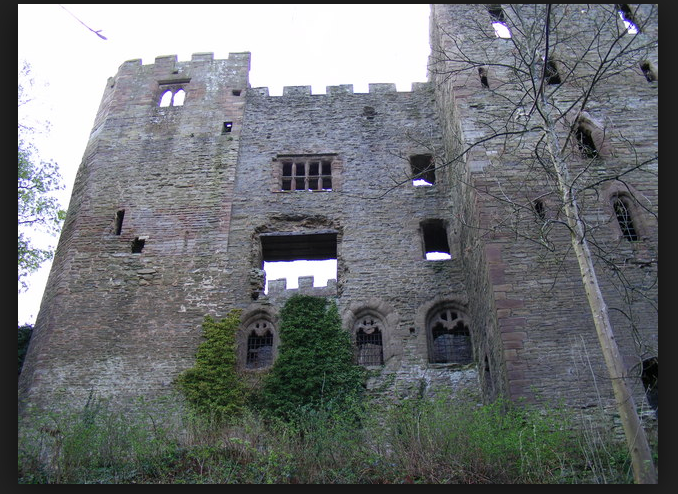
I highly recommend this series. It offers a terrific mix of elements, wonderfully likable characters, and great setting and atmosphere. I was almost sad when I came to the end of the novel and didn’t have another one at hand. And I would love to visit Ludlow Castle.

Ludlow Castle

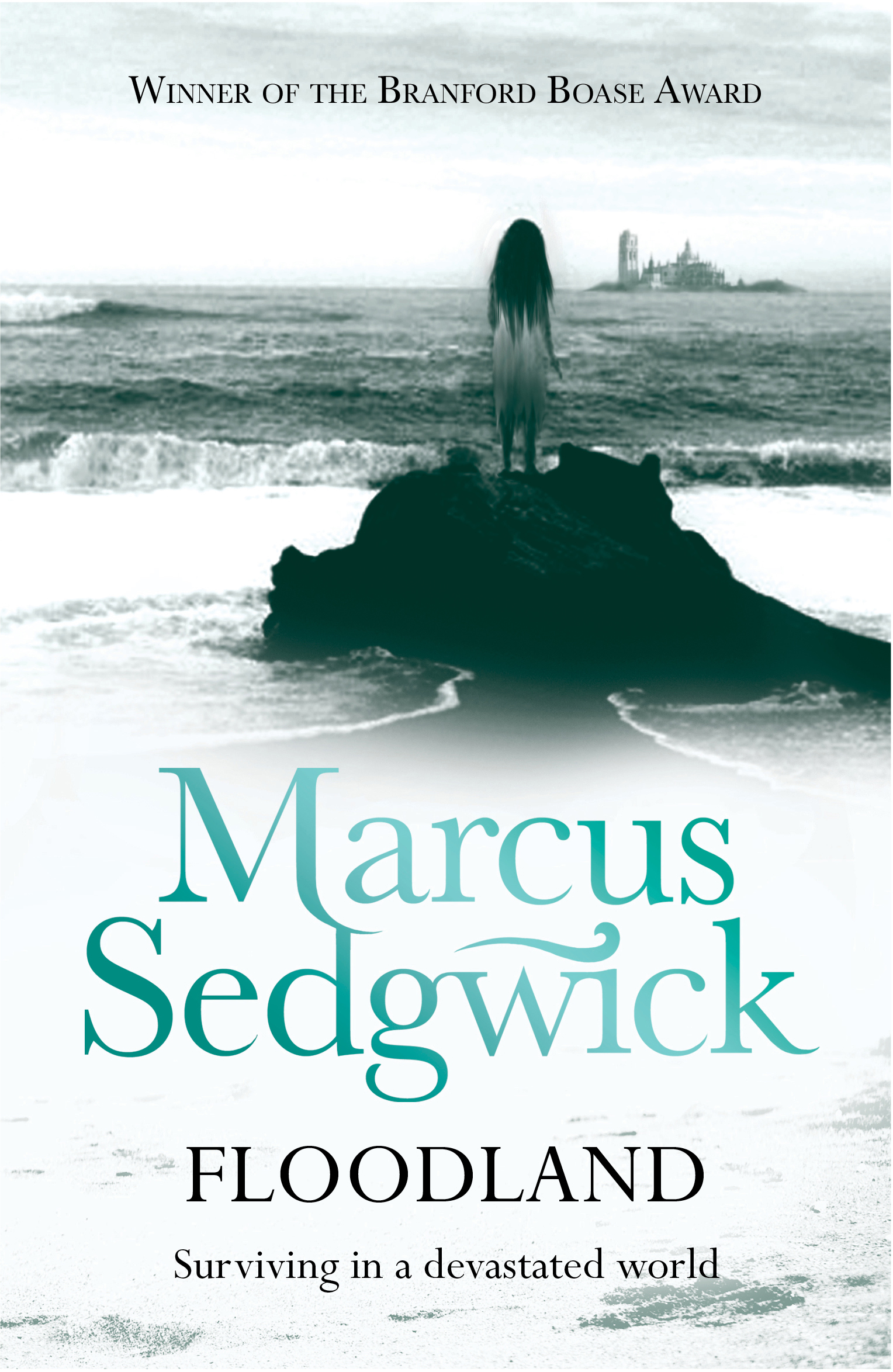
Marcus Sedgwick: Floodland (2000)

Floodland

Marcus Sedgwick has been on my radar for a while. I’ve seen more than one enthusiastic review of his books. He’s regularly nominated for awards and has won a few, notably the Branford Boase Award for first children’s book for Floodland. When you come to a writer who is as prolific as Marcus Sedgwick it’s hard to know where to start. Last year he even published a book for adults A Love Like Blood, that’s high on my TBR piles. I first wanted to read Midwinterblood but then decided to start with his first novel Floodland.

Floodland is set in the UK in the future. Most of the country is flooded, some of the higher regions building small islands. Food is scarce and people try to flee from the smaller islands to a larger part of the mainland. Zoe is left behind on the island of Norwich when her parents leave. During a moment of total chaos they boarded without making sure that she was really following them. Zoe’s been fighting for herself ever since. She’s a loner and most people leave her alone that’s why, when she discovers a boat, she’s able to hide it, and make it seaworthy again. One day she leaves the island, looking for the mainland. Instead of finding the mainland she’s stranded on an even smaller island than Norwich. Dooby, who is only a few years older than Zoe, is the leader of the people on that island. Food is even scarcer and so is shelter. Most people live in an old cathedral. Dooby confiscates her boat and Zoe’s forced to stay on this island on which people have turned into barbaric mobs, periodically overrun by other mobs who they torture and kill, if given a chance. Her only aim is to find her boat, flee and find the mainland and her parents.

I thought that the idea of Norwich being an island was pretty uncanny. I liked how this book was structured and divided into three parts “before”, “then” and “after”. Each part is subdivided into short chapters. At the beginning of every part and every chapter we find haunting wood carvings by Marcus Sedgwick.

Floodland is a short novel and so it may not be surprising that the writing is taut. There’s no superfluous word here. It all moves along at a steady pace and is very suspenseful.The middle part, which is the longest, was reminiscent of Lord of the Flies. It was also the part which carried the strongest message. There’s only one elderly person on that island and he makes Zoe understand how important it is to tell stories if humans want to keep their humanity.

The end felt a bit rushed but I still thought it was well done. Overall I enjoyed this adventurous story a great deal. Zoe’s a wonderful heroine and the world Marcus Sedgwick created felt realistic. There’s not too much backstory but we still understand it’s all a result of global warming. For children this may be a very emotional book because Zoe wonders until the end why her parents didn’t come back to find her. There’s one thing I didn’t like and that’s the idea that people turn into animals when they lose their humanity. I’m not keen on the dichotomy animal/human. The people in this book lose their compassion and their altruism because they are in a very precarious situation. They are cruel and depraved. That doesn’t make them animals. Animals don’t know cruelty.

If you’d like to find out more about Marcus Sedgwick here’s his website Marcus Sedgwick. It’s one of the most appealing writer’s websites I’ve come across. He also writes a blog where I found this quote that sums up his writing

I’m not a writer who tells you something five times. I usually say it just once, and if I say it any more in a first draft, my editor makes me take it out in a rewrite anyway. That’s one of the reasons that my books are sometimes shorter than other people’s. And that’s one of the reasons why I wish some people would read more slowly. Books are patient; you can afford to take your time when you’re reading for pleasure.

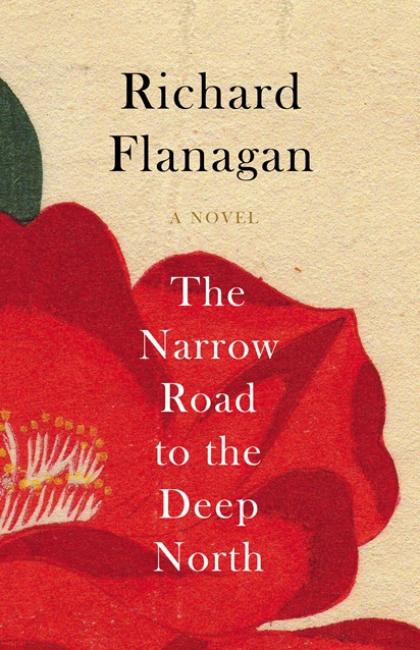
Richard Flanagan: The Narrow Road to the Deep North (2014)

The Narrow Road To The Deep North

In December I left an overhasty comment on Bellezza’s blog (here). She’d reviewed Richard Flanagan’s Booker Prize winning novel The Narrow Road to the Deep North, saying that it was very hard to read. I was about 100 pages into the novel and commented that I didn’t think it was all that bad. Unfortunately, I still had 350 pages to go and those were anything but easy. They were extremely hard and I kept on wondering “Why am I reading this?”. I’m not sure why I thought like that. I’ve seen many movies on POWs, have read more than one book and never had this reaction. It wasn’t even anything new. I was familiar with what the Japanese did to their prisoners. I knew about the vivisection on American soldiers. I just felt that it’s too much. Too graphic. After I finished the book I chatted with Vishy about it and he told me that Claire had written about the book (here), having a similar reaction. She couldn’t even finish it. I’m still not entirely sure why I reacted like this. I just know that I didn’t get anything out of reading this novel. If it hadn’t been for the brittle writing style and the mostly non-linear structure, which I both found very engaging, I would have given up. And I bought a hardback. It’s one of a few rules I try to stick to; if I buy a hardback, I finish it. I think I have to stop buying hardbacks.

The largest part of The Narrow Road to the Deep North tells the story of the surgeon Dorrigo Evans. Before the war he’s engaged to Ella but just before being shipped overseas he meets his uncle’s young wife Amy and falls in love with her. The love affair is intense and passionate and will haunt him all through the war years and even after the war. There’s a reason why they don’t get together at the end of the war and this plot line was the one I liked best because it illustrates so well how sometimes a whole life can take another turn just because of some small element.

The book is divided into several parts, one of which tells about Dorrigo’s time as a prisoner of war on the Burma Death Railway. In this section, like in the sections in the last part, the point of view changes from one Australian prisoner to the next, and from one Japanese officer or guard to the next. The parts told from the prisoner’s point of view are awful. The descriptions of the horrors, the beatings, the wounds, infections, illnesses  . . . they are so detailed and graphic, it’s too much. And the parts told from the point of view of the Japanese are very disturbing. I’ve never read anything as disturbing as that. We are in the mind of monsters who believe they are superior beings, who go on and on about honor and shame, who constantly rationalize their evil deeds and sadism,  and find not only excuses but reasons that make them believe they are “good men”.

On returning to the camp late that afternoon, Colonel Kota gave Nakamura a dressing down, his rage driven by his own shame at having forgotten a haiku and thus having been unable to behead a prisoner—and this in front of a Korean guard. In turn deeply ashamed, the Japanese major found the Korean sergeant whose name he could never remember, slapped him hard a few times, got the name of the prisoner who was apparently—of all things—hiding out in the hospital, and ordered a parade to be called and the prisoner to be punished in front of the assembled POWs.

After the war Dorrigo gets married to Ella, becomes a famous surgeon and turns into a philanderer.

He (Dorrigo after the war) was a lighthouse whose light could not be relit. In his dreams he would hear his mother calling to him from the kitchen: Boy, come here, boy. But when he would go inside it was dark and cold, the kitchen was charred beams and ash and smelt of gas, and no one was home.

In the last part we’re spending a lot of time in the mind of the Japanese war criminal, officer Nakamura. And once again that’s even more disturbing than anything else.

Flanagan’s writing style and the way he structured the first parts of the book made me finish it. It’s his strength of writing vivid scenes and descriptions that made the book worthwhile, but at the smae time these qualities also made it extremely hard to read. It’s debatable how graphic and explicit a novel should be. I think he did the right thing in being this explicit, only, I didn’t want to read it. Not at this time. However, I have other points to criticize. The book is too long. The last part felt as if he wanted to add too much. We didn’t need to read about the vivisections and there was a scene involving a fire, almost at the end, that I found superfluous as well. As if Flanagan didn’t exactly know when and how to end the book.

The brittle, vivid style makes me want to pick up another of his novels. But I wish I hadn’t read this one.

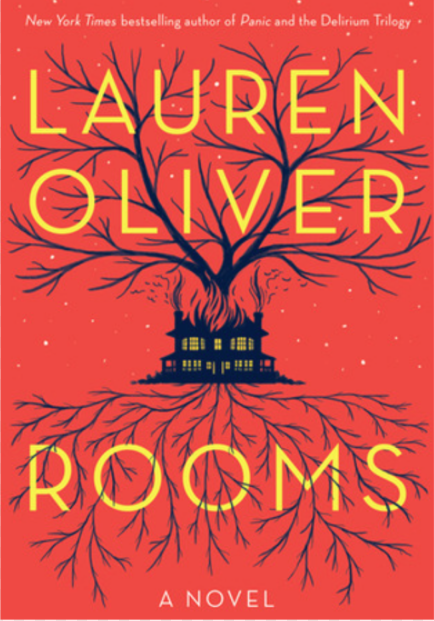
Lauren Oliver: Rooms (2014)

Rooms

This is a carryover review from last year. I finished the book before Christmas and wasn’t even going to review it at first – like so many others – but since it’s new, I thought it would be good to write about it anyway.

Rooms is Lauren Oliver’s first book for adults. She’s famous for her YA novels, Panic, Before I Fall and the Delirium trilogy. I haven’t read them, so I came to this novel without any preconceptions. I only knew it was said to be a rather unusual ghost story or – to be more precise – a haunted house story. I do love ghost stories and haunted house stories and the mini-review I read was so appealing that I had to try it.

Richard Walker died, leaving behind a huge country house. At the beginning of the novel his estranged family, – his ex-wife Caroline, his daughter Minna, her young child Amy, and his son Trenton – arrives to take possession of the house and his things.

The house is occupied by two bickering ghosts, Alice and Sandra. Unlike other ghosts who haunt houses these two are woven into the fabric of the house. They have become the house. They are in the walls, in the plumbing, everywhere. That’s an unusual idea and could have been really spooky, but it wasn’t because Rooms focuses too much on the story of each character. With the exception of little Amy, they are all troubled. The ex-wife is an alcoholic, Minna is a sex addict, Trenton is a suicidal teenager, Sandra, one of the ghosts, was shot, and Alice has secrets of her own.

The story moves along quickly, the descriptions are evocative, and the end is, although foreseeable, not bad. The biggest problem is that there are too many characters and, especially the ghosts Alice and Sandra, are too alike. They have different names and a different story but that’s not enough to tell them apart. The voices are too similar, even though they use another vocabulary. The same goes for the family members. They are all equally dysfunctional but if they were not so distinct through age and gender, they would blend into each other as well. Some of the descriptions of alcoholism or Minna’s and Trenton’s behaviour are spot on but they seem to exist in a vacuum. They have no history other than that the father was a bastard. We don’t understand Caroline’s drinking. We have no clue why Minna’s this bad, popping pills, jumping every guy that enters the house. Trenton’s the only character we get to understand a bit better.

Although I wasn’t too keen on this book, I think some readers might like it. Lauren Oliver knows how to write a scene or a description. However, overall this felt like a highly artificial attempt at a ghost story. The worst was maybe the lack of atmosphere. We don’t always need to know why a ghost is haunting a place but we want to feel the haunting. Atmosphere is a key element. As the story of a dysfunctional family it doesn’t work either because it lacks depth; for a character to be interesting he/she needs a bit more than being dysfunctional.

Maybe she’s better at writing for YA. Since I’ve got te first in the Delirium trilogy and Before I Fall I’ll certainly find out sooner or later.

Have you read any good ghost or haunted house stories lately?


Letters From a Lost Generation – Literature and War Readalong December 2014

Letters From a Lost Generation

Vera to Edith Brittain

Malta, 15 December 1916

I do wonder if I shall ever see Edward again; it is very hard that we should be the generation to suffer the War, though I suppose it is very splendid to, & is making us better & wiser & deeper men & women (at any rate some of us . . .) than our ancestors ever were or our descendants ever will be. It seems to me that the War will make a big division of ‘before’ and ‘after’ in the history of the World, almost if not quite as big as the ‘B.C.’ and ‘A.D.’ division made by the birth of Christ  . . . ( . . . )

I finished reading Letters from a Lost Generation on December 22nd. Only when I put it aside and picked up Testament of Youth did I realize that Vera Brittain’s fiancé Roland Leighton was shot exactly 99 years ago and died on December 23rd 1915. When I chose the book I didn’t know about this; reading it exactly during that time made it even more moving.

The first half of the book contains mostly the letters between Vera Brittain and Roland Leighton. There are a couple of letters between her and her brother Edward and between her and their best friends Victor Richardson and Geoffrey Thurlow, but the major part is the correspondence between Vera and Roland.

Reading these letters was very difficult. They are not graphic or gruesome at all – at times I wondered whether the four men really served in the trenches – but they are so unbearably tragic and sad. These five people were such close friends, that each time one of them dies, they all suffer terribly. Since Roland is the first to go and seems the one everyone liked the most, his death overshadows all the later letters. He’s mentioned constantly, quoted, remembered, and after a while I started to feel the loss almost as badly. No wonder people still visit his grave in France.

After Roland is killed Vera dedicates herself with even more verve to nursing. She first stays in England but then moves to Malta and later to France.

What spoke to me is the way they deal with grief. It shows how very important it is when you lose someone you love to know exactly what happened. In each case, and also in the case of friends who are not as close, they try, like detectives, to find out what happened. It’s particularly painful for Vera to know that Roland was wounded on the 22nd and only died one day later, after having been conscious the whole time, but didn’t write her a goodbye note. They find out later that he took an unforseen turn to the worse and might not have known he was going to die. Other aspects of his death become painful only later. Some of the friends are wounded and killed during battles, not so Roland. His death is rather an accident and Vera sometimes wishes that he’d died in one of the big battles so that his death would forever be linked to that name.

What I found extremely shocking is that Roland’s clothes – the stinking, muddy, bloody uniform and shoes – were sent to his family. I’d never heard of anything like this before. Vera describes the particular stench and the horror of the sight in great detail and I felt so sorry for them. How cruel and thoughtless. In Pat Barker’s Toby’s Room is a scene in which the sister takes out Toby’s clothes and speaks of the stench of the trenches. I’m pretty sure Pat Barker was inspired by the description of Roland Leighton’s clothes.

Letters from a Lost Generation is an important document on how the perception of the war changed. The four men signed up enthusiastically, spoke about honour and glory. Even war is glorified. The longer the war takes, the higher the losses, and the more futile it all seems, the more that perception changes.

Reading about the work of a nurse was especially interesting and showed to some extent why it was possible for so many people in England to ignore the mutilations. By the time the wounded men arrived, they had already been patched up as good as possible.

Another aspect that struck me is how humble the five friends were. None of them complained much or made a big fuss. Not about the cold, the mud, and the rain, nor about the battles and the fear of death. Not even when they are wounded.

I still wonder how Vera Brittain managed to survive the death of the four people who were closest to her. After the war she met the writer Winifred Holtby who became her best friend and helped her to overcome her grief. Sadly Holtby too died an early death in 1935. Another great loss for Vera.

I don’t think I’ve ever read a collection of letters this quickly and as soon as I finished the book I started Vera Brittain’s memoir Testament of Youth. I want to know more about her, about them. Letters from a Lost Generation is as important as it is beautiful and moving. It’s a document of deep and heartfelt friendship, a testimony of grief, loss and sorrow, and a valuable contribution to understand a generation and its motives.

Other reviews


*******

Letters from a Lost Generation was the last book in the Literature and War Readalong 2014. The next book is The Disappeared by Kim Echlin. Discussion starts on Tuesday 31 March, 2015. Further information on the Literature and War Readalong 2015, including the book blurbs can be found here.