Amy Liptrot: The Outrun (2016) – Wellcome Book Prize 10th Anniversary Tour

I was so pleased when I was invited to participate in the Wellcome Book Prize 10th Anniversary Tour and review one of the titles. There are so many literary prizes, but the Wellcome Prize is one of the most interesting to me because it is given to books that illuminate the many ways that health, medicine and illness touch our lives. 2019 marks the 10th anniversary of this prestigious award. Over the last decade, the prize has gone to a variety of titles from novels (Mend the Living, Maylis de Kerangal) to memoirs (The Iceberg, Marion Coutts) to popular science (It’s All in Your Head, Suzanne O’Sullivan).

I was offered to choose from the 2016 short list, including its winning title It’s All in Your Head by Suzanne O’Sullivan.

2016 Shortlist:Playthings by Alex Pheby; The Last Act of Love by Cathy Rentzenbrink; Neurotribes by Steve Silberman; Signs for Lost Children by Sarah Moss; The Outrun by Amy Liptrot.

There were many books on the list I felt tempted to read but I decided to choose Amy Liptrot’s memoir The Outrun because I was interested to see how the wild, as the blurb says, restored her life and renewed her hope.

At the age of thirty, after ten years of hard binge drinking, Amy returns to Orkney. Ten years earlier, she’s left the Scottish island in search of a more glamorous life in London. As soon as she arrived in London, she started to party, hang out with people in parks, take drugs and binge drink. It often seemed as if she was homesick.

But sometimes a smell in the air would remind me sharply that I was living in England. This leafy country with its red-brick skyline was not my home. I yearned for the open skies and grey stone of Orkney. I missed the curlews and oyster-catchers, even the black-backed gulls. Sometimes I’d be walking down Bethnal Green Road, surprised by the tears rolling silently down my face. (p. 37/38)

Although I’d left, and had wanted to leave, Orkney and the cliffs held me, and when I was away I always had, somewhere inside, a quietly vibrating sense of loss and disturbance. (p.50)

At the beginning of the memoir, she’s out of rehab and back where she came from, on Orkney. Bit by bit, we learn about her chaotic life in London, the excessive drinking that often ends with her blacking-out. When she is getting worse and worse, her boyfriend leaves her, she looses her job, and her apartment. Unfortunately, this isn’t enough and her drinking intensifies even more. Often she wakes up in places and with people she doesn’t know. Often, she starts drinking again right after waking up to fight a terrible hangover.

I heard it said that in London you’re always looking for either a job, a house or a lover. I did not realise how easily and how fast I could lose all three. (p. 43)

Reading about her excesses made me wonder how it was even possible that she managed to give up drinking. For years there was nothing else in her life but one bottle after the other. People started to avoid her because she was loud and rowdy, destroyed things, lost things, had accidents. She was such a mess.

My behaviour brought tension into the household: unpredictable noise levels; Tuesday night parties with strangers, men I brought home; leaving my handbag outside the front door and possessions trailing up the stairs. These episodes were followed by the depressive shadow of my hung-over days in bed.  (p.56)

And then, one night, something terrible happens and this might very well have been the deciding factor. While she did stop drinking occasionally and tried to stay away from alcohol before, it never lasted long. But after that night, which was a wake-up call for her, she enters a day rehab. One week of detox, assisted by Librium, was followed by twelve weeks of group therapy. One of the hardest things, in my opinion, is that she wasn’t allowed to stay at the rehab center but had to go home and face temptation every night. She lived over a pub in Hackney Wick. I don’t know Amy, but reading about this and knowing she made it, made me proud of her. It sounded like such a hard thing to do.

Once the program at the rehab center is finished, she returns to Orkney where she tracks birds, swims in ice-cold water, watches the night sky.

The descriptions of this harsh but beautiful landscape are amazing. Especially so, because we see them through Amy’s eyes whose every sense seems to reawaken now that she’s off the booze.

I loved this memoir so much. I could quote endlessly from it and I’m in awe because the fight is so intense. As Amy writes, even 20 months after she quit drinking, she still fantasizes about drinking all the time.

Through repeated use of the drug, our neural pathways are scored so deeply they will never be repaired.I will always be vulnerable to relapse and other kinds of addiction.

I’m crying. I’m sober, twenty months and eight days now, and I like the changes happening in my life but I’m still often frustrated about not being ‘able’ to drink. I’m sober but I would like drink.It’s a painful paradox to live in. (p.180).

It’s only towards the end of the book, and a long stay on Orkney, and a winter on her own on a much smaller island, Papa Westray, that the alcohol slowly lets go of her. There’s so much hope at the end and such a keen appreciation of life and nature. I also loved what she wrote about finding a new identity. For ten long years, her identity was rooted in her drinking. What would be left after that was gone?

I can’t recommend this highly enough. It’s an amazing insight into someone’s addiction and recovery and a fabulous account of life on Orkney. I could see the many migratory birds, feel the icy cold of the water, the force of the gales, and the beauty of the constellations in the night sky.

In defiance of this dissatisfaction, I’m conducting my own form of therapy through long walks, cold swims and methodically reading old journals. I’m learning to identify and savour freedom: freedom of place, freedom of damaging compulsion. I’m filling the void with new knowledge and moments of beauty. (p.180)

Don’t miss visiting the other blogs. You’ll discover many amazing books.

I’d like to dedicate this review to my beloved cousin, Olivier, who suffered from the same addiction as Amy but sadly didn’t make it.
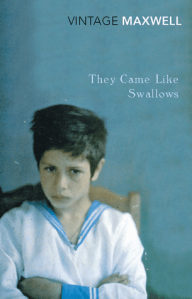
William Maxwell: They Came Like Swallows (1937)

They Came Like Swallows is American author William Maxwell’s second novel. Maxwell was famous as an author and editor. He helped shape the careers of writers like Eudora Welty, John Cheever, John Updike, John O’Hara and many others. I read and reviewed one of his later novels, So Long, See You Tomorrow in the early days of this blog. I was very impressed with it and keen on reading more of his work. Two of his books were suggested in the comments – One was They Came Like Swallows, the other one was The Château. Although I was so keen, it took me eight years to return to him. While I liked So Long, See You Tomorrow more, I found a lot to admire in They came Like Swallows. Once again, it is obvious why he’s called a “writer’s writer”. He’s so skillful.

They Came Like Swallows is a tragic book, even more so because we know it’s based on Maxwell’s childhood story. It’s set at the end of WWI, during the flu pandemic that killed twenty to forty million people. The story is told in three parts, each part told by another narrator. They don’t tell the same story from different angles, but each of them begins, where the other one stops.

Part one is told by eight-year-old Bunny, the younger child of the Morison family. His world turns around his mother and his mother only. He’s a very sensitive child, needs constant encouragement. He also has a keen imagination. Through his eyes we see the world transform into small villages, battles take place, fantastical things happen. His relationship with his older brother Robert is a source of terror. Robert is eight years older than Bunny and has little patience for the kid. At the end of part one, Bunny has been told, his mother’s expecting another child and he has come down with the flu.

Part two is told from Robert’s point of view. The tone is completely different. Robert has sorrows of his own. He’s lost a leg in an accident and tries hard to live a life like any other boy his age. He’s in this in-between state, not a kid anymore, but not yet a grownup. Because his mother had difficult pregnancies in the past, she and the boys’ father leave the kids with an aunt. Robert too, gets the flu and soon they hear that their parents have come down with it as well.

Part three is told from James Morison’s point of view and it’s the most devastating part. It’s obvious from the beginning, the mother will die, it’s only not clear, if anyone else will die, so I’m not going to mention that. The dad’s account is devastating on many levels. He’s lost his wife and the way grief grabs him and threatens to destroy him, is so well described. Equally well described are the reactions of the people who come to the funeral. I always find people are notoriously bad at expressing their sentiments when they hear of someone’s death. All the awkward phrases, the awkward and often unemphatic reactions are captured so well here.

I’m not so keen on stories told by kids usually but it’s done exceptionally well here because William Maxwell uses the kid’s imaginations. He doesn’t try to sound like a child but to let us experience the world through the eyes of a small child and a teenager and, later, a bereaved husband.

Something that struck me was the way the children were treated. Nowadays we have a tendency to treat even small children like grownups and a boy of sixteen would definitely be treated like that. Not so here. The book is eighty years old and to see how much the way we treat children has changed was really interesting.

While I didn’t love this book as much as the last one I read, I’m full of admiration for the craft and looking forward to reading The Château next. And I think it’s an outstanding portrayal of grief and the awkward ways people treat the bereaved. It also shows very well how devastating the pandemic was.

Should you wonder – the title is taken from Coole Park, a poem by William Butler Yeats.

I meditate upon a swallow’s flight,
Upon a aged woman and her house,
A sycamore and lime-tree lost in night
Although that western cloud is luminous,
Great works constructed there in nature’s spite
For scholars and for poets after us,
Thoughts long knitted into a single thought,
A dance-like glory that those walls begot.

There Hyde before he had beaten into prose
That noble blade the Muses buckled on,
There one that ruffled in a manly pose
For all his timid heart, there that slow man,
That meditative man, John Synge, and those
Impetuous men, Shawe-Taylor and Hugh Lane,
Found pride established in humility,
A scene well Set and excellent company.

They came like swallows and like swallows went,
And yet a woman’s powerful character
Could keep a Swallow to its first intent;
And half a dozen in formation there,
That seemed to whirl upon a compass-point,
Found certainty upon the dreaming air,
The intellectual sweetness of those lines
That cut through time or cross it withershins.

Here, traveller, scholar, poet, take your stand
When all those rooms and passages are gone,
When nettles wave upon a shapeless mound
And saplings root among the broken stone,
And dedicate – eyes bent upon the ground,
Back turned upon the brightness of the sun
And all the sensuality of the shade –
A moment’s memory to that laurelled head.

Have you read William Maxwell? Which of his books did you like the most?

Best Books I Read 2018

This was such a strange reading year. I was convinced that I wouldn’t be able to compile a decent best of list, but when I went over my notes, I discovered I was wrong. I’ve read several wonderful books – mostly in the first three and last two months of 2018 though. That might explain why I thought there hadn’t been that many. Another reason might be because I only reviewed about 30% of what I read.

I didn’t try to stick to ten or twelve books for my list, I just picked a few from each category.  If available, I’m adding a link to my review. I’m still hopeful I’ll manage to review the one or the other this year.

Best novels

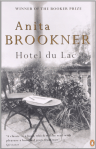
Anita Brookner – Hotel du Lac

Sadly I can’t remember that much of Hotel du Lac as I read it in January last year. I only know I liked it a great deal. It was my first Anita Brookner novel but it won’t be my last.

Ann Beattie – Chilly Scenes of Winter

Another book I read last January but this one has stayed with me. It has amazing dialogue and characters. Everything they say is always unexpected and interesting. It was such a pleasure to read.

Alfred Hayes – My Face for the World to See

My most recent read on the list and one I reviewed just two weeks ago.

Here’s some of what I wrote about My Face for the World to See

I think one reason I loved this so much is because it reminded me of Dorothy B. Hughes fantastic novel In a Lonely Place, which made my best of list in 2016. I’m sure Hayes knew the book and certainly knew the movie with Humphrey Bogart. Even though My Face for the World to See isn’t a crime novel, it has all the trademarks of a noir like In A Lonely Place. There’s the melancholy mood, the jaded, lonely people who try to connect but fail, love affairs that turn bitter within weeks.

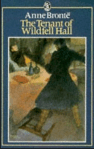
Anne Brontë – The Tenant of Wildfell Hall

I will write about this book some day. It isn’t on the list because I liked it but because I found it very interesting. I also found it annoying in parts and overall not what I expected. But it’s memorable and important and therefore deserves a place on this list.

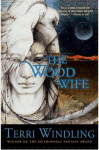
Terri Windling – The Wood Wife

This was a mix of magical realism, mythology, fantasy and a very realistic story in an amazing setting. I can still visualize the book. Its imagery was so strong and has stayed with me although it’s another one I read at the beginning of 2018.

Here’s a bit of what I wrote about The Wood Wife

I enjoyed this book very much and read it very slowly. Terri Windling created a magical world that is beautiful but not cute. Life in the desert is harsh. For months it’s dry and then when it rains, everything is flooded and the people living on the mountain are trapped there. Coyotes and rabbits roam freely but they are also hunted by poachers and tourists who think it’s a fun sport. In many ways, this is a very realistic depiction of a landscape and a way of life but then the book goes deeper and uses mythology and folklore to show what a magical, powerful place the Sonora is.

Nonfiction

Katie Roiphe – The Violet Hour

I hope to still review this book because it’s so great and I know many readers of this blog would love it. Essentially it’s a series of biographies of famous writers/thinkers, starting with their final hours. It may sound morbid but it’s not. It’s just fascinating to see how each of these great minds reacts when they realize there might not be a lot of time left. I was familiar with some of the stories, like Susan Sontag’s or Freud’s, because I read their biographies, but some were new to me. The other writers/artists are Dylan Thomas, Maurice Sendak, James Salter, John Updike. Roiphe also shares her own experiences with death and illness, why she chose to write this book and how she wrote it. Fascinating.

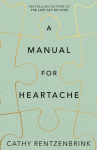
Cathy Rentzenbrink – A Manual for Heartache

I wish I had reviewed this beautiful memoir because it blew me away. It gives a lot of hope and solace in dark times. I’m not a rereader, especially not of nonfiction, but I think I will reread this. I loved it so much. The right book at the right time.

YA Fantasy

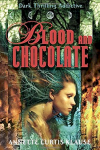
Annette Curtis Klause – Blood and Chocolate

I bought this book ages ago because so many people who participated in Carl’s R.I.P. and Once Upon a Time events raved about it. That always makes me a bit wary because I’m afraid that my expectations might be too high. In this case, although they were high, the book was so much better than I expected. It’s just a marvelous YA fantasy novel with a great twist and unexpected ending. While it is about a teenage werewolf girl, it’s also a wonderful exploration of what it means to stay true to who you really are. It’s never trashy, never clichéd. If you like the genre, don’t miss this.

Sci-Fi

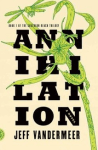
Jeff Vandermeer – Annihilation

What a peculiar book and not at all what I expected. I expected straightforward Sci-Fi but this is actually a horror story. I was thinking the whole time – if Edgar Allan Poe wrote today, this could very well be the way he would write. Once I finished it, I started watching the movie and that spoilt the experience. I don’t think I’ve ever seen a film that took so many liberties with the source material. It was odd.

Crime

Andrea Camilleri – Montalbano series book 1 and 2

This year I discovered two new crimes series that I like so much that I want to read the whole series eventually. The first is Andrea Camilleri’s Montalbano series. I’ve reviewed book one here. I liked absolutely everything about these books. The characters, the setting, the style and the stories.

Here’s what I said bout The Shape of Water

I’m so glad I finally read Camilleri because I enjoyed it so much that I have already started book two. This is such a perfect series for so many reasons. It paints an accurate, if somewhat embellished and exaggerated, picture of Sicily, its people, and customs. And its food. Montalbano enjoys good food, and for many readers, discovering all the dishes he eats in the books, is part of the appeal. While the descriptions of the place and its mores is part of the success of the series, the biggest reasons for loving it, is the character of Montalbano. He’s unorthodox, funny, dry, doesn’t suffer fools but has a big heart when it comes to “little people”. Montalbano’s name is an homage to Manuel Vázquez Montalbán. It’s no surprise then, that the inspector reads one of Montalban’s detective novels in this book.

Susan Hill Simon Serrailler Series book 5 and 1

The second series is Susan Hill’s Simon Serrailler series. While I loved the two books I’ve read, I still find something to criticise. I think she’s too much in love with her own writing and that’s why the books are a bit too long. There’s an almost Dickensian feel to these novels. That aside, it’s a great series that has a lot to offer.

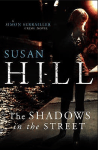
Here’s what I wrote about The Shadows in the Streets

As far as crime novels go, this isn’t the tightest but I didn’t mind because I enjoyed reading it. There’s suspense and the ending is not obvious, but at the same time it has a leisurely pace and takes a lot of time to show the characters and explore its main theme – prostitution. Susan Hill is famous for her ghost stories. Ghost stories need strong atmosphere and since she excels in the genre, it’s not surprising that this book is atmospheric too.


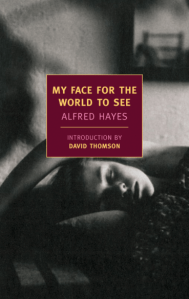
Alfred Hayes – My Face for the World to See (1958)

This wasn’t the best reading year for me. While I was very lucky with my nonfiction choices, more than one novel was a dud. Imagine how happy I was to see my faith in literature fully restored before the end of the year. Alfred Hayes’ novel My Face for the World to See is just marvelous. A perfect gem of a novel. I couldn’t fault a thing. I discovered it a few years ago on Guy’s blog here, but forgot all about it until Jacqui reviewed another of Hayes’ novels, The Girl on the Via Flaminia.

Alfred Hayes was born in London but moved to the US as a child. In 1943 he was drafted and spent time in the US army, in Italy. In Italy he contributed to some of the most famous scripts of Italian neo-realist cinema – Rosselini’s Paisà and de Sica’s Bicycle Thieves. The following ten years, he worked as a screen writer in Hollywood, writing  scripts for people like Fritz Lang, John Huston and many more.

While The Girl on the Via Flaminia, his earlier novel, is set in Italy, My Face for the World to See is set in Hollywood.

Before starting the review, I’d like to share the opening paragraphs, which set the tone and the mood of the novel.

It was a party that had lasted too long; and tired of the voices, a little too animated, and the liquor, a little too available, and thinking it would be nice to be alone, thinking I’d escape for a brief interval, those smiles which pinned you against the piano or those questions which trapped you wriggling in a chair, I went out to look at the ocean.

There it was, exactly as advertised, a dark and heavy swell, and far out the lights of some delayed ship moving slowly south. I stared at the water, across a frontier of a kind, while behind me, from the brightly lit room with its bamboo bar and its bamboo furniture, the voices, detailing a triumph or recounting a joke, of those people who were not entirely strangers and not exactly friends, continued. It seemed silly to stay, tired as I was and the party dying; it seemed silly to go, with nothing home but an empty house.

With hindsight, it’s amazing to see how perfect this beginning is. It captures the tone and the mood of the novel, as well as the narrator’s character. The narrator – he’s never named – is a successful, rich script writer, who spends some months of the year, in Hollywood, far from his wife and kid, who stay in New York. He’s successful but it doesn’t seem to mean much to him. He could be part of a crowd but he stays outside. There’s one person one could call a friend, the host, but other than that, he seems like the ship he watches – passing by, detached. At the same time, he’s the guy who is eternally watching, witnessing. A couple of moments after this short intro, he’s again a witness – this time to the near-suicide of a young, pretty wannabe actress. He saves her and this act is the beginning of a terrible mistake. While he may think he’s just being friendly when he contacts her again, it dawns on the reader that loneliness and boredom – also mentioned in the first paragraphs – might be the true reasons.

From that moment on, the reader gets to witness an awful Maelstrom of an affair. The beginning is somewhat sordid and the end disastrous.

I absolutely loved this novel because of the tone and the mood. And the writing style. It’s pared down and economical, not one superfluous word. It’s also chilling at times, because the narrator never fully engages with anything that happens. It’s almost as if he’s never really there. And the more he is withdrawn, the more the girl seems to sink deeper and deeper into her despair. I felt so sorry for this girl. A typical pretty small town girl who comes to Hollywood with big dreams, which a crushed instantly. She was hoping for “My Face for the World to See”, but what she gets instead is the wrong male attention. Almost all of her lovers seem to have been married and, invariably, it ends badly and she tries to console herself with alcohol. There’s a scene with a cat, who she loves dearly, that’s utterly heartbreaking.

I think one reason why I loved this so much is because it reminded me of Dorothy B. Hughes fantastic novel In a Lonely Place, which made my best of list in 2016. I’m sure Hayes knew the book and certainly knew the movie with Humphrey Bogart. Even though My Face for the World to See isn’t a crime novel, it has all the trademarks of a noir like In A Lonely Place. There’s the melancholy mood, the jaded, lonely people who try to connect but fail, love affairs that turn bitter within weeks.

Of course, Hollywood is the perfect setting for a story like this and one can easily see that Hayes knew what he was writing about.

I’m not entirely sure I will write a best of post this year, but if I do – My Face for the World to See will be on it.

A Tardy German Literature Month Wrap-up and Radetzky March Readalong Announcement

Does anyone else feel November went fast? I only just wrote a welcome post to German Literature Month and now it’s already over. That’s not why I’m late though. I caught a nasty cold.

I’d like to thank everyone who participated. It’s always wonderful to see all of your choices and your enthusiasm. So, thank you very much.

If you haven’t done so already, please add your posts to the German Literature Month Site. I’m still playing catch up and Lizzy’s collecting links for a final wrap-up post.

If you haven’t seen Lizzy’s post, you might not know that we are planning a Readalong of Joseph Roth’s Radetzky March early next year. The date hasn’t been fixed yet, so I’d like to know what would work for you.

We would like to extend this readalong over the course of one month, posting weekly on predefined portions of the novel. There will be questions, for those who’d like to use them, that will facilitate discussion.

I hope you’ll join us.

And thanks again for your participation.


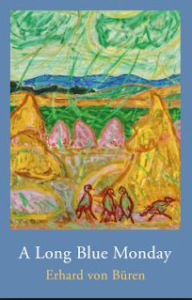
A Long Blue Monday by Erhard von Büren – Swiss Week Readalong

Published in 2013, A Long Blue Monday, is Erhard von Büren’s third novel. His earlier novels Wasp Days and Epitaph for a Working Man were published in 1989 and 2000 respectively. He lives in Solothurn, Switzerland.

A Long Blue Monday tells the story of Paul Ganter, a retired school teacher who has temporarily left his wife and taken an apartment in the city to write a book about Sherwood Anderson. Very possibly he could have done that at home, but we soon learn that this time out is about much more than just writing a book. He uses the time alone to delve into his feelings and memories and relives vividly an unhappy love story that happened over forty years ago, in the summer of 1959. That year he fell in love with Claudia, a girl from a very rich family and, in a desperate attempt to impress her, takes weeks off from school to write a trilogy of plays in the vein of the great American playwrights of the time. Every day he slaves over his work that seems to be a series of soliloquies put on paper. Once it is finished, he gives the play to his crush, hoping it will impress her. Sadly, just like all his other attempts at wooing her, this barely gets a reaction. Clearly, she’s not into him. Looking back, Ganter can’t help but admire the stamina of his younger self. And he realizes that while the result of his writing wasn’t successful, locking himself away, writing daily, going for long walks and experience the changes in the weather and nature surrounding him, was one of the most intense experiences of his life.

The story is told going back and forth in time. In the present, Paul spends a lot of time writing and reminiscing, but he also has long conversations with his daughter who discovers sides of her father she never knew existed. While the love story is central, it isn’t the most important aspect of Paul’s delving into his past. He also remembers vividly what it was like to come from a poor family, in which the men were battling alcoholism. He remembers how difficult it was to know what he wanted to do with his life and to achieve it. Trying to overcome the shortcomings of his upbringing, he became a master student. Unfortunately, for the longest time, he thought that he could master life and love just like he mastered school. This set him up to failure. Being shy didn’t help him either. Love and life choices are explored, but there’s one other important thing—the narrator’s intense love of American culture that finally leads him to become an English teacher and is now one of the reasons for his time out.

I hope my review will have told you several things—this is a very complex, rich book, but it’s neither straightforward, nor plot-driven. Funnily, for a novel that talks so much about American culture, it’s very unlike most American literature I know. It’s introspective and very quiet. Far more analysis of thoughts and feelings, than scenes and action. One could say, more telling than showing. The story meanders, goes back and forth in time, returns to certain events, adds additional information. Just like it happens to all of us in real life. We rarely remember events in a straightforward way.

I liked A Long Blue Monday very much. It’s a quiet book about a quiet, shy man, who feels strongly, struggles and fails, struggles some more, and then succeeds and finds meaning in all sorts of things. My favourite parts were the nature descriptions and if I had read this in English, you’d find dozens of quotes. The descriptions are lyrical and beautifully crafted. They are the most eloquent sign of the narrator’s rich interior life.

While reading A Long Blue Monday, I couldn’t help but think of another Swiss author, who writes similar descriptions— Robert Walser. If you know me, you know this is high praise.

I hope some of you have read this as well. I’m looking forward to the discussion.

Meet the Translator of A Long Blue Monday – Helen Wallimann

Helen Wallimann and Erhard von Büren working on a translation (Photo credit Silvia Reitz – Solothurner Woche)


As many of you know, our next readalong, on Wednesday, is dedicated to Erhard von Büren’s novel A Long Blue Monday. Since many of the readers of this blog are interested in the process of translation, I thought it would be great to do an interview with Erhard von Büren’s wife, Helen Wallimann, who is also his translator.

I enjoyed her answers very much and hope you will too.


Without any further ado — let’s welcome Helen Wallimann to the blog.

How did you become a literary translator?

That’s a long story! I was brought up in England by Swiss parents so I was bilingual from the start (English and Schwyzerdütsch, the Swiss-German dialect), and even believed that everyone spoke Schwyzerdütsch at home and English outside the family circle. As my father ran a hotel I knew, too, that different people spoke different kinds of English; so when we were in Lucerne just after the war I taught my little cousins how to get chewing-gum from US soldiers by asking – in what I mistakenly thought was slangy American English – “Any gum chum?”

As soon as I’d learned to read I became an avid reader. This would be useful later on: a translator needs to have an extensive vocabulary, particularly in her own language.

After graduating in French and German from Edinburgh University I worked in publishing in Munich, Paris and London, so I gained a lot of editorial experience. From 1973 to 2001 I was employed as a French and English teacher at the Kantonsschule Solothurn (similar to the old British grammar school), so I was indirectly but practically concerned with comparative linguistics – in fact one of my senior classes made fun of me because apparently one of my favourite sayings was “It’s not quite the same”.

In 1989-90 and again in 2002-03, I spent altogether two years teaching English at Chinese universities. After that I started to attend Chinese classes at the University of Zurich as an “unregistered student”. The second year I was there I attended a seminar on Modern Chinese Poetry. As there were only about half a dozen students in the class I had to take my turn at translating the poems. I was allowed to translate into English instead of German. As I’d retired from teaching I had plenty of free time, so I spent hours trying to produce correct translations in fluent English while preserving the poetic character of the originals. I found that it was something I loved doing. The professor liked my work and subsequently asked if I’d be willing to translate Swiss folk tales for a Chinese-English bilingual translation to be published in Hong Kong (Legends from the Swiss Alps). Later I translated various articles by Chinese artists, art critics and curators for two books on contemporary art in China. I also had the privilege of translating poems by the celebrated Hong Kong writer Leung Ping-kwan for a small book, The Visible and the Invisible: Poems (mccmcreations, Hong Kong),which was published when the poet was awarded an honorary doctorate by the University of Zurich.

After that I thought I might as well have a go at translating the first of the novels by my husband, Erhard von Büren. After all, I do understand German much better than Chinese!

Were there any particular challenges in translating Erhard von Büren?

I think translating literary texts always presents challenges. Take, for example the title of Epitaph for a Working Man, Erhard’s first novel, the story of the last year in an old man’s life as told by his son. The German title, Abdankung, has at least three meanings: resignation, abdication or, in Switzerland, funeral service or funeral oration. It also includes the word Dank (thanks). I found it impossible to translate the word adequately and had to invent a new title. That’s an example of the general problem of vocabulary: there’s often no exactly corresponding word in English, particularly for things like political institutions, traditional activities, food, even types of school – do English, American, Canadian etc. readers of  A Long Blue Monday all know what a Swiss “Gymnasium” is?

In Wasp Days there was an additional problem: each section has its own character, depending on its main theme. So the first section is made up mainly of straightforward narrative, the second one seems like a compendium of random notes and stories, the third is full of ironic description of academic research (here I had to be careful to use the right philosophical, ethnological, sociological, psychological etc. terms); the fourth section is mainly straightforward narrative again, but actually very ironic and funny: the fifth section is mainly made up of conversations; the sixth is more or less a stream of consciousness chapter, it’s also full of lyrical description. Finding the right tone for each section was quite a challenge!

Passages in A Long Blue Monday that were particularly difficult to translate were the lyrical ones that reoccur in the different seasons and describe fields of wheat or barley and the narrator’s mental turmoil as he strides through them.

Could you describe the process of translating A Long Blue Monday?

First of all, you must know that I don’t translate to earn a living. So I can take my time.

Of course I knew the book very well before I started on the translation in the autumn of 2016. So I just started at the beginning and worked through it. By March 2017 I’d completed a first draft which I subsequently sent to a friend in England for her comments. Then I did nothing on the book for a couple of months. The feedback from my friend didn’t arrive until the end of July. But by that time I’d carefully reread my translation and wasn’t at all satisfied with it. So I went through the whole book again with a fine tooth comb, reading the text aloud to make sure all the sentences adequately reflected the meaning and tone of the original, trying out different variants, revising, changing back… It was a slow process. But early in the new year I sent the revised manuscript to another friend in England for her comments. I finally sent the book off to the publishers at the beginning of March 2018.

Were there any passages in A Long Blue Monday where you needed to be creative because the German didn’t translate easily into English?

I’ve already mentioned the lexical problems. But of course there’s also the problem of German grammar and sentence structure: it’s very different from the English, so you just have to be creative if you want to produce a truly fluent translation. By chance I still have a few variations of the opening paragraph of the book. Here’s the German original.

Wie ich jeden Tag drei, vier Mal den Haselweg entlangging bis zum Wasserreservoir, einem mit Gras bewachsenen Erdwall an der Kreuzung vorne; wie ich dort links abbog und den steilen Feldweg Richtung Wald einschlug, am Waldrand entlangging bis zur Ecke oberhalb Langendorfs; wie ich zwischen zwei Feldern hindurch auf dem Trampelpfad die Strasse erreichte, die den Hang herauf- und hinüberführt zur Sagackerhöhe.

The very first phrase “Wie ich … den Haselweg entlangging” (How I … walked along Haselweg) is a problem for the translator. The German reader probably understands “(When I look back) I see myself walking along Haselweg three or four times a day…” How can you convey this in English without it sounding stilted?

Here are three of my many drafts, the first being a more or less literal translation.

  • How I’d walk along Haselweg three or four times a day as far as the reservoir, a grass-covered earth wall up at the crossing of paths; how I’d turn off left from there and take the steep track leading up to the wood, then follow the edge of the wood as far as the corner above Langendorf; how I’d continue along the footpath between two fields to reach the road that leads up the slope and across to Sagacker Heights.


  • Three or four times every day my walks along Haselweg as far as the reservoir, a grass-covered earthwork up at the crossing; turning off left there I’d take the steep track up to the wood and follow the edge of the wood as far as the corner overlooking Langendorf, then take the footpath between two fields to reach the road leading up the slope and across to Sagacker Heights.


  • Every day, three or four times, walking along Hazel Wood path as far as the reservoir, a grass-covered earthwork up at the crossing; turning off left there up the steep track to the wood; along the edge of the wood as far as the corner overlooking Langendorf; then along the footpath between two fields to reach the road that led up the slope and across to Sagacker Heights.


And here is the translation as it appears in the final publication. Note that, for the triple repetition of “wie ich…” – which is an important stylistic element in the original, I used “I’d…” three times.


Three or four times a day, I’d walk along Haselweg as far as the reservoir, a grass-covered mound up near the crossing; I’d turn left down the steep field path to the wood, then skirt the wood as far as the corner above Langendorf; from there I’d take the dirt track between two fields to reach the road that goes up the slope and across to Sagacker Heights.

Do you prefer to translate prose or poetry?

Poetry, really. Because you can spend a lot of time working on a poem: if you spent the same amount on each paragraph of a book, you’d never get to the end.  In general, if I’m not translating, I’m too impatient to reread poems several times, which is something you ought to do if you want to really appreciate a poem. So I get more out of a poem when I try to translate it. Also, it’s very satisfying to feel you might have found an adequate translation. It’s almost as though you’d written the poem yourself.

You are stranded on the proverbial desert island and you are allowed one book to take for translation purposes. Which would it be and why?

I hope it would be a nice Caribbean island and not the kind of island William Golding’s Pincher Martin landed on! Whatever, I’d want a book entitled something like “How to survive on a desert island”. Then, before starting with the translation, I’d search it for useful instructions on things like finding fresh water, opening coconuts, recognising what things are edible, making a fire, fishing, building a hut… And of course how to make signals so that you might be seen by passing ships, airplanes or satellites. Then, if the book proved to be useful but I still hadn’t been rescued, and also provided it gave instructions on how to make writing utensils and paper, I might translate it, just to pass the time. But probably I’d spend my free time writing a diary, hoping it might become a bestseller … if I ever got rescued.

*******

Thank you so much, Helen, for this fascinating insight into your work as a multilingual translator.