Jo Walton: Among Others (2010)

With a deft hand and a blazing imagination, fantasy writer Walton mixes genres to great effect. Elements of fantasy, science fiction, and coming-of-age novels combine into one superlative literary package that will appeal to a variety of readers across age levels. After engaging in a classic good-magic-versus-bad-magic battle with her mother that fatally wounds her twin sister, 15-year-old Morwenna leaves Wales and attempts to reconnect with her estranged father. She was sent to boarding school in England, and her riveting backstory unfolds gradually as she records her thoughts, feelings, and experiences in a series of journal entries.

Jo Walton’s Among Others is an absolutely charming book. Despite the fact that there are some magical things happening this isn’t a fantasy novel.  It is a novel about fantasy and SF and, if anything, I would call it magical realism. What is charming about this book is not the magic, which is raw, wild and dangerous but Morwenna’s voice and her love of books, reading and libraries.

Morwenna’s story unfolds in a series of diary entries. The year is 1979 and Morwenna has just arrived at and English boarding school. She is a 15-year-old girl from Wales whose twin sister has died in an accident. The very same accident has left her injured and crippled. As we learn in the novel the accident was the result of their evil mother’s doing. The girls tried to stop her from getting more power through magic and that’s how the accident happened.

Morwenna is an outsider at her new school. She is crippled and the only one from Wales. But that isn’t the only thing that makes her an outsider. She knows that she is different. Her mother is a witch. Morwanna only just met her father whose sisters are witches as well, she sees and talks to faeries and she is addicted to reading SF novels. Novels are her consolation.

“It doesn’t matter. I have books, new books, and I can bear anything as long as there are books.”

Books are her escape route but also her way to make sense of the world. Her enthusiasm and love for books is one of the most important elements in this novel. At the boarding school she discovers what libraries have to offer, is introduced to inter library loan which opens the world for her even more and finally she is invited to a SF book club. Once a week she will discuss all her favourite SF and fantasy writers and learn about new books and authors and go on reading her new discoveries in her spare time.

I sat on the bench by the willows and ate my honey bun and read Triton. There are some awful things in the world, it’s true, but there also some great books. When I grow up I would like to write something that someone could read sitting on a bench on a day that isn’t all that warm and they could sit reading it and totally forget where they were or what time it was so that they were more inside of the book than inside their own head. I’d like to write like Delany or Heinlein or Le Guin.

At the book club she meets Tim a gorgeously beautiful boy with a bad reputation. It’s for her to discover whether it is founded or not.

I haven’t read a lot of SF and although I knew the names, I hardly knew any of the books still it was captivating to read about them, to see what elements she picked for her life, what themes, questions and speculations fascinated her.

The voice of Morwenna is very well rendered. This sounds like a young girl discovering the world and new books. We follow her thoughts and see how they develop, how wrong assumptions are corrected, how new things are learned.

The magical parts can be read in many different ways. A sceptical reader could just assume that it is all in Morwenna’s imagination. That grief, sadness and the constant pain she is in lead her to fantasize. It would make sense as well. If you are less sceptical you can just accept the fact, that, yes, she does see fairies and has an evil witch mother. The fairies are very interesting beings and she also mentions that they have nothing in common with Tolkien’s elves. Some of them look like gnomes, others are very beautiful. They are tied to places and seem like some sort of condensed energy.

A part that spoke to me is, the description of Morwenna’s pain. The descrptions were very realistic. The way chronic pain changes, how she tries to handle it, the cures that are provided, the wrong therapy she gets from conventional doctors and how she finally gets better through acupuncture.

Jo Walton lives in Canada but she is from Wales. The differnce between Wales and England is emphasized all through the novel. Half of the French side of my family is from Brittany. The difference to the rest of France is very similar. And you also find a lot of magical beliefs in Brittany. I grew up believing in loup-garous (werewolves) and nobody would have made me go out during a full moon when we were on holidays in Morlaix.

Amon Others is a very unusual coming of age story and I’m glad I read about it on Gavin’s blog (here is her post). I can’t imagine that anyone who loves books wouldn’t be able to relate to the intense love of reading that is capured in this book.

Paris in July – 2011 or French Books, Movies, Art and Music

Paris in July is an event hosted by Book Bath and Thyme for Tea. I think it should appeal to many as you can contribute almost anything as long as it is about something French (not Paris only).

All you have to do is either read a French book, watch a movie, share a recipe, post something on French art or architecture, write a travel piece or share your favourite French music. It is up to you.

I am, as usual, tempted to contribute many things but July is my busiest month work wise, therefore I’ll try to not put the bar too high. But let me share a few plans.

Books

The July’s book for my Literature and War Readalong is Marguerite Duras’ Hiroshima mon amour. I will review the book and the movie.

I’m tempted to read and even re-read some Colette. I have never read her novel La Chatte, it would be a great choice for me. But I might also re-watch Chéri starring Michelle Pfeiffer and finally read the eponymous book as well. Zola’s Le ventre de Paris is also an option especially since there is a certain actuality to the topic as Les Halles, as I knew them all my life, are being torn down at the moment. Now these are just a few choices but my French reading pile is huge, I will certainly find something.

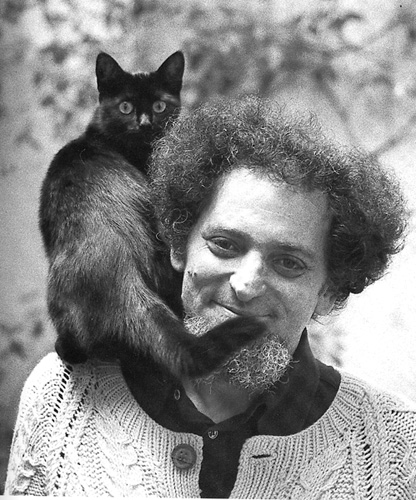
I could also imagine a post on French writers and their black cats.

Movies

I also have quite a little pile of DVDs here. I recently bought a Jean Gabin collection. I already watched Le Quai des Brumes and La Grande Illusion but there are some others that are very good. Another option is watching Les Misérables starring Gérard Depardieu. And I wanted to re watch the movie Paris, je t’aime. Despite it’s title it isn’t very clichéd.

Paris

I wanted to go to Paris in July but my workload will not allow it. Instead of that I might share a few extremely nice books on Paris that I found last year. There are a lot of themed guides around that are really interesting.

Paris: Made by Hand: 50 Shops Where Decorators and Stylists Source the Chic & Unique

Art

My favourite French painter is Gustave Caillebotte. He painted Paris like not many others. I might write in more detail about his work and background.

Music

When I think of French music, the first that comes to my mind is Air. I have all of their CD’s but I’m sure that’s not what people usually have in mind when thinking of French music. I’m also a huge fan of Edith Piaf. And there are many others that I could write about.

I hope this gives you an idea and tempts you as well. If you would like to sign up too here is the link.

Kat Banyard: The Equality Illusion (2010)

Women apparently have never had it so good. In today’s supposedly post-feminist world, cosmetic surgery is seen as empowering, lap dancing as a sexually liberating career, and the lack of women from boardroom a result of women’s free choices. In The Equality Illusion, campaigner Kat Banyard argues passionately and articulately that feminism continues to be one of the most urgent and relevant social justice campaigns today.

Kat Banyard’s The Equality Illusion: The Truth about Men and Women Today takes an unflinching look at what it means to be a woman today and, due to the fact that Banyard is British, especially in the UK .

Still, whether you are an Afghan woman fighting for girl’s rights of literacy or an American doctor performing late stage abortions, you have one thing in common: you lead a dangerous life and might end up being killed. Both things happened.  The first happened in Afghanistan in 2006, the second in the US in 2009. They illustrate the illusion of equality and show what a global phenomenon it is.

Banyard structured the book like a day in a woman’s life and tied each part to a topic. Getting up – beauty myths, going to work – sexual harassment and the opposite of equal opportunity, coming home – domestic violence and unwanted pregnancies, evening out- lap dancing clubs, porn industry and prostitution… This structure works very well.

The key topics are beauty and looks, equal opportunity at work, poverty, literacy, the sex industry, domestic violence, abuse, relationships and children. Banyard looks at everyday life and how it is lived and not so much at the ideas beneath it all. There is an introdcutory chapter on false assumptions about gender but it is quite short.

To say the least, I was shocked about a lot of the data and statistics and saddened by most of the individual stories. Whoever said that feminism wasn’t needed anymore or that we were by now equal?

Women are to this day among the poorest of the world. In some African countries little girls do not go to school because they are raped on the way. In the UK some girls have bad grades because there is constant sexual harassment at school and all the teachers do is saying “boys will be boys”. In some countries girls are forbidden to learn to write and read.

Humiliating and degrading girls serves to highlight just how masculine boys really are. And so, sexist bullying and sexual harassment are an integral part of daily school life for many girls. (p.67)

What women have to face at work isn’t much better. Cases of all forms of sexual harassment are frequent. Women with children do not have a lot of chances to make a career, especially not, when, as seems to be the case, men do not help enough when it comes to child rearing. Payment is still not equal at all and this stems to a large part from the fact that many jobs performed by women are considered to be less valuable and are paid less.

Legislation can create the illusion that equality has been achieved. But just because it is officially illegal to pay women less than men for equal work, to sack them for being pregnant, or to sexually harass them, it doesn’t mean theses things don’t go on. There is a huge gulf between policy and practice, and much current legislation – particularly around equal pay – lacks real bite. In a society where women still do the majority of unpaid caring, rigid workplace structures and the long-hours culture mean they pay a huge penalty for doing so. (p.101)

There is a trend, especially in the UK to normalize the porn industry. According to the interviews in this book, there is no such thing as “elegant lap dancing clubs”. Sooner or later all the women are harassed and coerced into having sex. Prostitution may be a choice but only because the women have not much to lose. They have often been abused as children, are very poor, have no education or just had no idea what they were getting into. “At work” they face brutality and violence on top of the degrading activity of selling their bodies.

I think the way society has glorified prostitution is very sad. I believe young women all over the world are becoming more curious (about going into prostitution) due to the positive light that is shown on this horrid profession. (p.145)

Domestic violence is extremely wide-spread, rape is on the up and many perpetrators are never convicted and if they are the punishment is ludicrous.

What bothers me personally the most in my personal life are two things. One is something I’m facing at work- there is no such a thing as equal treatment and the other is something I see happen, namely the overwhelming presence of the influence of the porn industry. Porn practices, fashion and looks seem to become normalized to the extent where you can find “sexy” underwear and clothes for little girls at the supermarket.

Compared to all this it may seem futile to debate whether all the pink toys for girls are really an issue or not but when you dig deeper, you just see that it is one of the symptoms of gender inequality. And it’s everywhere.

What I truly liked about the book, is that Kat Banyard offers hope. Her last chapter and the appendix are entirely dedicated to grassroot activism which is extremely important work and she offers a list of resources. She clearly shows how important feminism still is, that you can achieve something if you want to, it doesn’t need to be anything big and that your dedication may inspire others to follow your example. Last but not least she underlines that feminism also needs the contribution of men and they will ultimately also benefit from equality.

l read about this book on Still Life with Books. I’m really glad I read it and would love to hear from anyone who has read this or any of the other new/old publications. My first thought when I saw these new books was “But that has been done before….” Yes, it has, but apparently most of it has been forgotten. And we need books that back up the topics with actual data or the books get dismissed as being outdated.

I hope I might finally get to Cordelia Fine’s Delusions of Gender next.

The Company of Wolves, Bloodmantle and other Retellings of The Little Red Riding Hood

The Trials and Tribulations of Little Red Riding Hood: Versions of the Tale in Sociocultural Context

My first contribution to the Once Upon a Time Challenge V was the novel Red Riding Hood based on the movie. As you can read here I wasn’t too impressed with it.

Meanwhile I’ve seen the movie as well. It’s a visual treat, I enjoyed it but it isn’t as good as The Company of Wolves which is much more mysterious.

The Brother Grimm tale, The Little Red Riding Hood has fascinated people since forever. The dense forest, the wolf, the red cloak are such powerful images. It is certainly one o the  fairy tales with the most retellings.

There is a nice collection by Jack Zipes called The Trials and Tribulations of Little Red Riding Hood. It contains a huge range starting with the tale by Charles Perrault to more contemporary versions like the  Angela Carter’s The Company of Wolves. Carters story can also be found in her collection of fairytale retellings The Bloody Chamber. There are actually two versions in it. A very short sketch and one that is a bit longer.

I read Zipes book a few years ago and was impressed by how many different versions there are but there was none that I really liked. The Company of Wolves as a story is less convincing than the movie based on it. And there are other retellings in The Bloody Chamber that I liked much more.

The one re-telling that really impressed me is Tanith Lee’s Bloodmantle from her collection Forests of the Night. It can also be found in Wild Women. Tanith Lee’s stories can serve as proof that there is more to fantasy than meets the eye. If there is one writer who is capable of writing literary fantasy it is certainly Tanith Lee. Her writing is poetical, imaginative and very original. Here is what she says about Bloodmantle.

The forests of the mind are benighted, dark and dazzling places. Things wander there that shine, and burn, and bite.

Much of my writing, long and short, begins with nothing more – or less – than a feeling. The nearest I can come to describing this is to relate it to those curious unremembered memories, triggered maybe by a scent, or a certain seasonal light. Bloodmantle started in just that way, a sensation. Then quickly followed the notion of Roman Lupercal as a werewolf-finding feast. Wolves are creatures that live most definitely in my mind forests. I meet them with the primitive and often irrational wolf-fear, but also in fascinated love.

The girl in th red cloak of course most of us know. Innocence can be cruel.

In Bloodmantle the woman or girl isn’t only a victim. The roles change and there is potential to do harm in both, the man and the woman. The story isn’t very long but rich and multilayered, with a story inside of the story, a tale transmitted from days long gone, and a part that takes place in our contemporary world. The wolf is as much perpetrator as prey, half man, half animal and also ghost.

A very artful picture book Little Red Riding Hood illustrated by Daniel Egnéus came out this year. I discovered it during the Once Upon a Time Challenge. Here is Chris’ review  that contains some of the truly wonderful pictures.

You can also find something about Daniel Egnéus here

D89SUTKCGNX9

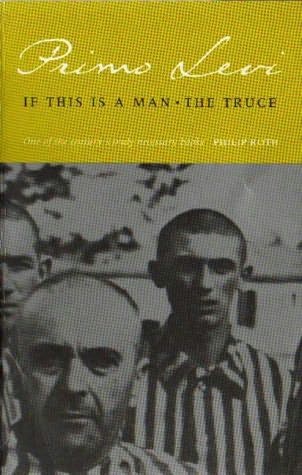
Literature and War Readalong June 24 2011: If This is A Man aka Se questo è un uomo by Primo Levi

This month is moving very fast and the next readalong is on the 24th already. It might be good to get started if you want to join in.

Primo Levi is a writer that has been on my mind for years. I knew his story, had read about him. I have read other’s accounts of their incarceration in concentration camps. I have read excerpts of Levi’s work but never got around to read his most famous book, the autobiographical account of his incarceration in the extermination camp Auschwitz.

He was on my mind for this and because he committed suicide so late in life. Because he seems to be such a perfect example of survivor’s guilt.

I dreaded to read his account, I know it won’t be cheerful but I always wanted to read it, wanted to explore his life, to understand why he couldn’t live with the guilt of being one of a very few survivors.

Despite the sadness and the horrors he describes there is beauty in his books as he is not only a witness of dreadful times but also an accomplished writer.

Primo Levi’s book is the only nonfiction book in this readalong.

I’m reading the French translation Si c’est un homme.

Jenn Ashworth: Cold Light (2011) Crime and Social Realism

An unsettling, darkly humorous tale of teenage girls in a predatory adult world, and a cocktail of lies, jealousy and unworldliness that leads to tragedy.

I have been looking forward to Jenn Ashworth’s new novel since I read A Kind of Intimacy at the beginning of the year (here’s the review). I had a bit of a problem not comparing the two books but once I let go of that I really liked this novel, it’s disturbing and chilling and you only find out at the very end what really happened.

Cold Light is a very appropriate title for this novel, although – as will be explained towards the end – it refers to bioluminescence.  It is a cold world in which today’s girls move and a predatory one. But is this really all that new? There is a lot that reminded me of my own coming of age. Not for anything in the world would I want to be 14 again. The competitions, the jealousy, the insecurity and the constant fighting off of boys or hoping to be noticed by them – depending on where on the good-looking scale you were positioned – was by far too upsetting. It’s all very horrible and can damage you for life. But there are other things young girls have to cope with nowadays that were not even thinkable 10-20 years ago. And today’s Britain (I’m just finishing Kat Banyard’s book The Equality Illusion and it echoes Cold Light) seems to be even worse than many other places.

Chloe is dead. Chloe will be 14 forever, 14, pretty and romantic. Since her presumed suicide 10 years ago she has become something like a cult figure. A symbol for young love and innocence. Now, ten years later, her former best friend Laura sits in front of her TV in a shabby little apartment and watches the groundbreaking ceremony for her memorial. The ceremony comes to an abrupt and macabre end when human bones are found in the damp soil. Laura nows whose bones they are and from this very first scene in the novel we know that some things must have gone seriously wrong ten years ago and we also know that there is a lot to be found out about Chloe, her ex-boyfriend who died with her and everyone else who was involved.

Laura will be watching TV all night, later joined by Emma with whom she is still in contact. They will be smoking and drinking until the early morning. Through flash backs and parts of their discussion the truth is slowly revealed. It’s the story of three friends who are jealous of one another, an older boyfriend who seems weird, a town in a state of alarm as a flasher who is getting more and more violent is chasing young girls. The three girls are only 14 yet they smoke, drink and have sex. We also hear a lot about innocent Chloe, how she exploited the obsessive best friend feelings of the others, how narcissistic and bullying she was, her delinquency and how she always got away with everything just because she was so pretty. Reading the story from Laura’s point of view we discover a lot about her family, the sadness of her childhood, about her father who seems to suffer from some kind of mental illness, her controlling mother and her obsession with Chloe that turns her into a stalker.

It’s an excellent book, disturbing and accurate and reminded me a great deal of the movie Fish Tank. I also thought of Harry Brown. Both movies paint a bleak picture of British youth. The first one also focusing on young girls being as well prey, victims and perpetrators.

Thanks again to Hodder and Stoughton who send me a review copy.

Winners of the Giveaway of Jenn Ashworth’s Cold Light

As promised, I am announcing the winners of the giveaway today. I have used random. org’s list generator.

The two copies go to

Litlove from Tales from the Reading Room

and

Amy from The House of the Seven Tails

Congratulations.

I will contact you per e-mail or you can send me your address via e-mail.

I have read my copy already and will be posting on it soon.