Sarah Gardner Borden: Games to Play After Dark (2011)

An unsparingly honest portrait of one marriage’s devolution into train wreck. Borden covers it all—from the resentments that build over childcare to the sex that’s no longer fun. Reading Games to Play After Dark is as intimate an experience as reading someone’s diary.

It is hard to believe that Games to Play After Dark is Sarah Gardner Borden’s first novel. The topic, a marriage that falls apart, may not be the most original, the young mother who tries to combine the demands of her children and her husband and her personal needs, isn’t new but how she describes it, the details she evokes, the way she looks at what has been swept under the carpet and the bed and what is hidden in the closets is extremely well done.

There have been a few similar books in recent years. Rebecca Miller’s The Private Lives of Pippa Lee, Rachel Cusk’s Arlington Park and Ayelet Waldman’s Love and Other Impossible Pursuits (see my review) are a few I have read. Many recent thrillers and crime novels also explore marriage and family life. One of the distiguishing traits of this novel is that Borden looks at sexuality in a detailed way and handles the topic explicitly. The games that are played after dark, are indeed of specifically sexual nature. More than any other recent writer of domestic disasters, Borden shows human beings as sexual beings, initiating with the discovery of sexuality by young people and leading to the sexuality of adults in- and outside of marriage.

Kate and Colin meet at a party, fall in love and get married soon after. The first years are intense and enjoyable but the moment the sexual attraction diminishes, things get complicated.

She became finicky about sex, wanting it only occasionally. Her body began to feel like a recently tidied room that she didn’t want Colin to mess up.

After the first child the marriage gets really awry. Kate has a hard time to cope and Colin, who is on a career path, doesn’t help much. The discussions and disputes that follow are some of the best bits of writing in this novel. A second child seems a good idea at first, after all, they want to be a “real family” and that is, according to Kate and their friends, only possible with a second child. After the second child is born, Kate doesn’t want any physical intimacy from Colin anymore. Her need of tenderness and proximity is covered by her daughters. She loves to lie in bed with them, feel their warm bodies.

But there is also decidedly more house work with a second child and the second daughter, on top of that, is a horrible brat. A child from hell. Scenes like the one below are all too frequent.

How much longer could she continue, could she stand it: the serving, the directing, the resulting absurd sense of abuse, the constant tiny negotiations of space? On the landing as Kate dropped the stuff and bent to collect her keys from her purse, Robin kicked her in the behind.

The older the girls get, the uglier the marriage turns. Although they try hard, they go to see a therapist, they try “date nights” and “family dinner”, things always go wrong. Kate and Colin fight constantly and more than once they both display violent behaviour. It is obvious Kate cannot take it much longer. She desperately tries to find a way out and the first path she chooses, is the well-known one of the affair. This is the only bad story line Borden told, not so much because she chose to have Kate start an affair (after all this seems more than common) but because it doesn’t seem plausible. In any case, the affair doesn’t last very long, and Kate will have to find another way out.

It’s a well-told book, I loved reading it and was captivated. I also appreciated that Borden seems to say, that not every marriage has to turn out like this, having children doesn’t need to be like this but there are combinations of people and circumstances that seem doomed from the start. Kate’s character and her past prepared the ground for this disastrous marriage. And Kate, when thinking back and remembering the beginning when they just got married wonders:

She had no idea if at that point things could have gone one way or the other, or if only one way, this way, had been available.

It is obvious that it isn’t only Colin’s fault, things go wrong, although, during their disputes, we think it is. The reasons lie much deeper and we see some of it in an early passage.

She could see that doing what he wanted was compelling for both of them, and that to interfere would interfere with the sexual chemistry that served as foundation for their bond. “Okay,” she said. “I don’t care where I am, ” she said, “so long as we’re together.” But later that night, doubt moved in her.

Kate doesn’t know herself and has not learned to analyze her feelings which is a bad foundation for a marriage. She had a complicated relationship with her father, which we get to know in flashbacks all through the novel.

Sexual attraction, sexuality and intimacy are core themes in Games to Play After Dark . The way they are described indicates clearly that they are no games but, on the contrary, powerful forces that need to be handled with care or they will constantly influence, interfere and fire back.

I’m very interested to see where Sarah Gardner Borden will go after such a promising debut novel.

Literature and War Readalong July 29 2011: Hiroshima Mon Amour by Marguerite Duras or Alain Resnais’ Hiroshima Mon Amour

This month’s readalong is a bit special as you have the possibility to either read the book by Marguerite Duras or watch Alain Resnais’ movie. I will read the book and watch the movie. I’m not sure whether I’ll do a combined post or rather two. I suppose, I will combine it. The movie is very beautiful but it is a good idea to read the book first, it will make watching the movie easier. I’m not sure how well they managed the subtitles.

Hiroshima Mon Amour is far more than a love story, it is also a haunting, poetical look at the horror of Hiroshima and the devastation created by the bomb.

The movie is one of the great classics of French cinema. Resnais started with documentaries (Night and Fog or Nuit et Brouillard is one of them), Hiroshima Mon Amour was his first feature film.

I don’t know whether anyone has noticed but I skipped last month’s wrap up. I did that deliberately as I found that three posts per month on the same book are a bit of an overload, especially when I am the only one posting. Should there be months with more posting participants I might do it again.

Here is a scene from the movie with English subtitles.

Zabou Breitman’s Je l’aimais – Someone I Loved (2009) The Movie Based on Anna Gavalda’s Novel

I wasn’t aware of this movie until I read about it on Guy Savage’s second blog Phoenix Cinema. I liked Anna Gavalda’s short story collection I Wish Someone Were Waiting For Me Somewhere (Je voudrais que quelqu’un m’attende quelque part) and her subsequent novel Someone I Loved (Je l’aimais) a great deal and was looking forward to watch the movie.

Zabou Breitman’s Je l’aimais or Someone I Loved is a very subtle, touching movie and the main actors are amazing, all three of them.

At the beginning we don’t really know what happened. Pierre (Daniel Auteuil), Chloë’s father-in-law, drives her and her two kids to their holiday house, near Annecy. It’s quite cold, the mountains look bleak, there is a constant drizzle and the young woman is crying during the whole trip. At the same time she emanates a fierceness. She seems desperate, wounded and angry at the same time. Florence Loiret Caille plays the wounded woman with such intensity, it’s painful to watch, we forget that it is a movie and think that we are really watching someone in distress and pain.

Once arrived in the little house, the girls start watching TV non-stop, Chloë cries and Pierre tries to take care of them. For a while, it works more or less, they hardly talk, keep politely distant but then Chloë has a break out and shouts and screams and tells Pierre she can’t take it any longer, these polite silences, the way how in their family they always remain silent, never talk and that this silence is precisely the reason why she never saw it coming. She never even expected that her husband had a mistress, she wasn’t prepared to be left like this, without forewarning.

This outburst, the honesty and directness move Pierre and he starts to talk. First he tells Chloë about his brother who died very young after having served in Indochina and later he tells her that he also had an affair.

We see the story of the love of his life in flashbacks, we watch how he meets Mathilde (an excellent Marie-Josée Croze) in Hong Kong on a business trip, how he falls in love head over heels, how they continue seeing each other for years in different places, Hong Kong, Paris, anywhere in the world. He tells Chloë of his extreme happiness, how well they felt together until the day Mathilde asked him what would become of them. From that moment on things got complicated.

Despite a loveless marriage Pierre cannot break free. There is his wife, the children, his reputation, the house, the holiday house, his habits, his way of life. He would have liked to go on like they did forever, meeting Mathilde whenever possible, but not changing his routine. For a while Mathilde accepts this but one day she cannot take it any longer and Pierre must make a decision.

It is easy to judge Pierre and I guess everyone who watches this movie at a certain moment will judge him. But after a while one starts to understand and one also understands why he told Chloë his story. He doesn’t want her to keep back his son. He doesn’t want his son to be a coward and to destroy two lives.

Je l’aimais is a great example of what French cinema has to offer. Actors who are so excellent, they let you experience what the characters they portray go through. The three people come across as so vulnerable and naked, it’s quite amazing. The camera seems glued to their faces and they fill the screen at any moment, every gesture, every facial expression is meaningful.

I couldn’t find an English trailer and had to attach the French one but there are subtitled versions of the movie available.

Je l’aimais is my first contribution to Book Bath‘s and Thyme for Tea‘s event Paris In July.

I decided to do a weekly French cinema post on Sunday starting today until the end of the month.

Rilke’s Letters to a Young Poet (1903-1908) and Romain Rolland on Rilke (1941)

Drawn by some sympathetic note in one of his poems, young people often wrote to Rilke with their problems and hopes. From 1903 to 1908 Rilke wrote a series of remarkable responses to a young would-be poet, on poetry and on surviving as a sensitive observer in a harsh world. An accompanying chronicle of Rilke’s life shows what he was experiencing in his own relationship to life and work when he wrote these letters.

Rilke’s Letters to a Young Poet or Briefe an einen jungen Dichter are very famous. I often heard people mention them. So far I had only managed to read The Notebooks of Malte Laurids Brigge, his only novel, and Rilke’s poems. He has always been one of my favourite poets and I was quite thrilled when the first Rilke Projekt CD came out in Germany. German actors and singer’s recite his poems to music that has been especially composed for the project. Meanwhile there are at least two or three other CDs out.

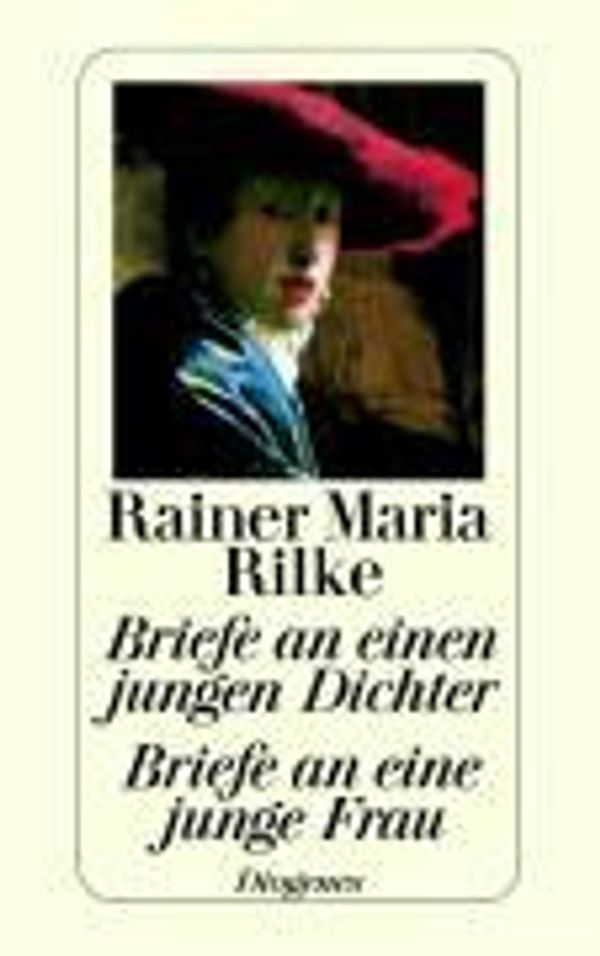
I’ve been reading the book you can see below Briefe an einen jungen Dichter which also contains the Letters to a Young Woman and an essay by Romain Rolland on Rilke.

The essay fascinated me even more than the letters.

Romain Rolland and Rilke were living within walking distance from each other in Paris, Rilke in the Rue Campagne-Première 17 and Romain Rolland on the Boulevard Montparnasse 162. For years they were living close to each other without knowing each other. They were introduced by Stefan Zweig. To read the names of all their mutual friends with whom they met regularly is quite amazing. Stefan Zweig, André Gide, Emile Verhaeren, Auguste Rodin, are but a few. Rilke and Rodin were very close friends and it’s interesting to read how different the two were. Rolland also mentions what an unhappy childhood Rilke had. From 10 to 16 he was at a very strict Military Academy and one can imagine how horrible this rigid discipline must have been for someone so sensitive.

Rolland and Rilke met before WWI and when the war broke out, Rolland left for Switzerland and lived in Geneva while Rilke left for Germany and was finally drafted in 1916. This is something I had either forgotten or didn’t know. Luckily Rilke didn’t have to fight and was working in an archive instead but he lost all his belongings which had remained in his apartment in Paris. His things were confiscated and auctioned, everything, including his manuscripts. What a nightmare. Gide tried to help but it was too late. Nothing was returned to the owner.

After the war Rilke came to live in Switzerland as well, not far from where Romain Rolland stayed. Most of the time Rilke lived at the Château de Muzot.

By that time Rilke’s health had deteriorated considerably and he had to stay frequently at the sanatorium Valmont where he also died. Only shortly before he died it was discovered that he had suffered from some very rare form of leukaemia.

Reading the letters with all this in mind, was quite touching.

A young aspiring poet had written to Rilke asking for advice and over the years Rilke would guide him with his letters. The idea of art and the artist that Rilke describes in his letters is so far from what we see nowadays.

Rilke’s idea of an artist is almost religious and deeply spiritual. First, he advises the young poet, he must try to find out whether being a writer is really his deepest wish. Only if he isn’t able to exist without creating, he should pursue this career. Everything else isn’t true to the soul and will only achieve to produce things devoid of meaning.

Art is good when born of necessity.

He also tells him that loneliness and solitude must be endured. They will transform the soul and lay bare its depth and truth. Most people look for an easy way of life but that isn’t the way of the soul. The soul strives for the difficult and serious.

In one of the first letters he tells the young man to read the novelist that is closest to his, Rilke’s, heart, Jens Peter Jacobsen. I have read Jacobsen’s Niels Lyhne when I was very young, shortly after reading The Notebooks of Malte Laurids Brigge, and I can confirm that it is deeply moving and engaging.

The artist described by Rilke is a pure being of the utmost integrity. This isn’t the realm of creative writing schools and MFA’s (I don’t want to criticize these at all. Our time is a different one). The art created by a being who is capable to endure loneliness and dive into the abyss of the soul or embrace the beauty of inspiration, has a deeply spiritual dimension.

I liked the gentleness of Rilke’s tone, how each and every single word is chosen carefully and especially for the one receiving the letter.

It is interesting to read what he writes about criticism and how to live with being criticized.

The advice he gives in his letters is true and precious but I was, once more, astonished, how much Rilke’s German is different form the one written and spoken nowadays. German isn’t a language that is supervised by a body of language authority like French. The German from only a few decades back sounds quite different from the one in use now.

Rilke is a deeply emotional man and so is his writing. There isn’t the tiniest trace of irony or sarcasm which is a deliberate choice. Rilke writes that a young aspiring poet must stay away from irony as he must explore things that are very serious and deep. Irony will, according to Rilke, never reach the deepest layers of the soul.

Another interesting aspect was what he said about love and men and women. Love, like loneliness, must be endured, he states, it is the most difficult thing in the world. He further says that he doesn’t think that men and women are all that different and that he thinks that women sadly are not yet fully accepted as human beings and that is not how it should be. They should be able to be whole and independent without the need of a man.

It made me a bit sad to read the letters, the world in which they have been written, is long gone, and our values have so much deteriorated.

Rainer M. Rilke: Briefe an einen jungen Dichter - Briefe an eine junge Frau, Buch

A Dune Readalong

I discovered yesterday that Carl V from Stainless Steel Droppings, Kailana from The Written World and The Little Red Reviewer will host a group read of one of the most famous Science Fiction novels there is.
I always wanted to read Dune but never really got around to doing it. Now is the time.
The book is divided into three parts and so the readalong will take place over a period of three weeks, starting this Friday, July 1st.
Details can be found on Carl’s blog.
I’m looking forward to it.
Will you join as well?

Cees Nooteboom: Mokusei! (1982)

Cees Nooteboom’s novella Mokusei! Een liefdesverhaal – Mokusei! a Love story is my second contribution to Iris’ Dutch Literature Month. It is currently out of print in English but there are German and French translations available.

Cees Nooteboom is one of those writers who simply never disappoint me. While reading this short book (70 pages) I was once more wondering how he does it. How can he write such stories that are feathery and light and still so full of meaning. His writing is inventive and informative, playful and deep, beautiful and melancholic. Apart from Nooteboom I know only the Italian writer Antonio Tabucchi with a similar style.

Arnold Presser comes to Japan to shoot pictures of a woman in a Kimono standing in front of Mount Fuji. He has a image of Japan in his mind that is very idealized. He thinks, he knows what the real Japan is like. It is the Japan of Kimono’s, Basho’s Haikus, Hokusai’s paintings, the Japan of the many views of Mount Fuji, the Japan of rigid traditions and beautiful gestures. The modern Japan which adopts Western traditions, buys into consumerism, the big cities, the traffic and pollution are not Japan for him. Same as he has fixed ideas about the country he knows what a beautiful Japanese woman has to look like. It takes a while until he finds the perfect model but then he discovers Satoko.

He photographs her and falls in love with her. Their story will last five years. Five years in which they are more separate than together, five years of secret love-making and intense moments in which she will never tell him about her life, never introduce him to his parents. Presser has three names for her, her real name Satoko, the one he calls her to himself, Snow Mask, that implies that he cannot read her expressions and the term of endearment he uses when he calls her, Mokusei. Mokusei is one of the rare Japanese flowers with a scent and seems to perfectly fit his mysteriously withdrawn lover.

Mokusei! is masterful for many reasons. It’s a short, intense and tragic love story, and a meditation on Japan and the images and ideas we can have of a foreign country. What is so amazing is that Nooteboom writes at the same time about an idealized Japan, the real Japan and manages to adopt the Japanese writing style. The concept of wabi sabi pervades this novella on every page. There is a scene in which Presser goes for a walk in a garden and sees a dead leaf hanging not on a branch but on a torn spider web. This image captures beauty, fragility and perishability.

Mokusei! is a beautiful and profound piece of writing and I am glad I finally read it thanks to Iris’ event.

Tommy Wieringa: Caesarion (2009)

During powerful winter storms the North Sea tosses its full weight against the coast of East Anglia, and little by little the land disappears into the waves. High atop the cliff, Ludwig Unger lives with his mother; with every winter that passes the sea comes a little closer.
Ludwig is the child of two celebrities, predestined to be the continuation – raised to the umpteenth power – of both their talents. In his mother’s ambitious dreams, he is already a concert pianist. At the moment, however, he plays for a living in cocktail bars, and in the course of three nights he tells his life’s story to a woman.

I wanted to read at least two novels for Iris’ Dutch Literature Month but so far I only managed Tommy Wieringa’s novel Caesarion that I discovered on Lizzy’s Literary Life.

I’m in two minds about Caesarion. I did like reading it but at the same time I didn’t know what it was all about. That’s a peculiar feeling. Usually I either like a book or don’t like it, I know whether it is good or not, but in this case, I only know it was entertaining but…

Something is missing and I cannot put my finger on it. It was original and trite at the same time. An odd combination. I think the worst was, that I had no feeling for Ludwig. He wanted to make us believe that his life was tragic but I simply didn’t feel it, on the contrary, I found him annoying. The voice and the character didn’t seem to go together well and I’m not sure at all whether Wieringa did like Ludwig or not…  If he wanted to portray a sexist jerk, he did well, but if he felt sympathetic towards Ludwig, he failed.  At the same time one could ask whether Wieringa did intentionally choose to portray gender bias or whether it was rather accidental.

At the beginning of the novel Ludwig is on his way to England to a funeral. In the evenings he plays the piano in a bar, meets a woman and tells her the story of his life. Ludwig was born in Egypt, his mother, a former porn star, has been left by his father, an eccentric egotistic artist. They live in Alexandria until his mother decides she wants to go back to Europe and packs all their belongings. They first go to the Netherlands, his mother’s home country, where she isn’t welcome. She goes to England, leaving Ludwig behind but eventually has him follow her to East Anglia where they will live in a cottage precariously close to the eroding cliff.

The relationship between mother and son is quite strange, incestuous one could say, as Ludwig desires his mother. She loves to dress and make him up like a girl and her touch and warmth arouse him. It seems that she isn’t even aware of this but he is and struggles to get free. One attempt to free himself is to engage in ways that are meant to assure he becomes more traditionally masculine and that is why he joins a rugby team.

When Ludwig turns twenty the thing that everyone expected happens, their house is swiped off the cliff in a storm. At the same time Ludwig finds out about his mothers past as a porn star and even sees the movies. Shortly after this his mother leaves for L.A.. Ludwig manages to track her down and follows her everywhere, pretending he wants to take care of her. His mother is working in the porn industry again and Ludwig disapproves a lot. He meets a nice girl but she breaks up with him when he follows his mother to Vienna and then Prague. Ludwig’s constant nagging depresses his mother and one day she tells him that he has to leave, she cannot stand his accusing presence anymore.

Ludwig starts drifting through life, working as a bar pianist, engaging in love affairs with elderly and old women until he reunites with his mother again after a few years. She is living in Tunisia and has left the porn industry or rather, she has been fired. The reason for this is a oozing spot on her breast which is obviously malignant. Ludwig’s mother must know that it is cancer but she is in denial and even though she finally gives in and has it diagnosed she doesn’t have it treated traditionally but starts travelling through Europe looking for a magical cure. The moaning Ludwig follows her everywhere. When it becomes obvious that his mother will die, the two finally settle down in the Netherlands.

The last chapters lead Ludwig to Panama where he tries to find his father.

It is a very readable book and I would like to read Wieringa’s highly acclaimed Joe Speedboat but I didn’t really get the point of Caesarion. There were so many parts that felt familiar, where I was thinking, that I had read this before. The last part in Panama, for example, reminded me of Max Frisch’s Homo Faber.

The part I liked the most and the one that touched me was the beginning in England. It was done very well but from then on the novel started to turn into hotchpotch. I was wondering whether he wrote this novel over a long period, stopping in between, which could explain why it didn’t feel seamless.

Overall it seemed to have been a re-imagining of the tales of Oedipus and Odysseus. I didn’t like Ludwig at all but then again, is it necessary to like the main character? I don’t think so, but I hated the way he desired his mother and at the same hated her and sabotaged everything she wanted for him (becoming a concert pianist, for example)  or whatever she did for herself. It is as if he blamed her for having been left by his father and for being too attractive. And at the end, when she falls ill, he behaves as if it was justified and she deserved it. All her life she has been exploited because of her body and now this body turns itself against her, and all Ludwig does is hate her for not letting anyone cut her open.

If you are interested in another view, here’s the review from A Common Reader.