The Best Books I Read In 2023

This is a bit of a déja-vu situation. At the beginning of last year, I returned to blogging with my best of list and then wrote a post for January in Japan. I had every intention of blogging regularly again but so many things went wrong, so many heartbreaking things happened. GLM was the date I had fixed to finally return but plans were made without me. I wish I had at least been consulted or informed . . . It felt like having climbed a mountain only to be pushed down again upon arrival. In many ways, that fit well into the overall theme of 2023. What a sad and exhausting year. But enough of this. Lets get to my list.
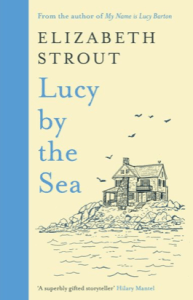
At the beginning of 2023 I went through an Elizabeth Strout phase, reading many of her books. I didn’t get to the Olive Kitteridge books or they might have been on the list but I read all the Lucy Barton novels and really loved them. Reading them felt like listening to someone tell you about their life. I can’t remember all the details but I remember how much I enjoyed them.

Maybe one could say, this was the year of life stories as I’ve read a few of them this year. Marzahn Mon Amour was one of my favorites. At forty, the author, an unsuccessful writer,  decided to become a chiropodist and was working in Marzahn. Marzahn used to be the biggest prefabricated housing estate in the former GRD.

When I visited Berlin, I went to see Gropius Stadt, which is similar, but not as huge. The atmosphere in Marzahn is quite oppressing, yet the people Katja Oskamp meets are full of life, colorful, eccentric. I highly recommend this book. I read it in German, so I don’t know who translated it but since it was published by Pereine, I’m sure it was done very well.

I don’t think that Volker Weidermann’s  Mann vom Meer has been translated yet but since other books by Weidermann have, it is posible this will be picked up by an anglophone publisher. I liked the idea and the book very much. It looks at Thomas Mann’s life and novels by focusing on his love for the sea. It contains a lot of quotes from his masterpieces like Buddenbrooks or Der Zauberberg. The book made me want to reread and read everything Mann has written. I also learned quite a few things about his life I didn’t know or had forgotten.
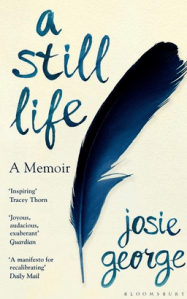
Josie George suffers from a condition that causes her incredible pain. She’s had it since she was a child and it has affected every area of her life. Most days she can barely walk. Doing things takes immense strength, leaving her exhausted. But A Still Life is more than an account of an incurable illness and the frustrations that come with it (also regarding doctors and medicine). It’s a story of remarkable resilience and of someone who is able to capture the beauty of the smallest things. The book is full of beautiful descriptions and observations. Its wise and gentle and ultimately very uplifting.
Whenever I read one of Eduard von Keyserling’s novels, it is bound to be among my favorites. I just love his writing so much. Abendliche Häuser is another one of those mournful tales of a dying society. In this novel, duels and class consciousness are slowly perceived as being less honorable than absurd. At the heart of Abendliche Häuser is a strong, independent young woman who follows her own heart and convictions. It seems this novel, which was published in 1914, was translated into English in 1927 but I don’t think it’s still available.
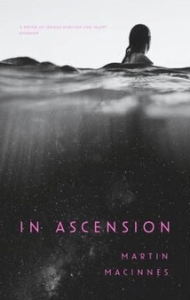
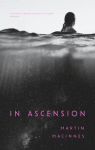
In Ascension is such a haunting novel. I always find it fascinating to read about people who are so passionate about what they are doing. The protagonist of this novel, Leigh, is a microbiologist. She first joins a team that explores an unexplainable deep vent in the ocean and then  goes on a space mission. The story of this book is captivating but what I liked even more was the atmosphere. It’s hard to describe but it’s so lovely and amazing to see and experience the world trough Leigh’s eyes. Some parts towards the end reminded me a bit of the movie Gravity.
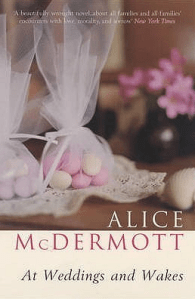
At Weddings and Wakes was my second Alice McDermott novel and once again, I was in awe of her writing. Is there anyone else who writes scenes like she doe? Her style is so amazing. But I also like her protagonists and settings. Most of her books are set in Brooklyn among Irish Catholic immigrants. Needless to say, religion plays a role. The family in this story is very eccentric which I enjoyed a lot. It was often like reading about big Italian families and since I’m half Italian, many characters felt familiar.

Cold Enough For Snow might be my favourite novel of 2023. It’s a bit surprising as initially I didn’t think it was all that good. Funny enough, I’m still not sure it is but I loved it. I loved it because it spoke to me and reminded me of places and things that are important to me. It also reminded me a bit of some of Tabbucchi’s stories. The main character and her mother are on a vacation in Japan. The descriptions are beyond beautiful. But there are other descriptions of places which I liked even more. The protagonists mother is from Hong Kong and there are passages describing the beauty of Hong Kong that capture it exactly as I remember it. The landscape around it, the mountains, the lights and skyscrapers and that balmy air I’ve experienced nowhere else. The book also explores a theme that fascinates me a lot – the way families tell their stories and how sometimes they tell various versions of a  story. In the end, nobody knows, which is the true story.
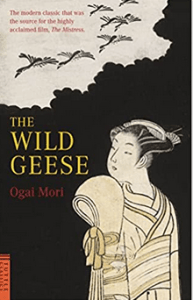
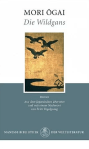
Ogai Mori’s The Wild Geese was the only book I reviewed last year. Here’s a snippet from my review:

What impressed me the most, is how immersive this story was. Reading it felt like making a trip to a distant place and time. The imagery, themes, and story are so haunting, I don’t think I’ll forget them any day soon.

The link  to the review is here.

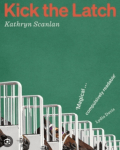
Kick the Latch is such a unique book. Until you pick it up for yourself, you’ll probably never understand what makes it so great. It is based on a series of interviews that Katrhryn Scanlan did with Sonia, a horse trainer from the Midwest. Scanlan herself stays completely out of this, also its not rendered in interview form but like short and very short accounts of a very unique life and a world most of us haven’t experienced. To say, Scanlan stayed out of the story is misleading though. She’s not present as a character or the interviewer but she is very present in the way she chose to tell this story, in the way she condensed, chose titles for even the shortest chapters. It’s brilliant. I loved the book as much for its style and form as for the subject matter. Its touching, moving, heartbreaking and infused with a strange, wild beauty.

I might not have read as much as I usually do, but I’ve read a few books, especially at the beginning and towards the end of the year, that I’m not likely to forget.

How about you? Which books stood out for you?

The Wild Geese by Ogai Mori

One of the things I missed the most during my blogging hiatus was Bellezza’s Japanese Literature Challenge. Whenever I participated in the past, I discovered books that made my end of year list. Obviously, I could read Japanese literature, of which I’m very fond, all year long, but we all know how it goes, when you’re a mood reader or “magpie reader”, as I call myself, you pick what speaks to you at a certain time and forget everything else. Unfortunately, as the last two years have shown me, it’s not a successful approach to reading. At least not for me. I need to have a few loose plans.

Ogai Mori’s novel is a recent acquisition and since I was keen on reading older Japanese literature, I felt it was a fitting choice for the challenge.

Ogai Mori (1862 – 1922) was an Army Surgeon, novelist, and translator. From 1884 to 1888 he studied medicine in Leipzig, Münich, and Berlin. In Germany he discovered the literature of many European countries and later translated classics like Shakespeare, Schiller, Goethe, Kleist, Rilke, Daudet, Tolstoy and many more into Japanese.

The Wild Geese, (or Wild Goose) is considered his masterpiece. It was serialized between 1911 and 1913 in the Japanese newspaper Subaru and finally published as a book in 1915.

The story is told by an unnamed narrator who is friends with the main protagonist, Okada, a medical student at the university in Tokyo. They both live in a boarding house for medical students. The story is set in 1880, during the Meiji era, a time, when Tokyo was no longer called Edo but wasn’t yet the Tokyo we know now.

Otama is a young woman who is very beautiful but also very poor. She and her father who raised her as a single parent are very close. There isn’t anything she wouldn’t do for him. When her marriage to an influential man is annulled, she accepts the position as concubine of a rich usurer. This deal allows her father to live comfortably in a very beautiful house, surrounded by nature. Otama herself lives in a side street in Tokyo with a young maid. She has no contact to people as they all avoid and ostracize her. One day she sees Okada from her window and they both feel a strong attraction. Will Otama be able to break free? If you’d like to find out, you’ll have to read the novel.

The Wild Goose is as subtle as it is beautiful. I liked it very much. It’s rich in detailed descriptions of the culture and customs of the time. Flora and fauna play important, often symbolic roles in this story. Throughout the novel we find descriptions of nature that reinforce the mood and the themes of the novel. One of the most powerful examples of nature descriptions was the episode of the wild geese which takes place towards the end of the novel. I was wondering from the beginning why Ogai Mori chose this title as it didn’t seem to make sense. When it was finally revealed, it was quite shattering.

While Mori Ogai is excellent at describing nature, he is also a very fine psychologist and a keen observer of relationships. The friendship between the narrator and Okada, and the relationship between Otama and her father a beautifully rendered.

This book is set during a time when the Japanese society was undergoing profound changes. It doesn’t look like things were changing for women though. To read about Otama is quite upsetting. She has the misfortune of being poor but beautiful which attracts powerful men who don’t have any intention of getting married to her and don’t care that this pushes her to the fringes of society. She might be the mistress in her own home, but as soon as she leaves the house, she’s an outcast.

What impressed me the most, is how immersive this story was. Reading it felt like making a trip to a distant place and time. The imagery, themes, and story are so haunting, I don’t think I’ll forget them any day soon.

I didn’t read the English, but the German translation of this book, which seemed well done. It was published by Manesse in their Bibliothek der Weltliteratur series. If you know the series, you know how beautiful and luxurious these small books are.

This post is a contribution to Bellezza’s Japanese Literature Challenge 6

The Ten Best Novels I Read This Year

Happy New Year. I hope you’re all doing really well and that 2023 will bring you light and joy.

I’ve been gone a while. Over a year, to be precise. Since summer I knew I wanted to return to blogging, if only to help myself remember what I’ve been reading. It’s easy to remember the books that make our top ten lists at the end of the year but all the others? Not so much. There are a few titles I saw on other people’s lists that I read too but until I read those lists, I’d totally forgotten about them. Needless to say, they won’t be on my list. Very often this has nothing to do with their quality at all. It has more to do with me as a reader. I’ve been an extremely distracted reader this year. I read far too many books in parallel and abandoned far too many. Nevertheless, the ten novels on my list not only captivated me, but they stayed with me.
I’ve read a lot of memoir and other nonfiction books this year. as well Also some poetry. More than usual, but to keep the list short, I’m only mentioning the novels.

Über Menschen by Juli Zeh

This chunky book hasn’t been translated yet. Possibly, because it was very controversial. It tells, among other things, the story of a woman who befriends a Neo-Nazi and tries to understand where he’s coming from. But it’s also set during the beginning of 2020 and the narrator flees to the country to avoid strict lockdown rules. I loved it for the writing. They way Juli Zeh describes people and places is just so immersive. I also found it courageous.

Open Water by Caleb Azumah Nelson

This was not what I expected. I had high expectations but more for the story, less for the writing. The stellar writing was a huge surprise. The rhythm of the book conveys the music the protagonist listens too. Each short chapter has its own flow, own rhythm. Some sentences, images are repeated, some sections meander, others are written in a staccato rhythm. The story, too, is beautiful and heartbreaking. As a woman, I’m often afraid to walk through certain neighborhoods as it can be scary to find yourself totally alone facing a hostile looking stranger. Now I know that young black men must feel like this just as often.

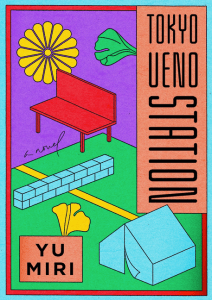
Tokyo Ueno Station by Yu Miri

What a haunting book. And so unusual. I don’t want to give away too much, I will just say that it tells the story of a homeless man, of social invisibility, using a very ingenious approach.

Passager de la nuit by Maurice Pons

This hasn’t been translated. Too bad as I loved it. It shows a side of the war of Algeria, or rather how the war played out in France, I was less familiar with.

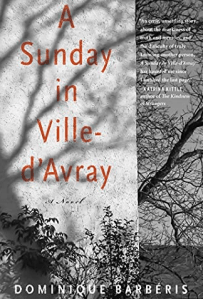
Sunday in Ville-d’Avray – Un Dimanche à Ville-d’Avray by Dominique Barbéris

A dreamy, lyric, short novel with a rich mood. Two sisters meet, speak about their childhood, their dreams, and one confesses a secret love story.

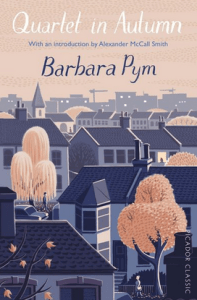
Quartet in Autumn by Barbara Pym

Not one of Pym’s lighter novels, this story of four people who might not exactly have had the life they wished for, is still typical Pym. As usual, the character portraits are rich and detailed and the story, while sad in places, isn’t depressing. I liked it a great deal. She’s such a sharp observer.

In a Summer Season by Elizabeth Taylor

Another novel from a sharp observer. This might not be my favorite Taylor novel but I enjoyed it nonetheless. The main character, a widow, marries a far younger man and it soon becomes clear, she might have made a huge mistake. Wonderful character portraits and a surprisingly enjoyable story.

The Camomile Lawn by Mary Wesley

Such a beautifully nostalgic novel. It begins during a summer holiday at the outbreak of WWII which will change everyone present. Fifty years later, the protagonists meet again for a funeral. It’s not a very straightforward novel but very immersive nonetheless.

The Fortnight in September by R.C. Sherriff 

I’m so glad I saw this mentioned on Twitter and elsewhere several times as I wouldn’t have discovered it on my own and that would have been such a shame. I read it in September and loved every page of it. Such a gentle, delightful book that tells of the holiday of an ordinary family and of the little joys and woes the holiday brings. Even though this book came out in 1931, most of what Sherriff describes is still relatable now. A timeless classic of a family holiday.

Mrs England by Stacey Halls

I can’t say that this historical novel was flawless, yet I still had a book hangover after finishing it, wishing it had been longer and looking for other, similar novels after putting it down. Mrs England tells the story of an Edwardian marriage and its dark undercurrents. The ending didn’t work for me, but the way Stacey Halls captured Edwardian England was so descriptive and captivating.


When I look at my best of list, it wasn’t such a bad reading year, but being able to easily whittle it down to ten, says a lot about the year as a whole. Normally, I always include a few crime novels in my end of year lists, but this year I managed to pick one dud after the other or just books that didn’t speak to me at all.

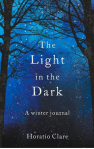
I decided to focus on novels in this post, but I didn’t want to end without mentioning my favourite memoir of the year, Horatio Clare’s The Light in the Dark, a Winter Journal. It’s about winter, the Yorkshire countryside, nature, depression and, as the title says, the light in the dark. Stunningly beautiful. Maybe my favourite book of the year.


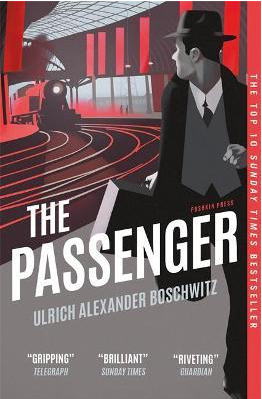
The Passenger – Der Reisende (1939) by Ulrich Alexander Boschwitz -Literature and War Readalong GLM November 2021

In 2015, Peter Graf, the German editor of The Passenger, read Boschwitz’s manuscript for the first time. The Passenger was written in 1939, right after the November pogroms described in the novel; its English translation came out the same year in the UK. The US edition followed in 1940. Given the status of the writer, a German Jew who fled Nazi Germany in 1935, and the nature of the story, it never stood a chance of being published in Germany at the time. But post-war Germany was equally reluctant to publish the novel, even though Heinrich Böll was one of its most enthusiastic supporters. It took many decades more until Peter Graf decided to edit and publish the book. The English retranslation followed and finally The Passenger became a publishing success. During his lifetime, Boschwitz published another novel. In a Swedish translation, if I’m not mistaken. His third and final manuscript was lost together with the author. In 1942, then only aged 27, Boschwitz was on a ship back from Australia to the UK when they were hit by a German U-Boot. 

The Passenger is one of the earliest German books about pre-war Germany and the November pogroms. Boschwitz who was Jewish lived in the UK at the time. He’d fled Germany in 1935 and first went to Paris. Elements of his story and the story of his family are described in the book. The pogroms were a huge shock for him. The Jews who were still in Germany in 1938 were sent to concentration camps, their property was confiscated. Within a few days they lost everything. Many tried to flee but the surrounding European countries were less than welcoming.

Otto Silbermann, the main protagonist of The Passenger, is one of those Jews who lose their company and wealth, and almost get arrested. Panicked, he flees to the train station and boards a train. The first chapters show him chasing an associate who conducts a last transaction for him. The man who isn’t Jewish, cheats him out of most of his fortune, but Silbermann is still left with 40,000 mark, an equivalent of 170,000 Euro. Decidedly enough to start a new life somewhere else. So, purely based on the circumstances, things do not look catastrophic for Silbermann. He saved his life and a small fortune. Moreover, his Arian wife can stay with her brother and his son is safely in Paris. All Silbermann must do is cross the border into Switzerland or Belgium. But while the circumstances aren’t totally against him, Silbermann is his own worst enemy. He waited too long, thinking he wouldn’t have to share the fate of all the other Jews. One gets the impression he doesn’t really see himself as Jewish because he doesn’t look Jewish and isn’t religious. To assume there’s some kind of rationality, albeit a warped one, behind the persecutions, is his biggest error. Like most totalitarian regimes, Nazi Germany has no real reason for its actions; they are purely based on irrational pretexts and scapegoating. Silbermann lived with a false sense of security for too long and once it becomes apparent that he is in danger too, the shock is so immense that he isn’t capable of clear thinking. What the reader witnesses from that moment on, is one failure and one wrong decision after the other. 

I’ve read a whole series of WWII books for this GLM (due to personal reasons I couldn’t review them) and this was by far the toughest of them all. It’s so claustrophobic. The atmosphere of rising fanaticism, the way everything closes in on Silbermann is depressing. And the role ordinary people played to support this madness is mindboggling. Silbermann meets a few good Germans, but the vast majority is either actively persecuting Jews, supporting the persecutors, or cowardly looking the other way. 

One of the most crucial moments in the book is an encounter between Silbermann and another Jew who is easily recognizable as Jewish. He asks Silbermann for help, and just like some of the Germans Silbermann asked himself, he denies it because he’s scared. This act of cowardice robs him of his last precious belonging – his self-esteem. Until that moment he thought of himself as very different, now, suddenly, he knows he’s not. 

The Passenger is an amazing document of a specific moment in Germany’s history. And it’s an amazing portrait of a very flawed man. I was wondering, why Boschwitz chose Silbermann as his protagonist and couldn’t help but wonder whether he wanted to say, that especially the atypical, irreligious Jews who stayed in Germany, unconsciously supported the rising madness in thinking they would be exempt. Or maybe he just wanted to say that it is human nature to go the way of least resistance.

I know that I didn’t do this book justice and so I’m glad several other people who participated in the readalong wrote more eloquent reviews. 

I’ll be collecting them here:

Kaggs’y Bookish Ramblings


I’m taking this opportunity to apologize if I haven’t been very active this year and not visited and commented on your blog posts. Personal circumstances sadly made it impossible.

Welcome to German Literature Month XI

The second decade has begun! 

To those who have been with Lizzy and me in previous years, good to see you again. For those new to this month of sheer indulgence in all things German(-language) literature, welcome.  As always, there is just one rule and that is:

You may read anything you want, in any language you want, as long as your material was originally written in German.

Reviews and features on any platform are welcome. Adding them to the linky over at germanlitmonth.blogspot.com lets everyone see what is going on and directs more readers to your review. Please use the hashtag #germanlitmonth when publicising the event or reviews on social media.

Don’t know what to read? Check out the author indices from previous years on germanlitmonth.blogspot.com for a wealth of ideas, or you can follow some or, if you’re feeling adventurous, all of the prompts for this year’s programme detailed in this year’s announcement post.

The main thing to remember is that German Literature Month is neither a competition, nor a challenge. It is an opportunity to enjoy some great literature within a community of fabulous readers and reviewers. 

Let the reading begin!

Announcing German Literature Month XI

German Literature Month is back, this year rolling into its second decade with a new style badge, featuring the glories of Stuttgart City Library. (Link to:  https://unsplash.com/s/photos/stuttgart-library ) I think you’ll agree, it is an aspirational building, with bookshelves and reading sofas to die for!   It serves as a reminder to start seeking out the literary treasures, originally written in German, on your shelves, prepare your comfortable reading nook and discover some great reads during the month of November.

What are we planning this year?  Like last year, there will be two parallel programs.

I will be focusing on books set during the run-up to WWII, the war itself and its aftermath, including historical fiction set during that period. 

Lizzy offers a tour of German-speaking countries and more besides. All timescales, genres and destinations are valid choices  provided the work was originally written in German.

Week 1 November 1-7  From or set in Austria

Week 2 November 8-14 From or set in Germany

Week 3 November 15-21 From or set in Switzerland featuring Dürrenmatt Day on 18.11.2021 to commemorate his centenary

November 22-28 Elsewhere

November 29-30 Here, There, Anywhere

In addition, there are a couple of readalongs.

11.11.2021 Inventory of Losses – Judith Schalansky (hosted by Lizzy)

26.11.2021 The Passenger – Ulrich Alexander Boschwitz (A Literature and War readalong hosted by Caroline)

As always you may take up some or all of our reading prompts or do you own thing entirely. Whatever you do, have fun. (That’s an order. 😉)

Celebrating the 15th Anniversary of #Quick Reads

I cannot think of a time when I haven’t taken reading and writing for granted. Of course, I was aware that not everyone could read but I don’t think I knew what that meant in numbers. One in six adults in the UK find it hard to read, and one in three do not read regularly. That’s such a shame as reading isn’t only educational, but can be so much fun and comfort. You can travel to new places, meet people you would never meet otherwise, learn new things, expand your knowledge.

Quick Reads, which celebrates its 15th anniversary this year, was developed by The Reading Agency. The programme which was launched in 2006, has helped many an emergent reader. The clever idea behind Quick Reads is to provide readers who aren’t as fluent, with engaging, enjoyable short texts that will not take too much time or effort to get through. And they are affordable. Each title only costs 1£. This year, for every book bought before 31 July 2021, a free book will be donated to a UK organisation helping those who aren’t as confident readers or lack access to books.

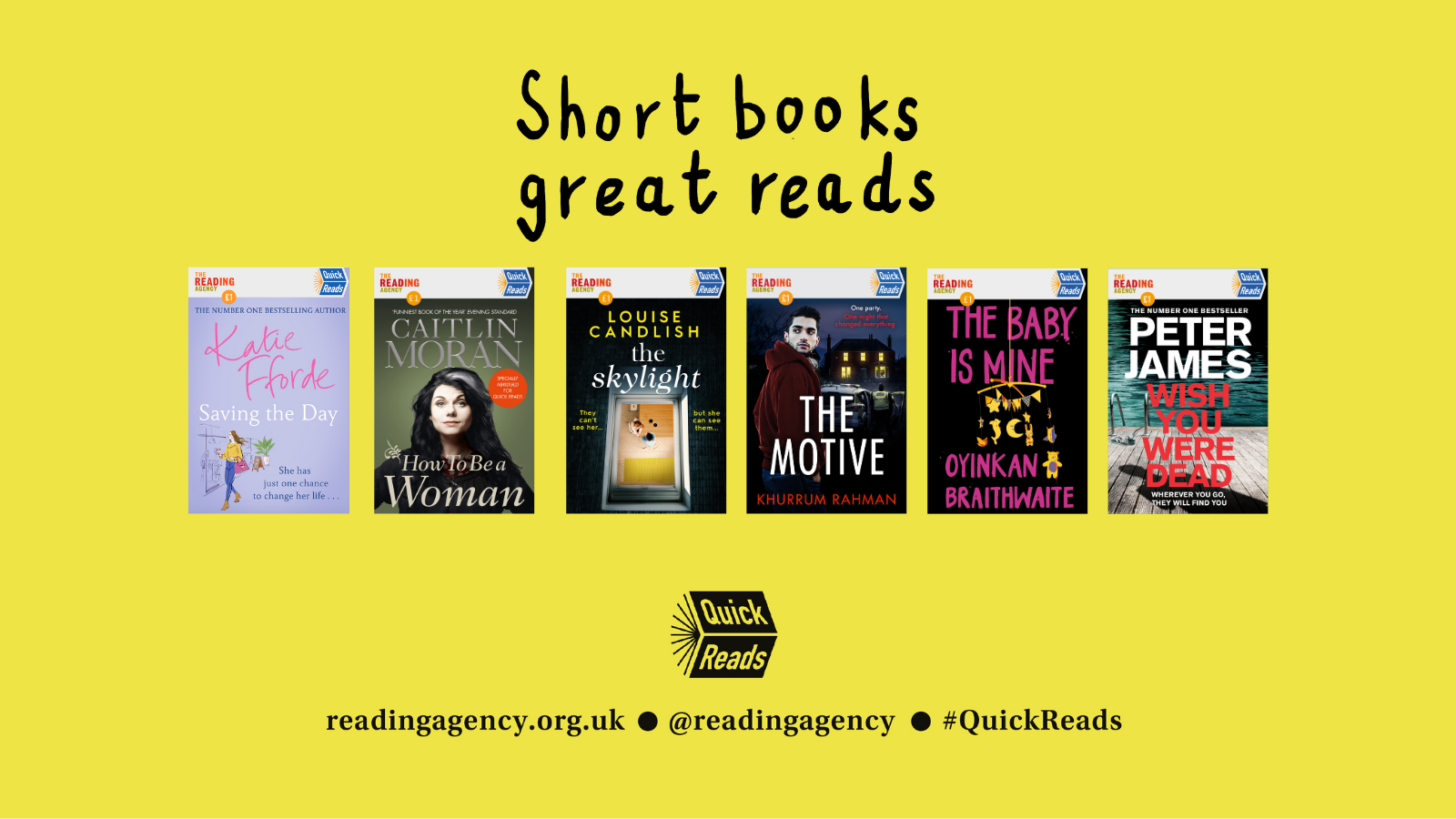
This year’s short books include:

OYINKAN BRAITHWAITE: The Baby is Mine (Atlantic)

–          Oyinkan Braithwaite’s follow-up to her Booker nominated debut sensation My Sister, the Serial Killer – a family drama set in lockdown Lagos (The Baby is Mine)

LOUISE CANDLISH: The Skylight (Simon & Schuster)

–          a dark domestic thriller from British Book Award winner Louise Candlish (The Skylight), who thanks reading for setting her on the right path when she was ‘young and adrift’ 

KATIE FFORDE: Saving the Day (Arrow)

–          an uplifting romance by the much-loved Katie Fforde (Saving the Day), who never thought she would be able to be an author because of her struggle with dyslexia

PETER JAMES: Wish You Were Dead (Macmillan)

–          the holiday from hell for Detective Roy Grace courtesy of long-time literacy campaigner and crime fiction maestro Peter James (Wish You Were Dead)

CAITLIN MORAN: How to Be a Woman, abridged (Ebury)

–          a specially abridged version of the feminist manifesto (How to Be a Woman) by Caitlin Moran: ‘everyone deserves to have the concept of female equality in a book they can turn to as a chatty friend.’ 

KHURRUM RAHMAN: The Motive (HQ

–          an introduction to Khurrum Rahman’s dope dealer Javid Qasim (The Motive), who previously found the idea of reading a book overwhelming and so started reading late in life, to find ‘joy, comfort and an escape’ )

*******

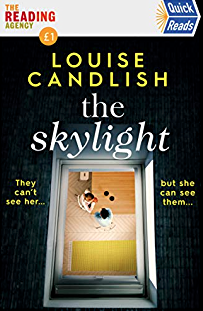
I’m very grateful to MIDAS PR for offering one of the titles for review. I chose Louise Candlish’s The Skylight because she’s an author I enjoyed previously.

The Skylight tells the story of Simone who watches her neighbour’s through their skylight from her bathroom window. They have no idea she can see them as from their flat it looks like the window is opaque. One day, standing at her window, spying, Simone sees something she didn’t really expect. It infuriates her so much that she decides to take revenge.

If you’d like to know what she’s seen and how the revenge goes, you have to read the novella for yourself. I thought it was very entertaining and offered a few unexpected twists and turns. I really enjoyed this short book. I might pick up a few other Quick Reads titles in the future as they are excellent introductions to an author’s work.

A book like this, short but entertaining, would have helped me during my reading slump at the beginning of the year. Now I know, where to look, should it happen again.

Thanks again to #QuickReads, @midaspr and @readingagency