Literature and War Readalong January Wrap Up: Strange Meeting

I just wanted to thank all of those who have participated either through reading, commenting or reviewing Susan Hill’s Strange Meeting. I think it was quite a success and everybody liked the novel. Various comments either on my or on other sites showed that there is a great interest in this novel and in the topic of WWI in general. I’m glad I chose a succession of WWI novels to start with as it will be interesting and thought-provoking to compare them.

Susan Hill’s novel is unique in so far as the biggest part of the novel takes place in a rest camp, off the front line. We approach the trenches very slowly. Erich Maria Remarque’s Im Westen nichts Neues aka All Quiet on the Western Front is much harder to read because of the importance of combat. We have a sequence in which Paul Bäumer is on leave and he does feel as lost as Hilliard on his stay in England. The isolation of the soldier who returns from combat to his home is a common theme. It’s very hard to imagine what it must have been like. They couldn’t speak and no one wanted to listen anyway.

Birdsong came to my mind as well, while reading. It’s an outstanding novel in many ways as good as or better than Pat Barker’s Regeneration Trilogy. There is much more emphasis on combat in Birdsong. Regeneration and its sequels are mostly exploring shell shock.

When reading the next novel in the readalong we have to bear in mind that the two main characters in Strange Meeting were both officers. This is important as this will not always be the case in all the novels we read and the life of an officer and a simple private was certainly much different. The main character in All Quiet on the Western Front is just a simple private.

One topic that we discussed and which I found interesting was the question whether Barton’s very explicit letters wouldn’t have been censored. I was wondering as well and luckily Susan answered this question by pointing out that Barton actually writes in one letter, that – because they are officers – their mail isn’t always censored.

Danielle pointed out in her post how very young Susan Hill was when she wrote this book. I think this explains the very fresh tone of Barton in some places. I had totally forgotten that all the Susan Hill books that I have read so far were the work of a much older woman.

Anna’s quote in her review reminded me that a big part of the book is dedicated to the devastation of the earth, the landscape, the animals. This is an important part and has also been emphasized in the comments. The French landscape still bear traces and I am not only talking of the memorials and cemeteries. The trenches were long, deep, the constant shelling ripped the earth apart. The horror of this war has not only wiped out a generation of young men but transformed and marked the earth forever.

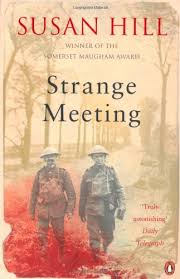
Susan Hill: Strange Meeting (1971) Literature and War Readalong January


John Hilliard, a young subaltern returning to the Western Front after a brief period of sick leave back in England, finds his battalion tragically altered. His commanding officer finds escape in alcohol, there is a new adjutant and even Hilliard’s batman has been killed. But there is David Barton. As yet untouched and unsullied by war, radiating charm and common sense, forever writing long letters to his family. Theirs is a strange meeting and a strange relationship: the coming together of opposites in the summer lull before the inevitable storm.

Strange Meeting, is set in the English countryside and the trenches in France, at the beginning of WWI. The book is divided into three parts. The first is written from John Hilliard’s point of view, the second mostly from David Barton’s and the third could be called the combined one. At the heart of the story is the juxtaposition of two very different themes; the intense and emotionally intimate friendship between John Hilliard and David Barton on the one hand, and the horrors of WWI on the other. The following quotes taken from page 158 illustrate this perfectly well:

“But they (the Germans) must know we are up to something.”

“Oh yes, though that fact is never obvious to High Command, whose faith in the Element of Surprise in the attack is really very touching and quite unshakeable.”

And a few lines later:

“Has it always been like that? Has it always been so easy for you to love people? To get on with them, to bring them out, say the right things at the right time? Have you always made friends as you’ve done out here?”

Whoever is familiar with novels or movies on wars knows that one of these two will die. It is the aim of books and movies on war to show an individual, to pick one person out of an anonymous number and to tell his story. As horrible as it is for us to know that in some offensives – especially in the early WWI ones – far over 100 000 young men were killed in less than an afternoon and millions died senselessly during the course of this war, we still need to be told an individual’s story and not only a huge number, to be touched emotionally. From the beginning of the novel until its end, the shadow of death hangs over these two young people and this is what makes it so touching. We know, one of them is doomed. It’s like a Greek tragedy.

Hilliard and Barton meet in France, during the first summer of WWI, in a bombed out village, away from the trenches and the front line. Hillard has just returned from a short sick leave to England. He is shocked to find his company reduced to a fraction. His commanding officer is drinking and seems to have lost his faith completely.

We lost three quarters of the Battalion in a day and a half. Getting on for two dozen officers. Mayor Gadney, young Parkinson, Ward – all the best. Half of them went because we didn’t get an order telling us the second push was cancelled. They just went on. You were well out of it. I’m glad you were out of it.

But Hilliard’s stay in England was horrible too. He couldn’t sleep, had no one to talk too. He showed signs of  shell-shock, only not enough to not return. The mindless cheerfulness of the people around him who had no idea what it was like to be in the trenches was unbearable. They did neither realize how useless the losses were, nor how futile the missions. The newspapers only gave a purified version and people everywhere were convinced, the war would be over by Christmas. Hilliard was suffering from this feeling of isolation and haunted by the images and smells that were stuck in his mind. He found the smell of roses revolting, the sweetness reminded him of the smell of dead bodies. He would have liked to talk to his sister, the only person from his family he felt close to, but finds her estranged. She is about to get married and he doesn’t approve of her choice until he realizes, there is really no one else left, most other young men are dying in France.

When he returns to France and finds out that most of the men of his company are dead, he also hears that there is a new guy that he will share his quarters with.  They don’t meet directly at first, instead we follow Hilliard into the room that they will share and discover Barton through his things.

The lettering (on the valise) was upright and plain and clear, done in black ink. The leather of the valise still shone, the buckles were not yet tarnished. There was a tortoise-shell backed hairbrush and comb and a slab of chocolat Meunier. A copy of The Turn of the Screw and of the complete works by Thomas Browne, and one of the Psalms, bound in navy morocco. Hilliard reached out a hand towards it, hesitated, drew his hands back.

This passage tells us such a lot in a few words. The new guy is still untarnished, naive, it seems he has prepared himself for a summer camp. Hilliard resents this at first but when he finally meets Barton and gets to know him, he understands that Barton would always have packed the same things, no matter where he would have gone. His belongings mirror his being and how he always tries to see the sunny side of things and make the best of it. Hilliard has never met anyone like Barton. He is cheerful, easygoing, open, direct and very communicative. Even though he is reluctant at first, Hilliard is swiped away by Barton’s exuberance. For the first time in his life he starts to open up to another person and speaks about himself and his feelings.

Part II is mostly told from Barton’s point of view and consists in large parts of letters home to his family. Barton writers the longest letters Hilliard has ever seen. This strikes him as his family sends expensive parcels but short, polite and distant notes.

The two friends are not at the front yet, Barton will still have to find out what life in the trenches is like but he already sees someone killed and feels responsible for the man’s death.

There is something all the men hate about this place. Now, I can sense it myself. Something old and bad and dead, a smell a feeling you get as you walk across the street. It is not simply the bodies lying all about us, and the fact that the guns are firing, it is something else, something…

Part III is set in the trenches and we see a considerably changed and disillusioned Barton who has been sent on a reconnaissance mission on which he has seen people get killed. They know by now that High Command prepares for a big offensive. Since most of these are high in losses their morale is low. Being the new guy,  Barton is sent on several reconnaissance missions without Hilliard who goes almost crazy when he imagines Barton might get hurt or killed. When the offensive finally begins the two friends are separated in the chaos and one of them dies.

Strange Meeting does an incredible job at rendering what it was like to be in France in the summer of 1914. It captures the difference between the relative luxury encountered by the companies who wait off the front line and the ugliness and ordeal of the trenches. Susan Hill describes all the details that we can also find in history books, memoirs and letters. She describes various elements that were typical for WWI, the futility and high losses of the offensives, the chaotic and bad planning, the underestimation of the situation and possible duration of the war. The trenches are rendered accurately. Once they are there we read about the constant shelling, the noise, the rats, the mud, the dirt, the stink, the wetness and the cold.

As accurately as she renders the dreary trenches and the sadness and futility of it all, it is not surprising to read the following in her afterword:

Yet I have not told the whole truth, for although I have accounted for my obsession with the First World War, I am still sometimes troubled by thoughts of those two young men of whom I became so very fond while I was writing about them and who stand for thousands upon thousands of others, so full of youth, strength and bright promise, who were slaughtered in a war perhaps more futile and meaningless than any other in history. I wrote the novel in memory of them and in tribute to them. But I hope it is not thought of only as a novel whose “subject is the war and the pity of war”, for, more than anything else it is about human love.

Srange Meeting is indeed a novel about friendship, much more than about the war. The war serves as a backdrop and an explanation for this very intimate exchange. In civilian life, men were not this close, opening up would have taken much longer. Strange Meeting excels in rendering the intensity of the feelings of two people for one another and the tragedy of their fate. As strange as this may seem, although the description of their feelings for each other can only be called love and Barton does also tell Hilliard that he loves him, I never had the feeling they were gay. Apparently Susan Hill has been asked if Hilliard and Barton did have a physical relationship and she denied this. As said this never occurred to me either. It is really about emotional love. It is sad that we immediately have to think that there must be some sexual attraction involved as soon as two people have very strong feelings for each other.

I read somewhere that it wasn’t possible to say if Strange Meeting had been written by a man or a woman. I would contradict this. I think we can feel that it was  written by a woman. This is mostly due to Barton’s narrative voice and the nature of their conversations. They constantly ask each other how they feel, speak out everything, clarify, share their emotions.

I think Strange Meeting is  a beautiful novel about a unique and fateful meeting that took place during one of the darkest moments of European history.

What did you think?

Other reviews:

Anna (Diary of an Eccentric)

Danielle (A Work in Progress)

*****

Strange Meeting was the first book in the Literature and War Readalong. The next one will be Jennifer Johnston’s How Many Miles to Babylon. Discussion starts on Friday February 25, 2011 .

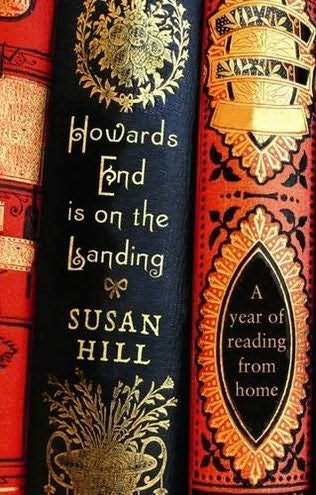
Susan Hill: Howards End is on the Landing (2009) A Bookish Memoir

Early one autumn afternoon in pursuit of an elusive book on her shelves, Susan Hill encountered dozens of others that she had never read, or forgotten she owned, or wanted to read for a second time. The discovery inspired her to embark on a year-long voyage through her books, forsaking new purchases in order to get to know her own collection again. A book which is left on a shelf for a decade is a dead thing, but it is also a chrysalis, packed with the potential to burst into new life. Wandering through her house that day, Hill’s eyes were opened to how much of that life was stored in her home, neglected for years. Howard’s End is on the Landing charts the journey of one of the nation’s most accomplished authors as she revisits the conversations, libraries and bookshelves of the past that have informed a lifetime of reading and writing.

I can’t tell you exactly how long it took to read this book. An evening? Two? Certainly not longer. I devoured it. What is more fascinating to read than a bookish memoir? And written by a writer. On top of that Howards End is on the Landing also contains some information on Strange Meeting, the first book I chose for my Literature and War Readalong.

Shouldn’t we all stop buying books from time to time and first read what is at hand, on our own shelves? This is exactly what Susan Hill did for a whole year. During this year she discovered and rediscovered a lot of books and writers, was reminded of many memories that are linked to books and writing and chose her own personal canon of 40 books.

It is an extremely interesting and entertaining and at times frankly puzzling book. Susan Hill doesn’t read Canadian or Australian literature. Why not? Too foreign. She thinks Joyce, Proust and a few others are unreadable. Are they? There were bits and pieces of information like this that did surprise me. But she is honest. She isn’t pretending for one second. It is obvious that this is the book of a reader, it is nothing like Francine Prose’s outstanding Reading Like a Writer, it is only about personal choices and tastes. There are whole chapters dedicated to her favourite female writers: Barbara Pym, Anita Brookner, Virginia Woolf, Penelope Fitzgerald and Iris Murdoch.  She has met quite many of the writers she mentions and tells anecdotes that are interesting too.

One whole chapter is dedicated to diaries, another one to picture books, one to things that fall out of books, another one is dedicated to annotations in books and  she muses over short stories (not her favourite form).

Sebald gets a whole chapter which surprised me after what she said about Proust and Joyce and others. I’m glad I am already reading his Austerlitz or I would have to rush and get one of his books. She really makes him sound appealing. I agree with her, there is no writer like Sebald.

His subject matter is extraordinary, unpredictable and odd – he seems to collect the unusual and be interested in the outlandish, but, through his eyes, even the ordinary and prosaic becomes somehow strange. Everything he sees, everywhere he goes, every person he meets, all are filtered through some curious lens of his own devising.

Something that I liked is her evaluating some of the classics and giving advice with which one of their novels one should start. One should read Hardy’s The Mayor of Casterbridge and not start with Tess of the d’Urbervilles or Jude the Obscure. Sounds sensible.

If she had two choose among the ghost stories she knows, she would choose M.R. James’ O Whistle and I’ll Come to You and Edith Wharton’s  Mr Jones. Given that it’s a genre in which she excels, I take her word for it.

When it comes to short stories in general she likes John McGahern, William Trevor and Katherine Mansfield.

Travel books are also covered and here it is Patrick Leigh Fermor who gets a special mention. He is also mentioned in her chapter on editing books, something she has also been doing for quite a while. Fermor is one of her authors.

One chapter I enjoyed particularly was the one on diaries. I would have liked to start all the books mentioned right away and have never heard of some the authors she loves to read and reread. Namely the Reverend Francis Kilvert and Frances Partridge. But she also loves Virginia Woolf’s A Writer’s Diary and, surprisingly (as she doesn’t like his novels at all), The Journal of Sir Walter Scott.

All in all I highly recommend this book. It’s very colloquial and reading it feels like talking to a good friend about the books and stories he or she likes. I found a lot of books I’m looking forward to reading now, especially those that are waiting on my shelves. In this sense it is an inspiring book that put me in the mood to concentrate more on the books I already have and not acquire so many news ones.

Out of the list of 40 novels she indicates, I chose to reproduce a list of the novels written by women that she thinks to be among the best. I chose only the women because a) they are not as numerous and b) I would like to read more female authors this year and c) you should still have a reason to read her memoir.

I read and reviewed Carson McCullers and read To the Lighthouse as I have read all the novels by Virginia Woolf (except Voyage Out). The Rector’s Daughter and The Blue Flower are those I am most curious about.

Which ones of these novels do you know and like?

The Ballad of the Sad Café by Carson McCullers

The Last September by Elizabeth Bowen

Middlemarch by George Eliott

The Blue Flower by Penelope Fitzgerald

To the Lightouse by Virginia Woolf

The House of Mirth by Edith Wharton

The Rector’s Daughter by F.M Mayor

The Pursuit of Love by Nancy Mitford

The Bell by Iris Murdoch

Family and Friends by Anita Brookner

The Finn Family Moomintroll by Tove Jansson

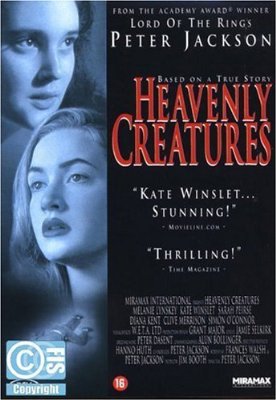
Peter Jackson’s Heavenly Creatures (1994)

A while back Bookaroundthecorner left a comment on one of my posts mentioning that the author of Victorian detective novels, Anne Perry, had committed a murder when she was a young girl. I had never heard of this before and a google search soon led me to more details and to Heavenly Creatures by Peter Jackson entirely based on this story.

I watched it recently and must say it was an utterly disturbing movie. I’m not giving away too much when I tell you what actually happened as it also written on the DVD covers and descriptions of the movie and many people know it anyway. Pauline Parker (Melanie Lysnkey) and Juliet Henry Hulme (Kate Winslet) met in New Zealand in the 50s. The unlikely couple formed a friendship that soon became an obsession, they lived in dream worlds, made up stories and were completely dependent on each other. Juliet (the future Anne Perry) had a very fragile health, a reason why her parents often chose to send her away. The marriage of Juliet’s parents is not working and they want to get a divorce. They decide to send Juliet to South Africa. The girls hope that Pauline will be allowed to come with her but Pauline’s mother is against it. She doesn’t approve of their friendship, correctly senses how unwholesome it is. That’s when the tragedy unfolds. Pauline who hates and despises her mother develops a plan that should allow them to stay together forever. In minute details she plans the murder of her own mother.

The brutality with which they execute their plan is quite a shocker. I still see the pictures in my mind.

They get caught because Pauline carelessly writes down everything in a diary. Both are sentenced but are left out of the correctional institution after two years. There is a condition however; they are not allowed to see each other again.

It wouldn’t be a Peter Jackson movie without any fantastic elements. He chose to show the fantasies of the girls, their dream world. I think I would have opted for a more sober way.

The two actresses are very good, they manage to convey the folly of the two girls brilliantly.

I found the movie to be disturbing for many reasons. Not only because they kill Pauline’s mother, which is quite horrible in itself, but also because I was wondering how you could go on living with a murder like this on your conscience and on top of that being separated from the most important person in your life. I would be interested to know how Pauline dealt with this. I did pity these two deluded girls.

As I said before, this is a highly disturbing movie but one that will keep you thinking for a long time. Also about the narrative technique chosen by Peter Jackson. What kind of movie would this have been, done by another director?

Last but not least, doesn’t it strike you as  highly uncanny to know that someone who committed such a brutal murder makes a living writing murder mysteries. Is this a means to come to terms with the past?

John Marsden: Tomorrow, When the War Began (1993) An Australian Page-turner

When Ellie and her friends go camping, they have no idea they’re leaving their old lives behind forever. Despite a less-than-tragic food shortage and a secret crush or two, everything goes as planned. But a week later, they return home to find their houses empty and their pets starving. Something has gone wrong–horribly wrong. Before long, they realize the country has been invaded, and the entire town has been captured–including their families and all their friends. Ellie and the other survivors face an impossible decision: They can flee for the mountains or surrender. Or they can fight.

Sometimes you want to read for pure entertainment, something that is fast-paced, action-packed but still interesting. Tomorrow, When the War Began is exactly like that, a real page-turner. I discovered the book on Jenclair’s blog last year and am really glad I read it. I am not too much into  series but this start into the Tomorrow Series was really gripping. Too bad that it isn’t an independent book. It’s rather a series in the spirit of the TV series Lost. It always ends when it’s most supenseful, when something big happens. You really have to go on reading if you want to know what’s going to happen next. Jenclair has read all the books meanwhile. You can find her second review here.

Ellie and her friends go camping instead of participating in a cattle show that takes place during Commemoration Day. They make a trip into the Australian mountains and discover a place that very possibly no one has ever seen before. Or only one person, a hermit, who is said to have lived there. The hermit is a man who has been accused of the murder of his wife and baby and escaped into the mountains.

The place they discover is enchanted. It seems to belong to another world, untouched by civilization. They enjoy their stay a lot and leave only reluctantly. When they arrive at their homes, the coming back is a brutal one. Their houses and farms have been abandoned, their animals are dead or dying. Bit by bit they discover that Australia has been invaded and all the people are captives.

The adventures that follow are numerous and dangerous. They first need to find out what happened, then they need to make decisions. How are they going to live and where? How will they hide, what will they eat? It seems natural that they return to the hidden place in the mountains. The country is swarming with foreign soldiers and every expedition is a trial.

We never hear who has invaded the country but we learn why. People in neighbouring poor countries couldn’t accept that a lot belongs to a few rich people and they came to redistribute what is here.

What I liked particularly is the setting. I have never been to Australia but I have seen movies and it is a country whose landscape fascinates me. The setting is rendered very well, in a very descriptive manner. I liked the exploration of topics like war, murder, social justice and injustice. I was just wondering for a moment if it is ethical, to base a book on the idea that poor people or a poor country could act in such an aggressive way. I think what Marsden had in mind, was raising the awareness that there are people less well off than those in the Western hemisphere. Another question that arose was whether they would have the military power to invade.

The characters are not all equally well drawn, two stay a bit schematic but that may change in the future books, maybe they will be more developed.

If you want to read something that is really absorbing, this is a good choice.

Did I mention it is a YA novel? I often enjoy the topics they explore and this is no different. Part one of the series has been made into a film. I haven’t seen it, no idea if it is any good.

Do you like series and if so which ones?

Edith Wharton: Madame de Treymes (1907) Novella with Parisian Setting

Madame de Treymes (Penguin 60s)

Set in Paris, Wharton’s 1907 novel explores the theme she and Henry James so often examined; the conflict between American innocence and corrupt Europe.

Even a short novel like Madame de Treymes (just 80 pages long) shows you what a masterful writer Edith Wharton was. This is the oldest of her novels that I have read so far. It came out after her enormous success The House of Mirth (1917) which I want to read very soon as well. The Age of Innocence (1920) and Ethan Frome (1911), both books that I have read, are later ones. Another one that I have found in my hopelessly overstuffed book shelves is Summer (1917).

Madame de Treymes has a Parisian setting which always appeals to me, as sentimental as this may be. It is a cruel little book and a very surprising one. All in all there is not a lot of description of the city itself, the novel rather offers an analysis of the society. It is interesting to see how Americans perceived the Parisian society and the differences in their respective values.

John Durham knew Mme de Malrive when she was still called Fanny Frisbee. Once a lively young American woman, she has become but a mere shadow of herself. She married into the Faubourg St Germain society, meaning Parisian upper-class. Stuffy, traditional and very unwelcoming to outsiders. She lives separated from her husband as he has cheated on her. She would like a divorce but is afraid to lose her son and doesn’t want to move him from Paris. Durham always liked Fanny and intends to marry her and, if needed, stay with her in Paris.

The only person Fanny trusts is Mme de Treymes, her sister-in-law, who disapproves as much of her brother as Fanny herself. Durham turns to her for help and what follows is a tragedy of manners, if I may say so.

This little story, as beautifully written as it is, made feel quite chilly. I am surprised to see that the Parisian upper-classes (to which I never belonged but am fairly familiar with) haven’t changed that much.

The differences between the American and the Parisian way of life is nowhere to be seen so well as when Durham and his sister visit Fanny at her house. The house, a rundown old mansion in a poky street, causes the follow exclamation from his sister:

“Well, if this is all she got by marrying a Marquis”.

Wealth meets status and it is funny to see how those down-to-earth rich Americans are absolutely not impressed with the shabby elegance they encounter. On the other hand, they were not aware of the power of ancestry and heritage which reignes in the society into which Fanny has married.

Durham felt, as he observed them, that he had never before known what “society” meant; nor understood that, in an organized and inherited system, it exists full-fledged where two or three of is members assembled.

But Wharton doesn’t only dissect the French society she also lays bare the lack of culture of some of the Americans.

To Mrs Durham, with her gentle tourist’s view of the European continent, as a vast museum in which the human multitudes simply furnished the element of costume, the Boykins seemed abysmally instructed, and darkly expert in forbidden things (…)

As the title indicates, Mme de Treymes is the central figure, the most complex character, much more than you can deduce from this post. She is also married to the wrong man and lives a scandalous life, having a  lover, yet she would never even think about leaving her husband. This would be too open a rebellion against the society of which she is a much more integral part than Durham and Fanny realize.

Mme de Treymes is a wonderful example of what an adept writer can achieve even in such a short form as the novella.

The topic of the American in Paris is interesting and would certainly be worth exploring further. Hemingway, Gertrude Stein and many more come to mind who wrote about it.

I think that to this day Paris is the city Americans are mostly likely to visit if they have to make a choice. At least that is what I have been told lately by different Americans. Maybe we could call this the “mythical Europe”.

Should you like to read another review of one of Edith Wharton’s books, Guy Savage just reviewed The Old Maid which rekindled my interest in Wharton that had unfortunately been dormant for a while. As soon as I get a chance I will continue with Summer and The House of Mirth. She is such a wonderful writer and one of a few where I could imagine reading everything she has written.

Which is your favourite Edith Wharton novel? I remember I liked The Age of Innocence a great deal.

Crimeculture – Books, Movies and More

victorian


I found this great site Crimeculture today and wanted to share it with you as I know that many of you also love crime, thriller, detective and suspense novels and movies. It contains a lot of information, essays, articles, lists on books and films. You will find the books and movies organized by subgenres like Victorian Detective Fiction, Classic Detective Novels, Early Hard-Boiled… Film Noir, Neo Noir, Asian Detectives. I hope you will enjoy it as much as I do. It’s a great resource.