Aussie Author Challenge 2012 – Bolaño Group Read – Henry Green Week

I discovered the  Aussie Author Challenge 2012 hosted by  Booklover Book Reviews on Tony’s Reading List. I’m not sure how many Australian authors I’ve read in my life so far, but I’m pretty sure not all that many. While browsing my piles I discovered five novels. One of them also qualifies for the War Through the Generations Challenge. Lisa from ANZ Litlovers has kindly given input and my choices seem worthy. Should you want to join the challenge, her blog offers lists where you will find a lot of reading suggestions. I have signed up for the  “beginner” level or, as the challenge terms it, “tourist”.

These are the books I’d like to read

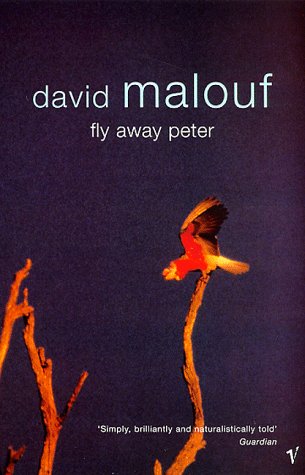
David Malouf’s Fly Away Peter

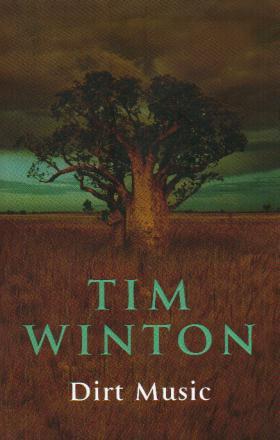
Tim Winton’s Dirt Music


Murray Bail’s Eucalyptus

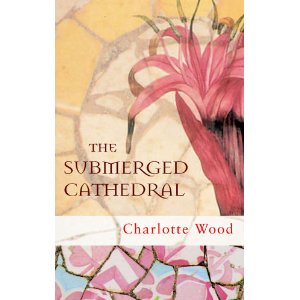
Charlotte Wood’s Submerged Cathedral (OOP?)

Helen Garner’s Monkey Grip

January is a busy month but some of the events were too good. I had to join.

I signed up for the Bolaño The Savage Detectives group read hosted by Richard and Rise last year and now is the time to start reading as the novel is on the chunky side. If you’d like to read along you better get a copy soon or you will not make it through the 770 pages in time. I have a feeling I won’t but if I mange to read 2/3 I’m already pleased with myself.

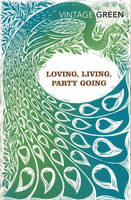
The week of January 23 sees another event coming that  I absolutely had to join. Stu from Winstonsdad’s Blog is hosting a Henry Green week. Henry Green was once thought to be one of the greatest stylists of British literature but is now almost forgotten. I have never read Henry Green and think Stu’s idea is really wonderful. Penguin has issued a tome containing three of his famous novels Loving, Living and Party Going. I’m going to read Loving.

Do you have any Aussie author suggestions?

Will you join the Bolaño group  read or Henry Green Week?

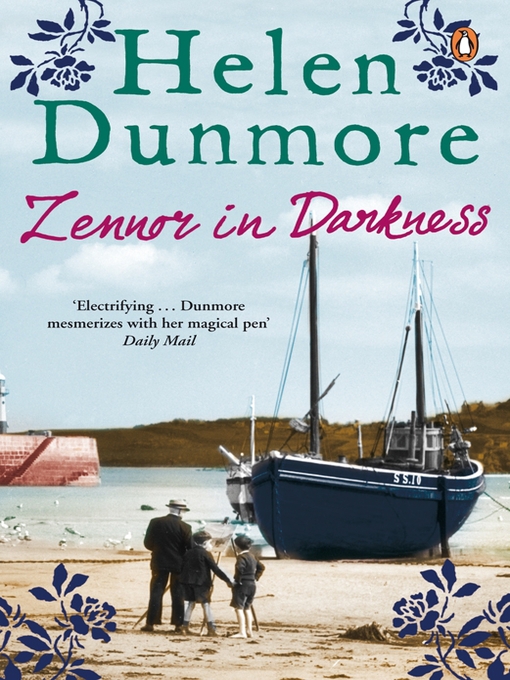
Literature and War Readalong January 30 2012: Zennor in Darkness by Helen Dunmore

Two or three years ago I read Helen Dunmore’s The Siege a painfully realistic and harrowing account on the siege of Leningrad. This was such a stunning novel, one of the best WWII novels I have ever read, accurate, moving, descriptive and captivating despite the bleak topic. When I discovered that she had written a novel on WWI, Zennor in Darkness, I didn’t hesitate and put it on this year’s readalong list right away. Helen Dunmore hasn’t only written novels, but short stories, children’s books and poetry as well. I think her wonderful prose shows that.

The story is set in a Cornish coastal village in 1917 and combines fact with fiction. D.H. Lawrence and his wife have indeed stayed there but the story is invented. The core theme seems similar to Return of the Soldier and deals with shell shock. But it is also a story of artists and writers. I have a weakness for books about artists and love Cornwall as a setting.

Here are the first sentences

One faint shriek. Then another. Three girls fling themselves over the top of the last dune and skid down warm flanks of sand. Marram grass slashes their ankles and sand kicks up behind Clare and Peggy, into Hannah’s eyes. She is the heaviest and the last.

Have you read Helen Dunmore?

*******

The discussion starts on Monday, 30 January 2012.

Further information on the Literature and War Readalong 2012, including all the book blurbs, can be found here.

A Few Plans for 2012

Happy New Year to all of you, my readers, commenters, subscribers and friends.

I wish that 2012 will be a wonderful year for all of us!

*******

This is the year in which I will

– Buy fewer books

– Read at least three books from countries I’ve never read a book from (most likely: Nigeria, Vietnam, Portugal)

– Read fewer novels

– Read plays and poetry

2012 Fearless Poetry

I will participate in Serena’s Fearless Poetry Exploration Challenge. It’s not a very demanding challenge, all you have to do is, read two poetry collections or participate in her Virtual Poetry Circles.

– Translate poetry

– Read more fantasy and YA

– Read more life writing including diaries, memoir and letters

– Pursue some of my reading projects that I had abandoned like

  • Native American reading project. I have a huge pile and have already read one book during the last week of last year.
  • African American reading project and as part of this the
  • Zora Neale Hurston reading project

– Start the new movie series World Cinema. The idea is to take a trip around the world in movies.

– Work on my About page. This page is actually clicked a lot and I was mortified to find out that since the day I started this blog, I hadn’t changed it which means it’s still a draft version. And it almost reads like a job application. It’s embarrassing.

– Write far less reviews and drastically shorten the summary sections

– Write in different ways

– Finally learn how to upload photos. I know you are dying to see my cats, my messy apartment, the view from my windows and oh the book piles. No worries, that’s not what you will get (or let’s say, the cats, yes, but not the mess and the shamefully high piles). I’d like to explore the medium photography and here is the moment to mention one of my very favourite blogs Mrs Pearl’s aka Carole’s Pearls and Prose. All of her posts are like gifts. Not only does she share her beautiful photography, she also shares a lot of tips and tricks.

– Read less, write more. No, not blogposts. Don’t get alarmed.

– 6/12 cities project. I want to travel quite a bit this year and, if possible pair this with some reading. The planned destinations so far are

  • Stockholm
  • London
  • Paris
  • Milano
  • Istanbul
  • ?

As I’m notorious for overthrowing my vacation (and other) plans it’s possible the final list will look very different. Milano and Paris are the most likely as they are close (4 respectively 3 hours by train). Why these 5 cities? I haven’t been in Paris for over a year and ususally went there at least a few times per year. Milano – The famous cemetery and I need clothes. Or rather a style change is overdue and how to best achieve that than with Italian fashion, right? Stockholm – I’ve never been there. Istanbul – I’m sure I will love it.

These are my blogging related plans. I spare you the others, the list is three times as long.

How about you? Are you making plans or just go with the flow (which I will eventually do as well but I love plans)?

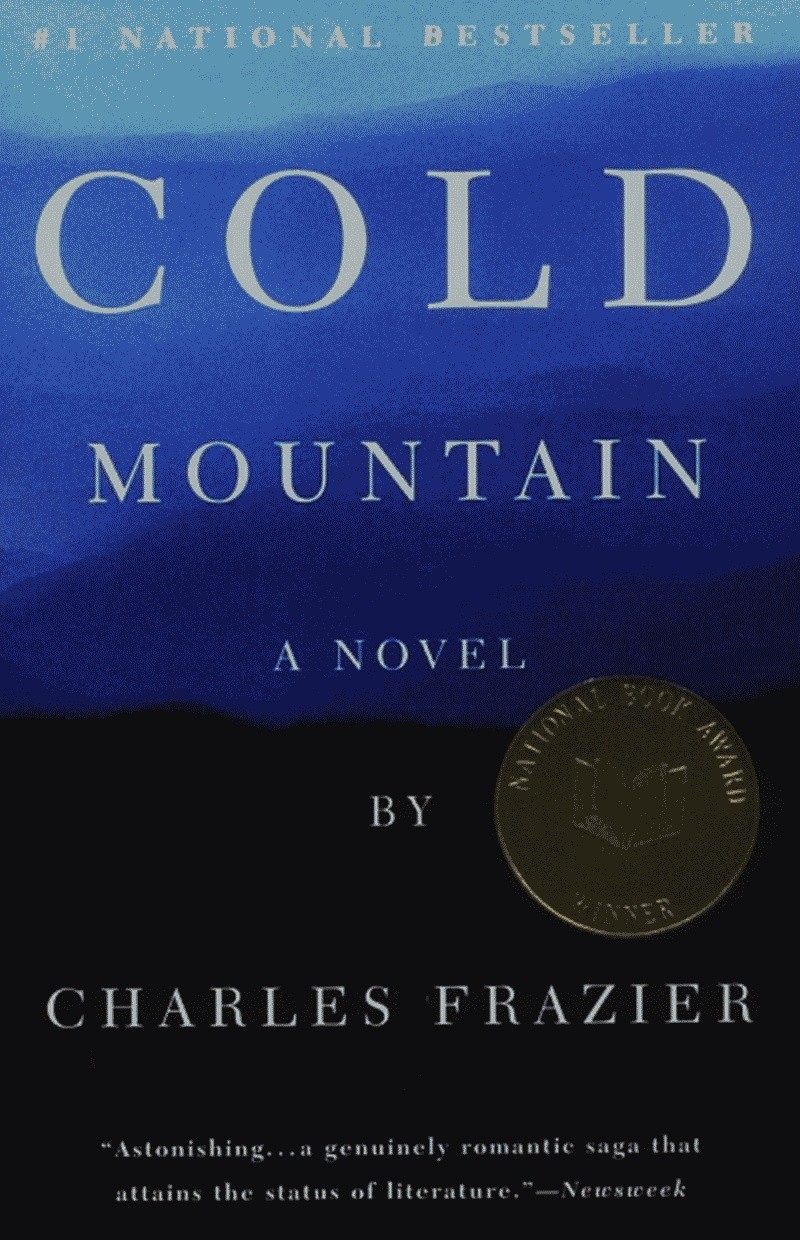
Charles Frazier: Cold Mountain (1997) Literature and War Readalong December 2011

The last book of this year’s readalong, Charles Frazier’s Cold Mountain,  is the only book on the American Civil War.

Cold Mountain juxtaposes the stories of Inman, a Confederate soldier, who was badly wounded at Petersburg, and Ada, the woman he loves, who waits for him in Cold Mountain. It describes Inman’s slow and long return to Cold Mountain and how Ada copes on her own after her father has died.

I have only just finished this book and I am still a bit stunned. This is an extraordinarily well-crafted novel. The structure is interesting from the beginning on. The chapters alternate between Inman’s and Ada’s point of view and are symmetrical. Motifs and themes that are described in one chapter will be echoed in the next. This is fascinating. At the beginning, for example, we see Inman at a hospital. He was badly wounded and most of the time he is lying in bed and watching the world through a window. The window is like the frame of a picture.

That summer, Inman had viewed the world as if it were a picture framed by the molding around the window. Long stretches of time often passed when, for all the change in the scene, it might as well have been an old painting of a road, a wall, a tree, a cart, a blind man.

In the next chapter we see how Ada struggles. Her father has died and left her nothing but a farm. The farmhands have all gone, either to war or they are hiding. Ada has lived almost all of her life in Charleston and has only lived in Cold Mountain for a few years, because her father was ill, and the mountain air was thought to be beneficial. She can sew, paint, play the piano and loves to read but never in all of her life has she worked with her hands. She doesn’t know how to keep the farm going, how to produce anything. She spends long stretches of time sitting in a chair, reading and staring through a window that starts to look like a frame, the sky outside like a painting.

There is nothing that Inman experiences, that Ada’s story doesn’t echo and vice versa. They both struggle to survive, they both find unlikely friends. I liked this structure a lot but there is more to this novel. It’s exceptionally well written. Words are chosen carefully, the prose is crystal-clear and manages to paint a picture of a breathtaking landscape that we see change with the seasons.

Maybe Ada would have starved or contracted an illness and died if Ruby hadn’t turned up at her farm. From that moment on her life is changed forever. Ruby has never read a book but she is so resourceful and attentive to every little detail of nature, one almost expects her to spin straw into gold. There is nothing she cannot use, mend, transform. And she knows how to teach Ada to become as capable as she is. All Ada knew so far was a life of leisure and that life now turns into work. It’s interesting to see how useless money has become during the war and how valuable it is to be able to produce your own food.

After a while, when plants grow and they have produced all sorts of things, the women are not only independent but almost completely self-sustaining. And they have become very close friends. They sit on the porch at night and Ada reads to Ruby. They talk and sit like an old couple. Content. At least Ruby is, Ada still longs for Inman.

After a while I started to dread his return. Their life seemed so peaceful, I couldn’t imagine how Inman would fit in. What would happen, would Ada send Ruby away, would they live together?

All this time Inman is walking and hiding. He is constantly in danger, he is a deserter after all and the country seems to have become lawless. Anyone can shoot you at any time. That’s what happens to him anyway. He is taken prisoner, shot and left for dead. He finds refuge with an old woman, who, like Ada and Ruby, lives completely on her own, with a little herd of goats.

This is a very powerful episode. The war is constantly present throughout the book. Inman remembers the battles, the dead men, the wounded. The butchery. But nowhere is this as much in the foreground as when he speaks with the old woman. I’m not very familiar with the American Civil War and the impression I got from reading Cold Mountain was that maybe initially there was a cause but very soon there were a lot of lawless people attracted who came in for the change and the freedom to go about killing people as they pleased.

While Ada and Ruby live an almost sheltered life, Inman, in crossing the country, sees the many faces of this war. The poverty, the illness, people who die for no reason, the cruelty, the violence. His own biggest fear however is that he is too damaged to live a happy life with Ada. The old woman says something that made me think and I wondered whether this is really true:

That’s just pain, she said. It goes eventually. And when it’s gone, there is no lasting memory. Not the worst of it anyway. It fades. Our minds aren’t made to hold on to the particulars of pain the way we do to bliss. It’s a gift God gives us, a sign of His care for us.

Something that struck me more than anything, besides the beauty of the language, the artful structure and the wonderful complexity of the characters, is how American Cold Mountain is. It’s a hymn to the landscape and the history of the country, that includes everything, the mythology of the Cherokee, the stories of the settlers, the possibilities that this country offers to resourceful people.

Cold Mountain is a stunning novel and I’m sorry, I feel haven’t done this book any justice. It’s a complex, rich and a very rewarding book. It’s rare that I feel envious of characters in a book but at times I thought that there could hardly be a better life than the life led by Ada and Ruby.

If you have seen the movie, it is still worth, reading the book. It is so much richer.

*******

Cold Mountain was the last book of the Literature and War Readalong 2011. The first book of the Literature and War Readalong 2012 is Helen Dunmore’s Zennor in Darkness. The discussion takes place on Monday, January 30 2012.

Best and Worst Books 2011

Looking back I must say that this was a very good reading year. That’s fortunate for me because to be honest in many other areas it was a nightmare and I hope that next year will be better. But readingwise it was wonderful. So many new authors, so many really great books. It couldn’t have been much better.

It’s always so difficult to say which books I liked the most but I noticed that whenever I thought “Best Books” and started to make a mental list, the same 12 books popped up again and again and only when I went back to the blog and looked at all the posts, did I remember many more. So, like last year, I’m cheating and do not present a Top 10 but a best of per category.  The 12 that popped up immediately can all be found under the category beautiful and enchanting.

All the quotes are taken from my reviews.

Most beautiful and enchanting books 

Saraswati Park by Anjali Joseph

“The calm, quiet and floating feeling that permeates Saraswati Park makes this one of the most beautiful novels I have read recently. Saraswati Park is about love and marriage, loss and discoveries but also about the power of imagination and memories, the beauty and danger of reading and ultimately also about writing.”

Three Horses by Erri de Luca

Three Horses was my first Erri de Luca but it will not be the last. “The scent of earth, sage and flowers pervades a story of love, pain and war.”

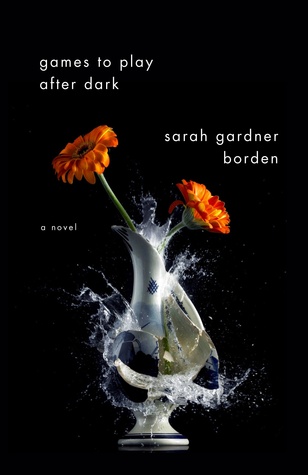
Games to Play After Dark by Sarah Gardner Borden

“It is hard to believe that Games to Play After Dark is Sarah Gardner Borden’s first novel. The topic, a marriage that falls apart, may not be the most original, the young mother who tries to combine the demands of her children and her husband and her personal needs, isn’t new but how she describes it, the details she evokes, the way she looks at what has been swept under the carpet and the bed and what is hidden in the closets is extremely well done.

Back When We were Grownups by Anne Tyler

Back When We Were Grownups is a novel about possibilities, lost dreams, second chances, family and love and ultimately about chosing the right path and belonging. I really loved this book. I liked Rebecca and many of the other characters, especially Poppy, the great-uncle. I liked how it shows that choosing a partner also means choosing a life and that maybe sometimes when we feel we are just drifting we are actually just sliding along because we are on the right path.

The Fish Can Sing by Halldór Laxness

Have you ever read a book and caught yourself smiling almost all the time? The Fish Can Sing is so charming I couldn’t help doing it. It’s also quite funny at times and certainly very intriguing. I’m afraid I can’t really put into words how different it is. As a matter of fact, Halldór Laxness’ book is so unusual and special that I have to invent a new genre for it. This is officially the first time that I have read something that I would call mythical realism.

The Square Persiommon by Takashi Atoda

I think the most intense reading experience is one that connects you to your own soul, that triggers something in you and lingers. Atoda’s stories even made me dream at night. I almost entered an altered state of consciousness while reading them.  The Square Persimmon managed to touch the part in me where memories lie buried and dreams have their origin.

Stranger by Taichi Yamada

Strangers is an excellent ghost story but it is also so much more than just a ghost story. It’s a truly wonderful book with a haunting atmosphere, a melancholy depiction of solitude and loneliness with a surprisingly creepy ending.

Enchanted Night by Steven Millhauser

Hot summer nights have a special magic. In the middle of the night, when everyone is sleeping and only night creatures are awake, the hot still air is heavy, time seems to stand still and the world is indeed enchanted. This is the magic captured by Steven Millhauser in his beautiful and poetical novella Enchanted Night. I have never read this book before but the images, the atmosphere felt so familiar. It was a bit like looking into my own imagination.

Goldengrove by Francine Prose

Reading Francine Prose’s novel Goldengrove felt at times like holding the clothes and belongings of a dead person in my hands. While I read it, and for a long while after I finished it, I felt as if I was grieving. It’s a really sad novel but at the same time it’s a very beautiful novel. It also reminded me of the series Six Feet Under. There is something very similar in the mood and the characters. Although I absolutely loved this novel I could imagine it isn’t for everybody.

Nada by Carmen Laforet

 Nada deserves to be called a classic. However it isn’t a classic because of the plot which can be summarized in a few sentences but because of the style. This is a young writer’s book who manages to capture the intensity of living typical for the very young and passionate.

The Cat by Colette

La Chatte has a subject to which I relate but it is far more than the story of a relationship between a man and his cat. It is a subtle analysis of love versus passion, of marriage versus celibacy, of childhood and growing up, of change and permanence. The story also captures the dynamics of disenchantment following the recognition that one’s object of desire is flawed.

So Long, See You Tomorrow by William Maxwell

So Long, See You Tomorrow  is a beautiful and melancholic short novel that explores a wide range of themes like memory, the past, isolation, loneliness, friendship, jealousy and violence. The central theme is that of the omission and the following regret. There are so many things left unsaid, things not done or too late in a life, that this core theme will speak to almost all of us. It’s often little things but they resonate for a long time in our lives and we might wish to turn back time and undo what has happened.

Most engrossing reads

These were the books where I never checked how many pages were left because I had finished them before even getting the chance to do so. In other words, the page-turners.

Underground Time by Delphine de Vigan

Les Heures souterraines or Underground Time is a chillingly good novel and shockingly topical. It’s accurate in its depiction of life in a corporate setting and of  life in a big city. It’s a very timely book, a book that doesn’t shy away to speak about the ugly side of  ”normal lives”.

Whatever You Love by Louise Doughty

Whatever You Love is a book of raw emotions. And that from the first moment on when we read about the police knocking on Laura’s door to inform her that her daughter Betty has been killed. Laura is a very emotional woman, she feels everything that happens to her intensely, her reactions are very physical. There are many elements in the book that made me feel uneasy.

You Deserve Nothing by Alexander Maksik

You Deserve Nothing was certainly one of the most entertaining reads this year. It offers an interesting mix of alternating and very realistic sounding voices, a Parisian setting and a wide range of themes.

A Kind of Intimacy by Jenn Asworth

I already jokingly “said” to Danielle in a comment that her top 2010 might become my top 2011 and,  yes, this book is certainly a candidate as it is astonishingly good. Very dark, absolutely fascinating, engrossing, and very well executed. While starting it I had forgotten Jenn Ashworth was compared to Ruth Rendell but the association immediately occurred to me as well.

everything and nothing by Araminta Hall

everything and nothing was one of those super fast reads, a book that I could hardly put down. Really riveting. The only complaint I have is that this is labelled as a psychological thriller. Although there is a part of it reminiscent of Ruth Rendell, it is like a background story and not really very gripping. At least not for me. Still I consider this to be a real page-turner for the simple reason that it captures chaotic family life in so much detail and explores some of the questions and problems parents who work full-time would face.

Best Books – Literature and War Readalong

How Many Miles To Babylon? by Jennifer Johnston

I loved How Many Miles to Babylon? I think it is a beautiful book. It doesn’t teach you as much about WWI as Strange Meeting (see post 1) but it says a lot about Irish history. I found this look at the first World War from an Irish perspective extremely fascinating.

The Things They Carried by Tim O’Brien

I expected The Things They Carried to be a very good book. A very good book about the war in Vietnam. What I found is not only an outstanding book about the war in Vietnam but also about the art of storytelling. I’m really impressed.

The Silent Angel by Heinrich Böll

Böll has a gift for description which is rare. And he represents a rare model of moral integrity, he is an author who wrote for those who have nothing, who tried to unmask hypocrisy and uncover everything that was fake and phony in post-war Germany. I don’t know all that many authors who are so humane.

Most touching

On the Holloway Road by Andrew Blackman. I read this novel in the summer and it’s one of a few books I haven’t reviewed. In this case because the reading caught me completely unawares. I had such an emotional reaction that I had to talk about it all the time. I still feel like reviewing it but I need some distance

Best classics

Mme de Treymes by Edith Wharton

Madame de Treymes has a Parisian setting which always appeals to me, as sentimental as this may be. It is a cruel little book and a very surprising one. All in all there is not a lot of description of the city itself, the novel rather offers an analysis of the society. It is interesting to see how Americans perceived the Parisian society and the differences in their respective values.

Hotel Savoy by Joseph Roth

Hotel Savoy has really everything. It is funny, sad, picturesque, touching and bitter-sweet and the ending is perfection. Roth describes people, the hotel and the little town with great detail. And every second sentence bears an explosive in the form of a word that shatters any illusion of an idyllic life. Roth served in WWI and never for once allows us to forget that the horror of one war and subsequent imprisonment have only just been left behind  while the next one is announcing itself already.

Grand Hôtel by Vicki Baum

Grand Hôtel is set in a luxurious hotel in Berlin between the wars. It’s walls shelter a microcosm of German society. The novel draws a panorama of the society and the times, reading it is fascinating and gives a good impression and feel for the time and the people. Vicki Baum includes a wide range of characters, the porter who waits for his wife to give birth to the first child, the aristocratic head porter Rohna, the many drivers and maids as well as some very interesting guests. Including the employees of the hotel gives the book a bit of an upstairs-downstairs feel and permits insight into the lives of the “simple people” who earn just enough not to starve.

Pedro Parámo by Juan Rulfo

It’s a powerful novel infused with the spirit of the Mexican Día de los muertos or Day of the Dead at the same time it is an allegory of oppression and freedom that comes at the highest cost. When you read Pedro Páramo it becomes obvious that “magic realism” has many faces.

Best non-fiction books

Making Toast by Roger Rosenblatt

I found Making Toast wonderful. It contains a lot of little endearing episodes like the one that gave the book its title, in which Rosenblatt states that the only thing he is really good at is making toast for the whole family in the morning. He describes how he gets up very early and, taking into consideration each family member’s taste, he produces a multitude of personalized breakfast toasts.

The Film Club by David Gilmour

The relationship between these two is unique. So much honesty, trust and friendship between a father and a son is wonderful. Not every parent has the chance to spend as much time with his kid, that is for sure, but every parent has certainly spent enchanted moments with his/her child and will be touched by this story. For us film lovers The Film Clubis  a great way to remind us how many movies there are still to discover, how many to watch again and in how many different ways we can watch them.

Howard’s End is on the Landing by Susan Hill

I can’t tell you exactly how long it took to read Howards End is on the Landing. An evening? Two? Certainly not longer. I devoured it. What is more fascinating to read than a bookish memoir? And written by a writer.

The Gifts of Imperfection by Brené Brown

Brené Brown is a researcher, specialized in topics like shame and perfectionism and analyzing how they are linked and keep us from living wholeheartedly. She is an incredibly honest and open person who is able to show her vulnerability.

Natural History of Destruction by W.G. Sebald

On the Natural History of Destruction is one of the most amazing books I have read this year. For numerous reasons. It is in line with the topic of my reading projects and readalong and contains descriptions that I have never read like this. On the other hand it gave me the opportunity to see another side of Sebald. One that I didn’t expect.

Cinderella Ate My Daughter by Peggy Orenstein

What happens when a feminist who knows exactly how things should be, gets pregnant and the child is – horror on horror – a girl? This is pretty much how Peggy Orenstein opens her entertaining, thought-provoking and occasionally quite shocking account Cinderella Ate my Daughter about what she sub-titles “Dispatches from the front-lines of the new girlie-girl culture”.

The Equality Illusion by Kat Banyard

Kat Banyard’s The Equality Illusion: The Truth about Men and Women Today takes an unflinching look at what it means to be a woman today and, due to the fact that Banyard is British, especially in the UK . Still, whether you are an Afghan woman fighting for girl’s rights of literacy or an American doctor performing late stage abortions, you have one thing in common: you lead a dangerous life and might end up being killed. Both things happened.  The first happened in Afghanistan in 2006, the second in the US in 2009. They illustrate the illusion of equality and show what a global phenomenon it is.

New Author Discoveries

These are the authors that made me think “I would like to read all of his/her books”.

Beryl Bainbridge,  William Maxwell, Jennifer Johnston, Peter Stamm, Annie Ernaux

The worst book this year

There is a lonely winner this year and it has so far not even been reviewed. I’m still determined to do so but I find adding quotes so tedious, only in this case it’s necessary to illustrate the problem I had with the book. Now you are dying to know the title, aren’t, you?

In a Hotel Garden by Gabriel Josipovici
Alexander Maksik: You Deserve Nothing (2011)

Set in an international high school in Paris, YOU DESERVE NOTHING is told in three voices: that of Will, a charismatic young teacher who brings ideas alive in the classroom in a way that profoundly affects his students; Gilad, one of Will’s students who has grown up behind compound walls in places like Dakar and Dubai, and for whom Paris and Will’s senior seminar are the first heady tastes of freedom; and Marie, the beautiful, vulnerable senior. 

You Deserve Nothing was certainly one of the most entertaining reads this year. It offers an interesting mix of alternating and very realistic sounding voices, a Parisian setting and a wide range of themes.

The story is told by three people, Will, a charismatic teacher at an international school in Paris, Gilad, one of his students and Marie, a younger student who goes to another class. Will teaches literature in a very unorthodox way, challenging his students to think for themselves and provoking them as well. There are no taboo topics in his courses, religion, ethics, philosophy, they are equally discussed. Not every student feels comfortable to be challenged like this and while some admire Will as if he was a pop star, others resent him.

Those three voices tell the story four years after it has taken place. We see what happened from three different angles and point of views. I really liked those voices, they sounded authentic, very different from each other.

Since they tell the story four years after it occurred, we know from the beginning that something bad must have happened and we watch the story unfold slowly.

In the beginning we are amazed by Will and his unique teaching style. But after a while he does sound like a self-help book. In one class he teaches them about fear and his slogan is “Feel the fear and do it anyway” which is the title of a bestselling self help book by Susan Jeffers. There are many such instances. At first he sounds profound in his analysis of Sartre and Camus but when he tells his students to trust their feelings and follow their dreams, his concepts start to unravel.

Different incidents slowly show us another side of Will, a side that he would probably rather hide but funnily enough, he doesn’t really try to go on pretending. He seems a bit tired and the things he left in his past and which he tried to forget are resurfacing with force.

It’s not difficult to imagine what causes the downfall but I’m not going to reveal it.

I liked a lot of things in this book. It’s quite suspenseful and the characters are captivating and even more than that I liked the story and the themes. I always feel that school, teachers and teaching are some of the most fascinating topics and certainly topics we can all relate to. We have all gone or go to school and some of us have been or are teachers. We know both sides. The importance and influence, I would even say the power, that teachers have is almost frightening. Being a charismatic teacher can be dangerous.

The question of how far a teacher can and should go, is one of the core questions, another one being the discrepancy between theory and practice. Will knows how influential he is, yet he isn’t fully aware of his responsibility to be who he pretends to be. It’s a catastrophe for his students to find out that a lot of what he preaches may just be empty words.

I read about this book first on Guy’s blog (here is his review) and was already very interested in reading it. Some weeks later Jackie reviewed it as well (here is her review). It even made her best of 2011 and will also make mine. Jackie compared the book to Notes on a Scandal (and two other novels that I have not read) which is very accurate.

After having finished the book, I returned to Jackie’s blog and saw that someone had left an intriguing comment and a link to an article about Maksik. It seems as if Maksik’s novel was based on his own story. I’m not sure what to think now but while I was reading the book, I sympathized a lot with Will.

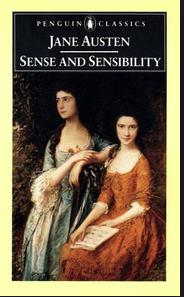
On Jane Austen’s Sense and Sensibility and Why I Love Marianne

sense-and-sensibility

At the beginning of December I was in the mood to read a lot of classics and that’s why I decided to participate in Advent with Austen. I didn’t manage to read or watch anything else that is Austen related apart from Sense and Sensibility  (1811). Today is the last day of the readalong. If you would like to read more enthusiastic takes on the book it might be good to visit Reading, fuelled by Tea.

What about my impression of Sense and Sensibilty? Boy, this was painful. Babushka-like reading. You know, the little doll inside of the little doll, inside of the little doll… Every time I peeled off a layer of pages, the book got magically longer and longer.

I suffered especially all through the first 100 pages. Yes, there were many witty sentences but all in all it was about money, marriages and talk, talk, talk. We could watch a bunch of nasty, fairly rich and scheming characters trying to kill time, marry right, secure their income and avoid at all times introspection and spending time on their own.

But then Marianne fell in love and started to suffer so terribly when Willoughby left for London, that I couldn’t help but being interested.

In many of the comments and posts I read, people state they like Elinor but not Marianne. Why? I think Elinor is a likable character but I love Marianne. She is the only truly honest person in this phony world and that’s why she falls so violently ill. She knows that there is a fine line between politeness and hypocrisy and her body reacts strongly to all the rules and laws of this society.

Some of the scenes in this novel made me cringe. I cannot picture myself in them. At 17, like Marianne, I would have fallen stupidly in love and ill as well. Nowadays, as a saner version of myself, I would just smash a few windows and ruffle whole bagloads of feathers.

Gossip and small-talk, insipid conversations and endless games is the essence of how the society in this book spends its time. People have to be glued to each other constantly. They can’t bear to be on their own. Although they are constantly around each other, they hardly ever connect. The only person who openly disregards this, is Marianne. She is often perceived as impolite, yet all she is, is honest.

I really liked her more and more. Whenever they arrive at a new place, she doesn’t participate in the tedious chit-chat that is soon to follow but walks off, looking for the library.

Elinor, however little concerned in it, joined in their discourse, and Marianne, who had the knack of finding her way in every house to the library, however it might be avoided by the family, soon procured herself a book.

Pretending and lying gives her headaches and she retires to her rooms. Realizing that she has been betrayed by Willoughby affects her so deeply, there is no more behaving or pretending, on the very contrary, she litterally screams, cries and gets very ill.

Despite her psychosomatic ailments after Willoughby’s departure and his breaking up with her, the most critical illness is still to come.

After she hears what Elinor had to endure without being able to talk about it, she is so shocked about having been so self-centered that she develops some late reaction and falls even more seriously ill.

Reading his I was amazed how audacious this really is and how modern but then comes the final part and Jane Austen spoils it. When Marianne has recovered and speaks about her illness, all she sees in it is an experience that helped her better herself, make her more fit for society. It’s not surprising then, that Jane Austen marries the tamed Marianne to the man she thought so ridiculous at the beginning of the novel.

I really didn’t like the book as a whole but Marianne will from now on be one of my favourite heroines of all time and I would have wished for another ending.

As I wrote earlier, the book is witty. Language has always a prominet place in Jane Austen’s novels. The differences between Marianne and Elinor are never as eloquent as when they speak about things they like. This is one of my favourite quotes and one that made me like Marianne even more:

“Dear, dear Norland, ” said Elinor, “probably looks much as it always does at this time of the year. The woods and walks thickly covered with dead leaves.”

“Oh!” cried Marianne, ” with what transporting sensations have I formerly seen them fall! How have I delighted, as I walked to see them driven in the showers about me by the wind! What feelings have they, the season, the air altogether inspired! Now there is no one to regard them. They are seen only as a nuisance, swept hastily off, and driven, as much as possible from the sight.”

“It is not every one, ” said Elinor, ” who has your passion for dead leaves.”

This was my fourth Jane Austen novel and it was the only one I didn’t like. So far Pride and Prejudice is still my favourite. But I haven’t read Persuasion yet. I have a feeling I will like it.

How about you, do you like Sense and Sensibility and Jane Austen in general? Do you have a favourite novel?

And what about the movies? I have seen Sense and Sensibility and liked the movie well enough although I thought Emma Thompson was far too old as Elinor. I liked the BBC version of Pride and Prejudice but I liked the film with Keira Knightley even better. Yesterday I discovered that I have a TV version of Mansfield Park on one of my DVD shelves.