From Australia to Russia via the US – A Few Challenges/Events in 2013

Aussie-Author-Challenge-2013

I have decided to be less active this year when it comes to challenges, readalongs and other events but there are still a few things I want to do or rather challenges I’d like to sign up for again.

All the Australian books I read last year were wonderful books and I want to explore more Australian literature. That’s why I singed up again for The Aussie Author Challenge at Booklover Book Reviews.

These are the possible choices

Secret River

Kate Grenville’s The Secret River

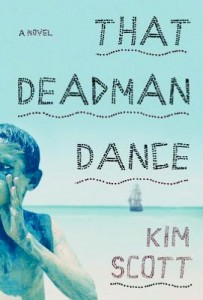
That Deadman Dance

Kim Scott’s That Deadman Dance

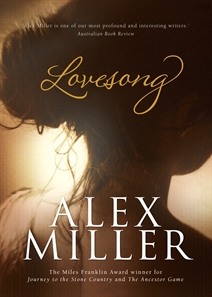
lovesong

Alex Miller’s Lovesong

American Revolution Reading Challenge 2013

I will also participate again in Anna’s and Serena’s War Through the Generations Challenge. The topic this year is the American Revolution. I haven’t read anything about this period yet and don’t know any books at all. Suggestions are very welcome.

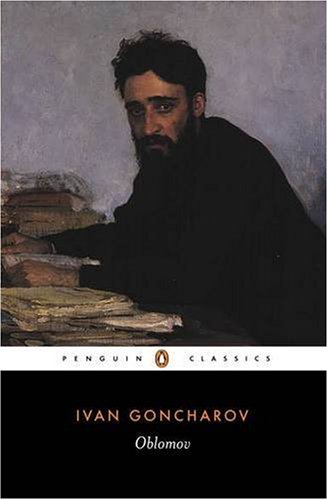
oblomov

Last but not least I’m planning on joining Richard (Caravana de recuerdos) for one or two of his 2013 Russian Reading readalong titles.

Here is the list.

Vasily Grossman’s Life and Fate (c. 1960)
 
Nikolai Gogol’s Dead Souls (1842)
 
Ivan Goncharov’s Oblomov (1859)
 
Leo Tolstoy’s Anna Karenina (1877)
 
Mikhail Bulgakov’s The Master and Margarita (c. 1940)
 
Vladimir Nabokov’s Lolita (1955)
 

Please visit Richard’s site for the details.

World Cinema Series 2013

I suppose one could say that the World Cinema Series is back by popular demand. When I posted the wrap up, I realized that there really were quite a lot of contributions and just because I wasn’t highly active, that didn’t mean others were equally inactive.

There were comments and questions about whether or not it would take place again. And so the World Cinema Series is back.

The rules are really simple. The idea is to watch movies from as many different countries as possible. It’s also possible to pick a lot of subtitled movies from one country like some of you have done last year. However in order to make points and win a prize, you would have to cover as many countries a possible.

Like last year, the person who covers the most countries will win a DVD or a 25$ amazon voucher.

I will collect all the reviews on the World Cinema Series 2013 page. Please leave your links there or in this post.

I hope for as many participants as possible and to discover a lot of great movies. And I also hope I will manage to review more than last year myself.

I would also like to post at least bimonthly wrap up posts.

Like last year, Richard from Caravana de recuerdos is hosting a similar event, the Foreign Film Festival. You are free to submit your reviews to both events.

To put you in the mood I attached a trailer of a movie I’d like to watch one of these days.

http://www.youtube.com/watch?v=1SFHWTl4oHs

Hiromi Kawakami: The Briefcase – Sensei no kaban (2004)

Hiromi Kawakami is one of my favourite writers. Three of her books have been translated into German two of which are available in English as well. I loved both books I’ve read so far (Manazuru and Mr Nakano and the Women) and was looking forward to this third one which has been published last year in English.

I often hear people say they don’t know any Japanese literature or don’t know where to begin. I usually recommend Banana Yoshimoto as a first author but now I think Kawakami’s The Briefcase may be even a better starting point.

The Briefcase is a love story between a retired college professor and his former student Tsukiko. When you read “love story”, you may have some expectations but you will have to throw them overboard as nothing will quite match this story which is as far from a Western love story or romance as can be.

The professor or sensei and his former student  meet accidentally one evening in a bar. Tsukiko is 38 years old, a loner who doesn’t believe she will ever find true love. She isn’t too sad about this though, she is unconventional and likes to live on her own.

The professor is somewhat startled to meet a woman in such a bar and drinking a lot of sake at that but soon they are both delighted to find out that they like the same food and drinks and that they enjoy hanging out together. The relationship is very formal at first, nothing hints at a possible love story at all. Tsukiko is quite quirky and in the beginning the professor tells her constantly that she isn’t acting very ladylike, only she couldn’t care less. It becomes soon obvious that he isn’t less quirky. They never  make appointments, they just meet at the same bars week after week until one day pick when they a fight over something really silly. It’s only when they do not see each other any more for a long time that Tsukiko realizes she has fallen in love.

The way they slowly and carefully approach each other, and get to know each other is so lovely. They really take their time and only decide to be real lovers when they have spent a long time together and have seen each other at their worst. But they are also both very shy and not very experienced and have been on their own for a long time. Why the professor has been alone will only be revealed in the end.

The way this relationship is described is very Japanese. It’s filled with respect and an almost ritualized slow approach of another human being. None of them would ask the other any direct questions, the way they get to know each other is far more subtle. Through shared moments and mutual attention and observation.

There are many wonderful and typically Japanese elements which could have turned the book into a cliché if a lesser writer had attempted to write about them. Food is extremely important and we read about an incredible amount of different meals. Vegetables, mushrooms, fish we’ve never heard of are mentioned.

Japanese poetry, Haikus, the cherry blossom festival, calligraphy and many other things are very important as well and reading the book is a bit like a trip to Japan. Or at least like I would imagine it.

What I liked is how the book reads as if it had been painted with one of those very precise and fine calligraphy brushes. Kawakami can evoke an atmosphere and emotions in a few lines, and artfully captures how they are changing constantly. The story takes up almost a year and the change of seasons is captured as well as the change of emotions.

The end was a real killer, beautiful but quite sad. I highly recommend this wonderful and lovely book. It is a great introduction to Japanese literature, its sensibilities and esthetics.

I’ve read the book as a contribution to Tony’s January in Japan and Bellezza’s Japanese Reading Challenge.

January_in_Japan

Japanese Literature Challenge

Literature and War Readalong January 28 2013: The Yellow Birds by Kevin Powers

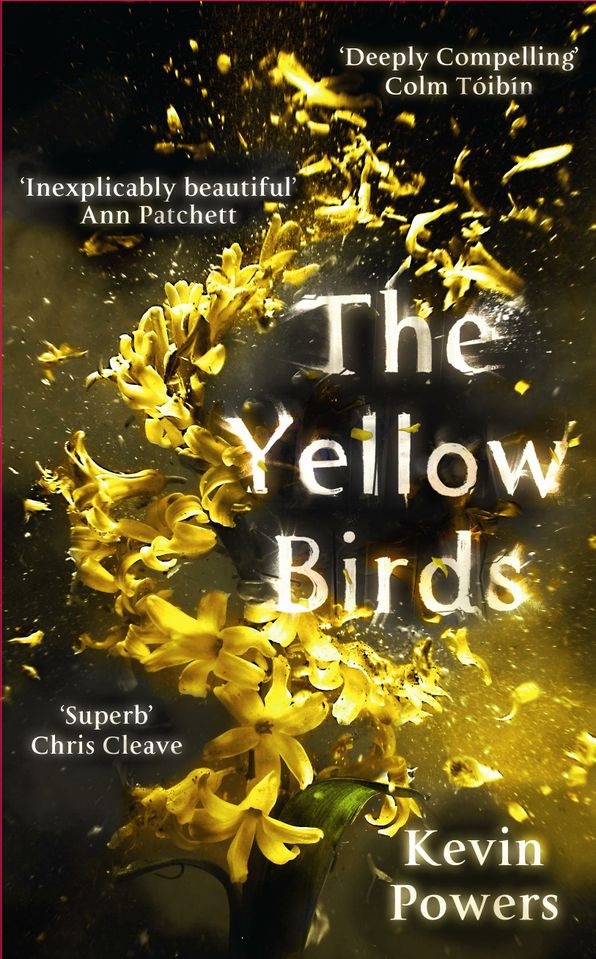
The Yellow Birds


I decided to include The Yellow Birds after having seen a few reviews which made it sound interesting. I wanted to branch out and include literature on other wars than just WWI, WWII and Vietnam. Iraq seemed an excellent choice and I’m very curious to see what we will think of this novel.

Kevin Powers is a veteran of the Iraq war. The Yellow Birds is his first novel.

Here are the first sentences

The war tried to kill us in the spring. As grass greened the plains of Niniveh and the weather warmed, we patrolled the low-slung hills beyond the cities and towns. We moved over them and through the tall grass on faith, kneading paths into the windswept growth like pioneers.

*******

The discussion starts on Monday, 28 January 2013.

Further information on the Literature and War Readalong 2013, including all the book blurbs, can be found here.