World Cinema Series and Foreign Film Festival

I realize this is awkward and a bit funny. I did already kick off my series last week but I never wrote a proper introduction because I didn’t think anyone would join. Meanwhile there have been two introductory posts, one by Novroz (Polychrome Interest) here and one by TBM (5o Year Project) here and quite a few people who said they would like to join us as well as you can see on the World Cinema Series Pages.

As a result, the World Cinema Series is now officially an event and you can sign up on the page which I will amend slightly, adding parts of this post.

Coincidentally Richard (Caravana de recuerdos) has started a Foreign Film Festival on his blog which is open to interested participants as well.

Just a few words on the “rules”, similarities and differences of our events.

I will, as I stated already, review up to two movies per month and add the review links to my page. The aim is to take a trip around the world in movies. This means I’m personally interested in movies that open a door to another culture. I wouldn’t review a Turkish crime movie that is set in the US. Not sure that exists but you get the idea. However I will review a German movie whose topic is Cambodia and I also plan on reviewing documentaries. But this is my interpretation. If you like fantasy movies and want to explore how different countries handle this in different ways, that’s a neat interpretation as well. All a participant has to do is link to my page and add a comment with the link to their review so I can add it. I will try to do an occasional wrap up post but nothing scheduled.

I’m glad if anyone has suggestions. I’m not very familiar with African filmmaking for example.

Richard’s Foreign Film Festival, in which I will participate as well, works a bit differently. Foreign is interpreted depending on your country of origin. No French movies for the French. You can sign up with Richard here and post links to your reviews on his blog. While I will just collect links, Richard will do a monthly wrap-up. The two projects are really two faces of the same medal. Movies can be entered on both sites.

What we decided off-line is that we will maybe organize the one or the other watchalong. The movies will be announced early on and we will post our reviews and discuss the movies on a set date. Suggestions are welcome.

At the end of the year  I will give away a DVD to the person who has managed to cover the most countries. Old reviews are not considered as an entry.

Other introductions

Dhitz

Here are the links to all the reviews


Ann Patchett: The Getaway Car (2011) A Practical Memoir About Writing and Life

In one of her wonderful Friday Five Series Jacquelin Cangro mentioned Ann Patchett’s essay The Getaway Car that is only available in e-book format. How lucky I just got a kindle for Christmas and could put it into use for the first time. I’m really grateful to Jacquelin for mentioning this essay as it may very well be one of the most wonderful pieces on writing that I have read in a long time. On some 50 pages Ann Patchett combines memoir with some advice that is useful to anyone who has ever thought of writing or who was interested in the process of writing. All the fans of Ann Patchett will love this little book as well, I’m sure. I haven’t read anything by Ann Patchett so far but I certainly will sooner or later.

There were a few elements in this book that I would like to mention, still, the take home message from this post should be – go and read it for yourself. It’s brilliant.

Ann Patchett writes about those wonderful pictures we have in our mind and as soon as we start to write them down, they start to look pale. Like pierced butterflies in display cases. What we need in order to over come the disappointment of not being able to capture our own images is forgiveness.

I believe that, more than anything else, this grief of constantly having to face down our own inadequacies is what keeps people from being writers. Forgiveness, therefore, is key. I can’t write the book I want to write, but I can and will write the book I am capable of writing. Again and again throughout the course of my life I will forgive myself.

She writes about inspiration and that one of the most important works for her was Thomas Mann’s ZauberbergThe Magic Mountain that she read when she was very young.

I think what influences in literature comes less from what we love and more from what we happen to pick up in a moment when we are especially open.

She loved it so much that all of her own novels reproduce that basic plot of

a group of strangers being thrown together by circumstances and form a society in confinement.

She also writes about writing chronologically, about chapters and pacing and writer’s block which doesn’t exist, according to her. She does write about MFA’s and whether it is possible to learn creative writing. This is especially interesting for Europeans who, I think, frown when they hear someone has taken courses in creative writing or even acquired a MFA.

Something I found valuable as well is her take on research.

As much as I love doing research, I also know that it provides a spectacular place to hide. It’s easy to convince myself that I can’t start to write my book until I’ve read ten other books, or gone to ten other places and the next thing I know a year has gone by.

Here lies the answer to why she thinks there is no such thing as writer’s block but procrastination.

It’s a short essay but it’s very well written and contains a world of valuable suggestions and stories of her own life.

Amor Towles: Rules of Civility (2011)

This is the reason why I always look forward to new releases because ever so often you discover a new book and simply enjoy it to the extent of wanting to start all over again after finishing it. This doesn’t always have to be a book that will enter the literary canon, it can just be a novel that makes you spend a few extremely entertaining hours. Like a well-made movie.

If you want to get the proper feel for Rules of Civility, you should listen to Billie Holiday singing Autumn in New York below. As Katey Kontent, the books narrator and main character, rightly says, every city has its season and for New York that seems to be autumn. And this book is all about New York in the 30s, its atmosphere, the Jazz Clubs, the lifestyle of the upper classes, drinking champagne and Martini’s, party going. It also made me think of Hopper’s famous painting Nighthawks, melancholic looking people at a bar late at night. When I visited Amor Towles website, I discovered that that’s exactly what he had in mind.

But what ultimately made me love this book was the narrator and main character, Kate Kontent. She is witty and intelligent, quick at repartee, full of wisdom. No wonder this is a highly quotable book. There a so many bon mots in it I could have copied one after the other. And I like a character who loves reading and makes you want to dash out and get the books she talks about. At the beginning of the novel, she reads Dickens and then moves on to Agatha Christie, overcoming her prejudice about mysteries and discovering a world of comfort and justice.

Rules of Civility tells the story of one year in the life of Katey Kontent. The novel begins in 1966 when Katey and her husband see the photo of a shabby looking Tinker Grey in an exhibition. Tinker who was one of the famous Wall-Street bankers. She knew Tinker and tells her husband so, however she doesn’t tell him how well she knew him. After this short intro the novel rewinds to New Year’s Eve 1937.

On New Year’s Eve 1937 the intelligent and sassy Kate and her best friend and roommate Eve, a gorgeous blonde from the Midwest, sit in a jazz club, waiting for someone to pay them a few glasses of champagne, when the extremely elegant and rich looking Tinker enters the club and they get to know each other.

They get along so well that the three of them hit the town together on many nights until they have a terrible accident. Until this time both women are interested in Tinker for different reasons but it is very obvious who he would like to get to know better. The accident changes everything, their relationships and ultimately it changes the course of their lives.

The year flies by in front of the reader. Katey who was a secretary becomes an assistant for a new glamour magazine, she meets interesting people, has different relationships with men but there are four people, including Eve and Tinker, that are more important than anyone else and although they will drift apart, she will never forget them.

It’s amazing to see these people come to life. At the end of the novel I thought, I had met Kate, Eve and Tinker, Wallace who joins up and fights in the Spanish Civil War and the ever so joyful Dickey. It’s a very artful novel. Towles knows how to create a world that comes to life and thanks to Kate’s incredible sense of repartee the novel is full of great sentences.

The most important theme of the book is making choices that’s why it’s such a melancholic book. As Katey says, even if you make the right choices

I have no doubt that they were the right choices for me. And at the same time, I know that right choices by definition are the means by which life crystallizes losses.

I could have added a lot of quotes but chose not too. All these sentences are embedded in the novel and are like little gems that we discover while reading and every time I tought “Oh that’s so well said” or “That’s so nicely phrased”. I don’t want to spoil these discoveries for anyone.

I really enjoyed this book, it’s very well written and it would make a wonderful movie.

I discovered the book on Danielle’s blog who reviewed it here. Jacquelin Cangro reviewed it here and Tracey here. Jackie mentioned it here.

Caramel – Sukkar banat (2007) World Cinema Series – Lebanon

I’m starting the World Cinema Series today with a movie that I watched during the Christmas break. It’s a Franco-Lebanese film directed by Nadine Labaki who also plays one of the five main characters.

Caramel tells the story of five friends living in the city of Beirut, in Lebanon. It’s an homage to friendship and the city of Beirut which was once called “Paris of the Middle-East” before it was bombed constantly and almost completely destroyed. The movie interweaves these five friends’ stories, shows their sorrows and pains, their joys and happiness. It manages to paint a picture of an extremely diverse Muslim society. Through the stories of these five women we see five different ways of life.

The biggest part of the story takes place in a beauty parlour where three of the five women are working. Layale is in love with a married man, and frequently rushes off from work, to meet him somewhere in a parking lot. Rima is attracted by women and one of her clients seems to feel the same. Nasrine is about to get married. She has a huge problem, that she shares with her girl friends. She isn’t “intact” anymore. Jamale is one of their clients and best friends. A fortysomething divorced part-time model who is terrified by getting older. Rose is an aging seamstress who takes care of Lilli, a very old demented woman.

There are some men as well, an aging man who falls in love with the gentle Rose, a policeman who pines for Layale.

I liked Caramel a lot. It’s a very warm movie, that captures a world that is at the same time foreign and familiar. I was captivated by the music, the pictures and the stories alike. These women fight the same fights we fight, they look for love and happiness, friendship and meaning. They are worried about their looks, their family, their love life. What is however completely different from our society is the human warmth and the friendship that extends over different generations.

The story of Rose and Lilli was one I liked best. All of the women take care of Lilli and she is treated with such a lot of love and respect although she does really crazy things and is getting on everyone’s nerves.

Caramel is a highly entertaining movie, moving and funny and with the right amount of melancholy to prevent it from becoming either silly or sugar-coated. Like the title, a bit like burnt sugar… Btw caramel isn’t only eaten in the movie, it is used for depilation, instead of wax. It’s such an apt symbol, something that can be sweet and delicious but causes a lot of pain as well. Just like life.

The trailer below takes a few seconds before it starts. It gives a good impression of the movie and its wonderful score.

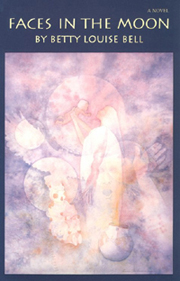
Betty Louise Bell: Faces in the Moon (1994)

In this moving first novel, Bell (a mixed-blood Cherokee) confronts the “lost generation” of Indian women, personified by Grace, who tries unsuccessfully to enter the mainstream of the white world. Her daughter Lucie’s horrendous childhood of struggle and abuse is relieved only by a two-year stay with a great-aunt, who instills in her a sense of pride. Despite the odds, she is now a successful college professor. Returning to Oklahoma for Grace’s final illness, Lucie spends some painful solitary hours examining the shame she has felt for her mother, who lacked both the skills needed to thrive in the white world and pride in her Cherokee heritage. She finds a link to Grace as she rummages through her things is able to engage in the generations-old tradition of proudly seeking the face of her mother when she sees the moon. 

Betty Louise Bell is a half Cherokee. Faces in the Moon is her first and I think only novel. It is to a large extent autobiographical. She teaches Native American Studies at the University of Michigan, Ann Arbor.

It was a pure coincidence that I started her novel shortly before beginning to read Cold Mountain which contains a few elements of Cherokee history and mythology.

When Hellen, Lucie’s grandmother, dies, she tells her daughters Gracie and Rozella that she would be watching them from above and that they should watch out for faces in the moon, she would be one of them. This story is part of the stories the sisters, Grace and Rozella, tell each other when they sit at the kitchen table and smoke. The child Lucie listens to these stories. Many of them are meaningless to her. All she can see is that her mother is nothing but a fat half Indian who bleaches her hair, wears the most awful baggy synthetic clothes and goes from one alcoholic violent white boyfriend to the next.

The grown up Lucie has long left her mother and aunt in Oklahoma and lives in some of the big cities like Boston and New York. When they call her, to tell her that her mother has had a stroke, it’s the first time, in many years that she drives back to her home town. While her mother lies in the hospital bed, Lucie sleeps at her place. The ugly furniture covered with plastic, the cupboards full of tins, the keepsakes, the pictures, take her back in time and she starts to explore why she hates her mother so much.

The story that unfolds is told alternating between first person and third person narrative and long stretches in italics. It tells of her mother’s life and of Lizzie, her great-aunt, who was a full-blooded Cherokee. During some years, when her mother couldn’t cope because she had a new, alcoholic lover, Lucie had to stay with her great-aunt Lizzie. At first the child misses her dysfunctional home. Lizzie who suffers from tuberculosis and constantly spits into a tin, is very kind to Lucie and treats her like an equal. Slowly they become friends and her aunt teaches her to be proud of her heritage. The years she spends with her, are the best years of her childhood.

Many of the elements in this novel, including the sparse prose, reminded me of Erdrich’s Love Medicine. These lives are bleak and a constant struggle. Alcoholism is frequent. Gracie, Lucie’s mother, is a very typical example. She tries everything to make people forget that she is half Indian. Her hair almost falls off, from the bleaching, she would never wear anything made of natural fibres but rather sweats in synthetic dresses. She changes her boyfriends constantly. Most them are white and beat her up. She is mean and doesn’t take care of her daughter. She is half illiterate and the letters she writes to Lucie later in life, fill her daughter with shame. They sound like the letters of a child and are full of errors.

What truly shocks Lucie at Lizzie’s place is when she sees a photo of a young beautiful Indian woman with long black hair, holding a little baby. If Lizzie hadn’t told her, she would never have recognized her own mother.

Bells’s writing is sparse and tries to imitate spoken language. This is a means to emphasize the importance of oral traditions. Unfortunately I didn’t think it was very well done. The changing from the first to the third person and to the italicized parts didn’t seem to follow a logic. I could understand why Lucie had a problem with her mother but the hatred wasn’t really explained. Because she gave her away or because she was poor and almost illiterate and denied her heritage? Was hurt or shame the source of it or both?

The ending is abruptly redemptive which I found quite odd too. I didn’t mind reading the book. Not at all. It’s interesting in parts but overall a bit disappointing as the structure was confusing. I would have liked to know more about the Cherokee culture. What Bell describes seems typical of many Native Americans with a severe identity crisis. And yet, this could have been the point. Maybe she wanted to show that once people are robbed of their identity, they all become alike, no matter whether they are Cherokee or Chickasaw or Choktaw. And since they are poor and not well educated all they have is the imitation of mainstream culture.

I liked that the book seemed very realistic and didn’t try to draw a romanticized picture. And what worked very well was how the difficulties of the mother-daughter relationship are described and how she captured that moment when Lucie sat in her mother’s empty apartment, looking at all her things and knowing that she would never return.

Has anyone read this or Louise Erdrich?

Aussie Author Challenge 2012 – Bolaño Group Read – Henry Green Week

I discovered the  Aussie Author Challenge 2012 hosted by  Booklover Book Reviews on Tony’s Reading List. I’m not sure how many Australian authors I’ve read in my life so far, but I’m pretty sure not all that many. While browsing my piles I discovered five novels. One of them also qualifies for the War Through the Generations Challenge. Lisa from ANZ Litlovers has kindly given input and my choices seem worthy. Should you want to join the challenge, her blog offers lists where you will find a lot of reading suggestions. I have signed up for the  “beginner” level or, as the challenge terms it, “tourist”.

These are the books I’d like to read

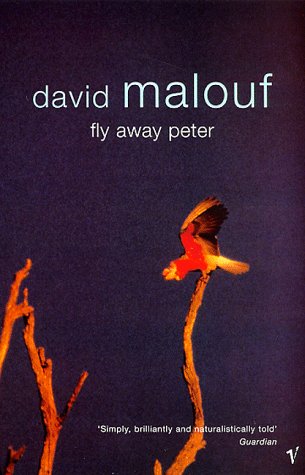
David Malouf’s Fly Away Peter

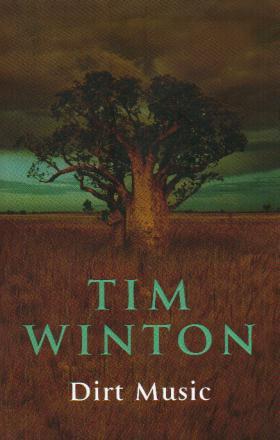
Tim Winton’s Dirt Music


Murray Bail’s Eucalyptus

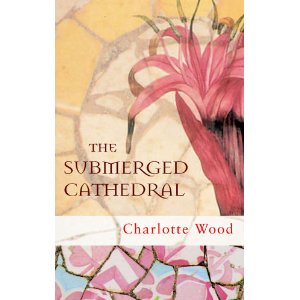
Charlotte Wood’s Submerged Cathedral (OOP?)

Helen Garner’s Monkey Grip

January is a busy month but some of the events were too good. I had to join.

I signed up for the Bolaño The Savage Detectives group read hosted by Richard and Rise last year and now is the time to start reading as the novel is on the chunky side. If you’d like to read along you better get a copy soon or you will not make it through the 770 pages in time. I have a feeling I won’t but if I mange to read 2/3 I’m already pleased with myself.

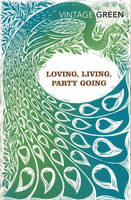
The week of January 23 sees another event coming that  I absolutely had to join. Stu from Winstonsdad’s Blog is hosting a Henry Green week. Henry Green was once thought to be one of the greatest stylists of British literature but is now almost forgotten. I have never read Henry Green and think Stu’s idea is really wonderful. Penguin has issued a tome containing three of his famous novels Loving, Living and Party Going. I’m going to read Loving.

Do you have any Aussie author suggestions?

Will you join the Bolaño group  read or Henry Green Week?

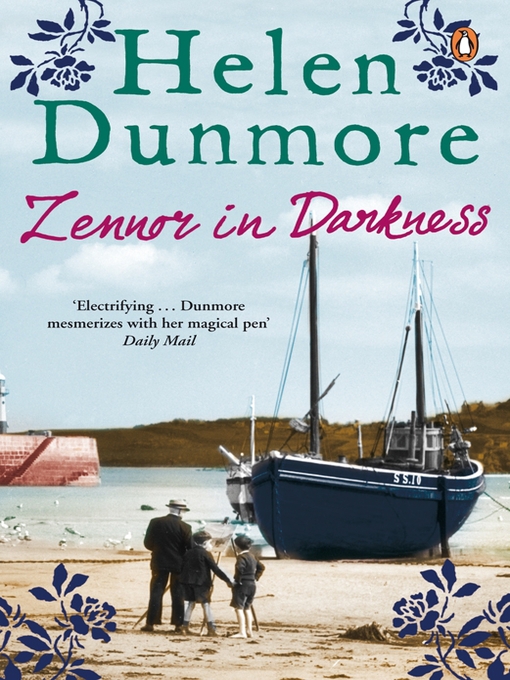
Literature and War Readalong January 30 2012: Zennor in Darkness by Helen Dunmore

Two or three years ago I read Helen Dunmore’s The Siege a painfully realistic and harrowing account on the siege of Leningrad. This was such a stunning novel, one of the best WWII novels I have ever read, accurate, moving, descriptive and captivating despite the bleak topic. When I discovered that she had written a novel on WWI, Zennor in Darkness, I didn’t hesitate and put it on this year’s readalong list right away. Helen Dunmore hasn’t only written novels, but short stories, children’s books and poetry as well. I think her wonderful prose shows that.

The story is set in a Cornish coastal village in 1917 and combines fact with fiction. D.H. Lawrence and his wife have indeed stayed there but the story is invented. The core theme seems similar to Return of the Soldier and deals with shell shock. But it is also a story of artists and writers. I have a weakness for books about artists and love Cornwall as a setting.

Here are the first sentences

One faint shriek. Then another. Three girls fling themselves over the top of the last dune and skid down warm flanks of sand. Marram grass slashes their ankles and sand kicks up behind Clare and Peggy, into Hannah’s eyes. She is the heaviest and the last.

Have you read Helen Dunmore?

*******

The discussion starts on Monday, 30 January 2012.

Further information on the Literature and War Readalong 2012, including all the book blurbs, can be found here.