Wednesdays are wunderbar – It’s Swiss Crime Time – Friedrich Glauser Giveaway

It’s Wednesday again, time for our weekly giveaway. Today’s books by Swiss author Friedrich Glauser have been kindly offered by Bitter Lemon Press.

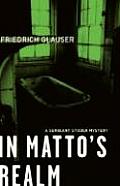
We can give away 2 copies of his classic crime novel In Matto’s Realm. I know it’s somewhat shameful but I haven’t read Glauser yet that’s why I included the description of the Bitter Lemon Press Glauser Page for you.
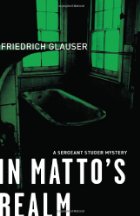
Finalist for the 2005 CWA Gold Dagger Award.

A child murderer escapes from an insane asylum in Bern. The stakes get higher when Sergeant Studer discovers the director’s body, neck broken, in the boiler room of the madhouse. The intuitive Studer is drawn into the workings of an institution that darkly mirrors the world outside. Even he cannot escape the pull of the no-man’s-land between reason and madness where Matto, the spirit of insanity, reigns.

Translated into four languages, In Matto’s Realm was originally published in 1936. This European crime classic, now available for the first time in English, is the second in the Sergeant Studer series from Bitter Lemon Press.

Author Information
Friedrich Glauser was born in Vienna in 1896. Often referred to as the Swiss Simenon, he died aged forty-two a few days before he was due to be married. Diagnosed a schizophrenic, addicted to morphine…

The Translator
Mike Mitchell has translated some thirty books, including ‘Simplicissimus’ by Grimmelshausen and all the novels of Gustav Meyrink. He won the 1998 Schlegel-Tieck German translation prize.

If you would like to win one of the books, please leave a comment. The only condition is that you have been participating in German Literature Month, either with comments, posts or reading along. No need to have your own blog.

The giveaway is open internationally, the books will be shipped by the editor. The winner will be announced on Sunday November 20 at 18.00 – European – (Zürich) time.

Peter Stamm: In Strange Gardens and Other Stories – Blitzeis und In fremden Gärten (1999/2003)

In Strange Gardens: And Other Stories by Peter Stamm

In these stories, Stamm’s clean style expresses despair without flash, through softness and small gestures, with disarming retorts full of derision and infinite tenderness. There, where life hesitates, ready to tip over—with nothing yet played out—is where these people and their stories exist. For us, they all become exceptional.  “Sensitive and unnerving. . . . An uncommonly intimate work, one that will remind the reader of his or her own lived experience with a greater intensity than many of the books that are published right here at home.”

I had a hard time picking a Swiss author for German Literature Month as there are so many good ones to pick from. I chose Peter Stamm because the reviews in Swiss and German newspapers tend to be full of praise but I have never read anything by him. Most of what Stamm has written is translated into English, his novels as well as his short stories. I got Agnes (Agnes German), his first novel but from the English and German reviews I know, it’s his only controversial book, one that you either love or hate. I was much more in the mood to read something that critics called one of “the most beautiful and important books” or “one of the most remarkable achievements of contemporary literature written in German”. And so I chose to read his short story collection Blitzeis. You can find it in the English collection In Strange Gardens and Other Stories that combines two German collections, Blitzeis and In fremden Gärten.

Since I have finished the book I tiptoe around this review. The stories are saturated with a fleeting beauty that is hard to capture. What exactly was it that made me love those stories so much? So much that for the first time, I regretted reading short stories and not a novel. I would have loved to go on reading each and every single one of those stories. Nothing much happens in these pages. People dream and float and meet others. They live some moments of intensity, of joy, of disappointment, of regret. The stories take place in different countries, one is set in Switzerland, some in New York, one in Sweden, another one in Italy, one in the Netherlands. The characters are often from Switzerland, they meet people abroad, are fascinated by the cities and the landscapes they don’t know, some are happy to return to Switzerland, some will stay abroad. They enjoy moments in which nothing much happens.

These stories are, as I said, not so much about plot or even atmosphere but about mood. They achieve to convey a wide range of moods. Sadness, melancholy, joy, apathy… each and every story captures either one or more of these emotional states. At times I was reminded of some Japanese stories and their celebration of fleetingness, at times they reminded me of Anna Gavalda’s first short story collection Je voudrais que quelq’un m’attende quelque partI Wish Someone Were Waiting For Me Somewhere.

To give you a better impression I will pick two stories.

In the Outer Suburbs (In den Aussenbezirken) is the story of a chance encounter. A young Swiss man is walking the streets of New York on an early Christmas morning. He is hung over from the night before in which he had a party with friends. Too much alcohol and too many cigarettes were involved. He walks aimlessly through the streets and feels as if he sees them for the first time. He finally enters a bar and is drawn into a conversation with a drunk whom everyone seems to avoid. Without prejudice or preconceived ideas he listens to the man and they drink together. The drunk is full of wisdom, talks about poetry, and the difference of love poems written by men or women. After a long while they leave the bar together. The afternoon is still bright, although they expected that the night had already fallen. When they part, the drunk thanks him for a beautiful afternoon.

Passion (Passion) is the story of a love in its final hours. The beauty of the Italian summer, the happiness of the narrator who lies awake in the hot night listening to his friends talk below the open window of his sleeping room, contrast with the feeling of an imminent ending. He wants to break up with his girlfriend but when she finally leaves him, he is disappointed.

Peter Stamm’s stories may very well be the greatest discovery of German Literature Month for me. I loved each and every one of them and wanted to go on reading. I can’t wait to read one of his novels. I already got An einem Tag wie diesem – On a Day Like This and it’s likely that I will review it during the last week of German Literature Month.

The review is part of German Literature Month – Week 3 Switzerland and Austria

German Literature Month – November 2011

Finally I am allowed to let you know what Lizzy and I have been planning in the background for quite a while now.

I’m happy to announce that Lizzy Siddal from Lizzy’s Literary Life and I are co-hosting a German Literature Month in November.  Ever since Iris from Iris on Books hosted her Month of Dutch Literature it’s been on our minds to do something similar for the literature of the German-speaking countries. We both share a passion for the literature of Austria, Germany and Switzerland and hope to find many like-minded and interested people to join us.

We have prepared a programme, including two readalongs and a lot of giveaways that generous publishers like Melville House, Bitter Lemon Press, Pereine Press, And Other Stories, Portobello Books and One World Classics have kindly contributed. The giveaways are international with the exception of a few which are UK only.

The official kick off will be on November first,  from then on we will post on alternating days. Lizzy will post on Tuesdays and Fridays, I will post on Mondays and Thursdays. Wednesdays, starting already in October, are reserved for giveaways. The readalongs will take place on Saturdays. Sunday will be weekly wrap up day and the time for announcing the winners of the giveaways.

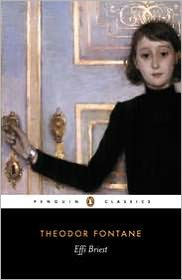
The first readalong is dedicated to  Effi Briest. It will run for three weeks. Details and exact dates are given below.

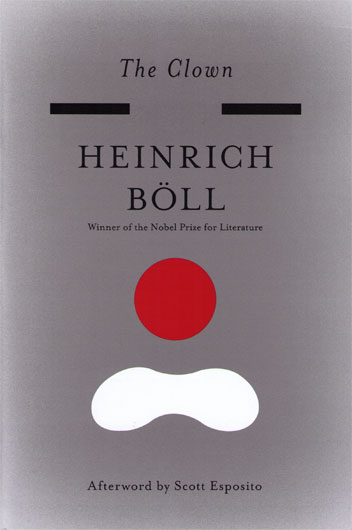
The second readalong is my monthly Literature and War Readalong that I will shift to Saturday and I have also changed the previoulsy announced title. We will read Heinrich Böll’s The Silent Angel. This book is unique for reasons that I will reveal in a later post. On a more personal note it is important to me as Böll is my favourite German author.

The programme will look as follows

Week 1 German Literature

Maybe you like Thomas Mann or you are a fan of Genazino. Now’s the time to share this.

Week 2 Crime Fiction

There are a lot of crime novels written in German out there. Whether you like it gritty or rather go for psychological suspense, you are sure to find something.

Week 3 Austria and Switzerland 

You could either read some of the 19th century Swiss classics like Gotthelf, Keller or Meyer or finally read the Roths and Zweigs you have had on your TBR pile for years.

Week 4 Kleist and Other German Classics

Kleist died 200 years ago. We are going to read some of his novellas and give away some of his books but we will also read other classics.

Week 5 Read As You Please and Wrap Up

Wrap up week is a chance to read and review whatever you like. I’ll go for something that hasn’t been translated yet.

Three Week Readalong on Saturdays  (5th chapters 1-15, 12th chapters 16 – 24 and 19th chapters 25 – 36, 280 pages)

Literature and War Readalong 2011 on Saturday 26th November

The Silent Angel (184 pages)

Giveaways

These are some of the possible titles for the giveaways. The exact titles will be announced on the giveaway days.

We will post a few times in the upcoming weeks sharing reading suggestions, as we hope that many of you will read and review with us.

The idea is that you link your posts in the comment sections of our posts. The Sunday will be wrap up day in which we will give an overview of everything that has happened through the week.

Get your copies out, enter the giveaways, or buy a few books and join us.

Feel free to use the button and spread the word.

I’m looking forward to November.

Visit the German Literature Month Page for regular updates.

Urs Widmer: My Mother’s Lover (2011) aka Der Geliebte der Mutter (2000) One of the Finest Swiss Authors Finally Translated

It’s Switzerland in the 1920s when the two lovers first meet. She is young, beautiful, and rich. In contrast, he can barely support himself and is interested only in music. By the end of their lives, he is a famous conductor and the richest man in the country, but she is penniless. And most important of all, no one knows of her love for him; it is a secret he took to his grave. Here begins Urs Widmer’s novel “My Mother’s Lover”. Based on a real-life affair, “My Mother’s Lover” is the story of a lifelong and unspoken love for a man – recorded by the woman’s son, who begins this novel on the day his mother’s lover dies. Set against the backdrop of the Depression and World War II, it is a story of sacrifice and betrayal, passionate devotion and inevitable suffering. Yet in Widmer’s hands, it is always entertaining and surprisingly comic – a unique kind of fairy tale.

Urs Widmer is one of the finest Swiss authors of German language. He has been compared to Frisch and Dürrenmatt but that isn’t doing him any justice. I personally like him more. His novellas and novels are always very nostalgic, melancholic and bitter-sweet. There is beauty and sadness in equal doses. Recently I looked which of his works has been translated and couldn’t believe that until now there wasn’t any English translation available. Seems as if his novel Der Geliebte der Mutter aka My Mother’s Lover is the first of his books that has been translated into English. It will be out in June. That is incredibly good news. This really is an author to discover and My Mother’s Lover is a good starting point as it is one of the best novels of German language of the last decade. It is rich, it is dense, it is colourful and as powerful as a slap in the face.

My Mother’s Lover is told in first person peripheral, a point of view I like a lot. Some of the best works of literature have made use of it (Le Grand Meaulnes, The Great Gatsby… ). It is a very poetical point of view. In this novel, it is the son who tells his mother’s story. A story that spans over eighty years and begins just before the Black Thursday 1929, when Clara, the mother, is some 20 years old. Widmer tells the story of a life and a century with all the joy, sadness, madness and tragedy there was in both.

Clara is the daughter of an Italian whose great grand-father was of African descent. Her father left his Northern Italian hometown to live in Switzerland, Zürich, where Clara is born. The mother died young and Clara grew up with her father enjoying a life of ease and wealth. They loved going to concerts and that is how she met Edwin, the man who should become the love of her life and one of the most famous conductors of all time.

The Black Thursday 1929 kills her father and ruins her. She starts to work for Edwin and his orchestra and leads a life of joyful bohemianism. Together with Edwin and the orchestra they travel to Paris, sit in restaurants and bars and discuss all night long. She becomes Edwin’s lover.

The descriptions of the cities in the novel are among the best parts. Clara travels to pre-war Frankfurt that was a city full of charm and narrow medieval streets. Clara also travels to Italy where her relatives life on a vineyard, producing some of the best Italian wine. She even sees Mussolini.

Clara gets pregnant and contrary to what she expects Edwin wants her to get rid of the child. She doesn’t realize that this is the end of the affair. Edwin marries the rich daughter of an industrialist and – we never really understand why – Clara gets married to the narrator’s father who stays somewhat non existent throughout the book.

The first part of the book spans maybe 5 years, the second part almost sixty. What is told from now on is the descent of a fragile woman with a great appetite for life and a passionate love for music. She is robbed of the life she loves and the man she desires. The juxtaposition of Clara’s life and the outbreak of the second world war is incredibly masterful. We see Clara like a figure on a stage and the history of the second world war like a moving canvas in the back. Clara plants vegetables, Hitler invades Poland, Clara cooks marmalade, Hitler drives the British into the sea at Dunkirk… It is breathtaking. And so is Clara’s story. After leading a normal life at first and having a child, the narrator, all of a sudden, she slowly goes mad. She who always fantasized a lot invents a dozen ways of killing herself. Of course she thinks of taking the child with her. After a breakdown, she ends in the asylum where she stays for a long time. Although she leaves the asylum again, she returns to it all through her life until her violent death.

Apart from being the story of a life, a century, it is also an homage to classical music and art in general. You will discover many names of musicians you know and maybe a few new ones.

Widmer takes barely 140 condensed pages to tell this century long story. It has a staccato rhythm. Phrases vary considerably in length. Fragments alternate with parataxis and longer phrases with subordinate clauses. That doesn’t make for smooth reading. At least not in German. Another writer would have told this story in 300-500 pages but he would never have made you feel as if you had jumped from a cliff at the end of it. And still, and this is Widmer’s most prominent feature as a storyteller, you know you have witnessed beauty. There is always something tragic about beauty… It doesn’t last, does it? Beauty has to be captured in art. And that’s what Widmer excels at.