Gabriel Chevallier: La Peur – Fear (1930) Literature and War Readalong June 2014

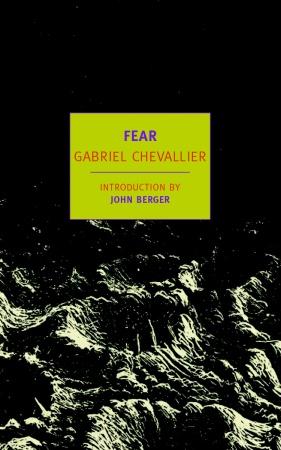
Fear

Most of the books we read for the Literature and War Readalong are historical novels, written by people who do not have any experience of war. But I always try to make sure to include at least one novel or memoir written by someone who had first-hand experience. Gabriel Chevallier’s Fear – La Peur is one of those. Like his narrator Jean Dartemont, Chevallier was a simple soldier during WWI. He served from 1914 to the end of the war. In 1915 he had a small break because he was wounded but was sent back to the front-line after his recovery. Reading his account it sounds like a miracle that anyone could survive this long under such circumstances. Given the title of this novel it may also come as a surprise that its author returned highly decorated. He was awarded the Croix de Guerre and the Chevalier de la Légion d’honneur.

Most of the time reading La Peur felt like reading a memoir and I suppose most of it is autobiographical. What drew me in from the beginning was the voice. I hope they were able to capture this unique and powerful voice in the English translation. A voice that mentions everything, denounces everything, and lets us get as close to the war in the trenches as possible without having been there.

The book hasn’t a plot as such, it’s more an episodic account of Dartemont’s experience of WWI and his thoughts. Not for one second does he think the war is noble, nor does he ever strive for glory. He sees right through most of the cowardly and sadistic officers and he speaks openly. Not always though. Sometimes he’s just too baffled to speak his mind like when an elderly man asks him on his leave whether they are having fun. Those at home think it’s all a great adventure, just like most of those who signed up early on.

Dartemont who was a student didn’t sign up for “gloire et patrie” (glory and homeland), he signed up because he wanted to see. He’s a very curious person, that’s probably why he never averts his eyes, no matter how scared he is. In the beginning he’s just like a participant observer. At first he’s far from the most intense fighting but once he’s seen his first battle, the first dead people and horribly wounded, fear is his constant companion.

I don’t think I’ve ever read anything quite like this. Not for one second are we led to believe that going to war is heroic. It might very well be one of the most openly anti-war books I’ve ever read. Free of any sentimentality, free of any attempt to make us swallow the bitter pill by telling some touching story. It’s just one man’s account of the most horrible things one can experience.

The parts that shocked me the most are not the gruesome descriptions of the wounded and the dead but those that show how utterly ill prepared most of the attacks were. And how incapable and idiotic most of the high command was. How can you expect to win a battle when the enemy is dug in and your soldiers are just running into open fire? No wonder there were some battles in which there were 50,000 to a 100,000 dead and wounded within two hours. All this led to the mutinies of 1917. Of course it wasn’t much better on the British side. Unfortunately many officers were not only useless but petty and sadistic, mean-spirited and small-minded, and managed to turn even times of rest into nightmares.

Seeing how scared Dartemont was all through the war, and how long he stayed in the trenches, I was wondering why he wasn’t shell-shocked. I think he must have had an extremely strong character. Unlike so many, he never looks away, not even when he’s scared. He’s always aware that any moment could be his last, that he could end up maimed for life from one second to the other. This extreme awareness, paired with a strong character, seems to have helped him stay sane through the madness.

As awful and detailed as many of the description were, I liked reading this, because I liked the narrator’s voice so much. Staying this matter of fact in such mayhem is admirable.

I’m not surprised this book went out of print in France when WWII broke out. It’s as powerful as it is subversive. Chevallier rips off the masks of all those who pretend war is noble.


Other reviews

 Guy (His Futile Preoccupations)

Judith (Reader in the Wilderness)

*******

Fear – La Peur is the sixth book in the Literature and War Readalong 2014. The next book is the WWI novel The Lie by Helen Dunmore. Discussion starts on Monday 28 July, 2014. Further information on the Literature and War Readalong 2014, including the book blurbs can be found here.
Literature and War Readalong June 27 2014: Fear aka La Peur by Gabriel Chevallier

Fear

Every year there is at least one book in the readalong I’m dreading. This year Gabriel Chevallier’s Fear –La Peur is one of them. Cheavllier called it explicitly an anti-war novel and at the same time his wish was to be as truthful as possible, to tell things as they were and to make those, who were not there understand what the war was like. His own experience as an infantryman made him especially qualified to write about the war.

In the French edition of the book is a foreword from 1951 and reading it, one could almost think thar Chevallier himself thought that he went too far. Probably it’s not surprising that the book went out of print when WWII broke out as it was considered bad for morale.

In any case, it’s one of the great French WWI classics. Another one of Chevallier’s novels, Clochemerle, was quite successful.

Here are the first sentences

The fire was already smouldering somewhere in the depths of Europe, but carefree France donned its summer costumes, straw hats and flannel trousers, and packed its bags for the holidays. There wasn’t a cloud in the sky – such an optimistic, bright blue sky. It was terribly hot and drought was the only possible worry. It would be so lovely out in the country side, or down by the sea. The scent of iced absinthe hung over the café terraces and gypsy orchestras played popular tunes from The Merry Widow which was then all the rage.

Some details and the blurb for those who want to join

Fear – La Peur by Gabriel Chevallier (France 1930)  WWI, Classic, Novel, 320 pages

It is 1915. Jean Dartemont is just a young man. He is not a rebel, but neither is he awed by authority and when he’s called up and given only the most rudimentary training, he refuses to follow his platoon. Instead, he is sent to Artois, where he experiences the relentless death and violence of the trenches. His reprieve finally comes when he is wounded, evacuated and hospitalised.

The nurses consider it their duty to stimulate the soldiers’ fighting spirit, and so ask Jean what he did at the front.

His reply?

‘I was afraid.’

First published in France in 1930, Fear is both graphic and clear-eyed in its depiction of the terrible experiences of soldiers during the First World War.

*******

The discussion starts on Friday, 27 June 2014.

Further information on the Literature and War Readalong 2014, including all the book blurbs, can be found here.

Michael Morpurgo: Private Peaceful (2003) Literature and War Readalong May 2014

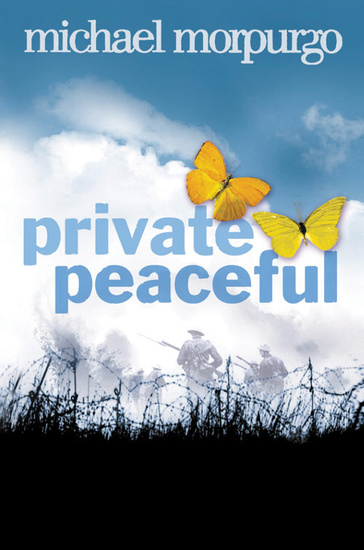
Private Peaceful

British author Michael Morpurgo is one of the most appreciated writers for Children. He was the UK Children’s Laureate from 2003 to 2005 and Writer in Residence at the Savoy Hotel in 2007. He won many prizes for his fiction.

Tommo Peaceful is the narrator of Private Peaceful. He begins his story at five past ten in the evening, after everyone else has left him. He awaits the next day with anxiety but he doesn’t want any company or distraction. He wants to spend the night thinking about his life. The chapters are all given a specific time and each intro to the chapter describes briefly Tommo’s surroundings and his state of mind. After the intro Tommo tells us in flashbacks his story, from the idyllic childhood in the English countryside to the trenches of WWI.

Tommo is one of three boys. At the age of nine his father dies in an accident and Tommo feels responsible for his death. Although he and his older brother Charlie are very close, he never mentions what happened in the woods, the day their father dies. They have an older brother Big Joe who had Meningitis as a child. He can’t go to school and is easily agitated but they are still very fond of him.

Their father’s death marks a transition from a carefree life to a life of some hardship. They are at the mercy of the Colonel in whose cottage they live. The cottage is tied to a function and after the death of the father, who was the forester, they would have to leave. The Colonel’s estate is big and many people and families work for him and so Tommo’s mother is offered a position at the big house, and they can stay in the cottage.

The years go by and there is happiness and heartache in equal measures. When WWI breaks out, they don’t think they are affected. Tommo is only 16 and Charlie, who is two years older, doesn’t think of volunteering but in the end they are forced. Although Tommo is too young, he doesn’t want to abandon Charlie and pretends he’s older. Finally they are shipped to France together. From there they move on to Belgium and stay near Ypres for the following months.

They don’t see any action at first but eventually they come under heavy fire. From then on we get an impression of everything that was typical or important during WWI: trench warfare, mustard gas, rats, rain, mud, high numbers of casualties among men and horses, arbitrariness of orders, sadism of the high command, absurdity of it all . . . While it’s usually key to show but not tell, Morpurgo often tells but doesn’t show. He stays away from graphic descriptions or anything that you could call gruesome. We still get the horror because we see how it affects Tommo. Most of the time, we just don’t get to see what he sees. I think that’s a great way to go in a Children’s book.

What works particularly well in the book is the contrast between the childhood and teenage years and the war scenes. Morpurgo takes a lot of time to introduce us to his characters and to make us care for them. While some of the secondary characters are a bit stereotypical, the main characters Charlie and Tommo are well-developed. Their relationship is very close and they would give everything for each other.

As I wrote in the introduction to this month, I was particularly interested to see how a Children’s author would handle a WWI book from the point of view of a soldier. I think Michael Morpurgo did an admirable job. I’m sure, children will get a good impression for the particularities of WWI. And they will care for the characters and feel deeply about the end. For an adult reader who has read some very similar books for adults – Strange Meeting and How Many Miles to Babylon come to mind – it was not exactly a huge revelation, but in spite of that, I found the twist at the end harrowing.

Other reviews

Danielle (A Work in Progress)

 Judith (Reader in the Wilderness)

*******

Private Peaceful is the fifth book in the Literature and War Readalong 2014. The next book is the WWI novel Fear – La Peur by Gabriel Chevallier. Discussion starts on Friday 27 June, 2014. Further information on the Literature and War Readalong 2014, including the book blurbs can be found here.

Literature and War Readalong May 30 2014: Private Peaceful by Michael Morpurgo

Private Peaceful

Michael Morpurgo is a famous British Children’s author. Some of you may know him from the Spielberg movie War Horse, which was based on one of his novels. I’ve had Private Peaceful on my piles for a while and I’m really keen on reading it finally. I’ve always wondered how you write about war for children. Especially from the point of view of a soldier. We’ve read the Dutch novel Winter in Wartime last year, but that was set among civilians. So I’m curious to find out how explicit the book will be and where Morpurgo draws the line.

I’m glad that CarolineD made me aware that Private Peaceful and My Dear I Wanted to Tell You (our choice for September) have been chosen by CityRead London 2014. CItyRead London is a project to promote reading across the UK capital.

Here are the first sentences

They’ve gone now, and I’m alone at last. I have the whole night ahead of me, and I won’t waste a single moment of it. I shan’t sleep it away. I won’t dream it away either. I mustn’t, because every moment of it will be far too precious.

And some details and the blurb for those who want to join

Private Peaceful by Michael Morpurgo (UK 2003)  WWI, Children’s Book, 192 pages

Heroism or cowardice? A stunning story of the First World War from a master storyteller.

Told in the voice of a young soldier, the story follows 24 hours in his life at the front during WW1, and captures his memories as he looks back over his life. Full of stunningly researched detail and engrossing atmosphere, the book leads to a dramatic and moving conclusion.

Both a love story and a deeply moving account of the horrors of the First World War, this book will reach everyone from 9 to 90.


*******

The discussion starts on Friday, 30 May 2014.

Further information on the Literature and War Readalong 2014, including all the book blurbs, can be found here.

Pat Barker: Toby’s Room (2012) Literature and War Readalong April 2014

Toby's Room

I’ve been procrastinating all morning. Every time I sat down to write this review I had something very urgent to do. Read the afterword of Fire and Hemlock, read the news on the Ukraine, get a cup of tea, look for cat number 2, read more news on the Ukraine, read the guardian review of Toby’s Room, urgently hunt for a book voucher, read the NY Times review of Toby’s Room, call my best friend in Odessa. I think you get the drift. Anything but writing the review.

Why?  Because I’m far from happy about this book and because I’m going to say what the critics didn’t say: it’s a mixed bag and despite a lot of good elements – mainly the choice of topic – it’s pretty much a failure or – even worse – a dishonest attempt. Still, it would be a great book club pick, as its strengths are topics and characters. That’s why I think it was a good choice for our readalong and if a few people read it, the discussion should be interesting.

So what’s Toby’s Room about? Thanks to the Guardian review, I was made aware that the title is an allusion to Virginia Woolf’s Jacob’s Room, the novel which she wrote after her brother Thoby died in WWI. It’s not surprising then that Virginia Woolf has a cameo appearance in Toby’s Room. I’ve read Jacob’s Room too long ago to make the connection, but I’m tempted to revisit it.

Elinor and her brother Toby are close, too close, one could say. One afternoon, in 1914 they spend a night together. This is deeply traumatizing for Elinor, although she’s not a victim in the whole encounter. Later when they are both in London, Elinor studying to become a painter, Toby to become a doctor, their relationship is strained.

In 1917 Toby’s reported “Missing, believed Killed”, which affects Elinor deeply. Until that day she tried to avoid thinking of the war but the death of her brother and the uncertainty of the circumstances, propel her right into it.

When Elinor finds a letter her brother wrote shortly before his death, mentioning Kit Neville, a famous painter, knows what happened to him, she barges in on Neville who’s at a hospital for soldiers with facial wounds. She disregards his state and unease and tries to force him to confess what happened. To no avail.

The second part of the novel sees Elinor join Tonks, her former teacher. Tonks is a painter and surgeon who helped a great deal in giving back some sort of face to those who had been severely disfigured. Part of his and Elinor’s work consists in drawing the wounded men before, during and after surgery. The gallery of this drawings can be visited online here (I managed to look at two).

Neville doesn’t confess to Elinor, he will confess to the far more sympathetic Paul, Elinor’s lover, whose story is told in Barker’s Life Class.

Pat Barker is famous for blending fact and fiction, for introducing us to important topics – I shy away from calling facial reconstruction “fascinating” as she herself does in her afterword – and for addressing the complexity of WWI. And she’s a very good plotter. The book reads like crime fiction. From the very beginning we are drawn along, running like donkeys after a carrot, to find out “Whatever happened to Toby?” I’m grateful for Pat Barker’s plotting skills, it made for quick reading, but when the juicy carrot I’d been hoping for proved to be a shriveled scrap, I felt let down. I didn’t buy the end. It wasn’t believable for me, but very much in line with the sensationalist beginning.

My biggest problem however was that she felt she had to start with an incest. Why was that necessary? I can relate to someone’s attachment to their brother, I didn’t need an incest to understand that they were very close and that their relationship was far from uncomplicated. This leads me to another problem I had with the book – heavy-handed foreshadowing.

Before I move on to the good parts, let me just say that I found Elinor a off-putting character. Not only did I despise her for blocking out the war, but for being so insensitive. In a way, the novel wants to tell us, it’s that character trait that made her useful. If she’d been more emotional, more sensitive, she wouldn’t have been able to draw the atrocities she saw. I don’t think that is true. I think there are people capable of deep empathy who can still do work like that.

What I liked about this novel, besides its suspenseful readability, was the choice of topics. I’d never heard of Tonks before and I found it interesting how the novel showed that the painters had to document everything in great detail but that they knew it would never be shown publicly. Some of the other painters mentioned painting landscapes as a metaphor. The war can be shown metaphorically but not realistically.

Neville isn’t a sympathetic character either but he’s a great character nonetheless. His story illustrates how hard it was for people to handle seeing facial mutilations. It was so hard that they often ceased to think about the person who was “behind” the disfigurement. They seemed to have lost their humanity with their faces and thus the repulsive reactions of the people were only occasionally questioned.

The more I read, the more I was wondering whether the fact that these injured men were sent to hospitals outside of cities was not so much for their own good as for the good of the population. These parts were done admirably well in the novel and the juxtaposition with scenes in which Elinor learns how to become a better painter through anatomy lessons and dissecting a corpse is great as well.

As a whole however I would say that this novel with its shifting POVs and sensationalist beginning and ending, is a failure. But a very thought-provoking failure.

I’m curious to hear the thoughts of others. Did you think the incest was a good choice? And what about the many different POVs and Elinor’s diary?

Other reviews

CarolineD

Danielle (A Work in Progress)

Maryom (Our Book Reviews)

The Mole

*******

Toby’s Room is the fourth book in the Literature and War Readalong 2014. The next book is the WWI novel  Private Peaceful by Michael Morpurgo. Discussion starts on Friday 30 May, 2014. Further information on the Literature and War Readalong 2014, including the book blurbs can be found here.
Literature and War Readalong April 28 2014: Toby’s Room by Pat Barker

Toby's Room

With Pat Barker’s novel Toby’s Room, we’re leaving the American Civil War behind and move on to WWI. All the books following Toby’s Room are dedicated to WWI.

Pat Barker is one of my favourite writers and her Regeneration Trilogy one of my favourite books. I read all three volumes (RegenerationThe Eye in the DoorThe Ghost Road) back to back and was genuinely sad when I turned the last page. It wasn’t only a story about WWI, but about shell shock, the development of two young disciplines (anthropology and psychiatry) and some of the famous poets who fought in the trenches. My love for her trilogy prevented me from picking up any of her other books, but now, some six years after I’ve read her masterpiece, I’m in the mood, to find out how I will like another of her novel. The scope of Toby’s Room is much smaller, the topics not as varied, but I still hope I won’t be disappointed. As far as I can judge from the blurb, Toby’s Room is a harrowing tale, touching on themes like disfigurement and facial reconstruction.

The first paragraph

Elinor arrived home at four o’ clock on Friday and went straight to her room. She hung the red dress on the wardrobe door, glancing at it from time to time as she brushed her hair. that neckline seemed to be getting lower by the minute. In the end her nerve failed her. She hunted out her pink dress, the one she used to wear for dancing classes at school, put it on and stood in front of the cheval mirror. She turned her head from side to side, her hands smoothing down the creases that had gathered round the waist. Oh dear. No, no, she couldn’t do it, not this time, not ever again.She wriggled out of it and throw it to the back of the wardrobe. Out of the window would have been more satisfying, but her father and brother-in-law were sitting on the terrace. She pulled the red dress over her head, tugged the neckline up as far as it would go, and went reluctantly downstairs.

And  some details and the blurb for those who want to join

Toby’s Room by Pat Barker (UK 2013), WWI, Novel, 272 pages

Pat Barker returns to the First World War in Toby’s Room, a dark, compelling novel of human desire, wartime horror and the power of friendship.

When Toby is reported ‘Missing, Believed Killed’, another secret casts a lengthening shadow over Elinor’s world: how exactly did Toby die – and why? Elinor determines to uncover the truth. Only then can she finally close the door to Toby’s room. Moving from the Slade School of Art to Queen Mary’s Hospital, where surgery and art intersect in the rebuilding of the shattered faces of the wounded, Toby’s Room is a riveting drama of identity, damage, intimacy and loss. Toby’s Room is Pat Barker’s most powerful novel yet.

*******

The discussion starts on Monday, 28 April 2014.

Further information on the Literature and War Readalong 2014, including all the book blurbs, can be found here.

Geraldine Brooks: March (2005) Literature and War Readalong March 2014

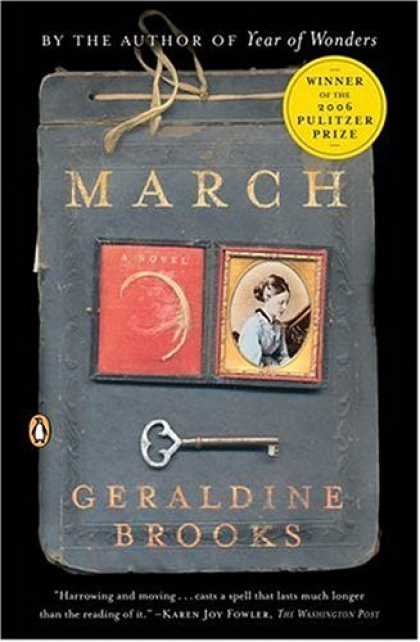
March

It seems I have far less stamina than before, when it comes to finishing books I don’t like, even when they are my own readalong choices. While I did finish this novel, I must admit I read large portions of it diagonally, after having suffered through the first 15o pages. I’m not quite sure why I disliked March so much, I only know I did.

March tells the imagined story of the absent father in Louisa May Alcott’s Little Women. The father of the four girls has joined the Northern troops as a chaplain. The father is the narrator of the book – with the exception of a few chapters towards the end, which are told by his wife. Many of the chapters start with a letter to his wife, then they describe things that happen in the present and move back to the past, showing how March developed a sensibility for the cause or how he became an abolitionist.

As a young man, March toured the South as a peddler and that’s how he came into contact with Grace, a very cultivated and intelligent slave.  Together they wanted to teach a young girl to read and write, an undertaking that had fatal consequences. March falls in love with Grace and when he meets her again, later in the book, now a married man and father, it puts a lot of emotional pressure on him.

For the creation of the character March, Geraldine Brooks used the biography of Louisa May Alcott’s father Bronson Alcott. She introduces real characters like Emerson and Thoreau and the militant abolitionist John Brown. Introducing real characters, giving March the biography of a real person, could have made this book very authentic, but for me that’s what made it artificial and turned it into a pamphlet.

The many scenes leading to March’s awareness of the mistreatment of slaves and the stories that took place during the war, are harrowing and described in great detail, but they didn’t work for me either because of the voice. The biggest problem I had with this book was the voice. The tone was that of a goody-goody and often mawkish and preachy. At no time did I have the feeling of being transported to 19th Century America, but I never forgot that I read a book written by a 21st Century author with all the sensibilities of our time, with our thoughts, feelings and outrage about slavery. I’m sure that people who fought against slavery at the time, were outraged as well, still, it didn’t ring true. What diminished the message in this book was the combination of anti-slavery views and transcendentalist beliefs, which led to a peculiar mix that annoyed me.

Geraldine Brooks won the Pulitzer for this book, but, frankly, I don’t understand why. The style is heavy and preachy, the tone mawkish. The only passages that worked were the descriptions. Those were great.


Other reviews

*******

March is the third book in the Literature and War Readalong 2014. The next book is the WWI novel Toby’s Room by Pat Barker. Discussion starts on Monday 28 April, 2014. Further information on the Literature and War Readalong 2014, including the book blurbs can be found here.