Wednesdays are wunderbar – It’s Swiss Crime Time – Friedrich Glauser Giveaway

It’s Wednesday again, time for our weekly giveaway. Today’s books by Swiss author Friedrich Glauser have been kindly offered by Bitter Lemon Press.

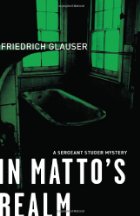
We can give away 2 copies of his classic crime novel In Matto’s Realm. I know it’s somewhat shameful but I haven’t read Glauser yet that’s why I included the description of the Bitter Lemon Press Glauser Page for you.

Finalist for the 2005 CWA Gold Dagger Award.

A child murderer escapes from an insane asylum in Bern. The stakes get higher when Sergeant Studer discovers the director’s body, neck broken, in the boiler room of the madhouse. The intuitive Studer is drawn into the workings of an institution that darkly mirrors the world outside. Even he cannot escape the pull of the no-man’s-land between reason and madness where Matto, the spirit of insanity, reigns.

Translated into four languages, In Matto’s Realm was originally published in 1936. This European crime classic, now available for the first time in English, is the second in the Sergeant Studer series from Bitter Lemon Press.

Author Information
Friedrich Glauser was born in Vienna in 1896. Often referred to as the Swiss Simenon, he died aged forty-two a few days before he was due to be married. Diagnosed a schizophrenic, addicted to morphine…

The Translator
Mike Mitchell has translated some thirty books, including ‘Simplicissimus’ by Grimmelshausen and all the novels of Gustav Meyrink. He won the 1998 Schlegel-Tieck German translation prize.

If you would like to win one of the books, please leave a comment. The only condition is that you have been participating in German Literature Month, either with comments, posts or reading along. No need to have your own blog.

The giveaway is open internationally, the books will be shipped by the editor. The winner will be announced on Sunday November 20 at 18.00 – European – (Zürich) time.

2 German Crime Ladies: Charlotte Link and Petra Hammesfahr

There are two German crime writers who are more famous than most others in Germany and these are Charlotte Link and Petra Hammesfahr. While Charlotte Link is probably by far the most read German author she has so far not been translated into English. That’s why I was so pleased when I saw that finally it’s going to happen. Her novel The Other ChildDas andere Kind will be published at the beginning of 2012. Here is the blurb:

A suspenseful and atmospheric new psychological crime novel from ‘Germany’s most successful living female author’

An old farm, a deserted landscape, a dark secret from times past with fatal consequences for the present. In the tranquil northern seaside town of Scarborough, a student is found cruelly murdered. For months, the investigators are in the dark, until they are faced with a copy-cat crime.

Charlotte Link is such a good example for another type of genre that German writers excel at and that is historical fiction. The amount of books and authors is amazing.

Link is famous for her psychological novels in the vein of Mary Higgins Clark and for her long family sagas and historical novels. The Other Child which I have not read yet – I wanted to but 700 pages were not feasible for German Literature Month – combines both. The story is set in 1970 – 2008 and during WWII in England. Young women are being killed, the crimes resemble each other and the trace to the killer seems to go back to WWII. One of the themes is the children that were sent to the country during the war.

Link has an easy but very gripping way of writing. I’ve read many of her psychological thrillers of women who are being stalked by ex-lovers. Her world is often one in which men are predators, but her descriptions are great and atmospherical and the pace is appealing. If this is really, as it seems, her first novel in English, I’m not sure how good a choice it is. It’s cunning to test the waters with a genre blend, I suppose, because if this book is loved, chances are high that her psychological thrillers and her historical novels will be equally liked.

For German Literature Month I picked up a slim volume of short stories by Petra Hammesfahr. While these stories have not been translated, Hammesfahr’s novels are slowly available in English and seem as succesful as they are in her native Germany. While Link is strong on plot and pace, Hammesfahr is even stronger on psychology. Whenever I start one of her novels, I don’t want to stop. I had the same experience when reading her short stories. Accurate descriptions, psychological insights and a surprising ending. Good people turn into criminals because the monotony and madness of daily life becomes too much to bear or highly dysfunctional people become delinquent because there was just this one moment that made them snap.

Hammesfahr, unlike Link, combines the very ordinary with the uncanny, the sick, the revolting. The outcast who may not be guilty, the housewife who may be.

The novels available in English so far are The Sinner Die Sünderin and The LieDie Lüge. I would hope that others will be translated. Most of all Der stille Herr Genardy.

Of the three German crime novelists I reviewed, Noll is the most literary, Link, the most mainstream, and Hammesfahr is somewhere in between. For you to choose what you prefer. I like them all, depending on my mood.

The review is part of German Literature Month Week II – Crime

German Literature Month Week I Wrap-up and The Winners of the Heinrich Böll Giveaway

This post has two parts. First is the wrap-up of Week I of our German Literature Month – focussing on literature from Germany. Please do not just skip it. It’s a tribute to all our participants. We have already seen some really amazing contributions and I would like to thank all of you for this.

There have been a lot of interesting lists and contributions made during October. They are HERE. This is the wrap-up of Week I.

Here are all of this weeks’ links with my impressions:

Week I

Lizzy has made a post on how to find German books in translation and a review of a very unique sounding book by Alina Bronsky.

The Magic Mountain of German Literature

The Hottest Dishes of the Tartar Cuisine by Alina Bronsky

Caroline – I have compiled a post with 14 women writers that shouldn’t be missed and reviewed Sebald’s book on the absence of the description of the destruction of German cities during WWII from German post-war literature. The book leads us to the Böll readalong on November 26.

14 Women Writers You Shouldn’t Miss

On the Natural History of Destruction – Luftkrieg und Literatur by W. G. Sebald

The Participants

Neer (A Hot Cup of Pleasure) shares her German Literature Month inspired Wishlist.  That’s always a risk with events like this. You may end up with far more books than before.

Christina from Ardent Reader hopes to be able to keep up with her Reading plans.

Danielle (AWork in Progress) introduces her choices. A list with descriptions. Plans for German Literature Month 

Emma (Book Around the Corner) wrote an enthusiastic review of  Fame by Daniel Kehlmann that she calls a “strange exhilarating book”.

sakura (chasing bawa) is thrilled by her discovery of Dark Matter by Juli Zeh  and adds (after having been tracked down by the German Literature Month Police , i.e. me) an Introduction.

Jackie (Farm Lane Books) wrote a very appealing review of the WWII novel Death of the Adversary by Hans Keilson. Not an easy read, highly literary but rewarding.

Guy Savage (His Futile Preoccupations) dethrones Goethe in his musings on  On Goethe’s Elective Affinities and reestablishes him again – at least in parts – in  On Goethe’s Elective Affinities Part II. The review is to follow.

Rise (in lieu of a field guide) reviewed Visitation by Jenny Erpenbeck and compares it to the passage of time chapter in Virginia Woolf’s To the Lighthouse.

Harvey (Leben, Kochen, Bier u. Fussball) offers a list with interesting choices Introduction with choices.

Eibhlin (Mar gheall ar a léim) shares he reading plans in Eibhlin’s reading plans.

Fay (Read, Ramble) reviews  Herta Müller – Land of Green Plums describing how she wanted to give up after a little while but was rewarded by her persistence.

Rikki (Rikki’s Teleidoscope) enjoyed The Hottest Dishes of the Tartar Cuisine by Alina Bronsky as much as Lizzy. She captures the unusual voice of the narrator very well.

Susanna P (Susie Bookworm)  has added her reading plans German Lit Month Kick off. She already read Lotte in Weimar and is about to pick something else soon.

Priya (Tabula Rasa) shares her reading plans Plans.

Alex The Children’s War wrote an in-depth review of The Oppermann’s by Lion Feuchtwanger. He writes  “What makes The Oppermanns so interesting is that it has the distinction of being the first story of its kind to tell about life under the Nazis and how it affected people opposed to Hitler.”

Parrish (The Parrish Lantern)  wrote a thoughtful review On The Joys of Morphinism by Fallada. Introducing first the life of the author and then writing about the book.

Mel u (The Reading Lives) announces German Literature Month and reviews a very interesting short story by Gerstacker, a lesser known author. His review is proof that it is worth looking for the lesser known.  Announcing German Literature Month and Short Story by Gerstacker

Tony (Tony’s Reading List) has really liked Alois Hotschnig’s – Maybe This Time and already read it twice but he doubts that he will re-read  All the Lights by Clemens Meyer. Although he didn’t mind reading it at all, he doesn’t seem to be convinced it’s all that literary.

Liz (Tortoisebook) shares he reading plans. German Literature Month Plans

Vishy (Vishy’s Blog) has reviewed a wide range of short stories and novellas. A really wide range. Both Lizzy and myself were stunned. This is pretty much an introduction to the most important German writers.  A Wide Range of German Short Stories

Stu (Winstonsdad’s Blog) I was equally amazed about the wide range of books reviewed by Stu. There are some wonderful books to discover here.  An early novel by the Nobel Prize winner Nadirs by Herta Müller , a novella by the author of Perfume The Pigeon by Patrick Süskind, a poetical novella Jarmila by Ernst Weiss and a novel of a Swiss writer A Perfect Waiter by Alain Claude Sulzer.

Amateur Reader (Tom) Wuthering Expectations wrote one post on the melancholic story Flagman Thiel by Gehart Hauptmann (also reveiwed by Vishy) and two posts on Hauptmann’s play Gerhart Hauptmann-Before Daybreak – Gerhart Hauptmann’s characters.

Effi Briest Readalong

Week I

The following people have posted so far, some freestyle, some answering our questions.

Andrew

Caroline

Danielle 


Fay

Eibhlin

Iris

Lizzy

Sarah

Tony

This and That

Yes, we were also featured on the web.

Melville House Press on What to drink when reading Heinrich Böll 

The Millions announce German Literature Month

kulturplease announces German Literature Month

love german books – Kid – On German Literature Month

The Victory Stitch – Peggy  If I were reading

**************

And here, finally, the winners of the Heinrich Böll giveaway courtesy of Melville House Press.

The winner of The Train Was on Time and The Clown is

Priya from Tabula Rasa

The winner of Group Portrait with Lady and Billards at Half-Past Nine is

Guy from His Futile Preoccupations

And the winner of The Irish Journal and The Safety Net is

Stu from Winstonsdad’s Blog

Happy reading Priya, Guy and Stu!

Please send me your address via beautyisasleepingcat at gmail dot com.

The giveaway is part of German Literature Month.

The next giveaway will take place on Wednesday 9 November 2011. Remember… It’s crime week…. there are some great books to be won. And, yes, those who won already can still participate.

Wednesdays are wunderbar – Heinrich Böll Giveaway

I’m so glad that I can give away six books by Heinrich Böll, my favourite German author. The giveaway has been kindly provided by Melville House Press.

We give away 6 novels to 3 winners, 2 novels each. Please tell us which novels you would like.

Here we go (the blurbs are all from the Melville House Böll Page):

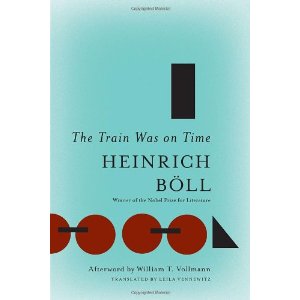
The Train was on Time

Heinrich Böll’s taut and haunting first novel tells the story of twenty-four-year-old Private Andreas as he journeys on a troop train across the German countryside to the Eastern front. Trapped, he knows that Hitler has already lost the war … yet he is suddenly galvanized by the thought that he is on the way to his death.

As the train hurtles on, he riffs through prayers and memories, talks with other soldiers about what they’ve been through, and gazes desperately out the window at his country racing away. With mounting suspense, Andreas is gripped by one thought over all: Is there a way to defy his fate?

The Safety Net

Fritz Tolm has risen to the most powerful position in Germany.

With fame comes fear and vulnerability. Threats to his life are met with the all-pervasive “safety-net” of police protection and surveillance.

Trapped in a house they dare not leave, where every visitor is suspect and every object a potential bomb, Tolm and his family wait to discover when and how terrorism will overtake them.

Group Portrait with Lady

Cited by the Nobel Prize committee as the “crown” of Heinrich Böll’s work, the gripping story of Group Portrait With Lady unspools like a suspenseful documentary. Via a series of tense interviews, an unnamed narrator uncovers the story—past and present—of one of Böll’s most intriguing characters, the enigmatic Leni Pfeiffer, a struggling war widow.

At the center of her struggle is her effort to prevent the demolition of her Cologne apartment building, a fight in which she is joined by a motley group of neighbors. Along with her illegitimate son, Lev, she becomes the nexus of a countercultural group rebelling against Germany’s dehumanizing past under the Nazis … and what looks to be an equally dehumanizing future under capitalism.

Billards at Half-Past Nine

Heinrich Böll’s well-known opposition to fascism and war informs this moving story of a single day in the life of traumatized soldier Robert Faehmel, scion of a family of successful Cologne architects, as he struggles to return to ordinary life after the Second World War. An encounter with a war-time nemesis, now a power in the reconstruction of Germay, forces him to confront private memories and the wounds of Germany’s defeat in the two World Wars.

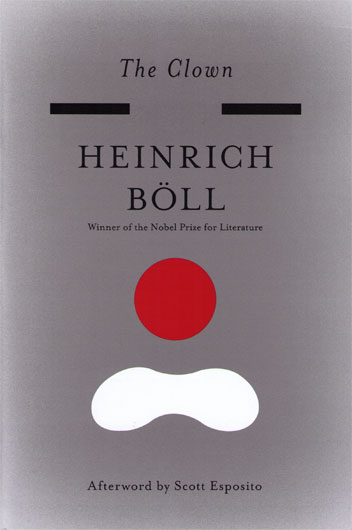
The Clown

Acclaimed entertainer Hans Schnier collapses when his beloved Marie leaves him because he won’t marry her within the Catholic Church.

The desertion triggers a searing re-examination of his life — the loss of his sister during the war, the demands of his millionaire father, and the hypocrisies of hs mother, who first fought to “save” Germany from the Jews, then worked for “reconciliation” afterwards.

Heinrich Böll’s gripping consideration of how to overcome guilted and live up to idealism — how to find something to believe in — gives stirring evidence of why he was such an unwelcome presence in post-War German consciousness … and why he was such a necessary one.

Irish Journal

When Heinrich Böll traveled with his wife to Ireland in the early 1950′s, he was immediately enchanted by the landscape and the people. Reveling in respite from a Europe still recovering from war, he was captivated by what he saw as a friendly and classless society that took life at a more leisurely pace. He was delighted, for example, by the Irish saying that explained why the trains were always late: “When God made time he made plenty of it.” Böll would return again and again.

In this unique entry in his oeuvre, Böll documents his eccentric travels around the Emerald Isle, detailing its charm in a way that gives his own habit of studying character and paradox, not mention national identity, a beguiling twist. The result, here presented with an epilogue written years later with Böll’s observation of changes since his first visit, is a reflection on the essence of a place and its people that is, indeed, evergreen.

*********

If you are interested in two or more of these books, tell me which ones you would like. The only condition is that you tell us about a favourite German book or author or – if you only get started – tell us what books you plan on discovering, which authors or books tempt you.

The giveaway is part of German Literature Month.

Also visit What to drink while reading Heinrich Böll on the Melville House Blog.

The giveaway is open internationally, the books will be shipped by the editor. The winners will be announced on Sunday 6 November 18.00 – European – (Zürich) time.

Initiating German Literature Month or 14 German Women Writers You Shouldn’t Miss

Welcome to German Literature Month or Herzlich Willkommen zum Monat der deutschsprachigen Literatur 

I thought it might be a good idea to start German Literature Month with a post that I had promised to write on some of the most important women writers of German language. German literature is often perceived as being dominated by men.

As you know the first week of German Literature Month is dedicated to German literature. The second will be focussing on crime novels, the third on Austrian and Swiss writers, week number four is Kleist and/or classics week and during the last days of the event you can do as you please. Maybe those who don’t know what to read yet, will find something in the list below.

I’m reading an excellent anthology right now which is called Wenn die Worte fliegen  (When words take flight). The book is out of print but cheap used copies can be ordered. It’s a compilation of 30 German women writers and poets. Some of them have written books I like a lot. I was quite excited and thought it would be great to pick 20 of them and introduce their writing but when I started looking them up, I saw that it was pointless. Not even 50% of them have been translated. Maybe some of you would have been interested anyway, especially those who read German, but for the others it’s a bit pointless. The book focuses mainly on writers of the 20th century and that is no coincidence. There are not a lot of women writers before that.

Finally I decided to introduce 11 writers who have been translated into English – with the exception of Lena Christ and Brigitte Reimann – and to add three earlier authors.

When I was reading the compilation I found it interesting to see how the topic’s change. I think you can find four main currents. Before WWII – war literature – post-war and finally post-wall literature. We shouldn’t forget that until 1989, there were not three countries producing literature written in German, but four. The literature and authors of the Former Democratic Republic of Germany (ex DDR) are quite unique. Their choice of themes is different from the West, they are often far more political and they didn’t have the same freedom of expression. Their books circle around topics that are important for them, like living in a communist state. Their characters question their country and it’s politics, many books describe people who are tempted to leave or who leave.

Sophie von La Roche’s (Germany 1730 – 1807) Geschichte des Fräuleins von Sternheim. Von einer Freundin derselben aus Original-Papieren und andern zuverläßigen Quellen gezogen (1771)  aka The History of Lady Sophia Sternheim: Extracted by a Woman Friend of the Same is the first German novel by a woman and as such foundational. It was very successful and widely read, although, it seems, very often misunderstood. Von La Roche, who was the grandmother of Bettina and Clemens Brentano, always had an educational aim when she wrote. He writing belongs to the Enlightenment and Sentimentalist (Empfindsamkeit) movement, a precursor of romanticism.

Annette von Droste-Hülshoff ‘s (Germany 1797 – 1848) Die Judenbuche  – The Jew’s Beech (1842) is very mysterious, eerie and highly readable. It is an early crime story and has also a very Gothic feel. Droste-Hülshoff however marks the transition between romanticism and realism. When I read this book I was surprised how well-written and truly suspenseful it is. Here is an online version The Jew’s Beech.

Johanna Spyri (Switzerland 1827 – 1901). Her most famous work Heidi (1880) is also one of the most famous Swiss novels and one of the most famous children’s books. It’s the tale of the little orphan girl Heidi who has to live with her cold and distant grandfather, high in the Swiss mountains. This is a tear-jerker that has also been made into movies and TV series. It’s still widely read to children in Switzerland and Germany. I might not have included it, if it hadn’t been so difficult to find another Swiss author who has been translated. For those who read German I would like to recommend the novels of Eveline Hasler. In each one of them she explores the life of a famous woman. Her style is noteworthy and the stories are thought-provoking. Here are links to German books. Anna Göldin. Letzte Hexe, Die Wachsflügelfrau. Geschichte der Emily Kempin-Spyri.

Lena Christ (Germany 1981-1920). Lena Christ was a successful writer but is best known for her autobiographical novel Erinnerungen einer Überflüssigen (Memoir of a superfluous woman). Her books have not been translated but I found this interesting analysis of her work and the works  of authors like Asta Scheib that are based on her life: The Passion of Lena Christ. Lena Christ’s story is famous because it is so tragic. It’s the story of a toxic mother-daughter relationship that ultimately seems to have killed the daughter. Lena Christ committed suicide in 1920. Reading her book is very painful. It’s the story of a sensitive and emotional girl who was crushed by a mean domineering mother.

Anna Seghers (Germany – German Democratic Republic 1900- 1983) This is one of Germany’s most accomplished writers. Her writing during and after the war circles around Nazi Germany and the Holocaust. Seghers was Jewish and fled from Germany. She lived in the Caribbean for a while. Later she settled in the DDR and wrote novels with a distinct socialist theme. Her most famous book Das siebte Kreuz aka The Seventh Cross is a must-read. One of the best books on Nazi Germany. Her short-stories are outstanding as well.

Irmgard Keun (Germany 1905 – 1982). Irmgard Keun’s novels are as interesting as her life. She entered the literary scene early with The Artificial Silk Girl that was a huge success (not her first novel but her biggest success). When the Nazi’s came to power her books were banned and she fled from Germany. After Midnight captures the mood of pre-war Germany like no other. Prone to drinking and self-delusion she often spent long stretches in psychiatric hospitals. The last twenty years of her life she didn’t write anymore and just vegetated in a home. I love the voices of her heroines who capture the pre-war atmosphere and uncover the most terrible things with utter naiveté.
Marlen Haushofer (Austria 1920-1970) has written a few novels but the one that really stands out is The Wall. I have read this book a long time ago but it is still haunting me. This is such a powerful story and I would like to recommend it to all of you who haven’t read it yet. It’s been called dystopian or feminist ecological and whatever not. All wrong. This is an absolutely uncanny look into the frailty of human existence. The protagonist wakes up one morning to find herself totally isolated from any other human being and separated from the rest of the world by an invisible wall. She struggles hard to survive. She isn’t completely alone, she has her animals, one of them a dog. It’s fascinating to see how resourceful she is and after a while her life seems almost normal until the day she senses someone else’s presence…

Ingeborg Bachmann (Austria 1926 – 1973). Bachmann is one of the most interesting German writers. There is nothing she couldn’t write marvellously well. Poems, short stories, a novel. They all contain a rare and savage beauty, something raw and refined at the same time. Her only novel Malina aka Malina (German), which is part of the Todeasartenzyklus (The Cycle of Manners of Death), contains a very uncanny element. I’m not going to reveal it but if you read it and read her biography you will see what I mean. Her books circle around death and different ways of dying. It’s eerie to know that she died a particularly strange death. She was smoking in her bed in Rome and because of the high amount of pain killers she took, she burned alive without realizing it.

Brigitte Reimann (German Democratic Republic 1933 – 1973). If I had studied German literature and had to choose a research topic it would have been her. If I had studied psychology, I would have chosen her as well. Reimann was an amazing woman. She wrote a few novels that are highly engaging, although flawed. I know of no ex DDR writer who was so much in favour of her country and still managed to analyze it in-depth, to show the difficulties, the contradictions. On the other hand she was an excessive woman and an addict like no other. She had probably more lovers than any other writer ever, was married at least four times. She drank excessively and smoked too much. She was only 40 when she died of cancer. What makes her so fascinating is that she kept a diary and reading it is mind-boggling. This was such an intelligent and intellectual woman, yet she didn’t get how unfree she was, unfree through the state she lived in and through her way of life. Her life has been made into an interesting TV movie starring beautiful Martina Gedeck Hunger auf Leben (not sub-titled).
Christa Wolf (German Democratic Republic – Germany 1929 –  ). She doesn’t need a lot of introducing as she is probably one of the best know German women writers. Her oeuvre is interesting and captivating. Some of the early books are easily readable and so are her short stories. Some are complex and almost experimental. I couldn’t recommend one single book as she has written so many and in so many different styles that I would need to know someone to know which one to pick. I personally like No Place on Earth aka Kein Ort. Nirgends that explores the tragic lives of Karoline von Günderrode and Heinrich von Kleist but I would also recommend her Cassandra aka Kassandra which stunned me and her more famous ones A Model Childhood aka Kindheitsmuster and The Quest for Christa T. aka Nachdenken über Christa T.

Monika Maron (German Democratic Republic – Germany 1941 – ) Like Christa Wolf, Monika Maron was born in the former German Democratic Republic and many of the novels she wrote circle around themes related to her home country. Flugasche aka Flight of Ashes is one of the most famous ones and tells the story of a journalist uncovering the environmental pollution stemming from a coal-fired power pant. I like Maron’s later novels a lot. They all explore the inner lives of women and are very subtle and engaging. However they are not translated with the exception of Pavel’s Letters that I haven’t read yet.

Elfriede Jelinek (Austria 1946 – ) Nobel Prize winner.  The Piano Teacher aka Die Klavierspielerin is an unpleasant book. It’s fantastic but I didn’t like it. The story of the piano teacher whose dominant and dysfunctional mother crushes her and turns her into a being torn between masochism and sadism and who tries frantically to repress her own sexuality, is hard to take.
Herta Müller (Romanian born German 1953 – ) Nobel Prize winner. Being awarded the Nobel Prize seems to help you getting published. Most of Herta Müller’s books are available in English. I’m puzzled about the English titles.  The Land of Green Plums  aka Herztier (Heartanimal) The Appointment – Heute wär ich mir lieber nicht begegnet (I would have preferred not to meet myself today), The Passport aka Der Mensch ist ein grosser Fasan auf der Welt (Man is a large pheasant in the world). Herta Müller was born in Romania and her novels all explore life under a communist regime. She wrote novels, poems and essays that all deal with the aftermath of terror, violence and cruelty.

Judith Herrmann (Germany 1970 – ). If you would like to read a contemporary author who has so far refrained from writing about WWII or history in general but prefers to explore her characters interior lives and how they are rooted in our contemporary society, then you should read Judith Hermann. I’ve hardly been as impressed by a collection of short stories as by her Summerhouse, later. She has since written another collection Nothing but Ghosts and a novel Alice. This is contemporary German writing at its best. Poignant and poetical.

I could add a lot of other names. Especially in the last few years there have been a lot of new voices, some of them great. Lizzy will focus more on newer books and will also review the one or the other younger author, like Alina Bronsky.

Please, don’t forget to leave a comment with a link, should you have written a post and also hop over to Lizzy who starts German Literature Month with The Magic Mountain of German Literature.

All the posts will be compiled in the German Literature Month November 2011 Participants – Links – Giveaways Page

German Literature Recommendations – 20 German Novels You Must Read

I’m planning on writing a few posts with recommendations  for Lizzy and my upcoming German Literature Month in November. While I will give my personal recommendations in another post, I chose to follow one of the most famous German critics for the classics and modern classics.

The notorious German critic Marcel Reich-Ranicki (also called Literaturpapst aka Pope of Literature), who, for decades, made writers – praise from him would invariably lead to sales, a negative comment could ruin a career – edited a few years ago the so-called Canon of German Literature. While I don’t always agree with the foreign books he chooses to praise, I trust his judgement on German literature. Especially classics. His “Kanon der deutschen Literatur” has five parts. The first consists of 20 novels, the others are dedicated to short stories, poems, plays and essays.

As I suppose most people who will join us in November will go for novels, I chose to present Reich-Ranicki’s list of novels. There are a few I haven’t read but I got all of them and have at least read the initial pages. I think it’s a good choice and it is great that you can find German, Austrian and Swiss authors on it. I indicated whether or not the book is available in English or out of print (OOP).

  1. Johann Wolfgang Goethe: The Sorrows of Young Werther aka Die Leiden des jungen Werther (1774) Germany
  2. Johann Wolfgang Goethe: Elective Affinities aka Die Wahlverwandtschaften (1809) Germany
  3. E. T. A. Hoffmann: The Devil’s Elixirs aka Die Elixiere des Teufels (1815/16) Germany
  4. Gottfried Keller: Green Henry aka  Der grüne Heinrich (1854/55) Switzerland
  5. Theodor Fontane: Frau Jenny Treibel (1892) Germany. Seems not available in English.
  6. Theodor Fontane: Effi Briest (1894/95) Germany
  7. Thomas Mann: Buddenbrooks (1901) Germany
  8. Heinrich Mann: The Blue Angel aka Professor Unrat (1905) Germany, OOP
  9. Hermann Hesse: The Prodigy aka Unterm Rad (1906) Germany
  10. Robert Musil: The Confusions of Young Törless aka Die Verwirrungen des Zöglings Törless (1906) Austria
  11. Franz Kafka: The Trial aka Der Prozess (1914/15) Germany – Prague
  12. Thomas Mann: The Magic Mountain aka Der Zauberberg (1924) Germany
  13. Alfred Döblin: Berlin Alexanderplatz (1929) Germany
  14. Joseph Roth: The Radetzky March aka Radetzkymarsch (1932) Austria
  15. Anna Seghers: The Seventh Cross aka Das siebte Kreuz (1942) Germany
  16. Heimito von Doderer: The Strudlhof Steps (The link included the translation of the first 79 pages)  aka Die Strudlhofstiege (1951) Austria. Seems not available.
  17. Wolfgang Koeppen: Pigeons on the Grass aka Tauben im Gras (1951) Germany
  18. Günter Grass: The Tin Drum aka Die Blechtrommel (1959) Germany
  19. Max Frisch: Montauk (1975) Switzerland. OOP
  20. Thomas Bernhard: Woodcutters aka Holzfällen (1984) Austria

Obviously there are authors and novels missing that I and others consider to be great, maybe in some cases greater than those included but you have to start somewhere. I think that Swiss author Robert Walser should have been mentioned. Many of my favourite authors have mostly written novellas and short stories and are therefore not included in this list. Some of them are Eduard von Keyserling, Theodor Storm, Annette von Droste-Hülshoff, Heinrich von Kleist, The Brothers Grimm and Arthur Schnitzler.

Be it as it may, the above mentioned list is a great starting point. The books vary a lot in style, length and themes.

My favourites are Effi Briest, The Elective AffinitiesThe Radetzky March and The Confusions of Young Törless. When it comes to Thomas Mann I liked everything but the book that impressed me the most was his Doctor Faustus, his most ambitious novel. Bekenntnisse des Hochstaplers Felix Krull aka The Confessions of Felix Krull, Confidence Man is the most entertaining. I read a lot of Hesse. Personally I think Narziss und Goldmund aka Narcissus and Goldmund to be his best.

Did you read any of them? Which ones did you like?

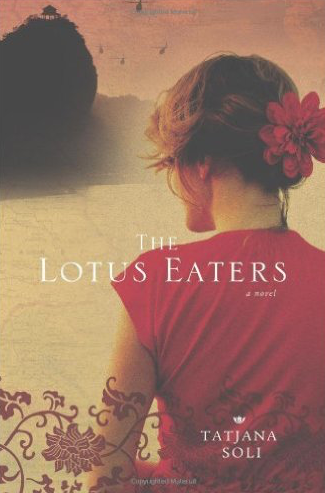
Literature and War Readalong October 28 2011: The Lotus Eaters by Tatjana Soli

lotus-eaters

Tatjana Soli’s The Lotus Eaters is another novel on the war in Vietnam that has received a lot of positive reviews. It cannot be called a classic as it only came out last year. So of all the books of this readalong it is by far the most recent. I really don’t know all that much about it and will therefore just add the blurb that should help you decide whether you’d like to read along or not.

As the fall of Saigon begins in 1975, two lovers make their way through the streets, desperately trying to catch one of the last planes out. Helen Adams, a photojournalist, must leave behind a war she has become addicted to and a devastated country she loves. Linh, her lover, must grapple with his own conflicting loyalties to the woman from whom he can’t bear to be parted, and his country.

Betrayal and self-sacrifice follows, echoing the pattern of their relationship over the war-torn years, beginning in the splendour of Angkor Wat, with jaded, cynical, larger-than-life war correspondent Sam Darrow, Helen’s greatest love and fiercest competitor, driven by demons she can only hope to vanquish.

Spurred on by the need to get the truth of the war out to an international audience, and the immense personal cost this carries, Sam and Helen’s passionate and all-consuming love is tested to the limit. This mesmerising novel carries resonance across contemporary wars with questions of love and heart-breaking betrayal interwoven with the conflict.

After having been so impressed by Tim O’Brien’s book I think I will explore more literature on the war in Vietnam in the future and I’m looking forward to read Soli’s novel.