Julian Barnes: The Sense of an Ending (2012)

The Sense of an Ending

When I posted my 20 under 200 list last week, Julian Barnes’s The Sense of an Ending was the novel that was mentioned the most and, so, I decided to pick it as the first novel of my project.

I don’t think, I have to write a lengthy summary as many other bloggers have done so already. Just a few words. The narrator, Tony, is in his 60s and looking back on his life. While most of that life is painfully average and there’s not a lot to say about it, his early youth is scrutinized and described in detail. This scrutiny serves a purpose. His past has come back to haunt him and Tony tries to uncover what exactly happened all those years ago, only to find out, his memory is more than a little faulty. While some people and events are still fresh in his mind, a lot has undergone a transformation and changed so much, that the actual events and the remembered events have but little in common.

I loved the way the narrator pieced together his memories, how he tried to make sense, and showed us how, often, we distort our memories to think better of ourselves or forget unpleasant events. I also loved the description of the four high school boys; their idealism that is always paired with more mundane occupations like chasing girls and hoping for sex.

Nonetheless, I can’t say I enjoyed this book. The voice got on my nerves. The way the narrator constantly tried to turn the reader into his accomplice by seeking reassurance, annoyed me. And I found him bland and depressing.

I also found hat there was a profound contradiction at the heart of this novel. On one side we have a very subtle analysis of memory and the tricks it plays on us; on the other side, we have a narrator who is an obtuse bore. For me, these are clearly two different people. One is the author, the other is the narrator. I really don’t think that someone who tells a story like Tony does and who lives such an uneventful life, just drifting, never striving for anything, never questioning, would come up with such amazing passages like this one:

We live in time – it holds us and moulds us – but I’ve never felt I understood it very well. And I’m not referring to theories about how it bends and doubles back, or may exist elsewhere in parallel versions. No, I mean ordinary, everyday time, which clocks and watches assure us passes regularly : tick-tock, click-clock. Is there anything more plausible than a second hand? And yet it takes only the smallest pleasure or pain to teach us time’s malleability. Some emotions speed it up, others slow it down; occasionally, it seems to go missing – until the eventual point when it really does go missing, never to return.

This doesn’t sound like our narrator. This sounds like Julian Barnes speaking.

Don’t get me wrong, this novel has a lot to offer. The portrayal of adolescent boys is spot on and endearing. The analysis of memory is fascinating and how the theme was tied into the plot was very well done. I can’t say the end surprised me, but several other revelations did. What kept me from truly enjoying it was the narrator and his way of talking to the reader.
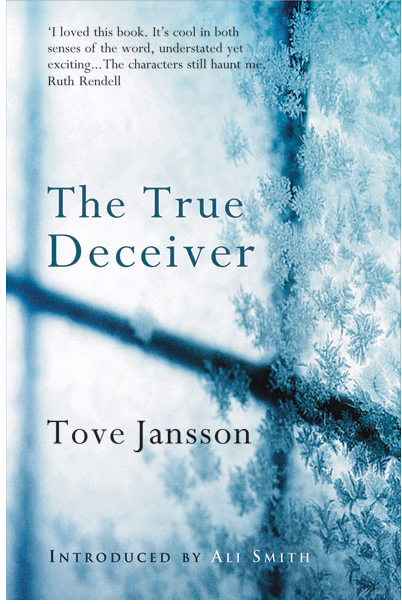
 

Tove Jansson: The True Deceiver – Den ärlige bedragaran (1982)

The True Deceiver

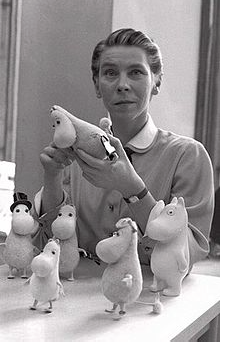
Swedish-speaking Finnish author and artist Tove Jansson is most famous for her stories featuring the Moomintroll family and their friends. Their creation spans almost thirty years. The first story came out in the 40s, the last in the seventies. When Tove Jansson was in her 60s she began to write books for adults. Some, like The True Deceiver, are novels, other’s, like Fair Play, are a collection of linked short stories, or episodic novels.

I always wanted to read her work, the books for children just as much as the books for adults, and I have no idea why it took me so long. After having finished The True Deceiver and already started Fair Play, I must say, this is one of those writers whose every book I want to read. She’s such an orginal, refreshing, and highly inspiring writer.

Katri and her younger brother, Mats, live in a village, in an unnamed Nordic country. It’s the deep winter. The land is covered in snow. The lake is frozen. Katri has just resigned from a job for the local merchant. Her brother helps building boats, his biggest wish being a boat of his own. In the same hamlet lives Anna Aemelin, a famous, rich children’s book illustrator. She’s become famous for her detailed depictions of the forest, which she adorns with drawings of rabbits. Katri decides that she wants Anna’s money for her brother. And she wants to get it in an honest way. Now honesty is an elastic term and for Katri it seems to mean— speaking the truth. Anna Aemelin has her own idea of what honesty means. And so does Mats.

The blurb of the English edition tells the reader that Katri fakes a break-in at Anna’s house to convince her she needs companionship, that’s why it’s not a spoiler to mention that she and Mats will move into Anna’s big house.

While the plot is interesting, the book’s strength lies in the characters and the setting. These people are so unusual. All three are eccentrics, each in their own way. And their interests, occupations, their innermost being is so original.

The artist Anna Aemelin was the character I enjoyed the most. Before Katri arrives, she’s not even aware of how much money she made with her illustrations. She lives a very ordered life, following the seasons. In winter, she doesn’t draw. It’s a bit as if she was hibernating. She orders food from the shops, doesn’t go out, and spends her days answering fan letters and reading adventure stories for kids. The books will be the foundation of her friendship with the boy Mats, a friendship that will create tensions between her and Katri. In spring, after the thawing, Anna goes into the forest and draws her pictures.

Katri is mysterious. She resembles a mythical figure, how she walks around with her huge, nameless dog, hardly speaking to anyone.

The way they live and communicate with each other is so peculiar because all three characters are loners. The conflicts between Katri and Anna are fascinating because they are both scheming, but both can’t really lie. But does that make them honest?

The story is set during winter and a huge part of its charm stems from the descriptions of the winter landscape, the harshness of the weather, the isolation of the big rambling house.

I don’t want to say too much. Pick it up and discover this unique writer for yourself. It’s certainly going to make my Top 10 of the year.

I read the German translation. That’s why I can’t offer any quotes. As I mentioned earlier, I’ve already started Fair Play, the story of two women artists. It’s another great find. I also want to read her Moomin stories chronologically and have her biography and a few other novels sitting on my piles. So, be prepared, you might read a lot more about Tove Jansson on this blog in the future.

Tove Jansson

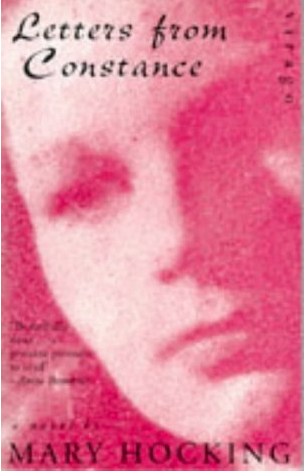
Mary Hocking: Letters From Constance (1991)

Letters From Constance

I think it speaks for the quality of a book when you feel like discussing it. Mary Hocking’s Letters From Constance is such a book. There’s so much to discuss. Characters, themes, and even the structure of the book. As the title indicates, Letters From Constance is an epistolary novel. A genre I’m particularly fond of and so it’s not surprising that I liked this novel very much.

Constance and Sheila met when they were only kids, in 1933. They were inseparable during their school years and confident they would stay close in the future. While they stayed close emotionally, they were often separeted. Sometimes for many months, even years. During those times of physical absence, they wrote letters. The novel renders one part of that correspondence that lasted from 1939 to 1984– the letters from Constance to Sheila. Those from Sheila to Constance had to be destroyed. In lesser hands this one-sided correspondence would have felt lacking, but the richness of the letters, the depth of Constance’s analysis and feelings, and her love for her friend, make sure Sheila’s just as present as the writer of the letters.

Constance and Sheila are very different and so are their life choices. While Constance marries an Irishman, Fergus, whom she met while she was posted to Ireland in the WRNS, Sheila marries the musician Miles. Constance has seven children, Sheila has two. Ever since they were teenagers, Sheila wrote poems and Constance was sure she would become a famous poet. It takes decades and a lot of heartache before Sheila finally follows her calling. One could say, she needed a detour to land on her path, while Constance follows her own calling intuitively. There are three things that define Constance – her friendship with Sheila, her children, and her religion.

I was surprised by this book because it’s very different from the first Mary Hocking (The Very Dead of Winter) I read. I must say I loved the first one more – it was richer in atmosphere and descriptions -, but it didn’t make me want to discuss it while this one did. There are so many themes explored it’s hard to name them all. I’ll just pick a few.

Motherhood. Maybe this is the main topic and the way it’s treated is arresting because there are so many elements attached to it. We are introduced to a multitude of mothers. First the mothers of the main protagonists, then the two friends, and finally their friends and daughters. Each woman stands for another type of mother/mothering but – and that’s what’s so great – not one of them is one-dimensional or clichéd.

Love for the children. More interesting than different types of motherhood is how Constance describes herself as a mother. She’s not one mother, but seven different mothers, depending on which child she’s talking about. All the parents of more than one child I know pretend they love all of their children the same. It’s something I’ve a hard time believing and sometimes you just have to listen to them and you know it’s not true. I’m sure they try to treat all of their children the same way, love them all, but there will always be one that’s closer to their heart. Funny enough, when you ask people with siblings, they will tell you that they experienced this, that one was the mother’s favourite, while another one was preferred by the father . . . In the novel Constance, openly names a favourite child. She also says which one she thinks is the most intelligent, the best looking . . .  nonetheless she’s just and does love them all. I found that very refreshing, because it’s the way we are. Be it friends, colleagues, siblings, kids, even animals, there’s always one we feel more connected to. I suspect that a lot of heartache comes from our trying to deny this.

The role of women. The novel spans far over half a century and captures the changes in the lives of women, their changing roles, and status. There’s a lot that’s worth discussing here as well.

Religion. While Sheila’s an agnostic, Constance converts to Catholicism. Not because she’s married an Irishman, but because she discovers some writings that help her cope, understand life, and approach it in a more philosophical way. One author who is mentioned is Jean Pierre de Caussade (1675-1751), a French Jesuit priest. I looked him up and what I read sounds very interesting and reminded me a bit of Greek philosopher Epictetus.

The perception of others. For a long time Constance envies Sheila. Her life, her home, her marriage. It sounds freer, more creative. For her, seeing Sheila and her family together, making music, equals a vision of  paradise. Over the years we learn that things were very different. I think Mary Hocking touches upon something that happens very often— we haven an idea of people and, eventually, we don’t even see the real people anymore and, through comparison, we don’t even see ourselves.

Structure. This is another of the things I would have loved to discuss. Why did Mary Hocking choose to include only one part of the correspondence? And why did she choose Constance’s? Maybe it’s unfair, but I often thought that Sheila sounded like the more interesting woman.

As I said, I didn’t love this as much as The Very Dead of Winter, even so it is a wonderfully rich novel. One that would make a particularly great choice for a book group. I’m pretty sure it would lead to fascinating discussions.

Unfortunately I don’t know a lot about Mary Hocking. I wonder whether she was more like Constance or more like Sheila – I guess the latter.

This review is part of Heavenali’s Mary Hocking Week. She read and reviewed Letters From Constance last year. Here’s the review.

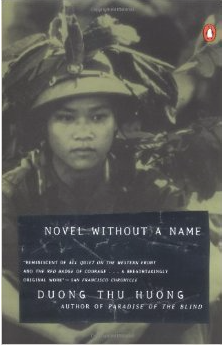
Duong Thu Huong: Novel Without a Name – Tiêu thuyêt vô dê (1995) Literature and War Readalong May 2015

Novel Without A Name

Duong Thu Huong is one of Vietnam’s most important writers. Since I haven’t read a lot of Vietnamese novels I was looking forward to reading her most famous book Novel Without a Name – Tiêu thuyêt vô dê. I wasn’t disappointed. It’s beautiful and harrowing.

At the beginning, Quan, the narrator, is sent on a mission to find his friend Bien. Quan, his commanding officer, Luong, and Bien have grown up together. When Luong hears that Bien has gone mad, he sends Quan to go and find out if it’s true.

What follows is the account of a dangerous mission on which Quan meets many people, dead and alive, sees atrocities, remembers his childhood, falls dangerously ill, dreams about his love, and finally finds his old friend.

Bien stands for many other “crazy” men we meet in this novel. Some really go mad because of the horrors they have experienced, others just withdraw into themselves, trying to escape the war.

Quan and his younger brother, who has been killed, have signed up right at the beginning of the war, ten years ago. Their father was one of those who supported a 100% mobilization, accepting that he might lose both of his sons. Almost all of Quan’s comrades are dead. The main story follows Quan on his mission, but overall the book is more like a series of vignettes. In parts it reminded me of Tim O’Brien’s The Things They Carried. Without the metafictional elements. Duong Thu Huong uses a mix of very short and long chapters. Some are dedicated to what’s happening to Quan on his trip, some are childhood memories or stories from the war, otheres are just short, intense snapshots.

What I liked best is how descriptive this book is. It speaks to the senses like not many others. It felt at times like watching a documentary on Vietnam. We read about the food, the flora, the fauna, the beliefs, the scents, the way people love, sleep, cook. Several chapters describe the landscape and make you want to visit this country that has sun sets the color of chrysanthemum flowers.

Duong Thu Huong served in the North Vietnamese army and so it’s not surprising the descriptions of combat, dead soldiers, the horror of war are drawn in a shockingly realistic way. She also manages to capture how tired and disillusioned most soldiers have become. The political slogans that fired them up and made them sign up have become mere empty words. Bodies pile up, their country is destroyed – for what? An ideal that isn’t even humane?

On his quest, Quan meets many people. Simple farmers, single mothers, small girls, old men. They are drawn with a lot of detail and warmth. We suffer for these kind, gentle people who had to endure the worst for such a long time.

It’s admirable that the author doesn’t blame the US. She finds a lot of fault with party politics and the false promises of the government. There is no evil enemy. Nor is there an army of faceless Vietnamese soldiers. Every soldier she describes becomes a human being with a history, feelings, wishes and hopes.

Novel Without a Name is a visceral account that doesn’t leave out any aspect of this war. It’s an insider’s perspective, a soldier’s account. The novel unrolls like a huge canvas, a painting of an abundant jungle, where humans butcher each other amidst the most beautiful scenery.

I read the German translation of this novel that’s why I can’t share any quotes. It’s too bad because many of the descriptions are so amazing that I read them more than once.

Other reviews

 TJ (My Book Strings)

Bonespark 


*******

Novel Without a Name is the second book in the Literature and War Readalong 2015. The next book is the Hungarian Holocaust novel Fateless – Sorstalanság by Imre Kertész. Discussion starts on Wednesday 30 September, 2015. Further information on the Literature and War Readalong 2015, including the book blurbs can be found here.

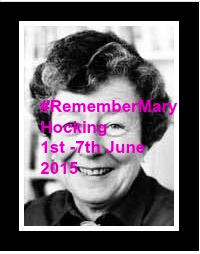
Are You Ready for Mary Hocking Week?

#Remember Mary Hocking

I discovered Mary Hocking last year, thanks to Heavenali‘s Mary Hocking Week. So, of course, I was keen on joining when I saw she was going to do another week this year.

Last year I read the wonderful The Very Dead of Winter. This year I will read Letters From Constance, which I first discovered a while back on Danielle’s blog here.

Letters From Constance

Here’s the synopsis should anyone be interested in reading along:

In 1939, as they leave school, Constance and Sheila vow to keep in touch. Posted to Ireland in the WRNS, Constance marries Fergus, a gregarious Irishman. Before long, stifled by domesticity and motherhood, she envies Sheila, writing poetry and married to the fiercely creative Miles. Gradually, however, a different reality emerges, for Constance has unacknowledged talents of her own, while Sheila’s public success is bought at great personal cost. From the war to the 1980s, Constance writes to Sheila of her everyday hopes and sorrows, and through her we learn much of Sheila’s gallantry and courage. We learn, too, of the social and political developments that challenge and shape her values, until finally outside events come too close and the fragile balance of Constance’s own world is threatened.

There are many Mary Hocking novels that sound amazing but they are not easy to get. Many are out of print. I managed to get a used copy of Letters From Constance.

Mary Hocking Week starts next Monday, so if you want to join, you have to hurry up a bit. Here are the details.

Will you join as well? What are you going to read?

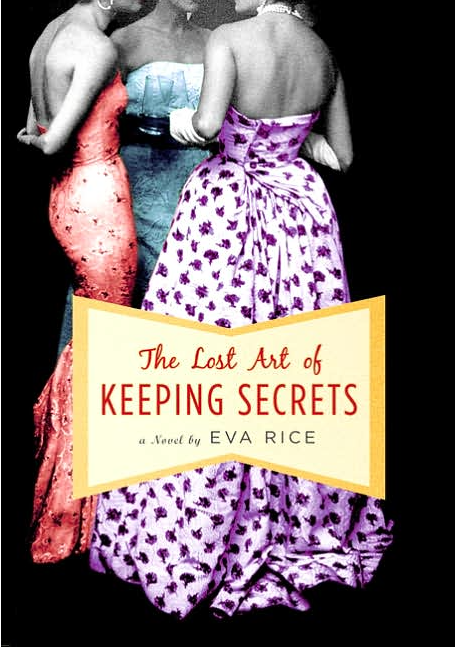
Eva Rice: The Lost Art of Keeping Secrets (2005)

Lost Art of Keeping Secrets

When seeing The Lost Art of Keeping Secrets referred to as pastiche, I was wondering when historical fiction actually crosses the line. Was it because Eva Rice did not only write a novel set in the 50s but a novel that sounded very much like some of the books written in the 40s and 50s? I suppose so. I haven’t read Dodie Smith’s I Capture the Castle, but it seems obvious that there are similarities. Be it as it may, Eva Rice has written a truly charming book.

The story starts in medias res with our narrator, Penelope, an eighteen year-old girl and aspiring writer, being whisked off in a taxi by Charlotte. Charlotte is Penelope’s age, but more self-assured, more stylish, outspoken, and exuberant. Before this day the two girls have never met, but, as the novel will slowly unfold, there are more connections than they see at first.

Charlotte begs Penelope to come with her to tea at Aunt Clare’s and meet Harry, her cousin. A little later they are sitting in Aunt Clare’s messy sitting room, eating scones, drinking tea and Penelope falls under the charm of these three people. They are all eccentric, speak their mind and either say hilarious or almost outrageous things. While Penelope is rather shy, she starts to swim like a fish in water in this stimulating company. Their first afternoon together marks the beginning of a great story and a wonderful friendship.

While the early chapters introduce us to Charlotte’s world, the following will take us to Penelope’s home and introduce us to her mother and her younger brother and the house they live in – Milton Magna Hall, called Magna by its inhabitants. Penelope and her family live in this huge, medieval house in genteel poverty. Her father died in WWII. Her mother, a stunning beauty, who’s only 35 years old, is prone to sudden crying fits and utterly sensitive to everything. Her brother, Inigo, doesn’t care about anything else but pop music. Like Charlotte and Penelope he loves Johnnie Ray, but as soon as his uncle from America introduces him to a new singer, Elvis Presley, who is still unknown in the UK, he only cares for Elvis. Their house, Magna, is as much a character as the people. I love stories that center on big old houses. Magna is such a house but it never sounded beautiful.It sounded rather dreadful, a monstrosity really, and a trap for those living inside. It certainly was one big, money-sucking machine. Sure, it was grand, with its huge galleries and halls, but since they had no money, it was cold, draughty and damp. The furniture had seen better days. Visitors were impressed, but, as Charlotte remarked, they didn’t have to live there.

The Lost Art of Keeping Secrets is a s much a book about the beginning of pop music, youth culture, the young Brits’ infatuation with everything American, as it is about coming of age, the definite end of an era, and new times. It’s a love story and a story of new beginnings but, more than anything, it’s a story of friendship.

The novel moves between a few distinct places,—Aunt Clare’s sitting room, the huge mansion Magna, and public places like The Ritz, where they party and listen to their favourite music.

Some of the most wonderful episodes show the four young people together, drinking champagne and enjoying each others company. My favourite scene is almost surrealist. It features Penelope and Harry together in the huge large gallery at Magna, lying on their backs, drinking, talking, and watching Harry’s doves – he’s a magician – fly around the room.

Books like these are often bitter-sweet, but this one is more sweet than bitter— in spite of some tragedy towards the end—because there are so many opportunities and hope waiting for the characters.

The Lost Art of Keeping Secrets is a smart, charming, exuberant book, filled with witty, endearing and eccentric characters, whose sharp insights, clever repartee, and uncrushable optimism are a delight to follow. If you need some intelligent cheering up—this is the book for you.


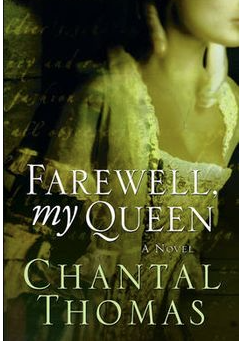
Chantal Thomas: Farewell, my Queen – Les Adieux à la reine (2002)

Farewell, my Queen

I’ve always been fascinated by Marie Antoinette and I tend to like the choices for the French Prix Femina. Chantal Thomas’ novel Farewell, my Queen – Les Adieux à la reine  won the prize in 2002 and has been been made into a movie in 2012. Chantal Thomas is an academic, specialized in the  XVIIIe century. Farewell, my Queen was her first novel.

What appealed to me was that she chose to tell the story from the point of view of Agathe-Sidonie Laborde, the queen’s reader. The book begins in 1810, in Vienna. Agathe-Sidonie is 65 years old and looking back on her life at Versailles, especially, her three last days there— July 14, July 15 and July 16 1789. At the end of the last day, most of the close entourage of Marie Antoinette and Louis XVI will have fled Versailles. The queen is left behind although she’s in great danger. Agathe-Sidonie is told to flee with the de Polignacs.

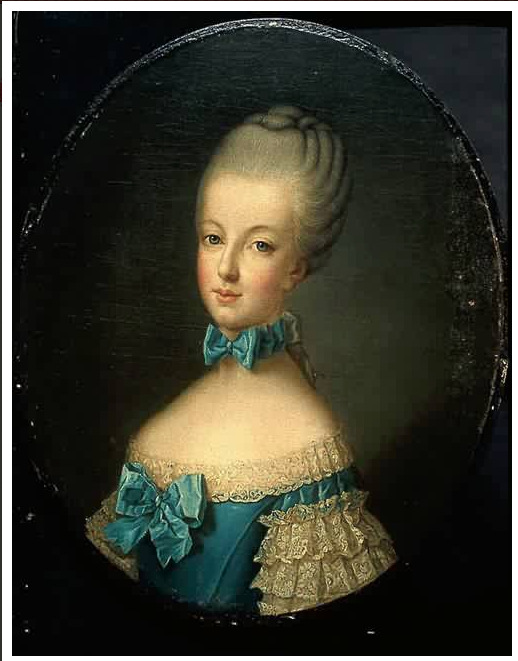
Marie Ant.

Focussing on three days, describing the many rituals, the rooms and apartments of the people living at Versailles, and contrasting Marie Antoinette at Le Petit Trianon and at Versailles, give an incredible insight into the life of this ill-fated woman. Her fears and joys are rendered vividly, her character comes to life. Agathe-Sidonie is not part of the entourage, she’s just a better sort of servant, which allows Chantal Thomas to play with proximity and distance, the effect of which is quite arresting. At times, we see the queen from afar, the way her people saw her, at times, when Agathe-Sidonie reads to her, or sits in her rooms, all but forgotten, we get a very intimate look at the poor queen.

While I think the French Revolution was more than justified, I was still moved by this account, by the growing fear of the courtiers. Many of the scenes take place during the night and, since most of the servants abandoned the court, they take place in obscurity, which enhances the feeling of doom and danger.

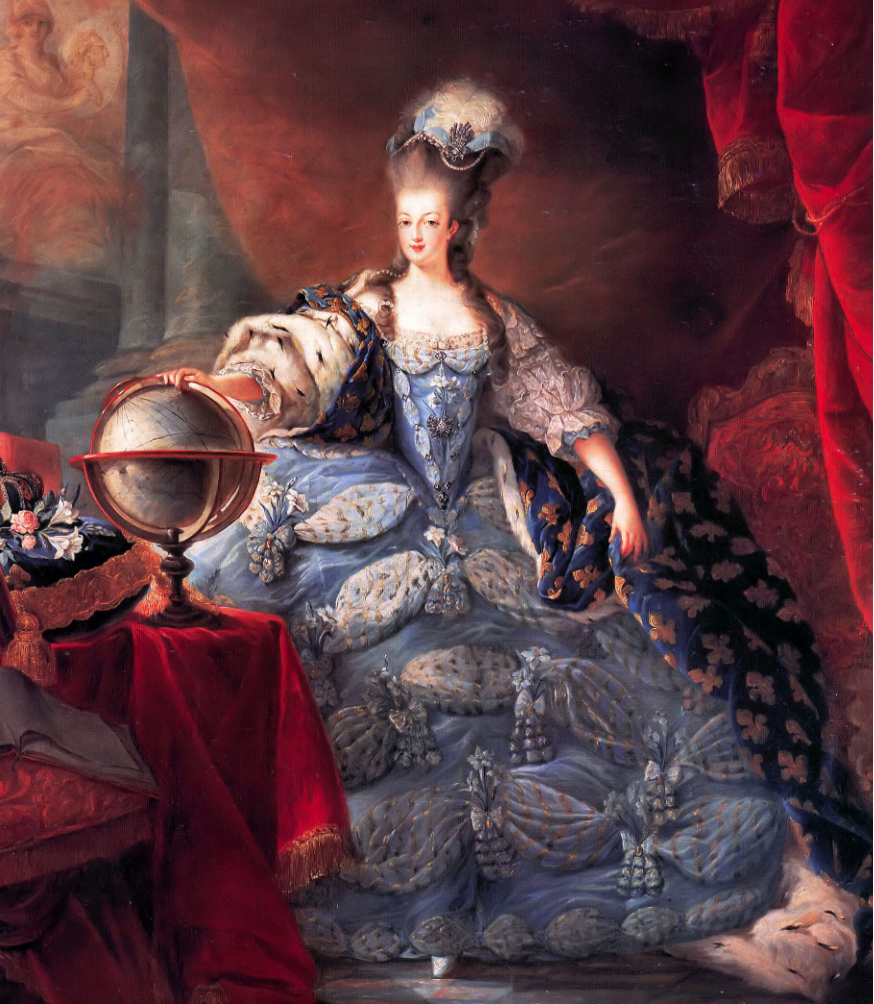
Marie Antoinette

What I liked best is how Chantal Thomas used the descriptions of light and weather to underline emotions. I equally loved her use of imagery and symbols. One of the most beautiful was evoked when Agathe-Sidonie looks back and thinks of the season of the queen’s balls. Marie Antoinette was very fond of fashion. Of course that was one of the things she was blamed for the most. Before the season of the balls she would order numerous new dresses, one per ball. Those dresses would be hidden from everyone’s eyes until the day of the ball, but the inhabitants of Versailles could see them being transported back and forth from the tailor’s rooms to the queen’s rooms. The dresses were wrapped in white taffeta, and called by many “the shadows of the queen”. When Agathe -Sidonie remembers this, the queen herself has become a mere shadow.

I wondered often why people were so fascinated by Marie Antoinette. When you read Farewell, my Queen, you get a pretty good idea why. She must have been very gentle, joyful, playful, and affectionate. She loved beautiful things and everything around her had to be perfect. I felt pity for this girl who came to the court at the age of 15 and was disgraced and guillotined at 37.

It’s chilling to read about the last moments at Versailles, and how even her most intimate friends like the Duchess de Polignac fled the palace. Because Agathe-Sidonie loved the queen and her life at Versailles, the book is very nostalgic.

Farewell, my Queen is unlike any other Marie Antoinette novel I’ve read. It could only have been written by someone who has done extensive research. Still, it’s moving and nostalgic and really beautiful. It’s almost as good as my favourite historical novel L’allée du Roi  – The King’s Way by Françoise Chandernagor, which tells the story of Mme de Maintenon. The two novels complement each other, as we see Versailles still under construction in The King’s Way and abandoned in the later book.

I’m tempted to watch the movie but I’m afraid it took a lot of liberties and is very different from the book.