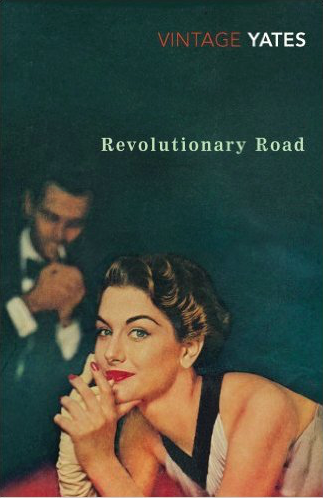
Richard Yates: Revolutionary Road (1961) or Why is Richard Yates a Writer’s Writer?

Revolutionary Road

The first time I came across the name Richard Yates was in 2006 when his short story collection Eleven Kinds of Loneliness was translated into German. All the big newspapers reviewed and praised it. I think that must have been about the same time, he was rediscovered in the US, which then led to the translations. I’m not sure why it took me another nine years to finally pick up one of his books. Be it as it may, I’m so glad I finally did. After finishing Revolutionary Road, I started to read up on him and that’s when I came across this very long, very insightful article by Stewart O’Nan: The Lost World of Richard Yates. It was written in 1999 – before the rediscovery. It’s interesting because O’Nan not only tries to capture why he thinks Yates is an amazing author but also goes into lengthy musings on why he was never successful. For me, it wasn’t surprising that it took so long to discover him in Germany, but that he wasn’t successful in the US or other English-speaking countries did come as a surprise. Stewart O’Nan’s central thesis is that Yates is a writer’s writer. Not a typical one, though. I’ll get to that again, after the review of Revolutionary Road.

Revolutionary Road tells the story of Frank and April Wheeler, a young couple who’s living in the suburbs of New York. The book opens with an amateur play in which April has the main role. At first it looks like it could be a success. Initially, April’s performance is good enough to make her husband fantasize what her success will mean for them. He imagines how April will be admired and how it will ultimately make him a center of admiration too and how he will pretend to be all modest about it. But then the play goes wrong and turns into a farce, exposing all the actors, including April to ridicule. It’s a devastating moment. Not so much because the play goes wrong but because the Wheeler’s dreams are shattered. April, who studied acting once, isn’t a good actress after all. And Frank, who imagined his wife’s stellar performance would reflect on him as well, feels just as ashamed as she does, maybe even more so.

This scene is a perfect introduction to the novel and the couple April and Frank Wheeler. While the outcome is dramatic for them, it’s not as such tragic but it contains all the elements of the future tragedy.

Yates introduces us here to a couple who lives a somewhat mediocre life. He’s working for a company he doesn’t appreciate, doing a job that bores him to death. She’s a housewife and stay-at-home-mom, the last thing she ever wanted to be. This as such is sad but what makes it sadder is the fact that they still think they are special and different from anybody else. But every time they want to prove themselves that they are more cultivated, wittier, unconventional, their unrealistic dreams crash against reality and leave them bitter, disillusioned, and filled with an anger they take out on each other.

I must admit, it took me over a hundred pages until I started to appreciate what Yates was doing. I hated and despised these two characters so much. Their aspirations and pretences showed us that they were anything but special but mediocre and petty. Since one of Yates’s admittedly brilliant techniques is to show us Frank’s interior monologue, we’re constantly in the head of a real douchebag. As I said, I was so distracted by the story and found the characters so off-putting, that I almost missed to pay attention to Yates’s narrative techniques. Not only is it brilliant to let Frank’s interior monologue clash with reality, it’s also quite funny.

At the heart of the story is April’s dream to leave and start a new life in Paris. The interesting thing about it is that while it may seem wild, it’s a totally feasible plan, yet they are bound to fail. Why and how they fail is shown in a masterful way.

The most tragic and paradoxical thing about April and Frank Wheeler isn’t that they never live their dream but that they try, if only for a very brief moment, to live it.

I said at the beginning of this post that Yates was, for a long time, considered to be a writer’s writer. This was surprising to me at first because usually writer’s writers are stylists, often using lyrical prose. Yates does write well but his writing is accessible, smooth, simple, almost free of figures of speech. He’s not strong on descriptions, hardly uses atmosphere or mood. So what is it then? It’s amazing how brilliantly he describes people and their interactions. His dialogue and interior monologue is sharp and witty. But more than that, his choices of scenes and structure are admirable. I wondered constantly – how will he capture this or that? Whose point of view will he choose next? And, most importantly – how will he end this novel? I wasn’t interest in the ending from a plot perspective but from a perspective of author’s choice. I felt that there had to be a major “bang”. What would it be?

These are reasons why I agree with O’Nan— he is a writer’s writer. After having found O’Nan’s essay,  I came across John Mullan’s four part piece on Revolutionary Road in The Guardian – you can find it here Part I Imaginary Dialogue, Part II The Epigraph, Part II Comic Dialogue, Part IV The Ending. Reading it confirmed my impressions. Yates is a highly conscious writer. His style may be effortless, his structure and narrative choices are not. One just has to think of the title. Revolutionary Road is the street on which the Wheelers live. It’s close to a suburban nightmare called “Revolutionary Hill”, where all the houses are candy-colored, cute abominations. Not so the Wheeler’s street and house. Nonetheless, it’s suburbia and even in a part that’s not as affluent. Knowing that they read signs and interpret them in a spirit of self-aggrandisement, the name of the road becomes ironic. The Wheeler’s are a lot of things but they are not revolutionary nor rebellious. If anything they are self-deluded and narcissistic.

Revolutionary Road was my first Richard Yates but it won’t be the last. I’m already halfway through Easter Parade and want to read Cold Spring Harbor and Eleven Kinds of Loneliness after that.

I had to watch the movie after finishing the book. Of course, it’s not as good but what bothered me the most was that the Frank Wheeler in the movie was almost likable.
Literature and War Readalong 2016

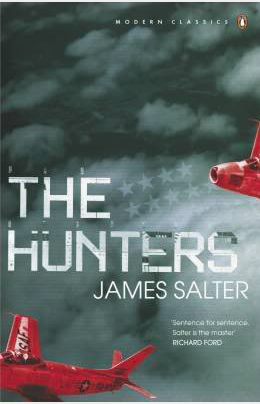
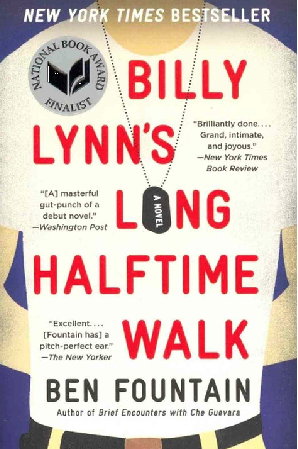
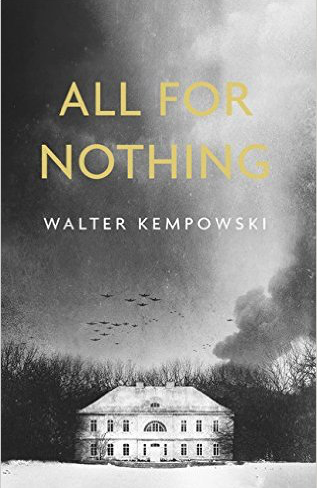
Storm Warning1914The HuntersBilly Lynn's Halftime WalkAll For Nothing

A few of you have already been wondering whether or not there will be another Literature and War Readalong. As you can see, there will be another one, but, like last year, it will be a mini-edition, although I included one book more.

Storm Warning

February, Monday 29

Storm Warning: Echoes of Conflict by Vanessa Gebbie, 120 pages, UK, 2010, WWII

Here’s the blurb:

Storm Warning explores the echoes and aftershocks of human conflict in a series of powerful stories in which the characters are tested, sometimes to breaking point. Gebbie pulls no punches, exploring the after-effects of atrocity and sometimes, the seeds of atrocity itself.

1914

March, Thursday 31

1914  – 14 by Jean Echenoz, 120 pages France 2012, WWI

Here’s the blurb:

Jean Echenoz turns his attention to the deathtrap of World War I in 1914. Five Frenchmen go off to war, two of them leaving behind young women who long for their return. But the main character in this brilliant novel is the Great War itself. Echenoz, whose work has been compared to that of writers as diverse as Joseph Conrad and Laurence Sterne, leads us gently from a balmy summer day deep into the relentless – and, one hundred years later, still unthinkable – carnage of trench warfare.

The Hunters

May, Tuesday 31

The Hunters by James Salter, 233 pages, US 1957, War in Korea

Here’s the blurb:

Captain Cleve Connell arrives in Korea with a single goal: to become an ace, one of that elite fraternity of jet pilots who have downed five MIGs. But as his fellow airmen rack up kill after kill – sometimes under dubious circumstances – Cleve’s luck runs bad. Other pilots question his guts. Cleve comes to question himself. And then in one icy instant 40,000 feet above the Yalu River, his luck changes forever. Filled with courage and despair, eerie beauty and corrosive rivalry, James Salter’s luminous first novel is a landmark masterpiece in the literature of war.

Billy Lynn's Halftime Walk

September, Friday 30

Billy Lynn’s Long Halftime Walk by Ben Fountain,  307 pages, US 2012, War in Iraq

Here’s the blurb:

His whole nation is celebrating what is the worst day of his life

Nineteen-year-old Billy Lynn is home from Iraq. And he’s a hero. Billy and the rest of Bravo Company were filmed defeating Iraqi insurgents in a ferocious firefight. Now Bravo’s three minutes of extreme bravery is a YouTube sensation and the Bush Administration has sent them on a nationwide Victory Tour.

During the final hours of the tour Billy will mix with the rich and powerful, endure the politics and praise of his fellow Americans – and fall in love. He’ll face hard truths about life and death, family and friendship, honour and duty.

Tomorrow he must go back to war.

All For Nothing

November, Friday 25

All For NothingAlles umsonst by Walter Kempowski, 352 pages, Germany 2006, WWII

Here’s the blurb:

Winter, January 1945. It is cold and dark, and the German army is retreating from the Russian advance. Germans are fleeing the occupied territories in their thousands, in cars and carts and on foot. But in a rural East Prussian manor house, the wealthy von Globig family tries to seal itself off from the world. Peter von Globig is twelve, and feigns a cough to get out of his Hitler Youth duties, preferring to sledge behind the house and look at snowflakes through his microscope. His father Eberhard is stationed in Italy – a desk job safe from the front – and his bookish and musical mother Katharina has withdrawn into herself. Instead the house is run by a conservative, frugal aunt, helped by two Ukrainian maids and an energetic Pole. Protected by their privileged lifestyle from the deprivation and chaos around them, and caught in the grip of indecision, they make no preparations to leave, until Katharina’s decision to harbour a stranger for the night begins their undoing. Superbly expressive and strikingly vivid, sympathetic yet painfully honest about the motivations of its characters, All for Nothing is a devastating portrait of the self-delusions, complicities and denials of the German people as the Third Reich comes to an end.

*******

Five books from four countries, covering four different wars. The books are all rather short and quite diverse. For the first time, I have included a collection of short stories. And I included the first novel on the war in Korea.

As always, I hope that many of you will feel tempted to join me.

My Case for “The Artificial Silk Girl” – A Guest Post by John Lugo-Trebble

The Artificial Silk Girl

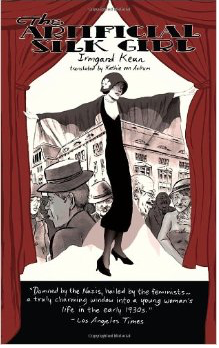
When you are part of a writers’ group, it’s only natural to discuss books. And so, a while ago, I mentioned German Literature Month on my writer’s forum and found out that one of the members. John Lugo-Trebble, had studied German literature and did research on Irmgard Keun (and other authors). While discussing, he said that he found she deserved to be more widely known, especially her masterpiece The Artificial Silk Girl Das kunstseidene Mädchen. I certainly agree with him, and so I asked him whether he felt like writing a guest post for German Literature Month. I’m very glad he said yes. John Lugo-Trebble is an American writer, living in the UK. Some of his short fiction is forthcoming on Jonathan the literary journal of Sibling Rivalry Press.

My Case for “The Artificial Silk Girl” – by: John Lugo-Trebble

Christopher Isherwood’s “Berlin Stories” was the inspiration for “Cabaret” which for an English speaking audience is often the image conjured up of Weimar Berlin. His Berlin is a decadent melting pot on the brink of implosion through the eyes of fun seeking expats. I don’t think you can argue that his observations are not important but for me, reading is like travelling and when I travel I always like to experience what locals would. This is why for me, one of the most important German texts capturing the era that should be read by English speakers is “Das kunstseidene Mädchen” (“The Artificial Silk Girl”) by Irmgard Keun.

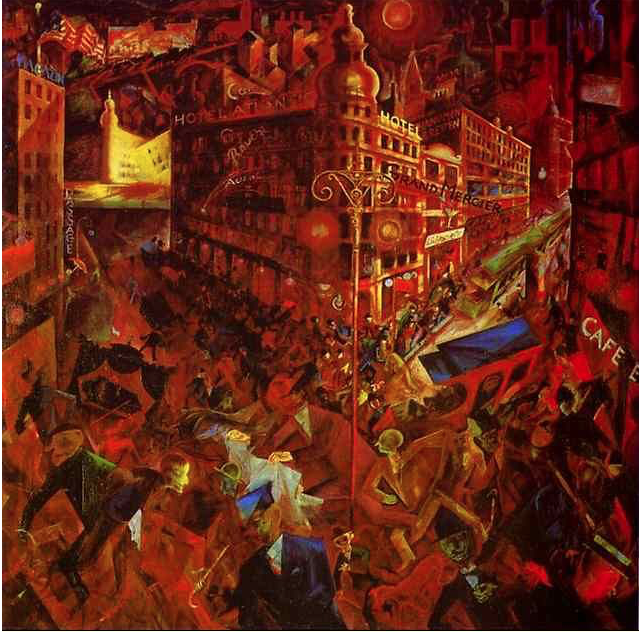
Georg Grosz - Die Stadt

Irmgard Keun gives us not just a German insight but a female German insight to Weimar through the eyes of her protagonist Doris. Working in a theatre in Köln, young Doris craves the spotlight, like the women in the glossy magazines that are like her Bible. She wants glamour, she wants wealth. She doesn’t want to be like her parents, on the breadline. She especially fears becoming her mother and having to support a man, in a loveless marriage. Doris becomes enamoured with a fur coat at the theatre and decides to steal it. In her fur coat, she can dream of the life she so covets. She can pretend to be that wealthy young girl who deserves the finery in life. She can epitomise glamour when wrapped in the soft fur. Now a fugitive because of this coat, she runs to Berlin wherein her vain attempt in pursuing glamour she weaves through the city’s underworld of prostitutes, pimps, communists and even becoming a mistress herself. Her dreams quickly spiral out of control as she chases money, stability and ultimately love amidst the backdrop of Berlin’s economic and political turmoil; putting us in mind of one of Grosz’s paintings come alive.

On the one hand, Doris is a mirror of the limitations of the New Woman, a woman who was to be liberated from the shackles of Imperial Germany by the promise of the Social Democratic Weimar Constitution. The reality is the limitations of that liberation that came with the economic upheaval left by the Treaty of Versailles. There is though something in Doris’ tale that resonates still today and that is the pursuit of glamour, a desire for celebrity.

I was reminded only recently of “The Artificial Silk Girl” when I was watching “The Bling Ring.” For those of you who haven’t seen it, the film is loosely based on a crime spree in Los Angeles perpetrated by a group of celebrity admiring, glamour seeking teenagers who literally break into the houses of their style icons to steal their possessions. They are driven by this desire and need to be famous, to lead an untouchable existence of celebrity. I couldn’t help but think of Doris. The difference though is that Doris has a moral centre which comes forward as she sits on a bench at Bahnhof Zoo, no longer the girl start struck in pursuit of wealth, she is a woman aware of the world around her, her own limitations, and indeed her own desires. Will she head out of Berlin or stay? We don’t know, but what we do know is that the fur coat is long gone now.

Irmgard Keun is one of the few German women writers of her day who have been translated into English and I truly believe one of the finest writers of the Twentieth Century, full stop. She presents us with a protagonist who has the naiveté of youth and the observational skills of a woman of her day. You will fall in love with her vulnerability, laugh at her silliness and want to shake her till she grows up but also respect her path because she tries, even when there is no hope presenting itself. With Keun, there is a voice beyond Alfred Döblin and Hans Fallada’s portrayals of women which leave much open to debate. There is more than Sally Bowles.

*****

Thanks so much, John, for this interesting post. I hope those who haven’t done so yet, will soon pick up The Artificial Silk Girl, or one of Keun’s other great novels.

Imre Kertész: Fateless – Sorstalanság (1975) Literature and War Readalong September 2015

Fateless

Imre Kertész novel FatelessSorstalanság tells the story of fifteen-year old Gyuri Köves, a Jewish boy who lives in Budapest. It starts in 1944, on the day on which Gyuri’s father is sent to a labour camp. What strikes the reader from the beginning is the narrator’s voice and his cluelessness. He’s a young boy, interested in girls and puzzled by his parents strange arrangements (he lives with his father and his stepmother and his parents often quarrel because his mother wants him to live with her). He notices everything that goes on around him but his interpretations are always slightly off. He finds logic in many shocking things, like the yellow star they have to wear, the way they are being treated by non-Jews and many other things. Why? Because they seem logical, from a certain point of view. And because he doesn’t feel like a Jew. His family isn’t religious. They even eat porc during the last dinner with his father. He feels that the star and being ostracized hasn’t really anything to do with him. It’s not personal.

A little later Gyuri is sent to work in a factory and then, one morning, has to get off the bus and wait endlessly for a train to take him and others to another “work place”. Of course, the reader knows it’s a concentration camp. He’s first sent to Auschwitz, then to Buchenwald and later to Zeitz.

He still finds logic in everything he sees. In the way they are forced to work, in the way they are punished. That doesn’t mean he doesn’t suffer. He’s cold, dirty and constantly hungry. He witnesses executions and is afraid of being sent to the gas chambers.

Towards the end of the book, he falls ill and is sent back to Buchenwald until the day the camp is freed and he can return to Budapest.

Reading a novel, set to large parts in a concentration camp, filtered through the consciousness of a narrator like this, was a peculiar and eerie experience. It could have gone wrong. It could have felt sensationalist and dishonest like The Boy in the Striped Pyjamas (I’m referring to the movie not the book), but it didn’t. It’s chilling because we know what he’s talking about but he doesn’t. When Gyuri tells us how everyone stepping off the train is inspected and then either sent to one group or the other, we know that it means that they will either be sent to a labour camp or to the gas chambers. Reading Gyuri’s assessment of what happens, his feeling of being chosen and found worthy – without knowing the real logic behind it all – is almost creepy.

The best novels don’t just follow a character from the beginning to the end but they show a change. And Gyuri does change. The boy who’s leaving the concentration camp is bitter and full of hatred. The days of his admiration for a system that runs,logically, smoothly, and mercilessly are long gone.

I’ve seen this novel called “shocking” and, if you’ve read my review until now, you may think, you know why. Because of the distortion. But that’s not the shocking part. What may seem odd is the end of the book. It’s not a plot element, therefore, I don’t consider it to be a spoiler to reveal the end. When Gyuri returns to Budapest, people refer to the horrors he must have seen or ask him whether it was like hell. He tells them that he hasn’t seen hell and therefore he doesn’t know how to compare. And  he finds it absurd when people tell him to start a new life, leave what has happened behind. But it’s not likely he will ever forget. What he doesn’t tell them is, that there were moments of great happiness in the concentration camp. And that’s the shocking thing of the novel. It shows us that we cannot imagine something we haven’t experienced. Whether we think, like some,  it wasn’t all that bad or whether we assume it was “hell” – we have no clue. Both assumptions are equally faulty. And there’s a certain arrogance in a assuming that we can picture what we don’t know.  And there can always be happiness. This reminded me of one of my favourite books – Solzhenitsyn’s One Day in the Life of Ivan Denisovich.

The end also reveals the meaning of the title. The novel describes many instances in which the Jews let the oppressor handle them like cattle. They never fight back. This, as Gyuri says, was a choice. Everything was a choice. There’s no such thing as “fate” – everybody is ultimately free, free to choose how to act. Always.

I wish this review was more eloquent but I’ve got the flu since Monday and my head is fuzzy. I’m sorry for that. It’s a book that would have deserved a careful review because it’s stunning. I really liked it a great deal and, for once, “like” isn’t a badly chosen word, even though I’m writing about a Holocaust novel.

I have watched the movie as well and found it powerful. It stay’s close to the novel, with the exception of the last parts. In the movie Gyuri is offered to go to the US when the camp is freed by the Americans. Going back to Hungary means going to the Russian sector. Nothing to look forward to. This isn’t a topic in the book.

The book is based on Kertész’s own experience. As a fourteen-year old he was sent to Auschwitz and from there to Buchenwald. Interestingly he says that the book is far less autobiographical than the movie.


Other reviews

Emma (Book Around the Corner)


*******

Fateless is the third book in the Literature and War Readalong 2015. The next book is the German novel A Time to Love and a Time to Die – Zeit zu leben und Zeit zu sterben by Erich Maria Remarque. Discussion starts on Friday 27 November, 2015. Further information on the Literature and War Readalong 2015, including the book blurbs can be found here.

Anthony Horowitz: Moriarty (2014)

Moriarty

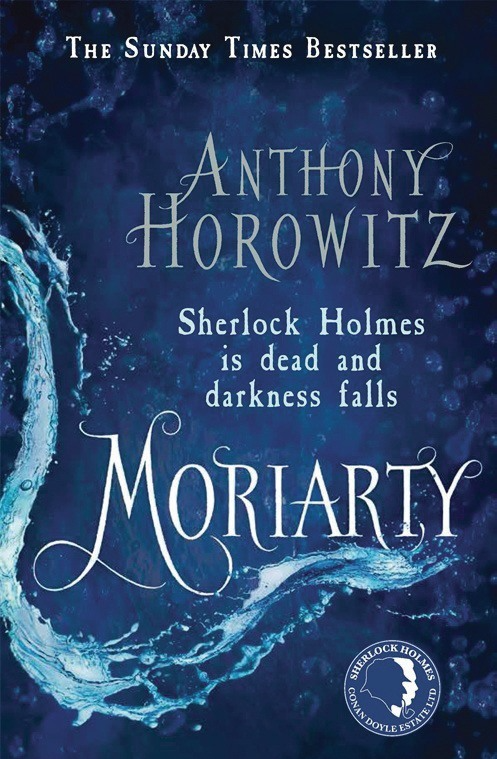
I didn’t expect that I would enjoy Moriarty so much but I did. This is especially surprising because, initially, I had no intention of reading it. I don’t usually pick up Sherlock Homes sequels, but since I’m planning on visiting the Swiss Sherlock Homes Museum and the Reichenbach Falls soon, I was suddenly tempted. I don’t regret it. Of course, the weather played a role as well. After weeks of temperatures over 100°/39°, we suddenly had cool and rainy autumnal weather.

The book starts at the Reichenbach Falls, in Switzerland. Those who are familiar with the Sherlock Holmes stories, know that’s where Holmes and his adversary Moriarty meet and fall to their deaths. Or, to be more precise, we are led to believe they fell to their deaths. It’s here, at the Reichenbach Falls, where Inspector Athelney Jones from Scotland Yard and Pinkerton agent Frederick Chase meet. The two men hit it off instantly and decide to join forces and hunt for a criminal, who is even more evil than Moriarty—Clarence Devereux, a ruthless American criminal who’s been followed by his violent entourage. A coded message in the pockets of the dead man they believe to be Moriarty, tells the two men where to go next. It looks as if Devereux and Moriarty were meant to meet in London.

Jones and Chase leave Switzerland and travel back to London where they embark on a hunt for the elusive criminal and follow his trail of violence and murder.

This is a very tightly plotted, dramatic and atmospheric story that manages to capture the Victorian London we know so well from the Sherlock Holmes story. I was afraid at first, that the book might be a bit artificial but while it shares elements with the Sherlock Holmes stories, it felt original. It also felt much more modern. I can’t think of any Sherlock Homes story in which the crimes depicted were as gruesome as in this novel. It’s an entertaining, enjoyable page-turner that will appeal to more than just Sherlock Holmes fans. My only reservation – admittedly it’s not a small one – the twist towards the end. If you’ve read it, you know what I’m talking about, if not—be prepared. You might be disappointed. I was annoyed at first, but a few days after having finished the book, the memory of the great atmosphere and the tight plot remains, while the twist is just a faint aftertaste. In a way, looking back, it even makes sense. Nonetheless, I felt I needed to warn people. There were reviewers on amazon who were so annoyed by the twist that it made them hate the book.

At the end of the book, as a freebie, so to speak, there’s one of Horowitz’ Sherlock Holmes stories “The Three Monarchs”, which I found quite enjoyable too.

In spite of the twist – I can really recommend this crime novel. It’s been written in the spirit of the Sherlock Holmes stories but adapted to our more modern tastes. An ideal book for a rainy afternoon.

Jenny Offill: Dept. of Speculation (2014)

Dept. of Speculation

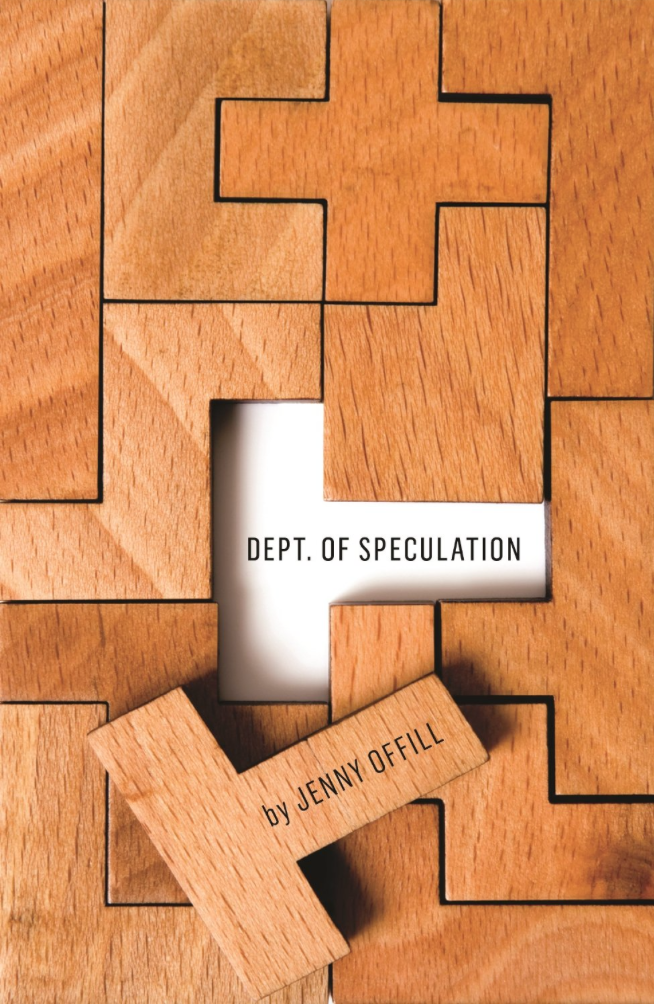
Are there any stories more hackneyed than stories of adultery? Possibly not. So, let’s imagine you’re a writer and you want to write a novel about adultery. How would you do it? You could hunt for a really sordid story. Or you could infuse your story with a heavy dose of original writing and, at the same time, make writing about adultery your topic. If you went down that road you might end up with something like Jenny Offill’s Dept. of Speculation. We’ve read the story she tells so many times before, but we never read it told the way she chose to tell it.

The plot is summarized quickly. A woman and a man meet, fall in love, get married, have a child, are happy. Then he cheats. She’s devastated. They fight and grieve and get back together. Jenny Offill could have told this many different ways, but she chose a fragmented approach. Maybe I’ve read too much flash fiction and prose poetry recently, but to me, that’s exactly what Dept. of Speculation is— a novel in flash fiction form. Like flash fiction, it’s highly condensed, pared down, stripped of anything superfluous. It uses formatting as a means of expression, short paragraphs that are arranged like verses in poems. It’s episodic, uses defamiliarization and counterpoint. Reverses expectations, wants to surprise. All characteristics of the condensed art of flash fiction. And it works. Almost every element, each paragraph that has been set apart, can be read individually, like a mini-story. They all offer something and, just like the wheels of a clock, are perfect in themselves.

There’s an interesting use of POV. Before the adultery there’s a first person narrator, after the adultery the POV changes to third. Instead of the pronouns You and I Offill uses “the wife” and “the husband”.  Only in the very last chapter she slowly moves back to first person, almost imperceptibly. Maybe it was the only way to write about the sorrow, pain and grief and avoid cliché and bathos. The result was that I felt kept at arm’s length by the book as a whole, but the individual parts moved me often.

The narrator is a teacher of creative writing. She writes about her student’s stories but, also about her own and how it should have been written differently. I liked those metafictional parts the most.

Of course we wonder how autobiographical it is. At times I felt like reading a personal essay.

There’s a lot to love in this book. Many sentences and passages I admired. Telling such an age-old banal story but infuse it with so much originality – form and thoughts – deserves high praise. And it goes beyond adultery. There are passages in which Offill captures bliss and joy without being corny. Passages in which she praises the wonder of creation and the vastness of the universe. Domestic bliss meets transcendent happiness.

Nonetheless, I couldn’t enjoy it unreservedly because it was too much. For a novel it was almost too rich and for a short story collection it lacked variety in tone, atmosphere, and mood. It’s a hybrid form, and, as such, needs a specific kind of reading.

To give you an impression here are a few quotes:

One night we let her sleep in our room because the air conditioner is better. We all pile into the big bed. There is a musty animal smell to her casts now. She brings in the nightlight that makes fake stars and places it on the bedside table. Soon everyone is asleep but me. I lie in our bed and listen to the hum of the air conditioner and the soft sound of their breathing. Amazing. Out of dark waters, this.


How has she become one of those people who wears yoga pants all day? She used to make fun of those people. With their happiness maps and their gratitude journals and their bags made out of recycled tire treads. But now it seems possible that the truth about getting older is that there are fewer and fewer things to make fun of until finally there is nothing you are sure will be never.


She would not have let one of her students write the scene this way. Not with the pouring rain and the wife’s broken umbrella and the girl in her long black coat. To begin with, she’d suggest taking out the first scene on the subway, the boring one, where the wife pretends to be a Buddhist. (I am a person, she is a person, I am a person, she is a person, etc. etc.) Needed? Can this be shown through gesture?


She has wanted to sleep with other people, of course. One or two in particular. But the truth is she has good impulse control. That is why she isn’t dead. Also why she became a writer instead of a heroin addict. She thinks before she acts. Or more properly, she thinks instead of acts. A character flaw. Not a virtue.

If you’d like to read another review. Max has reviewed here.

This is the third book of my 20 under 200 project.

Mercè Rodoreda: Jardí vora el mar – The Garden Above the Sea (1967)

Jardì vora el mar

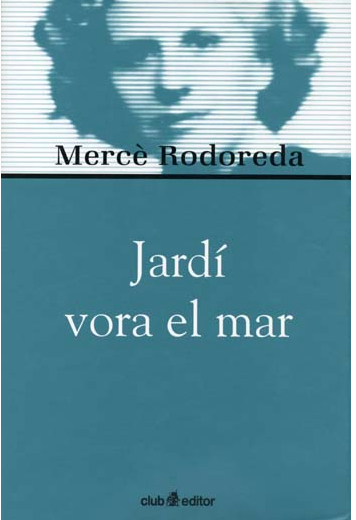
Mercè Rodoreda was a Spanish writer who wrote in Catalan. She’s most famous for her novel La plaça del diamant – In Diamond Square – (also The Time of the Doves). I’ve had that for ages but when I came across the German translation of Jardí vora el mar (The Garden Above the Sea), I couldn’t resist. Unfortunately it hasn’t been translated into English.

The story is set in Spain, in the 20s of the last century. The narrator of the story is a gardener. He’s a widower and has been in charge for the garden that belongs to a villa above the sea since decades, even before the current owners spent their summer vacations in the villa. The story spans six summers, summers that change from playfulness and enjoyment to drama and tragedy. Our narrator is not only a silent witness, he’s drawn into the story as the occupants of the villa treat him like a confidante. During the first year, when the young couple, Rosamaria and Francesc, and their friends spend their first summer at the villa, things seem perfect. The young people are beautiful, rich, joyful. They swim, they party, they tease each other. The gardener watches and listens. At night he refuels in his garden. He listens to the plants breathe, enjoys the scents and colors, cherishes the loneliness.

He loves to watch the young people. He has his favourites. There’s Feliu the painter who only paints the sea. Sebastia who travels in Africa and brings back a lion and a monkey. The summer when the mischievous monkey is at the villa, is by far one of the most entertaining, but some darkness already manifests. It is the summer of the monkey, but also the summer in which the construction of the neighbouring villa begins. At the end of that summer, the monkey goes missing and the young people at the villa feel like it was the last perfect summer. They already know that the villa next doors will be even bigger and more glamorous than their own.

The following summer, the new neighbours move in, and the tragedy unfolds. The past has come back to haunt Rosamaria and Francesc.

In the afterword the novel is compared to Bassani’s The Garden of the Finzi Continis and to The Great Gatsby. There are similarities but it might be especially interesting to point out the differences. The three novels are told by a narrator who is an outsider but while the narrators in Fitzgerald’s and Bassani’s novels circle the orbit of the rich and famous, they are still guests and allowed to take part, while the gardener is distinctly removed. All three books mourn also the end of an era. The Great Gatsby and The Garden Above the Sea are set in the 1920s, while Bassani’s book takes place in the 40s.  The Finzi Contini are Jewish. Needless to say how the story will end. Gardens and houses are important in the three novels but nowhere is the garden as much a character as in Rodoreda’s novel. The afterword tells us that the author was a passionate gardener and we can feel that. The descriptions of the flowers, trees, and bushes, their changes through the seasons, the difficulties to grow them are described with so much love, only someone who loves plants could have achieved that. I’ve come across many novels, in which houses are like characters, but I’ don’t think I’ve come across many, in which the garden played such an important role. Not even Bassani’s novel.

The Garden of the Finzi-Continis is easily one of my top ten favourite novels. I also love The Great Gatsby. I enjoyed Rodoreda’s book a great deal, but I only loved the descriptions of the garden. In choosing a gardener as her narrator, as wonderful a character as he may be, we stay much more spectators of the characters, are never fully immersed. We only see what they do when they are outside; we never see them interacting inside of the house. Most of the things we learn, are things the gardener himself was told by someone who heard it from someone. Seeing characters from afar, doesn’t allow to get as close to them as we would wish. Plus, the main protagonists change. Every summer, someone else gets close to the gardener, visits him in his small house. Those are the most intimate moments in the book, the ones, other than the descriptions of the garden, that I enjoyed the most. It’s not always good to compare a book with such famous novels as The Great Gatsby or The Garden of the Finzi-Continis, but in this case it helped me understand, why Rodoreda’s book left me a little cold, although it’s a fantastic book that I might even re-read some day.

The review is part of Richard’s and Stu’s Spanish Literature Month.