Wednesdays Are Wunderbar – German Literature Month Giveaway II

As promised here is the second giveaway of German Literature Month. While the first one was focussing on novellas and literary books, this one combines literary books and genre. Alissa Walser’s novel is clearly historical, it still is a literary novel, the same goes for Léon and Louise and Love Virtually, both are love stories but not pure genre. Things are different when it comes to Andrea Maria Schenkel. Hers is a crime novel, no doubt. One of the most interesting new German genre writers is Zoran Drvenkar who writes a lot of different genres. Thriller, YA, children’s books and many more. The book I’ve chosen is a genre blend which is extremely successful in Germany among adults and young adults alike.

I’d like to thank Haus Publishing for offering Léon and Louise and MacLehose Press for Alissa Walser’s novel Mesmerized. Lizzy is offering Love Virtually and Grimm’s Fairy Tales and I’m contributing The Murder Farm and Tell Me What You See.

I hope the blurbs will help you decide which of the books you would like to win.

Love Story
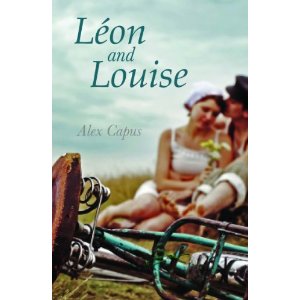
Alex Capus – Léon and Louise

Summer 1918. The First World War is drawing to a close when Léon Le Gall, a French teenager from Cherbourg who has dropped out of school and left home, first meets and falls in love with Louise Janvier. Severely wounded by a German artillery attack they are separated, both mistakenly believing each other to be dead. Ten years later, while travelling on the Paris Métro, Léon – now married – briefly catches sight of a girl who bears a strong resemblance to Louise, the first love he has never forgotten. He goes in search of her at the insistence of his wife Yvonne. The couple are briefly reunited, but part again with a heavy heart as Louise refuses to destroy Léon’s marriage. And then another war tears them apart. Paris is occupied by the Germans, for whom Léon indirectly works at the headquarters of the Paris CID. Louise, an employee of the Banque de France, is shipped off to French West Africa with the bank’s gold reserves. Narrated by Léon’s grandson, Léon and Louise is the story of an enduring passion that survives the vicissitudes of world history and the passage of time, spanning more than forty years. But it is far more than this. The long-separated lovers are flesh and blood characters vividly captured in complex human relationships and real-life situations: in German-occupied Paris, where Léon wages a lone battle against the abhorrent tasks imposed on him by the SS and his wife fights stubbornly for her family’s survival; and in the wilds of Africa, where Louise confronts the hardships of her primitive environment with courage and humour.

Daniel Glattauer – Love Virtually

It begins by chance: Leo receives emails in error from an unknown woman called Emmi. Being polite he replies, and Emmi writes back. A few brief exchanges are all it takes to spark a mutual interest in each other, and soon Emmi and Leo are sharing their innermost secrets and longings. The erotic tension simmers, and it seems only a matter of time before they will meet in person. But they keep putting off the moment – the prospect both unsettles and excites them. And, after all, Emmi is happily married. Will their feelings for each other survive the test of a real-life encounter?

Historical
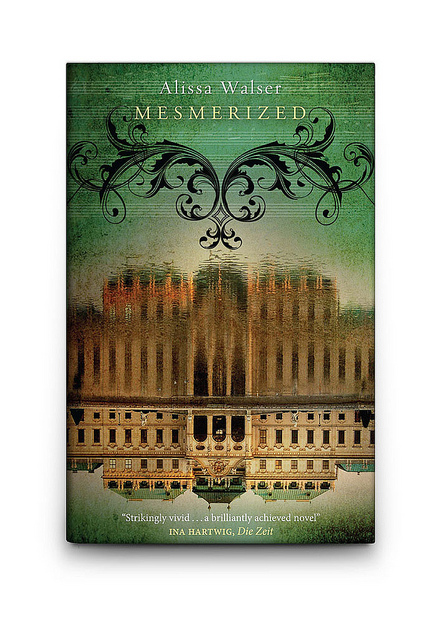
Alissa Walser – Mesmerized

Mozart’s Vienna. A crucible for scientific experimentation and courtly intrigue, as Europe’s finest minds vie for imperial favour. In a colourful, chaotic private hospital that echoes with the shrieks of hysterical patients, Franz Anton Mesmer is developing a series of controversial cure-alls for body and mind. When he is asked to help restore the sight of a blind musical prodigy favoured by the Empress herself, he senses that fame, and even immortality, is within his grasp. Mesmer knows that he will have to gain her trust if he is to open her eyes. But at what cost to her fragile talent? And will their intimacy result in scandal?

Crime
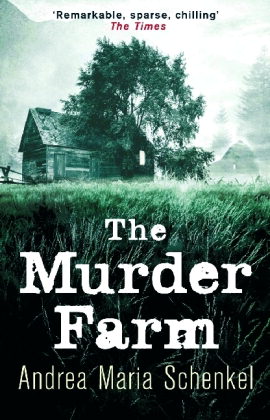
Andrea Maria Schenkel – The Murder Farm

A whole family has been murdered with a pickaxe. They were old Danner the farmer, an overbearing patriarch, his put-upon devoutly religious wife, and their daughter Barbara Spangler, whose husband Vincenz left her after fathering her daughter, Marianne. Also murdered was the Danners’ new maidservant, Marie, who was regarded as slightly simple. Despite the brutal nature of the killings and the small village where it has taken place, the police have no leads. Officially the crime is unsolved. And then a former resident returns home… The Murder Farm is an unconventional detective story. The author interweaves testament from the villagers, an oblique view of the murderer, occasional third-person narrative pieces and passages of pious devotion. The narrator leaves the village unaware of the truth, only the reader is able to reach the shattering conclusion.
 

Fairy Tales
The Brothers Grimm – Fairy Tales

Is a collection of well-loved fairytales by the brothers Grimm. Stories include Hansel and Gretel, Tom Thumb, Little Red Riding Hood, Sleeping Beauty, Rumpelstiltskin, Snow White, the Frog Prince, Rapunzel, The Elves and The Show Maker and many more.
 

YA/Horror/Ghost story

Zoran Drvenkar – Tell Me What You See

Berlin. The dead of night. Sixteen-year-old Alissa and her best friend Evelin make their secret Christmas pilgrimage to Alissa’s father’s grave. In the graveyard, Alissa falls through thick snow into an underground crypt. Searching for a way out, she discovers something else: out of the lid of a small coffin coils a strange black plant. Drawn closer, Alissa sees its roots embedded in a young child’s heart. This chance encounter sets off a chain of nightmarish events that throw her life into turmoil. Haunted by angels, stalked by her ex-boyfriend, only with Evelin’s help can Alissa reclaim her sanity and discover the truth about her frightening new gift.
 
*******
If you are interested in any of the books, just leave a comment indicating which one(s) you would like to read.

The competition is open internationally. The winners will be announced on Wednesday October 10 2012.


Wednesdays Are Wunderbar – German Literature Month Giveaway I

Those who followed German Literature Month last year know that Wednesdays are wunderbar because they are giveaway days!

This year we are splitting the giveaways into two batches. The first, this one, is a goody bag designed to complement the first half of the month during which we’ll be reading novellas and literary novels. It’s hosted by Lizzy, so if you are interested in winning one of the following books, make sure to visit her blog soon.

The first two novellas are courtesy of Pushkin Press, the next two are offered by Haus Publishing. The only novel among the titles,  The Bridge of the Golden Horn, is my contribution.

Burning Secret – Stefan Zweig (1913)
Set in an Austrian spa where a lonely twelve-year-old is befriended by a charming and enigmatic baron. As the boy gradually becomes infatuated with him, the older man heartlessly brushes him aside to turn his seductive attention to the boy’s mother.

Fear – Stefan Zweig (1913)
Irene Wagner has been married for eight years and is tired of her bourgeois and predictable existence as wife and mother. She starts an affair with an up-and-coming young pianist but finds herself being blackmailed by her lover’s former mistress. Irene is soon in the grip of an astonishing fear.

A Minute’s Silence – Siegfried Lenz (2009)
The delicately paced structure of Lenz’s novella begins with the memorial ceremony for a popular young English mistress, Stella Petersen, seamlessly alternating between this scene and eighteen-year-old Christian’s memory of a summer love affair with his tutor. They keep their mutual attraction concealed at school and as the season goes on the lovers continue to meet discreetly. Tragedy strikes when Stella goes on holiday with friends, sailing around the Danish islands. As the yacht returns to Hirtshafen at the end of the trip, a storm breaks. Before Christian’s eyes his beloved is flung overboard and fatally wounded. Lenz was twenty or thirty pages into writing A Minute’s Silence when his wife of fifty-six years died. Grief-stricken, he suffered from a serious bout of writer’s block and it seemed he would never finish the novel. With the passage of time, Lenz found that he could write again and complete this tender love story. Despite the obvious distance and difference of Lenz’s own long marriage and the brief, youthful passion of Christian for Stella, Lenz has wrought a well-aimed response to Auden’s famous request: ‘Tell me the truth about love.’

On the Edge – Markus Werner (2004)
When the cynical divorce lawyer Thomas Clarin finds himself at a table on the terrace of the Bellavista Hotel beside Thomas Loos, an eccentric, ageing philologist, hey strike up an unlikely conversation. Soon Clarin’s questions tease out stories from Loos’ past, and as both men slowly reveal more of themselves they are forced to question their opinions on love and life. The men are opposites; they intrigue and repel each other. But as the mystery of Loos’ past deepens, we begin it wonder if all as it seems.

The Bridge of the Golden Horn – Emine Sevqi Ozdamar (2002)
The Bridge of the Golden Horn is a coming-of-age novel, a sentimental education that is also a political, cultural and intellectual one. In 1966, at the age of 16, the unnamed heroine lies about her age and signs up as a migrant worker in Germany. She leaves Istanbul, works on an assembly line in West Berlin making radios, and lives in a women’s factory hostel. But this novel is not about the problems of assembly line work – it’s a witty, picaresque account of a precocious teenager refusing to become wise, of a hectic four years lived between Berlin and Istanbul, of a young woman who is obsessed by theatre, film, poetry and left-wing politics. These are sometimes grim years, particularly in Turkey, but they also have a hope and optimism that seem almost unimaginable today.

*******

Now all you have to do is visit Lizzy’s blog.

The competition is open internationally.

Balzac: The Deserted Woman – La Femme abandonnée (1832)

When I read Le Père Goriot Old Goriot years ago I was fascinated by the tragic story of Mme de Beauséant. I knew Balzac had dedicated a novella to her which is included in the Scenes from Private Life. After reading one of Guy’s recent Balzac reviews, I decided it was about time to finally read the story. For those who read French you can find the story of The Deserted Woman or La Femme abandonnée in  Les Secrets de la Princess de Cadigan et autres études de femmes.

Gaston de Nueil, a young noble man, leaves Paris for Bayeux, a provincial city located in the Basse-Normandie region. His health is rather poor and he has to stay away from the capital until he recovers. Used to more interesting society than the one he finds in Bayeux, he is soon terribly bored and his imagination is set on fire by the story of the countess de Beauséant who lives like a recluse in her château in the Normandy. She is said to be a young woman of great beauty and even greater esprit who fled to Bayeux after having been abandoned by her former lover, the marquis d’Ajouda-Pinto. The separation was devastating and as she is trapped in a loveless marriage which cannot be divorced, the only way to keep at least some of her self-esteem was to withdraw from the world and dedicate her days to reading and praying.

Young, bored and curious about love, de Nueil falls in love with the unhappy countess before he has even set eyes on her. He walks in her gardens in the night, tries to catch a glimpse of her and is finally so love-sick that he decides to use a ruse in order to get access to her house.

When he finally stands before the woman he fell in love with because of her story and her reputation, he finds her even more beautiful and tragic than he expected.

The countess is 30 years old by now, while de Nueil is barely 23. She is trapped in a void, a loveless life, no contact to society, no future joy in sight. It’s not surprising that de Nueil’s infatuation moves her and finally leads her to accept him as her lover.

Writing more would spoil the story which is one of the best of Balzac’s short stories. You can read it on its own but when you are familiar with the Comédie Humaine you will like it even more. The countess is a key figure in Old Goriot and therefore important for the whole oeuvre. The story as such reminded me of many others. It bears some resemblance with Mme de Lafayette’s The Princesse de Clèves. The countess sounds just like the princesse when she first meets de Nueil. I was also reminded of  Henry James’ Mme de Mauves but most of all it reminded me of Colette’s Chéri. The end however is entirely different from all of these.

I like it when the title has a special significance, is complex and multi-layered. The title of this story seems simple but is excellent. To fully appreciate it, you will have to read the story.

As excellent as this story is, I wouldn’t recommend it to anyone who is not familiar with Balzac. I would still recommend Old Goriot as the best starting point. Paired with this novella, it would be an amazingly great introduction to Balzac’s work and convey a good feeling for the diversity of his talent. The Deserted Woman also contains all of the themes which are important in Balzac’s work such as the mechanics of society, the role of women, marriage, adultery, money and some sub-themes like the “inheritance”, the “fallen woman”, the “aging woman” etc.

I liked the story a great deal. I thought the way Balzac described how de Nueil falls in love is perceptive and uncanny at the same time. Falling in love of an idea, or ideal, may unfortunately very often be the reason for falling in love. I haven’t seen it described as eloquently very often. I think this part of the story applies to all sorts of idealisations; people falling in love with stars or other people they hardly know like people in chat rooms, internet forums or blogs.

If you’d like to read the novella in English and are interested in an overview of Balzac’s work and how it is grouped here is an excellent link The Human Comedy – La comédie humaine.

William Trevor: My House in Umbria (1991) Novella and Movie

My House in Umbria is one of two longer novellas contained in the book Two Lives. The other one is called Reading Turgenev. I’ve had the book for a while and since Mel u’s Irish Short Story Week has been prolonged, I decided to read it now. William Trevor is one of those authors I always wanted to read more of.

My House in Umbria is a surprisingly somber and complex novella. As lovely as the setting is, a villa located near Siena, there are some dark undercurrents, nasty secrets and a back story unlike any other to discover.

The story is told in the very unique voice of Mrs. Emily Delahunty. Delahunty is one of a few names she has chosen for herself. She is a romance novelist with a more than troubled past. Sold by her parents as a child, abused by her step-father and later abandoned by a lover and stranded in a hotel in Africa where she meets Quinty. Quinty isn’t any less mysterious or adventurous than Emily and this strange couple forms an interesting alliance. At the beginning of the story they live in the afore-mentioned villa in Umbria. Surprisingly Emily’s novels have brought money and fame and she lives a comfortable life. She is haunted by the past but her incredible imagination helps her to flee to nicer places whenever the clouds get to dark. And there is always alcohol as well, to help circumnavigate the roughest cliffs.

At the beginning of the story she boards a train to Milano. The wagon she is sitting in is blown up and most of the passengers die. Only Emily, a young German man who loses his girlfriend, an old general who loses his daughter and Aimée a little American  girl whose whole family dies, survive.

After a stay at a hospital, Emily invites the three people to stay with her in her house in Umbria. The calm and peacefulness of the country-side, the beauty of the house, will help them recover, she hopes.

These four highly traumatized and maimed people share some moments of great intimacy, – reminiscent of the group in Enchanted April – until the day Aimee’s uncle announces that he will come and fetch the girl.

What follows is equally sad and dramatic and what little peace these wounded  people  have acquired is shattered for good. The idea that a man she has never seen before and who seems distant and unlikable, comes to get the girl who still suffers from amnesia is particularly painful for the three other victims.

Mrs Delahunty sounds like an unreliable narrator for most of the book but she isn’t. Some of the things she tells sound unbelievable but they turn out to be true, only, she mixes things she imagines with things that happened. She has a a habit of inventing back stories for each and every person she meets. It’s not surprising she has become a novelist. Hearing her we think she would have had what it takes to write great literature, yet she chose to write romances as a means to escape the memory of her past. Not only was she abused but it seems that before discovering that she is a writer, she was an escort girl in Africa.

It’s not often that I watch a movie based on a book right after having finished the book but I watched My House in Umbria the day after finishing Trevor’s novella.

I really enjoyed how the movie brings to life the great character of Mrs Delahunty. Maggie Smith is amazing in this role. They way she plays this very kind, vulnerable and sad woman is touching and funny at the same time. The movie changed the ending completely but stayed true to the rest of the story. It underlines and enhances the characters and episodes in the novella and I would say I liked it even better. Others may prefer the darker novella; I liked the way the movie interpreted some facts and changed a few others. In any case they work extremely well together. What the movie offers, apart from great acting, is enchanting pictures of a beautiful landscape and some truly comical moments when the worlds of Mrs Delahunty and Aimée’s uncle clash. It’s one of my favourite movies so far this year. But don’t get me wrong, the book is excellent as well.

It’s rare that a main character in a book is so memorable but I’m beginning to think that creating great characters is one of William Trevor’s strengths.


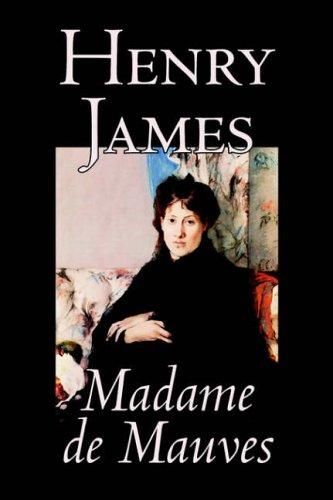
Henry James: Mme de Mauves (1874)

It was exactly one year ago that I reviewed Edith Wharton’s Mme de Treymes. Mme de Treymes – Mme de Mauves? Both novellas, both set in Paris, or in the case of Mme de Mauves in St-Germain-en-Laye. It’s hardly a coincidence. And who was influenced by whom is also not hard to find out as James wrote his novella in 1874, while Edith Wharton published Mme de Treymes in 1907.

Henry James and Edith Wharton are both novelists whose each and every book I would like to read sooner or later. Discovering Madame de Mauves of which I hadn’t known anything before was a real pleasure and the first sentences managed to capture me right away.

The view from the terrace at St.Germain-en-Laye is immense and famous. Paris lies spread before you in dusky vastness, domed and fortified, glittering here and there through her light vapours and girdled with her silver Seine. Behind you is a park of stately symmetry, and behind that a forest where you may lounge through turfy avenues and light-chequered glades and quite forget that you are in half an hour of the boulevards. One afternoon, however, in mid-spring, some five years ago, a young man seated at the terrace had preferred to keep this in mind. His eyes were fixed in idle wistfulness on the mighty human hive before him.

Like in Mme de Treymes we have the theme of intercontinental marriage and its difficulties. The young American Longmore, the narrator of Henry James’ novella, meets the beautiful and sad Mme de Mauves on one of his walks in St. Germain. A mutual friend introduces them and before leaving for London asks him to keep her company and distract her, as she is trapped in an unhappy marriage. Mme de Mauves is a young, very rich American woman, married to an aristocratic Frenchman. While she married because she romantically idealized the title, she also married for love, while he married her for the money only. It is known that he not only spends her money but has one affair after the other.

The more time Longmore  spends in her company, the more he admires her, pities her and finally falls in love with her. He would want her to confide in him but she refuses. As much as he is in love with her, he would never attempt anything and is taken aback when her sister-in-law suggests they should have an affair. It’s only natural, according to the sister-in-law, for a Frenchman to have affairs but it isn’t natural for a woman to make him one scene after the other and to torment him with reproaches. In an earlier conversation with Longmore, M de Mauves complains about his wife. He thinks that she is too morbid, to fond of reading and solitude.

A lot of what we find in James’ later novels can already be found here. The contrast of morals between France and America, the almost impossibility of a marriage between a rich American and an aristocratic Frenchman. Adultery. Divorce seems no option although Longmore hopes so at a certain point. I think it would be really great to read Wharton’s and James’ novella together. Both have drastic and surprising endings but in the case of Mme de Mauves, I’m not sure whether it isn’t surprising because it is implausible. If anyone has read the novella I’d love to discuss the ending.

It seems that of all of his novels The Golden Bowl is the most similar to this novella, although, without the tragic end. The negotiation that fails in Mme de Mauve is successful in The Golden Bowl, or so it seems. I have not read the Golden Bowl yet but would like to very much.

The writing in Mme de Mauves is complex, typical for James, it’s by far less readable than Mme de Treymes.

While this may not be his best work, it has reminded me of all I like in his writing and has certainly put me in the mood for another of his longer novels.

Has anyone read Mme de Mauves? Which are your favourite Henry James novels? Portrait of a Lady is one of my favourite novels but I also like many of his other books with the exception of The Turn of the Screw. I didn’t get along with that at all.

Madame de Lafayette: The Princesse de Monpensier – La Princesse de Montpensier (1662)

The Princess of Montpensier

I’m not a re-reader but I have read Mme de Lafayette’s La Princesse de Clèves at least four times. It is my favourite novel. For its style as well as for the story. There is something in the way Mme de Lafyette describes feelings that touches me profoundly. She wasn’t a very prolific writer. Before publishing La Princesse de Clèves (1678) she published La Princesse de Montpensier (1662) anonymously and later La Comtesse de Tende. Zaïde (1670/71) was published shortly after La Princesse de Montpensier. Although Zaïde was published under a pseudonym, it seems to be sure that it was also written by Mme de Lafayette.

Generally I’m not so much into the literature of the 19th century, I often feel that earlier writers, especially some of the French ones, are far more modern and original. This is certainly the case of Mme de Lafayette. Until a few days ago I had not read anything else by her but I bought a book called Nouvelles galantes du XVIIè siècle (it contains stories by Mme de Lafayette, Saint-Réal, Du Plaisir and Catherine Bernard) and finally read La Princesse de Montpensier.

It is a short novella but it’s as wonderful and as astonishing as her masterpiece. Her style is flawless, it is pure perfection. I particularly like her use of the passé simple and the indirect speech. The language is as fresh as a newly cut rose, it hasn’t aged one day.

Mme de Lafayette was an innovator. Before her most of the baroque novels, like d’Urfés L’Astrée, were thousands of pages long. To be this concise and precise like she was, was unheard of before. She was also one of the first to write historical fiction. The people in her books did exist, however the story is invented.

La Princesse de Montpensier is set during a very tumultuous period of French history. It starts 1566,  during the civil war in which Catholics and Protestants fought a bloody battle, and ends in 1572 at the time of the horrible massacre of the Nuit de La Saint-Barthélemy or The St.-Bartholomew’s Day Massacre.

La Princesse de Montpensier and the Duc the Guise are secretly in love with each other. They are very young and hope to get married but for political reasons her family decides otherwise and marries her to the Prince de Montpensier. This is a great tragedy for the princess. She doesn’t love her husband and when conflict breaks out she is glad to see him go to war. Montpensier leaves the Comte the Chabannes with her, not knowing how much in love the Comte already is with the princess as well.

This is a time in which women do hardly ever choose their husbands and adultery is very common. The princess is an extremely beautiful woman and it isn’t surprising that there are many men falling for her. She fights them all off until the day when she sees the Duc de Guise again. A qui pro quo and the intense jealousy of her husband accelerate the story. The end is somewhat unexpected and tragic.

I was thinking of Kleist while reading this novella and saw once more how much German changed while French has pretty much stayed the same since the 17th Century. La Princess de Montpensier is 150 years older than Kleist’s The Duel but it feels so much more modern.

I really loved this story and will soon read La Comtesse de Tende as well. I cannot believe that this was only 50 pages long, it feels as if I had read a novel, it is so rich. The five main protagonists are all equally well developed. All five of them are hurt and we feel for all of them. We know the society is to blame for their tragedy but Mme de Lafayette wouldn’t be Mme de Lafayette if she didn’t pick one particular person and blame her.

Still, if you have never read anything by her, I would recommend to start with The Princesse de Clèves but this little book is very beautiful as well.

I would love to watch Bertrand Tavernier’s movie La Princesse de Montpensier. Has anyone seen it?

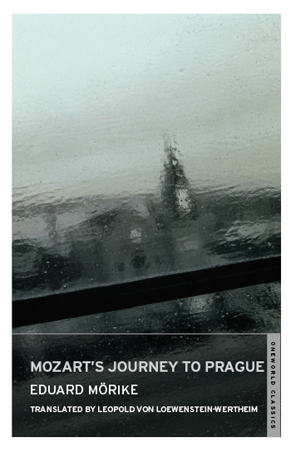
Eduard Mörike: Mozart’s Journey to Prague – Mozart auf der Reise nach Prag (1855)

This is one of those books that I had meant to read since years. Now that I have read it, just after reading Kleist, I must say, I couldn’t imagine another classic as far from Kleist as Mörike. Mozart’s Journey to Prague is a truly lovely piece of writing. Sunny, cheerful but still profound, thoughtful and with a melancholic undertone. All in all one could say the sunniness is deceptive.

It’s the year 1787 and Mozart and his wife Konstanze are on a journey to Prague for the opening of Don Giovanni. They are cheerful but not without worries. Money is a big issue in Mozart’s life. Money and his health. He never rests, never stops running from one invitation to the next, working till the early morning, hardly sleeping.

His needs were various, above all his passion for all the pleasures of society were extraordinarily strong. Honoured and sought out as an incomparable talent by Vienna’s noblest families, he seldom or never declined invitations to dinners, parties and soirées. In addition he would entertain his own circle of friends with befitting hospitality. The Sunday musical evening, a long-established tradition in his house, or the informal luncheon at his well-furnished table with a few friends and acquaintances two or three times a week, were pleasures he refused to forgo. Sometimes, to his wife’s dismay, he would bring unannounced guests straight in off the streets, a very varied assortment of people, dilettanti, artistic colleagues, singers and poets. The idle parasite whose sole merit lay in an untiring vivacity, ready wit and the coarser sort of humour was made as welcome as the learned connoisseur or the virtuoso musician.

They talk about a few of these things but they are enjoying themselves as well. Mozart steps out of the carriage in a forest and gets all enthusiastic about the trees, the beauty of nature of which he hardly sees anything in Vienna.

A little later they stop at a village and Konstanze rests in a guest house while Mozart goes for a walk in someone’s garden. Lost in his thoughts he carelessly snaps an orange from a little tree and halves it with his knife. He immediately gets arrested by the gardener and brought in front of the noble man whose park he has entered. Lucky for him they recognize him and are delighted to have him there.

The little tree is very dear to the daughter of the noble man. It has once been a gift from Mme de Sévigné herself. The little tree was about to die but thanks to a skillful gardener has recovered. His oranges were counted and the tree was meant as a gift for the daughters engagement.

Mozart and his wife are invited to spend the day and the evening of the engagement with the family. He plays the piano, sings, introduces them to Don Giovanni.

There is a lot of cheering, drinking and laughing but towards the end the daughter of the family feels a chill. She is convinced that Mozart is burning from an inner fire, that he consumes himself too fast and will not live much longer. The novella finishes with a sad poem by Mörike that ends the book on a melancholy note.

Mörike wrote this novella as an homage to Mozart whose music he adored. He tried to capture the beauty and the cheerfulness of his music and the man himself but did not omit the fact that Mozart wasn’t able to refrain himself. He couldn’t live in a moderate way, was excessive in everything, burned the candle on both sides and did, as we all know, not live very long.

Reading this novella felt at times like watching a painter paint a very colorful painting, drawing flowers and trees, a sunny blue sky but in the upper left corner of the painting we can see a dark cloud slowly starting to spread.

Mozart was without any doubt a genius and there is always a mystery surrounding them. One could wonder whether he was living and working so excessively, as the novella wants us to believe, because he knew deep inside he was going to die young or whether his excesses led to his untimely death.

It’s a very visual novella, lovely and enchanting but profound as well.

The review is part of German Literature Month – Week IV Kleist and the Classics