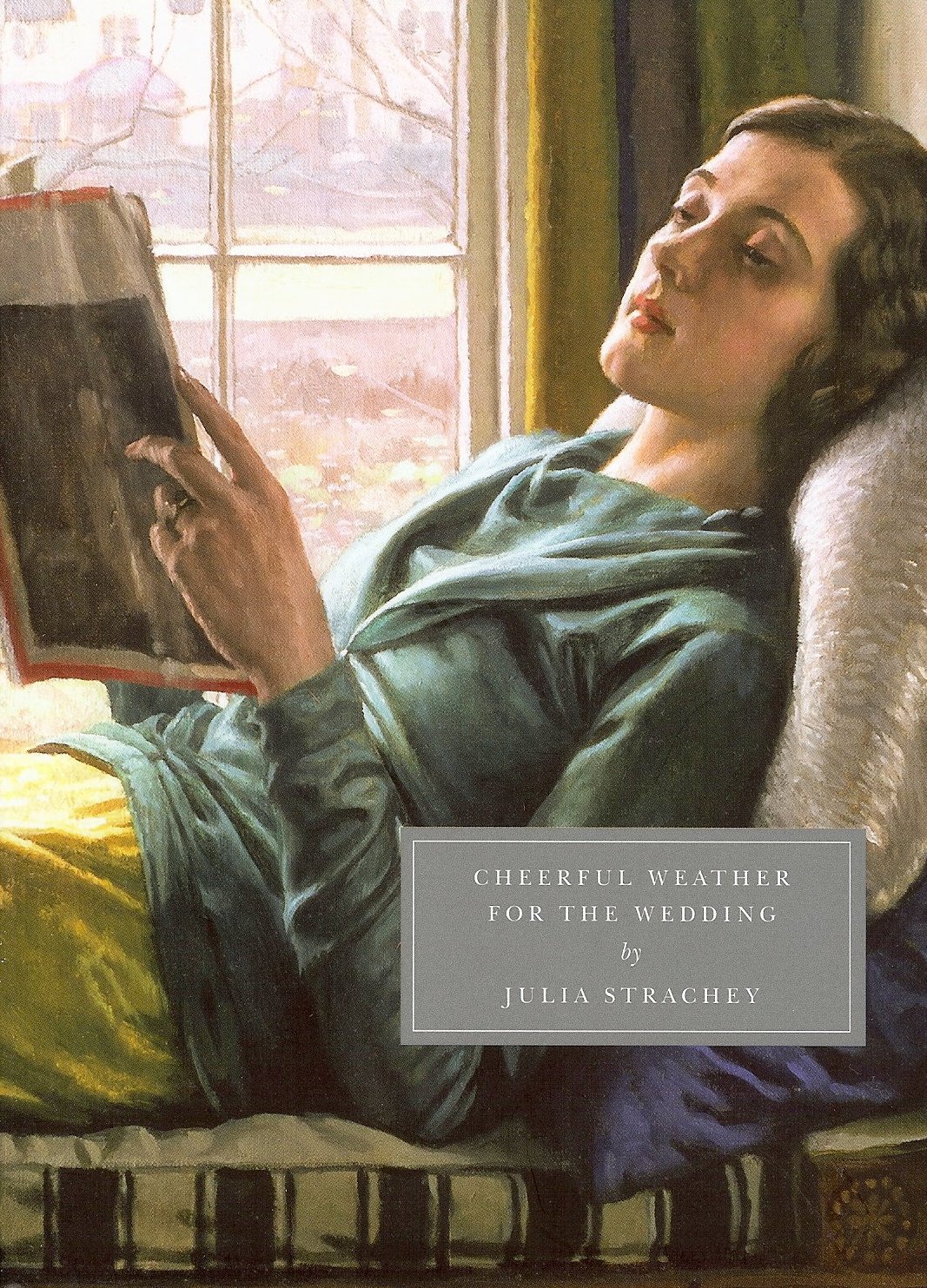
Julia Strachey: Cheerful Weather for the Wedding (1932)

Cheerful Weather

It seems my reading is very influenced by Danielle’s these days as this is the second book in a row I bought after having read an appealing review on her blog.

Cheerful Weather for the Wedding is an absolutely delightful little book; charming but still witty, filled with dry humour, detailed descriptions and quirky characters.

On the cover it is compared to Katherine Mansfield, E.M. Forster and Stella Gibbons which is apt but isn’t giving Julia Strachey enough credit for her originality.

A very crisp March morning slowly turns into a gloriously bright but chilly day. Dolly is about to get married to the Hon Owen Bingham who is eight years her senior. While she is getting ready in her room upstairs, the guests arrive and gather downstairs. Among the guests is Joseph with whom Dolly has spent a wonderful summer and possibly a love story.

The closer we get to the wedding the more things go topsy-turvy. Mrs Thatcham, Dolly’s mother, who is a very muddle-headed person assigns the same room to different people, the young cousins of Dolly chase and tease each other loudly, Dolly empties a bottle of rum, Joseph starts crying and in the end Dolly and Joseph are caught by Dolly’s soon-to-be husband in something that looks like an embrace.

Reading this book is like watching a dance on a slightly crowded dance floor. While all the dancers know their moves, they get into each other’s way, bump into each other and what we get to see is graceful chaos.

The character portraits are very witty. Dolly and Kitty’s mother, Mrs Thatcham is such an airhead. While there is huge drama going on behind the scenes, she wouldn’t even notice it, if it was brought to her attention. All she seems to care about is that there is cheerful weather for the wedding. Dolly and Joseph’s relationship is a mystery. We really wonder whether she is doing the right thing in marrying Bingham.

The people and their drama unfold within pages full of delicate descriptions which reminded me of Virginia Woolf’s early work. There are descriptions of the way light falls into a room through fern pots and colors it in a greenish hue, of the shades of dresses, the shape of a flower, the pattern on a lampshade. These are delicate and exquisite descriptions which paint a wonderfully rich picture.

Cheerful Weather for a Wedding is a most enjoyable little book which I can recommend to anyone who likes the writing of the early Virginia Woolf or E.M. Forster, infused with a dose of dry wit.

The novella has just been made into a movie starring Elizabeth McGovern (Downton Abbey) as Mrs Thatcham. I was very keen on watching it but it has received an incredible amount of bad reviews and an IMDb rating of 5.1.

Has anyone seen the movie?

And has anyone read other books by Julia Strachey?
Dickens in December – A Christmas Carol – Readalong

Dickens button 01 resized

It didn’t take Delia and me very long to decide which book to choose for our Dickens in December readalong. There really couldn’t be a more fitting book to read just before Christmas than Dickens’ A Christmas Carol.

Last week we sent out a few questions. Some of you have chosen to answer them for the readalong, others wrote a review. Both is fine and all the links to the different contributions can be found at the end of my post and will help you to find the participants and visit their blogs. It’s updated regularly, so come back and check who else has contributed.

Is this the first time you are reading the story?

I have read A Christmas Carol before, I guess some 5 or 6 years ago and already knew then that I would read it again some day.

Did you like it?

I liked it very much 5 years ago that’s why I knew I would read it again. I still liked it this time around but for very different reasons. I was much more attentive this time to the moral of the story. The first time I was paying more attention to the descriptions.

Which was your favorite scene?

I have two favourite scenes or parts. One is the scene when Marley’s ghost appears. It’s quite spooky and Scrooge’s shock is shown so well. It’s also a very dark passage as there is clearly no redemption for Marley. It’s too late for him to change anything. While the whole story is about the power of change, this first part is a cautionary tale showing us that while Dickens did believe in change that didn’t mean he was an optimist who didn’t see that there were lost souls too.

The second part I liked a lot was when Scrooge first follows the second spirit. The descriptions are among the most evocative. They show Dickens’s style amazingly well.

Which was your least favorite scene?

I couldn’t think of a scene I didn’t like.
Which spirit and his stories did you find the most interesting?

I found the third spirit and how he was described, his appearance, the most interesting. He was the most ghostly but I liked the stories and what the second spirit showed Scrooge the most. These were the stories, I think, which reached Scrooge’s heart and let it melt.
Was there a character you wish you knew more about?

I would have liked to know more about Marley. Why did he become such an embittered old man?
How did you like the end?

It’s a perfect ending, Scrooge’s joy can be felt in every line and is very contagious. It’s the illustration of the belief that people can always change as long as they are still alive. And it also shows that there are good people in the world. While Scrooge has to make an effort and change, if the others were not ready to forgive him, we wouldn’t have this happy ending.
Did you think it was believable?

I think that someone can change profoundly but maybe not in such a short time.
Do you know anyone like Scrooge?

I know people with Scrooge-like traits but nobody who is as bad as he is.
Did he deserve to be saved?

Scrooge had a heart of stone but he wasn’t treating himself any better than others which I think makes a huge difference. If he had been spending a lot, living in luxury, feasting but depriving others, I would not so easily say yes to this question but given that he didn’t harm others for his own sake or actively inflict pain, I’d say, yes, the change of attitude and sentiment is reason enough for him to be saved.

Other contributions

50 Year Project (TBM)

Dolce Bellezza (Bellezza)

Kaggsy’s Bookish Ramblings

Polychrome Interest (Novia)

Postcards from Asia (Delia)

The Argumentative Old Git (Himadri)

The Things You Can Read  (Cynthia)Questions and Answers

The Things You Can Read Student Comments

The View From the Palace (Shimona)

Lost in the Covers (Elisa)

Leeswamme’s Blog (Judith)

Lynn’s Book Blog

Love. Laughter and a Touch of Insanity (Trish)

A Work in Progress (Danielle)

Sandra – please see comments section

Tabula Rasa (Pryia)

Slightly Cultural, Most Thoughtful and Inevitably Irrelevant (Arenel)

My Reading Journal (Ann)

Vishy’s Blog (Vishy)

Resistance is Futile (Rachel)

Too Fond of Books

Beauty is a Sleeping Cat (Caroline)

Hansjörg Schertenleib: A Happy Man – Der Glückliche (2005)

Hansjörg Schertenleib is a Swiss author who received a lot of praise for his novels. Das Zimmer der Signora (The Room of the Signora) which has not been translated is one of the most famous. I’ve read Das Regenorchester (The Rain Orchestra), which has equally not been translated and which I liked a lot. He has written many more.

This Studer, the main protagonist in  Schertenleib’s airy novella A Happy ManDer Glückliche, is a jazz trumpeter and known for his somewhat enigmatic smile which puzzles and annoys those who meet him equally. Why does this man smile constantly? Is it possible to be this happy all the time?

This Studer is indeed happy most of the time. He loves his wife of twenty years just like he did when he met her, he loves jazz and his career as trumpeter and all the  joys this offers, like the trip to Amsterdam of which the novella tells us. Since This is not only of a sunny disposition but quite chatty and likable, he has many friends, one of them lives in Amsterdam and has invited him for a couple of concerts.

In the evening the friends play at a club, during the day This wanders the streets of Amsterdam, explores the city and has an uncanny encounter with a homeless man and his dog, an encounter which reminds him of something that happened in  his childhood and which shows that even this sunny man has some hidden darkness to hide.

What makes A Happy Man special is the narrative technique which reminded me of much older novels. There is a narrator who guides us into and out of the story, like a camera man, telling us to look at This now, to watch him and to leave him alone again in the end. I was afraid at first this would make for heavy reading but in the central part of the story, the narrator is in the background, just makes some comments occasionally.

I deliberately called this novella ‘airy’. ‘Breezy’ would have been apt as well. It’s like the dessert île flottante (floating island), which consists of floating egg white. If you have ever had that dessert, you will know what I mean. Fluffy, but not too sweet. And so is this novella; charming but not too cute. No literary heavyweight, that’s for sure, just a pleasant read. And if you like jazz, you might enjoy this even more.

Prague German Writers – Franz Werfel: Pale-Blue Ink in a Lady’s Hand – A Guest Post by literalab (Michael Stein)

This is the second in the series of guest posts from literalab on Prague German writers. Part I – The introduction – can be found here. 

So, without further ado, and in no particular order, here is the first of what will inevitably be an incomplete list of Prague German writers and some of the books they wrote:

1 – Franz Werfel

During his lifetime Werfel (1890-1945) was Prague’s leading literary star, the one whose fame allowed him to leave his provincial hometown behind for the intellectual and cultural bright lights of Vienna. Initially famous as a poet and playwright, Werfel’s current revival is based on his prose, specifically his 1933 international bestseller about the Armenian genocide The Forty Days of Musa Dagh and 1941 novella Pale Blue Ink in a Lady’s Hand, both published by Godine in 2012.

Though Musa Dagh had been translated into English and has been reprinted periodically since the 30s it suffered from cuts of up to 25% of the original novel, cuts that weren’t even made to appease Turkish political pressure (though that was present at the time and helped prevent a Hollywood adaptation) but to fit the work for this adaptation that wasn’t made and for the Book-of-the-Month club. The new edition is the first time the novel has appeared in English in its entirety.

I’d like to highlight the lesser-known novella because Werfel is sometimes criticized for writing long and long-winded novels – in other words for being the anti-Kafka, the opposite of the writer who was so sparing of his adjectives and adverbs. Yet Pale Blue Ink is a masterpiece of concision, and with a lot of recent discussion on the value and nature of the novella, it’s a prime example of a literary form (not just a short novel or a long short story) that at its best contains both the sweep of a long novel as well as the kind of precision in dramatic moments or individual lines typical of the best short stories.

The book opens with Austrian bureaucrat Leonidas Tachezy and his rich and beautiful wife, whose life of empty elegance reflects the Vienna of the 30s they live in. Unfortunately, for both the couple and the city, this smooth surface is only an illusion everyone pretends to believe in at a precipitously high cost. For Tachezy it’s a letter from his past that shatters his present life, though to what degree it will break he spends a great amount of effort trying to determine. An affair is one thing, actually not all that uncommon, but as the details of the letter get drawn out and as Tachezy is forced to confront his self-image Werfel subtly shifts the grounds of the book from ballrooms and boudoirs to Gestapo jail cells in a way that the impact is far stronger than if he had confronted the Nazis head-on.

Pale Blue Ink takes place within a single day and possesses a singular intensity in its focus on a letter and the specific long-ago relationship with a Jewish woman it recalls to the protagonist. Yet the novella’s reach is immense, bringing in Tachezy’s past and modest upbringing, Viennese high society, its government bureaucracy and the darkness of neighboring Nazi Germany.

In achieving the economy of the novella Werfel makes powerful use of leitmotifs that recur with particular characters or to drive home certain themes. Tachezy’s wife Amelie is obsessed with retaining her youthful beauty and the descriptions of her eyes become increasingly haunting and elaborate throughout the book. As a student Tachezy inherited a tuxedo from a Jewish fellow boarder who committed suicide, and this tuxedo likewise goes on to carry a dark, symbolic weight.

The best part of Pale Blue Ink is how unbalanced you are kept reading it, not knowing from one moment to the other just what type of story it is – a love story, a psychological portrait, a society novel, an early Holocaust book – and whether the main assumptions of the protagonist (and reader) are true or not.

Thanks a lot, Michael for this review.

The subsequent posts in the series will either be featured on this blog during German Literature Month or on literalab. I’ll add the links in any case. 

Here is part I of the series: Introduction and Werfel and Kafka (literalab)

Wednesdays Are Wunderbar – German Literature Month Giveaway – Job by Joseph Roth

Initially we had planned two giveaways for  German Literature Month but now, thanks to the generosity of another editor, there is additional one today.

I’m particularly pleased as this gives me the opportunity to introduce archipelago books who are offering the title for this giveaway. Archipelago books have one of the most interesting catalogs of literature in translation I have seen so far. They offer great titles from all over the world.

I also really love their motto

a not-for-profit literary press dedicated to promoting cross-cultural exchange through international literature in translation

If you don’t know them yet it’s worth having a look at their site. Some of their books are prize winners, also in the category “Best translation”.

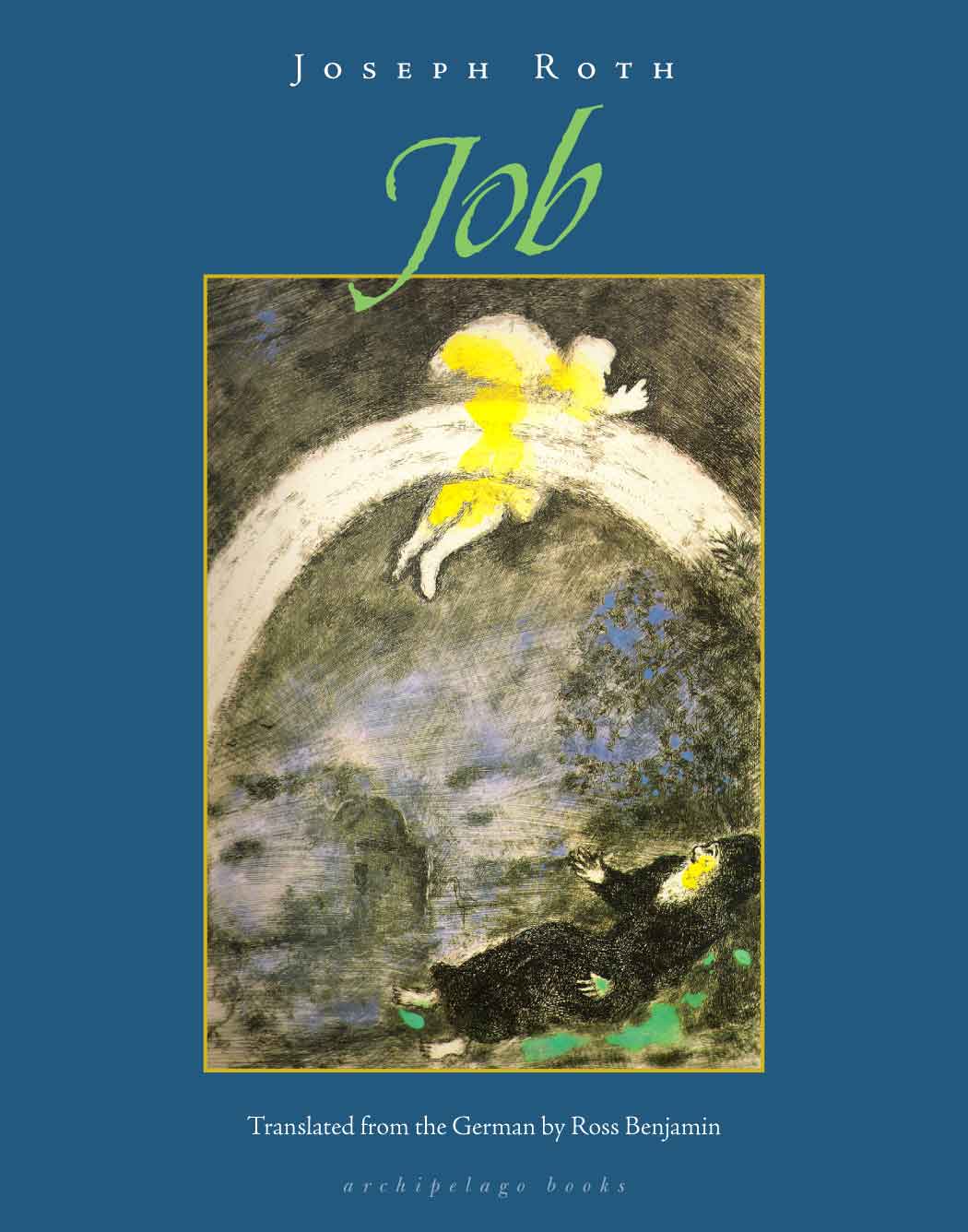
For German Literature Month I have the opportunity to give away one copy of one of the classics of Austrian literature, Joseph Roth’s Job.

Job is the tale of Mendel Singer, a pious, destitute Eastern-European Jew and children’s Torah teacher whose faith is tested at every turn. His youngest son seems to be incurably disabled, one of his older sons joins the Russian Army, the other deserts to America, and his daughter is running around with a Cossack. When he flees with his wife and daughter, further blows of fate await him. In this modern fable based on the biblical story of Job, Mendel Singer witnesses the collapse of his world, experiences unbearable suffering and loss, and ultimately gives up hope and curses God, only to be saved by a miraculous reversal of fortune.

As you can see, this is a novel that comes with high praise.

“A beautifully written, and in the end uplifting, parable for an era of upheaval . . . Job, opened to any page, offers something of beauty. . . Ross Benjamin’s excellent new translation gives us both the realism and the poetry.”
The Quarterly Conversation
“The totality of Joseph Roth’s work is no less than a tragédie humaineachieved in the techniques of modern fiction.”
Nadine Gordimer
“Joseph Roth was a permanent novelist. His Job was a worthy precursor of that masterpiece [The Radetzky March] . . . [Job is] both immensely sorrowful and finally strangely hopeful.
Harold Bloom
Jobis more than a novel and legend, it is a pure, perfect poetic work, which is destined to outlast everything that we, his contemporaries, have created and written. In unity of construction, in depth of feeling, in purity, in the musicality of the language, it can scarcely be surpassed.”
Stefan Zweig
“This life of an everyday man moves us as if someone had written of our lives, our longings, our struggles. Roth’s language has the discipline and rigor of German Classicism. A great and harrowing book that no one can resist.”
Ernst Toller
“Job is perfect. . . . a novel as lyric poem.”
Joan Acocella
*******
If you are interested in reading this book, just leave a comment.

The competition is US only. The winner will be announced on Monday October 22 2012.

Wednesdays Are Wunderbar – German Literature Month Giveaway II – The Winners

Busy random org has done its job and here are the winners of the second give away of  German Literature Month.

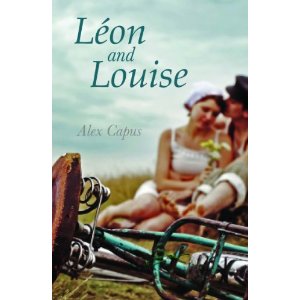
Susanna has won Alex Capus – Léon and Louise 

Judith (Leeswammes’ Blog) has won Daniel Glattauer – Love Virtually

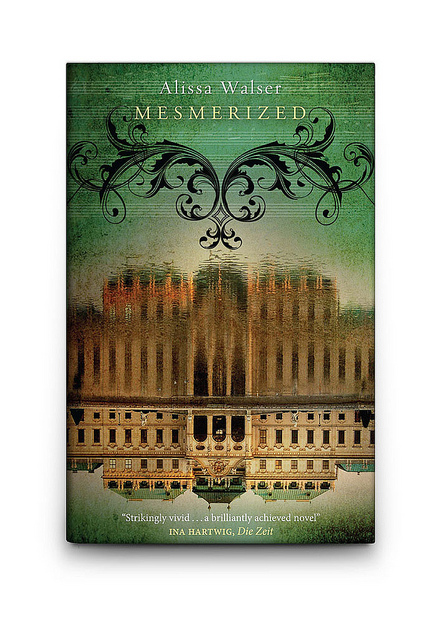
TBM (50 Year Project) has won Alissa Walser – Mesmerized

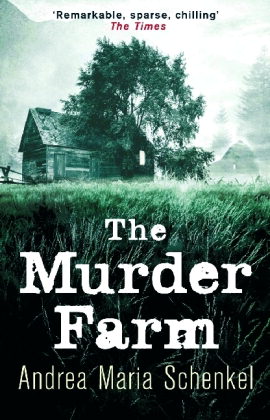
Neer (A Hot Cup of Pleasure) is the winner of Andrea Maria Schenkel – The Murder Farm

Novia (Polychrome Interest) is the winner of The Brothers Grimm – Fairy Tales

Vishy (Vishy’s Blog) has won Zoran Drvenkar – Tell Me What You See

Happy reading to all of you. Please send me your addresses via beautyisasleepingcat at gmail dot com