Bad Literature Doesn’t Equal Genre – On Judith Hermann’s Aller Liebe Anfang (2014)

Aller Liebe Anfang

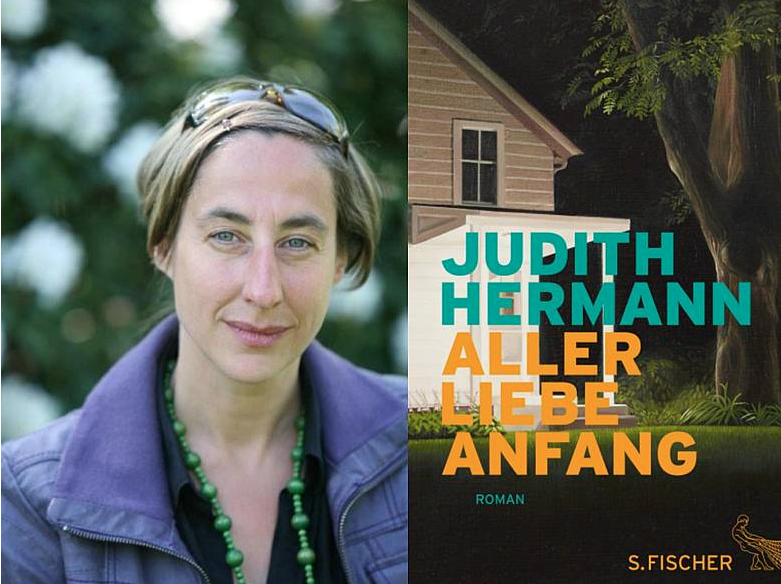
Edo Reents, the critic of the FAZ – Frankfurter Allgemeine Zeitung – wrote about Judith Hermann’s long-awaited first novel:  “Judith Hermann has two problems. She cannot write and she has nothing to say.” – “Judith Hermann hat zwei Probleme: Sie kann nicht schreiben, und sie hat nichts zu sagen”. I wouldn’t go as far as that, but I too felt that the muses were absent while she wrote this. It’s particularly disappointing because she took a long time to write this novel. Her last book came out in 2009. You’d expect a masterpiece after five years of silence.

Edo Reents’ review wasn’t the only one I read and most critics share his opinion; they just don’t word it as a personal attack. I’m not keen on this type of exposure of an author, but there were other elements – in the reviews and the book – that were incredibly annoying.

Aller Liebe Anfang is a stalker novel. Yes, another one. It’s the choice of theme that led the critics to the most stupid analysis I’ve read in a long time. Because this is a topic often used in genre literature and because the book isn’t great, they deduce that it must be genre. Some critics even mentioned Stephen King. Now, you may like Stephen King or not, but the guy knows how to write great genre and, funny enough, if you read Aller Liebe Anfang as genre – it’s even worse. Clearly those critics just know about Stephen King, they haven’t read him or any other genre writer or they would know that plausibility and logic are key in most crime novels. Unfortunately you don’t find a lot of that in Hermann’s book. Nor do you find compelling and precise descriptions, but blurred settings and faulty imagery. The characters too are blurred and their occupations seem vague. I’ve never heard of a nurse doing people’s shopping or of a carpenter designing houses.

What’s the novel about? Stella and Jason have been married for five years. They live with their small daughter in the suburbs. Where? We don’t know. That’s another annoying trait of this book: Everything is vague. Jason is mostly gone for weeks and Stella is alone. She loves to sit in the living room, in front of a huge window, reading. She doesn’t realize that she’s probably watched all the time until one day a guy rings the door bell demanding to talk to her. She refuses and, Mister Pfister (yes, that’s his name, not Herr Pfister), insists. He returns daily, leaves messages, photos, small things in her letter box. Stella is passive at first and when she finally reacts it’s too late. Things go very wrong.

Why does she not react? Because she’s unsettled by Mister Pfister and starts to look at her own life from outside. Is this really the life she wanted? Has she ever decided what kind of life she wants or has she just been drifting?

The reflections circling around Stella’s life were well done. I also liked her prose in these sections because some of the descriptions stood out like scarecrows on an empty field. She does more telling than showing but it’s often interesting telling. She takes risks.

In spite of some good elements, this isn’t a book I would recommend. I seriously wonder what went wrong here. I have a suspicion. Judith Herman is one of a few German authors who has been highly praised and translated into English – and many other languages. This book feels as if it had been written with an international market in mind. Knowing that the US and UK market is much more interested in plot, she added a stalker element to an otherwise quiet and introspective novel. The names she chose are very telling too. Stella, Jason, Ava, Mister Pfister  – really? I haven’t come across these names in Germany very often. And then there’s the  setting. It’s deliberately vague – with a bit of imagination it could be set anywhere in the world.

I once thought that Judith Hermann was one of the most important younger writers. I still think her shot story collections are wonderful. But she isn’t a novelist and she shouldn’t add a dodgy plot to her story just because she has an international market in mind. Considering how very few German books are translated into English, I would wish, this one wouldn’t make it and leave room for something that’s really good. Sadly, without the stalker element – and maybe 100 pages shorter – this could have been another of her memorable short stories.
 

Jan Costin Wagner: Im Winter der Löwen (2008) – The Winter of the Lions (2011) – Kimmo Joentaa Series 3

The Winter of the Lions

Jan Costin Wagner may very well be THE discovery of this year’s German Literature Month for me. I started The Winter of the Lions, book three in the series, in October and since then I’ve already read Silence, book two, have started book one, Ice Moon, and ordered the remaining two novels. Book five just came out in German. Now you certainly wonder why I’ve started the series backwards. There’s a reason, although, now that I’m reading book one I know, I shouldn’t have worried. I knew that Detective Kimmo Joentaa loses his wife in book one. I thought that a large part of the book would focus on her illness, but she dies in the first two pages and the book is about grief and loss, not about illness. The death of Joentaa’s wife, which is a recurring theme in every book, underlines that each novel is, at its core, a meditation on death.

It’s interesting that reading the series backwards makes me much more aware of how much Joentaa is changing. And it’s precisely this change which makes the series such a great read. Joentaa is not only likable but complex and sensitive, a truly appealing character. I’m also pleasantly surprised about how different each book is, although there are many similarities. In the first, Ice Moon, most chapters are written from Joentaa’s point of view, a few from the murderer’s perspective. In book two, Silence, we have a whole chorus of voices. Joentaa’s is only one of many. In The Winter of the Lions, Wagner uses a similar approach as in Ice Moon. Most chapters are written from Joentaa’s point of view, only a few from the point of view of the murderer.

What makes this series so outstanding is the choice of themes. While the detective has to find the murderer the books are much more an exploration of the reasons why someone was killed than simple “whodunits”. Only in finding the reason for a murder, does Joentaa find the killer.

The careful uncovering of the reason behind a series of murders is even more important in The Winter of the Lions than in the first two books. While book one focuses on the meaning of death, book two is a study of guilt, and book three looks into the way we treat other people’s tragedies.

The Winter of the Lion starts on Christmas Eve. Joentaa has been a widower for two years and has come to terms with his loneliness. He even looks forward to spend Christmas on his own. While he’s still at the police station, a young woman wants to report a rape. She’s a prostitute and pretends one of her customer’s has raped her. When Joentaa begins to ask questions, she withdraws. She doesn’t want to go into details.

Surprisingly, the same woman rings Joentaa’s door bell a little while later, when he’s back home. She spends the night with him and they begin a very unusual relationship.

The strange woman isn’t the only one to disturb Joentaa’s quiet Christmas. One of his colleague’s, the police pathologist, is found stabbed in a snowy wood. A little while later a puppeteer is killed and a famous talk show host is attacked.

All of the victims of the perpetrator in The Winter of the Lions took part in a talk show, in which victims of accidents, fires, and murder were the topic of the discussion.

One of the many questions the book asks is: When does one person’s tragedy become another person’s entertainment? I would love to write in more details about the topics in the book but I would spoil it.

What made me love Wagner’s books even more was his writing style. This is crime at the literary end of the spectrum. The sentences are short, spare, and very precise.

As if all of this wasn’t enough there’s a haunting atmosphere in every book and the Finnish setting is another bonus, especially since each book takes place during another season. I loved to read about the long nights in winter and the endless days in summer.

Should you wonder why a German author chose to set his books in Finland —Wagner is married to a Finnish woman and spends half of the year in Finland.

This is one of the best crime series I know. Haunting, atmospherical, with philosophical depth and impeccable writing.

Here is Guy’s excellent review of book two – Silence.

Literature and War Readalong November 30 2014 Meets German Literature Month: Flight Without End – Die Flucht ohne Ende by Joseph Roth

Screen Shot 2014-10-19 at 10.18.51

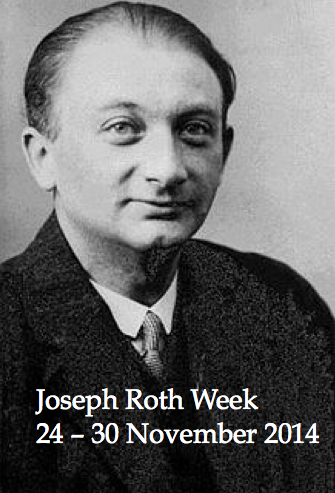
Jospeh Roth, one of the greats of Austrian literature, seemed like a wonderful choice, not only for the Literature and War Readalong in which we focus on WWI, but also as part of German Literature Month. And because he’s such a fine author, there will not only be a readalong but the last week of GLM ( 24 – 30 November) is dedicated to his work. After some rather unfortunate readalong choices, I’m confident this one will not disappoint.

Joseph Roth

Joseph Roth was an Austrian-Jewish writer and journalist. He died at the age of forty-seven in Paris. His early death was probably brought on by his alcoholism. His last book, called The Legend of the Holy Drinker, is inspired by his own battle with alcohol.

Some of his books deal with the end of the Austro-Hungarian Empire (The Radetzky March, The Emperor’s Tomb), others like Job focus on Judaism. Although he was Jewish, Catholicism was important for Roth and it’s assumed that he converted towards the end of his life.

Here are the first sentences of Flight Without End

Franz Tunda, first lieutenant in the Austrian Army, became a Russian prisoner of war in August 1916. He was taken to a camp a few versts north-east of Irkutsk. He succeeded in escaping with the help of a Siberian Pole. On the remote, isolated and dreary farm of this Pole, the officer remained until spring 1919.

And some details and the blurb for those who want to join

Flight Witout End – Die Flucht ohne Ende by Joseph Roth (Austria 1927) WWI, Classic,  144 pages

Flight Without End, written in Paris, in 1927, is perhaps the most personal of Joseph Roth’s novels. Introduced by the author as the true account of his friend Franz Tunda it tells the story of a young ex-office of the Austro-Hungarian Army in the 1914- 1918 war, who makes his way back from captivity in Siberia and service with the Bolshevik army, only to find out that the old order, which has shaped him has crumbled and that there is no place for him in the new “European” culture that has taken its place. Everywhere – in his dealings with society, family, women – he finds himself an outsider, both attracted and repelled by the values of the old world, yet unable to accept the new ideologies.


*******

The discussion starts on Friday, 28 November 2014.

Further information on the Literature and War Readalong 2014, including all the book blurbs, can be found here.

Mercedes Lackey: Phoenix & Ashes (2004) Literature and War Readalong October 2014

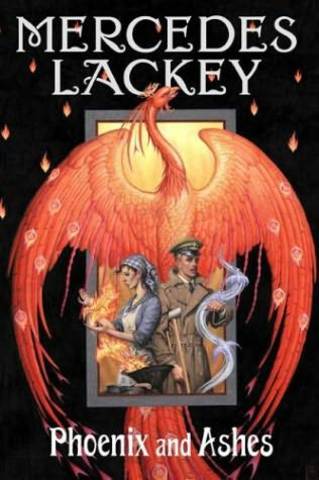
Phoenix and Ashes

I wasn’t going to do that anymore but after 270 pages of boredom, I had to put the book aside. I’ve got a pile of books on a small shelf, just opposite my bed, and while reading Mercedes Lackey’s novel Phoenix & Ashes I kept on looking at the titles of books I just bought (The Flamethrowers, The Interestings, Nobody is Ever Missing . . .) that I wasn’t reading because of this. I skipped to the end, read the last two chapters and that was that. The idea sounded so original. A retelling of Cinderella set right after WWI. Unfortunately the result is neither a proper historical novel, nor did it feel like real fantasy. It was more like an author filling pages using painting by numbers for books. You can’t just take a fairy tale, and use the story as plotline. Fairy tale retellings need to tell us something new about a fairy tale. They shouldn’t just be abused because the author has no story of her own to tell.

A novel like this needs great characters but I found them all very one-dimensional and uninteresting.

The period detail was well done, but it wasn’t anything new. You could watch Downton Abbey and get more out of it. Or read one of the many excellent historical novels set at that time. No need to trudge through 480 pages of something like this.

I was also annoyed because of the very poor editing. Or shoddy proofreading. So many mistakes in a book are not acceptable.

Luckily I have only one of Mercedes Lackey’s novella’s on my shelves. I’m not going to pick that up any day soon. I thought this book was a waste of talent, because she isn’t a bad writer as such, but sadly this is a lifeless, uninspired book.

My sincere apologies to all those who picked this up because of the readalong. I know Emma had the same reaction and gave up after some 100 pages. But I’m equally sorry if someone loved it and has to read such harsh words now.


*******

Phoenix & Ashes is the tenth book in the Literature and War Readalong 2014. The next book is the WWI novel Flight Without End – Die Flucht ohne Ende by Joseph Roth. Discussion starts on Friday 28 November, 2014. Further information on the Literature and War Readalong 2014, including the book blurbs can be found here.

Literature and War Readalong October 31 2014: Phoenix and Ashes by Mercedes Lackey

Phoenix and Ashes

Admittedly, this was a bit of an experimental choice for the Literature and War Readalong, but since this year is mostly dedicated to WWI, I thought some diversity would be nice. So why not read a fantasy novel dealing with the aftermath of the war?

Mercedes Lackey is one of the most prolific fantasy writers and has a huge following. Phoenix and Ashes is part of the Elemental Masters series. The books in the series are all fairy tale retellings, set in the early 1900s. Phoenix and Ashes is based on Cinderella. There are ten volumes in the series so far. If you’d like to find out more about Mercedes Lackey— here’s the link to her website.

Here are the first sentences

Her eyes were so sore and swollen from weeping that she thought she should have no tears left at all. She was so tired that she couldn’t keep her mind focused on anything; it flitted from one thought to another, no matter how she tried to concentrate.

One kept recurring, in a  never-ending refrain of lament. What am I doing here? I should be at Oxford.

Eleanor Robinson rested her aching head against the cold, wet glass of the tiny window in the twilight gloom of her attic bedroom. With an effort, she closed her sore, tired eyes, as her shoulders hunched inside an old woollen shawl. The bleak December weather had turned rotten and rainy, utterly un-Christmas-like. Not that she cared about Christmas.

And some details and the blurb for those who want to join

Phoenix and Ashes by Mercedes Lackey (US 2004) WWI, Fantasy, 468 pages

In this dark and atmospheric rendition of the Cinderella fairy tale, an intelligent young Englishwoman is made into a virtual slave by her evil stepmother. Her only hope of rescue comes in the shape of a scarred World War I pilot of noble blood, whose own powers over the elements are about to be needed more than ever.

“A dark tale full of the pain and devastation of war…and a couple of wounded protagonists worth routing for.”


*******

The discussion starts on Friday, 31 October 2014.

Further information on the Literature and War Readalong 2014, including all the book blurbs, can be found here.

Anna Gavalda: L’échappée belle – Breaking Away/French Leave (2009)

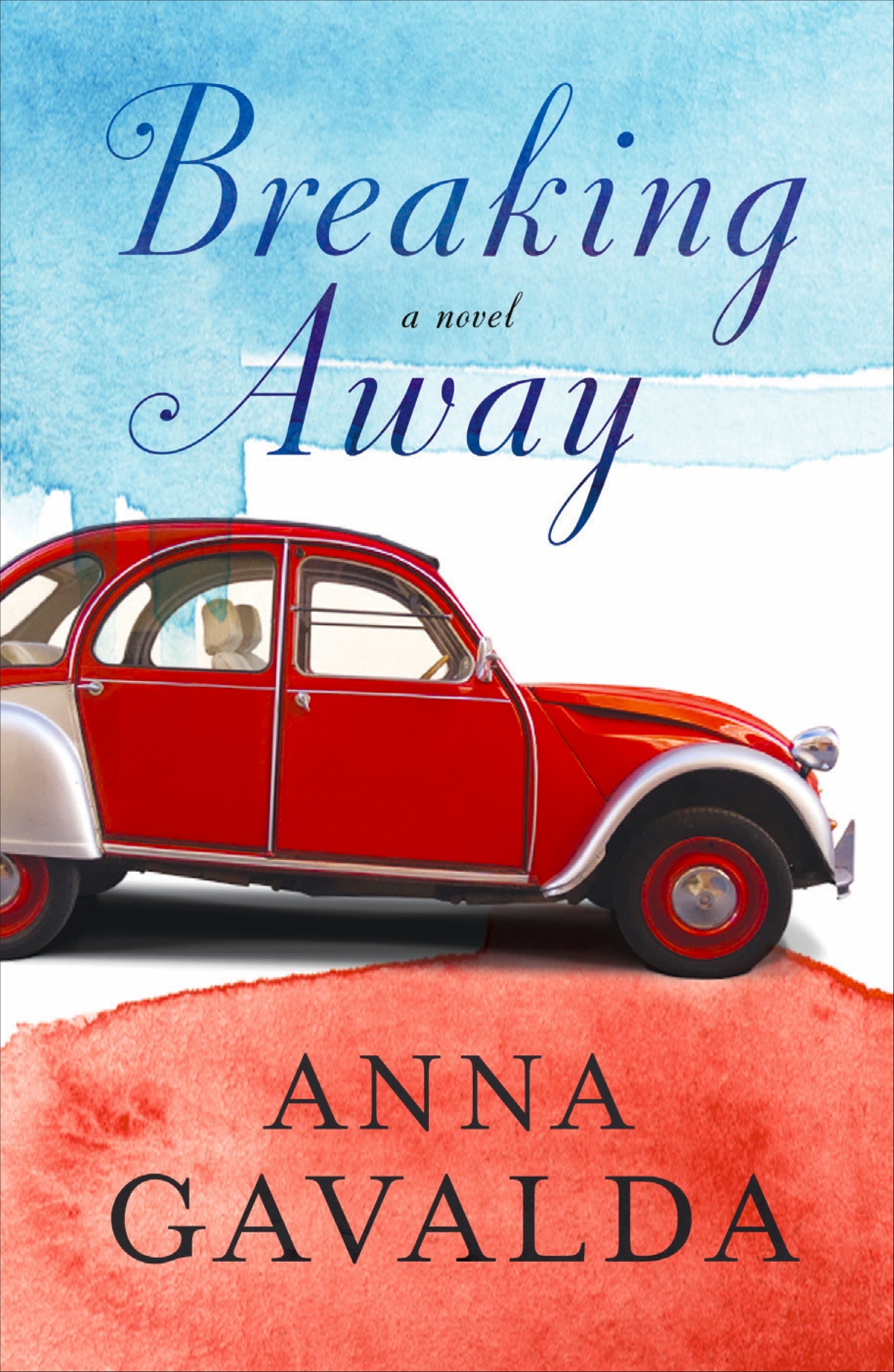
Breaking Away

When you look for something light but still profound, Anna Gavalda is an ideal choice. Her writing is airy but not fluffy. Her characters struggle but they make it eventually. Her slim novel, L’échappée belle, which has been published under two different names in English— Breaking Away and French Leave— was just like that. Entertaining, yet thoughtful. Amusing but a bit sad as well. The only problem I had was the structure. Breaking Away is divided in two parts. In both parts the book is told from Garance’s point of view but in the first part she’s the first person narrator, while the story is told in the third person in the later chapters. I wasn’t entirely sure why Anna Gavalda chose this approach. It gave the book a disjointed feel.

Garance, her older sister, Lola, her older brother, Simon, and her sister-in-law, Carine are on the way to a marriage. The scenes in the car are priceless. Carine is quite stuck up and the two sisters tease her mercilessly. They make her feel excluded, shock her, and push all of her buttons. Especially Garance, whose life style is wild and disorganized, antagonizes her constantly.

When they arrive at their destination the three siblings realize they are not in the mood for marriage malarkey, for family and hypocrisy. They would rather spend a day on their own and decide to pay a visit to their younger brother, Vincent, who is working as a guide at a Château.

Once there, they spend a wonderful time together. The siblings are very close and you get the feeling that whoever joins them, will always stay outside. This cannot be easy for a spouse or a girlfriend/boyfriend.

The siblings all seem at a turning point— newly divorced, just starting or ending a relationship. Garance is the one who will undergo the biggest change adn she has a new friend: a dog she adopted on the road trip. While the first part is like a road movie, the second shows us Garance on her own, in Paris.

Although the book is flawed and I didn’t understand the author’s choice to change from 1st to 3rd person, I did enjoy this. I have no siblings, so I always idealize the relationships between brothers and sister, even though most siblings I’ve met in real life never had such an intense, harmonious relationship.

A lot of Breaking Away is written in spoken language, using different types of accents and vernacular. I wonder how the translator handled this. It can’t  have been easy. In my opinion this gives the book added meaning, more depth. There’s a North African shop owner, for example, who speaks with a very strong accent. Reading it, I could hear it and was at first a bit shocked because it seemed racist but then we find out that Rachid speaks a perfect, accent free French, and only uses this accent to make fun of people who expect every North African to talk like this.

I’m glad that I still own another book by Anna Gavalda which I haven’t read yet – Hunting and Gathering – Ensemble c’est tout. It has been made into a movie and so has Someone I Loved. Her books make excellent choices for movies as her writing is heavy on dialogue.

For another take on the book, here’s Guy’s (His Futile Preoccupations) review.

Echappee belle

Louise Doughty: Apple Tree Yard (2013)

Apple Tree Yard

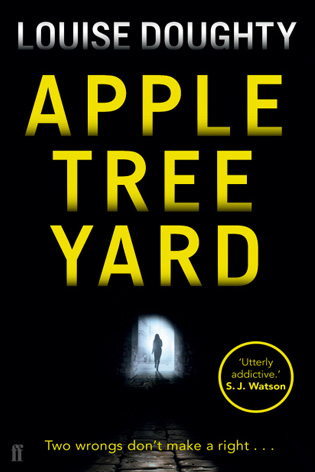
I wanted to read Apple Tree Yard as soon as it was out last year because I’d enjoyed Louise Doughty’s earlier novel Whatever You Love so much. I didn’t really know what to expect, didn’t read any reviews, and so I was glad to find out that not only is the book very different from her earlier novel, but just as good, maybe even better.

Apple Tree Yard tells the story of an affair that goes terribly wrong. Yvonne Carmichael is in her fifties, married with two grown-up kids. She’s a scientist and very successful in her work. Her marriage could be better but yshe and her husband do get along fine. What it is that makes her follow a man and start an affair with him? Boredom? Love—or rather lust— at first sight? Maybe a bit of both.

The book opens with a prologue that gives away a lot. We know Yvonne Carmichael and her lover have been arrested and are being tried and we also know that the prosecution has found out something that could be fatal for Yvonne. I think it’s quite impressive that Louise Doughty managed to give away this much in the prologue and still was able to write a page-turner that held my interest until the last page.

What worked particularly well for me was that large parts of the story were written as if Yvonne was talking to her lover, which was intimate and eerie at the same time.

Apple Tree Yard is the third crime novel with a London setting that I’ve read this year and, once again, the setting is almost a character.

The book is a crime novel but it explores a lot of themes in a very arresting way. Unfortunately mentioning some of them would really spoil the book. One theme I can mention, which is important, is the exploration of a marriage. Yvonne and her husband still share a lot but they are clearly not in love.

Apple Tree Yard is part thriller, part court-room drama, nicely paced, intricately plotted and infused with a bitter-sweet, melancholy mood that is quite rare in crime novels. A very gripping and intense novel.