Best and Worst Books 2011

Looking back I must say that this was a very good reading year. That’s fortunate for me because to be honest in many other areas it was a nightmare and I hope that next year will be better. But readingwise it was wonderful. So many new authors, so many really great books. It couldn’t have been much better.

It’s always so difficult to say which books I liked the most but I noticed that whenever I thought “Best Books” and started to make a mental list, the same 12 books popped up again and again and only when I went back to the blog and looked at all the posts, did I remember many more. So, like last year, I’m cheating and do not present a Top 10 but a best of per category.  The 12 that popped up immediately can all be found under the category beautiful and enchanting.

All the quotes are taken from my reviews.

Most beautiful and enchanting books 

Saraswati Park by Anjali Joseph

“The calm, quiet and floating feeling that permeates Saraswati Park makes this one of the most beautiful novels I have read recently. Saraswati Park is about love and marriage, loss and discoveries but also about the power of imagination and memories, the beauty and danger of reading and ultimately also about writing.”

Three Horses by Erri de Luca

Three Horses was my first Erri de Luca but it will not be the last. “The scent of earth, sage and flowers pervades a story of love, pain and war.”

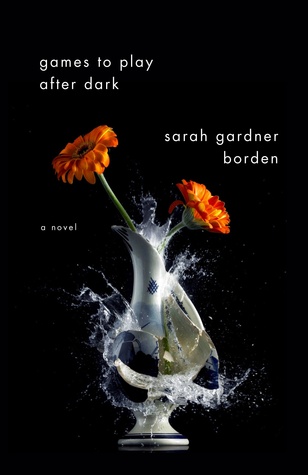
Games to Play After Dark by Sarah Gardner Borden

“It is hard to believe that Games to Play After Dark is Sarah Gardner Borden’s first novel. The topic, a marriage that falls apart, may not be the most original, the young mother who tries to combine the demands of her children and her husband and her personal needs, isn’t new but how she describes it, the details she evokes, the way she looks at what has been swept under the carpet and the bed and what is hidden in the closets is extremely well done.

Back When We were Grownups by Anne Tyler

Back When We Were Grownups is a novel about possibilities, lost dreams, second chances, family and love and ultimately about chosing the right path and belonging. I really loved this book. I liked Rebecca and many of the other characters, especially Poppy, the great-uncle. I liked how it shows that choosing a partner also means choosing a life and that maybe sometimes when we feel we are just drifting we are actually just sliding along because we are on the right path.

The Fish Can Sing by Halldór Laxness

Have you ever read a book and caught yourself smiling almost all the time? The Fish Can Sing is so charming I couldn’t help doing it. It’s also quite funny at times and certainly very intriguing. I’m afraid I can’t really put into words how different it is. As a matter of fact, Halldór Laxness’ book is so unusual and special that I have to invent a new genre for it. This is officially the first time that I have read something that I would call mythical realism.

The Square Persiommon by Takashi Atoda

I think the most intense reading experience is one that connects you to your own soul, that triggers something in you and lingers. Atoda’s stories even made me dream at night. I almost entered an altered state of consciousness while reading them.  The Square Persimmon managed to touch the part in me where memories lie buried and dreams have their origin.

Stranger by Taichi Yamada

Strangers is an excellent ghost story but it is also so much more than just a ghost story. It’s a truly wonderful book with a haunting atmosphere, a melancholy depiction of solitude and loneliness with a surprisingly creepy ending.

Enchanted Night by Steven Millhauser

Hot summer nights have a special magic. In the middle of the night, when everyone is sleeping and only night creatures are awake, the hot still air is heavy, time seems to stand still and the world is indeed enchanted. This is the magic captured by Steven Millhauser in his beautiful and poetical novella Enchanted Night. I have never read this book before but the images, the atmosphere felt so familiar. It was a bit like looking into my own imagination.

Goldengrove by Francine Prose

Reading Francine Prose’s novel Goldengrove felt at times like holding the clothes and belongings of a dead person in my hands. While I read it, and for a long while after I finished it, I felt as if I was grieving. It’s a really sad novel but at the same time it’s a very beautiful novel. It also reminded me of the series Six Feet Under. There is something very similar in the mood and the characters. Although I absolutely loved this novel I could imagine it isn’t for everybody.

Nada by Carmen Laforet

 Nada deserves to be called a classic. However it isn’t a classic because of the plot which can be summarized in a few sentences but because of the style. This is a young writer’s book who manages to capture the intensity of living typical for the very young and passionate.

The Cat by Colette

La Chatte has a subject to which I relate but it is far more than the story of a relationship between a man and his cat. It is a subtle analysis of love versus passion, of marriage versus celibacy, of childhood and growing up, of change and permanence. The story also captures the dynamics of disenchantment following the recognition that one’s object of desire is flawed.

So Long, See You Tomorrow by William Maxwell

So Long, See You Tomorrow  is a beautiful and melancholic short novel that explores a wide range of themes like memory, the past, isolation, loneliness, friendship, jealousy and violence. The central theme is that of the omission and the following regret. There are so many things left unsaid, things not done or too late in a life, that this core theme will speak to almost all of us. It’s often little things but they resonate for a long time in our lives and we might wish to turn back time and undo what has happened.

Most engrossing reads

These were the books where I never checked how many pages were left because I had finished them before even getting the chance to do so. In other words, the page-turners.

Underground Time by Delphine de Vigan

Les Heures souterraines or Underground Time is a chillingly good novel and shockingly topical. It’s accurate in its depiction of life in a corporate setting and of  life in a big city. It’s a very timely book, a book that doesn’t shy away to speak about the ugly side of  ”normal lives”.

Whatever You Love by Louise Doughty

Whatever You Love is a book of raw emotions. And that from the first moment on when we read about the police knocking on Laura’s door to inform her that her daughter Betty has been killed. Laura is a very emotional woman, she feels everything that happens to her intensely, her reactions are very physical. There are many elements in the book that made me feel uneasy.

You Deserve Nothing by Alexander Maksik

You Deserve Nothing was certainly one of the most entertaining reads this year. It offers an interesting mix of alternating and very realistic sounding voices, a Parisian setting and a wide range of themes.

A Kind of Intimacy by Jenn Asworth

I already jokingly “said” to Danielle in a comment that her top 2010 might become my top 2011 and,  yes, this book is certainly a candidate as it is astonishingly good. Very dark, absolutely fascinating, engrossing, and very well executed. While starting it I had forgotten Jenn Ashworth was compared to Ruth Rendell but the association immediately occurred to me as well.

everything and nothing by Araminta Hall

everything and nothing was one of those super fast reads, a book that I could hardly put down. Really riveting. The only complaint I have is that this is labelled as a psychological thriller. Although there is a part of it reminiscent of Ruth Rendell, it is like a background story and not really very gripping. At least not for me. Still I consider this to be a real page-turner for the simple reason that it captures chaotic family life in so much detail and explores some of the questions and problems parents who work full-time would face.

Best Books – Literature and War Readalong

How Many Miles To Babylon? by Jennifer Johnston

I loved How Many Miles to Babylon? I think it is a beautiful book. It doesn’t teach you as much about WWI as Strange Meeting (see post 1) but it says a lot about Irish history. I found this look at the first World War from an Irish perspective extremely fascinating.

The Things They Carried by Tim O’Brien

I expected The Things They Carried to be a very good book. A very good book about the war in Vietnam. What I found is not only an outstanding book about the war in Vietnam but also about the art of storytelling. I’m really impressed.

The Silent Angel by Heinrich Böll

Böll has a gift for description which is rare. And he represents a rare model of moral integrity, he is an author who wrote for those who have nothing, who tried to unmask hypocrisy and uncover everything that was fake and phony in post-war Germany. I don’t know all that many authors who are so humane.

Most touching

On the Holloway Road by Andrew Blackman. I read this novel in the summer and it’s one of a few books I haven’t reviewed. In this case because the reading caught me completely unawares. I had such an emotional reaction that I had to talk about it all the time. I still feel like reviewing it but I need some distance

Best classics

Mme de Treymes by Edith Wharton

Madame de Treymes has a Parisian setting which always appeals to me, as sentimental as this may be. It is a cruel little book and a very surprising one. All in all there is not a lot of description of the city itself, the novel rather offers an analysis of the society. It is interesting to see how Americans perceived the Parisian society and the differences in their respective values.

Hotel Savoy by Joseph Roth

Hotel Savoy has really everything. It is funny, sad, picturesque, touching and bitter-sweet and the ending is perfection. Roth describes people, the hotel and the little town with great detail. And every second sentence bears an explosive in the form of a word that shatters any illusion of an idyllic life. Roth served in WWI and never for once allows us to forget that the horror of one war and subsequent imprisonment have only just been left behind  while the next one is announcing itself already.

Grand Hôtel by Vicki Baum

Grand Hôtel is set in a luxurious hotel in Berlin between the wars. It’s walls shelter a microcosm of German society. The novel draws a panorama of the society and the times, reading it is fascinating and gives a good impression and feel for the time and the people. Vicki Baum includes a wide range of characters, the porter who waits for his wife to give birth to the first child, the aristocratic head porter Rohna, the many drivers and maids as well as some very interesting guests. Including the employees of the hotel gives the book a bit of an upstairs-downstairs feel and permits insight into the lives of the “simple people” who earn just enough not to starve.

Pedro Parámo by Juan Rulfo

It’s a powerful novel infused with the spirit of the Mexican Día de los muertos or Day of the Dead at the same time it is an allegory of oppression and freedom that comes at the highest cost. When you read Pedro Páramo it becomes obvious that “magic realism” has many faces.

Best non-fiction books

Making Toast by Roger Rosenblatt

I found Making Toast wonderful. It contains a lot of little endearing episodes like the one that gave the book its title, in which Rosenblatt states that the only thing he is really good at is making toast for the whole family in the morning. He describes how he gets up very early and, taking into consideration each family member’s taste, he produces a multitude of personalized breakfast toasts.

The Film Club by David Gilmour

The relationship between these two is unique. So much honesty, trust and friendship between a father and a son is wonderful. Not every parent has the chance to spend as much time with his kid, that is for sure, but every parent has certainly spent enchanted moments with his/her child and will be touched by this story. For us film lovers The Film Clubis  a great way to remind us how many movies there are still to discover, how many to watch again and in how many different ways we can watch them.

Howard’s End is on the Landing by Susan Hill

I can’t tell you exactly how long it took to read Howards End is on the Landing. An evening? Two? Certainly not longer. I devoured it. What is more fascinating to read than a bookish memoir? And written by a writer.

The Gifts of Imperfection by Brené Brown

Brené Brown is a researcher, specialized in topics like shame and perfectionism and analyzing how they are linked and keep us from living wholeheartedly. She is an incredibly honest and open person who is able to show her vulnerability.

Natural History of Destruction by W.G. Sebald

On the Natural History of Destruction is one of the most amazing books I have read this year. For numerous reasons. It is in line with the topic of my reading projects and readalong and contains descriptions that I have never read like this. On the other hand it gave me the opportunity to see another side of Sebald. One that I didn’t expect.

Cinderella Ate My Daughter by Peggy Orenstein

What happens when a feminist who knows exactly how things should be, gets pregnant and the child is – horror on horror – a girl? This is pretty much how Peggy Orenstein opens her entertaining, thought-provoking and occasionally quite shocking account Cinderella Ate my Daughter about what she sub-titles “Dispatches from the front-lines of the new girlie-girl culture”.

The Equality Illusion by Kat Banyard

Kat Banyard’s The Equality Illusion: The Truth about Men and Women Today takes an unflinching look at what it means to be a woman today and, due to the fact that Banyard is British, especially in the UK . Still, whether you are an Afghan woman fighting for girl’s rights of literacy or an American doctor performing late stage abortions, you have one thing in common: you lead a dangerous life and might end up being killed. Both things happened.  The first happened in Afghanistan in 2006, the second in the US in 2009. They illustrate the illusion of equality and show what a global phenomenon it is.

New Author Discoveries

These are the authors that made me think “I would like to read all of his/her books”.

Beryl Bainbridge,  William Maxwell, Jennifer Johnston, Peter Stamm, Annie Ernaux

The worst book this year

There is a lonely winner this year and it has so far not even been reviewed. I’m still determined to do so but I find adding quotes so tedious, only in this case it’s necessary to illustrate the problem I had with the book. Now you are dying to know the title, aren’t, you?

In a Hotel Garden by Gabriel Josipovici
Alexandra Johnson: A Brief History of Diaries – From Pepys to Blogs (2011)

I regularly find interesting non-fiction (and fiction) book reviews on Tom’s blog A Common Reader. I don’t always get to read the books right away which is a pity. There were two exceptions recently however,  A Brief History of Diaries that I have just finished (here is Tom’s review) and David Bellos’ Is That a Fish in Your Ear? which I’m still reading (Tom’s review is here).

A Brief History of Diaries is exactly what the title indicates, a short but nevertheless interesting overview of the tradition of journal keeping. Alexandra Johnson won the PEN award for Hidden Writer which I bought earlier this year and will be reading very soon as well.

I’m very interested in this topic as I’ve been keeping a diary since the age of 11. I don’t know how many thousand pages I’ve written because I do not read them very often anymore. This has reasons which would fill a few posts but I’d like to leave the stage to Johnson’s book for the time being.

The book is divided into 5 chapters. The first is dedicated to the innovators, the very first people who kept a diary. The apothecary Luca Landucci is among them. If you’d like to read an eyewitness account of the burning of Savonarola, this is the place to go. John Dee and Samuel Pepys can be found in this chapter as well. I think if you would like to know more about 17th century London, including the great fire, Pepys is the source to consult.

Chapter 2 is one I’m personally less interested in, its focus are the Travel and Explorer Diaries. I’m familiar with Ibn Battuta’s diary because it’s an early source for cultural anthropologists. Johnson included in this chapter Western pioneer travel diaries which sound very interesting.

Chapter 3 gives an overview of the diaries of artists and writers. I found many I would like to read or at least browse. Sonya Tolstoy, about whom Johnson writes extensively in Hidden Writer, is mentioned as well as Katherine Mansfield, Virginia Woolf, Sylvia Plath and May Sarton. The appeal of these diaries is to see how some sketches, little incidents, ideas are later incorporated into novels. We can follow the seed and watch it grow into a plant.

Chapter 4 is dedicated to war diaries. Those of the poets of WWI are mentioned (Sassoon, Owen, Graves) as well as the two famous WWII diaries by Anne Frank and Etty Hillesum. I wasn’t aware that there are two Anne Frank diaries. It’s interesting because the two diaries show the emergence of a writer. The first is just the diary of a child noting all that happens but later, she rewrote the diary. Her father seems to have thought it best to publish the early original first. The full unabridged version was only published in 1997. A war diary I’d never heard of before but which I would love to read is Mary Chestnut’s Civil War diary.

Chapter 5 is about digital diaries. I do not consider my blog like a diary at all and I would never use an online diary. I’m a fan of handwriting and have always been. I choose my pens and ink carefully. Choosing a new diary is a big ritual. So I was far less interested in this chapter and it’s also very brief.

This book is, as it states in the title, only an introduction, but it’s very well done and the bibliography at the end of the book is valuable.

I like reading diaries and have quite a collection. There are quite a few I haven’t read yet but I am looking forward to reading them. A major reading project next year, should actually be dedicated to diaries and memoirs. I’d like to read the diaries of May Sarton soon but I also got one by Cesare Pavese and just bought the first volume of the Journal of the brothers Goncourt. Of those I have read so far the one I liked the most was the one by Katherine Mansfield and those by German writer Brigitte Reimann.

Do you like reading diaries? Which were the diaries you liked the most?

W.G. Sebald: On the Natural History of Destruction – Luftkrieg und Literatur (1999)

During World War Two, 131 German cities and towns were targeted by Allied bombs, a good number almost entirely flattened. Six hundred thousand German civilians died a figure twice that of all American war casualties. Seven and a half million Germans were left homeless. Given the astonishing scope of the devastation, W. G. Sebald asks, why does the subject occupy so little space in Germany s cultural memory? On the Natural History of Destruction probes deeply into this ominous silence.

This is one of the most amazing books I have read this year. For numerous reasons. It is in line with the topic of my reading projects and readalong and contains descriptions that I have never read like this. On the other hand it gave me the opportunity to see another side of Sebald. One that I didn’t expect. If you are familiar with his fiction, notably if you have read them in the German original, you know that he is a very challenging writer. His sentences follow a rhythm that is very much his own. He tends to use old-fashioned and also invented words. And as far as I know he is not very humorous. The two essays contained in the German original of this book, the first on the description of the destruction of the German cities in German literature  – or rather its absence – and the second on Alfred Andersch are so different from his fiction. The style is fluent, accessible and he is extremely funny. The essay on Andersch made me laugh out loud. Sebald’s analysis and description of this conceited writer is hilarious. But that essay is not the topic of my review. I’d like to focus on Sebald’s Luftkrieg und Literatur whose English title is On the Natural History of Destruction.

The book is based on Sebald’s lectures which he held at the university of Zürich in 1997. Those lectures had the impact of a bomb. What Sebald stated was outrageous and had never before been said like this and analyzed with so much detail and force.

What Sebald does in this book, and that is why it is so amazing, is showing what post-war German literature failed to do and doing it at the same time.  It is a reproach and a demonstration how it should have been done.  Some of the descriptions are not for the faint-hearted, they are quite gruesome.

When I started to read I was puzzled at first because he wrote that hardly any German writer had tried to describe the enormity of the destruction of the German cities. I thought he was wrong in stating this but soon enough I understood why I thought so. I’ve always loved Heinrich Böll. Especially in my early twenties he was my favourite German writer and I read most of his books, one of them The Silent Angel. For some reasons I didn’t know that this book had been written in the 50s and was never published because editor and writer thought the topic was inappropriate. Together with Gert Ledig’s novel The Payback (possible choice for next year’s Literature and War Readalong), it is the only Western German book that chose the massive bombing and its aftermath as topic. Only, The Silent Angel had to wait almost 40 years for its publication.

Sebald analyzes in great depth why these were two of the few books. If I hadn’t seen the corny TV production Dresden I wouldn’t have had such a good idea about what it meant to bomb a city as radically as the German cities were bombed. That’s why I would urge you to watch Dresden (forget about the romance).

There are a few things that Sebald underlines. First how widely those cities were bombed. The RAF flew 400’000 missions dropping one million tons of bombs on 131 cities, some of which were flattened completely. 600’000 civilians lost their lives, 7’500’000 were homeless.

The second thing Sebald shows is that these are simply numbers. They seem enormous but they don’t let you experience what it meant to have been in one of those cities during the bombing or to have lived in one of them afterwards. There are accounts of this, like in the books of Nossack, but apart from that a lot of the documentation comes from foreign journalists. German writers and diarists hardly mention anything. As mentioned before, one of the rare writers who didn’t shy away from the topic was Gert Ledig. Already his first novel The Stalin Front or Die Stalinorgel depicted explicitly the atrocity of the Eastern Front. In his later work Payback aka Vergeltung he wrote in great details about the destruction. Unlike Böll’s novel, Ledig’s were published but he wasn’t republished and was finally forgotten, even excluded from the collective memory, as Sebald writes.

But what did Germany want to hush up and why?

When you bomb a city like they bombed the big German cities what follows is a huge surface fire followed by a firestorm that will make everything burst, sear and singe everything and was literally an extremely strong wind that blew even bodies away. What this heat does to a body is described by Sebald, mostly quoting Nossack, in gruesome details. What is also described is what happens later in a city full of rotting corpses. Rats will swarm the place. The stink will be insufferable and the flies unbearable.

This massive destruction and its aftermath filled the Germans with shame, according to Sebald. That’s why they didn’t want it mentioned, started to repress it. They even went as far as saying the bombing had a good side. Many of the old buildings would have needed renovating anyway, many of the factories were dated. Rebuilding was cheaper than tearing down and rebuilding afterwards. This is amazing thinking. The Wirtschaftswunder made the rest. The incredible efforts put into rebuilding and the economic growth helped the Germans forget and repress.

On the other hand, as Sebald states, it would have been rich of Germany to complain after having tried to exterminate a whole people and bringing war and destruction on everyone. As proof of this reasoning he mentions that the British never tried to repress the Blitz. It was a topic in books and documentaries and mentioned in various other forms of writing.

This urge to repress could even be seen immediately after the bombings. Sebald quotes Nossack twice on this. He describes a woman who was seen cleaning her windows. The house in which she lived was the only house in the whole neighbourhood that hadn’t been destroyed. He also saw people sitting on a balcony, drinking coffee although the house and those next to theirs were the only ones left intact.

As is usual in Sebald’s books there are a lot of photos which add another dimension to this excellent book. I think this is an absolute must-read for anyone interested in German literature, post-war Germany, the mass destruction of the German cities and the psychological mechanics of repression.

This review is part of German Literature Month – Week I – German Literature.

Don’t forget to visit Lizzy’s blog. Tomorrow she will review Alina Bronsky’s The Hottest Dishes of the Tartar Cuisine.

On Cinderella Ate my Daughter – A French Mother’s Perspective

Last month I read Peggy Orenstein’s book Cinderalla Ate my Daughter (here is the review) and I liked it a lot. It left me with many questions as I have no children and most of my friends either have none or they are too small or simply not girls. The only mother of a girl the age of Orenstein’s daughter I could think of was Emma (Book Around the Corner). We decided to do a double post. While she will post her review of the book on her blog, I post her answers to my questions on mine.

My hunch was that although a very accurate portrayal of some topics, Orenstein also depicted many purely American things. I also wanted to know from a mother how she dealt with all the traps and pitfalls that you encounter when raising kids in our society. I enjoyed reading her answers a lot and hope you will be interested as well.

Foreword about Emma

I was born in the 1970s and raised by a feminist mother who loves clothes and by a progressive father who always shared domestic tasks with his wife. So some things seem obvious to me. I have a daughter and a son who will be ten and seven-and-a-half year old in September. I have many friends and colleagues with children around that age. When I say “I” in the answers, I could have said “We” as my husband and I have very few disagreements on education. I also want to add that I haven’t read any parenting book since the ones for babies focusing on pampering, healing red bottoms, handling tooth aches and high fevers. Our only guide-book is our shared values, our common sense and what we think is important for the development of our children. For the rest, we do our best and we know we’ll make mistakes.

Are the Disney Princesses really as important in France as they seem to be in the US?

Yes and no.

Yes they are as important as far as marketing is concerned. You have glasses, notebooks, T-Shirts, towels, etc, all kind of objects with the Disney Princesses printed on them. But for me they are among other “brands” like Nemo, Lightening Queen, Winx Club and Totally Spies.

No they aren’t, as I never witnessed that girls identified with those princesses the way Orenstein describes. There’s one reason for that I think. When I read Orenstein’s book, I noticed that at several occasions she casually mentions that little girls go to school, to a show or to the mall in Disney Princess dresses. I was really shocked. In France, everybody will look at you if your daughter wears such a dress outside when it’s not Carnival. You can’t bring your child to school dressed as a princess or a pirate. Those dresses aren’t regular outfits. They are costumes. I’m not a psychologist but it seems to me it makes the difference between thinking you’re a princess and playing at being a princess. You don’t wear those dresses in your “real” life. The children understand the nuance very well.

Did your daughter go through a phase like this? How did you handle it?

Yes my daughter had a princess phase and she absolutely loved her high heels plastic shoes. I suspect that was because they made noise when she walked just like my high heel shoes do. For me it was more doing like Mom does than imitating a Disney Princess. And I thought it was natural for a girl to identify with her mother. After all, my son sometimes looks at his legs trying to detect if hair is growing so that he can have hairy legs like Dad.

She also had several princess dresses (according to her size) but she never thought she was a princess. It was clearly a game. So we let her play.

Later, a feminist friend of mine got her a pirate costume. She chose to wear it for Carnival at school and she didn’t mention any disagreeable comment from other kids. This year she had a witch costume. I’m not sure but I think I remember a note from school saying something like “Carnival will be on (date). The children can be dressed in costume. Please, no princess dresses”.

Did you think it was harmful as it was focusing too much on beauty and appearance?

I don’t think it was harmful for her. I think it focuses too much on beauty and appearance but let’s be realistic, that’s how our world works. Plus, children’s stories have always focused on beauty for girls. When I was little, I didn’t have Disney Princess dresses but I saw Disney films and heard fairy tales. It’s always about a beautiful princess and the prince never falls for her because she’s smart or funny. It’s always because she’s gorgeous. What I mean is that we don’t need Disney to have that model imposed on us.

How about the Bratz Doll? I’ve never seen one but I’m not regularly in toy shops. Would you let your daughter have one if she really wanted it?

My daughter doesn’t have one and never asked for one. I’ve never seen any in other people’s houses. I’m not sure I’d buy one. If I had to decide, I’d balance between the risk of her being apart and the risk of her being exposed to a very sexist toy.

Where do you draw the line and find a balance between – as Orenstein called it – going Amish on her or being too permissive?

I have my idea of what a little girl should not be doing and wearing:

  • No nail-polish in school but OK during the holidays as long as it is pale.

  • No make-up except for dressing-up and not to go to parties or outside.

  • She has curly hair: there is no way I’m going to buy an straigthening iron and do her hair. She’s too young.

  • No dyed hair

  • No tattoo even if it’s a children friendly one. (anyway they’re forbidden in school)

  • I compromised on earrings: OK for long ones if they aren’t too big or too dangerous. She can’t wear them on PE days in school.

  • No slutty clothes.

The list isn’t exhaustive. So far, it seems that other parents around us have more or less the same rules. So she never had big pressure and never threw a big tantrum. And we’ve never faced major questions. If she asks for a gloss, I say no and that she’s too young. If she wants a T-Shirt I think is vulgar, I say no and explain why. Of course she cries sometimes but that’s life, you can’t have whatever you want.

In the long term, I think that as long as nail polish (for example) is forbidden, it will be transgressive to have some. It will be a victory for her when I eventually say yes, a harmless victory but an important one for her. The more barriers we put now, the more “harmless” barriers she’ll break when she’s a teenager. That’s our bet.

The line is our values. It’s our role to explain our decisions properly so that they don’t appear too unjust. I have to admit we’re lucky we haven’t had problems so far. She seems to choose friends who live by the same kind of rules.

Would you allow sexualized toys and clothes?

Yes for toys because she has two or three Barbies. (She’s not a huge fan) and no for clothes. (no thongs, net stockings, T-shirts showing belly buttons…) Anyway these clothes aren’t allowed in school.

Did you also notice that your son was more reluctant to play with your daughter’s toys than the other way around?

No I didn’t notice that. Our daughter has never been interested in dolls. She loves Littlest Pet Shops and her brother plays with her. She has a very vivid imagination, she invents stories and games and he really likes it. She plays with cars too with him. They like Legos and Playmobils. They build houses or cars, it depends of the day.

Did your daughter ever report that others attacked her because she wasn’t following the trend or speaking up for herself?

No I’ve never heard of that but there’s always a risk that she didn’t report it. She complains sometimes that we don’t let her watch TV at nights or that she hasn’t seen Twilight or other films we consider are too “adult” for her.

How did you handle the pink phase? Is it even possible to find toys and clothes in other colours?

We waited for the pink phase to end. It’s over now. I wear a lot of pink myself and my husband has pink shirts. I think we’re safe about this.

It’s not that hard to find non-pink toys for girls. When she was little, she had Little People and big Legos. Now she has Littlest Pet Shops or Playmobils. But sure, a Barbie’s car will be pink.

It can be difficult to find cheap non-pink clothes. But it’s easier as she grows up. However, pink isn’t the worst. The worst are the ones with slutty designs or cuts. It was a big thing a few years ago. It seems to improve now.

Are there beauty pageants for little girls in France like in the US?

Yes, there are some but I don’t think they broadcast them on TV or maybe on some obscure cable TV. That’s the big difference.

Did you find good children’s books with role models that are inspiring?

I never looked for them. They have subscriptions to children’s magazines (Astrapi, Histoires Vraies, I Love English for our daughter and Pirouette for our son). Bayard Presse is very good for children and it’s for boys and girls. We have chosen them because they’re interesting and clever. They’re also neutral. There are really stupid magazines for little girls out there. (with girlie stuff, teaching to girls a model of the woman as a shopping addict, a lover of long chats with friends and also promoting an untimely interest for boys).

Our son has also a subscription to children’s books through school (L’Ecole des Loisirs). They’re of good quality. Otherwise I choose neutral gender books. I refuse to buy Totally Spies or Winx Club or Barbie or Pet Shop Books. These are not books. These are marketing.

About role models. Our daughter is a huge Harry Potter fan. And Hermione Granger is a fantastic model. She’s smart. She befriends with Harry and is not in love with Harry, so friendship with a boy is possible. She’s brave. She doesn’t wonder if what she intends to do will mess up with her hair or not.

Btw, I don’t agree with Orenstein’s analysis of Bella Swan (Twilight)

Do you even buy gender specific toys and how much non-gender toys are available?

My policy has always been: no toy ironing board or vacuum cleaner for her and no guns or cars for him. There’s no way I’m going to buy those stupid girl board games about boyfriends, secrets and supposedly girlie stuff. As far as I know her friends don’t have them either.

An anecdote. My daughter had received a pink car with a small doll in it. She never played with that toy. According to the above mentioned policy, we didn’t rush to buy cars to our son. When he wasn’t even walking, he started to play with the pink car all the time. Then we bought him cars, firemen trucks and “boys” stuff. Not because he was a boy but because he liked to play with them. If he had asked for a doll, he would have had one.

Are there non-gender toys out there? No except for Playmobils, Legos, Kaplas, board games and outside games (balls, bowling) Of course you will find those in gender-marketed colours (pink balls, pink bikes…) but you can find them in neutral colours too.

Did you also notice the Facebook craze and calling 622 girls girlfriends in France?

There’s also a Facebook craze but my daughter is too young. She doesn’t have an account. She never asked for one, her friends don’t have one either. I’m worried about social networks, but I’m not there yet.

A colleague with older children told me he received a guidebook from the collège to explain to parents how to handle Facebook and let the children use it in security. His son can’t accept a new “friend” without his approval. (he has a password). That’s fair.

Someone reported me the kind of bullying Orenstein describes. Mostly gossip that takes huge proportions because it spreads farther and faster. I think it’s really harmful as humiliations during adolescence can leave deep scars.

Anyway, another colleague has a very smart and safe policy: no electronic device in rooms after bed time. Laptops, cell phones, DS and so on sleep in the living-room. Sleep is important for kids and teenagers. I think she’s right. (And of course, children don’t have TVs in their rooms)

Is Hannah Montana loved in France as well?

She is known here too but her series is on Disney Channel. It’s a paid TV and not all families have it. We don’t. My daughter said she saw the series once when we had the channel for free. She said it’s stupid as it only talks about boys and singers. (C’est nul! Was the exact phrase. How lovely to my ears!!)

About Hannah Montana and the like singers: don’t forget that children here don’t understand the lyrics and most of the parents aren’t able to translate them. The impact is different.

*****

I’d like to thank Emma for answering my questions. It gives another dimension to my reading of the book and, I think a better understanding of the differences between the US and Europe.

Don’t forget to visit her page and read her thoughts on the books. She also included interesting photos.

Here is the link to her review.

Roger Rosenblatt: Making Toast (2010) A Memoir

Family tragedy is healed by domestic routine in this quiet, tender memoir. When his daughter Amy died suddenly at the age of 38 from an asymptomatic heart condition, journalist and novelist Rosenblatt (Lapham Rising) and his wife moved into her house to help her husband care for their three young children.  Building on the small events of everyday life, Rosenblatt draws sharply etched portraits of his grandchildren; his stoic, gentle son-in-law; his wife, who feels slightly guilty that she is living her daughter’s life; and Amy emerges as a smart, prickly, selfless figure whose significance the author never registered until her death.

I read memoirs for many different reasons. In some cases because of the topic but mostly because of the writing. Some of the most original and powerful writing nowadays can be found in life-writing. I’m fascinated by the diversity of memoir writing and the different approaches. The memoirs I like best are those written by writers or poets. I didn’t mind the topic of Making Toast but it isn’t why I chose to read it. I was intrigued because many reviews of Making Toast mentioned the style. I agree, it is beautifully written, very subtle, diverse and it works on many different levels. I took my time to read and savour it. You can’t really read it in one go, as every chapter, be it a few sentences long or a few pages, has another rhythm. The individual paragraphs read like micro-fiction but they still form a homogenous whole.

Rosenblatt’s daughter Amy dies unexpectedly at the age of 38. Nobody knew she suffered from an extremely rare heart disease. One morning, while working out in the basement, she collapses and dies on the spot where she is found by her eldest child. Amy was a doctor, a wife and a mother of three little children, the youngest barely one year old.

Rosenblatt and his wife Ginny decide to move in with their son-in-law Harris and the three little children. They want to help them cope with the multitude of daily tasks and duties and try to assist them in overcoming the tragic loss.

One of the core themes is how the children deal with their loss and the huge responsibility and also the strain it means for an elderly couple to take care of small children.

The book is touching, thoughtful, poetic, sad, but also beautiful and moving. Some paragraphs contain thoughts and musings, others describe scenes and anecdotes. Many chapters narrate Amy’s childhood and the past, others render everyday life and how to deal with the loss of a cherished person.

I was slightly taken aback by the unfriendly reader reviews.  Especially the German translation triggered a lot of spiteful comments. People remarked that he didn’t “mourn properly” that he sounded full of himself and they also criticized his mentioning of their wealth, that they can afford a nanny for the children and own houses.  I can’t understand these comments. Rosenblatt wrote this book in a restrained way which I found very appealing. He is neither weepy nor whining and especially not exhibitionistic, still you feel the grief in each line, you sense the bewilderment in every word. The family’s wealth doesn’t make Amy’s death any less tragic. I really don’t think Rosenblatt is self-publicizing unless you consider every personal essay or memoir to be an indecent display of someone’s life. But if so, why read it?

I found this book wonderful. It contains a lot of little endearing episodes like the one that gave the book its title, in which Rosenblatt states that the only thing he is really good at is making toast for the whole family in the morning. He describes how he gets up very early and, taking into consideration each family member’s taste, he produces a multitude of personalized breakfast toasts.

Making Toast is a book for readers and writers alike. If you like memoirs you will enjoy reading this well-written, lovely book. If you would like to write a memoir you will find this book inspiring in its original approach.

David Burke on Writers in Paris

Not long ago, during the Paris in July event, I did a post ( you can find it here) on David Burke’s fantastic book Writers in Paris. Today, when I checked my e-mails, I was really thrilled to find that he wrote me a messge saying that he liked my post. It’s so lovely when this happens and in this case it is even more so because the book is special to me.

David was kind enough to send me a video his wife has shot which is a nice companion piece to his book. It’s a wonderful short film, inspired by Woody Allen’s Midnight in Paris,  that will take you on a trip to Paris following some of the greatest writers that have been living there.

It’s worth watching. If you like you can find it here.

Peggy Orenstein: Cinderella Ate My Daughter (2011)

An intelligent, candid, and often personal work, Cinderella Ate My Daughter offers an important exploration of the burgeoning girlie-girl culture and what it could mean for our daughters’ identities and their futures.

What happens when a feminist who knows exactly how things should be, gets pregnant and the child is – horror on horror – a girl? This is pretty much how Peggy Orenstein opens her entertaining, thought-provoking and occasionally quite shocking account about what she sub-titles “Dispatches from the front-lines of the new girlie-girl culture”.

In Cinderella Ate my Daughter she explores the world of toys, kid’s beauty pageants, the color pink, superhero figures, fairy tales, the internet and so on and so forth. It is at the same time a cultural exploration as a reflection on how to bring up a daughter. How much can you allow, how well can you shield her from the influences around her and what if you succeed and she will forever be a boyish girl, the odd one out?

A lot of what Peggy Orenstein describes is certainly very American. I have seen items of the Disney Princesses’ brand but never to the extent she describes. The Disney Princesses are a marketing strategy that exploited little girls’ wish to look and dress up like a princess. The main problem, so Orenstein, is the focus on cuteness and looks only. What is also problematic is the fact that, although there are several princesses, they are never found to interact and on pictures showing them together, they all look into different directions.

Orenstein finally had to give in and let her daughter dress up as a princess but she stayed firm when it came to sexualized toys like the Bratz doll. She also explores at length how  even little girls are dressed in more and more sexy ways. Once more it is all about looks and not about feeling. The girls should look sexy but not feel it (of course not, they are only little girls), only if this is a behaviour they learn at a young age, how will they un-learn it?

The chapter on beauty pageants is one of the most controversial. Orenstein showed how confusing it was to speak with the families, to see how much the girls enjoyed it and she wondered finally if it was really all that damaging.

The chapter on pink was an interesting one and I liked how she described that this is rather a new phenomenon. Only a couple of decades back, pink wasn’t so important. Once more there is a marketing strategy behind it. If boys and girls are the same, you sell far less toys. Just imagine, a family has a boy and a girl, they wouldn’t need to buy special boy and girl toys, if there were no differences. Of course, it is more complicated than that, I simplify.

I never expected, when I had a daughter, that one of my most important jobs would be to protect her childhood for becoming a marketers’ land grab.

The chapter Wholesome to Whoresome was another fascinating part. Reading about the case of Miley Cyrus and other girl stars who seem to cross the border from cute child to slut in an instance and how this not only damages their self-esteem but confuses the fans is enlightening. Those girls have to be cute and sexy at a young age but as soon as they become teenagers the problems starts. They should be virginal but they can’t. Britney Spears is another sad example.

I found one of the last chapters on social media and virtual friendships called Just Between You and Me and My 662 BFFs extremely worrying. The umber of so-called friends on Facebook and the like indicates the popularity of a girl. At the same time, all their fears and weaknesses are exposed to the whole world at an age when they can hardly handle it.

The self, Manago (a researcher at the Children’s Digital Media Center in LA) said, becomes a brand, something to be marketed to others rather than developed from within. Instead of intimates with whom you interact for the sake of exchange, friends become your consumers, an audience for whom you perform.

According to Orenstein, recent research has shown, that there is an alarming rise in narcissistic tendencies among young adults as social media encourages self-promotion over self-awareness.

What I liked a lot is how honest Orenstein is about finding out how nice things are in theory and how super difficult and different things get when you face them in real life. Still, she concludes, it is vital, not to let go, to talk to the girls, ask them questions, guide them and to look for role models they can identify with and that will help them develop a strong sense of their self as beings and not as products.

I won’t lie: it takes work to find other options, and if you are anything like me, your life is already brimful with demands.

It is amazing that in all her sorting out of children’s books, cartoons for girls, fairy tales and movies there was only one director in whose films  there are female protagonists who are

refreshingly free of agenda, neither hyperfeminine nor drearily feminist. They simply happen to be girls, as organically as, in other director’s films, they happen to be boys.

The man she is speaking of is Japanese animation director Hayao Miyazaki who signed such fantastic movies as Laputa: The Castle in the Sky or Kiki’s Delivery Service.

I discovered the book on Fence’s blog. Here is her review.

If you want to know more about Peggy Orenstein and her books you should visit her website Peggy Orenstein.