Jeanette Winterson: Why Be Happy When You Could Be Normal? (2011)

Why Be Happy

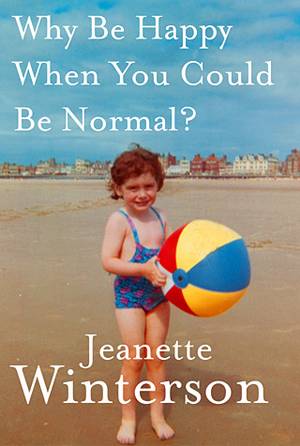
In 1985 Jeanette Winterson’s first novel, Oranges Are Not the Only Fruit, was published. It was Jeanette’s version of the story of a terraced house in Accrington, an adopted child, and the thwarted giantess Mrs Winterson. It was a cover story, a painful past written over and repainted. It was a story of survival.

This book is that story’s the silent twinIt is full of hurt and humour and a fierce love of life. It is about the pursuit of happiness, about lessons in love, the search for a mother and a journey into madness and out again. It is generous, honest and true.

Jeanette Winterson’s first novel Oranges Are Not the Only Fruit is largely inspired by her childhood. Her memoir Why Be Happy When You Could Be Normal? tells the other side of the story. That what was left out. It took me a long time to read this memoir. I started it four times, not because it’s not good, but because reading it was painful. The first part, until Jeanette leaves home at 16 and her mother asks her the question that has become the title of the book, is painful and disturbing for many reasons. The wit and the humor she uses to describe her awful childhood made me shudder. Shudder because I didn’t get it. I didn’t understand how you could live through so much pain and not go crazy, to write a book at 21 and become famous and leave it all behind. I was glad she proved to be so resilient, but it made me uneasy. I kept on thinking: When is it going to happen? When will she break down? Is that still in the future? I don’t think that you can survive a childhood like Winterson’s and not break down eventually. It’s just a matter of time.The second part of the book deals with what came much later. Jeanette Winterson’s descent into madness (her terms), her breakdown and attempted suicide in 2008. Reading that felt like entering a freshly aired room. I know this may sound weird, but the beginning made me choke. I couldn’t believe that she’d left it all behind and only when I read about the descent into madness, did I finally feel glad for her. Now she can move on.

Jeanette Winterson was adopted by the Wintersons when she was 6 months old. She was never told who her real parents were and her mother always said that the devil led them to the wrong crib, meaning she would have liked another child, a nicer child. This is such a typical statement from a woman like Mrs Winterson who is a depressed zealot and always utters half-truths in bible-inspired metaphor. Jeanette Winterson says that all of her books start with individual meaningful sentences and we see where that comes from. Her mother often only says one dark ominous sentence over and over again. Sometimes without any apparent connection to what just happens or what was just said. “Ask not for whom the bell tolls . . .”, “It’s a fault to heaven, a fault against the dead and a fault to nature . . . ” Uttered without any context or referring to very mundane things like the gas oven blowing up, these sentences are either creepy or hilarious.

Winterson grew up in the North of England, near Manchester and she loves this part of the country, lovingly tells us about its history, which is quite interesting. The Wintersons are not only religious fanatics but working class and her mother is so suspicious of books that she confiscates and burns all of those Jeanette has been hiding.

Punishment is frequent and comes in different forms. Either Jeanette is beaten or left outside all night and day, on the door step, even in winter.

When she falls in love with a girl, and Mrs W finds out, they perform an exorcism. Jeannette finally leaves at 16. She only returns once, when she’s studying in Oxford and things go very wrong. That’s the last time she sees her mother.

As you may have guessed, this isn’t an easy book to write about. I marked so many passages and sentences that hardly any page is left white. Jeanette Winterson has a way with words that is amazing. Although I don’t always agree, I find the sentences, many of which are used in her novels, arresting.

In her novel Oranges Are Not the Only Fruit, Jeanette Winterson paints her mother like a giantess and in her memoir she says she was too large for her circumstances. I was puzzled that there was no explanation whatsoever why Mrs W was the way she was. Mean, fanatic, abusive, depressed and just plain crazy. She had her dreams and her wishes, but smothered them. She lived as if she was wearing a very tight corset. The Wintersons were Pentecostals and the religion was like a mental corset.

If you like memoir, then you should read this. It’s disturbing, but it’s so amazingly well written and the first part has hilarious moments. Mrs Winterson is crazy, but she really is larger than life. She reminded me of some of Picasso’s paintings of grotesquely deformed women. We read about her with horror, but at the same time we almost wishes we had been there. I even felt compassion, there were small details that could almost make her endearing. At the end of the book, when Jeanette Winterson has found her birth mother and looks back on her childhood, she says she’s glad Mrs Winterson was her mother. Although she was crazy and abusive, she made her who she is, maybe without such an adoptive mother, there wouldn’t be a writer like Jeanette Winterson. I can understand that thinking very well.
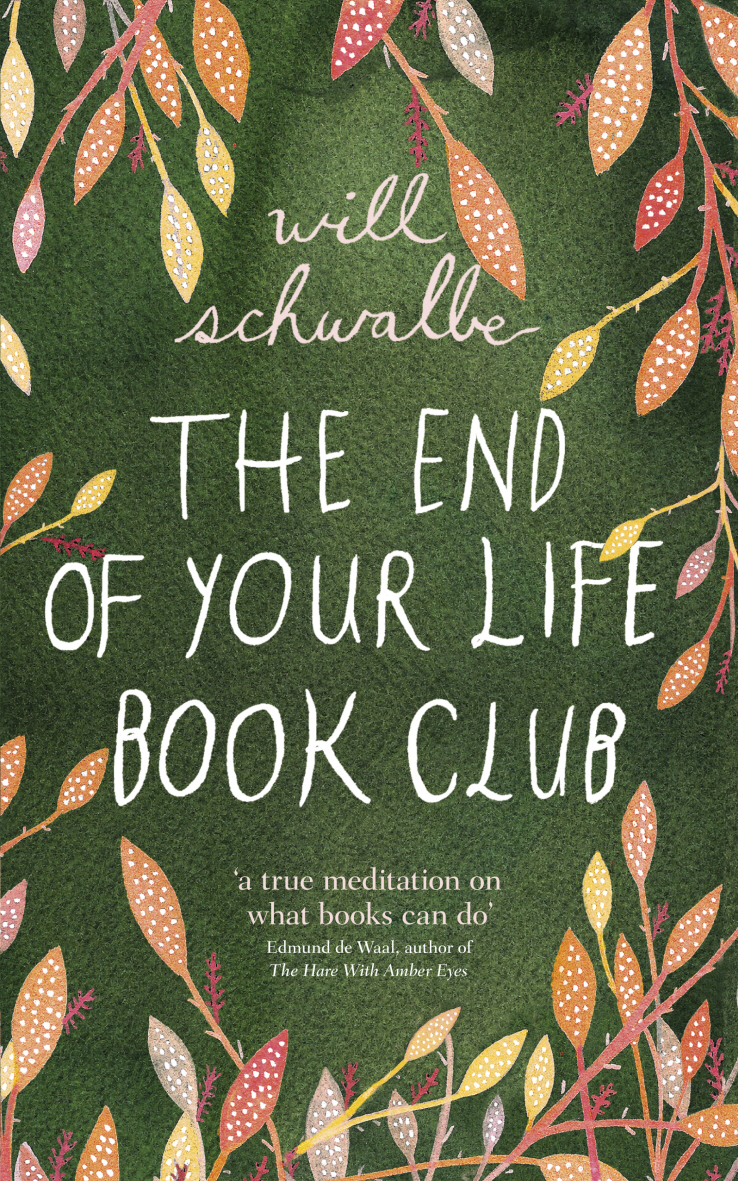
Will Schwalbe: The End of Your Life Book Club (2012) A Memoir

End of Your Life Book Club

Will Schwalbe’s memoir The End of Your Life Book Club is one of those books that needs a review because it’s hard to tell from the blurb what it is about. Sure, it’s about books and the love for books and a beautiful friendship between a mother and son, but more than that it’s about an amazing woman and her terminal illness. People who pick this up may think, like I did, that it was to a large extent about books, which isn’t the case. Books are mentioned on every other page, but the largest part is about Schwalbe’s mother, her life and her battle with pancreatic cancer.

Will Schwalbe and his mother always loved to read and discuss books, but when she is diagnosed with pancreatic cancer and has to undergo regular chemo therapy, they decide to use the time they spend together at the hospital discussing books they have both read and that’s how they start The End of Your Life Book Club. The beginning of each chapter is dedicated to the book they have been reading and the discussion they have. The book choices are varied and I loved reading about them. Continental DriftCrossing to Safety, The Painted Veil, Olive Kitteridge, The Girl with the Dragon Tattoo, Brooklyn,The Elegance of the Hedgehog are but a few books they read, discuss and enjoy.

After this usually brief paragraph about books, Schwalbe leads us directly to his main topic: his mother. His mother must have been a very courageous woman. She travelled from one hot spot to the next for the Women’s Refugee Committee. She helped refugees all over the world and put herself in great danger to do so. She was a fighter but at the same time she was a genuinely kind woman and to read about her and the love the people felt for her is quite beautiful.

What will not be everyone’s cup of tea is the detailed description of the therapies, the side effects and the battle to just live a few months longer. Pancreatic cancer is mostly terminal and most people don’t have much more than a few months after the diagnosis. Schwalbe’s mother was lucky, she lived a full two years. Years that she lived to the fullest, not missing any opportunity to enjoy life and do good. This is quite admirable. I liked her belief that you should never look away from what is bad in our world but always strive to do good.

I feel heartless writing this but the book did not work for me. I have no problem to read about terminal illness. I read the memoir written by Susan Sontag’s son and found it excellent. So that’s not the reason. And of course I love reading about books but in a way, I felt this memoir was too personal. There were too many details added that just didn’t mean anything to me, because it’s not my mother or someone I know. She ate this and liked it, she drank that and couldn’t swallow… She saw these friends and those grandchildren… There were just too many mundane and ordinary details that are only significant when you know a person. Since they wrote a blog about her illness to keep family and friends updated, I suspect, large portions of this book were based on those entries. This may be a reason why the writing was a bit bland.

I think this is a book which could be of great help if you have a friend or relative who has cancer, especially pancreatic cancer. It shows extremely well and in a lot of detail what can be done, what the side effects of some of the therapies are and when you have to decide to let go. As a book on cancer it’s great. As a book about one person’s mother, it’s too personal and as a book about books it is a let down. It says it’s about books and reading but they rather form a bracket around the rest.

Still I’ve discovered a few titles I didn’t know and would like to read:

Victor Lavalle’s Big Machine

Reynold Prices’s Feasting the Heart

Danyal Mueenuddin In Other Rooms, Other Wonders

There was also one book I know I will not be able to read and that is  Mariatu Kamara’s The Bite of the Mango (look it up and you’ll know why). Reading about it made me sick.

Have you read any of these?

Best Books 2012

Last year I had a hard time to narrow down the choices and ended up with a very long list. This year it was far easier. All in all it wasn’t such a great reading year. Still, there were 13 novels and 2 non-fiction books I found outstanding.

I added the links to my posts and a quote from my reviews.

Charlotte Wood – The Submerged Cathedral

Australian author Charlotte Wood’s lyrical novel The Submerged Cathedral caught me unawares. Reading it felt at times like daydreaming. It has a hypnotic and very gentle quality that isn’t easy to put into words. It is highly symbolical and complex but still down to earth. The voice and choice of themes are so unusual, I’m really glad I discovered it on Kim’s blog last year (here).

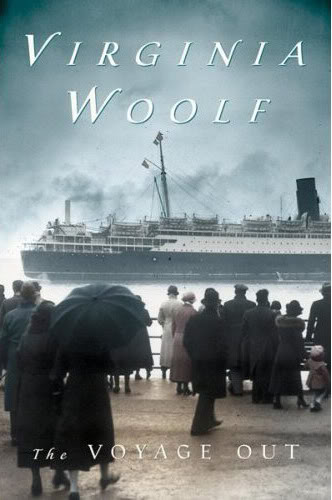
Virginia Woolf – The Voyage Out

Reading The Voyage Out makes me realize once more what I like the most about her writing. Yes, the style, especially in the later novels, is fantastic, with its flow of interior monologue, the way she uses time and how she describes the passing of time. But there is something else that stayed with me forever since the day I have read Mrs Dalloway. Her writing has an exhilarating quality, an effervescent intensity of feeling that made me think of a German expression which I adore: “Champagner Wetter” or “Champagne weather”. Champagne weather is used to describe a very fresh but sunny spring morning on which the air is still cool, nature has returned to life, the first tentative, tiny leaves appear, the first blossoms can be seen. It’s already a bit warm in the sun but still chilly in the shade. It’s like drinking the first glass out of a freshly opened, nicely cooled Champagne bottle. It bubbles and goes to your head. Virginia Woolf’s novels are full of scenes conveying the mood of champagne weather.

Robin McKinley – Chalice

What I loved so much about this book is the atmosphere. Sweet and floating, like the scent of beeswax candles. The descriptions are beautiful and following Marisol’s journey has something enchanting and almost hypnotic. The world building is exquisite. I was there in Willowsland the whole time. And Marisol is such a great character, so real. She is very insecure and has to find her way in a hostile environment but her strength and her love for her home guide her. I liked how she lived, on her own, outside of the Great House or the village, only with her bees whom she treats like pets.

Antonio Tabucchi – The Edge of the Horizon

I liked it because it’s a very melancholic story and the descriptions are wonderful. Instead of taking a trip to Lisbon it was like taking a trip to one of those typical old Italian towns with the narrow and steep alleys. The book has many descriptions of quiet moments like this one towards the end:

“When the night began to fall, he turned on the radio without turning on the light. He was smoking in the dark while looking out of the window and observing the lights in the harbor. He let time slip away. He enjoyed listening to the radio in the dark, it gave him a feeling of distance.”

Helen Dunmore – Zennor in Darkness

Dunmore conveys the soft light of the Cornish coast, the beauty of the lovely landscape, the slow pace of life. This softness is mirrored in the way she changes the point of views, blurring the edges, softening the transitions, so that it feels as if one person’s consciousness and interior monologue, was flowing gently into that of another character. Reading it made me dreamy and I felt as if I was watching a water-color come to life. I read this book very slowly. I could have finished it in a few evenings but I put it aside frequently to make it last.

Amor Towles – The Rules of Civility

This is the reason why I always look forward to new releases because ever so often you discover a new book and simply enjoy it to the extent of wanting to start all over again after finishing it. This doesn’t always have to be a book that will enter the literary canon, it can just be a novel that makes you spend a few extremely entertaining hours. Like a well-made movie.

Charles Dickens – Great Expectations

Great Expectations offered everything I expected from Dickens and so much more. The only thing I could criticize is that it was predictable and that there were a lot of coincidences which didn’t seem all that realistic but who cares. There is so much in this novel to like that I can easily forget its flaws. The characters were, as was to be expected, quirky and over-the top, much more caricatures than portraits, but drawn which such a wonderful imagination that I loved each one of them.

Sylvia Toswnsend Warner – Lolly Willowes

I’m glad I discovered this wonderful novel. It has freshness and vivacity, is clever and witty and the descriptions are detailed and atmospheric, the portraits of the society and the people are true to life and Lolly is a very endearing character, an illustration of the importance of “a room of one’s own” and the right of women to live an independent life, even outside of society and without a man. It’s certainly one of the rare novels in which a being considered to be a useless burden on society shows that she doesn’t need society in order to live a truly happy and  fulfilled life.

Guy de Maupassant – Bel Ami

After having read Bel-Ami, I think that he might very well be one of the best writers in any genre. It’s one of the most perfect books I’ve ever read. I couldn’t name one single flaw. As much as I like Balzac there is always this and that, minor things, sure, but still, some imperfections. Not with Maupassant. What also surprised me is that this book could have been written nowadays. The society has changed, the world has changed but the way he writes about love, sex, power, money, careers… It’s outspoken and modern.

Louise Penny – Still Life

If I could I would move to Three Pines, the small fictional village, located a few hours from Montreal, in rural Québec. It’s a small village that sounds as if it was a place where time stands still and reminded me a lot of Elizabeth Gaskell’s Cranford. Old cottages face a small village center and are surrounded by old trees and lush gardens. The place is very green and picturesque, the descriptions of it atmospheric and full of tiny details of the season. It’s the end of autumn, dead leaves are falling, it rains and the temperature is slowly dropping. A storm will come and soon it will be winter. Before the crime is solved, snow will begin to fall and a lot of the investigation will have taken place in front of a cozy fire.

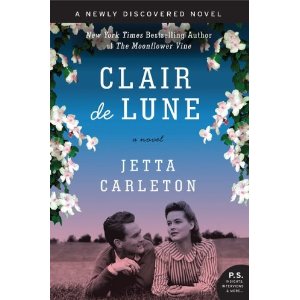
Jetta Carleton – Clair de Lune

I absolutely loved this book. I tried to slow down while reading but it was pointless, I just rushed through the pages and when I turned the last one I was quite sad. It contains such a lot of intense scenes and the most uplifting ending since I’ve read Nada last year. Since the largest part of the book is set in spring, there are a lot of wonderful outdoor scenes in which the three friends walk in the streets, stand in the rain or just stroll through the fog. There is a breathlessness and joy of life in these pages that is exhilarating. It renders the enthusiasm of young people for whom everything is a discovery, be it literature, art, music, love or friendship. At the same time there is the anxiety about war and the knowledge that the freedom and carefreeness they experience is going to end.

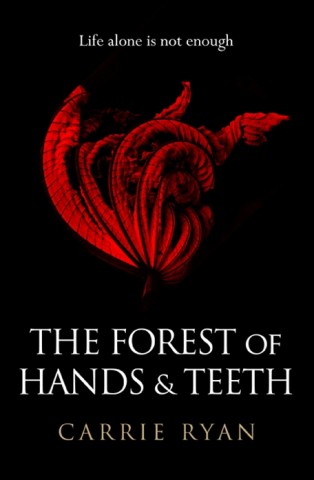
Carrie Ryan – The Forest of Hands and Teeth

I never felt like reading a zombie novel before and if it hadn’t been for Sarah’s intriguing review I wouldn’t have tried this book but I’m glad I did. It has a very special and haunting atmosphere, very captivating and oddly enthralling. The word zombies, is never used, by the way, but it’s clear from the descriptions. The Forest of Hands and Teeth is part I of a trilogy. I won’t rush to read part II and III right now but I feel like reading them some day.

Edda Ziegler – Forbidden – Ostracized – Banned

Edda Ziegler’s fantastic book on German women writers under National Socialism Verboten – Verfemt – Vertrieben (Forbidden – Ostracized – Banned) was easily my favourite read this year. I hope that some English language editor will buy the rights to this book and have it translated. It’s an introduction to the most prominent German women writers under National Socialism, a detailed historical account of the times and an analysis of publishing history.

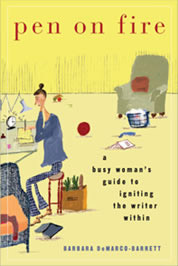
Barbara DeMarco-Barrett

I didn” get a chance to review this yet but if you are looking for a truly original genre blend – memoir + book on writing, this may be the book for you. Or if you are one of those who keep on saying “I would write if I only had the time” – this may be for you as well. An inspiring, motivating and really lovely book on writing and the life of a writer.

Puss in Books by Catherine Britton (2012)

I feel spoilt because I have received more than one great pre-Christmas book present from editors. One of them is Puss in Books, published by The British Library Publishing.

Catherine Britton’s richly illustrated book contains numerous examples of cats in books. It mentions  nursery rhymes, children’s books, novels and many other sources.  I thought I’ll write about it quickly as the one or the other may still be looking for a bookish present for a cat lover or anyone interested in cats in books.

The book as such is nice, with glossy paper and intense color illustrations.

Some of the earliest illustrations date back to the Egyptians but you can also find an illustration from Rudyard Kipling’s The Cat that Walked by Himself or of the Cheshire Cat, taken from Alice in Wonderland.

Fat Fredd’y s Cat has a chapter as well as Simon’s Cat and Splat the Cat.

One of the pictures I like the most is an engraving by Cornelis Vissher called The Large Cat from 1657.

As the blurb says the book is “a celebration of the feline wit, intelligence, aloofness and charm as presented in books, with examples from literature, folklore and popular culture.”

The book contains more than illustrations, it also offers a lot of information about the history of cats and how different cultures and societies saw them. It spans cultures as different as Egypt, England and Japan.

Aharon Applefeld: The Story of a Life – Sippur chajim (1999) Literature and War Readalong August 2012

In his memoir The Story of a Life acclaimed author Aharon Applefeld tells the story of his childhood and how he came to be a writer. He starts by describing his earliest memories, the beauty he experienced, the love he received from his parents and grandparents. Most prominent in his memories is his last summer holiday as a child of five when he and his parents visited the grand parents in the Carpathians. Little Aharon’s parents are quiet people. They don’t talk a lot and Aharon learns early just to observe, be in the moment and absorb everything around him, the light, the scents, nature. These sensory memories will haunt him all his life. But this idyllic summer is the last peaceful moment of his childhood. Hitler comes to power, war breaks out. At first the family lives in a ghetto, later on they are transported to the camps. Both his parents are killed, his mother right at the beginning of the war. After having lost his father as well, Aharon escapes into the forest where he lives for years until he joins others. Together they first walk from the Ukraine to Italy and from there to Palestine, their new home.

The memoir is a book of a rare beauty. It taps into the deepest recesses of the soul where vague and sensory memories are stored. Because he was a child and a taciturn child at that, he is lacking words for what has happened to him. This makes this memoir so amazing, it’s like watching someone feel around, probe and slowly approach the right words to convey what it was like. Fleeting memories and strong impressions are mixed. Some people, some stories stand out but a lot is just like shadows on the wall.

The loss of his mother tongue leads to further fragmentation. In his family they spoke three different languages, on his long escape to Italy and from there to Palestine, there are more languages spoken and when he finally arrives in Palestine he has to let go of all of them and learn a new one, Hebrew. This is all painful.

I’ve read all sorts of WWII accounts and novels but they never focussed on orphaned children. It’s hard to imagine what it means to lose your parents, your home, your mother tongue. And Palestine wasn’t as welcoming as one would think. Especially not when you felt you wanted to talk about what happened and later to write about it.

Applefeld had to overcome an incredible amount of obstacles before becoming the writer he is today. He had to dig out his memories from where they were buried, find the right words, find the right language. He had to fight hostility too. Every single one of his books is an attempt to capture what happened to him and how it felt.

The Story of a Life is in part exactly that, the story of one man’s life, but more than that it’s a meditation on language and how to put into words, make palpable what is just a fleeting sensory impression. No wonder the cold, the wind, the rain are things which catapult him back to the war years. The war, he writes, is stored in his body, his bones. Because he was so little at the time, lacking the ability to fully comprehend and put into words what happened, the memoir and most of his novels, it seems, are more like a search, a quest almost for what once was, an attempt at conjuring up what was lost.

This is a book I can highly recommend even to those who are tired of reading about WWII and the Holocaust. It is a rich, inspiring and very meditative book about life and how to tell one’s story.

Other reviews

Danielle (A Work in Progress)

Judith (Reader in the Wilderness)


*******

The Story of A Life was the eighth book in the Literature and War Readalong 2012. The next one will be Richard Bausch: Peace. Discussion starts on Friday 28 September, 2012.

John Sutherland: The Dickens Dictionary (2012)

Although I’m one of those who has been tiptoeing around Dickens’ work for a while now without reading anything else but A Christmas Carol and part I of David Copperfield, I’m still interested in the author and the work. I also have a feeling I’m familiar with his novels without having read them because I saw the one or the other movie based on his books and because creations of great artists seem to acquire a life of their own and seem to go on living outside of the confined space of the book covers. People mention them, talk about them as if they were real people.

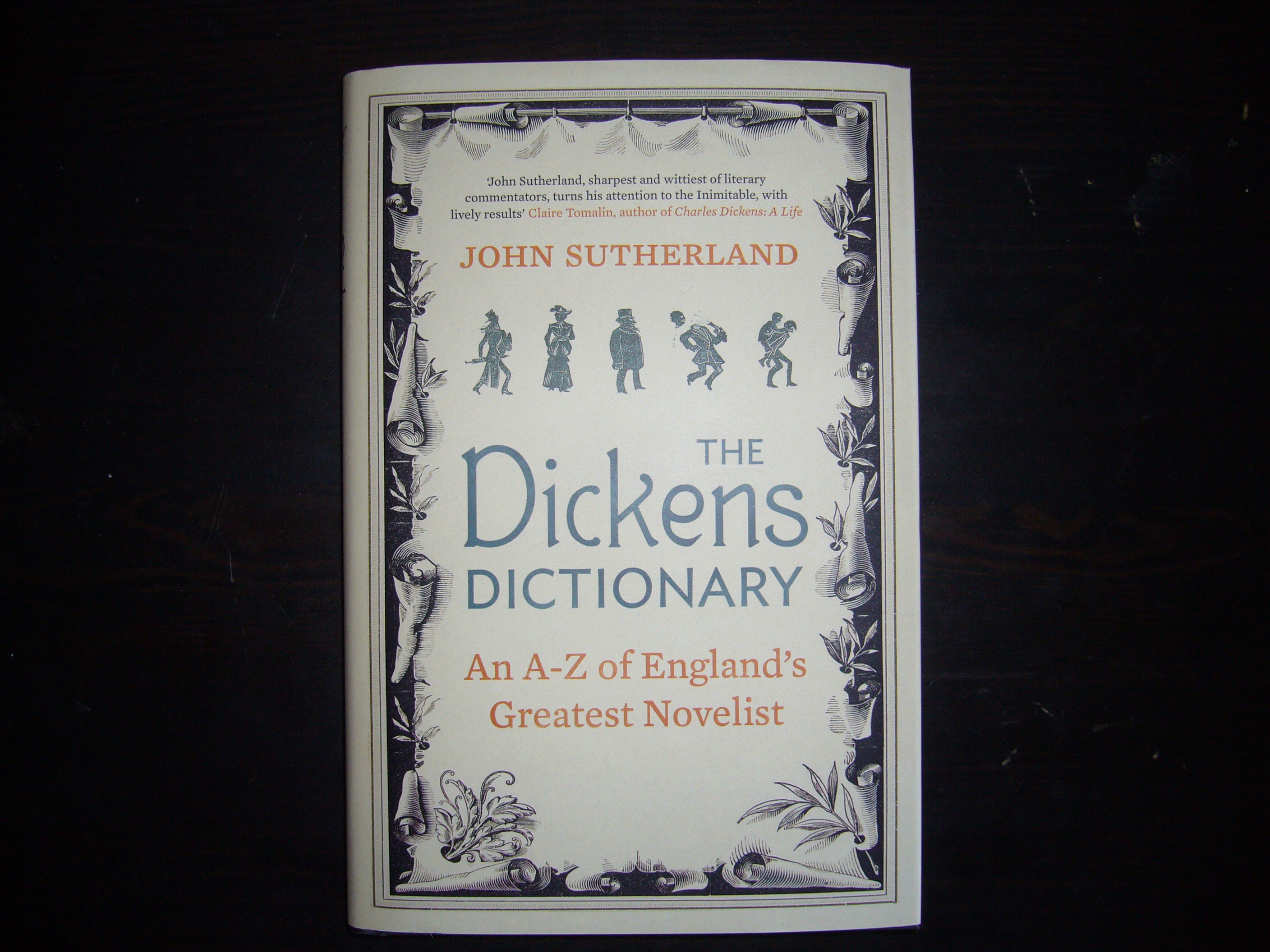
When I discovered The Dickens Dictionary on Mel U’s blog (here is the post) I knew I had to get it right away and since it arrived yesterday afternoon I spent many moments with it.

The author John Sutherland is a recently retired professor who has taught and published on Victorian novels. Browsing his book and reading the one and the other of the 100 collected entries, you discover not only a world of information but a book written by someone who is passionate about the subject and knows how to write about it in a way that will make you feel the urge to grab the next Dickens novel at hand. Sutherland’s aim was

When I think of Dickens I do not see a literary monument but an Old Curiosity Shop, stuffed with surprising things: what the Germans call a Wunderkammer – a chamber of wonders.

This book, taking as it’s starting point 100 words with a particular Dickensian flavour and relevance, is a tour round the curiosities, from the persistent smudged fingerprint picked up in the blacking factory in which Dickens suffered as a little boy to the nightmares he suffered from his unwise visit at feeding time to the snake-room of London Zoo.

The 100 entries cover such different subjects as Bastards, Blue Death, Candles, Cats, Child Abuse, Dead Babies, Dogs, Fog, Hands, Incest, Merrikins, Onions, Pies, Pubs, Smells, Thames…. They are all entirely fascinating.

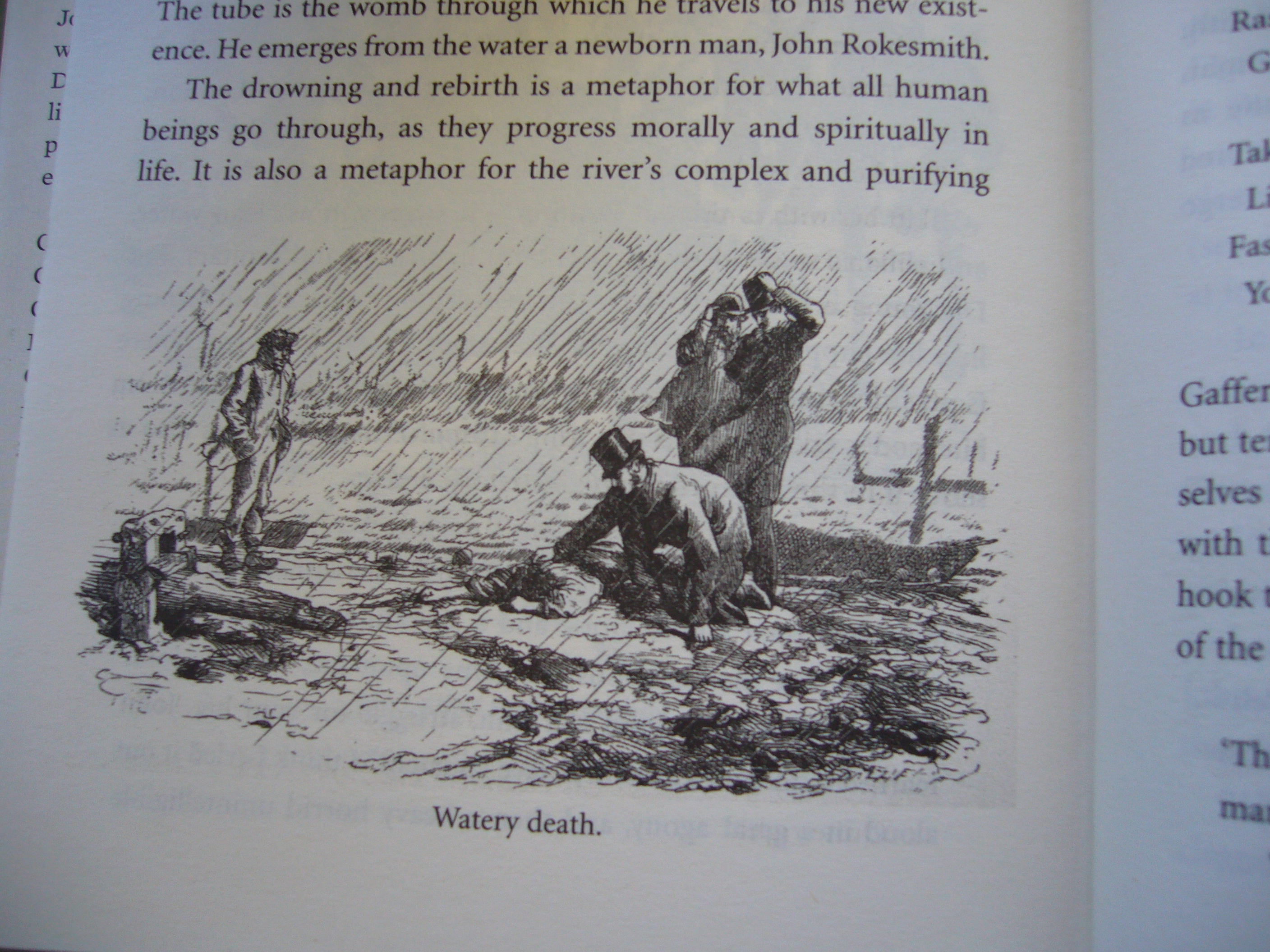
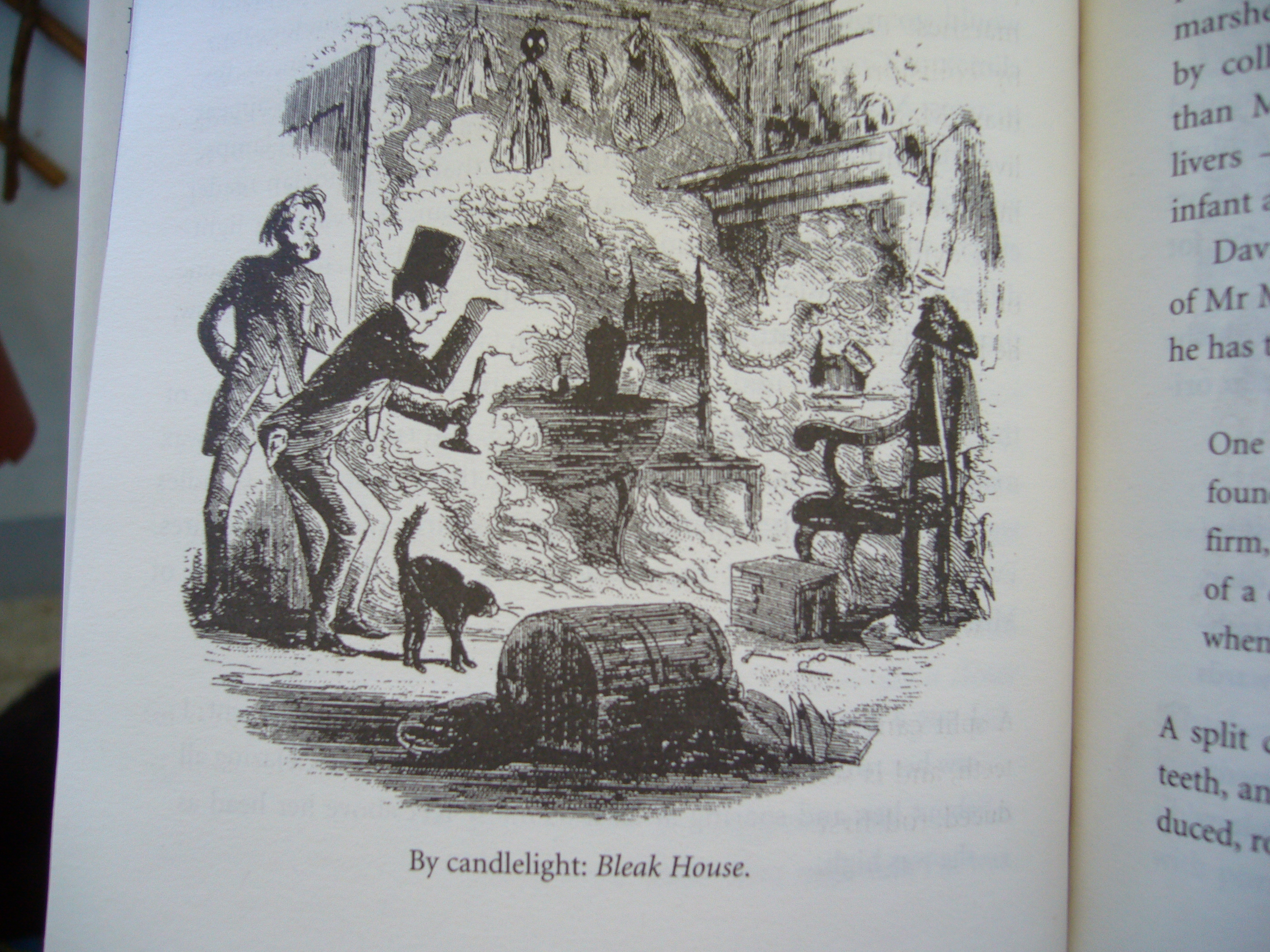
What certainly adds to the appeal of this book are the many illustrations.  There is one on almost every other page.

I also liked the many quotes Sutherland included which give a good feeling for the work. Since I have still not decided which will finally be my first Dickens, this book will help me make up my mind.

To give you an idea of the entries I chose the one called Blue Death.The title refers to the Cholera epidemic of 1848-49 during which 52,000 Londoners died. The entry explains where it came from – India 1817 – and how Dickens and most people thought it was miasmic. He referred to it in Bleak House in his description of Tom-All-Alones’s. His rival Thackeray contracted the Cholera and might have died if Dickens hadn’t sent his own physician.

The Dickens Dictionary is a great introduction to Dickens, it contains quotes and references of the various novels, anecdotes from Dickens life, historical facts of Victorian London and a whole range of other “curiosities”.

As I said, I still don’t know which should be my first Dickens. Which one would you recommend?

Nina Sankovitch: Tolstoy and the Purple Chair (2011) A Memoir

Tolstoy and the Purple Chair is a memoir I’ve been eying for a while until I finally bought it. The subtitle – My Year Of Magical Reading – obviously an allusion to Joan Didion’s memoir – annoyed me a bit but I liked the idea behind the book.

After the early death of her beloved sister, Nina tries for several years to overcome her grief and feelings of guilt when she finally comes up with a cunning idea. Reading has always been important for her and her family. Reading instructs and entertains but it can console and give hope as well. That’s how she decided that she would read one novel per day for a whole year and write about it on her blog Read All Day.

Tolstoy and the Purple Chair tells the story of that year, interweaving it with memories and stories of her family and herself. Not all the 365 books she has read in one year are described or mentioned but she writes in detail about a few which were especially meaningful. She summarizes them briefly and writes why they were important, what memories they triggered, how they helped her heal.

The list of all the 365 books can be found at the end of Tolstoy and the Purple Chair and on her blog. They don’t follow any specific order. One book led to the next and many were recommendations from family and friends and later from readers of the blog.

While I expected slightly more, I still liked reading the book. I liked her infectious enthusiasm. Each book is a world to discover and she tackles the ambitious goal with a lot of energy and passion.

Some of the books are so important because they help her explore her story or the story of her family. Harry Mulisch’s The Assault is one of them and so is Schlink’s Self’s Deception. But there are many more.

Crime novels are among her and her family’s favourite books, each member loves another writer. Nina thinks that what she loves best about them is the fact that they re-establish order. Things make sense in crime novels.

The parts in the book I enjoyed the most weren’t only those about books but those in which she describes the many little joys life has to offer. A meal with friends, a sunset, a newly planted tree, a lilac bush and the many cherished memories of her sister that make it easier to let go of her grief.

As was to be expected with a book like this I ended up with a list of books I’d like to read now.

Muriel Barbery’s The Elegance of the Hedgehog – L’élégance du hérisson

Nadine Gordimer’s Burger’s Daughter

Harry Mulisch’s The Assault

Adam Phillips and Barbara Taylor’s On Kindness

Kevin Canty Where the Money Goes

Chris Cleave Little Bee

Chimamanda Ngozi Adichie The Thing Around Your Neck

While I wouldn’t say it’s an absolute must-read, it’s a nice way to spend a few hours. I liked her voice and her stories. Just be prepared, if you don’t have as much time at hand, you might end up being a bit envious.

I have a fondness for this type of project. It doesn’t even have to be reading a book per day. There are some other 365 and similar projects like that I enjoyed reading about. Many are based on blogs or turn into blogs like the famous Julie and Julia.

Have you read about any interesting projects or self-experiments like this? And what about the books on my list, have you read any of them?