Boston Literary Magazine – Winter Issue 2015

BLM

I guess this is what happens when you write for years, never sending out anything and then decide – it’s time.

I feel very fortunate and glad to share more good news. My quick fiction piece Freeze Frame has been published in the Winter Issue of Boston Literary Magazine.

It’s a great issue with wonderful short fiction, prose poems, and poetry. My short piece is part of a cycle I’m working on.

Here’s the link, should you like to read it. It’s very short.


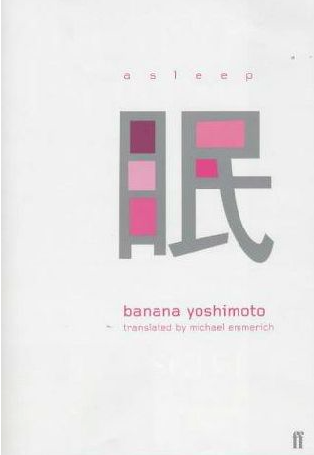
Banana Yoshimoto: Asleep – Shirakawa Yofune (1992)

Asleep

It’s been a while since I’ve last read a book by Banana Yoshimoto, who has always been one of my favourite writers, although I can’t say I loved all of her books. There was always the one or the other that didn’t work as well as a whole, but I always loved her themes and certain elements in every story.

Asleep is a collection of two long short stories (65 and 75 pages ) and one shorter story (30 pages). The stories circle around similar themes. Loneliness, longing, sadness, dreams, sleep, loss, and grief. A character, always a young woman, looks back with longing on a time in her life in which she was with someone she felt very close to or had an intense relationship with. At the time when she tells the story she’s in an uncertain situation. Maybe unemployed, dating a married man, grieving. What the characters in the three stories share as well is that they are visited by the ghosts of beloved dead in their dreams. Sleeping is important in the stories, dreaming can be more intense that staying awake.

Asleep is one of Yoshimoto’s books that I didn’t love as a whole. I loved the dreamy mood, the sorrow and loss, the loneliness and exquisite sadness she described but I found the stories a bit repetitive. Looking back, the three stories blend into each other. The one I liked the most was The Night and Night’s Travellers. The other two could have done with some editing. She moves back and forth in time and occasionally it’s confusing.

Asleep, the title story was interesting as well because I knew someone just like the narrator. A young woman who fell asleep constantly. Or slept for days and days. When you spoke to her, you had the feeling she was never really there. She too, like the main character in Asleep, had experienced something very painful and couldn’t come to terms with it. It was like her consciousness was trying to retreat all the time, shied away from fully confronting her situation. That’s exactly what happens to the young woman in Asleep.

In a way, one could say that these are ghost stories. Not that they are scary but they are eerie and the dead people talk to the living. The dream states are just as real as being awake. Reading this collection, I noticed that while atmosphere is a key element of European ghost stories, in most Japanese ghost stories I’ve read so far, mood is more essential.

While Asleep isn’t my favourite of Banana Yoshimoto’s books, I liked a lot of it and really enjoyed getting re-aquainted with her sadness-infused, eerie stories, in which dreams and dead people play such a prominent role and the characters occupy an in-between world.

This is book four of my 20 under 200 project.

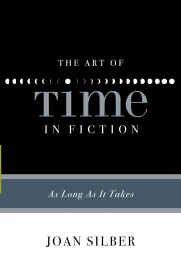
The Art of Time in Fiction by Joan Silber

The Art of Time in Fiction

It’s rare that I read a nonfiction book with as much enthusiasm as Joan Silber’s The Art of Time in Fiction.  Given the topic it’s not surprising though. I’ve long suspected that one of the key elements dividing literary fiction and genre fiction might be the use of time. I’m thinking of the artless use of the split-narrative that we find in almost every crime novel these days. Or the time-split in historical genre novels. Silber’s title is well-chosen, because using time masterfully is really an art.

She divided her book into different chapters, each dedicated to another use of time, another technique. I noticed, when compiling the list that when it’s done really well, we hardly notice what approach an author chose. I really appreciated the many examples she gave and from which she quotes extensively. Of course, this makes it a dangerous book for book addicts because it makes you want to add to your piles.

I will go through the categories, describing them briefly and adding the examples Joan Silber chose.

Classic Time

The first category was “classic time”. In this approach the author describes the story chronologically, chosing only a brief time span. There isn’t a lot of back story, nor flashbacks. I’d say it is the category that shows the most, tells the least.

The best example for classic time is:

  • Scott Fitzgerald – The Great Gatsby


Long Time

When an author tells a character’s whole life and the story spans over many years and decades, then we have an example of long time. I think it’s the category I’m the least fond of, but stories like Flaubert’s A Simple Heart, that capture a whole life, condensing long stretches, and only needs some forty pages, are not to be dismissed.

The examples quoted are:

  • Anton Chekhov – The Darling
  • Gustave Flaubert – A Simple Life/Un Coeur Simple
  • Jhumpa Lahiri – The Namesake
  • Carol Shields – The Stone Diaries
  • Arnold Bennett – The Old Wives’ Tale
  • Guy de Maupassant – Une Vie
  • Yu Hua – To Live
  • Evan Connell – Mrs Bridge
  • Virginia Woolf – To the Lighthouse

Switchback Time

The use of flashbacks, dreamlike sequences, non-linear storytelling, might be what appeals to me the most.

Here are a couple of examples for this type of storytelling:

  • Alice Munro – A Real Life, The Progress of Love, Carried Away, The Albanian Virgin
  • James Baldwin – Sonny’s Blues


Slowed Time

Proust’s In Search of Lost Time might be the most prominent of this category. In a movie there would be the use of slow motion. It’s an arresting technique that captures sensory and sensuous details like no other.

A few examples:

  • Nawal al-Sadaadawi – The Thirst
  • Don DeLillo – Videotape
  • Marcel Proust – In Search of Lost Time


Fabulous Time

This is the realm of magical realism and folk and fairy tales. It’s characterized by uncertainty and a reversal of natural time and disregarding the laws of time.

The examples used to illustrate this are:

  • Gabriel Garcia Marquez – One Hundred Years of Solitude, Chronicle of a Death Foretold
  • Italo Calvino – Italian Folktales
  • Arundhati Roy – The God of Small Things


Time as Subject

One of the most interesting uses of time in fiction is when it’s made the subject of the story. I’ve never read Fitzgerald’s Winter Dreams, which seems to be similar to The Great Gatsby, but uses time differently. Since I’m planning on re-reading The Great Gatsby, I’m looking forward to comparing it to Winter Dreams.

Here are the examples given in the book:

  • F.Scott Fitzgerald – Winter Dreams
  • Katherine Anne Porter – Old Mortality
  • Henry James – The Beast in the Jungle
  • Leo Tolstoy – The Death of Ivan Ilych
  • Alan Lightman – Einstein’s Dream
  • Chinua Achebe – Things Fall Apart
  • Gabriel Garcia Marquez – Love in the Time of Cholera
  • Denis Johnson – Out on Bail
  • Martin Amis – Time’s Arrow
  • Charles Baxter – First Light
  • Jorge Luis Borges – The Secret Miracle
  • Ambrose Bierce – An Occurrence at Owl Creek Bridge
  • Italo Calvino – Invisible Cities

I can’t say there’s one of these approaches I don’t like, but I guess books in which the time is a subject and what Silber calls “switchback time” might be those I like the most.

This is a wonderful little book that will appeal to readers and writers alike. It’s part of “The Art Of” series books published by Graywolf Press.

What about you? Do you prefer any of these categories? Or do you enjoy the use of split timelines/narratives more?


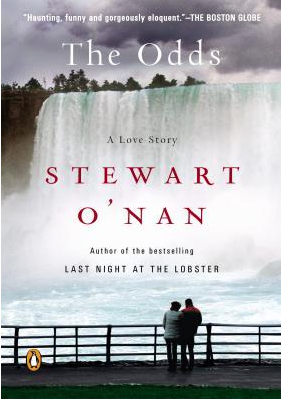
Stewart O’Nan: The Odds (2012)

The Odds

Stewart O’Nan’s novel The Odds is the second novel of my 20 Under 200 project. It’s the third of O’Nan’s novels I’ve read so far and while Last Night at the Lobster is still my favourite, I thought this was very well done.

The Odds tells the story of a middle-aged couple, who spends Valentines Weekend at an expensive hotel in Niagara Falls. They are broke, about to lose their beloved house, and ready to file for bankruptcy. Their marriage has been crumbling for years and after this weekend they will get a divorce. Basically, because they hope to hide assets. The interesting element, the element that generates tension in this novel, is that the reader knows from the beginning this weekend means different things for the characters. Marion considers this a weekend of goodbye. The divorce will bring her freedom. Art, on the other hand, considers this to be a new beginning. He’ll ask his wife to marry him again. Unsurprisingly, the book is full of double entendre and subtext. Watching the protagonists circle each other, trying to find out if they made the right move – Marion hopes having sex isn’t giving the impression, she’s still in for a new beginning, while Art hopes the flashy diamond ring does really express love and is not just seen as a reckless token – is enthralling.

While these dynamics would be interesting enough to follow, there’s something else ging on here. Niagara Falls was where they spent their honeymoon but it’s also a place where you can gamble. This might have been the most interesting part of the book and it shattered a few of my illusions. How naïve was I to believe that Niagara Falls offered nothing but a spectacular view of one of nature’s most amazing offerings. I’ve been taught, Niagara Falls is a garish, small version of Las Vegas. Flashing lights and casinos included. I honestly don’t get it. Do people really enjoy illuminated sights? In garish colors at that? I remember when I saw the Eiffel Tower for the first time in its all-year-round Christmassy illumination – I was disgusted. But this seems even more sacrilegious.

The trip to the casino makes a lot of sense because Art thinks he has figured out how to win big time at the roulette wheel, using the Martingale system. He’s certain that working with the odds will save them.

I found it amusing that Stewart O’Nan used different statistics as titles for his chapters. Odds of a couple making love on Valentine’s Day 1 in 14 – Odds of a U.S. citizen filing for bankruptcy: 1 in 17 – Odds of a married couple reaching their 25th anniversary: 1 in 6 – Odds of surviving going over the Falls without a barrel: 1 in 1,5000,000. Of course, all these are relevant to the story and made me think of those long chapter titles we find in many 19th century novels that give a flavour of what follows.

While they spend their days queuing for hours to see the many tourist attractions, at night they hit the casinos. If you want to find out whether the odds are against them – you’ll have to read the book.

I found this very well written, very realistic. I particularly liked the way he showed the absurdity of a tourist business that transforms a natural phenomenon into a tawdry theme park. Pretty sad, to be honest. It was equally excellent how he described how two people can have very different feelings about the same thing and that even in a marriage you may very well live with a stranger.

What kept me from loving this was that the people described are very realistic, but not exactly interesting. Since this is the second novel about middle-aged people, written by a man, I wonder whether men’s view of middle age in our society isn’t more negative than women’s view. Often, in novels written by women, the middle-aged protagonist starts a new, freer life. This is to some extent reflected in the attitude of the two protagonist. While Art thinks it would be a catastrophe if they spilt, it means freedom for Marion.

After finishing this book I’ve asked myself two questions:

What are the odds that I’ll visit Niagara Falls: 1 in 10,000

What are the odds I’ll pick up another Stewart O’Nan novel? 1:1

Maybe The Odds isn’t Stewart O’Nan’s best novel but it’s still well worth reading.

I first read about The Odds on Guy’s blog here.

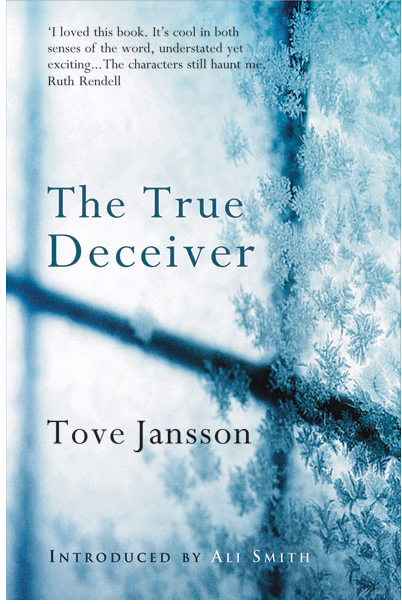
Tove Jansson: The True Deceiver – Den ärlige bedragaran (1982)

The True Deceiver

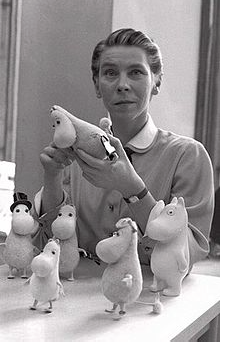
Swedish-speaking Finnish author and artist Tove Jansson is most famous for her stories featuring the Moomintroll family and their friends. Their creation spans almost thirty years. The first story came out in the 40s, the last in the seventies. When Tove Jansson was in her 60s she began to write books for adults. Some, like The True Deceiver, are novels, other’s, like Fair Play, are a collection of linked short stories, or episodic novels.

I always wanted to read her work, the books for children just as much as the books for adults, and I have no idea why it took me so long. After having finished The True Deceiver and already started Fair Play, I must say, this is one of those writers whose every book I want to read. She’s such an orginal, refreshing, and highly inspiring writer.

Katri and her younger brother, Mats, live in a village, in an unnamed Nordic country. It’s the deep winter. The land is covered in snow. The lake is frozen. Katri has just resigned from a job for the local merchant. Her brother helps building boats, his biggest wish being a boat of his own. In the same hamlet lives Anna Aemelin, a famous, rich children’s book illustrator. She’s become famous for her detailed depictions of the forest, which she adorns with drawings of rabbits. Katri decides that she wants Anna’s money for her brother. And she wants to get it in an honest way. Now honesty is an elastic term and for Katri it seems to mean— speaking the truth. Anna Aemelin has her own idea of what honesty means. And so does Mats.

The blurb of the English edition tells the reader that Katri fakes a break-in at Anna’s house to convince her she needs companionship, that’s why it’s not a spoiler to mention that she and Mats will move into Anna’s big house.

While the plot is interesting, the book’s strength lies in the characters and the setting. These people are so unusual. All three are eccentrics, each in their own way. And their interests, occupations, their innermost being is so original.

The artist Anna Aemelin was the character I enjoyed the most. Before Katri arrives, she’s not even aware of how much money she made with her illustrations. She lives a very ordered life, following the seasons. In winter, she doesn’t draw. It’s a bit as if she was hibernating. She orders food from the shops, doesn’t go out, and spends her days answering fan letters and reading adventure stories for kids. The books will be the foundation of her friendship with the boy Mats, a friendship that will create tensions between her and Katri. In spring, after the thawing, Anna goes into the forest and draws her pictures.

Katri is mysterious. She resembles a mythical figure, how she walks around with her huge, nameless dog, hardly speaking to anyone.

The way they live and communicate with each other is so peculiar because all three characters are loners. The conflicts between Katri and Anna are fascinating because they are both scheming, but both can’t really lie. But does that make them honest?

The story is set during winter and a huge part of its charm stems from the descriptions of the winter landscape, the harshness of the weather, the isolation of the big rambling house.

I don’t want to say too much. Pick it up and discover this unique writer for yourself. It’s certainly going to make my Top 10 of the year.

I read the German translation. That’s why I can’t offer any quotes. As I mentioned earlier, I’ve already started Fair Play, the story of two women artists. It’s another great find. I also want to read her Moomin stories chronologically and have her biography and a few other novels sitting on my piles. So, be prepared, you might read a lot more about Tove Jansson on this blog in the future.

Tove Jansson

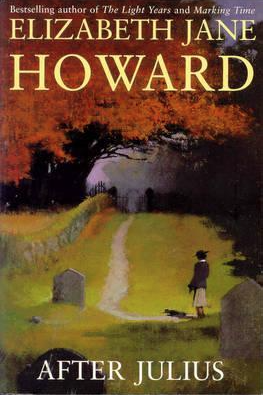
Elizabeth Jane Howard: After Julius (1965)

After Julius

It is twenty years since Julius died, but his last heroic action still affects the lives of the people he left behind. Emma, his youngest daughter, twenty-seven years old afraid of men. Cressida, her sister, a war widow, blindly searching for love in her affairs with married men. Esme, Julius’s widow, still attractive at fifty-eight, but aimlessly lost in the routine of her perfect home. Felix, Esme’s old lover, who left her when Julius died and who is still plagued by guilt for his action. And Dan, an outsider. Throughout a disastrous – and revelatory – weekend in Sussex, the influence of the dead Julius slowly emerges.

Elizabeth Jane Howard is best known for her Cazalet Chronicles, which I haven’t read yet. I don’t know where I came across After Julius, I only know I liked the premise. I’m drawn to stories that deal with the aftermath of an action. While After Julius is more complex than that, all the characters are affected by Julius’ last heroic action, which took place during WWII, twenty years before this story begins.

After Julius is divided into three parts; each part is subdivided into several chapters, each of which is told by another narrator. In lesser hands this might have turned into a fractured story, but Elizabeth Jane Howard is a very skilful writer and, while each chapter is told in a distinct voice, the whole feels seamless.

The narrators are Esme, Julius’ fifty-eight-year-old widow, Cressy, her older daughter, Emma, her younger daughter, Dan, Emma’s friend and Felix, Esme’s former lover. These five people, plus a married couple and an old Major meet for a dinner at Esme’s house in the country.

In the first part we see them all get ready for the weekend. Cressy and Emma live together in a dingy flat in London. Emma works in her late father’s publishing house, while Cressy struggles as a pianist. Like her mother, Cressy’s been a widow since the last war. She’s a great beauty, one of those that make whole rooms go quiet when she enters. A bit like Lily Bart. And, like Lily Bart, her beauty isn’t doing her any good. She attracts many, mostly married men, and all of her affairs end in drama and tears. When we meet her first she’s crying and thinking of ending it with her current lover Dick. Esme lives luxuriously in a big house in the country. Her only occupations are her garden, answering letters, planning meals and instructing the housekeeper. Dan’s a struggling poet and Felix is a doctor, who has spent most of his life abroad.

The dinner turns into a disaster for many reasons. Felix, who is Cressy’s age, was once her mother’s lover. He left her when Julius died and they haven’t seen each other in twenty years. Cressy’s lover is the husband of the woman, Esme invited for the dinner. The friend Emma brings along is an eccentric poet that she’s met only a few hours ago and invited spontaneously.

The last part of the novel shows each character after the disastrous meal.

The plot isn’t the most important thing in this book. What is amazing is how true to life these characters are. How we get to see their vulnerabilities, their disappointments, their hidden motivations. It’s a very outspoken book. Whether it lays bare the hopes of the protagonists, their sexual desires, or their life choices, it’s so honest, it’s occasionally painful to read. We forget that these are characters on paper and think we’re actually looking into someone’s soul.

It’s a beautiful book and a tragic one. We can’t help but wonder—when did things start to go wrong? While Julius’ death sets things in motion, it’s not the real beginning of the drama.

Esme is by far the most tragic character. She’s looking forward to seeing Felix again. Although he’s fourteen years younger, she hopes that there could finally be a future for them. She never assumes that he may have come for other reasons.

I found it hard to believe at times that this book was written in 1965. The open discussion of abortion and sexuality seemed far more modern. It made me wonder if we’re not living in more prudish times now.

Before ending this post I have to mention Elizabeth Jane Howard’s descriptions. They are stunning. When she describes a room, a scene, clothes, anything, she makes full use of these descriptions. It’s never just a random description but it always contributes to the understanding of a character, enhances the mood, sets the tone.

It’s still early but I wouldn’t be surprised if this book would be among my best of this year. Since she reminded me of many writers I absolutely love —Elizabeth Taylor, Rosamond Lehmann, Jean Rhys, Elizabeth Bowen — I know I’ll be reading more of her.

Do you have a favourite Elizabeth Jane Howard novel?


Best Books 2014

mail.google.com

I had a feeling this wasn’t a good reading year, but when I went over my posts I saw that I was wrong. I’ve read some outstanding books some of which will stay with me for a long time.

Best Literary Fiction
Evening

Here’s what I wrote about Susan Minot’s Evening

It’s not easy to capture the beauty of Susan Minot’s gorgeous and ambitious novel Evening. If Virginia Woolf or Proust had written page-turners, that’s what it could look like.

In beautiful prose which explores how memory and consciousness work Evening captures the story of Ann Grant’s life. It is 1994 and Ann is terminally ill; she’s lying in her bed, drifting in and out of consciousness. Scent transports her back in time. The morphine induces hallucinations, which are rendered in brilliant stream of consciousness paragraphs. These chapters and paragraphs, are very short, fragments only; the main story however simply moves back and forth between 1994 and 1954, the summer in which she met Harris Arden.

It’s a beautiful book and strangely uplifting. Possibly because it testifies how intense an interior life can be and that nothing is really lost. Everything we’ve ever experienced, imagined or dreamed is still somewhere. In its best moments Evening reminded me of Virgina Woolf’s The Voyage Out, in which we often see people or houses from outside. They are motionless or sleeping, but we catch a glimpse of their inner lives, which are rich and deep and passionate.

My review
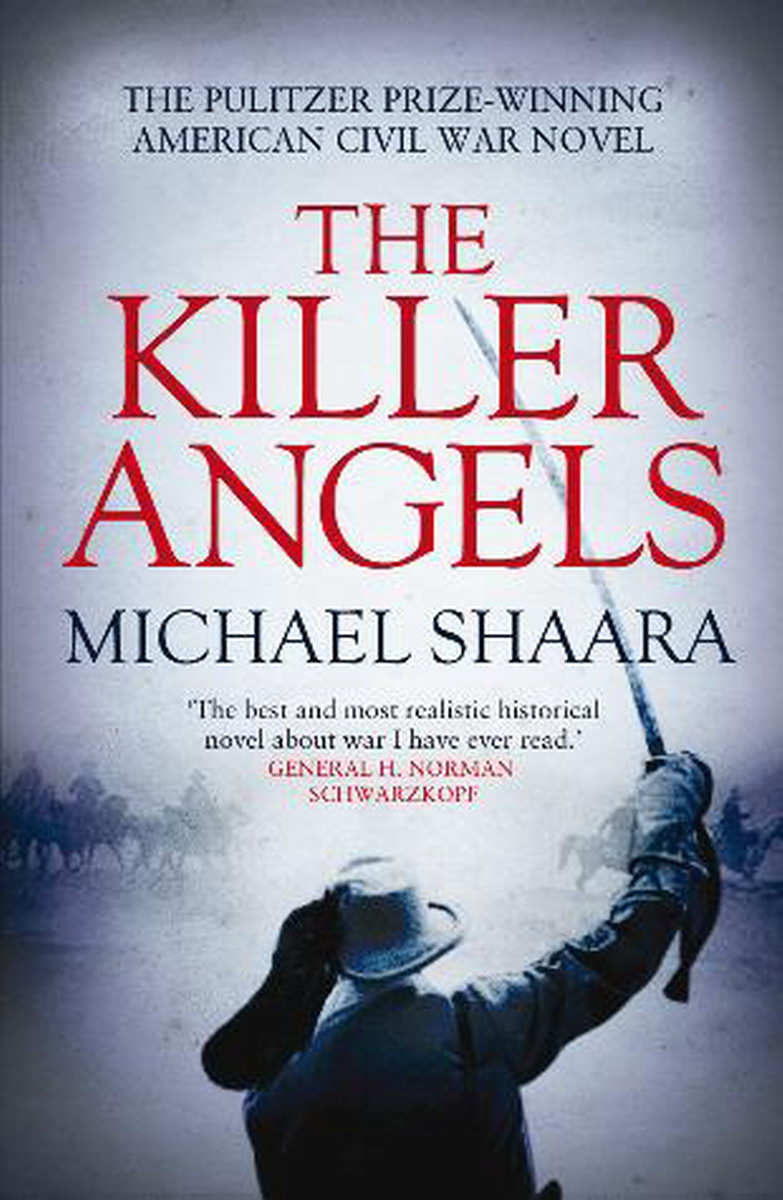
The Killer Angels

Michael Shaara’s Killer Angels is the only Literature and War Readalong title that made the list.

Here’s what I wrote:

Books are not always the way we expect them to be. Still, I’ve only rarely been this wrong. I was afraid Michael Shaara’s Pulitzer Prize winner would be dry, heavy on tactics and military jargon. It wouldn’t have been too surprising if it had been like that, after all, Shaara tells the story of the three-day battle at Gettysburg. But The Killer Angels is anything but dry or heavy. It’s a beautiful, lyrical novel, which focusses much more on the moods and emotions of the main characters than on tactics.

I don’t know what other books the year will bring, but I have a feeling this one could make it on the Best of List. I love books which are rich in atmosphere, capture quiet, introspective moods and manage to bring the most different characters to life. I certainly didn’t expect to find all that in a war novel. The Killer Angels is a gorgeous book on an awful subject, reading it felt like seeing all the major participants of the battle during their most intimate moments. I’m grateful to Kevin who said I would be missing out, if I didn’t read it. He was right.

My review
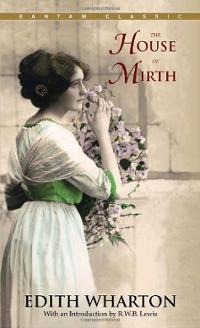
The House of Mirth

Edith Wharton’s The House of Mirth 

Here’s what I wrote:

It took me far over two months to decide whether I wanted to review The House of Mirth or not. For some reasons, I found this book profoundly disturbing.

While reading  The House of Mirth I felt like I was watching a fly getting trapped in a spider’s web. At first, when they notice that they are trapped, they wiggle frantically, hoping to be able to free themselves but, in doing so, entangle themselves even more. Comparing the stunningly beautiful Lily Bart to a fly isn’t doing her any justice, but the way she’s trapped by the society she lives in, and the way in which she tries to free herself, is not much different from the poor fly. I’m still a bit shocked. I knew nothing about The House of Mirth and to find that Lili Bart is just as tragic – maybe even more so – as Effi Briest or Mme Bovary (only without the adultery), came as a huge surprise.

My review
In the Land of Dreamy Dreams

Ellen Gilchrist’s In the Land of Dreamy Dreams is the best short story collection I’ve read this year and one I want to read again some day.

Here’s what I wrote:

I came across Ellen Gilchrist by chance. I was looking for books set in New Orleans and saw one of her short stories Rich in an anthology. I wasn’t familiar with her and looked her up and finally ordered a used copy of her first collection In the Land of Dreamy Dreams. It’s very rare that I read a whole short story collection in a few days, but I did in this case. There was a unity of setting, mood and atmosphere, and even one returning character that it read almost like a novel in stories.

I haven’t read anyone quite like Ellen Gilchrist but she still reminded me of a few authors. Tennesse Williams came to mind – A Streetcar Named Desire as much as The Roman Spring of Mrs. Stone – because of the setting and some of the older characters. But she also reminded me of Julie Orringer whose intricately woven sentences and lush descriptions are similar and there’s some of Yoko Ogawa’s cruelty in this collection as well. Funny enough Ogawa’s last short story collection has the English title Revenge. One of Gilchrist’s best stories is called Revenge as well. Coincidence? Who knows.

If you like rish, complex short stories, full of allusions and sensual descriptions, sometimes mean, sometimes dreamy – then do yourself a favour and get a copy of this wonderful book.

My review
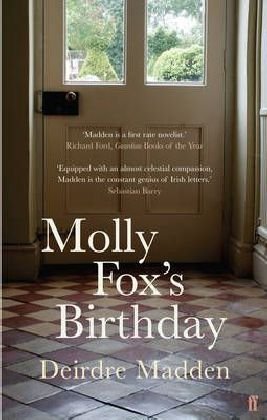
Molly Fox's Birthday

Deirdre Madden was another great discovery this year. I absolutely loved. Molly Fox’s Birthday 

Here’s what I wrote:

It’s been a while since I’ve read a book by a new-to-me author and felt like reading everything she’s ever written.

Molly Fox’s Birthday is a wonderful celebration of the interior life, art, theatre, friendship and it’s an exploration of how daily life, despite the struggles, doesn’t have to turn into something dull and devoid of authenticity. There’s always meaning, you just have to look for it.

My review
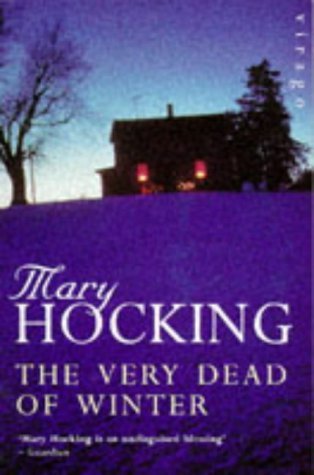
The Very Dead of Winter

I hadn’t heard of Mary Hocking before and have to thank heavenali who hosted a Mary Hocking Week for the discovery.

Here’s what I wrote:

I really liked The Very Dead of Winter are great deal. Not only for its wry humour and psychological insight, but also for some lovely descriptions. It’s not a flawless novel, there are a few instances of shifty point of view, but that didn’t diminish the experience one bit. I’ll certainly read more of Mary Hocking, might even re-read The Very Dead of Winter.

My review
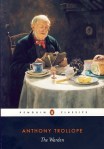
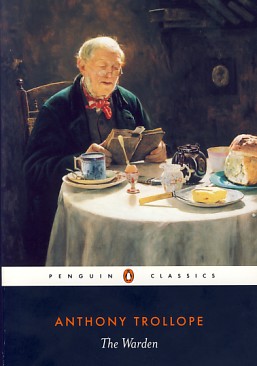
The Warden

After reading Trollope’s The Warden I wasn’t sure whether it would make it on the list but I must admit- it’s a memorable book.

Here’s what I wrote:

Memory is a funny thing. For years I have been haunted by a sensual impression of a place. I remember being in England and walking along a row of houses. It’s a very peaceful, mild, warm autumn afternoon. The houses are part of a larger compound, overshadowed by a huge cathedral. I remember walking away from the cathedral close and coming to a small river that was flowing through the grassy meadow, on the same level as the soil. There were weeping willows and sheep. Walking around that place was like visiting a time long gone. These haunting images returned periodically. The light outside of my windows sometimes triggered the memory. It was always nice to go back in my mind, the only trouble was – I couldn’t remember where this had been. I’ve been in England many times, stayed there for a couple of months or weeks. I’ve visited many places and many cathedrals, but as much as I thought about it – I had no clue where I’d been on that warm autumn afternoon. Not until reading The Warden. The moment I opened the book and read the description of Barchester I knew – this is where I had been. But how could that be? Barchester doesn’t exist. Although I like to keep the introduction of a book until I’ve finished it, I had to read it to find out more. In the introduction I learned that Trollope based Barchester on Salisbury and Winchester. I immediately went online and looked up photos of Salisbury cathedral, the cathedral close and the meadows around and, yes, indeed, that’s where I’ve been some years ago. I found it pretty uncanny that Trollope was so capable at describing a place. I still don’t know why I forgot that the images were images of Salisbury. I’ve never forgotten a place like that. Maybe because it was so dreamlike?

I’m glad I read The Warden. It made me remember my stay at Salisbury and I loved the descriptions. I liked his choice of themes and think they are just as important today as they were then. I also think he’s a wonderful satirist.

My review
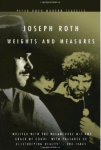
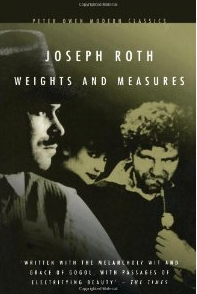
Weights and Measures

This too will stay with me. Joseph Roth’s Weights and Measures – Das falsche Gewicht is such a powerful short novel.

Here’s what I wrote:

How does an upright, steadfast man survive among corruption, hypocrisy, and crime? Roth’s answer to this question, which lies at the heart of Weights and Measures – Das falsche Gewicht, is pretty simple: he doesn’t. Either he is tainted or he will go down.

What I liked most is how Roth used the descriptions of the place and the weather to show Eibenschütz’s emotions and to underline the wild remoteness of this region. There were many beautiful small scenes and episodes. Eibenschütz is upright and stiff, but he’s also very emotional and feels deeply. His life as a soldier sheltered him emotionally; experiencing heartache and passion, unhinges him. When he falls in love he discovers nature. Before his “awakening” nature is just a phenomenon he sees but barely notices. The changing seasons bring rain or snow, breaking ice or sunshine, but that doesn’t affect him. Once he’s “awake” he feels the seasons, feels he’s part of it.

My review
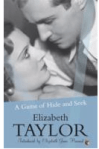
Screen Shot 2014-11-26 at 09.12.22

Elizabeth Taylor’s A Game of Hide and Seek was another winner.

I often read the best books of the year in December. Sometimes they don’t make it on the Top 10 list because I read them so late in the year. Luckily I’ve read Elizabeth Taylor’s fifth novel  A Game of Hide and Seek  just in time. This is my third Elizabeth Taylor novel and every time I read her I’m amazed to find out again how good she is. As much as I liked Blaming and Mrs Palfrey at the ClaremontA Game of Hide and Seek is even better. It’s larger in scope, richer in themes, with many more protagonists, and stretches over decades. The mood and atmosphere reminded me a lot of Rosamond Lehmann’s Dusty Answer and David Lean’s movie Brief Encounter, both of which are favourites of mine.

I’m aware I wasn’t able to capture this book because it contains so many themes (childhood, first love, passion, married life, women’s rights, work, education, memory, growing older . . .) and is so rich— there’s a wonderful, bitter-sweet love story, accurate descriptions of a period, lifelike, flawed characters, and humourous observations. It’s one of the best books I’ve read this year. I even added it to my list of all-time favourite books.

My review

Best Mainstream Fiction
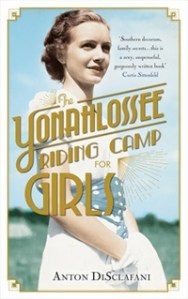
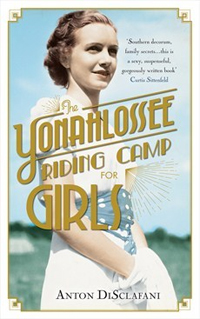
The Yonahlossee Riding Camp for Girls

I read  Anton DiSclafani’s The Yonahlossee Riding Camp for Girls in January but it’s still present as if I’d read it a couple of weeks ago. It’s such a lovely book.

This is what I wrote then

I’m not sure what exactly made me love this book so much. Was it the elegant writing, the dreamy mood, the sense of seeing a long-gone world, the tragedy of the story or the characters?

I loved the way DiScalafani captured the setting and the period. I liked how she showed the end of an era without turning this into a mournful book, but into one that shows that people can free themselves from their stifling upbringing if they are true to themselves. Thea is a character who is true to herself at all times. This comes at a cost but one she’s aware of and willing to pay.

If you like a rich, beautifully told story, with mystery and a lush setting, if you are fascinated by the Great Depression and big Southern Families and enjoy a coming-of-age story, which is at times quite steamy, then I’m pretty sure you’ll love The Yonahlossee Riding Camp For Girls.

Best Crime

It was a great crime reading year. I can’t say I’ve read anything that I didn’t like to some extent, so the choice wasn’t easy but my two favourite books this year were
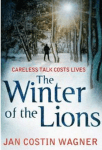
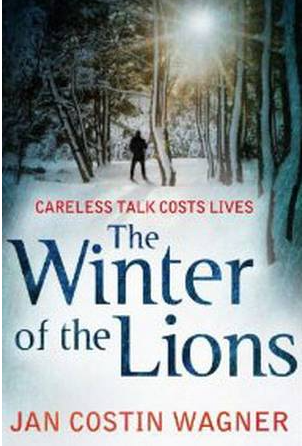
The Winter of the Lions

Jan Costin Wagner was a real discovery this year. I’ve read his first three. They are all good but I only reviewed this one.

Here’s what I wrote:

What made me love Wagner’s books even more was his writing style. This is crime at the literary end of the spectrum. The sentences are short, spare, and very precise.

As if all of this wasn’t enough there’s a haunting atmosphere in every book and the Finnish setting is another bonus, especially since each book takes place during another season. I loved to read about the long nights in winter and the endless days in summer.

Should you wonder why a German author chose to set his books in Finland —Wagner is married to a Finnish woman and spends half of the year in Finland.

This is one of the best crime series I know. Haunting, atmospherical, with philosophical depth and impeccable writing.

My review
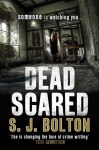
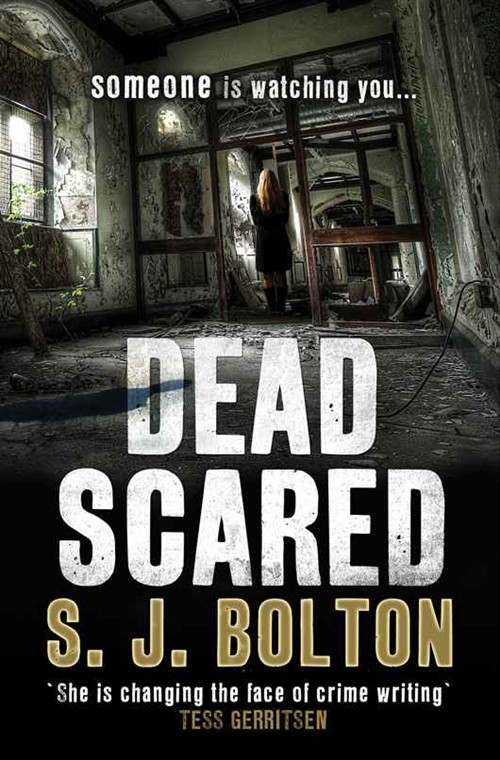
Dead Scared

S.J.Bolton is certainly one of my favourite crime writers and I’ll read all of her books eventually. Still, this was the best so far. I loved it.

Here’s what I wrote

Dead Scared was my third novel by S.J. Bolton. It’s the second novel featuring Lacey Flint and DI Mark Joesbury. I liked Sacrifice and Now You See Me a lot, but I really loved Dead Scared. I think it’s one of my all-time favourite crime novels. It’s got everything I like in a plot-driven crime novel. Great setting, evocative atmosphere, appealing characters, a well-paced plot and a really great story. For once she didn’t even stretch believability all that much.

My review

Best Sci-Fi
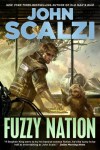
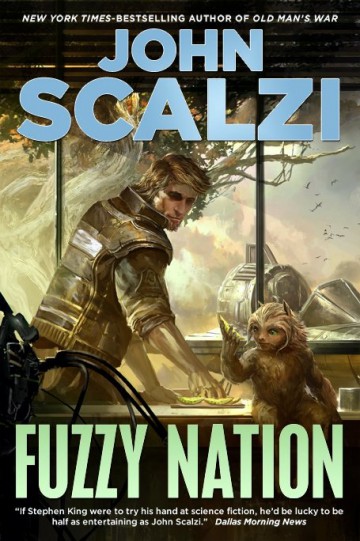
Fuzzy Nation

I loved John Scalzi’s Fuzzy Nation. Funny, entertaining and thought-provoking with one of the best beginnings ever.

Here’s what I wrote:

Fuzzy Nation isn’t only an adventure story, in which cute little animal-people are suddenly in great danger and other people have to make some tough decisions, it’s also an exploration of what makes a human. Is it understanding, intelligence, dexterity, the aptitude to use machines or language? In any case, once you’re declared a sentient being, you have the right to possess things. Before that, everything you own can be taken and destroyed.

 Here’s the review

Best Children’s Book
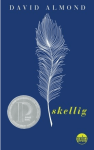
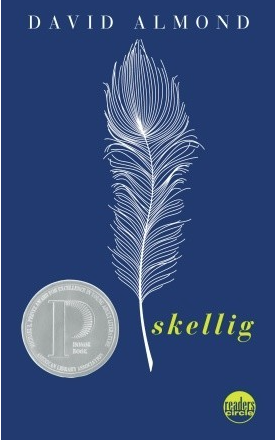
Skellig

I’ve read so many children’s books this year that I didn’t even get the time to review them. Two stood out Diana Wynne Jones’s Fire and Hemlock and David Almond’s Skellig.

Here’s what I wrote about Skellig:

I often think that the best books for children are not just books for a particular age group but timeless tales for any age. Just think of Antoine de St Exupéry’s The Little Prince. It’s a children’s book but it is so much more. And so is Skellig, David Almond’s wondrous, lyrical novel of love and healing.

Skellig is such a magical book. Lyrical, spiritual and philosophical, but very realistic too. It’s an elusive book, that is hard to describe without breaking its spell. It’s a story of love and loss, grief and joy, inspired by tales of angels, the evolution of birds and William Blake. Every reader interprets Skellig in another way. After I finished it I’m still not sure what Skellig is but it doesn’t matter. It’s enough to feel how inspired David Almond was when he wrote this novel. Skellig is pure magic; an image, a deeply haunting feeling, that carries a truth that predates words. I think it took courage to write a book like this and to leave so many questions unanswered. David Almond seems to have been sure that even if we didn’t “get it” intellectually, we would still be able to understand it on an emotional level. I really love that.

And the review

Best Non-Fiction
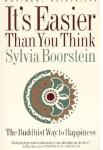
It's Easier Than You Think

It’s Easier Than You Think by Sylvia Boorstein.

I didn’t review it but it made a huge impression on me. Especially the parts about impermanence. I told all of my friends about it, urging them to read it.