Literature and War Readalong 2012

People have been announcing their challenges and events for 2012 for a while now so it was about time to let you see the list for next year’s Literature and War Readalong.

It was not easy to compile this list as the books needed to fulfill different criteria one of which was length. I didn’t want to include too many books over 300 pages. The only novel over 500 pages will make up for its length by being very readable.

The other criterion was the country. Like last year, I wanted to include books from as many different countries as possible. I know it looks as if there were more British books than anything else which is true, still I managed to include books from 8 different countries.

I will also join Anna and Serena for the War Through the Generations Challenge that is dedicated to WWI this year. My introductory post is due later this week. The first three novels in the readalong will also count for their challenge.

I have been asked whether it is possible to join but read something different. Since strictly speaking a readalong implies that people read and discuss the same book, it’s difficult but as I’m starting a Literature and War Project I thought of a good solution that will serve anyone who wants to join –  myself as well as I may be in the mood to read more than one novel focusing on war. The idea would be that anyone can join during the last week of the month and either participate in the readalong or review any other war themed book that will then be added to the project page. The objective of the page is to cover many different countries, wars, themes and even genres. For the War Through the Generations Challenge I will for example read a children’s book and maybe a crime novel set in the trenches. Next year I would also like to read a Sci-Fi novel like Joe Haldeman’s The Forever War that has been suggested by Max from Pechorin’s Journal. And finally I would like to read more non-fiction.

This year’s readalong will not always take place on Fridays but alternate between Monday and Friday depending on whether the Friday is during the last week of the month or not.
January, Monday  30

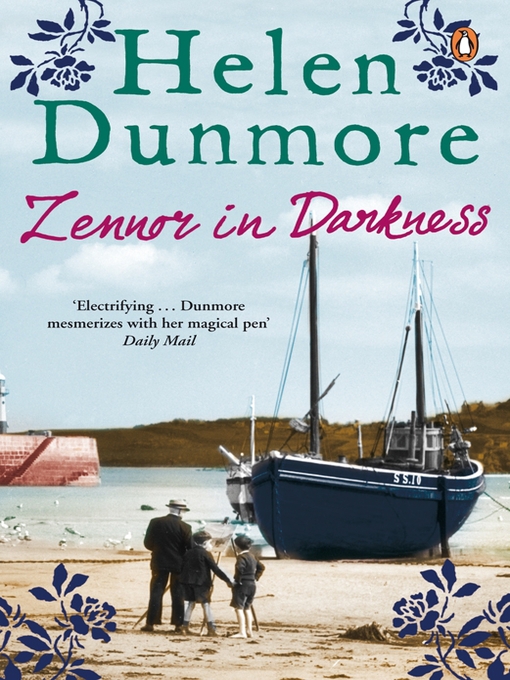
Helen Dunmore Zennor in Darkness , 320 p., England (1993), WWI

Spring, 1917 and war haunts the Cornish coastal village of Zennor: ships are being sunk by U-boats, strangers are treated with suspicion, and newspapers are full of spy-fever. Into this turmoil come DH Lawrence and his German wife Frieda, hoping to escape the war-fever that grips London. They befriend Clare Coyne, a young artist, struggling to console her beloved cousin John William who is on leave from the trenches and suffering from shell shock. Yet the dark tide of gossip and innuendo means that Zennor is neither a place of recovery nor of escape …
February, Monday 27

Sebastian Barry: A Long Long Way , 295 p.,  Ireland (2005), WWI

I discovered the book thanks to a comment from Danielle (A Work in Progress)

One of the most vivid and realised characters of recent fiction, Willie Dunne is the innocent hero of Sebastian Barry’s highly acclaimed novel. Leaving Dublin to fight for the Allied cause as a member of the Royal Dublin Fusiliers, he finds himself caught between the war playing out on foreign fields and that festering at home, waiting to erupt with the Easter Rising. Profoundly moving, intimate and epic, A Long Long Waycharts and evokes a terrible coming of age, one too often written out of history.
March, Friday 30

Jean Giono:  Le grand troupeauTo the Slaughterhouse 224 p., France (1931), WWI

Conscription reaches into the hills as the First World War come to a small Provençal community one blazing August. Giono’s fiercly realistic novel contrasts the wholesale destruction of men, land and animals at the front with the moral disintegration of the lonely and anxious people left behind. Yet not all is despair. The novel ends with a message  of hope.

April, Monday 30

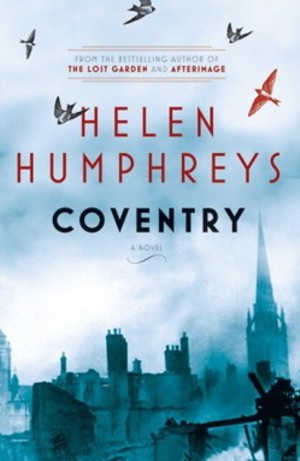
Helen Humphreys: Coventry,172 p., England (2008), WWII

Another book discovered thanks to Danielle (here)

On the night of the most devastating German raid on Coventry, two women traverse the city and transform their hearts. Harriet, widowed during WWI, is “”firewatching”” on the cathedral roof when first the factories and then the church itself are set ablaze. In the ensuing chaos she helps a young man, who reminds her of the husband she has lost, find his way back home where he left his mother.
May, Monday 28th

Nigel Balchin: Darkness Falls From The Air, 208 p., England (1942), WWII

I owe the discovery of Balchin to Guy (His Futile Preoccupations) who reviewed two of his books here and  here.

With ostentatious lack of concern, Bill Sarratt, his wife and her lover spend the war wining and dining expensively, occasionally sauntering out into the Blitz with cheerful remarks about the shattered night-life of London’s West End. But beneath the false insouciance lies the real strain of a war that has firmly wrapped them all in its embrace. Wit may crackle at the same pace as buildings burn, but personal tragedy lurks appallingly close at hand.
June, Friday 29

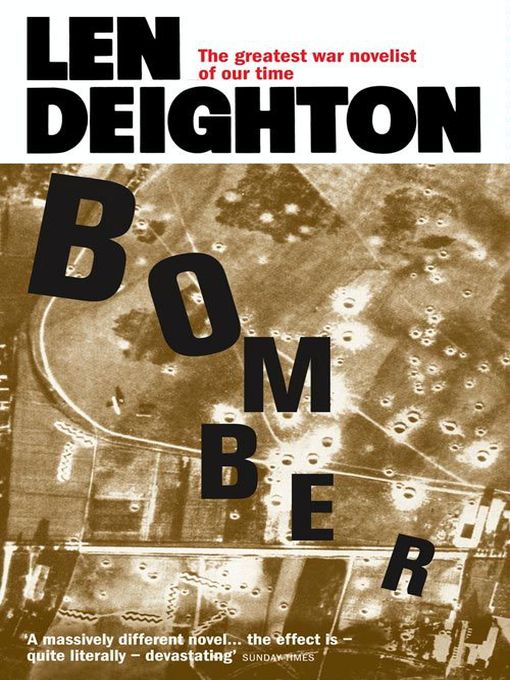
Len Deighton:  Bomber, 532 p., England (1970), WWII

This book is a suggestion from Kevin (The War Movie Buff). It is by far the longest on the list but it should be a very quick read.

The classic novel of the Second World War that relates in devastating detail the 24-hour story of an allied bombing raid.

Bomber is a novel war. There are no victors, no vanquished. There are simply those who remain alive, and those who die.Bomber follows the progress of an Allied air raid through a period of twenty-four hours in the summer of 1943. It portrays all the participants in a terrifying drama, both in the air and on the ground, in Britain and in Germany.In its documentary style, it is unique. In its emotional power it is overwhelming.Len Deighton has been equally acclaimed as a novelist and as an historian. In Bomber he has combined both talents to produce a masterpiece.

July, Monday 30

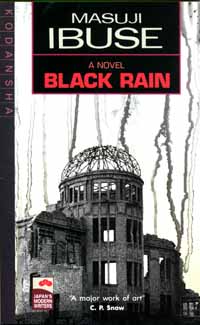
Masuji Ibuse: Black Rain – Kuroi Ame, 304 p., Japan (1969), WWII

I saw the book mentioned on Rise’s blog (in lieu of a field guide) where is was mentioned by Gary (The Parrish Lantern)

Black Rain is centered around the story of a young woman who was caught in the radioactive “black rain” that fell after the bombing of Hiroshima. lbuse bases his tale on real-life diaries and interviews with victims of the holocaust; the result is a book that is free from sentimentality yet manages to reveal the magnitude of the human suffering caused by the atom bomb. The life of Yasuko, on whom the black rain fell, is changed forever by periodic bouts of radiation sickness and the suspicion that her future children, too, may be affected.

lbuse tempers the horror of his subject with the gentle humor for which he is famous. His sensitivity to the complex web of emotions in a traditional community torn asunder by this historical event has made Black Rain one of the most acclaimed treatments of the Hiroshima story.


August, Friday 31

Aaron Applefeld: The Story of a Life – Sippur chajim, 208 p., Israel (1999), WWII

Aharon Appelfeld was the child of middle-class Jewish parents living in Romania at the outbreak of World War II. He witnessed the murder of his mother, lost his father, endured the ghetto and a two-month forced march to a camp, before he escaped. Living off the land in the forests of Ukraine for two years before making the long journey south to Italy and eventually Israel and freedom, Appelfeld finally found a home in which he could make a life for himself. Acclaimed writer Appelfeld’s extraordinary and painful memoir of his childhood and youth is a compelling account of a boy coming of age in a hostile world.

September, Friday 28

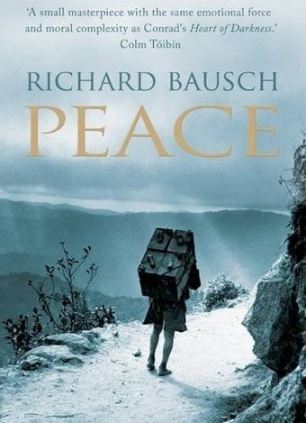
Richard Bausch: Peace, 171 p., US (2008), WWII

This was a suggestion from Sandra Rouse in a comment on one of this year’s readalong posts. 

It’s Italy, near Cassino. The terrible winter of 1944. A dismal icy rain falls, unabated, for days. Three American soldiers set out on the gruelling ascent of a perilous Italian mountainside in the murky closing days of the Second World War. Haunted by their sergeant’s cold-blooded murder of a young girl, and with only an old man of uncertain loyalties as their guide, they truge on in a state of barely suppressed terror and confusion. With snipers lying in wait for them, the men are confronted by agonizing moral choices…Taut and propulsive – Peace is a feat of economy, compression, and imagination, a tough and unmistakably contemporary meditation on the corrosiveness of violence, the human cost of war, and the redemptive power of mercy.
October, Monday 29

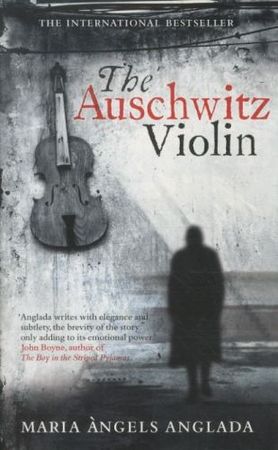
Maria Angels Anglada The Auschwitz Violin – El violí d’Auschwitz, 128 p., Spain (1994), WWII

In the winter of 1991, at a concert in Krakow, an older woman with a marvelously pitched violin meets a fellow musician who is instantly captivated by her instrument. When he asks her how she obtained it, she reveals the remarkable story behind its origin.

Written with lyrical simplicity and haunting beauty—and interspersed with chilling, actual Nazi documentation—The Auschwitz Violin is more than just a novel: It is a testament to the strength of the human spirit and the power of beauty, art, and hope to triumph over the darkest adversity.

November, Friday 30

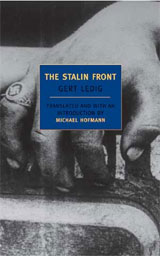
Gert Ledig The Stalin Front  –  Die Stalinorgel , 198 p., Germany (1955), WWII

1942, at the Eastern Front. Soldiers crouch in horrible holes in the ground, mingling with corpses. Tunneled beneath a radio mast, German soldiers await the order to blow themselves up. Russian tanks, struggling to break through enemy lines, bog down in a swamp, while a German runner, bearing messages from headquarters to the front, scrambles desperately from shelter to shelter as he tries to avoid getting caught in the action. Through it all, Russian artillery—the crude but devastatingly effective multiple rocket launcher known to the Germans as the Stalin Organ and to the Russians as Katyusha—rains death upon the struggling troops.
December, Friday 28

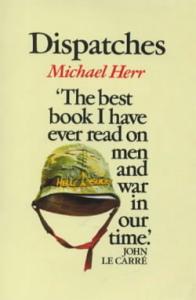
Michael Herr: Dispatches, 262 p., US (1977) Vietnam

This novel has been suggested by at least three people. Kevin (The War Movie Buff) and Max (Pechorin’s Journal)

If you’ve seen the movies Apocalypse Now and Platoon, in whose scripts Michael Herr had a hand, you have a pretty good idea of Herr’s take on Vietnam: a hallucinatory mess, the confluence of John Wayne and LSD.Dispatches reports remarkable front-line encounters with an acid-dazed infantryman who can’t wait to get back into the field and add Viet Cong kills to his long list (“I just can’t hack it back in the World”, he says); with a helicopter door gunner who fires indiscriminately into crowds of civilians; with daredevil photojournalist Sean Flynn, son of Errol, who disappeared somewhere inside Cambodia. Although Herr has admitted that parts of his book are fictional, this is meaty, essential reading for anyone who wants to understand Vietnam.

I hope that many of you will feel tempted by the one or the other title on the list and am looking forward to great discussions. The books are all very different in tone, style and themes. As always there are a some I can hardly wait to read.

*******

How does the readalong work?

This is just a quick info for those who are new to blogging and /or the readalong.

I will review the book on a set date during the last week of the month. If you choose to read along you can either participate in the discussion in the comments page or post a review on your blog. I will add all the links to the reviews at the bottom of my posts.

The books are usually announced with some additional information or a short introduction at the beginning of the month.

*******

This post will be copied into the Literature and War Redalong 2012 page so you can find it again at any time.
Literature and War Readalong December 30 2011: Cold Mountain by Charles Frazier

While I’m busy collecting the titles for next year’s Literature and War Readalong I should not forget to make you aware that there is still one more book on the list for 2011. Initially I had chosen two books on the US Civil War but German Literature Month made me remove The Killer Angels from the list.

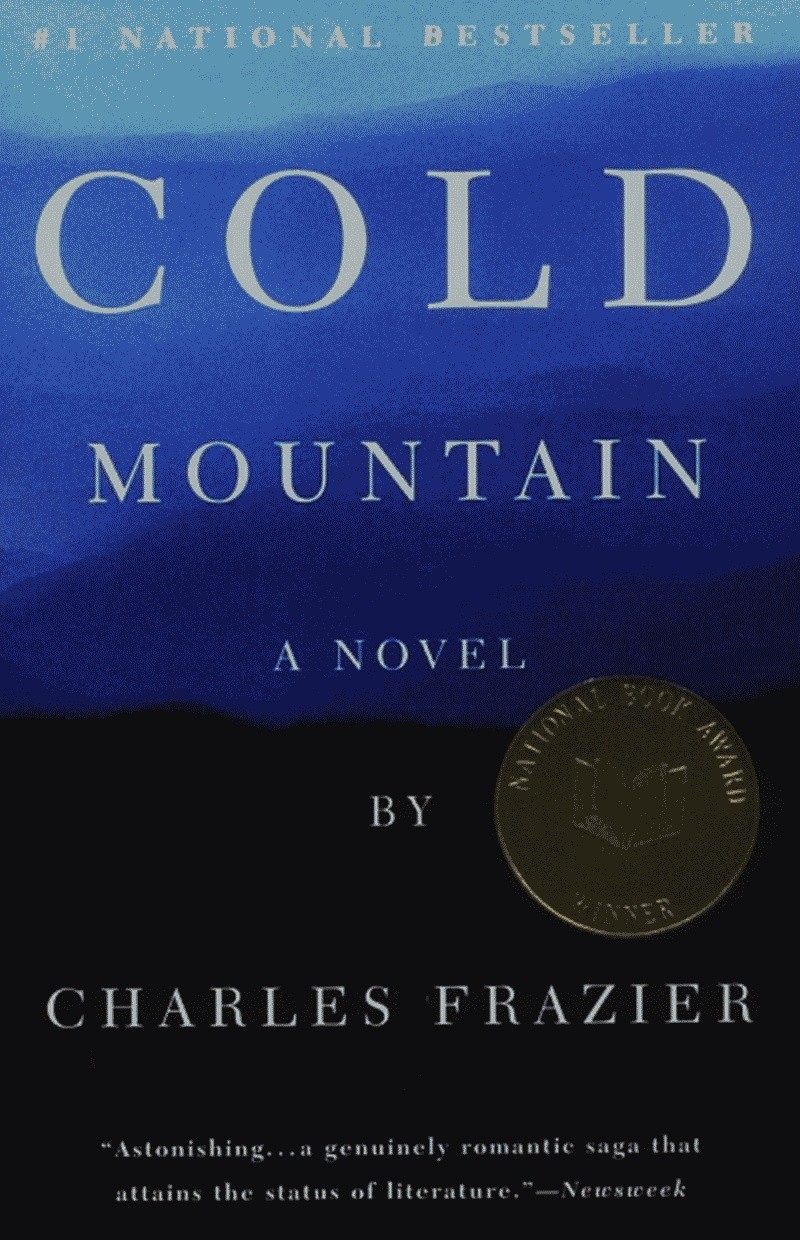
This year’s last readalong title is Charles Frazier’s Cold Mountain. I’ve watched the movie a while back but don’t remember all that much apart from a stunning cinematography. I’ve heard a lot of good things about the novel and especially the friendship between the two women is said to be very compelling so I’m really looking forward to reading it and find out if I will like it or not. For some reason I think it’s a particularly good choice for December.

For those who have no idea what it’s all about and whether or not it’s worth joining here’s the blurb.

Charles Frazier’s debut novel, Cold Mountain, is the story of a very long walk. In the waning months of the Civil War, a wounded Confederate veteran named Inman gets up from his hospital bed and begins the long journey back to his home in the remote hills of North Carolina. Along the way he meets rogues and outlaws, Good Samaritans and vigilantes, people who help and others who hinder, but through it all Inman’s aim is true: his one goal is to return to Cold Mountain and to Ada, the woman he left behind. The object of his affection, meanwhile, has problems of her own. Raised in the rarified air of Charleston society, Ada was brought to the backwoods of Cold Mountain by her father, a preacher who came to the country for his health. Even after her father’s death, Ada remains there, partly to wait for Inman, but partly because she senses her destiny lies not in the city but in the North Carolina Blue Ridge.

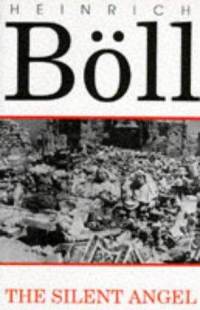
Heinrich Böll: The Silent Angel – Der Engel schwieg (1951) Literature and War Readalong November 2011 Meets German Literature Month

Written between 1949 – 1951 Der Engel schwieg  or The Silent Angel is unique in many ways. Unique for German literature but also in Böll’s work. I have already written about it in my post on Sebald’s The Natural History of Destruction. Böll’s novel, which is one of the rare to depict a German city after the massive bombings by the Allies, had to wait 40 years for its publication. For this reason many of the chapters have been re-used in other books and if you are familiar with Böll the one or the other scene or description may appear familiar. All the important themes of Böll’s work can already be found here. Criticism of post-war Catholicism, compassion with those who have nothing, with those who suffer. His books often circle around the same elements, motives and themes and although he doesn’t always use the same style, this gives the impression of a very organic work that, read in its entirety, gives an excellent panorama of Post-war Germany.

The Silent Angel is one of the most important works of the so-called “Trümmerliteratur” (the literature of the ruins). The story as such can be told in a few sentences. It’s May 8 1945. Hans, a deserter, returns from the war without a passport. He tries to find the woman of a comrade who died instead of him. While walking the bombed and destroyed city he meets a woman who lives in an appartment in a house that is almost a ruin. He feels a strong connection to her and asks her if he can stay with her. She has lost her baby in an air raid, his wife has died as well and so, like two castaways, they are stranded together in this apartment. At first they both envy those who died but slowly they find their way back to love, hope and some kind of livable future.

It isn’t said but we know that the city which is described is Köln, Böll’s hometown. The description of the despair of the people, how tired they are physically and psychologically is impressive. The way he depicts their struggle to find bread, their fight to survive in those ruins is powerful. There is one scene in which Hans tries to visit someone and to walk a distance which used to take him ten minutes, he takes an hour because of  all the debris and the rubble. As I said before, Catholicism is an important theme in Böll’s work and in this novel, in which the greed of some Catholics is shown in all its ugliness, the description of the bombed churches becomes a very significant additional meaning.

What impressed me the most apart from the descriptions of the ruined city is how tired these people are. They spend days and days on end in their beds, staring at their walls. Finding something to eat, moving about the city, coming to terms with was has happened, takes an unimaginable effort, drains them of all their energy. All they have left is exhaustion.

This must sound very depressing but Böll isn’t only a writer of despair. He describes hopelessness but his characters overcome it, they find hope and the courage to go on living. The negative people have their positive counterparts. The greedy Dr. Fischer who doesn’t care for anything but money and for whom Catholic artifacts are just collectible items finds his counterpart in the gentle priest who helps Hans. The priest is the embodiment of a pure, compassionate Catholicism.

I was wondering while reading The Silent Angel whether I thought it was well written. I think he could have improved the structure, some passages read like short stories, some elements could have been left out, all in all it feels a bit loose at times which isn’t the case in his later work. His later novels are much more condensed but Böll has a gift for description which is rare. And he represents a rare model of moral integrity, he is an author who wrote for those who have nothing, who tried to unmask hypocrisy and uncover everything that was fake and phony in post-war Germany. I don’t know all that many authors who are so humane.

I have read The Silent Angel before. It isn’t my favourite Böll novel but since it’s an excellent example of “Trümmerliteratur” it seemed a great choice for the readalong. I’m very interested to know what others thought of this book.

Other reviews

Christina (Ardent Reader)

Danielle (A Work in Progress)

Fay (Read, Ramble)

Lizzy (Lizzy’s Literary Life)

Rise (in lieu of a field guide)

Tony (Tony’s Reading List)

Literature and War Readalong November 2011 Meets German Literature Month: The Silent Angel by Heinrich Böll

I’m not sure all those who follow me for the Literature and War Readalong did notice that there was a change of title. It just didn’t feel right to read an American author depicting the Civil War during German Literature Month. This means The Killer Angels are postponed (?).

The choice for this month’s readalong is Heinrich Böll’s The Silent Angel aka Der Engel schwieg. This novel, by my favourite German writer, is a unique book. I will explore this in more detail in Thursday’s post on Sebald’s Luftkrieg und Literatur aka On the Natural History of Destruction.

Here’s the blurb for Silent Angel

The first novel by the Nobel prize winner, never previously published. Written at the end of the Second World War it describes the death and destruction faced by the people of a city ravaged by war.

The readalong is not taking place on Friday but on Saturday 26 November. Anyone who wants to participate just leave a link in the comments section of my post, I will then add it to my post. Those who have no blogs are welcome to leave longer comments or send me an e-mail with their thoughts before Saturday and I will add them to my post. Should anyone prefer questions instead of freestyle, let me know. I could send out questions but give me time until Wednesday 23 November.

Watch out for Wednesday’s giveaway…

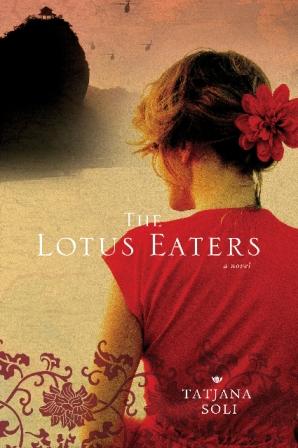
Tatjana Soli: The Lotus Eaters (2010) Literature and War Readalong October 2011

Soli’s debut revolves around three characters whose lives are affected by the Vietnam War. Helen Adams comes to Vietnam in the hopes of documenting the combat that took her brother from her. She immediately attracts the attention of the male journalists in the region, and quickly falls into an affair with the grizzled but darkly charismatic war photographer Sam Darrow. As Helen starts to make her own way as a photographer in Vietnam, drawing as much attention for her gender as for her work, Darrow sends her his Vietnamese assistant, Linh, a reluctant soldier who deserted the SVA in the wake of his wife’s death. While Linh wants nothing more than to escape the war, Darrow and Helen are consumed by it, unable to leave until the inevitable tragedy strikes. The strength here is in Soli’s vivid, beautiful depiction of war-torn Vietnam, from the dangers of the field, where death can be a single step away, to the emptiness of the Saigon streets in the final days of the American evacuation.

For one reason or the other I had a hard time getting into this novel. I struggled for almost 100 pages but all of a sudden I was hooked, fascinated and almost entranced. And I wanted to talk about it. I don’t always feel the urge to talk about what I’m reading but with this book, I felt it because the topics Soli chose are still as conflicting and important today, during any war, as they were at the time, in Vietnam.

The book starts in 1975 with the fall of Saigon and then switches back to 1963 and the moment when the young photojournalist Helen Adams arrives in Vietnam to cover the war. Helen is keen, eager and ambitious and a sensation as she is one of the first women photographers to want to cover a war.

Helen’s character is complex and interesting and through her we see the fascination and problems of this dangerous profession. Helen’s character is based on the stories of real photographers, one of them Dickey Chapelle, one of the first female war photographers who was killed in action.

There aren’t many professions that I find as problematic as war photographer and the novel does a fantastic job at letting us look into their world.

Helen knows from the start that if she wants to become a famous photographer, shoot interesting pictures, she must follow the men into combat. This is not only dangerous, it’s also voyeuristic because the photographers take pictures of everything. Dying soldiers, executed Vietnamese, piles of bodies, screaming children, in short, people during their final moments. They often wonder whether they are more than just vultures, whether it is justified to do what they are doing. On the other hand they get addicted to the high they experience in the heat of the action and the exhilaration that follows an incredible shot that will go on the cover of a magazine and will be seen by the whole word.

Helen and the others constantly oscillate between two states of mind, the selfish drive and the urge to help and reveal to the world what is going on. It seems as if this was a very addictive job and when the novel nears the end and at the same time the end of the war, there is a feeling in the air as if a party was over.

The danger cannot be underestimated. Not only the soldiers, whom Helen gets to like, are killed, many fellow photographers lose their lives as well. One could say the better the picture, the more dangerous the situation was for everyone involved and especially for the subjects.

An older woman from the group, a mother or aunt, screamed and ran forward toward the alcove, and one of the soldiers shot her. Captured on film. The curse of photojournalism was that a good picture necessitated the subject getting hurt or killed.

I was wondering why I always find it much more problematic when someone shoots a photo of a wounded or dying person but have far less of a problem when a reporter only tells or writes about it. Maybe because the dying people lose their privacy. In order to get a good shot, the photographer needs to focus on the pain, to invade the space of the other.

A the heart of The Lotus Eaters is a complex love story or rather the story of a love triangle. I was far less interested in that aspect of the book and that’s maybe why I didn’t like the beginning so much as it focuses a lot on that story line.

Soli manages to give a good feeling for the war. She captures how the war and its perception changed over time, shows how different its meaning was for those abroad, the Americans and Europeans who lived in Vietnam,  as well as for the Vietnamese people. In the beginning the presence of the French can still be felt.

The Americans called it “the Vietnam war”, and the Vietnamese called it “the American war” to differentiate it from “the French war” that had come before it, although they referred to both wars as “the Wars of Independence”. Most Americans found it highly insulting to be mentioned in the same breath with the colonial French.

The descriptions of the city, the country and the jungle are vivid and evocative. For that alone the book is worth reading. I equally liked how she managed to show what it meant for women to cover war. There are no women soldiers and when the female photographers follow a group into combat, they are the only women present which was problematic as well. There were sexual tensions and the fact that the men felt responsible for the women, furthermore they didn’t want to be seen injured or wounded by women.

When Helen goes back to the US for a while, in the late 60s, she tries to make people understand why she does this job. Helen explores her reasons very often and at one point she has to admit it is also because she excels at what she is doing.

“I just went as a lark. It turned into something else. What do you do if you have a hazardous talent, like riding over waterfalls in a barrel? A talent dangerous to your health?” After the question came out of her mouth, she felt embarrassed.

I’m glad I read The Lotus Eaters.  It has many beautiful passages and is very thought-provoking. It gives an in-depth view of one of the most dangerous professions without giving any easy answers. It’s up to the reader whether he thinks they are purely adrenaline addicted vultures or whether they are doing a heroic and admirable job.

I often wonder whether we need those pictures. Do we need to see the horror in detail, up close? Does it help stop wars? In one instance Helen says that every good war picture is an anti-war picture. Is that true and does it justify what they are doing?

I’m curious to hear what others thought.

Other reviews:

Anna (Diary of an Eccentric)


Danielle (A Work in Progress)

Serena (Savy Verse & Wit)

Literature and War Readalong October 28 2011: The Lotus Eaters by Tatjana Soli

lotus-eaters

Tatjana Soli’s The Lotus Eaters is another novel on the war in Vietnam that has received a lot of positive reviews. It cannot be called a classic as it only came out last year. So of all the books of this readalong it is by far the most recent. I really don’t know all that much about it and will therefore just add the blurb that should help you decide whether you’d like to read along or not.

As the fall of Saigon begins in 1975, two lovers make their way through the streets, desperately trying to catch one of the last planes out. Helen Adams, a photojournalist, must leave behind a war she has become addicted to and a devastated country she loves. Linh, her lover, must grapple with his own conflicting loyalties to the woman from whom he can’t bear to be parted, and his country.

Betrayal and self-sacrifice follows, echoing the pattern of their relationship over the war-torn years, beginning in the splendour of Angkor Wat, with jaded, cynical, larger-than-life war correspondent Sam Darrow, Helen’s greatest love and fiercest competitor, driven by demons she can only hope to vanquish.

Spurred on by the need to get the truth of the war out to an international audience, and the immense personal cost this carries, Sam and Helen’s passionate and all-consuming love is tested to the limit. This mesmerising novel carries resonance across contemporary wars with questions of love and heart-breaking betrayal interwoven with the conflict.

After having been so impressed by Tim O’Brien’s book I think I will explore more literature on the war in Vietnam in the future and I’m looking forward to read Soli’s novel.

Tim O’Brien: The Things They Carried (1990) Literature and War Readalong September 2011

A sequence of stories about the Vietnam War, this book also has the unity of a novel, with recurring characters and interwoven strands of plot and theme. It aims to summarize America’s involvement in Vietnam, and her coming to terms with that experience in the years that followed.

I expected The Things They Carried to be a very good book. A very good book about the war in Vietnam. What I found is not only an outstanding book about the war in Vietnam but also about the art of storytelling. I’m really impressed. I don’t normally rely so heavily on quotes but in this case, I think, the author is the best person to give an accurate impression of his excellent writing.

But this too is true: stories can save us. I’m forty-three years old, and a writer now and even still, right here, I keep dreaming Linda alive. And Ted Lavender, and Kiowa, and Curt Lemon, and a slim young man I killed, and several others whose bodies I once lifted and dumped into a truck. They’re all dead. But in a story which is a kind of dreaming, the dead sometimes smile and sit up and return to the world. (…) The thing about a story is that you dream it as you tell it, hoping that others might then dream along with you, and in this way memory and imagination and language combine to make spirits in the head.

The Things They Carried is told in interwoven stories. They are linked through the characters who return in most of them and through the common themes of war and storytelling. Each of the tales shows another way of telling a story or looks at an episode from another angle. Some are explicitly written by a writer for his readers only, they have never been told before. Some describe how the soldiers tell each other stories of what happened while they were separated or how they keep on retelling the same stories over and over again. Telling these stories gives meaning and is also liberating and healing. Those who cannot tell stories, those who are shut up by what they saw, those are bad off.

What is so fascinating about this book is that you can just read it like a series of linked episodes or you can read each episode as an attempt to tell the story another way.

One of the most powerful chapters is certainly the first, the one that gave the book its title. Through the enumeration of the things the soldiers carry, we get to know the soldiers, we sense that some of them will die and some will be wounded. As we learn later many of the young men O’Brien served with and who are introduced too us in this first chapter, die. Some through enemy fire, some in accidents. Some deaths are heroic, others are ridiculous, like Kiowa’s who got shot and then suffocated in a field full of shit. What impressed me in this story is the description of the stress, the weight they had to lift, the endless walking.

They moved like mules. By daylight they took sniper fire, at night they were mortared, but it was not battle, it was just the endless march, village to village, without purpose, nothing won or lost.

We learn a lot about the feeling of having been in a war and in this particular war. We hear about the state of mind of the soldiers and what war did to them. There are some chapters that made me feel uncomfortable like the one of a young soldier’s girlfriend who stayed with them a few weeks, joined the Green Berets and ultimately disappeared in the night, swallowed by the war. She got addicted to the feeling of danger and the heightened sense of being alive that went with it. This is fascinating and also unsettling.

I have read other accounts of men who went to war, I know my own father’s stories but they sound different which leads me to the conclusion that some experiences were typical for the soldier in Vietnam.

The average age in our platoon, I’d guess, was nineteen or twenty, and as a consequence things often took on a curiously playful atmosphere, like a sporting event, at some exotic reform school. The competition could be lethal, yet there was a childlike exuberance to it all, lots of pranks and horseplay.

At the end of the book you have the whole story of Tim O’Brien’s time in Vietnam. From the day when he got the letter that informed him that he was drafted, to the first days in Vietnam, all through the weeks that passed, all the things that happened, the friends he found, the friends he lost and how he ended up feeling like an outcast because he was sent away from his company after he was wounded and had to do some light duty in another camp. Maybe not all of this is true, as O’Brien writes, but a lot of what is made up is closer to what really happened than that what is just the plain unadorned truth.

Here is my favourite quote:

A true war story is never moral. It does not instruct, nor encourage virtue, nor suggest models of proper human behavior, nor restrain men from doing the things they have always done. If a story seems moral, do not believe it. If at the end of a war story you feel uplifted, or you feel that some small bit of rectitude has been salvaged from the larger waste, then you have been made the victim of a very old and terrible lie. There is no rectitude whatsoever. There is no virtue. As a first rule of thumb, therefore, you can tell a true war story by its absolute and uncompromising allegiance to obscenity and evil.

The Things They Carried is fascinating and powerful. Writing at its very best.

I hope others have read it as well and liked it as much. I would also like to hear how it compares to Matterhorn.

Other reviews

Anna (Diary of an Eccentric)

Danielle (A Work in Progress)

Silver Season