German Literature Month Week III Wrap-up and The Winners of the Friedrich Glauser Giveaway

When I did the wrap up for the first week I was amazed about the contributions and thought that the enthusiasm might die down further into the month. I’m glad I was wrong with this assumption. The number of reviews and the variety of authors and books that have been chosen is as great as during week I and II. I would really like to thank all of you who contributed and help making this event a huge success.

The complete links and participants list can be found HERE.

Lizzy contributed two posts, one in which Publisher’s and Authors recommend their favourite German books and the other is a review of Julya Rabinowich’s Splithead which sounds like a most unusual book.

The Magic Mountain of German Literature 3 (Publisher and Author Recommendations)

Splithead by Julya Rabinowich

I reviewed a short story collection by Peter Stamm that I liked a lot and also reviewed Vicki Baum’s classic bestseller Grand Hôtel. While it isn’t as refined as Joseph Roth’s Hotel Savoy it is still a surprisingly interesting and character driven book.

In Strange Gardens and Other Stories by Peter Stamm

Grand Hôtel – Menschen im Hotel by Vicki Baum

Danielle (A Work in Progress) reviewed The Murder Farm by Andrea Maria Schenkel which she found a fascinating and unusual crime story in the vein of Capote’s In Cold Blood.

Emma (Book Around the Corner) read Short Stories by Stefan Zweig. The stories had all a historical theme. She did enjoy it but maybe not as much as his non-historical stories.

Ted (BookeyWookey) read The Artificial Silk Girl by Irmgard Keun and liked it a lot. The review captures the frothy playful tone that covers a dark undercurrent very well. The many quotes included in the review give a good impression of the novel (a favourite of mine).

Grace (Books Without Any Pictures)  re-read The Trial by Kafka which she thinks a most unusual and absolute must-read book. She likes it better than most of his short stories.

Richard (Caravana de Recuerdos) read Doctor Faustus by Thomas Mann after having been urged by a few people. He appreciated it a lot but liked it more for its ideas than its style. His review gives an excellent impression of the many interwoven themes of this complex book.

Jackie (Farm Lane Books) came to the conclusion that neither Jelinek’s Piano Teacher nor Grass’ The Tin Drum are to her liking. On Jelinek’s the Piano Teacher and Grass’ The Tin Drum. Judging from the comments, she is far from alone.

Guy (His Futile Preoccupations) read and reviewed Where Do We Go From Here? by Doris Dörrie which seems to have been a very good read, in typical Dörrie style “With piercing wit and a generous view of human nature.” Guy also read and reviewed  The Snowman by Jörg Fauser. A cult classic of gritty German crime which – to quote Guy – “is strongest in its depiction of the seedy underbelly of life –the cheap hotels, the filthy toilets (…).  There’s an intense authenticity to these scenes, and a sour truth to Fred’s realization that he’s small-time for a reason.”

Rise (in lieu of a field guide ) underlined in his review of Rock Crystal by Adalbert Stifter how crystal clear Stifter’s prose is. A captivating story written in a flawless style, concrete and precise like poetry, as he writes.

Fay (Read, Ramble) read Poems by Rilke which impressed her or in her own words “One reading of selected poems gives a sense of striking imagery and intense artistic purpose but not enough mastery of Rilke’s art to make further commentary worthwhile. Rilke is a poet who deserves several careful readings. All I know is that the more I came to know Rilke’s voice, the better I liked him, after a hesitant start. It is a voice to listen to again.”

Rikki (Rikki’s Teleidoscope) read Maybe This Time by Alois Hotschnig in German. She writes “I read this is German and I don’t think I have ever come across a writer who writes in such a precise way and who conjured such a clear picture of what is going on.”

Scott W. (seraillon) reviewed  Beautiful Days – Schöne Tage by Franz Innerhofer. In his in-depth review he writes about the unusual combination of a seemingly cheerful title with the topic of child abuse. The book seems to be well worth reading, complex and arresting.

Priya (Tabula Rasa) liked Hotel Savoy by Joseph Roth a lot and recommends it highly.

Alex (The Children’s War) rediscovered and reviewed an old children’s classic Emil and the Detectives by Erich Kästner and reviewed A Song For Summer by Eva Ibbotson. Ibbotson’s book offers a wide variety of unusual, typical Ibbotoson characters and despite a WWII topic stays light and hopeful.

Parrish (The Parrish Lantern)  introduced a great book on German poetry, including authors like Else Lasker-Schüler as well as Jan Wagner. The Faber Book of 20th Century German Poems. He included the whole list of poets, a poem by Elke Erb and a lot of other information.

Anthony (Time’s Flow Stemmed) calls Old Masters by Thomas Bernhard a flawless book. It seems also a very interesting book and one that was echoed by two other reviews (in lieu of a filed guide and seraillon). Bernard’s character criticizes Austrian art and artists, among them Stifter. The book could be called a rant but Anthony chooses to call it a tirade.

Tony (Tony’s Reading List) What happens when someone reads Kafka’s The Castle and participates in German Literature Month? Given he is an imaginative person it might look a little bit like this Das Schloss – The Play Act One  – Das Schloss – The Play Act Two  – Das Schloss – The Play Act Three Das Schloss – The Play (Director’s Cut). Tony writes his own “Castle Play ” and adds a review of Kafka’s book.

Liz (Tortoisebook) liked the sad but beautiful  The Sorrows of Young Werther by Goethe. She says “This book is a lovely read, beautifully told and achingly heartbreaking.”

Vishy (Vishy’s Blog) reviewed the original sheep crime novel Three Bags Full by Leonie Swann which read as if “Agatha Christie had rewritten The Wind in the Willows“.

Poor Daryl (Who Killed Lemmy Caution?) was ill but is recovering. Soon we will read her review of Klausen by Andreas Meier. Review on Its Way

Week three gives us a slightly puzzled Tom (Wuthering Expectations ) who after having read Wedekind’s Spring Awakening during week II thought he had seen the height of Austrian treatment of  sexuality in plays but no – he hadn’t read the La Ronde/Der Reigen by Arthur Schnitzler yet. He was quite amused by the use of … to cover up the ongoing activities and wonders how they handled this during the play.

Effi Briest Readalong

Week III

Andrew

Caroline

Danielle

Eibhlin

Fay 

Iris

Lizzy

Tony

**************

And here are the winners of the Friedrich Glauser giveaway courtesy of Bitter Lemon Press.
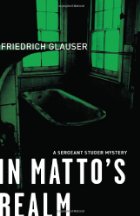
One copy each of In Matto’s Realm goes to

Neer from A Hot Cup of Pleasure and

Richard from Caravana de Recuerdos

Happy reading Neer and Richard!

Please send me your address via beautyisasleepingcat at gmail dot com.

The giveaway is part of German Literature Month.

The next giveaway will take place on Wednesday 23 November 2011.

Wednesdays are wunderbar – It’s Swiss Crime Time – Friedrich Glauser Giveaway

It’s Wednesday again, time for our weekly giveaway. Today’s books by Swiss author Friedrich Glauser have been kindly offered by Bitter Lemon Press.

We can give away 2 copies of his classic crime novel In Matto’s Realm. I know it’s somewhat shameful but I haven’t read Glauser yet that’s why I included the description of the Bitter Lemon Press Glauser Page for you.

Finalist for the 2005 CWA Gold Dagger Award.

A child murderer escapes from an insane asylum in Bern. The stakes get higher when Sergeant Studer discovers the director’s body, neck broken, in the boiler room of the madhouse. The intuitive Studer is drawn into the workings of an institution that darkly mirrors the world outside. Even he cannot escape the pull of the no-man’s-land between reason and madness where Matto, the spirit of insanity, reigns.

Translated into four languages, In Matto’s Realm was originally published in 1936. This European crime classic, now available for the first time in English, is the second in the Sergeant Studer series from Bitter Lemon Press.

Author Information
Friedrich Glauser was born in Vienna in 1896. Often referred to as the Swiss Simenon, he died aged forty-two a few days before he was due to be married. Diagnosed a schizophrenic, addicted to morphine…

The Translator
Mike Mitchell has translated some thirty books, including ‘Simplicissimus’ by Grimmelshausen and all the novels of Gustav Meyrink. He won the 1998 Schlegel-Tieck German translation prize.

If you would like to win one of the books, please leave a comment. The only condition is that you have been participating in German Literature Month, either with comments, posts or reading along. No need to have your own blog.

The giveaway is open internationally, the books will be shipped by the editor. The winner will be announced on Sunday November 20 at 18.00 – European – (Zürich) time.

Wednesdays are wunderbar – It’s Crime Time – Jakob Arjouni Giveaway

Today we have another special treat for you, courtesy of Melville House Press we give away one set of Jakob Arjouni’s Kayankaya series to one lucky winner.

This is a great series and anyone who will win it will surely like it.

The giveaway is part of German Literature Month and  is open internationally but if you would like to enter you have to hop over to Lizzy’s blog where the giveaway is taking place.

Good luck!

German Literature Month Week I Wrap-up and The Winners of the Heinrich Böll Giveaway

This post has two parts. First is the wrap-up of Week I of our German Literature Month – focussing on literature from Germany. Please do not just skip it. It’s a tribute to all our participants. We have already seen some really amazing contributions and I would like to thank all of you for this.

There have been a lot of interesting lists and contributions made during October. They are HERE. This is the wrap-up of Week I.

Here are all of this weeks’ links with my impressions:

Week I

Lizzy has made a post on how to find German books in translation and a review of a very unique sounding book by Alina Bronsky.

The Magic Mountain of German Literature

The Hottest Dishes of the Tartar Cuisine by Alina Bronsky

Caroline – I have compiled a post with 14 women writers that shouldn’t be missed and reviewed Sebald’s book on the absence of the description of the destruction of German cities during WWII from German post-war literature. The book leads us to the Böll readalong on November 26.

14 Women Writers You Shouldn’t Miss

On the Natural History of Destruction – Luftkrieg und Literatur by W. G. Sebald

The Participants

Neer (A Hot Cup of Pleasure) shares her German Literature Month inspired Wishlist.  That’s always a risk with events like this. You may end up with far more books than before.

Christina from Ardent Reader hopes to be able to keep up with her Reading plans.

Danielle (AWork in Progress) introduces her choices. A list with descriptions. Plans for German Literature Month 

Emma (Book Around the Corner) wrote an enthusiastic review of  Fame by Daniel Kehlmann that she calls a “strange exhilarating book”.

sakura (chasing bawa) is thrilled by her discovery of Dark Matter by Juli Zeh  and adds (after having been tracked down by the German Literature Month Police , i.e. me) an Introduction.

Jackie (Farm Lane Books) wrote a very appealing review of the WWII novel Death of the Adversary by Hans Keilson. Not an easy read, highly literary but rewarding.

Guy Savage (His Futile Preoccupations) dethrones Goethe in his musings on  On Goethe’s Elective Affinities and reestablishes him again – at least in parts – in  On Goethe’s Elective Affinities Part II. The review is to follow.

Rise (in lieu of a field guide) reviewed Visitation by Jenny Erpenbeck and compares it to the passage of time chapter in Virginia Woolf’s To the Lighthouse.

Harvey (Leben, Kochen, Bier u. Fussball) offers a list with interesting choices Introduction with choices.

Eibhlin (Mar gheall ar a léim) shares he reading plans in Eibhlin’s reading plans.

Fay (Read, Ramble) reviews  Herta Müller – Land of Green Plums describing how she wanted to give up after a little while but was rewarded by her persistence.

Rikki (Rikki’s Teleidoscope) enjoyed The Hottest Dishes of the Tartar Cuisine by Alina Bronsky as much as Lizzy. She captures the unusual voice of the narrator very well.

Susanna P (Susie Bookworm)  has added her reading plans German Lit Month Kick off. She already read Lotte in Weimar and is about to pick something else soon.

Priya (Tabula Rasa) shares her reading plans Plans.

Alex The Children’s War wrote an in-depth review of The Oppermann’s by Lion Feuchtwanger. He writes  “What makes The Oppermanns so interesting is that it has the distinction of being the first story of its kind to tell about life under the Nazis and how it affected people opposed to Hitler.”

Parrish (The Parrish Lantern)  wrote a thoughtful review On The Joys of Morphinism by Fallada. Introducing first the life of the author and then writing about the book.

Mel u (The Reading Lives) announces German Literature Month and reviews a very interesting short story by Gerstacker, a lesser known author. His review is proof that it is worth looking for the lesser known.  Announcing German Literature Month and Short Story by Gerstacker

Tony (Tony’s Reading List) has really liked Alois Hotschnig’s – Maybe This Time and already read it twice but he doubts that he will re-read  All the Lights by Clemens Meyer. Although he didn’t mind reading it at all, he doesn’t seem to be convinced it’s all that literary.

Liz (Tortoisebook) shares he reading plans. German Literature Month Plans

Vishy (Vishy’s Blog) has reviewed a wide range of short stories and novellas. A really wide range. Both Lizzy and myself were stunned. This is pretty much an introduction to the most important German writers.  A Wide Range of German Short Stories

Stu (Winstonsdad’s Blog) I was equally amazed about the wide range of books reviewed by Stu. There are some wonderful books to discover here.  An early novel by the Nobel Prize winner Nadirs by Herta Müller , a novella by the author of Perfume The Pigeon by Patrick Süskind, a poetical novella Jarmila by Ernst Weiss and a novel of a Swiss writer A Perfect Waiter by Alain Claude Sulzer.

Amateur Reader (Tom) Wuthering Expectations wrote one post on the melancholic story Flagman Thiel by Gehart Hauptmann (also reveiwed by Vishy) and two posts on Hauptmann’s play Gerhart Hauptmann-Before Daybreak – Gerhart Hauptmann’s characters.

Effi Briest Readalong

Week I

The following people have posted so far, some freestyle, some answering our questions.

Andrew

Caroline

Danielle 


Fay

Eibhlin

Iris

Lizzy

Sarah

Tony

This and That

Yes, we were also featured on the web.

Melville House Press on What to drink when reading Heinrich Böll 

The Millions announce German Literature Month

kulturplease announces German Literature Month

love german books – Kid – On German Literature Month

The Victory Stitch – Peggy  If I were reading

**************

And here, finally, the winners of the Heinrich Böll giveaway courtesy of Melville House Press.

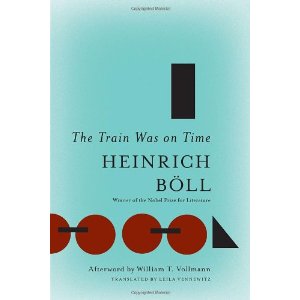
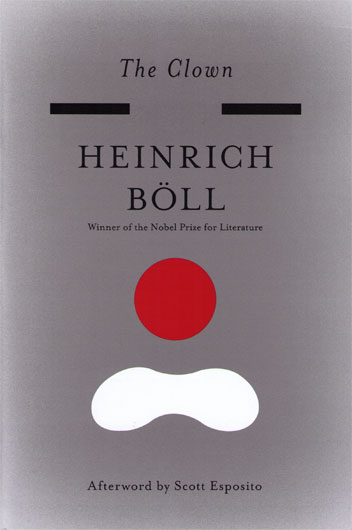
The winner of The Train Was on Time and The Clown is

Priya from Tabula Rasa

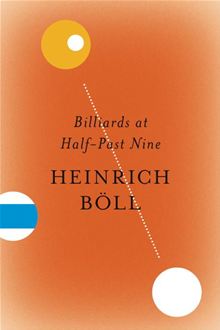
The winner of Group Portrait with Lady and Billards at Half-Past Nine is

Guy from His Futile Preoccupations

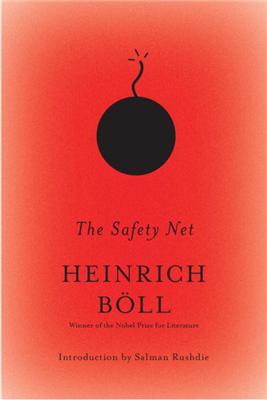
And the winner of The Irish Journal and The Safety Net is

Stu from Winstonsdad’s Blog

Happy reading Priya, Guy and Stu!

Please send me your address via beautyisasleepingcat at gmail dot com.

The giveaway is part of German Literature Month.

The next giveaway will take place on Wednesday 9 November 2011. Remember… It’s crime week…. there are some great books to be won. And, yes, those who won already can still participate.

Wednesdays are wunderbar – Heinrich Böll Giveaway

I’m so glad that I can give away six books by Heinrich Böll, my favourite German author. The giveaway has been kindly provided by Melville House Press.

We give away 6 novels to 3 winners, 2 novels each. Please tell us which novels you would like.

Here we go (the blurbs are all from the Melville House Böll Page):

The Train was on Time

Heinrich Böll’s taut and haunting first novel tells the story of twenty-four-year-old Private Andreas as he journeys on a troop train across the German countryside to the Eastern front. Trapped, he knows that Hitler has already lost the war … yet he is suddenly galvanized by the thought that he is on the way to his death.

As the train hurtles on, he riffs through prayers and memories, talks with other soldiers about what they’ve been through, and gazes desperately out the window at his country racing away. With mounting suspense, Andreas is gripped by one thought over all: Is there a way to defy his fate?

The Safety Net

Fritz Tolm has risen to the most powerful position in Germany.

With fame comes fear and vulnerability. Threats to his life are met with the all-pervasive “safety-net” of police protection and surveillance.

Trapped in a house they dare not leave, where every visitor is suspect and every object a potential bomb, Tolm and his family wait to discover when and how terrorism will overtake them.

Group Portrait with Lady

Cited by the Nobel Prize committee as the “crown” of Heinrich Böll’s work, the gripping story of Group Portrait With Lady unspools like a suspenseful documentary. Via a series of tense interviews, an unnamed narrator uncovers the story—past and present—of one of Böll’s most intriguing characters, the enigmatic Leni Pfeiffer, a struggling war widow.

At the center of her struggle is her effort to prevent the demolition of her Cologne apartment building, a fight in which she is joined by a motley group of neighbors. Along with her illegitimate son, Lev, she becomes the nexus of a countercultural group rebelling against Germany’s dehumanizing past under the Nazis … and what looks to be an equally dehumanizing future under capitalism.

Billards at Half-Past Nine

Heinrich Böll’s well-known opposition to fascism and war informs this moving story of a single day in the life of traumatized soldier Robert Faehmel, scion of a family of successful Cologne architects, as he struggles to return to ordinary life after the Second World War. An encounter with a war-time nemesis, now a power in the reconstruction of Germay, forces him to confront private memories and the wounds of Germany’s defeat in the two World Wars.

The Clown

Acclaimed entertainer Hans Schnier collapses when his beloved Marie leaves him because he won’t marry her within the Catholic Church.

The desertion triggers a searing re-examination of his life — the loss of his sister during the war, the demands of his millionaire father, and the hypocrisies of hs mother, who first fought to “save” Germany from the Jews, then worked for “reconciliation” afterwards.

Heinrich Böll’s gripping consideration of how to overcome guilted and live up to idealism — how to find something to believe in — gives stirring evidence of why he was such an unwelcome presence in post-War German consciousness … and why he was such a necessary one.

Irish Journal

When Heinrich Böll traveled with his wife to Ireland in the early 1950′s, he was immediately enchanted by the landscape and the people. Reveling in respite from a Europe still recovering from war, he was captivated by what he saw as a friendly and classless society that took life at a more leisurely pace. He was delighted, for example, by the Irish saying that explained why the trains were always late: “When God made time he made plenty of it.” Böll would return again and again.

In this unique entry in his oeuvre, Böll documents his eccentric travels around the Emerald Isle, detailing its charm in a way that gives his own habit of studying character and paradox, not mention national identity, a beguiling twist. The result, here presented with an epilogue written years later with Böll’s observation of changes since his first visit, is a reflection on the essence of a place and its people that is, indeed, evergreen.

*********

If you are interested in two or more of these books, tell me which ones you would like. The only condition is that you tell us about a favourite German book or author or – if you only get started – tell us what books you plan on discovering, which authors or books tempt you.

The giveaway is part of German Literature Month.

Also visit What to drink while reading Heinrich Böll on the Melville House Blog.

The giveaway is open internationally, the books will be shipped by the editor. The winners will be announced on Sunday 6 November 18.00 – European – (Zürich) time.

Joseph Roth, Irmgard Keun, Christa Wolf Giveaway -The Winners

It’s my pleasure to announce this week’s winners who have been drawn by random.org list generator.

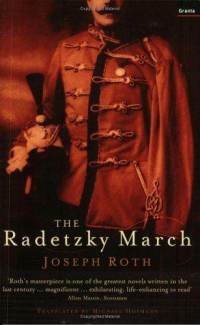
The winner of Joseph Roth’s The Radetzky March is – megan

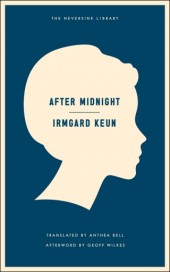
The winnder of Irmgard Keun’s After Midnight is – Susanna P. from Susie Bookworm

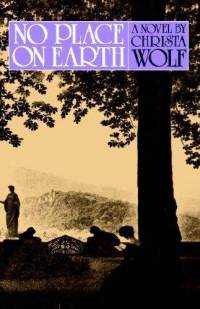
The winner of Christa Wolf’s No Place on Earth is – Litlove from Tales from the Reading Room.

Happy reading, megan, Susanna and Litlove!

Please send me your contact details via beautyisasleepingcat at gmail dot com.

The giveaways are part of Lizzy and my German Literature Month in November.

The next giveaway will take place on Wednesday 2 November.

Should anyone want to participate in the organized Effi Briest readalong, please leave a comment or sign up here and we will send you the questions for week 1. 

Wednesdays are wunderbar – Joseph Roth, Irmgard Keun and Christa Wolf (English or German) Giveaway

Today we have a different kind of giveaway. The books are personal contributions and that is why you can win them either in English or in German. The giveaway is part of Lizzy and my German Literature Month in November.

The books I selected are the following:

Joseph Roth’s The Radetzky March (1932).

The Radetzky March is one of the very great novels of 20th century literature. It’s a swan song, a melancholic depiction of the end of an era.

The Radetzky March can fairly claim to be one of the great novels of the last century. Its theme, beautifully articulated, is the end of an era. His anthem for a vanished world has the intense, fleeting beauty of a sunset’ Sunday Telegraph ‘He saw, he listened, he understood. The Radetzky March is a dark, disturbing novel of eccentric beauty… If you have yet to experience Roth, begin here, and then read everything’ Eileen Battersby, Irish Times ‘The true reading pleasure afforded by the rich environment Roth captures may well have increased over time, while the schisms at the heart of Europe continue to fascinate. It seems that we are rediscovering in twentieth-century Central European literature classics for a new millennium.”

Book number two is After Midnight (1937) by Irmgard Keun.

Keun was a very successful writer until the Nazi’s came. Her novel After Midnight and all of her other works (the most famous is The Artificial Silk Girl) were confiscated and banned. She flew from Nazi Germany together with her lover Joseph Roth. Keun is a tragic figure. In and out of psychiatric hospitals, alcoholism… Her biography is as fascinating as her novels. There is a lot of her own life in the novels too.

What I like a lot about her writing is that it seems so deceptively simple while in reality it is full of explosives. In After Midnight a young woman with the voice of a child describes the most upsetting things. It’s a lucid depiction of the ascent of Nazism and shows, like not many other novels, how and why the Nazi’s were so successful. The fact that a very simple, almost simpleminded girl tells the story makes it an uncanny read.

In 1937, German author Irmgard Keun had only recently fled Nazi Germany with her lover Joseph Roth when she wrote this slim, exquisite, and devastating book. It captures the unbearable tension, contradictions, and hysteria of pre-war Germany like no other novel. Yet even as it exposes human folly, the book exudes a hopeful humanism. It is full of humor and light, even as it describes the first moments of a nightmare. After Midnight is a masterpiece that deserves to be read and remembered anew.

The third book is Christa Wolf’s No Place on Earth (1979).

No Place on Earth is a special book for me and a special book for this event. It is my favourite Christa Wolf and its topic fits nicely into our event as it depicts an imaginary encounter between Heinrich von Kleist and the poet Karoline von Günderrode. Von Günderrode is hardly read anymore although she was very influential. She was the friend of Bettina von Arnheim (born Bettina von Brentano, sister of Clemens Brentano) who wrote a book about her which is really wonderful. Von Günderrode and von Kleist never really met but – that’s what Christa Wolf imagines – if they had…. Who knows, they might not have ended their lives. Both authors committed suicide at an early age and are seen as victims of the circumstances in which they lived. In Wolf’s novel they are given the opportunity to meet and to find that they are kindred spirits. It’s a very poetical novel and I would wish that whoever wins it will like it as much as I did.

This fictionalized account of an encounter in 1804 between the poet Karoline von Gunderrode and writer Heinrich von Kleist is pieced together from extracts of actual letters. In real life, both committed suicide some years after the events in this book.

If you would like to win one of those books, or enter for more than one, please let me know which ones you would like and why you would like to win them. Also indicate if you would like the book in English or in German. There is only one little condition – you should be a participant of German Literature Month.

The giveaway is open internationally, the books will be shipped by amazon or the book depository. The winners will be announced on Sunday 30 October 18.00 – European – (Zürich) time.