A Day in Lion Feuchtwanger’s Life – On Klaus Modick’s Sunset (2011)

Sunset

Apologies for using this misleading title. Sunset is the German title but, unfortunately, it hasn’t been translated yet.

Klaus Modick is a German author whose books regularly win prizes. He is also well-known as a translator of English and American books. John O’Hara and Nathanael West are a few of the authors he has translated. He wrote his PhD on the Jewish German writer Lion Feuchtwanger and frequently returns to him in his writing.

Sunset tells about one day in Lion Feuchtwanger’s life. Using flashbacks and memory tags, we are given insight into his life, an era and his lifelong friendship with Bertolt Brecht.

It’s a day in 1956. Feuchtwanger is alone in his home in Pacific Palisades. His wife is out of the house for the day. In the early morning he receives a telegram. Feuchtwanger is the last of the great German authors who is still living in California. During the war a lot of them stayed here. The Manns, Brecht, Werfel, Baum… Feuchtwanger was the most successful one, the one who made the most money. His house in Pacific Palisades is a huge villa. Unlike most others he doesn’t want to return to Germany. He thinks of his home country, of his childhood, he misses using the language and the snow and many other things but he loves the US and the Germany he once knew, is gone anyway.

The telegram he receives informs him of Brecht’s death. What a shock. Not only does he lose his best and maybe only friend, he is reminded of his own mortality. He is 16 years older than Brecht, it should have been him first.

The book then moves back in time and describes how the two met in Germany, how Feuchtwanger became the young Brecht’s mentor, how he knew immediately that he met a genius.

The beauty of the language struck me from the very first sentence. Modick uses images sparingly but to great effect.

In the inner courtyard the roses wither in tired opulence. It almost looks as if they were bleeding to death.

or

The smell of paper and dust wafts through the open door of the salon. The ink of the night trickles from the east into the fog.

Modick uses one day in the life of Feuchtwanger to unfold a whole life, exploring various different aspects and themes. Feuchtwanger’s books are infused with stories from his life. The daughter who died barely one year old, things people say, characters, such a lot is taken from his life.

He loves the US but like so many others he is scrutinized by the McCarthy government, suspected to sympathize with Stalin.

An early memory haunts him on the afternoon of the telegram. As a child, on an excursion with the whole family, Lion fell into a swamp. He was scared of drowning, cried for help but nobody came to his assistance, neither his parents, nor any of his eight siblings. They only laughed. This episode points to a recurring theme in Feuchtwanger’s life – being ridiculed. People like Thomas Mann and many others envied him his whole life and tried to mask this with mockery.

The friendship with Brecht is peculiar. They are so different but influence each other. Brecht has ideas, Feuchtwanger money and discipline. They often work together. They share a passion for women; both are adulterous men.

Towards the end of his life, writing is what keeps Feuchtwanger going. He writes one long novel after the other. After his prostate operation there is not much more left, he thinks. Passion is gone. And now Brecht is dead. But he doesn’t despair. He works out, works hard on his novels, enjoys life, loves the US and still hopes for citizenship.

Modick let’s us experience the way Feuchtwanger wrote – collecting ideas, noting down dreams, fleeting thoughts, images, symbols – nothing is lost, everything kept in notebooks. It takes a long time until he captures the perfect sentence, the perfect description. He approaches his work slowly, using information, memories, dreams.

Modick is a translator. It isn’t surprising that language is important in the book.Feuchtwanger mediates on language. On how you can translate things but they still don’t mean the same . The German word “Eisblume” which haunts him on this afternoon is a good example. In English “Eisblume” means “frost pattern” but literally “Eisblume” means “flower of ice”. A world of difference.

Modick paints the portrait of an interesting man. Successful and proud of it, yet modest and incredibly kind and generous. Without Feuchtwanger’s money many an author would have suffered greatly. Yet most of them didn’t even know the money came from him.

I have been fascinated since years by the German writers who escaped Germany and fled to California. The names in the novel are illustrious. Not only the German ones. Feuchtwanger knew them all, the actors, film makers, studio bosses. The German authors were all hoping to make money in Hollywood but that didn’t happen for most. Brecht and many others failed. Feuchtwanger regularly sold the movie rights to his books but they were hardly ever made into movies.

Feuchtwanger was a passionate collector of books. He first collected books when he was still in Germany but those were confiscated and probably burned by the Nazis. In his French exile he started another collection, most got lost when he fled. Finally in the US he started again and when he died he owned far over 30,000 books.

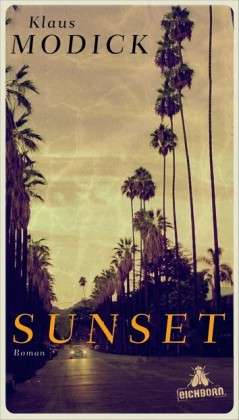
Sunset is a wonderful title for a book which describes the evening of the life of a writer and an era which is long gone. It is infused with the fading light of a dying sun, sinking slowly into the ocean. The title is perfect and so is the German cover with its sepia photo.

Modick is compared to authors like Grass, Lenz and Walser, it’s easy to see why. It is a real shame he hasn’t been translated.

On Iris Hanika’s Tanzen auf Beton (Dancing on Concrete) (2013)

Tanzen auf Beton

I avoid reviewing books which haven’t been translated and this led to the somewhat more problematic development of my not reading them anymore. Since some of you have commented that you’d be interested anyway I will  post a bit more frequently on not (yet) translated books in the future.

Iris Hanika is a German writer who has received several important prizes for her books. So far none has been translated. I bought one of her novels a while ago but when a friend told me about  Tanzen auf Beton (Dancing on Concrete), which has just been published in Germany, I thought, I’d like to read it. As much as I like British and American novels, occasionally I want something more edgy, less polished, raw even. Hanika’s fragmented “novel” was exactly that: raw and edgy.

It already starts with the subtitle which calls this book “Another report from the endless analysis”. Still, the book is called “novel”. After having finished it, I’m not sure why. Easier to sell?

What is edgy and raw in the book is not only the writing and the fact that it is fragmented but that Hanika presents herself naked, with all her vulnerabilities. She analyses the total failure of an affair which lasted years, decades even. Despite the fact that being with this man turned her into a moron (as she thinks) who wasn’t able to talk, made her dependent and begging for sex which wasn’t even good or satisfying, she couldn’t stop seeing him.

This whole misery is almost spat out at first, not like a confession, more like an attempt at putting into words what happened and in doing so making sense. It’s an attempt that took a long time and would never have been achieved without the help of psychoanalysis. As Hanika admits freely in interviews, she’d like to help people see that psychoanalysis can help, it can help uncover hidden truths and move towards a being less neurotic, healthier. She has even written an introduction to psychoanalysis together with her analyst.

I personally don’t believe psychoanalysis is that useful, (psychotherapy certainly is but there are many approaches). A so-called talking cure, is not for everyone. Hanika tries to show that for her this was a good approach. (Seeing the outcome, I’m not entirely convinced this is true).

What was interesting was that she did not only find meaning and a new way to live through psychoanalysis but also through writing, travelling, Russian literature and heavy metal. A peculiar mix but when she writes about these things, how much joy for example a trip through Russia brings, how much she loves to read the Russian authors, the joy is infectious. It makes you want to grab all of your Russian novels and book a trip to St Petersburg. (Her praise of Ministry and other metal bands was somewhat less infectious).

What was it that turned Hanika into a woman who needs a man, feels incomplete without one but is at the same time not capable of having a real relationship and always ends up in degrading affairs with married men? Yes, a lack of self-esteem, but that does come from somewhere. Since it’s not that likely this book will be translated I can allow myself to write spoilers and will tell you what was uncovered. First she came from a family in which women were not valued and then, at the age of 13, she had the traumatizing experience of being almost raped. It’s interesting that her therapist isn’t accepting this as sole reason but digs deeper and what is truly shocking is that nobody spoke with the young Iris about what happened to her. Nobody tried to find out whether the man was caught. It was a topic that was never mentioned. As if what had happened to her had not been important as she was not important. As she correctly writes – the shame is for the victims. Not only is this hurtful but it made her feel utterly alone.

All this is told in fragments; bits of storytelling follow small essays, short observations follow longer reflections.

Happiness, love, sex, getting older, music, psychoanalysis, Russia, violence against women…. The topics are endless, the way she writes is fresh and new, the tone is sometimes humorous, sometimes sad, often laconic and surprising. Quite refreshing to be honest but I can’t say I really liked it. I felt pity for her, for the way she over-analyzes everything but then again, I liked the way she could be so enthusiastic. I certainly wish her well and think it was a courageous book to write. The only thing I found a bit astonishing was that she never thought of the guy’s wife. (I am tempted to be sarcastic here – psychoanalysis, in this case, seems to have turned someone into a person who feels better but not necessarily a better person.)

There are a lot of reviews from critics available already, and they are all raving. I’m going to read her novel Treffen sich zwei (When Two Meet) soon. I’d like to see how she writes when she writes a “real” novel. Treffen sich zwei has been translated into French (Une fois deux) and Spanish (Un encuentro de dos), her prize-winning novel Das Eigentliche was translated into Italian (L’essenziale) and has a good chance of being translated into English as well as it received a prestigious prize.

German Literature Month – Week IV Links

Another amazing week for German Literature Month. The final wrap up post is due in a week or so as Lizzy has decided to extend the month. 

All those of you still want to contribute or finish a book, feel free to do so and join her. There will be a final wrap-up post and a link list next week as well.

Undine by Friedrich de la Motte Fouqué (A Work in Progress)

Grimm Readathon 2012: Meet me at Hanau (Lizzy’s Literary Life)

No Place on Earth by Christa Wolf (Tony’s Reading List)

Unformed Landscape by Peter Stamm (Vishy’s Blog)

Dream Story by Arthur Schnitzler (Tales from the Reading Room)

The Story of the Hard Nut by E.T.A. Hoffmann (The Reading Life)

Grimm Readathon from Hauna to Kassel (Lizzy’s Literary Life)

My First Wife by Jakob Wassermann (Gaskella)

Demian by Hermann Hesse (Babbling Books)

Grimm Readathon: From kassel to Fürstenberg (Lizzy’s Literary Life)

Brenner and God by Wolf Haas (His Futile Preoccupations)

Ich sehe was, was Du nicht siehst by Birgit Vanderbeke (Tony’s Reading List)

The Weekend by Berhard Schlink (Vishy’s Blog)

Grimm Readathon: From Fürstenberg to Bremen (Lizzy’s Literary Life)

The Tale of the Honest Caspar and Fair Annie by Clemens Brentano (A Work in Progress)

Crime & Guilt by Ferdinand von Schirach (A Fiction Habit)

After Midnight by Irmgard Keun (chasing bawa)

Berlin Alexanderplatz by Alfred Döblin (Tony’s Reading List)

Grimm Readathon 2012 Meets Book Week Scotland (Lizzy’s Literary Life)

Wonderful, Wonderful Times by Elfriede Jelinek (St. Orberose)

Schnitzler and Stoppard collaborate (Wuthering Expectations)

Forbidden – Ostracized – Banned German Women Writers Under National Socialism (Beauty is a Sleeping Cat)

The Hunger Angel by Herta Müller (Winstonsdad’s Blog)

Amerika by Franz Kafka (A Hot Cup of Pleasure)

Sci-Fi Stories by German Authors (Slightly Cultural, Most Thoughtful and Inevitably Irrelevant)

The Pharmacist by Ingrid Noll (A Work in Progress)

Another Schnitzler – Stoppard Play (Wuthering Expectations)

Siddharta by Hermann Hesse (Tabula Rasa)

The Gordian Knot by Bernhard Schlink (Winstonsdad’s Blog)

This Wednesday is Wunderbar GLM extension (Lizzy’s Literary Life)

The Reader by Bernard Schlink (Iris on Books)

Forbidden – Ostracized – Banned – German Women Writers Under National Socialism

Edda Ziegler’s fantastic book on German women writers under National Socialism Verboten – Verfemt – Vertrieben (Forbidden – Ostracized – Banned) was easily my favourite read this year. I hope that some English language editor will buy the rights to this book and have it translated. It’s an introduction to the most prominent German women writers under National Socialism, a detailed historical account of the times and an analysis of publishing history.

Edda Ziegler is a professor of German Literature and non-fiction writer. Unlike some academics she manages to write in an engaging way and still offers a world of information.

The book is divided into 7 chapters which are dedicated to different aspects of the life of women writers before and after National Socialism. Each chapter contains stories of different writers and at least three more elaborate biographies as examples.

Chapter 1 looks at the so-called Asphaltliteratur, just before 1933. Vicki Baum, Mascha Kaleko and Irmgard Keun are the chosen examples. Asphaltliteratur was a term applied by the Third Reich to denigrate modern literature “without value”, meaning not popular and nationalist enough. The three writers were successful before the Nazis came to power and stayed relatively successful and famous until today. Vicki Baum fled to the US very early where she led quite a glamorous life. These women were considered to write “Unterhaltungsliteratur” – literature of escapism – because they wrote about the life of women. Edda Ziegler shows very well, that it was far more difficult for German women to be taken seriously as writers as for men. The situation was very different in England or the US.

Chapter 2 is dedicated to those writers whose books were burned by the Nazis, like Annette Kolb, Erika Mann and Gertrud Kolmar.

Chapter 3 looks into the ways that lead women into exile. Prominent examples are Else Lasker-Schüler, Grete Weil, Veza Canetti and Hermynia Zur-Mühlen. This was one of the most gripping chapters. Many writers dedicated themselves to help others flee. There are some astonishing acts of heroism mentioned. Varian Fry, an American journalist, is mentioned quite often. Together with German authors, like Lisa Fittko who wrote a memoir about this time, he helped numerous authors to flee from France to unoccupied Morocco and the US and the UK. After 1933, many emigtared to the Netherlands and France but when the war broke out that wasn’t safe anymore. Some emigrated to the UK and the US, Anna Seghers and some other communist writers went to Mexico.

Chapter 4 is dedicated to life in exile. Gina Kaus, Hertha Narthorff and the women around Bertolt Brecht (Elisabeth Hauptmann, Margarete Steffin, Ruth Berlau) illustrate this aspect. Some authors like the Manns were able to make the most of life in exile and there were some interesting author’s colonies in the US.

Chapter 5 tells about the trauma for writers to lose their native language. Anna Seghers, the writers in the concentration camp Gurs and Nelly Sachs are mentioned in-depth. Erika Mann was one of the rare examples who started writing in English but many of the others struggled incredibly. And even if they managed after a while, it was hard and the loss was always felt.

Chapter 6 contains examples of women who went into an interior exile. Ricarda Huch and Marieluise Fleisser are the two examples. These women simply withdrew from life around them and lived apart and on their own.

Chapter 7 which is called “estranged” looks into life after 1945. Some women returned to Germany, many stayed abroad. The biographies of Hilde Domin and Rose Ausländer exemplify these two possibilities.

The book is written in an engaging way, many of the biographies are incredibly tragic but most are testimonies of astonishing resilience. Edda Ziegler has managed to get rid of the myth of the helpless German women writers. Most of her biographies show that women did cope far better in exile than men. They were more ingenious than their male colleagues. Contrary to what was generally believed, far less women committed suicide. Even before 1933 women writers were always forced to take care of their families,to assure that everyone was fed and clothed, they were used to survive writing and working in parallel. They even started to sew and type to make a living without making a fuss like so many of their husbands or partners.

The most tragic examples for me were those who were already elderly when the Nazis came to power and those who were incapable of learning another language. Even some women who emigrated to Palestine encountered these difficulties.

Sure, some women didn’t survive, the interior exile could become the last step before madness and a few women committed suicide but, overall, I think this book carries a message of hope. It shows us that women are capable of being active, creative and to survive under the most dreadful circumstances. Needless to say that I ended up with a long list of books I’d like to read. A few have been translated and some of those I’d like to mention here.

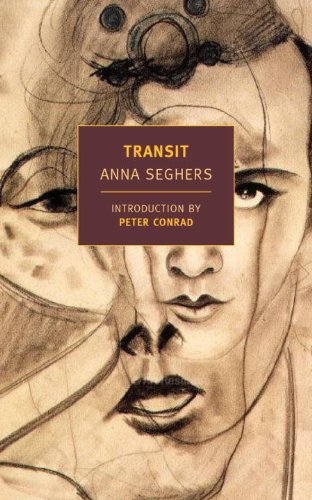
Anna Seghers who is famous for The Seventh Cross, wrote a book while she was in transit in the South of France. It is called Transit and seems to be one of the most accomplished accounts of this painful chapter of the life of those who left Germany. Fellow writers like Erich Weiss who tragically committed suicide in Paris when the Germans occupied the city are mentioned. The book had a somewhat turbulent history as Seghers who returned from exile to live in East Germany had added some criticism of communism. Transit will be reissued in May 2013 by the NYRB.

Hilde Spiel’s novel The Darkened Room (Lisas Zimmer) sounds like one of the most interesting ones and I hope to be able to read it soon. Set in New York it tells the story of various immigrants who cannot or do not want to return to Germany. Hilde Spiel was Austrian and spent the war years in London. She has published memoirs which all seem available in English as well.

Before ending this lengthy post I’d like to mention two very interesting parts which were dedicated to the wife of Elias Canetti, Veza Canetti, and the women around Bertolt Brecht like Elisabeth Hauptmann, Margarete Steffin and Ruth Berlau. These were very enlightening pieces as they showed those men in a less than favourable light. Brecht really didn’t apply any socialist ideas while he was reigning over his harem. While he had a sexual relationship with all of the women in the beginning of their relationship, he soon abandoned each woman for another one. The weird thing is, that they all stayed and worked for him. A lot of his writings should be attributed to the one or the other woman around him. Exile reinforced this dependency. Brecht preached “non-possession” and equality but this meant, de facto, that they all contributed to his work without any rights or without ever being thanked and mentioned.

I could write much more but I will stop here. I’ve mentioned a few of the important names, those who read German will easily find their books and some may be available in English too. The novels of Irmgard Keun and Vicki Baum, both successful then and now, are still available and highly recommended reading.

German Literature Month – Week III Links

The enthusiasm for  German Literature Month is still amazing.

I think I’ve added all the links but let me know if one has escaped my attention.

Schnitzler’s Substitue for the Talking Cure (Wutherin Expectations)

Meet the Translator Sally-Ann Spencer (Lizzy’s Literary Life)

Hotel Savoy by Joseph Roth (Tony’s Reading List)

Schlink Week – Links (Reader in the Wilderness)

A Schlink Link – A Key to Understanding (Reader in the Wilderness)

Night Games – Schnitzler Stretches Out (Wuthering Expectations)

Tell me What You See by Zoran Drvenkar (Beauty is a Sleeping Cat)

The Dream Story by Arthur Schnitzler (Wuthering Expectations)

The Swarm by Frank Schätzing and The Sweetness of Life by Paulus Hochgatterer (Farm Lane Books)

Summerhouse, Later by Judith Hermann (Tony’s Reading List)

Seven Years by Peter Stamm (Tony’s Book World)

Tell Me What You See by Zoran Drvenkar (Vishy’s Blog)

Talking of Romance… (Lizzy’s Literary Life)

Being German, Writing Fiction and the Holocaust (Reader in the Wilderness)

Final Words About Bernhard Schlink Week (Reader in the Wilderness)

Fräulein Else by Arthur Schnitzler (A Work in Progress)

Man of Straw by Heinrich Mann (His Futile Preoccupations)

Grimm’s Fairy Tales Day by Day (Read, Ramble)

Bunker by Andrea Maria Schenkel (Beauty is a Sleeping Cat)

Love Virtually by Daniel Glattauer (The Little Reader Library)

The Collini Case by Ferdinand von Schirach (Vishy’s Blog)

Winters in the South by Norbert Gstrein (Winstonsdad’s Blog)

Mesmerized by Allissa Walser (50 Year Project)

Der Elfenbeinturm by Herbert W. Franke (Slightly Cultural, Most Thoughtful and Inevitably Irrelevant)

The Poetry of Trakl (Wuthering Expectations)

Zbinden’s Progress by Christoph Simon (everybookhasasoul)

This Wednesday is Wunderbar (Lizzy’s Literary Life)

Salzburg in Trakl’s Poems (Wuthering Expectations)

 All Roads Lead to Berlin (Tony’s Reading List) 

German Literature Month – Week II Links

This was another great week for German Literature Month

Let me know if I missed a link.

Unformed Landscape by Peter Stamm (Tony’s Reading List)

The Cow by Beat Sterchi (Farm Lane Books)

One Hundred Days by Lukas Bärfuss (Lizzy’s Literary Life)

German Literature Month (and then she read)

The Royal Game by Stefan Zweig (Tabula Rasa)

The Sorrows of Young Werther (Still Life With Books)

A Happy Man by Hansjörg Schertenleib (Beauty is a Sleeping Cat)

Jakob von Gunten  by Robert Walser (Vapour Trails)

Sea of Ink by Richard Weihe (Iris on Books)

Reckless by Cornelia Funke (and then she read)

Bernhard Schlink Week (Reader in the Wilderness)

L’adultera by Theodor Fontane (Tony’s Reading List)

My Prizes by Thomas Bernhard (in lieu of a field guide)

The Land of Green Plums by Herta Müller (Vishy’s Blog)

Introduction GLM (Curious Incidents in the North East)

On the Edge by Markus Werner (Lizzy’s Literary Life)

Burning Secret by Stefan Zweig (everybookhasasoul)

Death in Venice by Thomas Mann (Sightly Cutural, Most Toughtful and Inevitably Irrelevant)

The Murder Farm by Andrea Maria Schenkel (A Hot Cup of Pleasure)

Eckbert the Fair by Ludwig Tiek (A Work in Progress)

Summer Lies by Bernhard Schlink (Winstonsdad’s Blog)

The Land of Green Plums by Herta Müller (Tony’s Reading List)

Summer Lies by Bernhard Schlink (Reader in the Wilderness)

Schnitzler’s Short Fiction (Wuthering Expectations)

The Post Office Girl by Stefan Zweig (The Little Reader Library)

Love Virtually by Daniel Glattauer (Leeswamme’s Blog)

The Piano Teacher by Elfriede Jelinek (A Fiction Habit)

Summer Lies by Berhard Schlink (Lizzy’s Literaray Life)

The Weekend by Bernhard Schlink (Beauty is a Sleeping Cat)

The Dead Are Silent by Arthur Schnitzler (Wuthering Expectations)

German Stories from Best European Fiction 2012 (The Reading Life)

Effi Briest by Theodor Fontane (Still Life With Books)

Loving Rilke (Tales From the Reading Room)

This Wednesday is Wunderbar (Lizzy’s Literary Life)

The Collinin Case by Ferdinand von Schirach (A Book Sanctuary)

The Beggar Woman of Locarno by Heinrich von Kleist (The Reading Life)

Here is a great resource which Mel U (The Reading Life) sent me yesterday. It has a lot of online stories, in English and German, mostly from the Rom

Bernhard Schlink: The Weekend – Das Wochenende (2008)

Old friends and lovers reunite for a weekend in a secluded country home after spending decades apart. They plumb their memories of each other and pass quiet judgements on the life decisions each has made since their youth. This isn’t, however, just any old reunion, and their conversations of the old days aren’t typical reminiscences. After 24 years, Joerg – a convicted murderer and terrorist, is released from prison on a pardon. 

Bernhard Schlink Week, hosted by Judith (Reader in the Wilderness), is part of German Literature Month. We had the option to choose either a literary  or one of the crime novels. I opted for the first. I have read The Reader a few years ago and liked it. It’s well-written, carefully constructed, thought-provoking and suspenseful. No wonder it was a bestseller. It took me a while to decide which of his novels I should read. Since I’m interested in the history of the RAF (Red Army Fraction), I felt like reading The Weekend – Das Wochenende which tells the story of Jörg, former terrorist, who is amnestied by the president, after 20 years in prison. To ease him into this transition his sister Christiane, invited the old friends to her house in the country, to spend a weekend together.

Family weekends or holidays are tropes I love because they often manage to look under the surface; taken out of their daily lives and put together, people clash and reveal their carefully hidden and often ugly feelings. To choose this setting for the homecoming of his protagonist wasn’t a bad choice but the way it was written was awfully bad. While there were a few scenes I liked and although it was a quick read, the melodramatic tone, the trite symbolism – the book starts on Friday and ends on Sunday with a “redemptive” scene in which everyone helps to carry buckets of water which flooded the cellar after a torrential rain (hello, heavy-handed allusion) – just didn’t do it for me. Add cancer, a budding love story between two elderly people who don’t need to fall in love as they are mature and therefore can skip the intro – read – jump into bed without the nervous fussing  – …

What’s really bad is that this is a book about terrorism. A terrorism which was a reaction to Germany’s post-war attempts at forgetting the past and leaving the old Nazis in prominent places. A terrorism which protested against imperialism, bigotry and hypocrisy. While initially in her first wave the RAF didn’t want to harm or kill people, the second wave became much more aggressive and violent and didn’t shy away from murder. Jörg is exemplary of this second wave. But nothing is shown, or discussed. There are just people with opinions, sitting together, eating and discussing. Each character serves as a vehicle expressing the one or the other opinion on terrorism.

The German newspaper critics hated this book. The readers on amazon like it. I don’t always agree with critics but in this case I have to. This is a book written like a corny genre novel and the only thing interesting about it is the topic but it’s not treated well. I don’t know any more than before reading it. Jörg says that there was a war on and that it was normal that people got killed in a war. On the other hand he is crying over getting old and being ill…. A sentimental man who pretends he doesn’t care that he killed people? That doesn’t work for me.

The book was published in 2008, just half a year after Brigitte Mohnhaupt was amnestied, while Christain Klar was not. It’s ok to be topical in novels but this book makes me think Schlink wanted to exploit something.

At the end of the year we write our Best of lists. I always add one or two worst of books, books that I found so bad that in some cases they infuriated me. The Weekend will be on the list. It’s insufferably botched.