Vicki Baum: Grand Hôtel – Menschen im Hotel (1929)

Vicki Baum was an Austrian novelist most famous for her Berlin novel Grand Hôtel aka Menschen im Hotel published in 1929. Although this book made her one of the early bestselling novelists and is still widely read in German it seems a bit difficult to find English copies. But since her far lesser known book Life and Death in Bali has just been reissued I hope that her other books, especially Grand Hôtel, will be republished as well. In any case, it is possible to find used copies. Part of the long-lasting success of the novel comes from the fact that it was made into a movie starring Greta Garbo Grand Hôtel (1932) and later into a German movie Menschen im Hotel (1959) starring Michèle Morgan and Heinz Rühmann. Vicki Baum wrote far over 50 novels, 10 of which have been made into movies.

Grand Hôtel is set in a luxurious hotel in Berlin between the wars. It’s walls shelter a microcosm of German society. The novel draws a panorama of the society and the times, reading it is fascinating and gives a good impression and feel for the time and the people. Vicki Baum includes a wide range of characters, the porter who waits for his wife to give birth to the first child, the aristocratic head porter Rohna, the many drivers and maids as well as some very interesting guests. Including the employees of the hotel gives the book a bit of an upstairs-downstairs feel and permits insight into the lives of the “simple people” who earn just enough not to starve.

The main characters are the guests. Dr. Otternschlag is the first to be introduced and he will also be the one closing this novel as he is almost part of the establishment. He stays here year in and year out, sits in the lobby and does nothing much. Badly wounded in Flanders, half of his face is just a scarred mass with a glass eye, he has lost interest in life. Wherever he goes his little black suitcase travels with him. The suitcase is packed for his final trip. It contains a large amount of morphine vials which he intends to inject should he be finally too disgusted by life. For the time being, he endures living but eases it with a regular nightly shot.

The Russian ballet dancer Grusinskaja is another important character. She is an aging beauty who is less and less successful. Her dancing lacks spirit and the public punishes her by leaving the theater almost before the final curtain. Once the lover of a Russian aristocrat, she is now still admired for her looks but not many fall in love with her. She reminded me of Gloria Swanson in the movie Sunset Boulevard or Blanche DuBois in A Streetcar Named Desire.

The astonishingly handsome Baron von Gaigern is one of the most joyful characters. He is easy-going, always happy, a womanizer and a con artist. Nobody knows that all he has left is his title and that he is without any financial means. He too was in Flanders but apart from a tiny scar on his chin he seems unharmed.

The industrialist Preysing has come to the hotel for an important meeting. If the business men he will meet, will not sign the contract, he is done.

And there is the terminally ill accountant Kringelein, one of the many employees of Preysing.  Kringelein hasn’t done much else than save money all his life. He has never treated himself to anything and now, having been diagnosed with terminal cancer, he has left his wife in some little provincial town and travelled to Berlin to spend all his savings and to finally live.

Flämmchen (little Flame) is Preysing’s temporary secretary. She is very young, as good-looking as Baron von Gaigern, good-natured but without much luck. Because she can’t find work, she started to model and sells her company to business men.

During the course of three days these people meet and interact. Some fall in love, some help each other, one kills one of them and at the end it’s not entirely clear who is a winner and who is a loser.

The character portraits are the strength of this novel. And the variety of themes. I was amazed about the range. It isn’t only about aging, the loss of success and fraud, but it also shows the aftermath of WWI. The war has left its mark on the people, their faces and their souls and changed the society forever. These people are very frivolous and venal. The meaning of life for them equals having a good time. If you want to have a good time you need money. And so another of the central themes is money. There is a whole chapter in which Preysing and his consultant discuss how they want to raise the value of the stocks of Preysing’s factory. What they do to achieve it, sounds so modern.

It’s interesting that the characters can be divided into two diametrically opposed groups. One group embraces life fully and greedily while the other one is weary and suicidally tired of it.

When you read a novel like Grand Hôtel that isn’t only set in the 20s but has been written at the time, you see the whole difference of a historical novel and one that depicts it’s time. Vicki Baum has an insider’s knowledge that is hard to achieve through research. I would really recommend this novel to anyone interested in the era, to those, like me, who love novels set in hotels and to all those who like a character driven story.

I would be very interested to know if anyone has read this one or any of her other novels. The way she described the society of the 20s is a very anthropological one. I’m not surprised, after reading it, that Life and Death in Bali was suggested reading at university in a course on Balinese culture. Our professor said the book was so well written that it was as good as non-fiction in its detailedness and exact observation.

The review is part of German Literature Month – Week III Switzerland and Austria
Wednesdays are wunderbar – It’s Swiss Crime Time – Friedrich Glauser Giveaway

It’s Wednesday again, time for our weekly giveaway. Today’s books by Swiss author Friedrich Glauser have been kindly offered by Bitter Lemon Press.

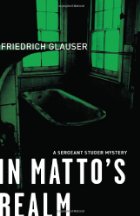
We can give away 2 copies of his classic crime novel In Matto’s Realm. I know it’s somewhat shameful but I haven’t read Glauser yet that’s why I included the description of the Bitter Lemon Press Glauser Page for you.

Finalist for the 2005 CWA Gold Dagger Award.

A child murderer escapes from an insane asylum in Bern. The stakes get higher when Sergeant Studer discovers the director’s body, neck broken, in the boiler room of the madhouse. The intuitive Studer is drawn into the workings of an institution that darkly mirrors the world outside. Even he cannot escape the pull of the no-man’s-land between reason and madness where Matto, the spirit of insanity, reigns.

Translated into four languages, In Matto’s Realm was originally published in 1936. This European crime classic, now available for the first time in English, is the second in the Sergeant Studer series from Bitter Lemon Press.

Author Information
Friedrich Glauser was born in Vienna in 1896. Often referred to as the Swiss Simenon, he died aged forty-two a few days before he was due to be married. Diagnosed a schizophrenic, addicted to morphine…

The Translator
Mike Mitchell has translated some thirty books, including ‘Simplicissimus’ by Grimmelshausen and all the novels of Gustav Meyrink. He won the 1998 Schlegel-Tieck German translation prize.

If you would like to win one of the books, please leave a comment. The only condition is that you have been participating in German Literature Month, either with comments, posts or reading along. No need to have your own blog.

The giveaway is open internationally, the books will be shipped by the editor. The winner will be announced on Sunday November 20 at 18.00 – European – (Zürich) time.

Peter Stamm: In Strange Gardens and Other Stories – Blitzeis und In fremden Gärten (1999/2003)

In Strange Gardens: And Other Stories by Peter Stamm

In these stories, Stamm’s clean style expresses despair without flash, through softness and small gestures, with disarming retorts full of derision and infinite tenderness. There, where life hesitates, ready to tip over—with nothing yet played out—is where these people and their stories exist. For us, they all become exceptional.  “Sensitive and unnerving. . . . An uncommonly intimate work, one that will remind the reader of his or her own lived experience with a greater intensity than many of the books that are published right here at home.”

I had a hard time picking a Swiss author for German Literature Month as there are so many good ones to pick from. I chose Peter Stamm because the reviews in Swiss and German newspapers tend to be full of praise but I have never read anything by him. Most of what Stamm has written is translated into English, his novels as well as his short stories. I got Agnes (Agnes German), his first novel but from the English and German reviews I know, it’s his only controversial book, one that you either love or hate. I was much more in the mood to read something that critics called one of “the most beautiful and important books” or “one of the most remarkable achievements of contemporary literature written in German”. And so I chose to read his short story collection Blitzeis. You can find it in the English collection In Strange Gardens and Other Stories that combines two German collections, Blitzeis and In fremden Gärten.

Since I have finished the book I tiptoe around this review. The stories are saturated with a fleeting beauty that is hard to capture. What exactly was it that made me love those stories so much? So much that for the first time, I regretted reading short stories and not a novel. I would have loved to go on reading each and every single one of those stories. Nothing much happens in these pages. People dream and float and meet others. They live some moments of intensity, of joy, of disappointment, of regret. The stories take place in different countries, one is set in Switzerland, some in New York, one in Sweden, another one in Italy, one in the Netherlands. The characters are often from Switzerland, they meet people abroad, are fascinated by the cities and the landscapes they don’t know, some are happy to return to Switzerland, some will stay abroad. They enjoy moments in which nothing much happens.

These stories are, as I said, not so much about plot or even atmosphere but about mood. They achieve to convey a wide range of moods. Sadness, melancholy, joy, apathy… each and every story captures either one or more of these emotional states. At times I was reminded of some Japanese stories and their celebration of fleetingness, at times they reminded me of Anna Gavalda’s first short story collection Je voudrais que quelq’un m’attende quelque partI Wish Someone Were Waiting For Me Somewhere.

To give you a better impression I will pick two stories.

In the Outer Suburbs (In den Aussenbezirken) is the story of a chance encounter. A young Swiss man is walking the streets of New York on an early Christmas morning. He is hung over from the night before in which he had a party with friends. Too much alcohol and too many cigarettes were involved. He walks aimlessly through the streets and feels as if he sees them for the first time. He finally enters a bar and is drawn into a conversation with a drunk whom everyone seems to avoid. Without prejudice or preconceived ideas he listens to the man and they drink together. The drunk is full of wisdom, talks about poetry, and the difference of love poems written by men or women. After a long while they leave the bar together. The afternoon is still bright, although they expected that the night had already fallen. When they part, the drunk thanks him for a beautiful afternoon.

Passion (Passion) is the story of a love in its final hours. The beauty of the Italian summer, the happiness of the narrator who lies awake in the hot night listening to his friends talk below the open window of his sleeping room, contrast with the feeling of an imminent ending. He wants to break up with his girlfriend but when she finally leaves him, he is disappointed.

Peter Stamm’s stories may very well be the greatest discovery of German Literature Month for me. I loved each and every one of them and wanted to go on reading. I can’t wait to read one of his novels. I already got An einem Tag wie diesem – On a Day Like This and it’s likely that I will review it during the last week of German Literature Month.

The review is part of German Literature Month – Week 3 Switzerland and Austria

German Literature Month – Effi Briest Group Read Week II

This is the second week of our Effi Briest Group Read. This week the questions have been sent out by me.

What strikes you most in this novel,  what do you like or dislike the most?

What strikes me personally most is that I don’t dislike anything. I find no superfluous words, no false tones in this novel. I think it’s an incredibly accomplished book that is as moving the second time as it was the first time I read it.

I really love everything about the book but I do have pretty strong reactions towards some of the characters. Instetten is for me, this time, a pompous insufferable git. I truly hate people who think they are superior. He patronizes Effi wherever he can. He is very rigid and follows rules and orders.

Do you think Fontane likes Effi? Whose side is he on?

I was wondering very often and think, he must like her a great deal or I wouldn’t feel for her. As a person she is quite opposite to myself or people I’m usually interested in, now as well as when I was 17. She isn’t introspective but fun-seeking. I think if Fontane didn’t like her, I wouldn’t feel the way I feel about her. She is a bit like a little animal that needs protection.

What do you make of the story of the Chinese and the haunted house. How would you interpret it? And what about Crampas’ interpretation?

I’m surprised how important this story is as this is something I had completely forgotten although I love a good ghost story. I think Effi is extremely isolated and all sorts of things play tricks on her mind. I also think it’s foreshadowing things to come but for fear of spoilers I’m not going to elaborate on this.

Crampas interpretation strikes me as spot on and it does enforce my negative feelings for Instetten. Wanting to educate or drilling Effi is so like him.

Descriptions are an important part in Effi Briest. How do you like them and how important do you think they are for the novel?

This question is tied to the next one. I had a feeling that the novel moves back and forth from outdoor to indoor scenes and in the outdoor scenes the descriptions are very important.

The region in which Kessin is located bears a lot of dangers for humans. There are the marshes that can swallow you, the snow can cut you off from the outside, the storms make ships sink. This seems very symbolic and full of foreboding.

The contrast between the loveliness of Effi’s family’s garden compared to the bleak landscape around Kessin emphasizes her loneliness. She would need a welcoming home but the house she lives in scares her as well.

The descriptions of the outside world also seem to point to things to come and the night in which Effi and Crampas sit together in the carriage and almost sink into the “Schloon” (that’s the German expression and I have no clue what the corresponding English word is, I guess marsh) seems full of foreboding.

It struck me while I was reading this novel how Fontane pairs descriptions of cozy and scary. Did you notice this as well and if so, what did you make of this?

For a tormented soul like Effi’s the idea that feet are running over her head and that she is all alone in the dark unwelcoming house in Kessin is very scary. I found the whole novel much more “gothic” this time around than when I first read it. The contrast to her family home, in which everything was cozy is very striking.

Another scene where I saw this pairing was when she walks in the wood with Crampas and it begins to snow. It might be a scary idea usually to be snowed in but Effi mentions a poem set druing the war, in which an old woman was snowed in and the snow-covered her up so the soldiers couldn’t find her. The idea warms Effi, she feels that being snowed in means being sheltered from the outside world.

What do you think of Crampas?

I didn’t think Crampas was such an unlikable character but he is a very irresponsible man. He should have thought of Effi and not start something with her. Of course he is trapped in a loveless marriage as well but he doesn’t seem to love Effi either. He is clearly a player. He likes to break rules and says so early on. I think it’s maybe as much about having an affair for him as about doing something forbidden. Still in the scenes in which we see them together he is far nicer to Effi than her husband and she seems a more mature person in his presence, not a little child that fears to be criticized at any moment.

Fontane chose to describe more than one Christmas in this novel, what do you think Christmas signifies?

Christmas is traditionally a family holiday. There is more than one Christmas in the novel and they are all slightly different. They do mark the passing of time but also show what it means for Effi to have left Hohen-Cremmen. Her first Christmas is a very lonely one. The second is slightly better but she misses her family. What struck me is that there was no attempt at spending Christmas together. I found that unrealistic. I can’t imagine a reason why they didn’t visit Effi’s parents. It felt like a punishment when I read it, as if she was an outcast.

What kind of mother is Effi?

I think she is quite a devoted mother. The child turns her into a grown up but, as it was usual then, someone else, in this case Roswitha, spends much more time with the child.

Where will the novel go from here? What do you think will happen next?

As I have read it before I’ll skip the question of course.

Please leave a link to your post in the comments section or in the Mr. Linky. (To see the participants, you have to click on Mr Linky).

2 German Crime Ladies: Charlotte Link and Petra Hammesfahr

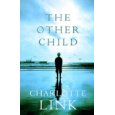
There are two German crime writers who are more famous than most others in Germany and these are Charlotte Link and Petra Hammesfahr. While Charlotte Link is probably by far the most read German author she has so far not been translated into English. That’s why I was so pleased when I saw that finally it’s going to happen. Her novel The Other ChildDas andere Kind will be published at the beginning of 2012. Here is the blurb:

A suspenseful and atmospheric new psychological crime novel from ‘Germany’s most successful living female author’

An old farm, a deserted landscape, a dark secret from times past with fatal consequences for the present. In the tranquil northern seaside town of Scarborough, a student is found cruelly murdered. For months, the investigators are in the dark, until they are faced with a copy-cat crime.

Charlotte Link is such a good example for another type of genre that German writers excel at and that is historical fiction. The amount of books and authors is amazing.

Link is famous for her psychological novels in the vein of Mary Higgins Clark and for her long family sagas and historical novels. The Other Child which I have not read yet – I wanted to but 700 pages were not feasible for German Literature Month – combines both. The story is set in 1970 – 2008 and during WWII in England. Young women are being killed, the crimes resemble each other and the trace to the killer seems to go back to WWII. One of the themes is the children that were sent to the country during the war.

Link has an easy but very gripping way of writing. I’ve read many of her psychological thrillers of women who are being stalked by ex-lovers. Her world is often one in which men are predators, but her descriptions are great and atmospherical and the pace is appealing. If this is really, as it seems, her first novel in English, I’m not sure how good a choice it is. It’s cunning to test the waters with a genre blend, I suppose, because if this book is loved, chances are high that her psychological thrillers and her historical novels will be equally liked.

For German Literature Month I picked up a slim volume of short stories by Petra Hammesfahr. While these stories have not been translated, Hammesfahr’s novels are slowly available in English and seem as succesful as they are in her native Germany. While Link is strong on plot and pace, Hammesfahr is even stronger on psychology. Whenever I start one of her novels, I don’t want to stop. I had the same experience when reading her short stories. Accurate descriptions, psychological insights and a surprising ending. Good people turn into criminals because the monotony and madness of daily life becomes too much to bear or highly dysfunctional people become delinquent because there was just this one moment that made them snap.

Hammesfahr, unlike Link, combines the very ordinary with the uncanny, the sick, the revolting. The outcast who may not be guilty, the housewife who may be.

The novels available in English so far are The Sinner Die Sünderin and The LieDie Lüge. I would hope that others will be translated. Most of all Der stille Herr Genardy.

Of the three German crime novelists I reviewed, Noll is the most literary, Link, the most mainstream, and Hammesfahr is somewhere in between. For you to choose what you prefer. I like them all, depending on my mood.

The review is part of German Literature Month Week II – Crime

Wednesdays are wunderbar – It’s Crime Time – Jakob Arjouni Giveaway

Today we have another special treat for you, courtesy of Melville House Press we give away one set of Jakob Arjouni’s Kayankaya series to one lucky winner.

This is a great series and anyone who will win it will surely like it.

The giveaway is part of German Literature Month and  is open internationally but if you would like to enter you have to hop over to Lizzy’s blog where the giveaway is taking place.

Good luck!

German Literature Month Week I Wrap-up and The Winners of the Heinrich Böll Giveaway

This post has two parts. First is the wrap-up of Week I of our German Literature Month – focussing on literature from Germany. Please do not just skip it. It’s a tribute to all our participants. We have already seen some really amazing contributions and I would like to thank all of you for this.

There have been a lot of interesting lists and contributions made during October. They are HERE. This is the wrap-up of Week I.

Here are all of this weeks’ links with my impressions:

Week I

Lizzy has made a post on how to find German books in translation and a review of a very unique sounding book by Alina Bronsky.

The Magic Mountain of German Literature

The Hottest Dishes of the Tartar Cuisine by Alina Bronsky

Caroline – I have compiled a post with 14 women writers that shouldn’t be missed and reviewed Sebald’s book on the absence of the description of the destruction of German cities during WWII from German post-war literature. The book leads us to the Böll readalong on November 26.

14 Women Writers You Shouldn’t Miss

On the Natural History of Destruction – Luftkrieg und Literatur by W. G. Sebald

The Participants

Neer (A Hot Cup of Pleasure) shares her German Literature Month inspired Wishlist.  That’s always a risk with events like this. You may end up with far more books than before.

Christina from Ardent Reader hopes to be able to keep up with her Reading plans.

Danielle (AWork in Progress) introduces her choices. A list with descriptions. Plans for German Literature Month 

Emma (Book Around the Corner) wrote an enthusiastic review of  Fame by Daniel Kehlmann that she calls a “strange exhilarating book”.

sakura (chasing bawa) is thrilled by her discovery of Dark Matter by Juli Zeh  and adds (after having been tracked down by the German Literature Month Police , i.e. me) an Introduction.

Jackie (Farm Lane Books) wrote a very appealing review of the WWII novel Death of the Adversary by Hans Keilson. Not an easy read, highly literary but rewarding.

Guy Savage (His Futile Preoccupations) dethrones Goethe in his musings on  On Goethe’s Elective Affinities and reestablishes him again – at least in parts – in  On Goethe’s Elective Affinities Part II. The review is to follow.

Rise (in lieu of a field guide) reviewed Visitation by Jenny Erpenbeck and compares it to the passage of time chapter in Virginia Woolf’s To the Lighthouse.

Harvey (Leben, Kochen, Bier u. Fussball) offers a list with interesting choices Introduction with choices.

Eibhlin (Mar gheall ar a léim) shares he reading plans in Eibhlin’s reading plans.

Fay (Read, Ramble) reviews  Herta Müller – Land of Green Plums describing how she wanted to give up after a little while but was rewarded by her persistence.

Rikki (Rikki’s Teleidoscope) enjoyed The Hottest Dishes of the Tartar Cuisine by Alina Bronsky as much as Lizzy. She captures the unusual voice of the narrator very well.

Susanna P (Susie Bookworm)  has added her reading plans German Lit Month Kick off. She already read Lotte in Weimar and is about to pick something else soon.

Priya (Tabula Rasa) shares her reading plans Plans.

Alex The Children’s War wrote an in-depth review of The Oppermann’s by Lion Feuchtwanger. He writes  “What makes The Oppermanns so interesting is that it has the distinction of being the first story of its kind to tell about life under the Nazis and how it affected people opposed to Hitler.”

Parrish (The Parrish Lantern)  wrote a thoughtful review On The Joys of Morphinism by Fallada. Introducing first the life of the author and then writing about the book.

Mel u (The Reading Lives) announces German Literature Month and reviews a very interesting short story by Gerstacker, a lesser known author. His review is proof that it is worth looking for the lesser known.  Announcing German Literature Month and Short Story by Gerstacker

Tony (Tony’s Reading List) has really liked Alois Hotschnig’s – Maybe This Time and already read it twice but he doubts that he will re-read  All the Lights by Clemens Meyer. Although he didn’t mind reading it at all, he doesn’t seem to be convinced it’s all that literary.

Liz (Tortoisebook) shares he reading plans. German Literature Month Plans

Vishy (Vishy’s Blog) has reviewed a wide range of short stories and novellas. A really wide range. Both Lizzy and myself were stunned. This is pretty much an introduction to the most important German writers.  A Wide Range of German Short Stories

Stu (Winstonsdad’s Blog) I was equally amazed about the wide range of books reviewed by Stu. There are some wonderful books to discover here.  An early novel by the Nobel Prize winner Nadirs by Herta Müller , a novella by the author of Perfume The Pigeon by Patrick Süskind, a poetical novella Jarmila by Ernst Weiss and a novel of a Swiss writer A Perfect Waiter by Alain Claude Sulzer.

Amateur Reader (Tom) Wuthering Expectations wrote one post on the melancholic story Flagman Thiel by Gehart Hauptmann (also reveiwed by Vishy) and two posts on Hauptmann’s play Gerhart Hauptmann-Before Daybreak – Gerhart Hauptmann’s characters.

Effi Briest Readalong

Week I

The following people have posted so far, some freestyle, some answering our questions.

Andrew

Caroline

Danielle 


Fay

Eibhlin

Iris

Lizzy

Sarah

Tony

This and That

Yes, we were also featured on the web.

Melville House Press on What to drink when reading Heinrich Böll 

The Millions announce German Literature Month

kulturplease announces German Literature Month

love german books – Kid – On German Literature Month

The Victory Stitch – Peggy  If I were reading

**************

And here, finally, the winners of the Heinrich Böll giveaway courtesy of Melville House Press.

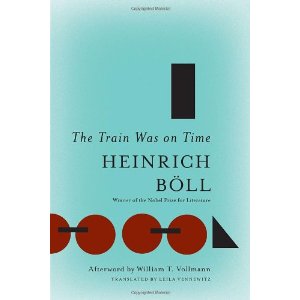
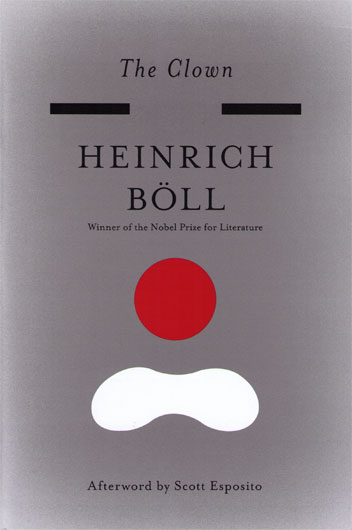
The winner of The Train Was on Time and The Clown is

Priya from Tabula Rasa

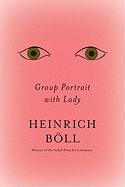
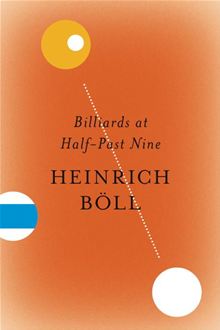
The winner of Group Portrait with Lady and Billards at Half-Past Nine is

Guy from His Futile Preoccupations

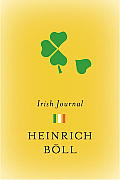
And the winner of The Irish Journal and The Safety Net is

Stu from Winstonsdad’s Blog

Happy reading Priya, Guy and Stu!

Please send me your address via beautyisasleepingcat at gmail dot com.

The giveaway is part of German Literature Month.

The next giveaway will take place on Wednesday 9 November 2011. Remember… It’s crime week…. there are some great books to be won. And, yes, those who won already can still participate.