Final Giveaways and Looking Back on German Literature Month 2015

literatur_2015_gold-2

It feels as if I only just posted the intro to German Literature Month 2015. It’s hard to believe the month is already over.

And what a month it was. So many great posts. We have a total of 157 contributions. I’m not really into statistics, so I can’t tell you whether that’s more or less than last year – be it as it may, it’s a lot.

Thank you so much for your enthusiasm.

I haven’t read as much as I wanted, nor have I been able to visit everyone, but I’m still doing my rounds.

As a thank you to all of you, I’m giving away two books from Pushkin Press.
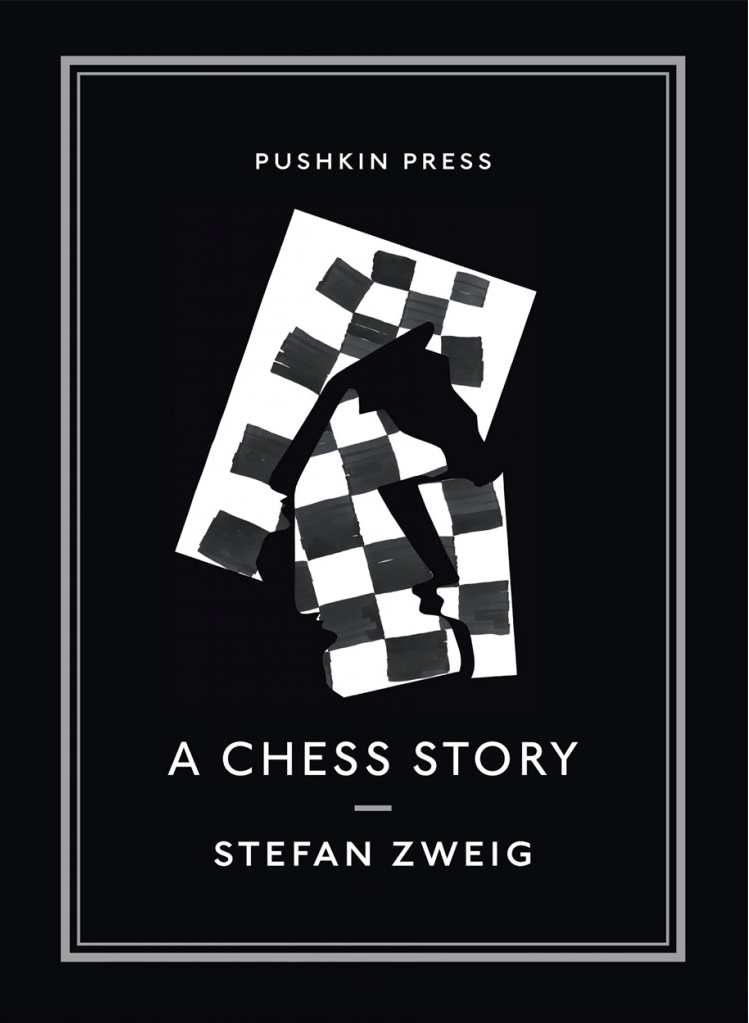
A Chess Story

Stefan Zweig’s A Chess Story

Chess world champion Mirko Czentovic is travelling on an ocean liner to Buenos Aires. Dull-witted in all but chess, he entertains himself on board by allowing others to challenge him in the game, before beating each of them and taking their money. But there is another passenger with a passion for chess: Dr B, previously driven to insanity during Nazi imprisonment by the chess games in his imagination. But in agreeing to take on Czentovic, what price will Dr B ultimately pay?

A moving portrait of one man’s madness, A Chess Story is a searing examination of the power of the mind and the evil it can do.
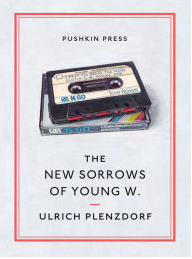
The Sorrows of Young W.

Ulrich Plenzdorf’s The Sorrows of Young W. A retelling of Goethe’s famous novel, set in GDR. It’s often called a GDR Catcher in the Rye.

‘I was just a regular idiot, a nutcase, a show-off and all that. Nothing to cry about. Seriously’

Edgar W., teenage dropout, unrequited lover, unrecognized genius – and dead – tells the story of his brief, spectacular life.

It is the story of how he rebels against the petty rules of communist East Germany to live in an abandoned summer house, with just a tape recorder and a battered copy of Goethe’s The Sorrows of Young Werther for company. Of his passionate love for the dark-eyed, unattainable kindergarten teacher Charlie. And of how, in a series of calamitous events (involving electricity and a spray paint machine), he meets his untimely end.

Absurd, funny and touching, this cult German bestseller, now in a new translation, is both a satire on life in the GDR and a hymn to youthful freedom.

Ulrich Plenzdorf was born in Berlin in 1934, and studied Philosophy and Film in Leipzig. In the early 1970s, he achieved fame with the much acclaimed The New Sorrows of Young W., considered a modern classic of German literature and taught in classrooms across Germany. From 2004 onwards, Plenzdorf was a guest lecturer at the German Institute of Literature in Leipzig. An award-winning and much celebrated author and dramatist, he died in 2007.

*****

All you have to do is tell me which book you’d like to win and why. The giveaways are open internationally. I’ll announce the winners on Monday 7 December 17:00 – Western European time.

This Giveaway is now closed!
German Literature Month – Winner Announcement

Screen Shot 2014-09-24 at 07.23.25

Some of you will remember that we announced two special giveaways at the beginning of German Literature Month.

Two people will win two sets of books. One will be the winner of the “Pick and Mix Category” and the other will be the winner of “Best Post”.

While I will let Lizzy announce the winner of the “Pick and Mix Category”, I’m announcing the winner of the “Best Post”.

It wasn’t easy to find a winner because there were so many outstanding posts, but we both named the same without much thinking.

And here goes:

Winner of the category “Best Post” is Thomas (Mytwostotinki) for his post on Ostende. 1936, Summer of Friendship.

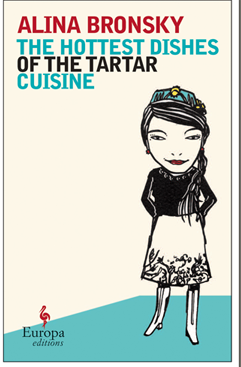
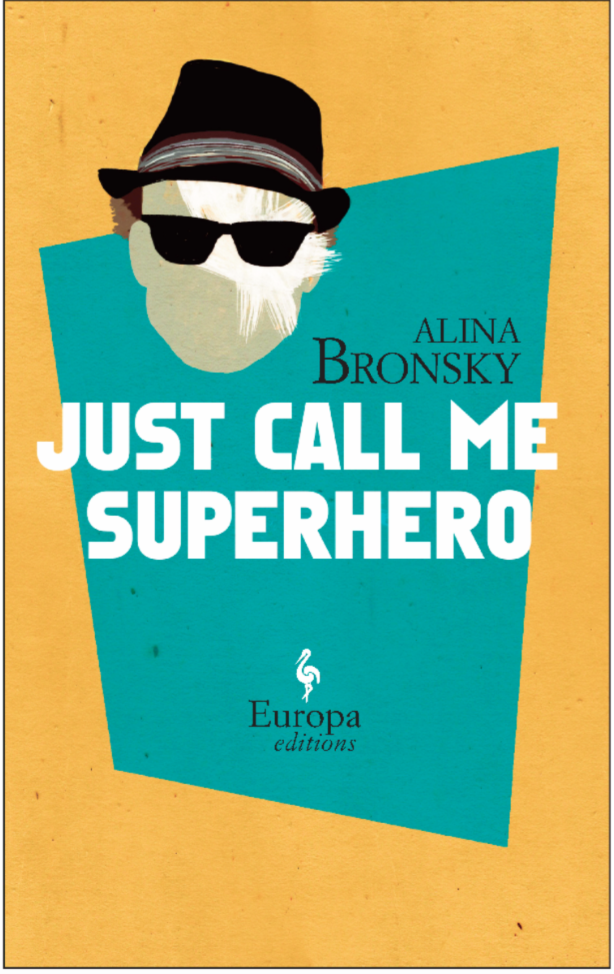
The Hottest DishesJust Call Me Superhero

Congratulations, Thomas, you have won two books by Alina Bronsky, The Hottest Dishes of the Tartar Cuisine and Just Call Me Superhero. Thanks to Europa Editions for their generosity.

Looking Back on German Literature Month IV 2014

Screen Shot 2014-09-24 at 07.23.25

Every year Lizzy and I think that German Literature Month can’t get any better and every year we are wrong. It keeps on getting better and better. More people take part – 43 this year – more blog post are being written – 174 (!) -, and the quality of the posts is surprising too. I’m so pleased and want to thank you all for participating and showing so much enthusiasm.

I tried to read all the posts, but I still have some catching up to do before next Sunday. Next Sunday Lizzy and I are giving away two books. One for the winner of the “pick and mix”- category and one for our “favourite post”. It’s not easy because there have been so many great posts.

I’m sorry if I haven’t been able to comment on some blogs, but unfortunately there are always a few with a commenting system I can’t use.

My personal month went great as well. I’ve read some outstanding books, discovered a new favourite crime writer, and managed to read most of the books on my list.

Thanks once more to everyone. And a very special thank you to my wonderful co-host Lizzy.

Wednesday is Wunderbar – German Literature Month – Giveaways

Screen Shot 2014-09-24 at 07.23.25

Thanks to the generosity of different publishers, Lizzy and I are able to give away a number of wonderful books.

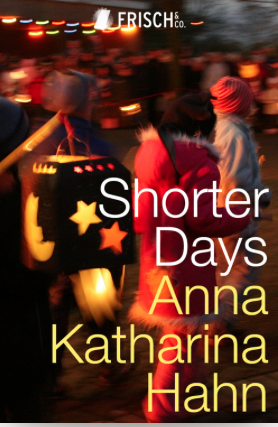
I’m particularly pleased to give away a copy of the e-book of Anna Katharina Hahn’s novel Shorter Days. I’ve often thought that it was sad that her novel hadn’t been translated because I loved it so much. I’ve read it when it came out in Germany, in 2009, at a time when I read far more German than English books. Since then it’s among my top 5 German books of the last decade. I was really happy when I saw that Frisch & Co, an e-book publisher, was going to publish the novel in October.

Screen Shot 2014-10-01 at 10.21.24

Here’s the publisher’s blurb

It’s fall in Stuttgart, just before Halloween, and thirty-something mothers Judith and Leonie are safely ensconced in their upscale apartments in one of the city’s best neighborhoods. Judith has squeezed her life into the straitjackets of stay-at-home Waldorf motherhood—no TV, no sweets, nature hikes, and, above all, routine—and marriage to staid university professor Klaus. Leonie is proud of her work at a bank and her husband Simon’s career, though she worries that she’s neglecting her young daughters, and that Simon’s work distracts him from his family. Over the course of a few days, Judith and Leonie’s apparently stable, successful lives are thrown into turmoil by the secrets they keep, the pressures they’ve been keeping at bay, and the waves of change lapping at the peaceful shores of their existence.

Shorter Days is a heartrending exploration of the joys, challenges, and dangers of modern family life.

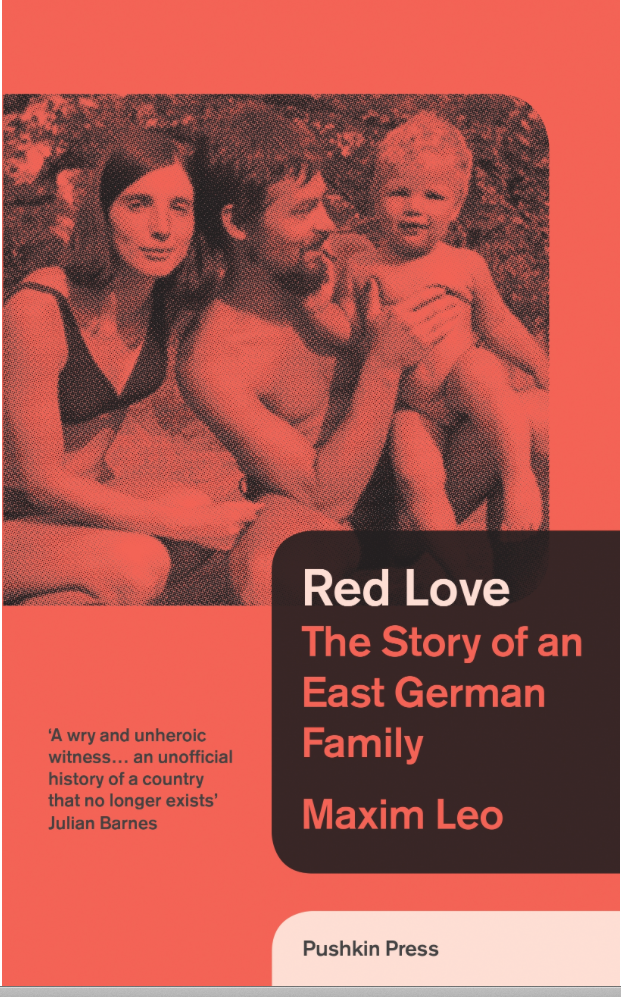
The second book I am giving away is a nonfiction book, published by Pushkin Press, Maxim Leo’s Red Love: The Story of an East German Family. I haven’t read it but it sounds very interesting.

Screen Shot 2014-10-01 at 10.28.30

Here’s the blurb

Growing up in East Berlin, Maxim Leo knew not to ask questions. All he knew was that his rebellious parents, Wolf and Anne, with their dyed hair, leather jackets and insistence he call them by their first names, were a bit embarrassing. That there were some places you couldn’t play; certain things you didn’t say.

Now, married with two children and the Wall a distant memory, Maxim decides to find the answers to the questions he couldn’t ask. Why did his parents, once passionately in love, grow apart? Why did his father become so angry, and his mother quit her career in journalism? And why did his grandfather Gerhard, the Socialist war hero, turn into a stranger?

The story he unearths is, like his country’s past, one of hopes, lies, cruelties, betrayals but also love. In Red Love he captures, with warmth and unflinching honesty, why so many dreamed the GDR would be a new world and why, in the end, it fell apart.

“Tender, acute and utterly absorbing. In fine portraits of his family members Leo takes us through three generations of his family, showing how they adopt, reject and survive the fierce, uplifting and ultimately catastrophic ideologies of 20th-century Europe. We are taken on an intimate journey from the exhilaration and extreme courage of the French Resistance to the uncomfortable moral accommodations of passive resistance in the GDR.

“He describes these ‘ordinary lies’ and contradictions, and the way human beings have to negotiate their way through them, with great clarity, humour and truthfulness, for which the jury of the European Book Prize is delighted to honour Red Love. His personal memoir serves as an unofficial history of a country that no longer exists… He is a wry and unheroic witness to the distorting impact – sometimes frightening, sometimes merely absurd – that ideology has upon the daily life of the individual: citizens only allowed to dance in couples, journalists unable to mention car tyres or washing machines for reasons of state.” Julian Barnes, European Book Prize

With wonderful insight Leo shows how the human need to believe and to belong to a cause greater than ourselves can inspire a person to acts of heroism, but can then ossify into loyalty to a cause that long ago betrayed its people.” Anna Funder, author of Stasiland


I’d like to thank Frisch & Co. and Pushkin Press for their generosity.

If you’d like to enter the giveaway, leave a comment, indicating for which book you’d like to enter. You can enter for both, of course.

Don’t miss visiting Lizzy’s site as she’s giving away titles from other publishers.

The giveaway is open internationally. The winners will be announced on Sunday, 5th October 2014. 

THIS GIVEAWAY IS NOW CLOSED: THE WINNERS HAVE BEEN ANNOUNCED.

Announcing German Literature Month III – November 2013

image

Lizzy and I are delighted to be making this announcement and we hope you’re happy to hear it.  The tweets of others as early as January of this year looking forward to German Literature Month convinced us it just had to happen.  And so your wishes have come true. This time, however, we are issuing a challenge.

GLM I and II were resounding successes and we want GLM III to follow suit.  One thing has concerned us though.   Why were the lady writers so grossly under-represented?  Only 22% of the authors read in GLM I, reducing to 19% in GLM II, were female. We want to redress that balance.  Now we’re not going all Orange prize on you.  We don’t want to exclude the great male authors in German(-language) literature.  But we are structuring the month so that there are times to focus in on the ladies.

We would, therefore, like the structure of German Literature Month III to look like this.

Week 1:  1-7.11 Ladies Week

Week 2:  8-14.11 Gents Week

Week 3: 15-21.11 Ladies Week

Week 4: 22-28.11 Gents Week

Weekend 29-30.11 Read as you please

Read anything you want: any format, any genre. As long as the works were originally written in German and are reviewed during November, they count for GLM III.  The ideal female:male author ratio at the end of the month would be 50:50.

We will also have two readalongs:

7.11 Lizzy will lead a discussion of a title to be determined by public vote. A post will follow shortly with voting options. In the meantime if there’s a title you wish to suggest, written by a female (it will be ladies’ week after all), please leave a comment.

29.11 Caroline will lead a War and Literature discussion of Hans Keilson’s Death of the Adversary.

With just 5 weeks and 3 days to go it’s time to start planning.  Check out those TBR’s and library catalogues.  Find some female authors to read.  Most of all get excited.  This is the German Lit blogging event of the year.  What’s not to get excited about?

Announcing German Literature Month II – November 2012

I’m so pleased that I can finally announce that German Literature Month is returning. Mark November in your calendar and join Lizzy and me for the occasion.

While we focused on countries last year, this year we are structuring the month around genres and literary formats.

Week 1 (November 1-7) Novellas, plays and poems
Week 2 (November 8-14) Literary Novels
Week 3 (November 15-21) Genre Fiction – Crime, Fantasy, Horror, Romance
Week 4 (November 22-30) Read as you please

We chose that sequence so that Judith’s previously announced Bernhard Schlink Week (November 11-17) would span both literary novels and genre week. So if you read something by Schlink this month, you can partake in two blogging events for the price of one. Cunning, don’t you think?

2012 is also the bi-centennial of the birth of the Brothers Grimm. We can’t let it pass without a Brothers Grimm Readathon. So we’ve put that in the calendar from 22-26 November.

My Literature and War Readalong of Gert Ledig’s The Stalin Front will bring the month to a close on the 30th.

I’m looking forward to another wonderful month with lots to read, discuss and discover. Please join us.

Looking for inspiration? Why don’t you browse through last year’s discussion or the German Literature Month 2011 page. You never know what you’ll be inspired to pick up.

Like last year there will be giveaways. Additionally I’m planning on doing a series of introductory posts during October.

Peter Stamm: On a Day Like This – An einem Tag wie diesem (2006)

Swiss author Peter Stamm was one of the discoveries of German Literature Month last November. I read and reviewed one of his short story collections In Strange Gardens and was very much looking forward to read one of his novels. I have finally managed to read On a Day Like This – An einem Tag wie diesem.

On a Day Like This tells the story of Andreas, a Swiss teacher who has been living in Paris for twenty years. He goes through the city and his own life like a visitor, never really belonging there nor to anyone. He changes his lovers, sometimes sees more than one woman at the same time. Whenever one of them wants more, he leaves them. He is like a spectator of his own life, someone who doesn’t fully participate. But “on a day like this” things change. He feels even more detached than he used to. His work as a teacher doesn’t make sense anymore. He doesn’t feel at home in Paris, doesn’t like his friends and he is filled by an incredible yearning for his home country and a woman he was once in love with, when he was barely twenty.

The fragile construction that his life has become finally falls apart completely when he goes to see a doctor because of a persistent cough. The doctor sees a shadow on his lung that could be anything, a scar or cancer. Too scared to wait for the result of some tests, Andreas, resigns from his job, sells his apartment and returns to Switzerland to find the woman he once loved.

I thought I knew how this was going to end but luckily I was wrong. It’s not a predictable story and the laconic tone doesn’t leave a lot of room for sentimentality. Like in his short stories, Stamm captures minute details of every day life. The struggle of someone who avoids relationships at any price but is filled with a deep longing to belong somewhere, to find meaning, resonates with us.

You can read this novel without being aware of the intertextuality, without knowing how much references and allusions to other works it contains but it’s still interesting to know them. The title is a reference to Georges Perec’s Un Home qui dort – A Man Asleep. The story of a young man, a bit like Bartleby who withdraws from life and only slowly finds his way back. One could say that Andreas has lived a life like that but has now woken up. Another reference is François Ozon’s movie Le temps qui reste.

But Andreas’ detachment is also reminiscent of Camus’ L’étrangerThe Outsider. Just like Meursault, Andreas doesn’t belong anywhere or to anyone, he is even an outsider in his own life, has never been capable of taking root but unlike Meursault, he wakes up and his life takes a turn.

Reading this novel had something uncanny. Andreas’ coldness is painful and it’s not easy to like him at first, but slowly, Stamm peels off layer after layer and we get a better feeling for his protagonist and why he became the way he was. There is pain and hurt and deep-rooted suspicion of anything “normal”, like families, love, career. Deep down, without knowing it, he was protesting and looking for something out of the ordinary, something more.

Stamm is a great observer, it’s the way he captures brief moments, tiny details, minutiae that make his books so special. There is the beauty of the fleeting moment, right next to the banality of everyday routine. I don’t think that this is his best novel and I preferred his short stories but there were so many wonderful scenes in this book that I still want to read his other novels too.