Best Books 2012

Last year I had a hard time to narrow down the choices and ended up with a very long list. This year it was far easier. All in all it wasn’t such a great reading year. Still, there were 13 novels and 2 non-fiction books I found outstanding.

I added the links to my posts and a quote from my reviews.

Charlotte Wood – The Submerged Cathedral

Australian author Charlotte Wood’s lyrical novel The Submerged Cathedral caught me unawares. Reading it felt at times like daydreaming. It has a hypnotic and very gentle quality that isn’t easy to put into words. It is highly symbolical and complex but still down to earth. The voice and choice of themes are so unusual, I’m really glad I discovered it on Kim’s blog last year (here).
Virginia Woolf – The Voyage Out

Reading The Voyage Out makes me realize once more what I like the most about her writing. Yes, the style, especially in the later novels, is fantastic, with its flow of interior monologue, the way she uses time and how she describes the passing of time. But there is something else that stayed with me forever since the day I have read Mrs Dalloway. Her writing has an exhilarating quality, an effervescent intensity of feeling that made me think of a German expression which I adore: “Champagner Wetter” or “Champagne weather”. Champagne weather is used to describe a very fresh but sunny spring morning on which the air is still cool, nature has returned to life, the first tentative, tiny leaves appear, the first blossoms can be seen. It’s already a bit warm in the sun but still chilly in the shade. It’s like drinking the first glass out of a freshly opened, nicely cooled Champagne bottle. It bubbles and goes to your head. Virginia Woolf’s novels are full of scenes conveying the mood of champagne weather.

Robin McKinley – Chalice

What I loved so much about this book is the atmosphere. Sweet and floating, like the scent of beeswax candles. The descriptions are beautiful and following Marisol’s journey has something enchanting and almost hypnotic. The world building is exquisite. I was there in Willowsland the whole time. And Marisol is such a great character, so real. She is very insecure and has to find her way in a hostile environment but her strength and her love for her home guide her. I liked how she lived, on her own, outside of the Great House or the village, only with her bees whom she treats like pets.

Antonio Tabucchi – The Edge of the Horizon

I liked it because it’s a very melancholic story and the descriptions are wonderful. Instead of taking a trip to Lisbon it was like taking a trip to one of those typical old Italian towns with the narrow and steep alleys. The book has many descriptions of quiet moments like this one towards the end:

“When the night began to fall, he turned on the radio without turning on the light. He was smoking in the dark while looking out of the window and observing the lights in the harbor. He let time slip away. He enjoyed listening to the radio in the dark, it gave him a feeling of distance.”

Helen Dunmore – Zennor in Darkness

Dunmore conveys the soft light of the Cornish coast, the beauty of the lovely landscape, the slow pace of life. This softness is mirrored in the way she changes the point of views, blurring the edges, softening the transitions, so that it feels as if one person’s consciousness and interior monologue, was flowing gently into that of another character. Reading it made me dreamy and I felt as if I was watching a water-color come to life. I read this book very slowly. I could have finished it in a few evenings but I put it aside frequently to make it last.

Amor Towles – The Rules of Civility

This is the reason why I always look forward to new releases because ever so often you discover a new book and simply enjoy it to the extent of wanting to start all over again after finishing it. This doesn’t always have to be a book that will enter the literary canon, it can just be a novel that makes you spend a few extremely entertaining hours. Like a well-made movie.

Charles Dickens – Great Expectations

Great Expectations offered everything I expected from Dickens and so much more. The only thing I could criticize is that it was predictable and that there were a lot of coincidences which didn’t seem all that realistic but who cares. There is so much in this novel to like that I can easily forget its flaws. The characters were, as was to be expected, quirky and over-the top, much more caricatures than portraits, but drawn which such a wonderful imagination that I loved each one of them.

Sylvia Toswnsend Warner – Lolly Willowes

I’m glad I discovered this wonderful novel. It has freshness and vivacity, is clever and witty and the descriptions are detailed and atmospheric, the portraits of the society and the people are true to life and Lolly is a very endearing character, an illustration of the importance of “a room of one’s own” and the right of women to live an independent life, even outside of society and without a man. It’s certainly one of the rare novels in which a being considered to be a useless burden on society shows that she doesn’t need society in order to live a truly happy and  fulfilled life.

Guy de Maupassant – Bel Ami

After having read Bel-Ami, I think that he might very well be one of the best writers in any genre. It’s one of the most perfect books I’ve ever read. I couldn’t name one single flaw. As much as I like Balzac there is always this and that, minor things, sure, but still, some imperfections. Not with Maupassant. What also surprised me is that this book could have been written nowadays. The society has changed, the world has changed but the way he writes about love, sex, power, money, careers… It’s outspoken and modern.

Louise Penny – Still Life

If I could I would move to Three Pines, the small fictional village, located a few hours from Montreal, in rural Québec. It’s a small village that sounds as if it was a place where time stands still and reminded me a lot of Elizabeth Gaskell’s Cranford. Old cottages face a small village center and are surrounded by old trees and lush gardens. The place is very green and picturesque, the descriptions of it atmospheric and full of tiny details of the season. It’s the end of autumn, dead leaves are falling, it rains and the temperature is slowly dropping. A storm will come and soon it will be winter. Before the crime is solved, snow will begin to fall and a lot of the investigation will have taken place in front of a cozy fire.
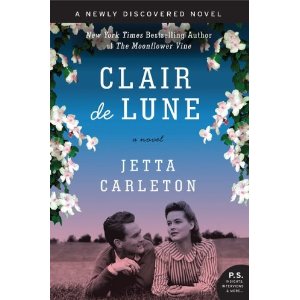
Jetta Carleton – Clair de Lune

I absolutely loved this book. I tried to slow down while reading but it was pointless, I just rushed through the pages and when I turned the last one I was quite sad. It contains such a lot of intense scenes and the most uplifting ending since I’ve read Nada last year. Since the largest part of the book is set in spring, there are a lot of wonderful outdoor scenes in which the three friends walk in the streets, stand in the rain or just stroll through the fog. There is a breathlessness and joy of life in these pages that is exhilarating. It renders the enthusiasm of young people for whom everything is a discovery, be it literature, art, music, love or friendship. At the same time there is the anxiety about war and the knowledge that the freedom and carefreeness they experience is going to end.
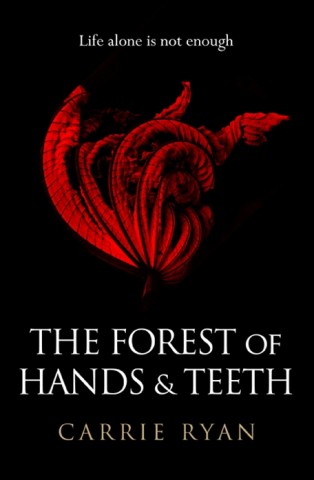
Carrie Ryan – The Forest of Hands and Teeth

I never felt like reading a zombie novel before and if it hadn’t been for Sarah’s intriguing review I wouldn’t have tried this book but I’m glad I did. It has a very special and haunting atmosphere, very captivating and oddly enthralling. The word zombies, is never used, by the way, but it’s clear from the descriptions. The Forest of Hands and Teeth is part I of a trilogy. I won’t rush to read part II and III right now but I feel like reading them some day.

Edda Ziegler – Forbidden – Ostracized – Banned

Edda Ziegler’s fantastic book on German women writers under National Socialism Verboten – Verfemt – Vertrieben (Forbidden – Ostracized – Banned) was easily my favourite read this year. I hope that some English language editor will buy the rights to this book and have it translated. It’s an introduction to the most prominent German women writers under National Socialism, a detailed historical account of the times and an analysis of publishing history.
Barbara DeMarco-Barrett

I didn” get a chance to review this yet but if you are looking for a truly original genre blend – memoir + book on writing, this may be the book for you. Or if you are one of those who keep on saying “I would write if I only had the time” – this may be for you as well. An inspiring, motivating and really lovely book on writing and the life of a writer.

Best and Worst Books 2011

Looking back I must say that this was a very good reading year. That’s fortunate for me because to be honest in many other areas it was a nightmare and I hope that next year will be better. But readingwise it was wonderful. So many new authors, so many really great books. It couldn’t have been much better.

It’s always so difficult to say which books I liked the most but I noticed that whenever I thought “Best Books” and started to make a mental list, the same 12 books popped up again and again and only when I went back to the blog and looked at all the posts, did I remember many more. So, like last year, I’m cheating and do not present a Top 10 but a best of per category.  The 12 that popped up immediately can all be found under the category beautiful and enchanting.

All the quotes are taken from my reviews.

Most beautiful and enchanting books 

Saraswati Park by Anjali Joseph

“The calm, quiet and floating feeling that permeates Saraswati Park makes this one of the most beautiful novels I have read recently. Saraswati Park is about love and marriage, loss and discoveries but also about the power of imagination and memories, the beauty and danger of reading and ultimately also about writing.”

Three Horses by Erri de Luca

Three Horses was my first Erri de Luca but it will not be the last. “The scent of earth, sage and flowers pervades a story of love, pain and war.”

Games to Play After Dark by Sarah Gardner Borden

“It is hard to believe that Games to Play After Dark is Sarah Gardner Borden’s first novel. The topic, a marriage that falls apart, may not be the most original, the young mother who tries to combine the demands of her children and her husband and her personal needs, isn’t new but how she describes it, the details she evokes, the way she looks at what has been swept under the carpet and the bed and what is hidden in the closets is extremely well done.

Back When We were Grownups by Anne Tyler

Back When We Were Grownups is a novel about possibilities, lost dreams, second chances, family and love and ultimately about chosing the right path and belonging. I really loved this book. I liked Rebecca and many of the other characters, especially Poppy, the great-uncle. I liked how it shows that choosing a partner also means choosing a life and that maybe sometimes when we feel we are just drifting we are actually just sliding along because we are on the right path.

The Fish Can Sing by Halldór Laxness

Have you ever read a book and caught yourself smiling almost all the time? The Fish Can Sing is so charming I couldn’t help doing it. It’s also quite funny at times and certainly very intriguing. I’m afraid I can’t really put into words how different it is. As a matter of fact, Halldór Laxness’ book is so unusual and special that I have to invent a new genre for it. This is officially the first time that I have read something that I would call mythical realism.

The Square Persiommon by Takashi Atoda

I think the most intense reading experience is one that connects you to your own soul, that triggers something in you and lingers. Atoda’s stories even made me dream at night. I almost entered an altered state of consciousness while reading them.  The Square Persimmon managed to touch the part in me where memories lie buried and dreams have their origin.

Stranger by Taichi Yamada

Strangers is an excellent ghost story but it is also so much more than just a ghost story. It’s a truly wonderful book with a haunting atmosphere, a melancholy depiction of solitude and loneliness with a surprisingly creepy ending.

Enchanted Night by Steven Millhauser

Hot summer nights have a special magic. In the middle of the night, when everyone is sleeping and only night creatures are awake, the hot still air is heavy, time seems to stand still and the world is indeed enchanted. This is the magic captured by Steven Millhauser in his beautiful and poetical novella Enchanted Night. I have never read this book before but the images, the atmosphere felt so familiar. It was a bit like looking into my own imagination.

Goldengrove by Francine Prose

Reading Francine Prose’s novel Goldengrove felt at times like holding the clothes and belongings of a dead person in my hands. While I read it, and for a long while after I finished it, I felt as if I was grieving. It’s a really sad novel but at the same time it’s a very beautiful novel. It also reminded me of the series Six Feet Under. There is something very similar in the mood and the characters. Although I absolutely loved this novel I could imagine it isn’t for everybody.

Nada by Carmen Laforet

 Nada deserves to be called a classic. However it isn’t a classic because of the plot which can be summarized in a few sentences but because of the style. This is a young writer’s book who manages to capture the intensity of living typical for the very young and passionate.

The Cat by Colette

La Chatte has a subject to which I relate but it is far more than the story of a relationship between a man and his cat. It is a subtle analysis of love versus passion, of marriage versus celibacy, of childhood and growing up, of change and permanence. The story also captures the dynamics of disenchantment following the recognition that one’s object of desire is flawed.

So Long, See You Tomorrow by William Maxwell

So Long, See You Tomorrow  is a beautiful and melancholic short novel that explores a wide range of themes like memory, the past, isolation, loneliness, friendship, jealousy and violence. The central theme is that of the omission and the following regret. There are so many things left unsaid, things not done or too late in a life, that this core theme will speak to almost all of us. It’s often little things but they resonate for a long time in our lives and we might wish to turn back time and undo what has happened.

Most engrossing reads

These were the books where I never checked how many pages were left because I had finished them before even getting the chance to do so. In other words, the page-turners.

Underground Time by Delphine de Vigan

Les Heures souterraines or Underground Time is a chillingly good novel and shockingly topical. It’s accurate in its depiction of life in a corporate setting and of  life in a big city. It’s a very timely book, a book that doesn’t shy away to speak about the ugly side of  ”normal lives”.

Whatever You Love by Louise Doughty

Whatever You Love is a book of raw emotions. And that from the first moment on when we read about the police knocking on Laura’s door to inform her that her daughter Betty has been killed. Laura is a very emotional woman, she feels everything that happens to her intensely, her reactions are very physical. There are many elements in the book that made me feel uneasy.

You Deserve Nothing by Alexander Maksik

You Deserve Nothing was certainly one of the most entertaining reads this year. It offers an interesting mix of alternating and very realistic sounding voices, a Parisian setting and a wide range of themes.

A Kind of Intimacy by Jenn Asworth

I already jokingly “said” to Danielle in a comment that her top 2010 might become my top 2011 and,  yes, this book is certainly a candidate as it is astonishingly good. Very dark, absolutely fascinating, engrossing, and very well executed. While starting it I had forgotten Jenn Ashworth was compared to Ruth Rendell but the association immediately occurred to me as well.

everything and nothing by Araminta Hall

everything and nothing was one of those super fast reads, a book that I could hardly put down. Really riveting. The only complaint I have is that this is labelled as a psychological thriller. Although there is a part of it reminiscent of Ruth Rendell, it is like a background story and not really very gripping. At least not for me. Still I consider this to be a real page-turner for the simple reason that it captures chaotic family life in so much detail and explores some of the questions and problems parents who work full-time would face.

Best Books – Literature and War Readalong

How Many Miles To Babylon? by Jennifer Johnston

I loved How Many Miles to Babylon? I think it is a beautiful book. It doesn’t teach you as much about WWI as Strange Meeting (see post 1) but it says a lot about Irish history. I found this look at the first World War from an Irish perspective extremely fascinating.

The Things They Carried by Tim O’Brien

I expected The Things They Carried to be a very good book. A very good book about the war in Vietnam. What I found is not only an outstanding book about the war in Vietnam but also about the art of storytelling. I’m really impressed.

The Silent Angel by Heinrich Böll

Böll has a gift for description which is rare. And he represents a rare model of moral integrity, he is an author who wrote for those who have nothing, who tried to unmask hypocrisy and uncover everything that was fake and phony in post-war Germany. I don’t know all that many authors who are so humane.

Most touching

On the Holloway Road by Andrew Blackman. I read this novel in the summer and it’s one of a few books I haven’t reviewed. In this case because the reading caught me completely unawares. I had such an emotional reaction that I had to talk about it all the time. I still feel like reviewing it but I need some distance

Best classics

Mme de Treymes by Edith Wharton

Madame de Treymes has a Parisian setting which always appeals to me, as sentimental as this may be. It is a cruel little book and a very surprising one. All in all there is not a lot of description of the city itself, the novel rather offers an analysis of the society. It is interesting to see how Americans perceived the Parisian society and the differences in their respective values.

Hotel Savoy by Joseph Roth

Hotel Savoy has really everything. It is funny, sad, picturesque, touching and bitter-sweet and the ending is perfection. Roth describes people, the hotel and the little town with great detail. And every second sentence bears an explosive in the form of a word that shatters any illusion of an idyllic life. Roth served in WWI and never for once allows us to forget that the horror of one war and subsequent imprisonment have only just been left behind  while the next one is announcing itself already.

Grand Hôtel by Vicki Baum

Grand Hôtel is set in a luxurious hotel in Berlin between the wars. It’s walls shelter a microcosm of German society. The novel draws a panorama of the society and the times, reading it is fascinating and gives a good impression and feel for the time and the people. Vicki Baum includes a wide range of characters, the porter who waits for his wife to give birth to the first child, the aristocratic head porter Rohna, the many drivers and maids as well as some very interesting guests. Including the employees of the hotel gives the book a bit of an upstairs-downstairs feel and permits insight into the lives of the “simple people” who earn just enough not to starve.

Pedro Parámo by Juan Rulfo

It’s a powerful novel infused with the spirit of the Mexican Día de los muertos or Day of the Dead at the same time it is an allegory of oppression and freedom that comes at the highest cost. When you read Pedro Páramo it becomes obvious that “magic realism” has many faces.

Best non-fiction books

Making Toast by Roger Rosenblatt

I found Making Toast wonderful. It contains a lot of little endearing episodes like the one that gave the book its title, in which Rosenblatt states that the only thing he is really good at is making toast for the whole family in the morning. He describes how he gets up very early and, taking into consideration each family member’s taste, he produces a multitude of personalized breakfast toasts.

The Film Club by David Gilmour

The relationship between these two is unique. So much honesty, trust and friendship between a father and a son is wonderful. Not every parent has the chance to spend as much time with his kid, that is for sure, but every parent has certainly spent enchanted moments with his/her child and will be touched by this story. For us film lovers The Film Clubis  a great way to remind us how many movies there are still to discover, how many to watch again and in how many different ways we can watch them.

Howard’s End is on the Landing by Susan Hill

I can’t tell you exactly how long it took to read Howards End is on the Landing. An evening? Two? Certainly not longer. I devoured it. What is more fascinating to read than a bookish memoir? And written by a writer.

The Gifts of Imperfection by Brené Brown

Brené Brown is a researcher, specialized in topics like shame and perfectionism and analyzing how they are linked and keep us from living wholeheartedly. She is an incredibly honest and open person who is able to show her vulnerability.

Natural History of Destruction by W.G. Sebald

On the Natural History of Destruction is one of the most amazing books I have read this year. For numerous reasons. It is in line with the topic of my reading projects and readalong and contains descriptions that I have never read like this. On the other hand it gave me the opportunity to see another side of Sebald. One that I didn’t expect.

Cinderella Ate My Daughter by Peggy Orenstein

What happens when a feminist who knows exactly how things should be, gets pregnant and the child is – horror on horror – a girl? This is pretty much how Peggy Orenstein opens her entertaining, thought-provoking and occasionally quite shocking account Cinderella Ate my Daughter about what she sub-titles “Dispatches from the front-lines of the new girlie-girl culture”.

The Equality Illusion by Kat Banyard

Kat Banyard’s The Equality Illusion: The Truth about Men and Women Today takes an unflinching look at what it means to be a woman today and, due to the fact that Banyard is British, especially in the UK . Still, whether you are an Afghan woman fighting for girl’s rights of literacy or an American doctor performing late stage abortions, you have one thing in common: you lead a dangerous life and might end up being killed. Both things happened.  The first happened in Afghanistan in 2006, the second in the US in 2009. They illustrate the illusion of equality and show what a global phenomenon it is.

New Author Discoveries

These are the authors that made me think “I would like to read all of his/her books”.

Beryl Bainbridge,  William Maxwell, Jennifer Johnston, Peter Stamm, Annie Ernaux

The worst book this year

There is a lonely winner this year and it has so far not even been reviewed. I’m still determined to do so but I find adding quotes so tedious, only in this case it’s necessary to illustrate the problem I had with the book. Now you are dying to know the title, aren’t, you?

In a Hotel Garden by Gabriel Josipovici

Louise Welsh: Tamburlaine Must Die (2004)

It’s 1593 and London is a city on edge. Under threat from plague and war, it’s a desperate place where strangers are unwelcome and severed heads grin from spikes on Tower Bridge. Playwright, poet, spy, Christopher Marlowe has three days to live. Three days in which he confronts dangerous government factions, double agents, necromancy, betrayal and revenge in his search for the murderous Tamburlaine, a killer who has escaped from between the pages of Marlowe’s most violent play. The Final Testament of Christopher Marlowe is a swashbuckling adventure story of a man who dares to defy God and state and who discovers that there are worse fates than damnation.

I really enjoyed Tamburlaine Must Die. I liked Louise Welsh’s latest novel Naming the Bones (here’s the review) and wanted to read another one and I wasn’t disappointed. However I know the book got very mixed reviews and this mainly because of the language. Clearly Welsh tried to write 16th century English and might not have been 100% successful. I didn’t care or – because I’m not a native speaker – didn’t notice. I thought the language was beautiful.

In her novella Louise Welsh lets Christopher Marlowe, the famous playwright, tell his final ten days. Someone has written a libel in his name, imitating his writing, signing with the name of the main-protagonist of one of his plays, Tamburlaine. Welsh imgines how and why he must have been killed, how he spent his last days, sleeping with men and women, drinking too much, picking fights, putting himself in danger through his blasphemies.

I think Christopher Marlowe is one of the most fascinating figures of literature. An immensely gifted writer, a rake, a debauchee, a spy, a rough neck, a ruffian, an innovator and subversive man  and many other things. The book is atmospheric and evocative, you see the streets of London, the intrigue, the danger of a city afflicted by the plague, the violence of the times. Any sign of not following the Church, not being loyal to the Queen, being a homosexual were highly dangerous.

We know Marlowe escaped the dungeon but only to face death through an unknown enemy. His murder has never been solved and to this day there are many speculations.

I think I start to realize what type of historical novels I like. I like it when a writer manages to give a voice to historical figures, makes them come alive, imagines how they thought and felt.

One thing that has been criticized is that she didn’t depict a fear-ridden Marlowe although he knew he was going to be killed. I think from what I know of the man, he wasn’t too anxious, he threw himself into life until his last moment. He would have gladly gone on living, writing more plays but if this wasn’t to be, then it wasn’t. As simple as that.

The best about the book is that it sparked my imagination. I’m in the mood to read Marlowe’s Tamburlaine, The Great and Doctor Faustus which influenced Goethe and Thomas Mann and I would also be interested in reading about him.

Louise Welsh based her book to a large part on Charles Nicholl’s The Reckoning: The Murder of Christopher Marlowe but David Rigg’s The World of Christopher Marlowe sounds equally interesting.

Has anyone read any of these or other books about Tudor England?

Jenn Ashworth: Cold Light (2011) Crime and Social Realism

An unsettling, darkly humorous tale of teenage girls in a predatory adult world, and a cocktail of lies, jealousy and unworldliness that leads to tragedy.

I have been looking forward to Jenn Ashworth’s new novel since I read A Kind of Intimacy at the beginning of the year (here’s the review). I had a bit of a problem not comparing the two books but once I let go of that I really liked this novel, it’s disturbing and chilling and you only find out at the very end what really happened.

Cold Light is a very appropriate title for this novel, although – as will be explained towards the end – it refers to bioluminescence.  It is a cold world in which today’s girls move and a predatory one. But is this really all that new? There is a lot that reminded me of my own coming of age. Not for anything in the world would I want to be 14 again. The competitions, the jealousy, the insecurity and the constant fighting off of boys or hoping to be noticed by them – depending on where on the good-looking scale you were positioned – was by far too upsetting. It’s all very horrible and can damage you for life. But there are other things young girls have to cope with nowadays that were not even thinkable 10-20 years ago. And today’s Britain (I’m just finishing Kat Banyard’s book The Equality Illusion and it echoes Cold Light) seems to be even worse than many other places.

Chloe is dead. Chloe will be 14 forever, 14, pretty and romantic. Since her presumed suicide 10 years ago she has become something like a cult figure. A symbol for young love and innocence. Now, ten years later, her former best friend Laura sits in front of her TV in a shabby little apartment and watches the groundbreaking ceremony for her memorial. The ceremony comes to an abrupt and macabre end when human bones are found in the damp soil. Laura nows whose bones they are and from this very first scene in the novel we know that some things must have gone seriously wrong ten years ago and we also know that there is a lot to be found out about Chloe, her ex-boyfriend who died with her and everyone else who was involved.

Laura will be watching TV all night, later joined by Emma with whom she is still in contact. They will be smoking and drinking until the early morning. Through flash backs and parts of their discussion the truth is slowly revealed. It’s the story of three friends who are jealous of one another, an older boyfriend who seems weird, a town in a state of alarm as a flasher who is getting more and more violent is chasing young girls. The three girls are only 14 yet they smoke, drink and have sex. We also hear a lot about innocent Chloe, how she exploited the obsessive best friend feelings of the others, how narcissistic and bullying she was, her delinquency and how she always got away with everything just because she was so pretty. Reading the story from Laura’s point of view we discover a lot about her family, the sadness of her childhood, about her father who seems to suffer from some kind of mental illness, her controlling mother and her obsession with Chloe that turns her into a stalker.

It’s an excellent book, disturbing and accurate and reminded me a great deal of the movie Fish Tank. I also thought of Harry Brown. Both movies paint a bleak picture of British youth. The first one also focusing on young girls being as well prey, victims and perpetrators.

Thanks again to Hodder and Stoughton who send me a review copy.

Winners of the Giveaway of Jenn Ashworth’s Cold Light

As promised, I am announcing the winners of the giveaway today. I have used random. org’s list generator.

The two copies go to

Litlove from Tales from the Reading Room

and

Amy from The House of the Seven Tails

Congratulations.

I will contact you per e-mail or you can send me your address via e-mail.

I have read my copy already and will be posting on it soon.

Literature and War Readalong May Wrap up: The Sea and Poison


Shusaku Endo’s novel The Sea and Poison proved to be a challenging read which is also reflected in the fact that some reviews will still be posted. I will of course link to them once they are done. For the time being you can always read Novroz’ review which complements my own very well.

For the time being thanks a lot for those who already participated. I know that the idea of reading about vivisection held some readers back but it isn’t a graphic book at all. Nevertheless it is a depressing book that seems to center on two major themes, one of which hospitals and their staff, the other war crimes.

What depressed me was the description of the hospital and the doctors. My late mother spent more time in hospitals than outside, so I have had my fair share of contact with doctors and most of them were not like Suguro but rather like Toda or Hashimoto. Doctors in hospitals that is. I’d like to emphasize this. Doctors who stay in hospitals after having been interns follow another agenda. A hospital in many cases isn’t much different from a Corporate Company. It’s all about results and money and hierarchy. What I didn’t know at the time of my reading is the fact that Endo suffered all his life. He was very ill, had tuberculosis and some of the treatments described in the novel in great detail were treatments he had to undergo regularly. For anyone interested in this background here is an interesting analysis.

Thanks to Kevin who did some research and added them in his comments, it became clear that the book was based on facts and that there had indeed been American POW on whom they performed vivisections. Here is the link he added to the comments section.

This leads us to the biggest problem of this book, as Kevin and Anna (Diary of an Eccentric) pointed out and which was probably the base for my doubting the incident. Why did Endo chose to describe the vivisection as if it had been performed under anesthesia when it is apparently well-known, that like in Germany, the vivisections were performed without the prisoners being anesthetized? I have no answer to this question and don’t want to start speculating.

Does anyone have an idea?

Jenn Ashworth: Cold Light (2011) Giveaway

This is the tale of three fourteen-year-old girls and a volatile combination of lies, jealousy and perversion that ends in tragedy. Except the tragedy is even darker and more tangled than their tight-knit community has been persuaded to believe.
Blackly funny and with a surreal edge to its portrait of a northern English town, Jenn Ashworth’s gripping novel captures the intensity of girls’ friendships and the dangers they face in a predatory adult world they think they can handle. And it shows just how far that world is willing to let sentiment get in the way of the truth.

Anyone who follows this blog knows how much I loved Jenn Ashworth’s novel A Kind of Intimacy (here is my review). That’s why I am especially pleased to be able to giveaway 2 copies of her new book Cold Light courtesy of Hodder.co.uk.

The giveaway is open internationally. All you need to do is leave a comment and tell me if you would like one of the books. If there is a lot of interest, I will determine the winners with the help of random.org. They will be announced next Monday.

I started reading my review copy and so far I’m enjoying it a lot. It’s different from A Kind of Intimacy but quite captivating as well.

The giveaway ends Sunday June 5 2011.