The Canadian Book Challenge 6

I was hoping to find a Canadian Literature Challenge. These days I’m very interested in literature written in English outside of the UK and the US. The Canadian Book Challenge seemed just the thing I was looking for. I came across the challenge on Gavin’s blog Page 247.

The host is John Mutford from The Book Mine Set. His blog is dedicated to Canadian literature. If you are interested here’s the sign up post with all the details you need to know. In theory the idea is to read 13 books. It sounds like a lot but interpreting what John writes I would say it doesn’t seem as if you must reach that number. Aim for it, if you read less, it’s not the end of the world, if you read more, all the better.

I have a lot of Canadian literature on my book piles and have read quite a few authors in the past. Authors writing in English and in French. I asked and if you’d like to join, you can choose books written in English or French as long as the author or the topic is Canadian.

I know that I usually do not stick to my book lists but I still keep on making them. Possible choices for this challenge are

A Map of Glass by Jane Urquhart. Urquhart isn’t an easy writer but she is a fascinating one who writes beautifully.

Margaret Atwood’s Lady Oracle. Atwood is another immensely fascinating author I have meant to return to. I loved Cat’s Eye and Surfacing and some of her short stories.

The Birth House by Amy McKay. I haven’t read this author yet but everyone who read this novel was impressed.

The Stone Angel by Margaret Laurence is a book I discovered not too long ago on Danielle’s blog (A Work in Progress). It sounded like another Canadian must-read.

I would like to read the one or the other novel by Nancy Huston and some other Canadian authors writing in French.  Since I recently discovered Louise Penny’s Canadian crime series, I’ll certainly read one of those as well.

Are you joining? Do you have any Canadian literature suggestions?

Japanese Literature Challenge

Every year the Japanese novels I read are among my favourites. While I missed Bellezza’s Japanese Literature Challenge last year, I’m very keen on participating this year. It is a 7 month long challenge which has started this month and runs until January 30 2013.

I’m not going to share a proper list at this point although I have a pile with interesting books. Mostly in French or German translations which makes it tricky to find the English titles and, as so often, they do not even exist in an English translation.

A few of the translated choices are

Ueda Akinari’s Tales of Moonlight and Rain.

Soseki Natsume’s Kokoro

Lady Sarashina As I Crossed A Bridge of Dreams: Recollections of a Woman in 11th Century Japan.

I already know that one of my first contributions will be the July title of my Literature and War Readalong.

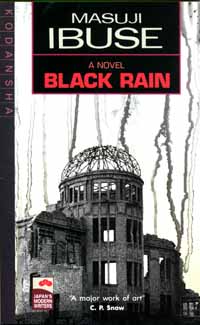
Masuji Ibuse’s Black Rain is said to be one of the most important novels which have been written on Hiroshima.

If you participate in the Japanese Literature Challenge you might consider joining us in reading this novel.

The discussion is due on Monday, July 30 2012. An introduction post to this novel will follow shortly.

Alice Hoffman: The Ice Queen (2005)

I don’t know many writers whose first sentences draw you into a novel like Alice Hoffman does

Be careful what you wish for. I know that for a fact. Wishes are brutal unforgiving things. They burn your tongue the moment they are spoken and you can never turn them back. They bruise and bake and come back to haunt you. I’ve made far too many wishes in my lifetime, the first when I was eight years old.

This is the lesson the narrator learns when she is still a little girl at the beginning of Alice Hoffman’s novel The Ice Queen. In a moment of intense anger she wishes her mother dead. A few hours later she and her brother are informed that their mother has died in a car accident. This freezes the narrator’s heart. Nobody will ever be allowed to approach her emotionally, she is shut down. She will live like a spectator, never get involved. When she is older she becomes a librarian, lives with her grandmother, has a lover, a policeman. Apart from being interested in all the possible ways someone can die, her life is uneventful. When her grandmother passes away, she decides to leave New Jersey and move to Florida where her brother lives.

She finds a job at the local library and resumes her uneventful life until she is struck by lightning. That changes everything. She joins a local support group and makes friends with a fellow lightning strike victim, Renny. When she hears of Seth, the man who is called Lazarus, because he returned from the dead, she starts to develop an obsession and finally follows him until he lets her into his house and his heart. The relationship they begin is one of intense passion and not very healthy. They are both initially trying to hide dark secrets from each other but ultimately their relationship will help them reveal and accept them.

The Ice Queen is a peculiar story. To some extent it is a re-imagination of  Andersen’s fairy tale The Ice Queen but many other tales have been incorporated and are mentioned throughout the book. Beauty and the Beast is as important as Amor & Psyche. And fairy tales are also present as topic. The narrator speaks about them, mentions them.

The main character isn’t very appealing, I can’t say I ever sympathized with her and her life much but I learned a world of things I didn’t know about lightning strike victims. How tragic it is, how much your life can be altered by it, the wounds, the scars. The worst that happens to the narrator is that she looses the ability to see the color red. This triggers the love story with Seth because she dresses and behaves differently just because all that was formerly red to her looks white. It’s amazing to imagine something like this and I found it fascinating to see the world described through the eyes of someone who sees white instead of all the shades of red. While it seems visual problems are common in lightning strike victims,  I’m not so sure something like this could happen but I was equally not sure that people could get so-called lightning figures that make them look as if whole trees had been burned into their skin. But then I looked it up and as amazing as it may seem, the phenomenon, which is called Lichtenberg figures, really exists (the link will guide you to some photos).

While as a whole this is one of the rare Alice Hoffman novels that didn’t work for me so much, there were a lot of amazing elements, as usual. One of the main characters, Renny, believes that every person has a defining secret and that it makes him or her tick. It’s an interesting concept and the novel elaborates on it.

I also liked the aspect that the narrator is a librarian and that for her each library card represents a person’s secrets. She thinks the information on it is as personal as diary entries.

What people read revealed so much about them that she considered our card catalog a treasure house of privileged secrets; each card contained the map of an individual’s soul.

I have read quite a lot of Alice Hoffman’s novels and find her a fascinating writer. Unusual and captivating and highly quotable. This isn’t one of her best in my opinion but it’s not bad at all. I just didn’t care much for the narrator and the story is based more on themes than plot which makes it somewhat disparate.

Of all the Hoffman novels I read so far I liked Seventh Heaven, Turtle Moon and The River King best. Second Nature and Here on Earth follow closely but I cared less for Practical Magic and Illumination Night.

Which is your favourite book by Alice Hoffman?

The review is a contribution to Carl’s Once Upon a Time Challenge. I am glad I made it. I had a list with several books and wanted to read at least one. I’ve read one and half. While book two – Patricia Mc Killip’s Solstice Wood – is much better than The Ice Queen, I will not be able to finish it this month.

Paris in July 2012

Paris in July was one of the events I enjoyed the most last year and I’m really glad that Karen from Book Bath and Tamara from Thyme for Tea are organizing it again.

The rules are very simple. If you’d like to join all you have to do is review a French book or movie or write about something French. Music, art, cuisine. Anything you like. It’s not a challenge so you don’t need to commit to anything. Details can be found here Book Bath and here Thyme for Tea and here is the sign up.

I’ve been reading quite a lot of French books recently which I haven’t even reviewed yet, so this is certainly something I’m going to do.

While we are free to choose any French books we like, I will focus on books set in Paris. Possible choices are

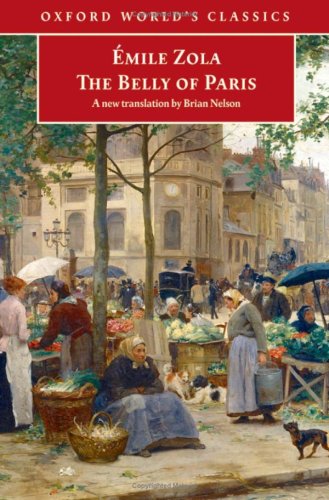
Zola’s The Belly of Paris – Le ventre de Paris

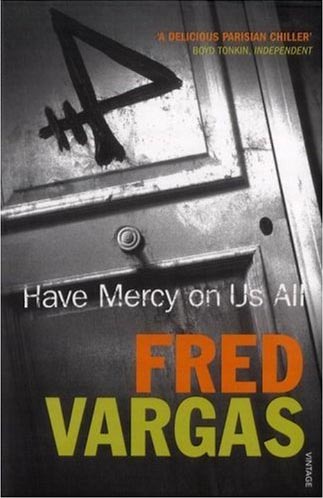
Fred Vargas’ Have Mercy On Us AllPars vite et reviens tard. You cannot go wrong with Fred Vargas. She is one of the best crime writers writing today. If you haven’t read her yet, just pick any of her books.

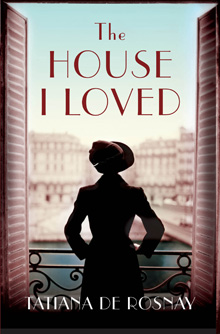
Tatiana de Rosnay’s The House I LovedRose. While she is known as a French writer, this is one of the books she has written in English. It’s a historical novel set in 19th century Paris during the time when the city was undergoing major changes.

I hope to review a movie as well but I’m not sure yet which one it will be. Maybe it’s time to re-watch the movie which is possibly my favourite French film.

I know I will not be able to be as active as last year as July is also Spanish Literature Month.

Are you going to join? Do you already know what you will read?

Spanish Literature Month – July 2012

There have been requests last year and then a rumour started to spread and now it’s official: July is Spanish Literature Month. Stu (Winstonsdad’s Blog) and Richard (Caravana de recuerdos) who co-host this event have organized a watchalong (Carlos Saura) and two readalongs (Juan Carlos Onetti A Brief Life and Enrique Vila-Matas Bartleby and Co.) but if you cannot make them you are free to choose whatever you like. If you want to join, just leave a comment at one of the two blogs. Here’s Stu’s intro post and here the one by Richard.

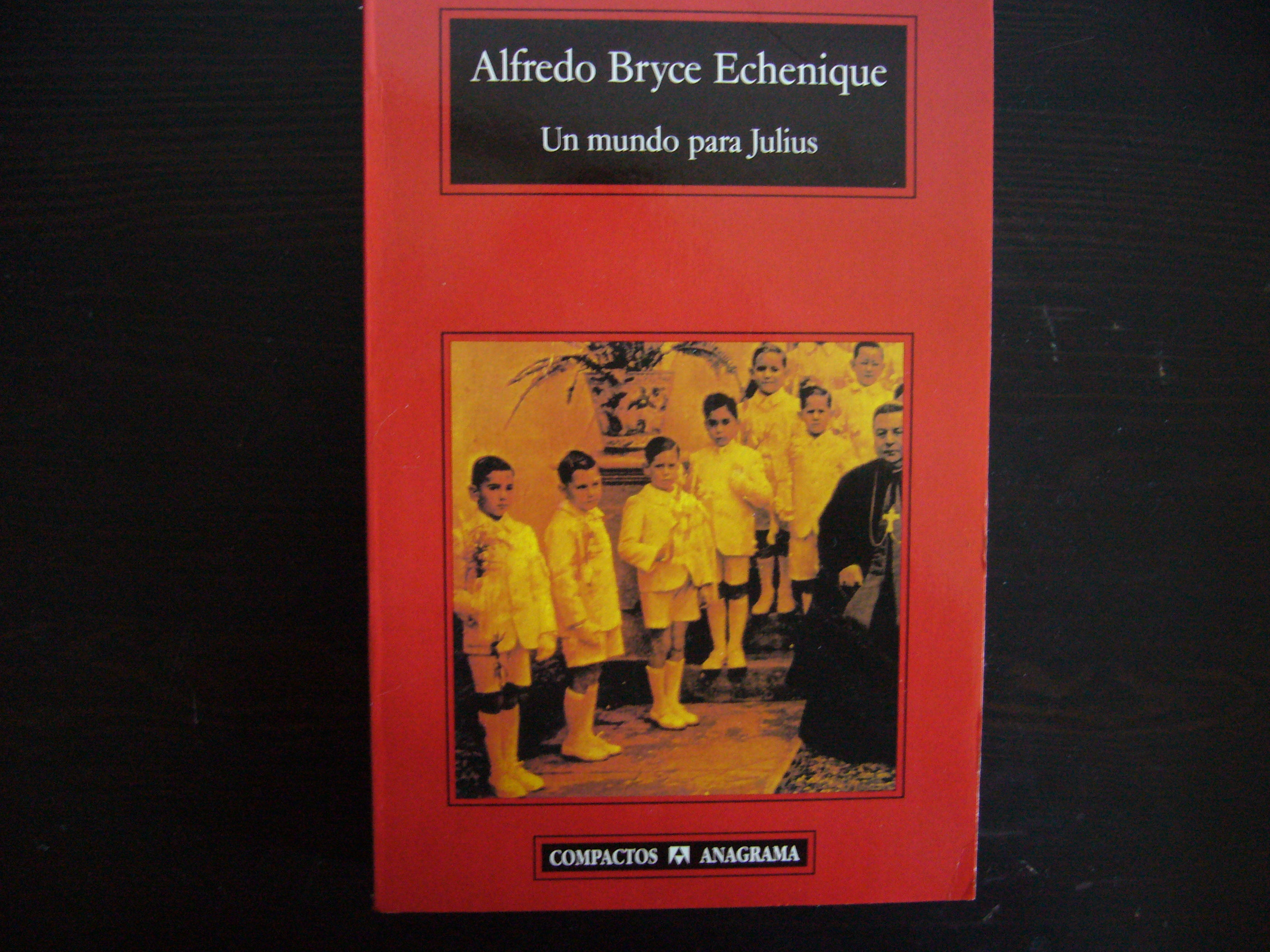
As you can see I have an idea what I would like to read. Since I may not be able to read a lot, I want at least to read one of the books I have in Spanish. A few years back I bought Un mundo para Julius by Peruvian writer Alfredo Bryce Echenique. I like books about the end of an era. They are usually lyrical, nostalgic and melancholic. This seems to be no exception.

It has been translated into English as A World for Julius.

Julius was born in a mansion on Salaverry Avenue, directly across from the old San Felipe Hippodrome.” Life-size Disney characters and cowboy movie heroes romp across the walls of his nursery. Out in the carriage house, his great-grandfather’s ornate, moldering carriage takes him on imaginary adventures. But Julius’s father is dead, and his beautiful young mother passes through her children’s lives like an ephemeral shooting star. Despite the soft shelter of family and money, hard realities overshadow Julius’s expanding world, just as the rugged Andes loom over his home in Lima. This lyrical, richly textured novel, first published in 1970 as Un mundo para Julius, opens new territory in Latin American literature with its focus on the social elite of Peru. A member of that elite, Bryce Echenique incisively charts the decline of an influential, centuries-old aristocratic family who becomes nouveaux riches with the invasion of foreign capital in the 1950s. A World for Julius, his first novel, marks the first appearance in English of this important Peruvian writer, whose Latin American postmodern fiction has won critical acclaim throughout the Spanish-speaking world.

I may end up reading something less challenging in terms of pages. Two authors I like a lot are Almudena Grandes from Spain and Maria Luisa Bombal from Chile. I still have some of their books I have not read.

Product Details

The crime novels by Teresa Solana A Not So Perfect Crime and A Shortcut to Paradise are possible choices as well.

Or another Peruvian author. I just recently got Vargas Llosa’s Death in the Andes – Lituma en los Andes.

Set in an isolated, run down community in the Peruvian Andes, Vargas Llosa’s riveting novel tells the story of a series of mysterious disappearances involving the Shining Path guerrillas and a local couple performing cannibalistic sacrifices with strange similarities to the Dionysian rituals of ancient Greece. Part-detective novel and part-political allegory, it offers a panoramic view of Peruvian society; not only of the current political violence and social upheaval, but also of the country’s past, and its connection to Indian culture and to pre-Hispanic mysticism.

I have read Juan Carlos Onetti before and liked him very much. To make sure that I really read at least something, I will join the readalong of A Brief Life. The details can be found on Richard’s and Stu’s blog.

I could suggest some other books but I think Stu and Richard are doing a great job at pointing out books you should discover.

Are you joining as well? What are you going to read? Do you have favourites of Latin American and Spanish literature?

Muriel Spark: Territorial Rights (1979)

I have been looking forward to Muriel Spark Week hosted by Simon from Stuck in a Book  and Harriet from Harriet Devine’s Blog. I liked both of the Muriel Spark novels I’ve read so far,  The Girls of Slender Means and The Prime of Miss Jean Brodie. It was about time to read another one. Territorial Rights had been on my piles for a while and that’s why I decided to read it.

Sadly this book did not work for me and if it hadn’t been for Muriel Spark Week  – and if I was not a notorious book-finisher – this would have been a DNF for me. But first things first.

Territorial Right is set in Venice and as a Venice novel it is remarkably well done. I was there, I saw the streets, the canals, the piazzas, the palazzi, the churches, the street cafés and the back gardens. I enjoyed the descriptions a lot.

Now take this setting and throw in a motley crew of people, all magically coming to Venice at the same time. They know each other either from Paris, England or Bulgaria. They do not only know each other but they are all connected and even fleeing from each other only to bump into each other in Venice. Hmmmm. Add a dark secret that is hidden by two elderly women owning one of the local pensions, murmur of political machinations, drug dealers, an unfaithful husband, an elderly  woman wo likes young men, a Bulgarian artist in exile who jumps in the canal because she finds out she has been in bed with a Jew, a rich art dealer who is in love with a young man who disappears while his father abandons his lover for his sons ex-lover…

All is resolved in the end. Nothing was as it seemd at first. We find out what was hidden in the garden and get to know the past and the future of each character. Does it sound quirky? It sure was.

I think there is a lot going on in this novel that mirrors unresolved conflicts in Spark’s life and I’m sure from what little I have read after finishing the book that it would be interesting to analyze it in the light of this. Little incidents like the girl jumping into the canal to clean herself after having had sex with a Jew are meaningful when you know Muriel Spark had a falling out with her son because he was an Orthodox Jew and she a devout Catholic (as read on Wikipedia).

Since this is a very well written book, I can see how it could appeal to someone else. It’s a must for those who love novels set in Venice.

I hope others have been more successful in their book choices. Despite not having liked this, I will certainly read another of her novels soon.

Has anyone read Territorial Rights? Did you like it?

Once Upon A Time Challenge VI

I’m so glad that Carl’s Once Upon a Time Challenge has started. I have been looking forward to it since weeks. Every since I have finished Robin McKinley’s Chalice and was in the mood to read more fairy tale retellings and fantasy.

If you want to know the details of the challenge, do please visit Carl’s blog. You have different challenge levels and four genres to choose from: Fairy tales, Folklore, Mythology and Fantasy. The challenge runs from March 21st to June 19th. There will be two readalongs as well. The first one in April – Brandon Sanderson’s Mistborn, the second in May – Neil Gaiman’s Neverwhere. I would love to join for Mistborn.

I will be busy in the next few months and so I decided to do The Journey which is only one book.

One reason why challenges are so much fun is the fact that one can make a list. Although I have only committed to one book, I may read more. I want to focus on fairy tale retellings and fantasy this year and here a few of my possible choices.

Ash by Malinda Jo

The Rose and the Beast by Francesca Lia Block

Briar Rose by Jane Yolen

The True Story of Hansel and Gretel by Louise Murphy

Solstice Wood by Patricia McKillip

Spindle’s End by Robin McKinley

The Ice Queen by Alice Hoffmann

How about you? What are you going to read?