J.G. Ballard: The Drowned World (1962)

The Drowned World

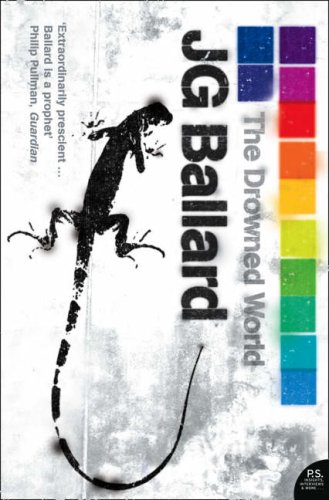
Ballard is an author I’ve always wanted to read, but I was never sure which novel to pick first, so I postponed reading him again and again. Why I finally picked  The Drowned World is an interesting story because it mirrors the content of the book in an uncanny way.

I keep on dreaming about the city I’m living in. In my dreams it doesn’t look like the actual city but is completely overgrown, drowning in vegetation, all the streets look like rivers of grass. It’s not hot in this city and it’s not necessarily a post-apocalyptic setting, but it’s a completely altered landscape. Curious to see whether anyone ever wrote something like this, I googled a few key words, which eventually led me to Ballard’s The Drowned World. What an amazing experience to find an echo of my own dreams and imagination in this book. Furthermore I have always been very fond of  surrealist paintings and the idea of archetypes makes sense to me; both are important elements in this novel.

The Drowned World is set in a post-apocalyptic world, or, to be more precise, in a submerged, overgrown, tropical lagoon that once used to be the city of London. Solar radiation melted the ice-caps; the land was flooded. The heat and the floods have changed the climate completely.

Dr Robert Kerans, a team of researchers and an army unit map the flora and fauna of the different lagoons. While the team wants to move north, Kerans and a few others want to remain south. They have begun to dream strange dreams, which are a sign of their devolution. It seems as if they were regressing; the changing landscape has affected their psychology.

As Bodkin, one character, says:

“Well, one could simply say that in response to the rises in temperature, humidity and radiation levels the flora and fauna of this planet are beginning to assume once again the forms they displayed the last time such conditions were present – roughly speaking the Triassic period.”

Because the landscape once used to look like it does now, the subconscious of the people reacts:

“But I’m really thinking of something else. Is it only the external landscape which is altering? How often recently most of us have had the feeling of déjà vu?, of having seen all this before, in fact of remembering these swamps and lagoons all too well.”

The premise is that everything the species has ever experienced is stored in the subconscious of each one of us and with the devolution, the memories are triggered:

“The brief span of an individual life is misleading. Each one of us is as old as the entire biological kingdom, and our bloodstreams are tributaries of the great sea of its total memory.”

I thought this was highly fascinating and it does make sense. Maybe not as literally as Ballard states it, but it’s sure that landscape influences us, it even influences our deep psychology, and it’s entirely possible that the memories of the species are stored in our subconscious as well.

The novel is not very action-driven but there is conflict. At first the army wants everyone to leave and move up north, but they finally give in and depart. Kerans, Bodkin and Beatrice Dahl – Kerans enigmatic lover – stay behind. They know they will not be able to survive for long but before they can decide on their future Strangman and a group of pirate-like characters appear. They are looters. They travel from lagoon to lagoon and rob all the submerged buildings of their riches. What nobody knows at first is that they dry up the lagoons and towards the end of the novel, we see the silt- and algae-covered London emerge from the waters. Another uncanny moment.

The end is predictable, but that doesn’t make it any less powerful. It reminded me a lot of Joseph Conrad’s Almayer’s Folly.

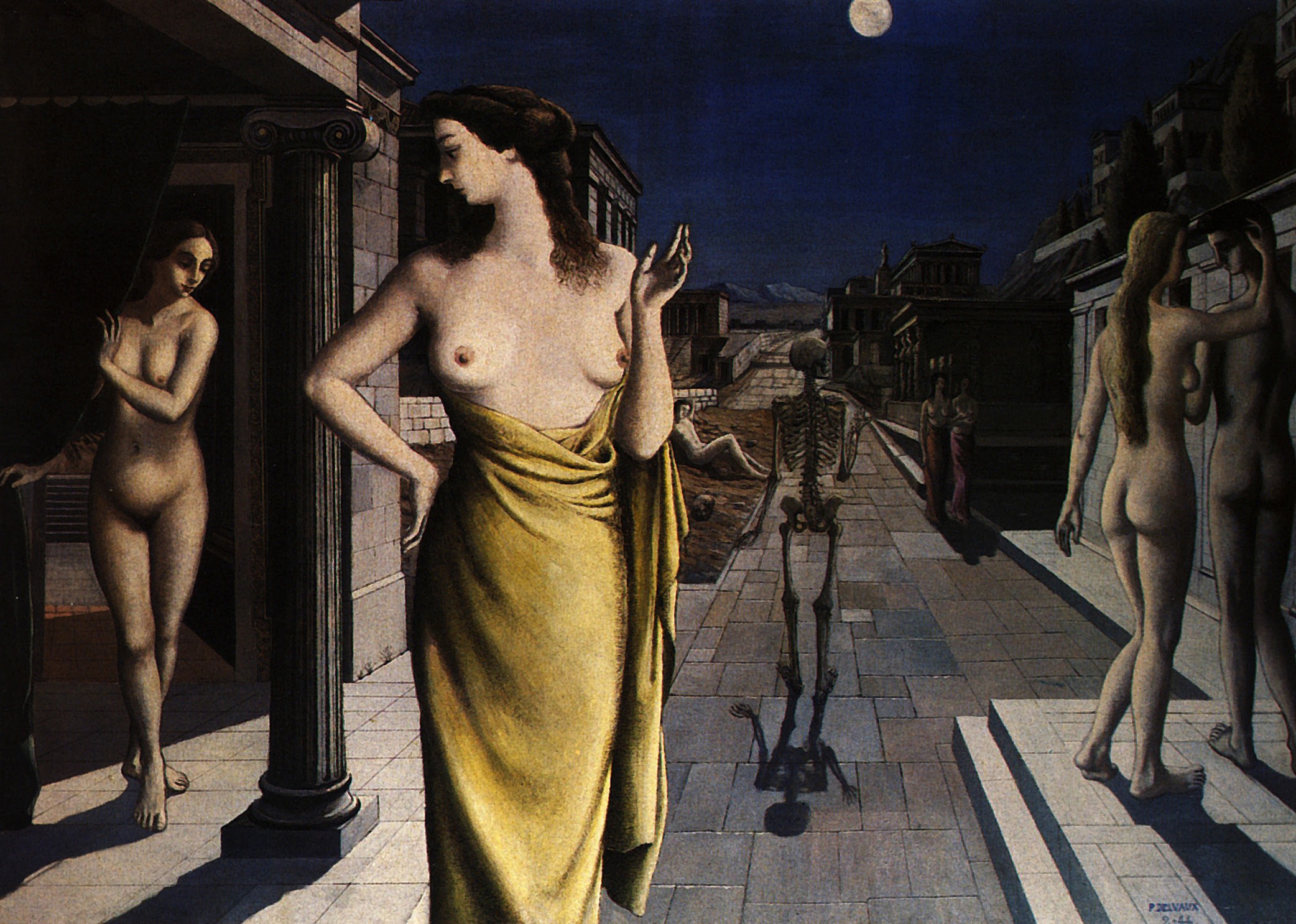
My edition of the novel contains an interview with Ballard and a short essay by him. In these two texts he underlines that surrealism, dreams and the fact that he grew up in Shanghai were important in the writing of this book. Max Ernst and Paul Delvaux are mentioned in the novel and have influenced Ballard’s imagery. As a child he witnessed how Shanghai was flooded every summer and that as well has contributed to create the images in the novel.
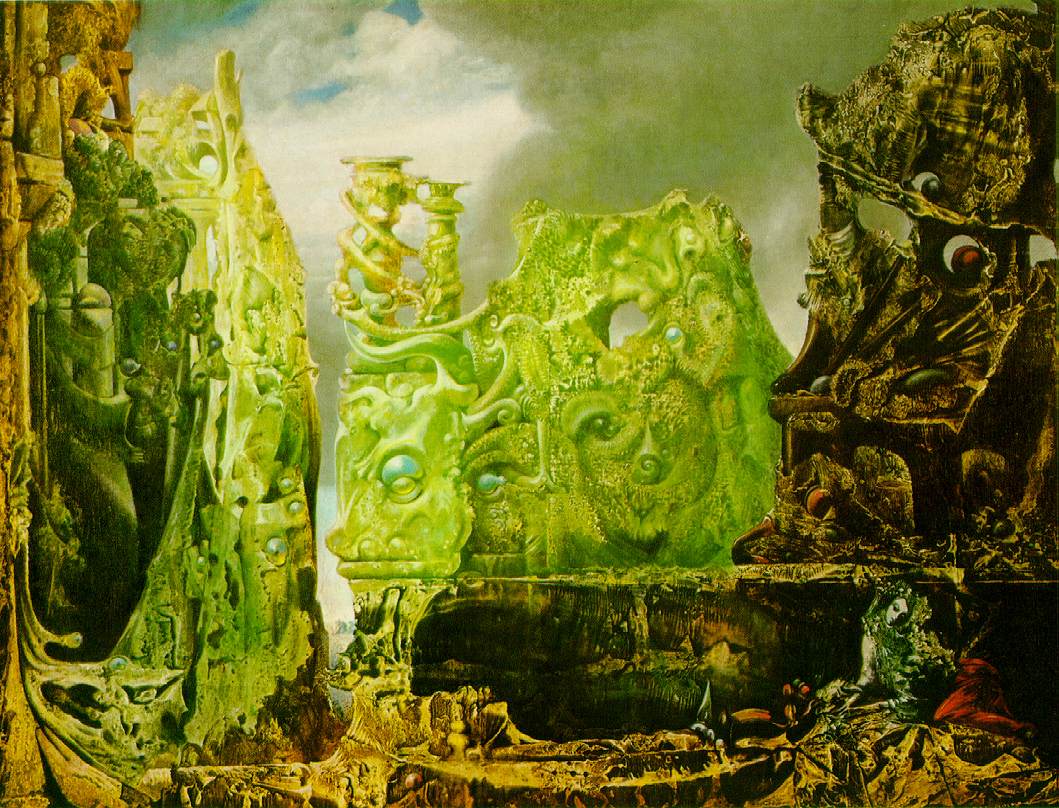
Eye of Silence

Max Ernst

Lunar City

Paul Delvaux

The Drowned World is not an easy book because it’s heavy on descriptions. As a lot of what he describes felt familiar from my dreams and my travels to Asia, it was easy for me to see what he painted with words, but I suppose it could be a challenge if you prefer action driven books. If you have never experienced the humid heat of the tropics it’s equally hard to imagine how that climate could affect you. That’s why I compared it to Conrad. The way Westerners are affected by the tropics is quite explicit in Conrad’s work, while it is much more implicit in Ballard’s book. Comparing the two is interesting.

I know that I wasn’t able to do this book justice. I think that is because I liked it too much. That may sound weird but that’s how it is. The Drowned World is one of the most fascinating books I’ve ever read. I loved the premise and the imagery; it was so powerful, reading it felt like lucid dreaming. It’s making my best of this year list, and maybe even my all-time favourite list.
Sarah Hall: The Carhullan Army (2007)

Carhullan

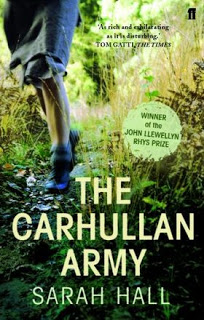
Set in the part of England once known as The Lake District and frequented by hordes of landscape hungry tourists, The Carhullan Army is narrated by a young woman who has adopted the name Sister. Britain after its union with the United States and numerous unsuccessful foreign wars, has found itself in the grip of a severe fuel crisis and the country is now under the control of a severe body known as The Authority. All fire-arms have been handed over to the Government and all women have been fitted with contraceptive devices; this Britain of the near-future is brutal and very-near desperate.Sister’s only hope — or so she thinks — lies in finding the Carhullan Army: a mythical band of women who lives a communal existence in the remote hills of Cumbria.

I came across Sarah Hall’s name many times in the past months. First I read a review of The Carhullan Army on Vishy’s blog (here) and immediately thought I’d love to read it. I later saw that Hall won the John Llewellyn Rhys Prize for The Carhullan Army, the Commonwealth Writer’s Prize for Hameswater and was shortlisted for the Man Booker for The Electric Michelangelo. Her short stories are said to be very good too.

The Carhullan Army is a dystopian novel. It has been called A Handmaid’s Tale for our times. I can’t confirm whether that’s the case as I haven’t read Atwood’s novel yet, but it’s certainly not a genre novel, it’s highly literary.

The Carhullan Army  is set in a bleak Britain, which is ruled by the so-called Authority. The system has collapsed due to a fuel crisis. People live like cattle, sharing small apartments. Some things are strictly regulated like work and reproduction, others are forbidden, like leaving the town. People are depressed, many use drugs. Relationships collapse, love dies. “Sister”, how the narrator calls herself, can’t take this anymore. She’s heard of Carhullan. Somewhere in the mountainous region of the Lake District lives a group of women autonomously. They have a leader, Jackie, a very charismatic figure, but other than that, they are free. Sister doesn’t know that much about the place, only that what she has heard. The rest is a mix of her imagination, her hopes, her dreams.

The place sounded utopian, martial or monastic, depending on which publication was interviewing, and what angle they wanted to push.

Sister is sure that her life will improve and that the women will welcome her, commend her for her courage to leave. But things don’t exactly go like that. The way Sister is “welcomed” is a huge disappointment, a shock even. It will take more than simple resilience to come to terms with this. But once she’s proven she isn’t a spy, nobody is following her and that she’s truly interested in living at Carhullan, she’s accepted.

Sister is a complex narrator but Jackie, the leader, is even far more complex. What Jackie has created at Carhullan is as amazing as it is scary. The women are able to provide for themselves. They plant, gather, and hunt, and – even far more important – they have an army. An army which has been trained by ex-soldier Jackie who is a severe drill instructor. She’s fierce and demanding, charismatic and unforgiving. Most women know that they might need to defend themselves some day and for many it is a special distinction and a great honor to be chosen for the army, others however think Jackie goes too far. Sister would love to be part of the army, but she has to wait a long time.

In Jackie Sarah Hall has created a multilayered personality. She combines the traits of a cult leader, of a fanatic, a saviour, a soldier and a hero. She never questions the use of violence, which, for me, was the most difficult part of the book. I never thought this was a utopian society, but I never thought they were that misguided either. Given the circumstances the development was quite logical but they were not free. Every single of Jackie’s decisions is an answer to the Authority and the end of the book makes this very clear. Sister idealizes Carhullan when she goes looking for it, the reader thinks it’s ideal at first, but towards the end we understand that Carhullan is part of the system as well. There would be no Carhullan, at least not the one we see here, if the society had not reached an endpoint.

Here’s Jackie talking to Sister:

“…. I just want to get to the bottom why these things go on. I’m a dark fucking tourist, Sister, I like going to these places. It’s interesting to me. I’m interested in what holds people back. And what doesn’t. And how far these things extend….”

I think this illustrates my point. Jackie is raw, she’s violent and she’s never free of questioning the system, she has an urge to explore it and in doing so stays tied to it.

The Carhullan Army explores many other themes, Lesbian love, autonomous living, the nature of cults and fanatics, totalitarianism and terrorism. Sarah Hall writes well, her sentences are limpid, simple, yet her vocabulary is rich and evocative.

The story is told like a confession, which has been recorded. Some of the files are recovered, some are corrupted. I thought tha approach worked well.

It’s a book that made me feel very uncomfortable. I found it had a bit of a Lord of the Flies vibe. The place Sarah Hall describes isn’t a gentle haven, it’s a rough world, in which people have to fight for their survival. The harsh landscape, the difficult situation has changed them. They swear, they fight. They do have camaraderie and loyalty, even love,  but it’s all very raw.

I am glad I’ve read The Carhullan Army. I think it’s excellent and thought-provoking but it’s depressing as well. I wouldn’t want to live in neither of the worlds Sarah Hall has created.

Have you read any of Sarah Hall’s novels or short stories?

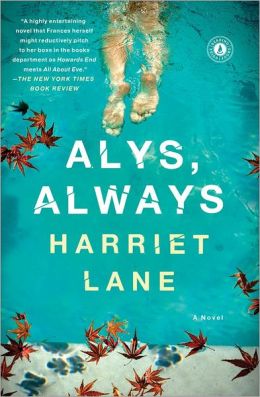
Harriet Lane: Alys, Always (2012)

Alys-Always

Litlove reviewed Harriet Lane’s first novel Alys, Always a couple of weeks ago (here) and it sounded very good. A bit like Ruth Rendell only even more literary. In any case I was curious and had to read it.

Frances drives back home to London from a visit at her parent’s house. It’s winter, cold and dark when she sees something strange on the side of the road in a forest. It’s a car accident. The driver is still alive and Frances stays with her until the ambulance arrives. She only speaks a few words with the woman but those words tell her a lot about her. She sounds like she comes from a well-off family and lives a life of ease. The choice of words, the intonation and the accent tell her all this. Frances may be a mousey looking woman but she’s highly perceptive and sharp.

A little while later the police inform her that the woman, Alys, has died. They ask her whether she is willing to talk to the family but Frances doesn’t feel up to it. She only decides to do it after discovering that the woman whose final moments she witnessed was the wife of one of the most highly acclaimed British writers.

Frances lives an invisible life. She isn’t unhappy but there is nothing that stands out. She is single, doesn’t have a lot of friends, doesn’t care for her family and her job for the book section of a big newspaper is less than fulfilling. When she is offered the opportunity to meet someone famous, she seizes it and with a cold, sly determination, she manages to use every little thing that comes her way.

I wouldn’t call Frances an unreliable narrator. On the very contrary. But she is sly. Calculating, dissecting. Everything she sees is carefully evaluated, assessed and we follow her astonished, wondering all the time what her intentions are and where they will lead her.

It’s fascinating and a bit creepy. I wouldn’t call her a likable person at all but in way she’s understandable and by the time the book ends, we’re glad we didn’t meet her or get in her way.

I wouldn’t exactly compare this novel to Notes on  Scandal but it is written in the same vein. It has also a similarity with Rendell’s A Judgement in Stone. The difference lies in the psychological believability and the writing. Alys, Always wasn’t entirely believable or rather, Frances was very believable but the people around her far less so. However, this small flaw is minimized by the writing. Harriet Lane writes beautifully and that’s why I’d say, the book is more literary than Rendell. Her descriptions are subtle and lyrical, the mood and atmosphere of the book are quiet and cool, the pace is relaxed. It’s eerie, but in a gentle way. Opening the pages and entering the world of Alys, Always is like walking through a huge stylish house in which every detail is carefully selected and arranged. There is only this slightly cool breeze coming from an open French window that makes you shiver just a tiny bit.

If I had to compare this book to a flower, I’d compare it to a white calla.

Calla

On the surface Alys, Always is a novel about a woman who knows how to exploit an extraordinary situation but underneath it says a lot about fate and narcissism. As Frances says in the novel, “listening is a dying art form” and because all of the characters in this novel are to some extent narcissistic, they want to be heard and seen and would never question that someone could be far less interested than they pretend to be.

I really hope Harriet Lane is going to write another novel as I liked Alys, Always a great deal. The writing was so beautiful, it made me re-read several passages more than twice before I moved on.

Anna Raverat: Signs of Life (2012)

signs-of-life-

Ten years ago, Rachel had an affair. It left her life in pieces. Now, writing at her window, she tries to put those pieces together again. She has her memories, recollections of dreams, and her old yellow notebook. More than anything, she wants to be honest. Rachel knows that her memory is patchy and her notebook incomplete. But there is something else. Something terrible happened to her lover. Her account is hypnotic, delicate, disquieting and bold. But is she telling us the truth?

A review on Litlove’s blog a few weeks ago led me to Anna Raverat’s novel Signs of Life. I’m glad I discovered it, I liked it very much,

Ten years ago Rachel had a disastrous love affair. She was in a relationship with Johnny, content and maybe a bit bored. Carl was new in Rachel’s company. She wasn’t really attracted, Johnny was far more handsome, but maybe she sensed Carl was a “bad boy”, maybe she wanted to escape routine. One evening they kiss and from there they slide into a passionate affair, even though Rachel doesn’t really want that.

We know from the beginning that things go horribly wrong in the end but we don’t know what happened. Even Rachel doesn’t know everything. At the end of the affair she has a breakdown. She is hospitalised; trauma, stress and medication blur everything. Now, ten years later, she decides to write down the whole story, tries to make sense.

The story Rachel tries to write down is fragmented because her memories of what happened ten years ago are fragmented. And that leads us straight to one of the major topics of this novel. How does memory work?

Perhaps it never did snow that August in Vermont; perhaps there never were flurries in the night wind, and maybe no-one else felt the ground hardening and summer already dead even as we pretended to bask in it, but that was how it felt to me, and it might as well have snowed, could have snowed, did snow. Joan Didion

Might as well have; could have; did. The movement from possibility to certainty in the sentence is exactly how it works in the head; this is how imagination merges with memory, how dreams get confused with facts; why reality sometimes feels so unreal. The extract is from Joan Didion’s On Keeping a Notebook. It unlocked my own imagination; something in me resonated strongly and I wanted to use that, the feeling of recognition, almost of ownership, when you read something and think, that’s exactly the way I feel! And a feeling of entitlement slips in. I started with her line, took some words of, pegged others on – I wanted to absorb the sentence fully, make my own version.

The narration jumps back and forth in time, and precisely this fragmentation is what I liked so much. We don’t only discover a story, we discover how memory works. How things are altered, embellished, imagined.

The result is authentic. We take part in discovering the truth. Rachel took notes during the affair but she left out a lot. Reading was and is important to her. The books and stories she reads influence the way she perceives what happens. The final tale she tells is a patchwork made of different material.

Signs of Life is fascinating and gripping at the same time.  The end was to some extent what I had expected but still surprising enough to be memorable. And we wonder whether Rachel is not after all a very unreliable narrator.

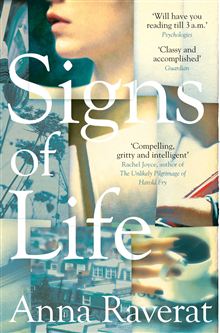
I’m often annoyed by book covers so it’s worth mentioning what a great exception this cover is. It’s rare that a cover fits a book so well. How to better represent a fragmented story than by using a collage of photos that illustrate various moments in the book. The only pictures missing here are that of a cat and of a woman writing.

Apart from depicting how memory works, Signs of Life is an excellent psychological study. It shows how some choices may alter our lives forever and that we are not always fully in charge. Intense emotions may push us to do things we don’t want to do and we may find that our life has fallen apart, is shattered and broken.

Tim Parks: Loving Roger (1986)

Tight and disturbing, Loving Roger begins with a dead body and a chilling question. Why has nice, ordinary, affectionate Anna picked up her kitchen knife and murdered the man she insists she loves?…This brief novel is a mordantly illuminating essay on the way love contains the seeds of vindictiveness and hatred.

A while back in a discussion Max from Pechorin’s Journal mentioned Loving Roger as an excellent example for a book that explored the reasons for a murder rather than having us guess who did it. I was intrigued and since I had liked Tim Parks’ Rapids I got Loving Roger a while ago. I had totally forgotten about the book until last week when I was hunting for a short novel or novella.

The narrator of the story is Anna and here is how the book begins

Roger lay on my new blue rug in the corner by the television and the lamp that seemed it always had the funny orange bubbles rising in it that he hated. But I went to work as usual. I made myself the regular cheese and ham sandwich and took the baby up to Mrs Duckworth for the day and she didn’t notice anything odd about me, I dont’ think.

What a beginning. To pack such a lot of information in three sentences, grab the reader’s interest and start right in the middle of the story is masterful.

After this intense beginning, Anna rewinds and tells the story from its start; how she met Roger, how they started to have an affair, how she got pregnant and how she killed him. The story she tells is quite disturbing. At first because the way she describes Roger makes him look like a total bastard and we don’t understand why she stays with him. He works as executive in the company in which Anna has a job as a secretary. Most of the senior men in the company treat the young women shabbily. They think they are not only simple but simple-minded girls. While Roger hopes that this is just a temporary job before he will become a famous writer and sees himself as something better, in the way he treats Anna he is just as average and shabby as the other men. He believes she is below him and tells her so. But she is attractive and sexy and so they start their secret affair. Anna tells a lot of shocking details of their affair in a very candid voice. She describes how condescending Roger is, how he is ashamed of her, how he lies and betrays. But then, after a while, she adds bits and pieces of her own family history, tells how much her parents loved her late brother Brian, how she doesn’t count at all, and that is when we begin to understand that not only is she a unrealiable narrator but that she has serious issues of her own.

The further the novel progresses, the more it is like watching a train crash. What she tells about the way Roger treats her, his pompous monologues, the diary she finds in which he analyses his feeling and confesses his infidelity, added to her constant repeating of how much she loves him, is unsettling.

Although the novel seems to start with the end, that is actually not the case. The book offers a final twist that is quite unexpected. It’s one of those surprising endings which alone make the book worth reading. However, that’s not the only thing Loving Roger offers. Tim Parks writes with extreme accuracy. There is an episode in which Anna and Roger bathe in the middle of the night in a river in Cambridge and when they come out of the water Anna struggles to put on her clothes. This is such a small detail but the way he describes it, how the clothes get stuck on her wet body, was so well observed.

The central story of Anna and Roger is a story of passion and obsession and it’s not always clear who is the victim. A lesser author would have left it at that but Parks manages, in just a few pages, to paint not only the story of an obsession but of a very dysfunctional family too. The way Anna is treated by her parents is awful. Her brother was always the favourite, they didn’t even pretend otherwise and after his death, she is even less important. Strangely, I didn’t feel much for her, nor for Roger, I felt for their little child. Just imagine, what I life he will have.

I really enjoyed this slim novel. It’s admirably well written. It reminded me a bit of Jenn Ashworth’s A Kind of Intimacy or some of Ruth Rendell’s books although Tim Parks isn’t a crime writer.

Has anyone read this too or another Tim Parks novel? He has a new one out The Server which sounds interesting as well. I have his non-fiction account Teach Us To Sit Still on my TBR pile.

Nicci French: Secret Smile (2004)

I really like Nicci French or I wouldn’t have picked the third book in such a short time. The last two I have read were the first two installments of the new series, Blue Monday and Tuesday’s Gone. Both were really good books. Unfortunately that’s not exactly the case here. Secret Smile has a lot of what I truly like about Nicci French but it’s painfully unbelievable. Still, call me weird, I liked it.

The story, if one doesn’t want to spoil the book, is told in a few sentences. Miranda has been dating Brendan for three weeks when she catches him reading her diary. She immediately ends the relationship. In a way she is relieved because he annoyed her. He was far too obtrusive and possessive. Brendan takes the break up very badly, still she manges to get rid of him. Or so she thinks. A few weeks later he is introduced to her as her sister’s new boyfriend. She is quite shocked and the idea to have to see him regularly really bothers her but on top of that Brendan pretends that he ended the relationship.

What follows is at first manipulation, then pure psychological terror. This premise as such isn’t unbelievable but what is unbelievable is the fact that Miranda doesn’t try to clarify right away who broke up with whom and when she does, nobody believes her anymore.

I always find it annoying when a whole plot relies on one person’s silence, a silence at that which isn’t realistic but has to be maintained in order to get the plot moving. If you can forgive this major flaw or if it is in character with you – let’s say you’re the type who always speaks up too late – then you might not find this unbelievable and would enjoy the book because I think there are a lot of really appealing elements in it. Nicci French is really good at creating atmosphere. The change of seasons is captured well and there are a lot of scenes in which Miranda is on her own and they are all nicely created. Plus she is an interesting character. She is independent, attractive, makes a living as a decorator, all things which work quite well.

Despite the fact that there are unrealistic elements, Secret Smile was a page turner and I really wanted to find out how it would end. Surprisingly the end is different from what I expected which was a pleasant surprise.

As you can see, a mixed bag, but still an enjoyable, quick read.

This is my first contribution to Carl’s R.I.P. VII. Here are the links to the posts of the other participants.

John Sutherland: The Dickens Dictionary (2012)

Although I’m one of those who has been tiptoeing around Dickens’ work for a while now without reading anything else but A Christmas Carol and part I of David Copperfield, I’m still interested in the author and the work. I also have a feeling I’m familiar with his novels without having read them because I saw the one or the other movie based on his books and because creations of great artists seem to acquire a life of their own and seem to go on living outside of the confined space of the book covers. People mention them, talk about them as if they were real people.

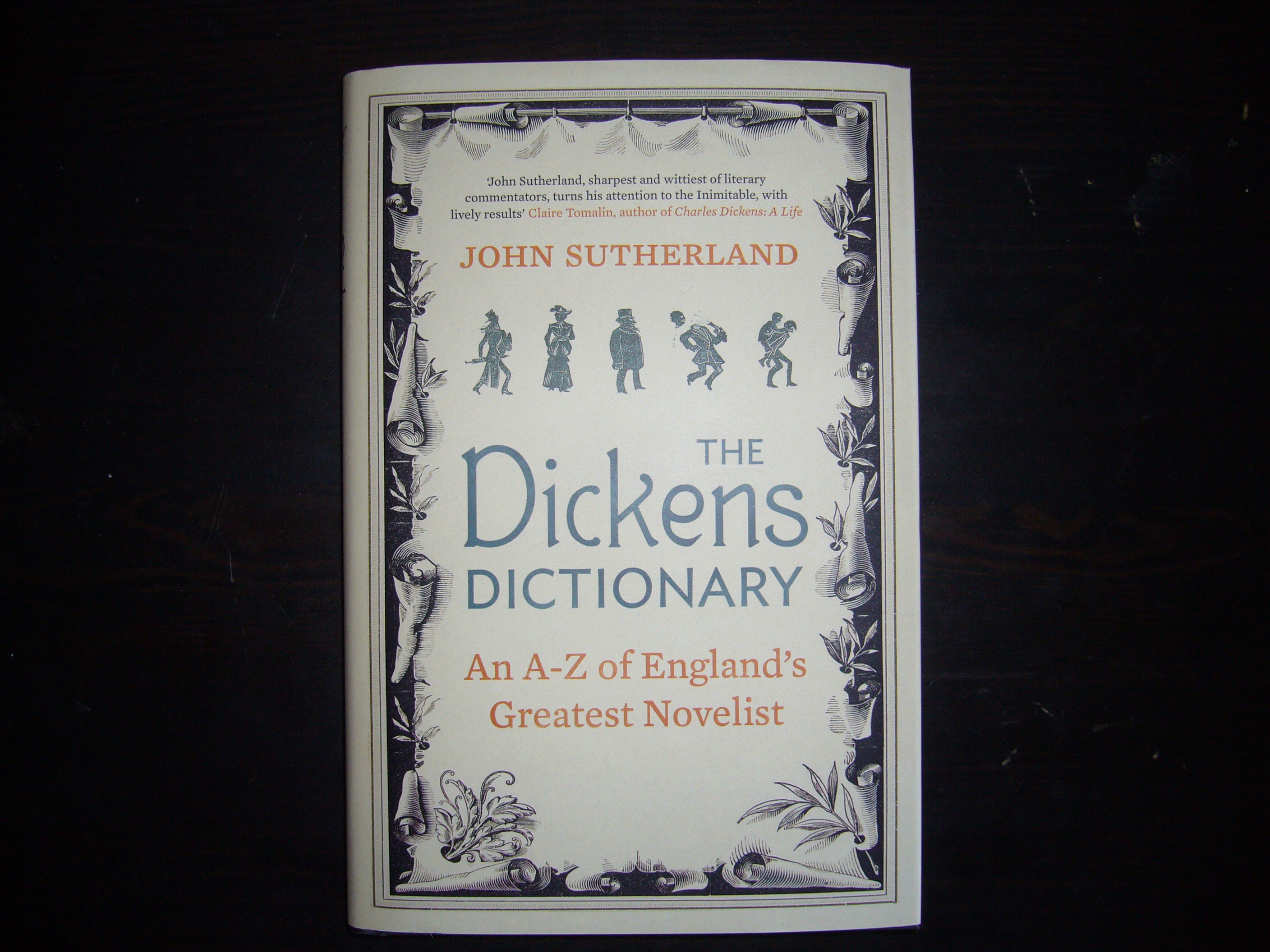
When I discovered The Dickens Dictionary on Mel U’s blog (here is the post) I knew I had to get it right away and since it arrived yesterday afternoon I spent many moments with it.

The author John Sutherland is a recently retired professor who has taught and published on Victorian novels. Browsing his book and reading the one and the other of the 100 collected entries, you discover not only a world of information but a book written by someone who is passionate about the subject and knows how to write about it in a way that will make you feel the urge to grab the next Dickens novel at hand. Sutherland’s aim was

When I think of Dickens I do not see a literary monument but an Old Curiosity Shop, stuffed with surprising things: what the Germans call a Wunderkammer – a chamber of wonders.

This book, taking as it’s starting point 100 words with a particular Dickensian flavour and relevance, is a tour round the curiosities, from the persistent smudged fingerprint picked up in the blacking factory in which Dickens suffered as a little boy to the nightmares he suffered from his unwise visit at feeding time to the snake-room of London Zoo.

The 100 entries cover such different subjects as Bastards, Blue Death, Candles, Cats, Child Abuse, Dead Babies, Dogs, Fog, Hands, Incest, Merrikins, Onions, Pies, Pubs, Smells, Thames…. They are all entirely fascinating.

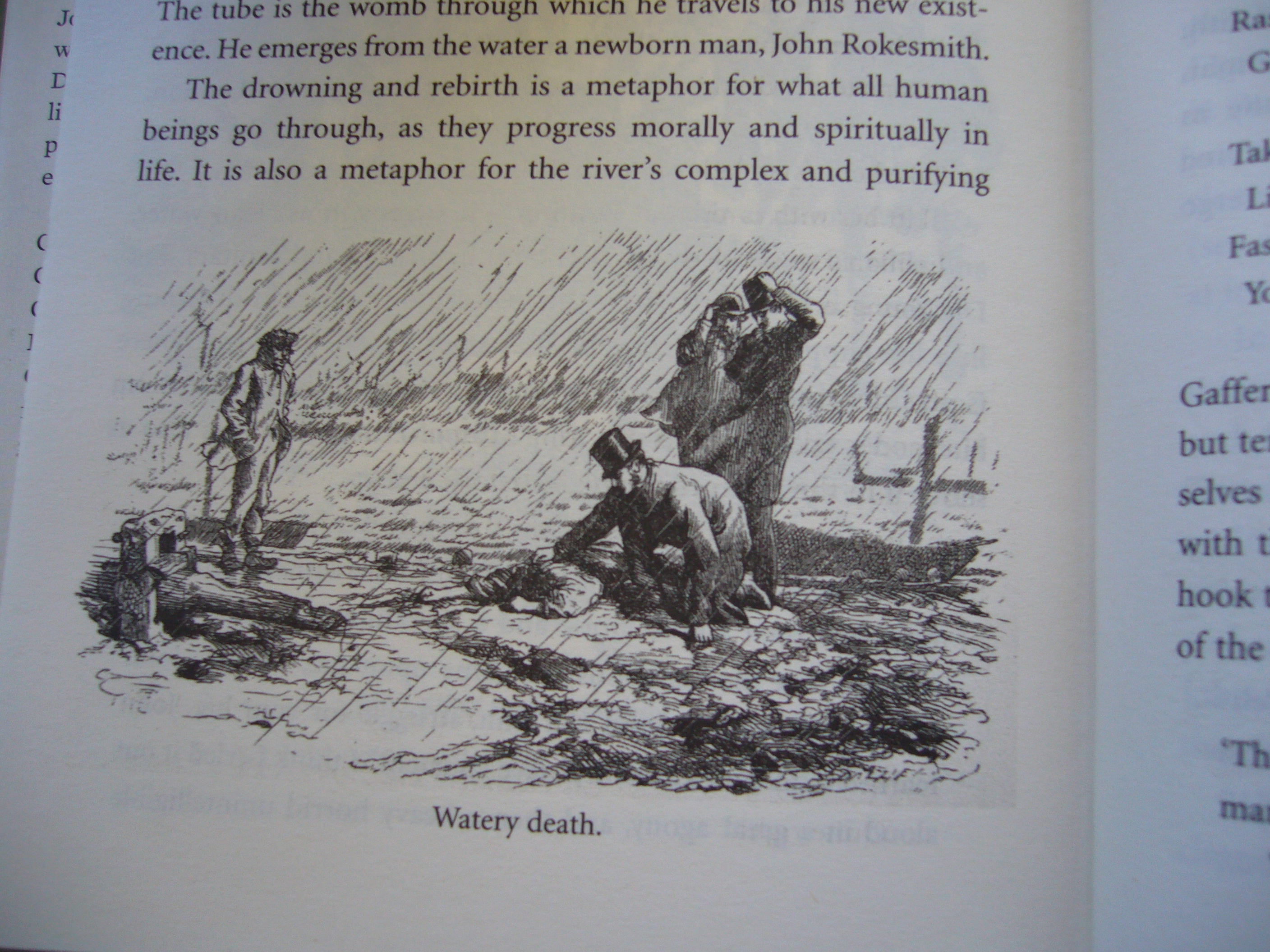
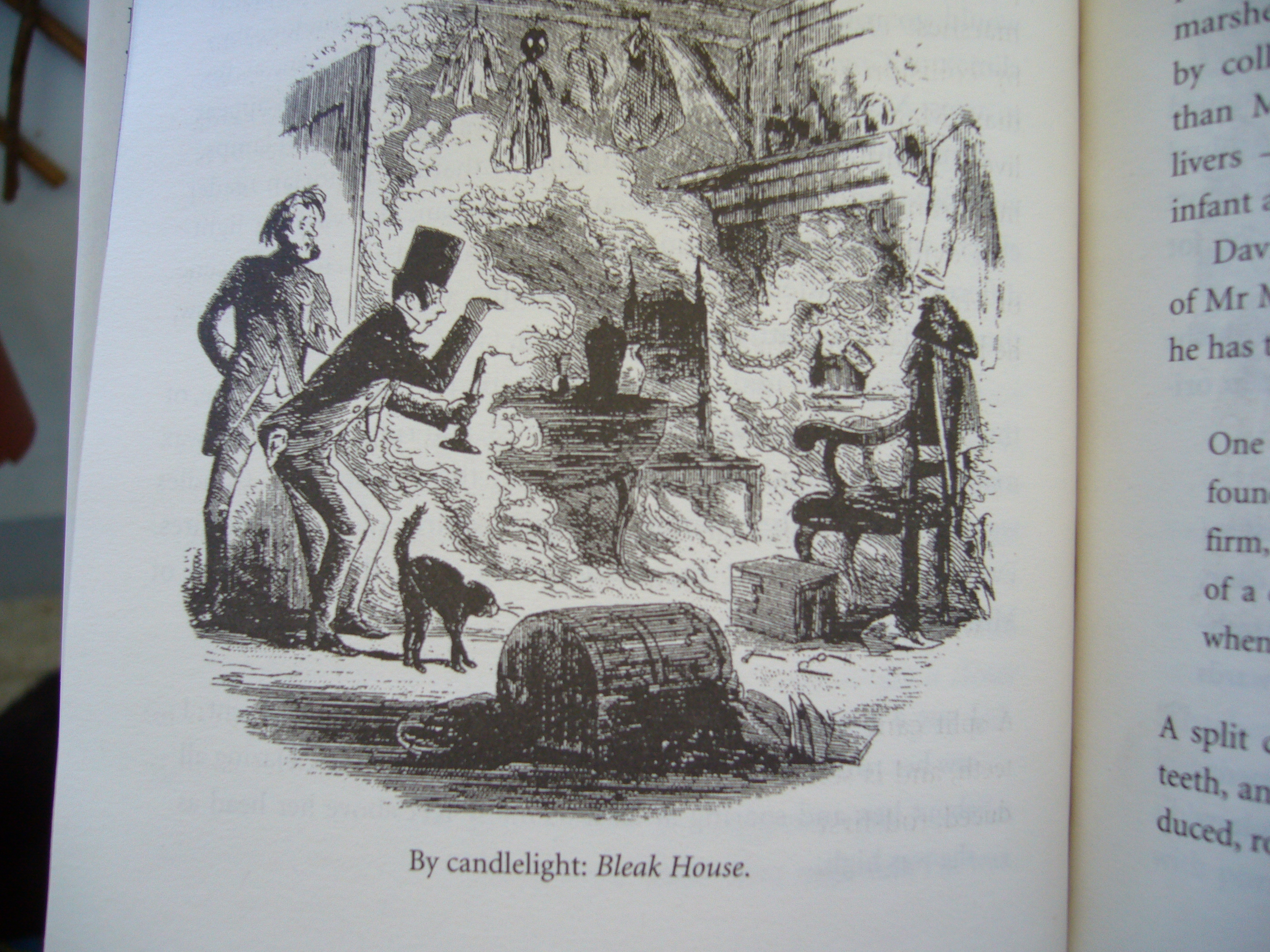
What certainly adds to the appeal of this book are the many illustrations.  There is one on almost every other page.

I also liked the many quotes Sutherland included which give a good feeling for the work. Since I have still not decided which will finally be my first Dickens, this book will help me make up my mind.

To give you an idea of the entries I chose the one called Blue Death.The title refers to the Cholera epidemic of 1848-49 during which 52,000 Londoners died. The entry explains where it came from – India 1817 – and how Dickens and most people thought it was miasmic. He referred to it in Bleak House in his description of Tom-All-Alones’s. His rival Thackeray contracted the Cholera and might have died if Dickens hadn’t sent his own physician.

The Dickens Dictionary is a great introduction to Dickens, it contains quotes and references of the various novels, anecdotes from Dickens life, historical facts of Victorian London and a whole range of other “curiosities”.

As I said, I still don’t know which should be my first Dickens. Which one would you recommend?