Carrie Ryan: The Forest of Hands and Teeth (2010)

In Mary’s world there are simple truths. The Sisterhood always knows best. The Guardians will protect and serve. The Unconsecrated will never relent. And you must always mind the fence that surrounds the village; the fence that protects the village from the Forest of Hands and Teeth. 

I don’t think it is a coincidence that books like Carrie Ryan’s The Forest of Hands and Teeth are so popular. All around me people speak about their insecurities, how they have lost their confidence, their belief that all will stay the way it is, that they are safe. Many fear that the world as we know it may come to an end.

The Forest of Hands and Teeth is set in a time, long after the world as we know it has come to an end. A strange illness broke out, called The Return, and since then the world is divided in the people living in the village, guarded by the Sisterhood and the Guardians and those, behind the fences, who live in the forest, the so-called Unconsecrated. The Unconsecrated are living dead, zombies, who spread their disease through biting the living.

The story is told by Mary whose father has disappeared in the forest and possibly become one of the Unconsecrated and whose mother approaches the fence at the beginning of the book and turns. Her brother is a guardian. Mary will mostly probably get married to Harry, that’s the wish of the community and the Sisterhood who reign over this enclosed world. Harry and Mary have been friends forever, just like Cass and Mary have been friends. What nobody knows is that Mary is in love with Travis, Harry’s brother.

Until the day when the Unconsecrated breach the fence and kill almost all the villagers, it’s not clear whether Mary will join the Sisterhood or become a wife and mother. When their world collapses and they have to flee, it’s not that important anymore. Mary and a group of six people and a dog escape the village and reach a secret path that leads through the forest. The path is secured by a fence through which the moaning Unconsecrated try to reach them.

The path is like a maze. It’s mysterious and they do not know where they are going. There were tales of cities and an ocean somewhere beyond the forest. They don’t have a lot of food and are attacked constantly. When they arrive at an abandoned village they hope they may soon arrive at their destination and find safety.

The beginning of the story is unlike the stories in any zombie movie, I have ever seen. In the movies the zombies usually attack from the start and the people have to fight them. In this novel, for a long time, they are just a threatening presence and the book is all atmosphere but then, they close in on them and breach one gate after the other and the book turns into an action-packed novel that moves towards a climatic ending. Climatic and sad as some of the small group of survivors are bitten on the way.

I never felt like reading a zombie novel before and if it hadn’t been for Sarah’s intriguing review I wouldn’t have tried this book but I’m glad I did. It has a very special and haunting atmosphere, very captivating and oddly enthralling. The word zombies, is never used, by the way, but it’s clear from the descriptions. The Forest of Hands and Teeth is part I of a trilogy. I won’t rush to read part II and III right now but I feel like reading them some day.

Here’s another review by Fence (Susan Hated Literature).
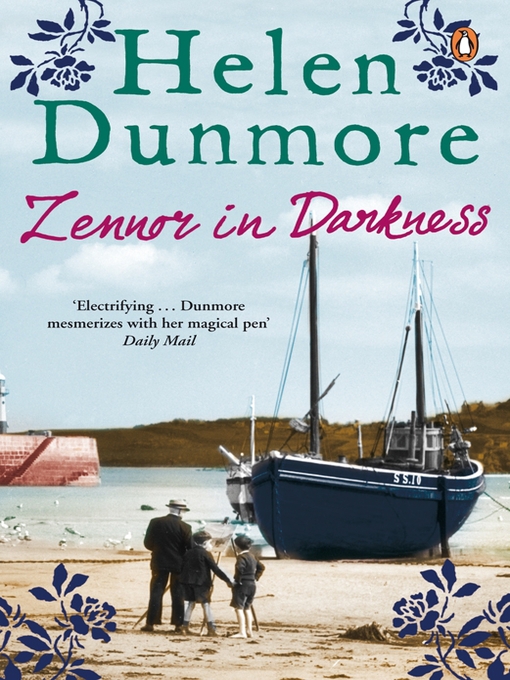
Helen Dunmore: Zennor in Darkness (1993) Literature and War Readalong January 2012

Helen Dunmore’s first novel Zennor in Darkness is set on the Cornish coast in 1917. The sound of war can be heard from afar. The first young men return from France, some of them are missing limbs, others are shell-shocked like Claire Coyne’s cousin John William. Although the war is present on every page, in the suspicions of the people, the fear that all the boys will be drafted, the noise the wind blows over from France, the scarcity of money and food, this is a novel of dreamlike beauty. Dunmore conveys the soft light of the Cornish coast, the beauty of the lovely landscape, the slow pace of life. This softness is mirrored in the way she changes the point of views, blurring the edges, softening the transitions, so that it feels as if one person’s consciousness and interior monologue, was flowing gently into that of another character. Reading it made me dreamy and I felt as if I was watching a water-color come to life. I read this book very slowly. I could have finished it in a few evenings but I put it aside frequently to make it last.

Zennor in Darkness interweaves the fictional story of Claire Coyne, and her cousin John William with the story of D.H.Lawrence and his wife. Claire lives alone with her father. Her mother who died while she was still very little was from Cornwall, while her father is an outsider, just like Lawrence. He comes from a rich Londoner family and was always seen as an intruder. Claire’s maternal grandparents, her aunts, uncles and cousins live close by. The children are a tight-knit community since they were little kids. They are so close that, although it seems logical for us, nobody suspects Claire and John William to be lovers.

The war has taken its toll, hundreds of thousands are dead and a lack in officers makes it possible for someone like John William who isn’t noble, to become an officer. He returns from France for a brief visit before he will join a training camp where he will stay a few months before being sent back to France.

Before his return Claire has befriended D.H. Lawrence. She is fascinated by him and even more so by his attractive German wife, Frieda. Not everyone is happy about their stay in Zennor. Germans are suspected to be spies and people would like to see them gone. Lawrence and his wife are happy in Cornwall. Their dream of a community of like-minded people has been shattered after Katherine Mansfield and her husband have left but still they love Cornwall and their simple life. Lawrence works in the garden, befriends the villagers. It’s not as easy for Frieda but she likes it as well. To the Lawrences Cornwall means more than just a place to stay, it is a refuge, a shelter and to watch their dream being crushed is painful.

Lawrence discovers that Claire is talented at drawing and encourages her to pursue a career. She introduces him to John William and Lawrence feels, more so than Claire, that John William hides something. One evening, when the two men walk alone in the balmy Cornish night, John William lets himself go in front of Lawrence, unable to hide the signs of shell-shock any longer.

Zennor in Darkness is a very beautiful novel and if anything it made me want to read more of Helen Dunmore. And it also made me want to return to D.H. Lawrence whose books I have abandoned for too long. I’ve always liked D.H.Lawrence, his novels, short stories, essays and letters and found that she captured him and his relationship with his wife very well. Frieda was a von Richthofen. A cousin of the famous Red Baron. Abandoning her marriage, her children and her privileges must have cost her a lot. I was always fascinated by this free spirit. The end of the book moved me. I knew the part related to the Lawrences, still it made me angry, while the fictitious story of Claire and John Williams made me sad.

What I found astonishing is the combination of beauty and horror. The descriptions of the Cornish coast, its air, light, flora and fauna alternate with passages like this one.

In Flanders the struggle for the Passchendaele Ridge continues. The poppy-blowing fields are ploughed by German and English guns, and sown with a litter of lost equipment, a seeding of blood and bone. Soon it will be autumn there too, and heavy northern rains will fall. Men will be listed missing, presumed drowned – a new classification for the lists in the newspaper. They are presumed drowned in the mud in which they live and often die. The men who came ‘right away to Blighty’ with John William will return to Flanders with their new commissions soon. Their training lasts only three months, and then they are wanted back at the Front. Hammond will die on a mission described to him by a senior officer as ‘rather a tricky bit of patrol-work’. His body will not be found. Simcox, a dozen feet to the left of him, will survive.

Ultimately however Zennor in Darkness is a novel about the difficulty to know another person. Either because you see them as strangers, or because they are too close for you and you lose all perspective. Like in real life, in many instances a stranger understands another character better than his own family, while at the same time, the community projects fear on the outsider.

In any case this was an excellent start to the Literature and War Readalong 2012.

Other reviews

Danielle (A Work in Progress)

Lizzy (Lizzy’s Literary Life)

Sarah (A Rat in the Book Pile)

Zennor in Darkness is also my first contribution to the War Through the Generations Challenge hosted by Anna and Serena.

*******

Zennor in Darkness was the first book in the Literature and War Readalong 2012. The next one will be Sebastian Barry’s A Long Long Way. Discussion starts on Monday February 27, 2012.

Impressions of Bolaño’s The Savage Detectives

Caroline, in her kitchen, near the city center, Europe, January 2012. Defeat. Defeat. Defeat. I had a feeling I wouldn’t finish The Savage Detectives. 700+ pages is just a tad too long for me these days. Still, I was full of good intentions and even bought the German translation early in December thinking that if it had to be a chunky book it might be wise to read it in German and not in the Spanish original. It’s been far over a year since I’ve read my last Spanish novel and I didn’t want to tempt fate. Chunky novels have always been a huge turn off for me but these days, with so little spare time, I’m even less in the mood for a longterm reading committment.

Despite all these length related reservations and after having read the first 50 pages I thought I might finish easily. The whole of Part I was a surprisingly quick and amusing read. Admittedly, it was occasionally a bit exasperating to read the fictitious diary of a breathless, overenthusiastic and over sexed young man but it was at the same time refreshing. The reason why I didn’t manage to finish was a pure case of “wrong reader-right book ” or something like that. Listening to Juan García Madero telling the story of how he got involved with the movement of visceral realism, frantically wrote poetry and discovered the joys of sex made me feel as if I had met one of my teenage friends again. We were reading the same books as Juan Gracía; the Surrealists, Perec, Lautréamont. We were fascinated by experimental literature, the nouveau roman and anything that smelled avantgarde and nontraditional. It seems that most people who experiment with writing and literature revisit the same masters. Meeting a literary figure like Madero was almost eerie. Now, apart from not doing well with chunky books I often don’t do too well with novels about writing.  As much as I love memoirs and non-fiction books about reading and writing, I find a novel about the same topics artificial.

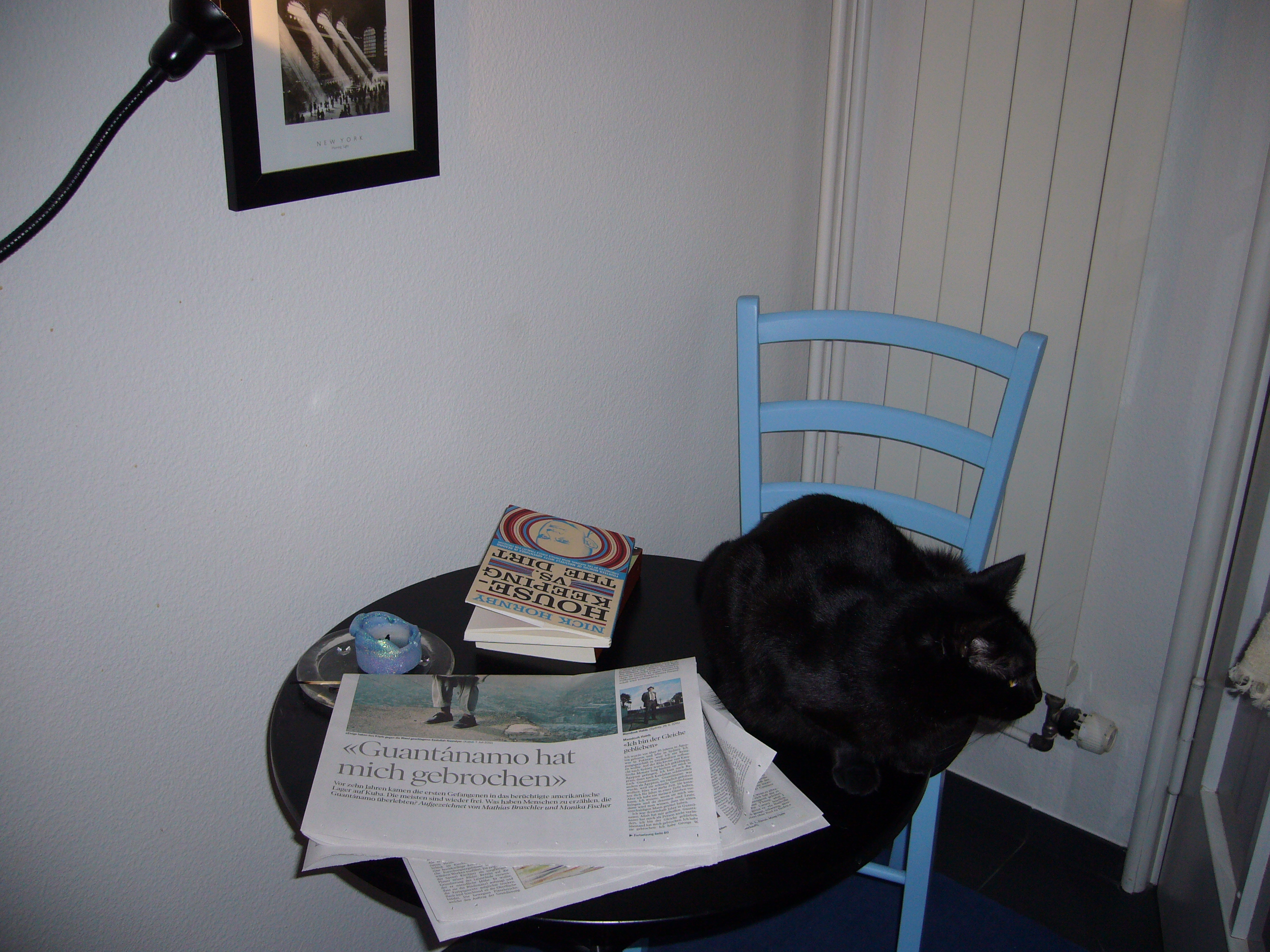
By the time I started part II, which consists of several dozens of short chapters, all told by another narrator who adds information and elements to the whole story, I knew I couldn’t finish. There were too many other books calling me. First Nick Hornby’s essay collection Housekeeping vs The Dirt, then I started Henry Green’s Party Going and my own readalong title Zennor in Darkness and finally I developed an obsession. All the books on my TBR pile which were written by someone named Elizabeth started calling me. First it was Elizabeth Gaskell’s Cranford, then Elizabeth Taylor’s Angel, after that Elizabeth Berridge’s Across the Common followed by Elizabeth Jane Howard’s After Julius and finally Elizabeth Bowen’s The House in Paris. I know, this sounds serious and I will have to analyze this weird obsessive compulsion at a later date. I would say the name is a pure coincidence but what is not is the size of their books, all just under 200 pages.

There is one thing that puzzled me a great deal while reading The Savage Detectives. While all these people in Bolaños novel celebrate short literary forms, like poetry, their author chose this traditional form of the long novel. Is that why part I is composed of short diary entries and part II – a 500 pages long sequence – of short chapters? To make us believe he does, after all write a short form? He is cheating, isn’t he?

In any case, even though Mrs Cat started supervising my reading progress, I had to throw in the towel and put The Savage Detectives on the half-read chunkster pile where it’s sitting right next to Anna Karenina. A far better fate than the one that befell Dumas’ La Reine Margot. That one was disposed of.

I have not given up on Bolaño. Far from it. There are still many others of his books on my piles and one of them will be my first one in 2012. Not sure which one though. 2666, Amulet, Last Evenings on Earth or Monsieur Pain?

If you want to read a few proper reviews of The Savage Detectives, please make sure to visit the hosts of the readalong Rise and Richard and the other participants. Here is Bellezza’s post and Sarah’s.

Henry Green: Party Going (1939)

Take a handful of idle bored rich people, put them in a confined space and see what happens. A minor writer may turn this tested recipe into a dull and boring exercise, a major writer will produce an amazing piece of writing which isn’t only brilliantly well written but a psychologically accurate comedy of manners.

Heavy fog has trapped the members of a party about to board a train for France in a London railway station. They were to leave for a couple of weeks. Max, their host, organizes these parties regularly and who is invited and who is not is of great importance.  Surely they cannot stay outside on the train platforms in the middle of those brutal and vulgar masses who will end up drinking and singing, now, can they? So they leave their porters and their luggage outside and move into the railway station hotel where Max has reserved some rooms for them.

This stay at the hotel may have been comfortable enough, boring, yes, but sipping tea, taking baths and slagging off others behind their back is amusing for a while. Unfortunately Claire’s aunt has committed the indecency of falling ill and becoming quite the nuisance for all of them. It’s particularly horrible for Claire as everybody knows she will board that train, no matter what, but, before she can do so, she must convince the partygoers that she isn’t heartless, no, on the very contrary, it’s her aunt’s fault entirely. Nobody should dare falling ill and spoil other people’s fun. Here’s Claire talking to Evelyn about her aunt.

(…) absolutely everyone else is dead and mother’s abroad as you know. It’s rather touching that’s why she came to see us off really it’s her only link. No, but it’s not touching actually because she goes and gets ill. Oh, Evelyn, it’s so unfair, isn’t it?

I’m sure you have realized by now that these characters are far from kind or pleasant. They are a bunch of egotistic, selfish and spoilt people who take everything that gets between them and their pleasure as a personal affront. Be it the fog, the sick aunt or anything else.

What made Party Going such an incredible read is the way it is told. Point of views change constantly, people move from one person to the other and always pretend to be different from how they really are. What we see is exactly what we would see if we were present at that very moment with only a little background information on the motives and true feelings but no other background information whatsoever. Still I felt, I got to know these people better than some of those whose whole biography I have been informed of in other novels. While reading Party Going we feel like unseen guests eavesdropping on other guests who are all nasty and mean behind each other’s backs and constantly pretend to think or feel different from what they let perceive. Sometimes the deception is minor but on many occasions the discrepancy between the true feelings and what is shown is considerable.

When Alex came to an end and she had not properly heard what he had been saying so she said something almost under her breath, or so low that he in his turn should not catch what she had said, but so that it would be enough to tell him she was listening.

There are shocking moments in the novel. Especially when these people talk about the masses, the poor. They, of course, are a nuisance too. Their maids and porters are not perceived as human beings, they are just commodities.

“Would you like me to come down with you to see if we can do anything about your things?”

This seemed to Julia the sweetest thing she had ever heard, to offer to brave those frantic drinking hordes of awful people all because someone was upset about their charms (…)

There really isn’t a likable character in this book, apart from the enigmatic handsome Max whose two girlfriends both appear, although he thought he got rid of one of them. Max is very rich, generous and quite elusive. Kind to everyone but hard to keep in one place. He likes his drink too much and this is part of his charm, as we are told, because all the girls think they will be able to save him.

It’s like watching a movie, the dialogue, and the commentary that accompanies it, is fantastic. I know some people will think this too experimental but I thought this was maybe one of the most accomplished pieces of modernist writing I’ve read in a long time. It works like a clock. All the pieces fit into each other, all the little cogwheels gear into each other and move at a steady pace. More surprisingly, Green not only has an ear for dialogue and is a brilliant observer, he also writes quite beautiful passages.

It was so luxurious he nodded, perhaps it was also what she had put on her hair, very likely it may have been her sleep reaching out over him, but anyway he felt so right he slipped into it too and dropped off on those outspread wings into her sleep with his, like two soft evenings meeting.

The novel is available in a collection with two other novels Loving, Living, Party Going. I’m grateful to obooki for pointing out Party Going because I had planned to read Loving instead. Party Going is brilliant.

The review is part of Henry Green week hosted by Stu on Winstonsdad’s Blog. If you are interested, here is his introductory post. I know that quite a few people take part in Henry Green week and I’m curious to see what they read and how they liked it.

On Negative “Reviews”, Bookmark Ripping and Nick Hornby

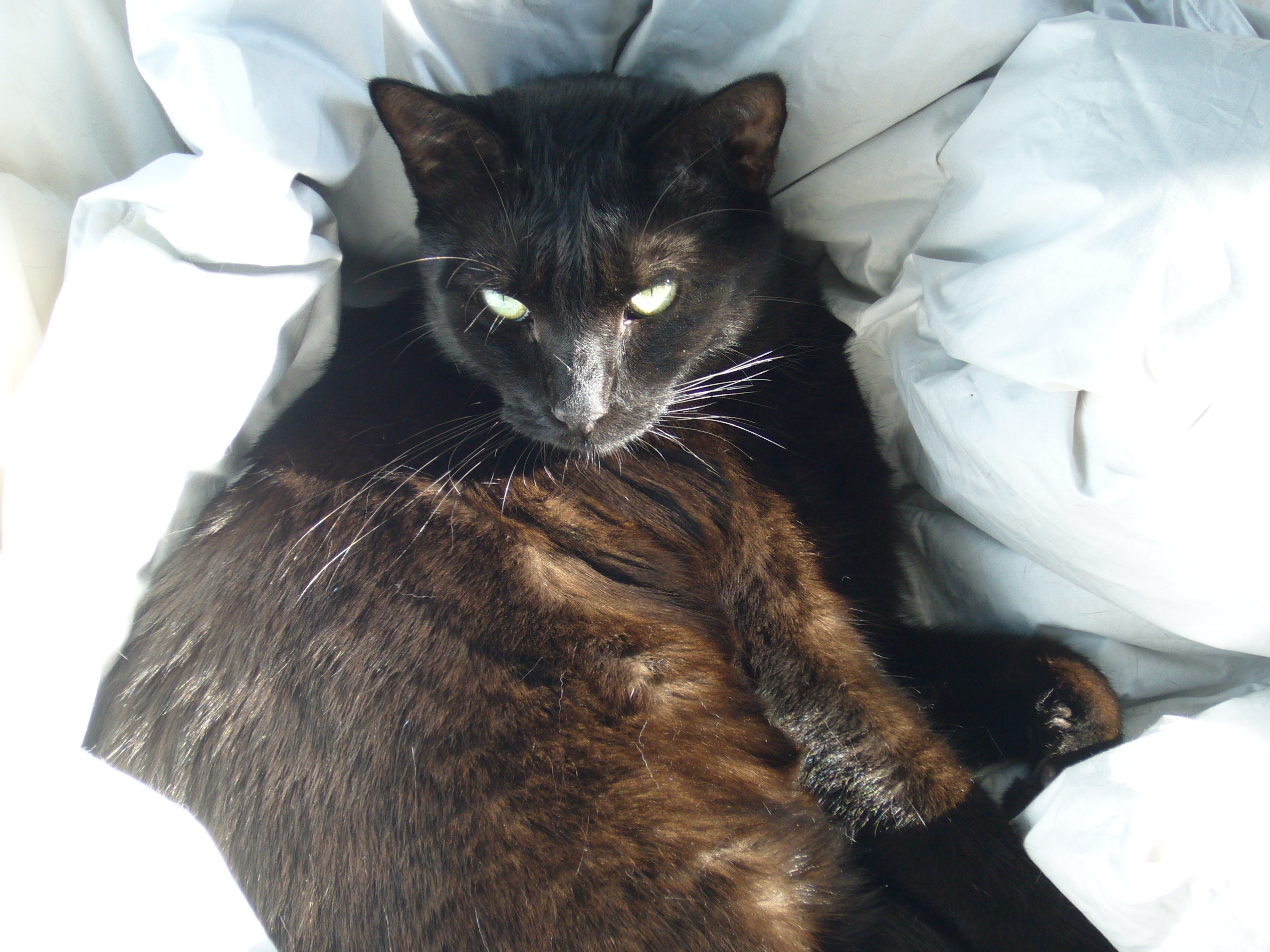
In German a slating review is called a “Verriss” which comes from the word “verreissen” – pull to pieces. When I discovered yesterday what the kitty had done to one of the free bookmarks I got in the bookshop, I thought it was somehow apt to use a picture of it for this post.

I’m not the first nor the last who will mention the debate that was raging on Goodreads, Twitter, a few blogs and even in the newspapers last week. Some of the discussions, although heated, were interesting, while others were alienating or downright offensive. In any case they got me thinking about “reviews” in general and “negative reviews” in particular.

The first incident started on Goodreads where a reader posted a negative review of a YA novel (see here). For reasons I do not understand this triggered a massive response from YA novelists who slagged her off collectively. More and more people entered the debate and in the end it looked like some sort of author versus reader war. I have read her review and while it was easy to see that she didn’t like the book, I didn’t think she was offensive. A lot of these debates were going on on blogs and twitter and were picked up by mainstream media like the guardian here. The guardian article then triggered further responses, one from the YA novelist Maggie Stiefvater (here) which annoyed many bloggers but which I personally find very interesting and balanced.

The next incident happened on the page of the speculative fiction magazine Strange Horizons where a reviewer posted a very negative review (you can find it here) of a Fantasy novel that many like. This has created a response and an intensity of response I found amazing in itself. I was so captivated I could hardly stop reading. At some point a lot was censored.

Sure, the question comes up whether such heated debates only happen when it comes to genre but I do not think so. When you write literary books you even may end up being torn apart by professional critics which may prove to be more fatal. In the cases mentioned above, there were at least people supporting the author.

Much of the debate was circling around the notion of “proper review” and taking into account what a “proper review” is or should be. It was said that a review can be negative or positive but it shouldn’t manipulate the reader or be guided by intense emotions. With this interpretation of review in mind, it was stated that one shouldn’t write an emotionally charged negative review. If you do so, it’s rather an attack than a review.

I for one do not enjoy writing too negative or snarky book reviews. I have seen too many positive reviews of books I didn’t like on other blogs to find it appropriate to be snarky. Why would I want to ridicule a book? That’s like ridiculing someone’s taste in books. Very often I find that negative reviews are not balanced and are used to make the reviewer look good. They often work along the same lines and are aggressive and offensive. They also often rely on saying negative things about the author and ultimately about his readers.

Still this doesn’t mean we shouldn’t say what we like or don’t like but there is always so much that works in a book anyway or that we know will work for others that we should try to emphasize it. I have found wonderful books through someone else’s careful and thoughtful negative review.

Last week, instead of reading The Savage Detectives, I spent a lot of time with Nick Hornby’s wonderful essay collection Housekeeping vs The Dirt which he wrote for the magazine Believer. One of their mottos, as he writes is Thou Shalt Not Slag Anyone Of. As he explains further

As I understand it, the founders of the magazine wanted one place, one tiny corner of the world, in which writers could be sure that they weren’t going to get a kicking; predictably and depressingly, this ambition was mocked mercilessly, mostly by those critics whose children would go hungry if their parent’s weren’t able to abuse authors whose books they didn’t like much.

When I visit a new blog I read a few posts here and there and I’m very glad if I see the writer has written about books he/she likes and about some he/she doesn’t like and I will pay extra attention when reading negative reviews. Not too long ago I was on a blog who reviewed a book that another blogger had recommended as being particularly great. Said blogger not only hated the book but found it to be insulting his/her intelligence. The blogger went on and on how weird it was that another person did recommend this. He/she took it apart in minute detail, making herself/himself look good and witty in the process and of course that person got a lot of applause. People loved the snark, couldn’t get enough of it. I wonder if anyone else felt as bad as I did. What about the person who did recommend the book (mercifully the name wasn’t given)? Funnily it is a book that I have read and think in its genre it is a very good book. If said blogger only reads romance or even only literary fiction he/she wouldn’t get it and shouldn’t even bother reading it. Reading it and then emphasizing that this isn’t what we would normally read because it is beyond us, is a bit shameful. Maybe the person did sound intelligent, she certainly didn’t sound kind.

There is an instance in which I find a negative review acceptable and that is when the book is morally unacceptable. When it glorifies oppression, racism, sexism, or is a vehicle of harmful propaganda. In that case the negative review could serve as a warning for the reader and is even necessary.

Another instance in which I find it acceptable is when a literary writer who is extremely smug in his utterances about others and dismissive of other’s craft writes something that is bad. In that case you can say, he or she had it coming.

How about you? Do you like to read snarky reviews? Do you write them?

To end on a positive note, here is a picture of  the bookmark ripper and, no, that’s not my bed, excuse me, that’s one of his own. Fluffy and comfy, original Icelandic eider-down.

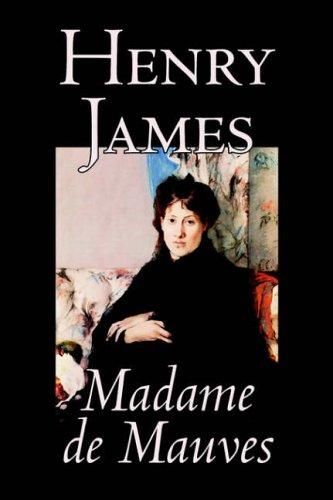
Henry James: Mme de Mauves (1874)

It was exactly one year ago that I reviewed Edith Wharton’s Mme de Treymes. Mme de Treymes – Mme de Mauves? Both novellas, both set in Paris, or in the case of Mme de Mauves in St-Germain-en-Laye. It’s hardly a coincidence. And who was influenced by whom is also not hard to find out as James wrote his novella in 1874, while Edith Wharton published Mme de Treymes in 1907.

Henry James and Edith Wharton are both novelists whose each and every book I would like to read sooner or later. Discovering Madame de Mauves of which I hadn’t known anything before was a real pleasure and the first sentences managed to capture me right away.

The view from the terrace at St.Germain-en-Laye is immense and famous. Paris lies spread before you in dusky vastness, domed and fortified, glittering here and there through her light vapours and girdled with her silver Seine. Behind you is a park of stately symmetry, and behind that a forest where you may lounge through turfy avenues and light-chequered glades and quite forget that you are in half an hour of the boulevards. One afternoon, however, in mid-spring, some five years ago, a young man seated at the terrace had preferred to keep this in mind. His eyes were fixed in idle wistfulness on the mighty human hive before him.

Like in Mme de Treymes we have the theme of intercontinental marriage and its difficulties. The young American Longmore, the narrator of Henry James’ novella, meets the beautiful and sad Mme de Mauves on one of his walks in St. Germain. A mutual friend introduces them and before leaving for London asks him to keep her company and distract her, as she is trapped in an unhappy marriage. Mme de Mauves is a young, very rich American woman, married to an aristocratic Frenchman. While she married because she romantically idealized the title, she also married for love, while he married her for the money only. It is known that he not only spends her money but has one affair after the other.

The more time Longmore  spends in her company, the more he admires her, pities her and finally falls in love with her. He would want her to confide in him but she refuses. As much as he is in love with her, he would never attempt anything and is taken aback when her sister-in-law suggests they should have an affair. It’s only natural, according to the sister-in-law, for a Frenchman to have affairs but it isn’t natural for a woman to make him one scene after the other and to torment him with reproaches. In an earlier conversation with Longmore, M de Mauves complains about his wife. He thinks that she is too morbid, to fond of reading and solitude.

A lot of what we find in James’ later novels can already be found here. The contrast of morals between France and America, the almost impossibility of a marriage between a rich American and an aristocratic Frenchman. Adultery. Divorce seems no option although Longmore hopes so at a certain point. I think it would be really great to read Wharton’s and James’ novella together. Both have drastic and surprising endings but in the case of Mme de Mauves, I’m not sure whether it isn’t surprising because it is implausible. If anyone has read the novella I’d love to discuss the ending.

It seems that of all of his novels The Golden Bowl is the most similar to this novella, although, without the tragic end. The negotiation that fails in Mme de Mauve is successful in The Golden Bowl, or so it seems. I have not read the Golden Bowl yet but would like to very much.

The writing in Mme de Mauves is complex, typical for James, it’s by far less readable than Mme de Treymes.

While this may not be his best work, it has reminded me of all I like in his writing and has certainly put me in the mood for another of his longer novels.

Has anyone read Mme de Mauves? Which are your favourite Henry James novels? Portrait of a Lady is one of my favourite novels but I also like many of his other books with the exception of The Turn of the Screw. I didn’t get along with that at all.

Drive – The Book by James Sallis (2006) and The Movie by Nicolas Winding Refn (2011)

James Sallis’ taut neo-noir novel Drive is nothing if not surprising. All the more so should you have seen the movie first and now want to read the novel. I had barely finished the book when I watched the movie and it was extremely interesting to see what and how they changed it. I don’t want to spoil the fun for those who have read the book first and have not seen the movie yet. I will just mention a few differences.

Sallis’ book is extremely well-crafted and has an interesting structure. I know I will read it again, just because of that. The story can be summarized in a few sentences. At the beginning of the book we see Driver in a pool of blood, three dead bodies next to him. How he got there and why will be revealed in bits and pieces during the novel. The story jumps backwards and forwards in time, only revealing a little in each chapter. The chapters can be read like short stories. They work on their own. This structure and the way information is given, only in the smallest of slices, exemplifies one of the main themes of the book.

Life sends us messages all the time – then sits around laughing over how we’re not gonna be able to figure them out.

Driver is a stunt driver for the movies. He is the best. Driving is what he knows best. His reputation is such that he is contacted by some criminals and hired as the driver for getaway cars in robberies. Driver is non-colloquial to the extent that even his delinquent bosses are stunned. Try to be more mono-syllabic and you’d be reduced to complete silence. Driver doesn’t want to know details. He drives. Period. And tells you that. In very short sentences.

Driver and many other people stay nameless all through the book which symbolizes a lot and mirrors an element of his childhood.

Mostly, when she spoke to him at all, she just called him boy. Need any help with the schoolwork, boy? Got enough clothes, boy? You like those little cans of tuna for lunch, right, boy? and crackers?

With a mother like that no wonder Driver never really attaches any meaning to his name or is much interested in elaborate conversation. This doesn’t mean he isn’t interested in people or relationships. He tries to be with people, he does contact people and hang out with them. He even takes care of some. Despite this lack in open communication, Driver’s interior life is far from empty. Passages like the one below are frequent in the novel.

Driver marvelled at the power of our collective dreams. Everything gone to hell, the two oft them become running dogs, and what do they do? They sit there watching a movie.

It’s rare that I’m this fascinated by a crime novel, this amazed by the writing. After having finished it, I could hardly wait to see the movie.

Maybe it’s lucky book and movie do not have a lot in common. Some story lines that are not very important in the book, have a major importance in the movie. The movie has nothing of the staccato rhythm of storytelling of the novel but delivers the story chronologically, leaving out everything about Drivers’ childhood and developing a major love story.

I didn’t mind those liberties at all because you can see book and movie as two separate things, one serving as a draft to the other. This is one of those movies I see myself re-watching many times. I absolutely loved it and one of the major reasons for that is the soundtrack. This is one of those glossy movies in which picture, story, actors and score form a tight whole and each part is perfect. Remove or change one thing and it would crumble. What I liked best was the extremely soulful, almost dreamlike atmosphere the soundtrack created, those beautiful pictures of the illuminated L.A. skyline at night and the surprisingly tender love story. I have often issues with the cast but it’s perfect in this movie. I couldn’t imagine a better Driver than Ryan Gosling or a better person for Irina than Carey Mulligan.

With a director like Nicolas Winding Refn (Valhalla Rising) it was to be expected that the movie would be visually compelling but not shy away from graphic scenes and strong violence.

You can watch this movie, see the differences with the book and still like it, and you can still admire the book as well.

Probably still under the influence of the movie, I haven’t done the book enough justice. If you want to read more focussed reviews, Guy reviewed it here (that’s the one that made me discover the book) and Max reviewed it here.

Thanks to the major success of this film the books by Sallis are now reissued. I’ve heard a lot of good things about Ghost of a Flea. The re-release is due in May 2012.