Claire Tomalin: Jane Austen – A Life (1997)

Jane Austen

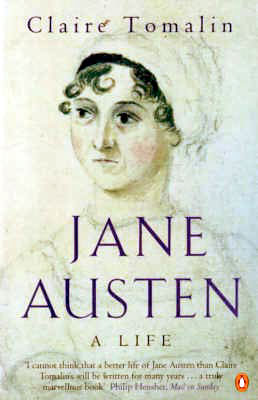
Last year I was in a Jane Austen mood for several months. I read the last of her novels I hadn’t read, watched movie adaptations, and even picked up the one or the other book inspired by her. Finally I also read Claire Tomalin’s Jane Austen biography, which I’ve finished a while ago.

Jane Austen – A Life isn’t only an excellent biography, it’s very moving as well. There isn’t all that much we know about Jane Austen but Tomalin wrote about what little we know with so much empathy and compassion that, at times, I couldn’t help but feel deeply for Jane Austen. When you read a biography you’re never sure what you will get. Some biographers are too present in the book or, what is even worse, some seem not to like their chosen subject at all. I’m glad none of this was the case here. I felt Tomalin approached Jane Austen with a lot of admiration and sympathy.

It’s hard to review a biography and do it justice, especially when it’s so carefully done, including every aspect of an author’s life. There were chapters I devoured, others, like those on the Austen neighbours, were a bit dragging. Overall however this is a wonderful biography and I could feel on every page how much passion and dedication Tomalin put into the book.

Since the book is so comprehensive, I’d like to pick just a few elements and write about those.

Tomalin, as I just wrote, is a very compassionate biographer, which made her detect things that are never explicitly stated in the testimonies or letters. She writes that seen from outside one might think that Jane Austen had a happy childhood and an unproblematic life, but when you look more closely, it becomes apparent, that there was a lot of heartache and sorrow. Tomalin mentions for example that all the Austen children were given away for up to 18 months when they were just a few months old. They grew up in the village with a wet-nurse. This means that by the age of three, they had experienced two traumatic events. First they had to leave the mother and later they were ripped from the family they hade come to see as their own.

The movie Becoming Jane, gives the wrong impression with regard to Jane Austen’s siblings. She had only one sister, but more than one brother, and because the parents had a school for boys, she and her sister grew up among many other boys. Unfortunately, because  it was a boy’s school, the two sisters had to leave the family again and go to boarding school. This, it seems, was another traumatic event as the school was quite terrible.

When I watched Becoming Jane, I wondered, like so many others, how much of the love story was true. Why did Jane Austen never get married? Was she too heartbroken and could never get over Tom Lefroy? After reading Tomalin, I have the impression that the love story which is told in the movie, is quite close to reality. There was no elopement and, as I already mentioned, Jane had more than one brother, but the depiction of the unhappy love story between her and the Irishman Tom Lefroy is pretty accurate. She had more opportunities later in life but she turned all her suitors down. She didn’t have any feelings for them.

Jane and her sister Cassandra were very close and spent their whole lives together. Seeing how many of the women around them were either constantly pregnant or died in childbed, staying single must have been some consolation to them.

I wasn’t aware that Jane Austen stopped writing for almost ten years. The chapters on this silence are by far the most tragic and interesting. One could think that the cause for her silence was small, but for Jane Austen it was a catastrophe. She loved the house in the country in which she grew up and when her parents decided to sell it – without telling Jane or her sister anything about the decision, until it was executed – she was devastated. She didn’t want to move to Bath. She didn’t like it and the house would be much smaller. There would be no garden, and no possibility to be close to nature. The impact of this move was so intense that she became depressed, shut down and didn’t write anymore. I guess it was more than just the loss of the garden though. She had a certain routine, and lack of space would prevent that she could withdraw herself from company as easily as before.

Jane Austen died quite young and, according to Tomalin, it’s not entirely clear what illness she had. Some attempts at a retrospective diagnosis have been made. She might have died from Addison’s disease, Hodgkin’s Lymphoma or bovine tuberculosis. In any case, the deterioration was slow and she suffered for more than a year before she died.

The biography contains a lot more, of course. I focussed on the tragedies of her life, but Tomalin writes extensively about the books and the influence Jane Austen’s reading had on her writing. Dr Johnson is mentioned for example and that many of Austen’s famous sentences have been inspired by him.

At the end of her biography Tomalin writes about Jane Austen:

“She is as elusive as a cloud in the night sky.” (287)

That’s exactly how I felt when I closed the book. As if I’d been watching a shadow theater. It’s the first time, I close a biography and it leaves me this sad.

Literature and War Readalong May 30 2014: Private Peaceful by Michael Morpurgo

Private Peaceful

Michael Morpurgo is a famous British Children’s author. Some of you may know him from the Spielberg movie War Horse, which was based on one of his novels. I’ve had Private Peaceful on my piles for a while and I’m really keen on reading it finally. I’ve always wondered how you write about war for children. Especially from the point of view of a soldier. We’ve read the Dutch novel Winter in Wartime last year, but that was set among civilians. So I’m curious to find out how explicit the book will be and where Morpurgo draws the line.

I’m glad that CarolineD made me aware that Private Peaceful and My Dear I Wanted to Tell You (our choice for September) have been chosen by CityRead London 2014. CItyRead London is a project to promote reading across the UK capital.

Here are the first sentences

They’ve gone now, and I’m alone at last. I have the whole night ahead of me, and I won’t waste a single moment of it. I shan’t sleep it away. I won’t dream it away either. I mustn’t, because every moment of it will be far too precious.

And some details and the blurb for those who want to join

Private Peaceful by Michael Morpurgo (UK 2003)  WWI, Children’s Book, 192 pages

Heroism or cowardice? A stunning story of the First World War from a master storyteller.

Told in the voice of a young soldier, the story follows 24 hours in his life at the front during WW1, and captures his memories as he looks back over his life. Full of stunningly researched detail and engrossing atmosphere, the book leads to a dramatic and moving conclusion.

Both a love story and a deeply moving account of the horrors of the First World War, this book will reach everyone from 9 to 90.


*******

The discussion starts on Friday, 30 May 2014.

Further information on the Literature and War Readalong 2014, including all the book blurbs, can be found here.

Pat Barker: Toby’s Room (2012) Literature and War Readalong April 2014

Toby's Room

I’ve been procrastinating all morning. Every time I sat down to write this review I had something very urgent to do. Read the afterword of Fire and Hemlock, read the news on the Ukraine, get a cup of tea, look for cat number 2, read more news on the Ukraine, read the guardian review of Toby’s Room, urgently hunt for a book voucher, read the NY Times review of Toby’s Room, call my best friend in Odessa. I think you get the drift. Anything but writing the review.

Why?  Because I’m far from happy about this book and because I’m going to say what the critics didn’t say: it’s a mixed bag and despite a lot of good elements – mainly the choice of topic – it’s pretty much a failure or – even worse – a dishonest attempt. Still, it would be a great book club pick, as its strengths are topics and characters. That’s why I think it was a good choice for our readalong and if a few people read it, the discussion should be interesting.

So what’s Toby’s Room about? Thanks to the Guardian review, I was made aware that the title is an allusion to Virginia Woolf’s Jacob’s Room, the novel which she wrote after her brother Thoby died in WWI. It’s not surprising then that Virginia Woolf has a cameo appearance in Toby’s Room. I’ve read Jacob’s Room too long ago to make the connection, but I’m tempted to revisit it.

Elinor and her brother Toby are close, too close, one could say. One afternoon, in 1914 they spend a night together. This is deeply traumatizing for Elinor, although she’s not a victim in the whole encounter. Later when they are both in London, Elinor studying to become a painter, Toby to become a doctor, their relationship is strained.

In 1917 Toby’s reported “Missing, believed Killed”, which affects Elinor deeply. Until that day she tried to avoid thinking of the war but the death of her brother and the uncertainty of the circumstances, propel her right into it.

When Elinor finds a letter her brother wrote shortly before his death, mentioning Kit Neville, a famous painter, knows what happened to him, she barges in on Neville who’s at a hospital for soldiers with facial wounds. She disregards his state and unease and tries to force him to confess what happened. To no avail.

The second part of the novel sees Elinor join Tonks, her former teacher. Tonks is a painter and surgeon who helped a great deal in giving back some sort of face to those who had been severely disfigured. Part of his and Elinor’s work consists in drawing the wounded men before, during and after surgery. The gallery of this drawings can be visited online here (I managed to look at two).

Neville doesn’t confess to Elinor, he will confess to the far more sympathetic Paul, Elinor’s lover, whose story is told in Barker’s Life Class.

Pat Barker is famous for blending fact and fiction, for introducing us to important topics – I shy away from calling facial reconstruction “fascinating” as she herself does in her afterword – and for addressing the complexity of WWI. And she’s a very good plotter. The book reads like crime fiction. From the very beginning we are drawn along, running like donkeys after a carrot, to find out “Whatever happened to Toby?” I’m grateful for Pat Barker’s plotting skills, it made for quick reading, but when the juicy carrot I’d been hoping for proved to be a shriveled scrap, I felt let down. I didn’t buy the end. It wasn’t believable for me, but very much in line with the sensationalist beginning.

My biggest problem however was that she felt she had to start with an incest. Why was that necessary? I can relate to someone’s attachment to their brother, I didn’t need an incest to understand that they were very close and that their relationship was far from uncomplicated. This leads me to another problem I had with the book – heavy-handed foreshadowing.

Before I move on to the good parts, let me just say that I found Elinor a off-putting character. Not only did I despise her for blocking out the war, but for being so insensitive. In a way, the novel wants to tell us, it’s that character trait that made her useful. If she’d been more emotional, more sensitive, she wouldn’t have been able to draw the atrocities she saw. I don’t think that is true. I think there are people capable of deep empathy who can still do work like that.

What I liked about this novel, besides its suspenseful readability, was the choice of topics. I’d never heard of Tonks before and I found it interesting how the novel showed that the painters had to document everything in great detail but that they knew it would never be shown publicly. Some of the other painters mentioned painting landscapes as a metaphor. The war can be shown metaphorically but not realistically.

Neville isn’t a sympathetic character either but he’s a great character nonetheless. His story illustrates how hard it was for people to handle seeing facial mutilations. It was so hard that they often ceased to think about the person who was “behind” the disfigurement. They seemed to have lost their humanity with their faces and thus the repulsive reactions of the people were only occasionally questioned.

The more I read, the more I was wondering whether the fact that these injured men were sent to hospitals outside of cities was not so much for their own good as for the good of the population. These parts were done admirably well in the novel and the juxtaposition with scenes in which Elinor learns how to become a better painter through anatomy lessons and dissecting a corpse is great as well.

As a whole however I would say that this novel with its shifting POVs and sensationalist beginning and ending, is a failure. But a very thought-provoking failure.

I’m curious to hear the thoughts of others. Did you think the incest was a good choice? And what about the many different POVs and Elinor’s diary?

Other reviews

CarolineD

Danielle (A Work in Progress)

Maryom (Our Book Reviews)

The Mole

*******

Toby’s Room is the fourth book in the Literature and War Readalong 2014. The next book is the WWI novel  Private Peaceful by Michael Morpurgo. Discussion starts on Friday 30 May, 2014. Further information on the Literature and War Readalong 2014, including the book blurbs can be found here.

Susan Minot: Evening (1998)

Evening

With two novels and one short story collection published to overwhelming critical acclaim, Susan Minot has emerged as one of the most gifted writers in America, praised for her ability to strike at powerful emotional truths in language that is sensual and commanding, mesmerizing in its vitality and intelligence. Now, with Evening, she gives us her most ambitious novel, a work of surpassing beauty. During a summer weekend on the coast of Maine, at the wedding of her best friend, Ann Grant fell in love. She was twenty-five. Forty years later–after three marriages and five children–Ann Lord finds herself in the dim claustrophobia of illness, careening between lucidity and delirium and only vaguely conscious of the friends and family parading by her bedside, when the memory of that weekend returns to her with the clarity and intensity of a fever-dream. 

It’s not easy to capture the beauty of Susan Minot’s gorgeous and ambitious novel Evening. If Virginia Woolf or Proust had written page-turners, that’s what it could look like.

In beautiful prose which explores how memory and consciousness work Evening captures the story of Ann Grant’s life. It is 1994 and Ann is terminally ill; she’s lying in her bed, drifting in and out of consciousness. Scent transports her back in time. The morphine induces hallucinations, which are rendered in brilliant stream of consciousness paragraphs. These chapters and paragraphs, are very short, fragments only; the main story however simply moves back and forth between 1994 and 1954, the summer in which she met Harris Arden.

She smelled the cushion and smelled the balsam and what happened to her then was a kind of wild tumult. The air seemed to fracture into screens which all fell crashing in on one another in a sort of timed ballet with spears of light shooting through and something erupted in her chest with a gush and in her mind’s eye she saw her hands forty years younger and heard the clink of rocks on a beach and the sound of a motorboat and rising behind that came a black night and a band playing in the trees and the smell of water in the pipes of a summer cottage and she raised her hand to keep the cushion there and breathed in and heard an old suitcase snap open.

While Ann is remembering four days in 1954, when she met Harris, her grown-up children, her friends and nurses flutter like moths in the periphery of her bed. Ann is given morphine and more often than not, she’s not lucid but hallucinating. One moment she remembers something that happened in 1954 and the next moment a noise in her bedroom changes everything, makes her imagine something; another moment later, she’s back with her visitors.

Her children hear her talk to an invisible stranger, Harris, but when they ask her about him, Ann denies knowing a person with that name.

The story is divided into several recurring elements. There is the story of the four days in summer 1954, the stream of consciousness elements in which Ann sees her whole life pass, the passages in which we hear her children talk, and very short passages in which Ann seems to be talking to Harris who has come to visit her. His visits take place in her imagination but for her this seems more real than anything else.

Evening questions what is left of a life when it comes to its end. Memories, dreams, illusions, are all the same, when you look back. Ann has been married three times. Some marriages were good, others were bad, but now that she is dying, Harris, the unlived possibility, is the strongest memory she has.

Evening explores the way memory works

First she was Ann Grant, then Phil Katz’s wife then Mrs Ted Stackpole then Ann Lord. Bits of things swam up to her, but what made them come. Why for instance did she remember the terrace at Versailles where she’d visited only once, or a pair of green and checkered gloves,  photograph of city trees in the rain?It only demonstrated to her all she would forget. And if she did not remember these things who would? After she was gone there would be no one who knew the whole of her life. She did not even know the whole of it.

Although the narrative is fragmented and modernist in places, the book has the qualities of a page-turner. At the beginning we only know that Ann Grant met Harris in 1954 and that they both fell in love. It will take the whole book to reveal what has happened and why, after all these years, she still remembers him as if it had been yesterday but never told anybody about him.

Underlying this remembrance of things past, lies a very crucial topic: pain medication in palliative care. It’s briefly mentioned in the book that Ann Lord decided to be medicated although she knew she would probably spend her final weeks, days and hours not being lucid. Some cancer patients prefer lucidity and live their final moments with as much pain as they can possibly endure. Not Ann.

It’s a beautiful book and strangely uplifting. Possibly because it testifies how intense an interior life can be and that nothing is really lost. Everything we’ve ever experienced, imagined or dreamed is still somewhere. In its best moments Evening reminded me of Virgina Woolf’s The Voyage Out, in which we often see people or houses from outside. They are motionless or sleeping, but we catch a glimpse of their inner lives, which are rich and deep and passionate.

Evening has been made into a movie with Claire Danes, Vanessa Redgrave, Glen Close, Toni Colette, Natasha Richardson and Meryl Streep. It doesn’t capture what made the book so wonderful but it’s still a beautiful movie.

Angela Carter Week 8 – 15 June 2014

ACW badge 2-2

I’ve been a fan of Angela Carter’s work since I discovered her as a teenager. She’s one of those rare writers and academics who are good at every genre they try. Novels, short stories, essays, plays, film scripts. And her prose is one of those I admire the most. I don’t know any other writer with such an astonishingly rich vocabulary, that is both exquisite and evocative.

I always wanted to host an Angela Carter Week but I was looking for the right moment and co-host. When I saw that Delia was planning on reading Carter’s fairy tale retellings The Bloody Chamber for Carl’s Once Upon a Time Challenge, I knew the moment had come. After all, Delia (Postcards from Asia) and I had hosted Dickens in December and it was great fun. Seeing that she was planning on reading Angela Carter was the final nudge I needed. Luckily, Delia was in and she designed two gorgeous badges.

Here are the details:

  • The event runs from June 8 – 15 2014.
  • You can read absolutely anything you like. One short story or essay, a book she has edited, a novel, a radio play. Anything goes. You could equally read books or essays about her.
  • You can choose any of the two badges for your posts or side bar.
  • You can join any time. As early as now, as late as June 15. If you’ve written a post, please leave a comment in the comment section.

Angela Carter was not only versatile but her writing proves how lucid, highly creative and intellectual she was.  And provocative. She didn’t shy away from any topic, – be it sexuality, pornography, violence, torture, schizophrenia  –  or from any trope. She had a very unique esthetic; motives and themes like the circus, cabaret, artificial people, toys and angels are recurring. But she was also interested in cultural change, gender and various movements. Some of her books are exploring the culture and philosophy of the 60s.

Here are a few books you can choose from, (including the blurbs). There are many, many more.

Novels
Heroes and Villains

Heroes and Villains

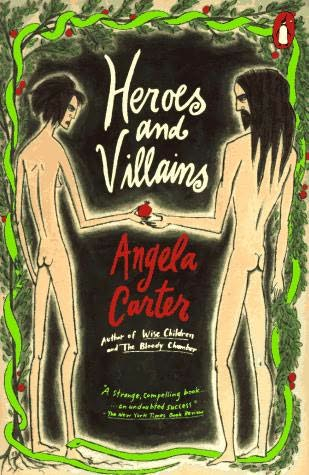
I’ve read a lot of Angela Carter’s short stories and some of her novels. The novel I liked by far the most was the critically acclaimed Heroes and Villains.

A modern fable, a post-apocalyptic romance, a gothic horror story; Angela Carter’s genre-defying fantasia Heroes and Villains includes an introduction by Robert Coover in Penguin Modern Classics.

Sharp-eyed Marianne lives in a white tower made of steel and concrete with her father and the other Professors. Outside, where the land is thickly wooded and wild beasts roam, live the Barbarians, who raid and pillage in order to survive. Marianne is strictly forbidden to leave her civilized world but, fascinated by these savage outsiders, decides to escape. There, beyond the wire fences, she will discover a decaying paradise, encounter the tattooed Barbarian boy Jewel and go beyond the darkest limits of her imagination. Playful, sensuous, violent and gripping,Heroes and Villains is an ambiguous and deliriously rich blend of post-apocalyptic fiction, gothic fantasy, literary allusion and twisted romance.
Magic Toyshop

The Magic Toyshop

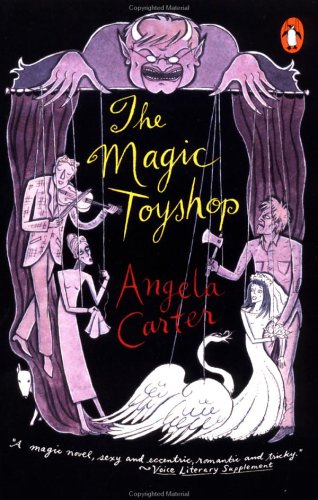
This crazy world whirled around her, men and women dwarfed by toys and puppets, where even the birds are mechanical and the few human figures went masked… She was in the night once again, and the doll was herself.’ Melanie walks in the midnight garden, wearing her mother’s wedding dress; naked she climbs the apple tree in the black of the moon. Omens of disaster, swiftly following, transport Melanie from rural comfort to London, to the Magic Toyshop. To the red-haired, dancing Finn, the gentle Francie, dumb Aunt Margaret and Uncle Phillip. Francie plays curious night music, Finn kisses fifteen-year-old Melanie in the mysterious ruins of the pleasure gardens. Brooding over all is Uncle Philip: Uncle Philip, with blank eyes the colour of wet newspaper, making puppets the size of men, and clockwork roses. He loves his magic puppets, but hates the love of man for woman, boy for girl, brother for sister…
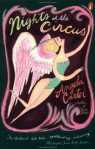
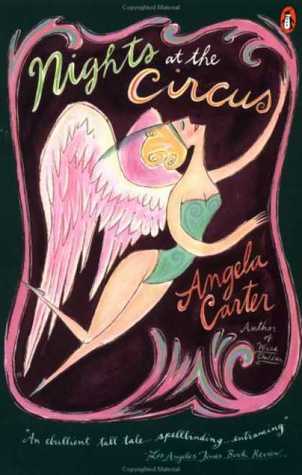
Nights at the Circus

Nights at the Circus

Is Sophie Fevvers, toast of Europe’s capitals, part swan…or all fake? Courted by the Prince of Wales and painted by Toulouse-Lautrec, she is an aerialiste extraordinaire and star of Colonel Kearney’s circus. She is also part woman, part swan. Jack Walser, an American journalist, is on a quest to discover the truth behind her identity. Dazzled by his love for her, and desperate for the scoop of a lifetime, Walser has no choice but to join the circus on its magical tour through turn-of-the-nineteenth-century London, St Petersburg and Siberia.
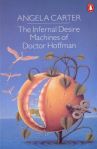
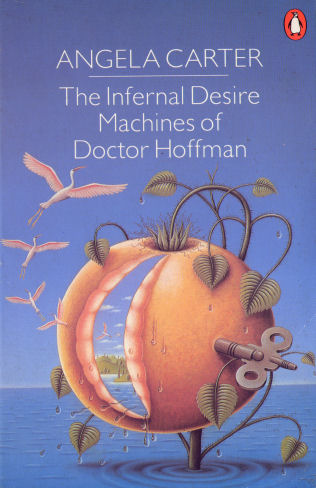
TheInfernalDesireMachinesOfDoctorHoffman

The Infernal Desire Machines of Doctor Hoffman

Desiderio, an employee of the city under a bizarre reality attack from Doctor Hoffman’s mysterious machines, has fallen in love with Albertina, the Doctor’s daughter. But Albertina, a beautiful woman made of glass, seems only to appear to him in his dreams. Meeting on his adventures a host of cannibals, centaurs and acrobats, Desiderio must battle against unreality and the warping of time and space to be with her, as the Doctor reduces Desiderio’s city to a chaotic state of emergency – one ridden with madness, crime and sexual excess.

A satirical tale of magic and sex, The Infernal Desire Machines of Doctor Hoffman is a dazzling quest for truth, love and identity.
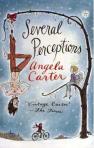
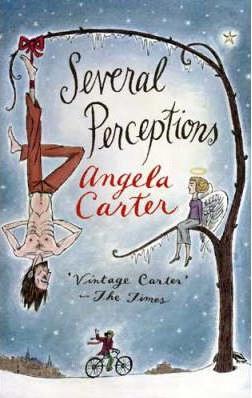
Several Perceptions

Several Perceptions

Centre stage in Angela Carter’s unruly tale of the Flower Power Generation is Joseph – a decadent, disorientated rebel without a cause. A self-styled nihilist whose girlfriend has abandoned him, Joseph has decided to give up existing. But his concerned friends and neighbours have other plans.

In an effort to join in the spirit of protest which motivates his contemporaries, Joseph frees a badger from the local zoo; sends a turd airmail to the President of the United States; falls in love with the mother of his best friend; and, accompanied by the strains of an old man’s violin, celebrates Christmas Eve in a bewildering state of sexual discovery. But has he found the Meaning of Life?
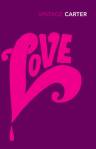
LOVE

Love

Love is Angela Carter’s fifth novel and was first published in 1971. With surgical precision it charts the destructive emotional war between a young woman, her husband and his disruptive brother as they move through a labyrinth of betrayal, alienation and lost connections. This revised edition has lost none of Angela Carter’s haunting power to evoke the ebb of the 1960s, and includes an afterword which describes the progress of the survivors into the anguish of middle age.

Short Stories
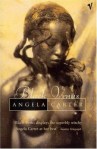
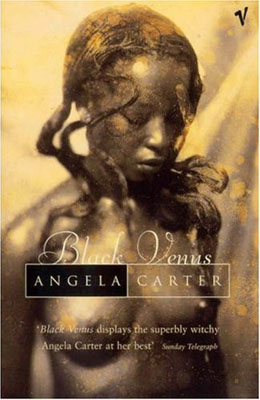
BLACK-VENUS

Black Venus

Extraordinary and diverse people inhabit this rich, ripe, occasionally raucous collection of short stories. Some are based on real people – Jeanne Duval, Baudelaire’s handsome and reluctant muse who never asked to be called the Black Venus, trapped in the terminal ennui of the poet’s passion, snatching at a little lifesaving respectability against all odds…Edgar Allen Poe, with his face of a actor, demonstrating in every thought and deed how right his friends were when they said ‘No man is safe who drinks before breakfast.’

And some of these people are totally imaginary. Such as the seventeenth century whore, transported to Virginia for thieving, who turns into a good woman in spite of herself among the Indians, who have nothing worth stealing. And a girl, suckled by wolves, strange and indifferent as nature, who will not tolerate returning to humanity.

Angela Carter wonderfully mingles history, fiction, invention, literary criticism, high drama and low comedy in a glorious collection of stories as full of contradictions and surprises as life itself.
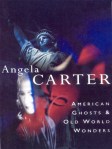
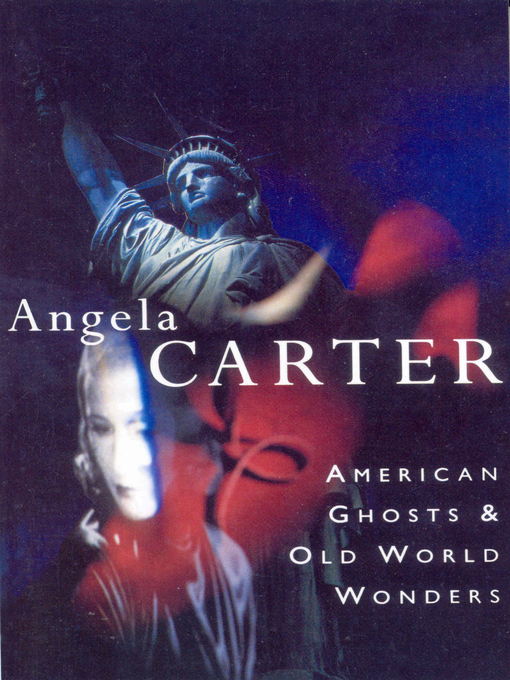
American Ghosts

American Ghosts and New World Wonders

A collection of short stories which tear through the archives of cinema, of art and of the subconscious. A young Lizzie Borden visits the circus; a pianist makes a Faustian pact in a fly-blown Southern brothel; and a transfigured Mary Magdalene steps out of the canvases of Donatello and de la Tour.
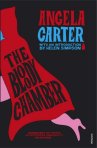
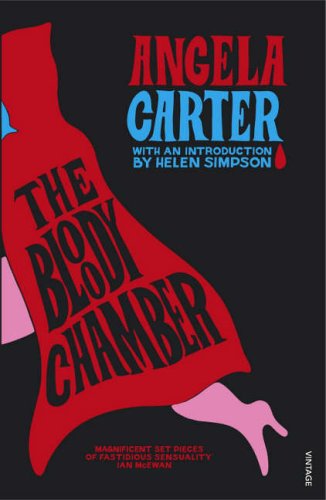
The Bloody Chamber

The Bloody Chamber

From familiar fairy tales and legends – Red Riding Hood, Bluebeard, Puss in Boots, Beauty and the Beast, vampires and werewolves – Angela Carter has created an absorbing collection of dark, sensual, fantastic stories.

Books edited by Angela Carter
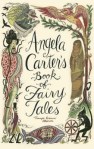
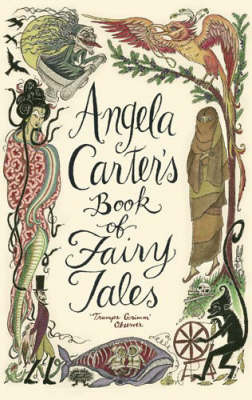
Book of Fairy Tales

Angela Carter’s Book of Fairy Tales

Once upon a time fairy tales weren’t meant just for children, and neither is Angela Carter’s Book of Fairy Tales. This stunning collection contains lyrical tales, bloody tales and hilariously funny and ripely bawdy stories from countries all around the world- from the Arctic to Asia – and no dippy princesses or soppy fairies. Instead, we have pretty maids and old crones; crafty women and bad girls; enchantresses and midwives; rascal aunts and odd sisters.

This fabulous celebration of strong minds, low cunning, black arts and dirty tricks could only have been collected by the unique and much-missed Angela Carter. Illustrated throughout with original woodcuts.

Essays and Criticism
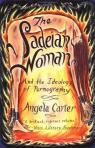
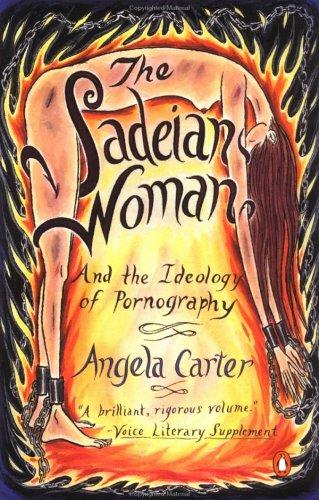
The Sadeian Woman

The Sadeian Woman

‘Sexuality is power’ – so says the Marquis de Sade, philosopher and pornographer extraordinaire. His virtuous Justine keeps to the rules laid down by men, her reward rape and humiliation; his Juliette, Justine’s triumphantly monstrous antithesis, viciously exploits her sexuality. In a world where all tenderness is false, all beds are minefields. But now Sade has met his match. With invention and genius, Angela Carter takes on these outrageous figments of his extreme imagination, and transforms them into symbols of our time – the Hollywood sex goddesses, mothers and daughters, pornography, even the sacred shrines of sex and marriage lie devastatingly exposed before our eyes. Angela Carter delves into the viscera of our distorted sexuality and reveals a dazzling vision of love which admits neither of conqueror nor of conquered.
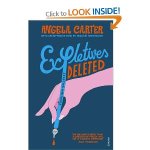
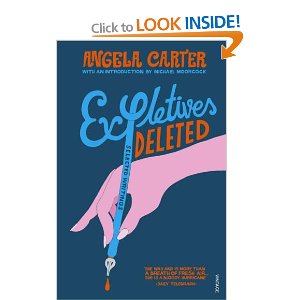
Expletives

Expletives Deleted

Angela Carter was one of the most important and influential writers of our time: a novelist of extraordinary power and a searching critic and essayist.This selection of her writing, which she made herself, covers more than a decade of her thought and ranges over a diversity of subjects giving a true measure of the wide focus of her interests: the brothers Grimm; William Burroughs; food writing, Elizbaeth David; British writing: American writing; sexuality, from Josephine Baker to the history of the corset; and appreciations of the work of Joyce and Christina Stead.

Radio Plays and Scripts
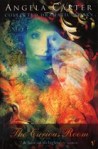
The Curious Room

 The Curious Room

This one is only available in kindle format.

The Vintage Collected Edition of Angela Carter’s works continues with THE CURIOUS ROOM, which contains her dramatic writings, including several previously unpublished plays and screenplays. THE CURIOUS ROOM includes a radio play about the demented Victorian painter and parricide Richard Dadd; reworkings of Puss in Boots and the Dracula story; a draft for an opera of Virginia Woolf’s ORLANDO, as well as the film scripts of THE MAGIC TOYSHOP and THE COMPANY OF WOLVES. Revealing many of the enthusiasms and concerns which ignited Carter’s fiction. THE CURIOUS ROOM is full of magnificent and startling new material, charged with the range and power of Carter’s imagination and inventiveness.

Essays on Angela Carter
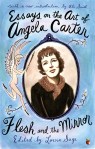
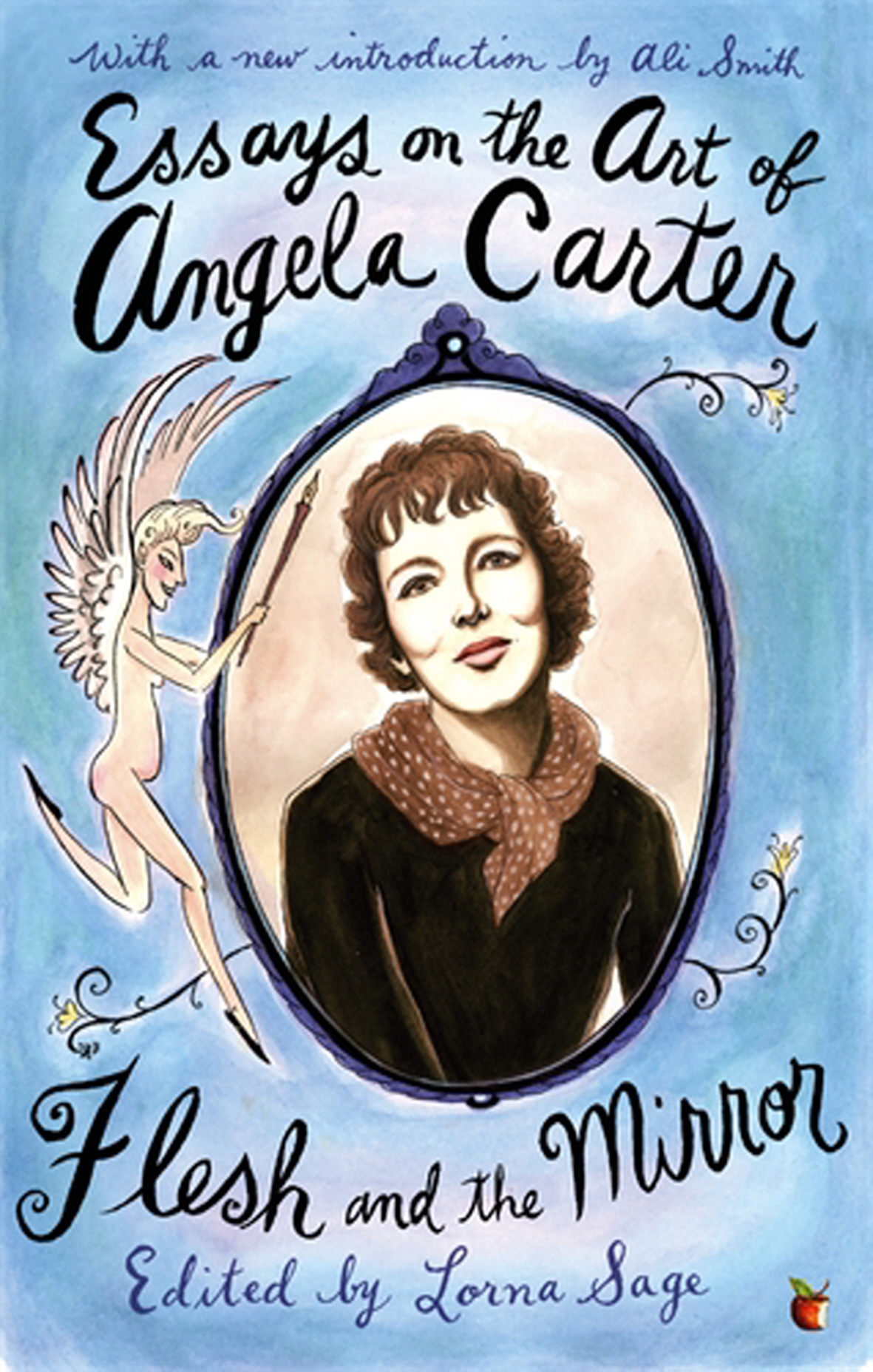
Flesh and Mirror

Flesh and the Mirror 

Go out and get Carter. Get all her fiction, all her fact.’ Ali Smith

 This distinguished volume of essays commemorates the work of Angela Carter. Here her fellow writers, along with an impressive company of critics, disuss the novels, stories and polemics that make her one of the most spellbinding authors of her generation. They trace out the signs of her originality, her daring and her wicked wit, as well as her charm, to produce an indispensable companion to her texts.

 Contributors are: Guido Almansi, Isobel Armstrong, Margaret Atwood, Elaine Jordan, Ros Kaveney, Hermione Lee, Laura Mulvey, Marc O’Day, Sue Roe, Susan Rubin Suleiman, Nicole Ward Jouve, Marina Warner and Kate Webb.


A list with more titles and further details can be found on Delia’s blog here.

I hope that you will join Delia and me in celebrating this unique writer.

I’m looking forward to rediscover a favourite writer. I might read her novel Love, a radio play and hopefully some short stories.

Will you join us? Which books or stories will you read?
Angela Carter Week

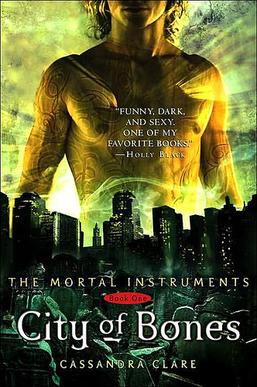
Cassandra Clare: City of Bones (2007) Mortal Instruments I Book and Movie

City of Bones

A couple of weeks ago I watched the movie City of Bones and liked the imagery and the story so much, I had to pick up the book. The movie got dreadful reviews; it seems I’m the only one who really liked it. The book was said to be much better. It’s tricky to read a book after having watched a film with such stunning visuals. For the first 200 pages I didn’t really see the descriptions of the book but the movie images. After that I got a better feel for the book because it contained some major plot elements which had been left out in the film.

The story might be familiar to you by now. Clary and her best friend Simon live in New York City. One night they go to the Pandemonium Club and Clary witnesses a murder. Funny enough Simon can’t see anything. Neither the murder, nor the people who commit it. When Clary’s mum is abducted a little while later, and Clary is attacked by a demon, it dawns on her that the life she has been living might have been a lie.

Together with her friend Simon, Jace, one of the guys who committed the murder, and his friends, she embarks on a big adventure. Clary like Jace is no real human. She is a shadow hunter. Shadow hunters kill demons, but they co-exist with downworlders like werewolves and vampires. I’m not going to write much more about the plot as it’s one of those that is easily spoilt.

I thought the movie did a good job at tightening the plot. Maybe if I had read the book first, I would have missed the scenes and episodes that were cut but I thought they were not that gripping. Clary’s interior monologue in the book is often silly, like when she wonders why there are only good-looking vampires. I’m going to spare you her reasoning. It’s NOT clever. Interestingly though, the greatest appeal of the book are the dialogue sections. Jace, Clary and Simon and not only witty but very sarcastic, which made me chuckle quite a few times.

Overall I would say, book and movie both have their strengths, but I prefered the movie because I absolutely loved the imagery and the interiors they created – the club, Clary’s house, the church in which the shadowhunters live.  I also liked that they made the plot so much tighter. And I thought the cast was perfect.

What I didn’t like so much in both lies in the nature of this specific type of story. There are numerous ways to tell (urban/dark) fantasy stories. I tend to prefer those in which magic/fantasy are part of the world the characters live in, and their existence are known by everyone, or when the main character is part of the paranormal world. Normal humans who are thrown into a paranormal situation or who discover at the beginning of a book that they aren’t entirely human are just not as appealing to me. I find that these stories stretch believability too much. At the beginning of City of Bones, for example, Clary is a normal teenager and after only one day, she’s immersed in a paranormal world she never knew existed, her mother’s abducted, she’s attacked by demons, werewolves and vampires, but she accepts this without questioning it too much. This premise can work sometimes. Neil Gaiman made it work in Neverwhere, but often it feels unrealistic.

Anyway, it’s an entertaining book and I might even read part two, if only for the dialogue. If there is another movie, I’ll certainly watch it.

This is my first contribution to Carl’s Once Upon a Time Challenge. Don’t miss the review site, which can be found here.

Literature and War Readalong April 28 2014: Toby’s Room by Pat Barker

Toby's Room

With Pat Barker’s novel Toby’s Room, we’re leaving the American Civil War behind and move on to WWI. All the books following Toby’s Room are dedicated to WWI.

Pat Barker is one of my favourite writers and her Regeneration Trilogy one of my favourite books. I read all three volumes (RegenerationThe Eye in the DoorThe Ghost Road) back to back and was genuinely sad when I turned the last page. It wasn’t only a story about WWI, but about shell shock, the development of two young disciplines (anthropology and psychiatry) and some of the famous poets who fought in the trenches. My love for her trilogy prevented me from picking up any of her other books, but now, some six years after I’ve read her masterpiece, I’m in the mood, to find out how I will like another of her novel. The scope of Toby’s Room is much smaller, the topics not as varied, but I still hope I won’t be disappointed. As far as I can judge from the blurb, Toby’s Room is a harrowing tale, touching on themes like disfigurement and facial reconstruction.

The first paragraph

Elinor arrived home at four o’ clock on Friday and went straight to her room. She hung the red dress on the wardrobe door, glancing at it from time to time as she brushed her hair. that neckline seemed to be getting lower by the minute. In the end her nerve failed her. She hunted out her pink dress, the one she used to wear for dancing classes at school, put it on and stood in front of the cheval mirror. She turned her head from side to side, her hands smoothing down the creases that had gathered round the waist. Oh dear. No, no, she couldn’t do it, not this time, not ever again.She wriggled out of it and throw it to the back of the wardrobe. Out of the window would have been more satisfying, but her father and brother-in-law were sitting on the terrace. She pulled the red dress over her head, tugged the neckline up as far as it would go, and went reluctantly downstairs.

And  some details and the blurb for those who want to join

Toby’s Room by Pat Barker (UK 2013), WWI, Novel, 272 pages

Pat Barker returns to the First World War in Toby’s Room, a dark, compelling novel of human desire, wartime horror and the power of friendship.

When Toby is reported ‘Missing, Believed Killed’, another secret casts a lengthening shadow over Elinor’s world: how exactly did Toby die – and why? Elinor determines to uncover the truth. Only then can she finally close the door to Toby’s room. Moving from the Slade School of Art to Queen Mary’s Hospital, where surgery and art intersect in the rebuilding of the shattered faces of the wounded, Toby’s Room is a riveting drama of identity, damage, intimacy and loss. Toby’s Room is Pat Barker’s most powerful novel yet.

*******

The discussion starts on Monday, 28 April 2014.

Further information on the Literature and War Readalong 2014, including all the book blurbs, can be found here.