Hermann Hesse: Klingsors letzter Sommer – Klingsor’s Last Summer (1919)

Klingsor's Last Summer

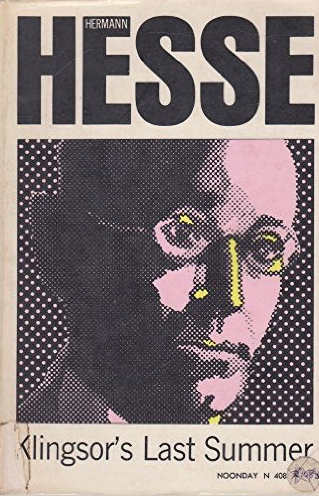
The novella Klingsors letzter Sommer  or Klingsor’s Last Summer is another of Hesse’s autobiographical books. Like Veraguth in Rosshalde, Klingsor is a painter. As you may know, Hesse painted as well, so the choice of painters as alter egos makes a lot of sense. While both books are inspired by Hesse’s life and both have painters as protagonists, they don’t have much else in common. Veraguth was a realist painter, Klingsor is an expressionist. Veraguth is trapped in a loveless marriage, Klingsor is a free-spirit living an excessive life on the brink of disaster.

The way Hesse chose to write his novella is interesting because he seems to paint with words, tries to capture Klingsor’s expressionist work, and uses some of the most interesting and nuanced names for color. Here too, I liked the descriptions. The story is set in the Ticino region, the Italian part of Switzerland. It has one of the most beautiful landscapes I’ve ever seen. Hesse barely disguises the real names. He calls Lugano – Laguno, Sorengo – Barengo  . . . As much as I liked Rosshalde, I really didn’t care for this novella. I hated the main character too much.

Screen Shot 2016-03-10 at 08.36.55

Klingsor is an exalted, self-centred, alcoholic, womanizer and possibly bi-polar. The passages in which he is frenetic and exalted, tries to have sex with every woman he meets, drinks one bottle of wine after the other, and sees death, decay and destruction everywhere, were hard to take. I’ve met a few people in my life who had traits of Klingsor. I really have a hard time coping with this type of energy, even on paper. That said, I might not do this book any justice.

Screen Shot 2016-03-10 at 08.37.57

Nonetheless, I’m glad I read it because it’s interesting to see, how the changes in Hesse’s life are reflected in this story. When he wrote this, he’d left his wife and three kids. Subsequently, sis wife had to be sent to a psychiatric hospital and Hesse too saw a therapist. Even his painting seems to have changed and he moved away from realistic depictions, to more expressive forms.

Screen Shot 2016-03-10 at 08.40.35

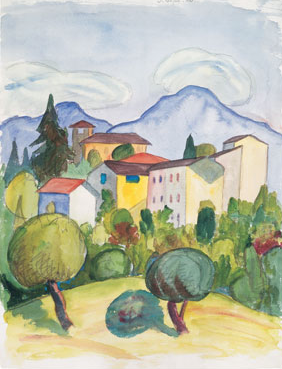
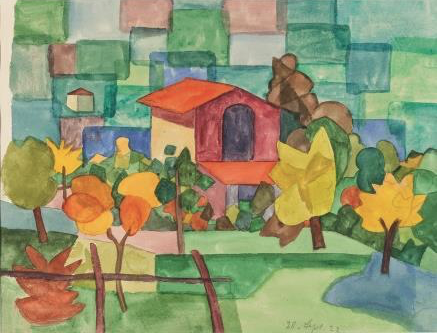
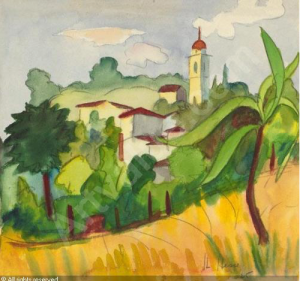
What I truly enjoyed is the way he captures expressionist paintings. His choice of words is so strong and powerful; we can see distorted landscapes, painted in striking colors. Towards the end, he paints a self-portrait that really comes to life.

Screen Shot 2016-03-10 at 08.38.38

Klingsor’s letzter Sommer is a short book. It’s essential reading for anyone who loves Hesse but not a good starting point for those who haven’t read him yet.

The biographical elements I’ve mentioned here and in my earlier post are taken from Heimo Schwilk’s Hesse biography. It came out in 2012. Unfortunately, it hasn’t been translated yet.

Hesse bio

If you’d like to read another post on Klingor’s Last Summer – here’s Pat’s (South of Paris Books) review.

Hermann Hesse: Rosshalde (1914)

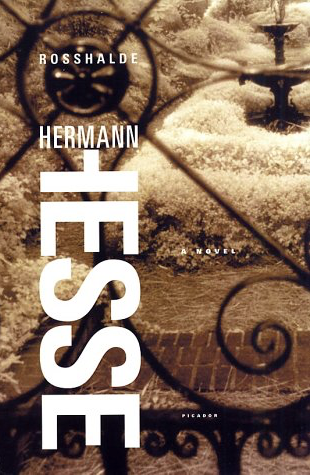
Rosshalde

Published in 1914, Rosshalde is Hermann Hesse’s fourth novel. It tells the story of a failed marriage and the disillusionment of a painter. In many ways it’s a continuation of Gertrude. Both novels are autobiographical, Rosshalde even more so than Gertude. Hesse often tried to make sense of his own life in writing his books, that’s why critics call many of his narrators alter egos.

Johann Veraguth, the main character of Rosshalde, is a painter who is entirely dedicated to his art. The only love in his life is the love for his second son Pierre. He bought the estate Rosshalde many years ago when there was still hope for his marriage. At the beginning of the novel, he returns home one night on his own and looks at the dark house. He has moved out a long time ago and lives in his artist’s studio. He gets up very early every morning, paints until noon, then takes lunch with his wife and son and later paints again until the evening. He’s a rich and famous painter, lives a life of ease, surrounded by beautiful things, he even has servants but he’s very lonely. His wife is hard and distant and has never really understood how he could be so absorbed by his art. His first-born hates him and had to be sent to a boarding school. His best friend travels the world and only rarely returns to Europe. The only joy in his life is his little boy. If his wife allowed him to keep the boy, he would have divorced her a long time ago.

Veraguth is unhappy but he doesn’t even realize it. He’s a bit like a well-oiled machine. He produces one painting after the other, follows a strict routine. All this changes when his old friend pays him a visit. He’s shocked when he sees how Veraguth lives and tells him he has to leave. He cannot go on living in such loveless isolation. But Veraguth cannot make up his mind. He’s too attached to his boy. Nonetheless, he has to admit that his friend is right and before he leaves again, he tells him he might follow him to India and spend a couple of months with him.

I had very mixed feelings while reading this. I didn’t like the beginning all that much but from the middle on, I really started to love this book. I finished it a week ago and it’s still constantly on my mind. There’s so much to like here. But there’s also a lot that I didn’t like. I really loved the descriptions and being in Veraguth’s head when he contemplated nature, his garden, his art. Those passages reminded me of Mercè Rodoreda’s novel Jardí vora el mar. In both books, a solitary man lives in a small house, surrounded by a huge garden and follows the life that is led in the estate nearby. But these passages also reminded me of Virginia Woolf’s The Voyage Out. The end of the novel has affected me quite a bit. I can’t really say anything without spoiling it – just this much – it’s very similar to The Voyage Out as well. I also liked how Hesse depicted Veraguth. The man’s so absorbed by his work, so self-centered, that he doesn’t even notice when his kid needs him, although the boy is the only really good thing in his life. Some of these scenes were written from the small boy’s point of view and were very sad.

What I didn’t like is the idea behind the novel. As I said earlier, it’s autobiographical and closely mirror’s Hesse and his wife’s marriage. From his biography I know that Hesse believed that artists – writers, painters, musicians – should never get married and live conventional lives. His own wife didn’t really understand him and having to provide for her and his three kids took its toll on him. Unfortunately, his views are so dated. His views on marriage, artists, and especially his views on gender. When you read about his views, it’s clear that the artist is always a man and the woman, who wants children and is dependent on him financially, will become a burden. Even so, Hesse thinks that the true failure of the marriage comes from the fact that an artist makes a poor companion. He’s too narcissistic, to self-absorbed. I couldn’t agree less. I’m sure there are artists like that but there are just as many narcissistic, self-absorbed people who don’t create anything. I’m afraid, it might have been a character trait Hesse struggled with. My problem with it is that he thinks it’s a universal problem, thinks that all artists are like that.

And then there’s the language. Hesse’s a very original writer. He creates words, uses new combinations but his German feels very old-fashioned, and his choice of words are at times too emotional, too sentimental. Don’t get me wrong, in spite of these negative aspects, I’m glad I read this and really loved it. But I had to ignore his views on men, women, artists, and marriage and just enjoy the amazing descriptions, the interior life of his protagonist and the terribly tragic story.

Rosshalde might be one of the best books for someone who hasn’t read Hesse and is a bit wary of his spirituality. Those who love him, do love him for that, but those who shy away from him or don’t appreciate him, often mention that aspect. Rosshalde isn’t like his later works in that regard. It talks about transcendence of some sort, but it isn’t meant in a religious way.

Have you read Rosshalde or any other of  Hesse’s books? Which is your favourite?

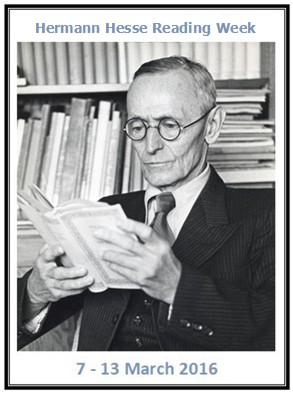
Welcome to Hermann Hesse Reading Week 7 – 13 March 2016

hesse revised

Today is the first day of Hermann Hesse Reading Week, here at my blog and over at Kaggsy’s Bookish Ramblings. I’ve been busy and have read a couple of books (Rosshalde, Klingsor’s letzter Sommer, Wanderung) and will write about them shortly. Pat (South of Paris Books) and I will both write about Klingsor on Thursday 10 March, so if anyone has read that too, try to  join our discussion.

If you participate, please use the Mr. Linky, so Karen and I can visit and comment. Just add your name (blog) + the name of the book you’ve read and then the link below.

I wish everyone a great week.


Literature and War Readalong March 31 2016: 1914 by Jean Echenoz

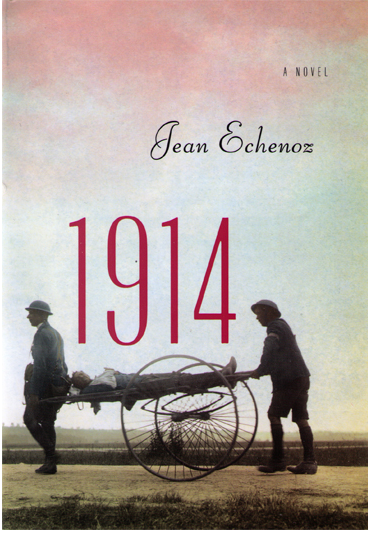
1914

This month’s readalong title is the slim novel 1914  – 14 by prize-winning French author Jean Echenoz. He has won the Prix Médicis for Cherokee and the Prix Goncourt for I’m off – Je m’en vais, both prestigious prizes, and a number of smaller prizes as well. He’s been on my radar for a long while and when I saw he wrote a novel set during WWI, I was immediately tempted. To be honest, the book has received mixed reviews. I’m very curious to find out on which side I’ll be.

Interestingly, the French title is 14 not 1914. One could probably discuss endlessly why they chose 1914 for the English translation and whether it’s right to change it like that. When I compared the beginning of the two books in French and English I noticed considerable differences. Those who read it in English, will have to tell me what they think of the translation.

Here are the first sentences:

Since the weather was so inviting and it was Saturday, a half day, which allowed him to leave work early, Anthime set out on his bicycle after lunch. His plan: to take advantage of the radiant August sun, enjoy some exercise in the fresh country air, and doubtless stretch out on the grass to read, for he strapped to his bicycle a book too bulky to fit in the wire basket. After coasting gently out of the city, he lazed easily along for about six flat miles until forced to stand up on his pedals while tackling a hill, sweating as  he swayed from side to side. The hills of the Vendée in the Loire region of west-central France aren’t much, of course, and it was only a slight rise, but lofty enough to provide a rewarding view.

And some details and the blurb for those who want to join

1914  – 14 by Jean Echenoz, 120 pages France 2012, WWI

Here’s the blurb:

Jean Echenoz turns his attention to the deathtrap of World War I in 1914. Five Frenchmen go off to war, two of them leaving behind young women who long for their return. But the main character in this brilliant novel is the Great War itself. Echenoz, whose work has been compared to that of writers as diverse as Joseph Conrad and Laurence Sterne, leads us gently from a balmy summer day deep into the relentless – and, one hundred years later, still unthinkable – carnage of trench warfare.

*******

The discussion starts on Thursday, 31 March 2016.

Further information on the Literature and War Readalong 2016, including all the book blurbs, can be found here.

Vanessa Gebbie: Storm Warning – Echoes of Conflict (2010) Literature and War Readalong February 2016

Storm Warning

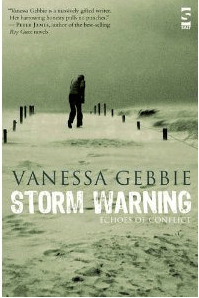
Very often short story collections are just that – collections of stories that may or may not have a few themes in common. Most of the time, the themes are different, while the voice stays the same. Not so in Vanessa Gebbie’s stunning collection Storm Warning – Echoes of Conflict. The themes —war and conflict— are the same in every story, but the voices, points of view, the structure, the range of these stories is as diverse as can be. That’s why this collection is one of those rare books, in which the sum is greater than its parts. Each story on its own is a gem, but all the stories together, are like a chorus of voices lamenting, accusing, denouncing, and exploring conflict through the ages and the whole world. The result is as chilling as it is powerful and enlightening. I don’t think I’ve ever come across anything similar in book form and the only comparable movie, War Requiem, uses a similar technique only at the very end, during which we see  horrific original footage taken from many different wars, covering decades, and dozens of countries.

We’ve often discussed the question of how to write about war in the Literature and War Readalong and I’ve said it before – if I put away a book and am left with a feeling of  I-wish-I’d-been-there, then the book is a failure in terms of its anti-war message. I don’t think one should write about war and give readers a similar, pleasant frisson, they get when they read crime. I can assure you, you won’t have a reaction like this while reading Storm Warning. Without being too graphic, Vanessa Gebbie’s message is clear – there’s no beauty in war. There’s no end to war either. Even when a conflict is finished, it still rages on in the minds of those who suffered through it. Whether they were soldiers or civilians. War destroys bodies and souls. And—maybe one of the most important messages— war is universal. Including stories set in times as remote as the 16th century, choosing locations as diverse as South Africa, the UK, and Japan, conflicts like WWI, WWII, the Falklands war, Iraq, Vietnam, and many more, illustrates this message powerfully. Choosing from so many different conflicts also avoids falling into the trap of rating. I always find it appalling when people rate conflicts, saying this one was worse than that one. Maybe the methods are more savage in some conflicts, but they are all equally horrific.

What is really amazing in this collection is that so many of the stories get deeper meaning because they are juxtaposed with other stories. For example, there’s the story The Ale Heretics set in the 16th Century, in which a condemned heretic, awaits being burned. Burning people alive was such a savage and abominable thing to do, but just when we start to think “Thank God, that’s long gone” – we read a story about necklacing, a form of torture and execution, practiced in contemporary South Africa (possibly in other regions too), in which the victims are also burned alive. And, here too, it’s said to be in the name of the law. If I had only read the first story, it wouldn’t have been as powerful as in combination with the second.

Vanessa Gebbie’s writing is very precise, raw, expressive. As I said before, each story has a distinct voice. There are men and women talking to a dead relative, others seem to try to explain what happened to them, others accuse, many denounce. Yet, as precise as the writing is, often there’s an element of mystery as to what conflict we are reading about. While it’s mostly clear, what conflict is described, they are rarely named. Interestingly, this underlines the similarity and universality, but it also makes differences clear. When a girl talks to her dead sister Golda, mentions the Kristallnacht, we know, it’s a Holocaust story. When gas gangrene is mentioned, we know it is about WWI.

Many of you might wonder, whether the stories are not too graphic, whether the book is depressing. There’s a balance between very dark and dark stories. There’s a touch of humour here and there, even if it’s gallows’ humour, and there’s the one or the other story that’s almost uplifting like my own personal favourite Large Capacity, Severe Abuse. In this story, a Vietnam veteran lives in the basement of an apartment house for retired army officers. He’s in charge of washing their laundry which gives him an opportunity for revenge. This story illustrates also the invisibility of many veterans. They are decorated, they return, they suffer, but society doesn’t care. Some of the veterans in this collection, end up homeless. Too sum this up— the collection is not easy to read, as it’s quite explicit in showing that war mutilates bodies and souls.

Another favourite story was The Return of the Baker, Edwin Tregear. It’s a story that does not only illustrate the difficulties of the homecoming, but the absurdity of things that happened during the war. In this case WWI and its practice of firing soldiers for so-called cowardice.

Some of the stories describe a narrow escape like in The Salt Box, in which a dissident poet finds an unexpected ruse to destroy his poems when his house is searched.

The narrators and characters in these stories are of different gender and age. Stories that have child narrators are often particularly harrowing. There’s the one called The Wig Maker, in which a child witnesses the execution of the mother, and another one, The Strong Mind of Musa M’bele, in which the kid knows his father will be necklaced. Another kid, in Cello Strings and Screeching Metal, witnesses someone being shot while climbing the Berlin Wall.

Quite a few of the stories are more like snapshots; they are very brief, only a page or two, but there are some longer ones as well.

I must say, I’m impressed. The range of these stories is amazing. Getting voice right and distinct, is a difficult thing to do and to get it as right and as distinct in so many stories is absolutely stunning. This is certainly one of the most amazing and thought-provoking anti-war books I’ve ever read.

Should you be interested, one of the stories – The Wig Maker – is available online. Just a warning – it’s possibly the most explicit of the collection.

Vanessa Gebbie is joining our discussion, so, please, don’t hesitate to ask questions.

Other reviews

Danielle (A Work in Progress)


*******

Storm Warning is the first book in the Literature and War Readalong 2016. The next book is the French WWI novel 1914  – 14 by Jean Echenoz. Discussion starts on Thursday 31 March, 2016. Further information on the Literature and War Readalong 2016, including the book blurbs can be found here.

Elizabeth Strout: My Name is Lucy Barton (2016)

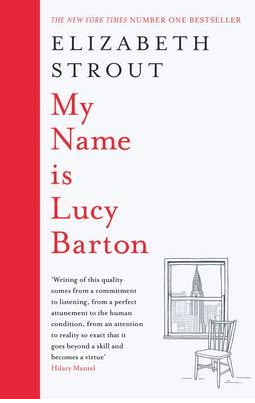
My Name is Lucy Barton

What a beautiful novel. I can hardly believe I haven’t read anything by Elizabeth Strout before. If someone can write a book like this, then surely, her other books must be outstanding too.

Lucy Barton looks back on a time in her life when she spent nine weeks in hospital suffering from a strange illness. Back then, she was married, had two small kids, and was an aspiring author. Lucy comes from a dirt poor family. However, it’s not only poverty she suffered from but cultural deprivation. They had no books, no TV, no radio. Little Lucy was profoundly lonely and that was, she thinks, the reason why she was drawn to books and reading and later to writing. She left her hometown Amgash, Illinois and moved to New York. During her time at the hospital, she often lies away at night and looks at the illuminated Chrysler building. It’s like a beacon. Looking at it helps her ward off feelings of loneliness, gives her hope. One day, she wakes up and finds her mother whom she hasn’t seen in years, next to her bed. Her mother stays five days and watches over her. During these five days, Lucy discovers how profoundly she loves this distant woman and how much it comforts her to know she’s close. The narrative moves back and forth in time. From the hospital room to her childhood and from there to a future with a second husband and a stunning career as a writer.

At times, the novel reminded me of Jenny Offill’s book Dept. of Speculation, but My Name is Lucy Barton is so much warmer, so much more emotional. I absolutely loved it. It explores so many topics. Families, the relationship between mothers and daughters, poverty, loneliness, the artist’s life, New York,  . . .

The voice is very endearing. It’s hard to imagine, this is an accomplished writer talking, the narrator sounds much more like a naïve girl. A very loving one, a girl who tries to find beauty and goodness in everything. It’s endearing and a bit frightening. Another writer would have chosen to throw disaster at her, but not so Elizabeth Trout. She has her character navigate the choppy waters of chance encounters, friendships, marriage and family relationships, without ever being wrecked and going under. There’s heartache, sadness, and loneliness, but Lucy’s always able to see something good and move on. She’s a true survivor. Her childhood sounds horrific. Her parents were abusive, the poverty was brutal. But Lucy survived and everything she’s given, seems like a gift. She stayed true to herself and remained kind and caring and humble.

This may sound a bit mushy, but it’s actually not. The tentative way in which the narrator tries to describe her life, her feelings, gives it great authenticity. At times, it feels like listening to someone talking.

It’s a fantastic book. For readers and for writers. I loved the many complex characters. Some appear only very briefly, like the writer Sarah Payne, who is extremely important for Lucy. It’s Sarah who tells her, that author’s shouldn’t be too concerned with plot as every writer only has one story that he will tell again and again. In Lucy’s case, that story is about trauma. While I’ve seen many authors write about PTSD or childhood trauma, I’ve hardly ever seen anyone, touching this subject in such a delicate way. From war trauma to abuse to AIDS, and 9/11, there’s so much suffering, but it’s like it’s presented behind a thick layer of fabric. Here and there something flares up but it’s never allowed to occupy too much space. It’s pushed back by deep and authentic experience and emotions.

I’ll leave you with a longer quote to give you an impression of the writing. The narrator is talking about her sister, Vicky, and then, as she always does, moves on:

How Vicky managed to this day I don’t know. We were not as close as you might expect; we were equally friendless and equally scorned, and we eyed each other with the same suspicion with which we eyed the rest of the world. There are times now, and my life has changed so completely, that I think back on the early years and I find myself thinking: It was not that bad. Perhaps it was not. But there are times, too—unexpected—when walking down a sunny sidewalk, or watching the top of a tree bend in the wind, or seeing a November sky close down over the East River, I am suddenly filled with the knowledge of darkness so deep that a sound might escape from my mouth, and I will step into the nearest clothing store and talk with a stranger about the shape of sweaters newly arrived. This must be the way most of us maneuver through the world, half knowing, half not, visited by memories that can’t possibly be true. But when I see others walking with confidence down the sidewalk, as though they are free completely from terror, I realize I don’t know how others are. So much of life seems speculation.

I hope that I managed to capture the beauty of this book. It’s such a stunning novel. I can’t wait to read more by Elizabeth Strout.

Hermann Hesse Reading Week March 7 – 13 2016

hesse revised

I think it was in October when Karen from Kaggsy’s Bookish Ramblings and I had the idea of a Hermann Hesse week. We both have come to him very early. She started reading him in her 20s, while I read my first Hesse as a teenager. I returned to him later, in my 20s, but since then, I don’t think I’ve read him again, with the exception of his poems and fairy tales.

Hesse

Initially, I wanted to reread some of my favourites, but now I’ve decided, I’ll rather pick the one or the other I haven’t read yet. So, I’m planning on reading Rosshalde and Klingsor’s letzter Sommer. 

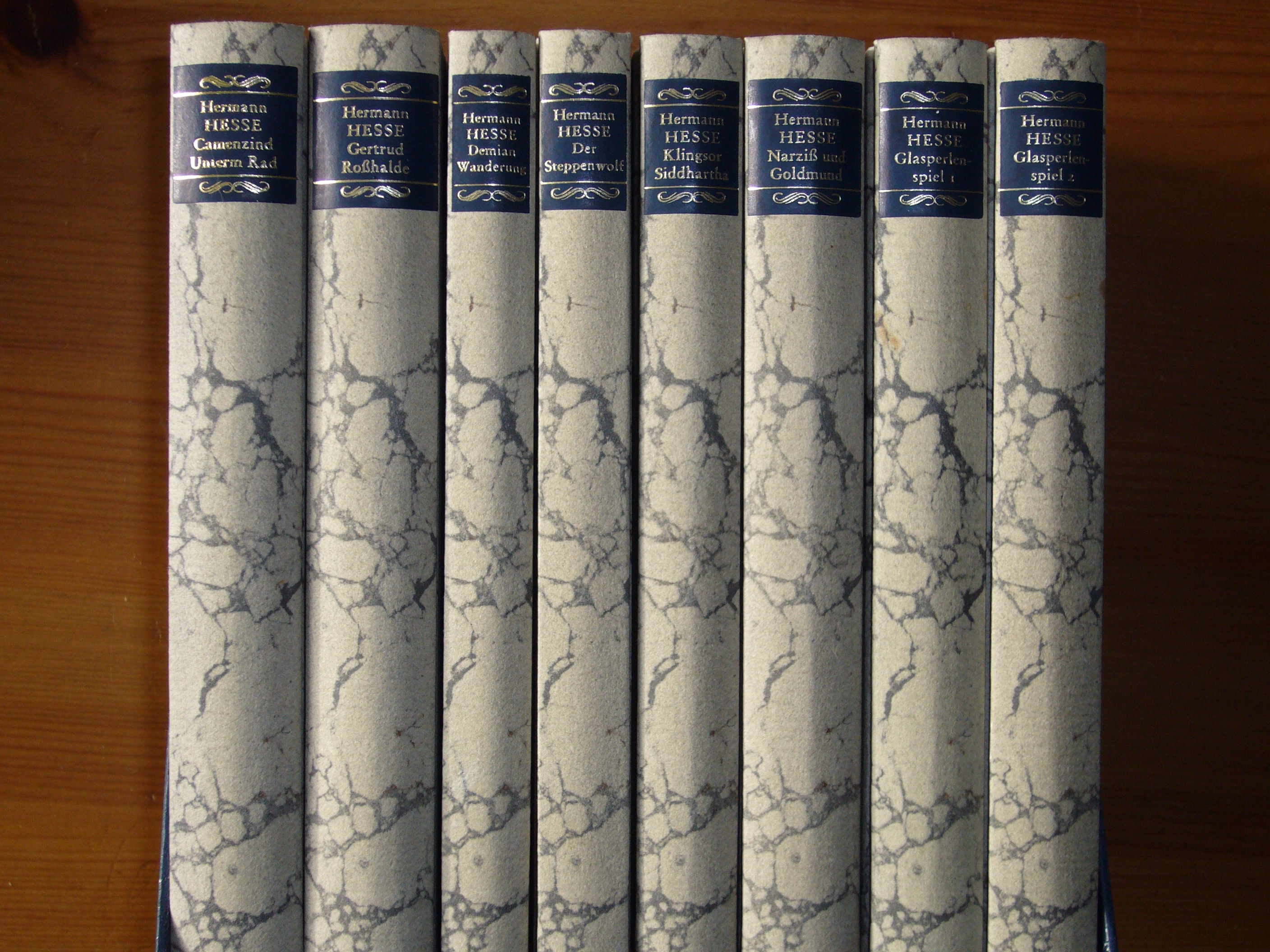
Luckily, I got this lovely collection of his novels and novellas. If I have enough time, I got a few other good choices. I also recently bought a small book that contains poems, letters, non fiction, and excerpts of some of his novels. From what I’ve seen so far, it’s great.

I hope you’ll join Karen and me. I know that Hesse is a favourite of many of the readers of my blog.

For those less familiar with him, Karen’s written a wonderful introduction. You can find it here.

Have you read Hesse? Will you join us?