If You Come Softly by Jacqueline Woodson – A New York Setting – A Post A Day in May

I’ve had Jacqueline Woodson’s novel(la) If You Come Softly (published in 1998) on my piles for almost ten years. When I discovered her name on this year’s Women’s Prize For Fiction Longlist, I decided it was finally time to read it. I was a bit surprised to find her on that list, as I thought she only wrote books for Young Adults and I don’t seem to remember having seen any YA titles on the past lists. I suppose, one could also call Red at Bone a YA novel, as the protagonist is a young woman.

I know, a lot of people shy away from reading YA literature but that’s a real shame as one can find some of the most original writing under that label.

The epigraph to If You Come Softly and the title are taken from a poem by Audre Lorde

If you come as softly

as the wind within the trees

You may hear what I hear

See what sorrow sees

I couldn’t think of a better epigraph to set the tone and capture the mood of this beautiful, mournful book.

If You Come Softly tells the love story of Jeremiah and Ellie. They fall in love at first sight on their first day in their new private school. Ellie lives with her parents in a huge flat overlooking Central Park. Jeremiah is from Brooklyn. He too, is from a rich family. His dad is a famous film director, but nobody at his new school knows that. Nobody even thinks that Jeremiah’s family has money, they think he attends the expensive school because of a scholarship. Why would they think that, you may wonder? Because Jeremiah is black, and this school is mostly white. And so is Ellie who is white and Jewish.

These two young people couldn’t care less about the colour of their skin and, while they think it might be difficult to be together, they do not expect it to be this difficult.

This is a very short book and I’m still surprised it manages to be so deep. Love at first sight stories often don’t work but this one does. Woodson conveys the feelings so well. There’s something magical about Jeremiah’s and Ellie’s love. And it’s exactly that soft, mellow magic that stands in such stark contrast with the world these two live in.

Towards the end, when Jeremiah is on his way to visit Ellie, there’s a very short passage that punched me in the gut.

He hated lying to his father. Yes, he did go to Central Park, but it was to hang out with Ellie- to sit and talk with her for hours and hours.

“You be careful over there. No running.”

Ever since he was a little boy, his father had always warned him about running in white neighbourhoods. Once, when he was about ten, he had torn away from his father and taken off down Madison Avenue. When his father caught up to him, he grabbed Miah’s shoulder, Don’t you ever run in a white neighbourhood, he’d whispered fiercely, tears in his eyes. Then he had pulled Miah toward him. Ever.

I think this passage hit me so hard, because as a reader one instinctively understands, on a very visceral level, what it means: One senses how scary it must be to be a black person in a world where even running can be dangerous.

As I said before, this is a short book but it’s powerful and tightly written. You won’t find a superfluous word or passage. Only key scenes that manage to move and touch.

I can see why Jacqueline Woodson won so many awards. I’m pretty sure, I’ll read more of her. She might even become a favourite writer.

A word about the cover – Since I bought my book ten years ago, the cover I added, is the old cover. Sadly, they have changed it meanwhile. This one worked so well on so many levels.

Hetty Dorval by Ethel Wilson – A Canadian Novella – A Post a Day in May

Hetty Dorval is Canadian author Ethel Wilson’s first novel, or novella. It was published in 1947. I came across this book on Heavenali’s blog who reviewed the Persephone edition.

The book, which is mostly set in British Columbia, tells the story of how Frankie Burnaby fell under the spell of a mysterious stranger, Hetty Dorval. The story, told in first person by Frankie herself, begins when young Frankie, an impressionable schoolgirl, meets the elegant, beautiful, and charismatic Hetty Dorval. Mrs Dorval has bought a cottage, far off any other houses, and lives there alone with a housekeeper. Hetty who tells Frankie that she doesn’t really like people visiting her, nonetheless, invites Frankie to her house, where she gives her tea and sings for her. Before Frankie leaves, Hetty makes her promise, not to tell anyone. It won’t take long until loyal Frankie gets in trouble because of this. Her parents find out and forbid her to ever visit Hetty again. They won’t tell her why but it’s clear that Hetty has a reputation.

After this initial meeting ends so abruptly, Frankie doesn’t see Hetty anymore and shortly after, Hetty moves away. But that’s not the last Frankie or the reader have heard of Mrs Dorval. Over the next years, Frankie and Hetty will cross paths several times. Every time, Frankie is a little older and every time, she sees more clearly what kind of person Hetty Dorval is. Soon there’s nothing left of the early enchantment but total disillusion.

Hetty Dorval is a short novel. It is flawed but that didn’t diminish my enjoyment. Hetty is a fascinating character. She’s a free spirit but, sadly, also painfully narcissistic. I enjoyed seeing how Frankie’s perception of her changes over the years.

What I liked the most about this short book (just over 100 pages) were the descriptions of the landscape. Most of the story takes place in British Colombia, at the confluence of the Fraser and Thompson rivers. Young Frankie is often on horseback and explores her surroundings. I had another picture of Canada in my mind. Not one where sage-covered hills abound. The way Ethel Wilson describes it is so beautiful.

Here’s a short quote that illustrates this. It’s taken form the end of the book. Hetty is speaking.

“Do you remember that mare I had in Lytton? Juniper? Wasn’t she a beauty? Sometimes when the moon was full I used to saddle Juniper and ride at night down to the Bridge, and across, and up to the Lillooet road and off into the hills. And Frankie, it was so queer and beautiful and like nothing else. Though there was nothing round you but the hills and the sage, all very still except for the sound of the river, you felt life in everything and in the moon too. All the shapes different at night. And such stars. And once in the moonlight the geese going over. I remember the shadows the moonlight made on the ground, great round sage-bushes all changed at night into something alive, and everything else silver. And once or twice the northern lights – yes, really. And the coyotes baying in the hills to the moon – all together, do you remember, Frankie, such queer high yelling as they made, on, and on, and on?” (p.105)

What also seems worth mentioning is Ethel Wilson’s knack for ominous sentences. I can’t explain this in detail as it would ruin the book but in one case, she uses it to foreshadow and in another to hint at a possible tragedy in a character’s life. The result is uncanny.

Overall this was a unique and enjoyable reading experience.

The Temptation of “A Post a Day in May”

I’m not sure when I first came across someone doing “A Post a Day in May” or a “Vlog a Day in May” or, the latest addition “A Pod a Day in May”. I’m sure there are other variations. It’s become a part of the year of many content creators, be they book or other bloggers, YouTubers or Podcasters.

I followed some of these “events” with a mix of awe and fascination. Those that I liked best were the themed ones like Madame Bibi Lophile’s “A Novella a Day in May”. I’ve enjoyed her posts for a few years now and always thought I’d love to join her. Reading and reviewing a novella a day seemed not only appealing but feasible. Some years even a novel a day might have been an option.

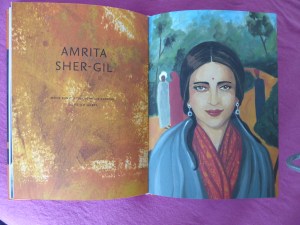
At the beginning of the year, I decided, 2020 would be the year I would join Mme Bibi. That was before the awfulness happened. Some days, I’m sure, I could still read and review a novella, but more often than not, I would have to stick to a short story or a poem a day. Now there’s a thought, I said to myself, why not just leave it open. Read and review a novella whenever it’s possible, and when not, I can just post on something else, a poem, a painting, a song. Coffee table books, Cookbooks, Children’s books. There’s so much I could write about. And it doesn’t have to include the madness that’s going on in the world. I can write about anything that I’m enjoying or find fascinating these days. So, don’t worry, there won’t be any posts in which I wonder how it came to this – not only that the president of the US is stupid enough to think injecting bleach might be a cure, but that he is allowed to say so on TV without being openly contradicted. Argh. No, there won’t be posts like that, but I had to mention it once.

I’m not sure how long I will be able to do this for, but I won’t beat myself up if I give up early. I hope I can do a post a day, if not, then that’s OK too. It would be great though. I’ve missed blogging and this might be just the thing to get me back into it.

I hope you’re May has started well. If you’re doing something like this, please leave a comment and a link, so we can visit each other.

Happy reading and blogging, everyone and cheer up – things will not stay like this forever.

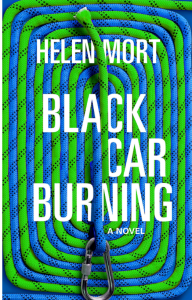
Black Car Burning by Helen Mort – Dylan Thomas Prize Longlist Blogtour

My second book for the Dylan Thomas Prize Longlist Tour was written by acclaimed poet Helen Mort. Black Car Buring is her first novel.

What a harsh beauty this book is. As harsh and as beautiful as the location it’s set in – Sheffield and the surrounding area, notably the rocky Peak District, a climber’s paradise and hell.

Sheffield sounds like a place with its own very special challenges, notably in some of the less affluent quarters, where people try to cohabitate with people from different cultures. The lack of trust, an important theme of the book, makes their life together very difficult.

Sheffield is the city where the notorious Hillsborough disaster took place. During an association football match at Hillsborough Stadium, on 15 April 1989, the stadium collapsed, crushing 96 people. At the time, when this novel is set, 2014, the inquiry into the disaster is taken up again. The disaster is central in the book as some of its characters have been deeply traumatized by it.

The story centers on four main characters, Alexa, a young police community support officer, and her climber girlfriend Caron, Leigh, another climber, who is drawn to Caron, and finally Pete, who works with Leigh. Pete is a former policeman who left the force because of the Hillsborough disaster during which he was present. Watching helplessly how people were crushed and slowly suffocated scarred him for life.

Alexa and Caron are in an open relationship which did work before but Caron is withdrawing more and more. She’s not only a passionate but a compulsive climber, tempted to take great risks. Her biggest goal is to climb Black Car Burning, one of the most difficult rocks to climb.

The characters are all climbers but very different ones. While Caron looks for risky challenges, the others, while still adventurous, are far me careful. They all react differently to the landscape around them. Not only the rocks and mountains but Sheffield and it’s districts.

This is an intriguing book, it’s fascinating to see these people navigate the landscape and their relationships and how these mirror each other.

The most intriguing passages of this novel, the ones that show us Mort is a poet, are the page-long chapters written in first person, which we find between most of the other chapters. The writing is luminous and shines like Mica. At first, I wasn’t sure who was talking but then soon discovered – it was the landscape itself that was given a voice – parks, streets, rivers, rocks, the city and its surrounding landscape, ever present, are observing and talking. Those passages are stunning and beautiful.

Here’s an excerpt from an example titled The Trees:

At night the trees call to each other across the roofs of the houses. There are so many, but there are never enough for an army. Some of them are splayed and ancient with voices like church doors. The saplings sound like bicycle brakes on a wet day.

Black Car Buring is masterfully written, poignant, and topical. It treats themes like social injustice, trauma, relationships and the way people deal with landscapes and cities, with sensitivity. It paints a portrait of contemporary Britain that manages to convey both challenges and beauty.

Thanks go to Midas PR for a free copy of the book.

The Swansea University International Dylan Thomas Prize recognizes the best published work in the English language written by an author aged 39 or under. All literary genres are eligible, so there are poetry collections nominated as well as novels and short stories. The other 11 books on this year’s longlist are:

  • Surge, Jay Bernard
  • Flèche, Mary Jean Chan
  • Exquisite Cadavers, Meena Kandasamy
  • Black Car Burning, Helen Mort
  • Virtuoso, Yelena Moskovich
  • Inland, Téa Obreht
  • Stubborn Archivist, Yara Rodrigues Fowler
  • If All the World and Love Were Young, Stephen Sexton
  • The Far Field, Madhuri Vijay
  • On Earth We’re Briefly Gorgeous, Ocean Vuong
  • Lot, Bryan Washington

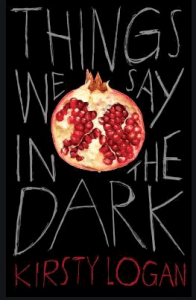
Dylan Thomas Prize Longlist Blogtour – Things We Say in the Dark by Kirsty Logan

A few years ago, I read one of Kirsty Logan’s short stories and liked it very much. Since then, I wanted to read her again and when I saw her latest book on the Dylan Prize Longlist and was offered to read it, I didn’t hesitate.

Short story collections come in different forms. There are anthologies, best of or themed collections that contain mostly commissioned stories. When it comes to collections of single authors, they are just as diverse. Some authors write predominantly novels and novellas, but short stories here and there and, after a while, they are put together in a collection. Even those who write mostly or only short stories, will just collect a certain number of stories that have been published over the years. Cohesive, structured collections that form a whole and have been written with the whole book in mind, are far less frequent. Things We Say in the Dark belongs to the latter category. This is a highly conceptual collection. You could read individual stories, but reading them in this specific order and with all the bits and pieces that form this collection, makes this a rather unique experience.

The book is divided into three parts. There’s a quote at the beginning of every part that sets the tone. There’s also a dark drawing at the beginning, which also contributes to the tone. And there are the titles. Every one of the stories has a very long title. Here are a few examples

Things My Wife And I Found Hidden in Our House

The World’s More Full of Weeping Than You Can Understand

The Only Time I Think of You is All the Time

The first story of each part has sections called Fear 1, Fear 2, Fear 3 . . .

Between the stories you find page-long texts in italics that lead the reader to believe, the author is writing about the writing process. After a while though, it becomes obvious that this too, is a short story.

The stories themselves are mostly surreal and always with an element of horror. Sometimes the horror is leaning towards the uncanny, sometimes it’s more frightening, but it always leaves the reader with a sense of unease. The reality described in this collection is porous. It’s never clear whether the characters are dreaming or whether they are hallucinating. In some stories it’s not even clear whether the characters aren’t the only ones who see the world as it is. Dreams and nightmares are carried over into the day. Fears manifest.

The themes are varied but always contain similar elements. Ghosts want revenge, babies are born but somehow still dead. Women are attacked, raped, seduced against their will. Women are mudered. Houses are empty but seem to have a life of their own.

These are dark stories. And that made it difficult for me to read as it just went from horror to horror. It’s a claustrophobic, nightmarish world, mostly populated by lonely figures.

Nonetheless, there were many stories that I liked a great deal.

Things My Wife And I Found Hidden in Our House and The Only Time I Think of You is All the Time are two of the best. They are both mysterious ghost stories. The reader doesn’t know what’s going on until the very end and the final twists are very eerie.

I would lie if I said, I “liked” this collection, but I’m very grateful I read it because it’s fascinating. It made me think a lot about the way short story collections are produced. The way all the elements played together in this collection was marvellous and very artful.

Kirsty Logan has been compared to Angela Carter, Margaret Atwood, and some others. I don’t agree with the comparison to Angela Carter as that would be reducing Carter to her themes and inspirations. Angela Carter’s language is one of the most sophisticated I know. Her vocabulary is huge. Kirsty Logan’s writing is much simpler. Carter’s world is far more colourful. If I had to compare Kirsty Logan, I’d rather compare her to Japanese author Yoko Ogawa, or the Austrian writer Alois Hotschnig. But maybe her first collection was very different.


Thanks go to Midas PR for a free copy of the book.


The Swansea University International Dylan Thomas Prize recognizes the best published work in the English language written by an author aged 39 or under. All literary genres are eligible, so there are poetry collections nominated as well as novels and short stories. The other 11 books on this year’s longlist are:

  • Surge, Jay Bernard
  • Flèche, Mary Jean Chan
  • Exquisite Cadavers, Meena Kandasamy
  • Black Car Burning, Helen Mort
  • Virtuoso, Yelena Moskovich
  • Inland, Téa Obreht
  • Stubborn Archivist, Yara Rodrigues Fowler
  • If All the World and Love Were Young, Stephen Sexton
  • The Far Field, Madhuri Vijay
  • On Earth We’re Briefly Gorgeous, Ocean Vuong
  • Lot, Bryan Washington

Mrs Gaskell and Me by Nell Stevens (2018)

I’m not sure where I came across a review of Nell Stevens’ charming book but I’m so glad I did. It’s been a while since I’ve enjoyed a book as much and as unreservedly as this one.

Mrs Gaskell and Me – Two Women, Two Love Stories, Two Centuries Apart is a unique genre blend between memoir and fictionalised biography. The memoir tells us of Nell Stevens’ struggle to write her PhD on Elizabeth Gaskell and her tumultuous love story with a guy called Max. The fictionalised parts are Nell’s attempt to imagine a possible love story between Victorian writer Elizabeth Gaskell and Eduard Norton. Gaskell and Norton met in Rome. Gaskell’s Charlotte Brontë biography was just being published and she had fled Manchester to avoid the complications the publication might bring. She assumed, and later found out she’d been correct, that many people would disagree with her and even threaten to sue her for libel.

The book moves back and forth between chapters based on Nell’s life and chapters based on Elizabeth Gaskells’. Sometimes when books alternate like this, one has favourite sections but, in this case, I liked them both a great deal. I enjoyed reading about Gaskell’s time in  Rome, the people she met, the conversations she had. I know Nell Stevens took a lot of liberties but since I’m not that familiar with Gaskell’s life, I didn’t mind. From what I know, I’d say what Stevens imagined might not have happened like this, but it sounded plausible. She didn’t invent an affair but the story of two soulmates. Under other circumstances, at another time, they might have become lovers. Norton also fascinates Gaskell because he is American. America is her dreamscape, so to speak. A place that she imagines often and hopes to see some day. Meeting a soul mate is something that can have a deep impact; in Gaskell’s case, the impact was deepened further because they met abroad. Rome transformed and inspired her. Rome as a special place for writers and artists at the time, is the central theme of Nell’s PhD.

Having worked on a PhD myself, I recognized so many of the struggles. Finding a theme, keeping motivated. It’s so well described. Add to that, in Nell’s case, a complex love story. Max, like Gaskell’s Eduard Norton, is from the US. They met in Boston and while Nell knew immediately, she wanted to be with Max, he initially hesitates. The ups and downs of their story complicate the work on her thesis even more.

I loved this book for many reasons. I enjoy books about writers and literature. I enjoy memoir and the combination of the two works very well. I could relate to the way Nell Stevens tried to get inside of Gaskell’s head. She wrote those parts in the second person, as if she was addressing her. I remember battling with a paper on Voltaire’s Zadig. It was laborious and frustrating. Like Nell, I was very fond of my subject and while our professor told us to refrain from using biographical material for the interpretation of texts – especially of that era – reading about Voltaire’s life, discovering a kindred spirit, helped me. After a while, I felt I really knew him. At some point, I started a conversation with him in my head and funny enough that gave me an entry point to the analysis of Zadig.

Academic writing, love, the meeting of kindred spirits, and the importance of travel, are but some of the main themes.

Whether you’re a fan of Gaskell and like books about writers, or whether you enjoy memoir, there’s a huge chance, you might enjoy this book. It’s engaging, quirky, interesting, and at times very moving. Mrs Gaskell and Me, is Nell Steven’s second book. Her first, Bleaker House, about how she tried to write a novel, is also a memoir. I’m certain, I’ll read that too eventually.


André de Richaud – The Author Who Inspired Camus to Become a Writer

Albert Camus said that André de Richaud’s novel La douleur  – The pain – inspired him to become a writer. When it came out in 1930, it created a scandal. The author was just twenty-three years old and had sent his manuscript to the Jury of the Prix du premier roman of the Revue Hebdomadaire. The jury was so shocked but impressed by the writing, that nobody won the price that year. While they considered La douleur too shocking for publication, it was clearly the best book. Despite the risk of a potential scandal, Bernard Grasset published the novel anyway that year, as he liked it so much.

Even though he entered the literary scene making such an impression and even though people like Camus and Cocteau praised him, de Richaud never got the fame or recognition he deserved. He went on to write more novels, short stories, plays, and poems but without any success. At the age of fifty-one, prematurely aged, he moved into a nursing home where he died of tuberculosis in 1968. He wrote his final work, the autobiographical novella Je ne suis pas mort – I am not dead, in 1965, after having found his own obituary that someone posted erroneously in a newspaper.

You’re certainly curious to find out now why La douleur was such a scandalous book. What was particularly scandalous was the combination of several themes that were taboo at the time. The love between French women and German prisoners of war, incest, and female sexuality.

La douleur is set during WWI, in the village of Althen-des-Paluds, in the Comtat region in the South of France, very far from the trenches. In the village, like in so many other French villages, there are only women, old men, and children, until the day when three German prisoners of war arrive.

Thérèse Delombre has lost her husband six months ago. Since then she’s been living alone with her small son. Thérèse Delombre suffers intensely. Not so much because she misses her husband, but because the loss leaves her sexually frustrated. She can’t think of anything else, can’t sleep. While it isn’t explicit, it’s obvious that her relationship with her son has an incestuous undertone. He sleeps in her bed, they touch constantly. She’s jealous whenever he makes a friend, especially a female friend. And when she catches the kids playing doctor’s games in the attic, she freaks out. This changes when she meets the German prisoner Otto and begins an affair with him. She neglects her son and throws herself into this love affair, unaware that people have noticed and disapprove.

Even for a contemporary reader some of the passages are very outspoken but not explicit. There isn’t any description of any of the sexual encounters, but the longing is described in an explicit way.

The book is courageous and interesting because of these themes but what made me really love it is the writing. De Richaud is a stunning writer. His descriptions are so lyrical I read many passages several times just because they were so beautiful. He also manages to give us a feeling of what it was like to be in one of those villages far from the trenches, but still so deeply affected by the war.

It’s tragic to know that the book is based on de Richaud’s own childhood. He was traumatised by his mother’s affair with an enemy.

What I find even more tragic is that de Richaud has hardly been translated. La douleur has been translated into German for the first time in 2019. I don’t think that an English translation of this exists. It’s a shame. People would love it and those interested in Camus would appreciate reading it even more.

This was such a haunting book. I will certainly read more of de Richaud’s work.