Literature and War Readalong September 30 2015: Fateless – Sorstalanság by Imre Kertész

Fateless

The third book in this year’s Literature and War Readalong is Imre Kertész’ Holocaust novel Fateless. Kertész is a Hungarian author who won the Nobel Prize in Literature in 2002. As far as I know, he’s the only Hungarian author who has won the prize.

As a boy of fourteen, Kertész was deported to Auschwitz in 1944 and later brought to Buchenwald. Although the book is based on some of his own experiences, it is by no means autobiographical. The movie based on the book, and for which Kertész wrote the script, is much more autobiographical as the novel.

Here are the first sentences

I didn’t go to school today. Or rather, I did go, but only to ask my class teacher’s permission to take the day off. I also handed him the letter in which, referring to “family reasons” my father requested that I be excused. He asked what the “family reasons” might be. I told him my father had ben called up for labor service; after that he didn’t raise a further peep against it.

And some details and the blurb for those who want to join

Fateless – Sorstalanság by Imre Kertész (Hungary 1975), Holocaust,  Novel, 272 pages.

The powerful story of an adolescent’s experience of Auschwitz by Holocaust survivor and Nobel Prize winner, Imre Kertész.

Gyuri, a fourteen-year-old Hungarian Jew, gets the day off school to witness his father signing over the family timber business to the firm’s bookkeeper – his final business transaction before being sent to a labour camp. Two months after saying goodbye to his father, Gyuri finds himself assigned to a ‘permanent workplace’, but within a fortnight he is unexpectedly pulled off a bus and detained without explanation. This is the start of his journey to Auschwitz.

On his arrival Gyuri finds that he is unable to identify with other Jews, and in turn is rejected by them. An outsider among his own people, his estrangement makes him a preternaturally acute observer, dogmatically insisting on making sense of everything he witnesses.

I’m planning on watching the movie soon. I’m interested to see the differences. If you don’t get the time to read the novel, but still want to join the discussion, you could just watch (and review) the movie.


*******

The discussion starts on Wednesday, 30 September 2015.

Further information on the Literature and War Readalong 2015, including all the book blurbs, can be found here.

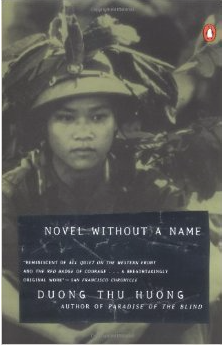
Duong Thu Huong: Novel Without a Name – Tiêu thuyêt vô dê (1995) Literature and War Readalong May 2015

Novel Without A Name

Duong Thu Huong is one of Vietnam’s most important writers. Since I haven’t read a lot of Vietnamese novels I was looking forward to reading her most famous book Novel Without a Name – Tiêu thuyêt vô dê. I wasn’t disappointed. It’s beautiful and harrowing.

At the beginning, Quan, the narrator, is sent on a mission to find his friend Bien. Quan, his commanding officer, Luong, and Bien have grown up together. When Luong hears that Bien has gone mad, he sends Quan to go and find out if it’s true.

What follows is the account of a dangerous mission on which Quan meets many people, dead and alive, sees atrocities, remembers his childhood, falls dangerously ill, dreams about his love, and finally finds his old friend.

Bien stands for many other “crazy” men we meet in this novel. Some really go mad because of the horrors they have experienced, others just withdraw into themselves, trying to escape the war.

Quan and his younger brother, who has been killed, have signed up right at the beginning of the war, ten years ago. Their father was one of those who supported a 100% mobilization, accepting that he might lose both of his sons. Almost all of Quan’s comrades are dead. The main story follows Quan on his mission, but overall the book is more like a series of vignettes. In parts it reminded me of Tim O’Brien’s The Things They Carried. Without the metafictional elements. Duong Thu Huong uses a mix of very short and long chapters. Some are dedicated to what’s happening to Quan on his trip, some are childhood memories or stories from the war, otheres are just short, intense snapshots.

What I liked best is how descriptive this book is. It speaks to the senses like not many others. It felt at times like watching a documentary on Vietnam. We read about the food, the flora, the fauna, the beliefs, the scents, the way people love, sleep, cook. Several chapters describe the landscape and make you want to visit this country that has sun sets the color of chrysanthemum flowers.

Duong Thu Huong served in the North Vietnamese army and so it’s not surprising the descriptions of combat, dead soldiers, the horror of war are drawn in a shockingly realistic way. She also manages to capture how tired and disillusioned most soldiers have become. The political slogans that fired them up and made them sign up have become mere empty words. Bodies pile up, their country is destroyed – for what? An ideal that isn’t even humane?

On his quest, Quan meets many people. Simple farmers, single mothers, small girls, old men. They are drawn with a lot of detail and warmth. We suffer for these kind, gentle people who had to endure the worst for such a long time.

It’s admirable that the author doesn’t blame the US. She finds a lot of fault with party politics and the false promises of the government. There is no evil enemy. Nor is there an army of faceless Vietnamese soldiers. Every soldier she describes becomes a human being with a history, feelings, wishes and hopes.

Novel Without a Name is a visceral account that doesn’t leave out any aspect of this war. It’s an insider’s perspective, a soldier’s account. The novel unrolls like a huge canvas, a painting of an abundant jungle, where humans butcher each other amidst the most beautiful scenery.

I read the German translation of this novel that’s why I can’t share any quotes. It’s too bad because many of the descriptions are so amazing that I read them more than once.

Other reviews

 TJ (My Book Strings)

Bonespark 


*******

Novel Without a Name is the second book in the Literature and War Readalong 2015. The next book is the Hungarian Holocaust novel Fateless – Sorstalanság by Imre Kertész. Discussion starts on Wednesday 30 September, 2015. Further information on the Literature and War Readalong 2015, including the book blurbs can be found here.

Two Read Alongs You Might Be Interested In

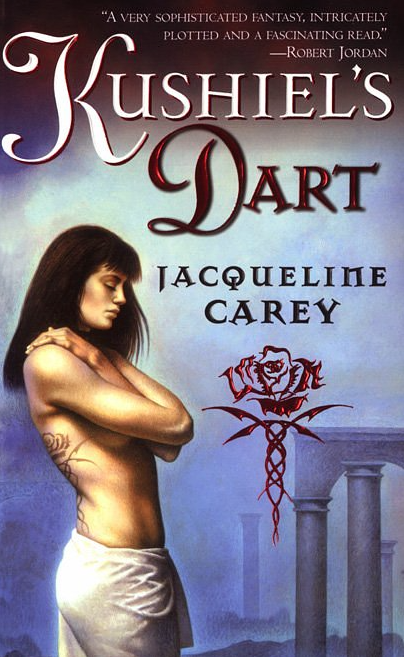
Kushiel's Dart

May seems to be a readalong month. I’m hosting my own Literature and War Readalong at the end of the month, signed up for the readalong of Kushiel’s Dart at Dab of Darkness, and am extremely tempted to join Bellezza (Dolce Bellezza), Tom (Wuthering Expectations), and Helen (a gallimaufry) in their joint reading of John Crowley’s Little, Big.

Jacqueline Carey’s mentioned the readalong on her Facebook page!

Here’s the blurb of Jacqueline Carey’s Kushiel’s Dart:

The land of Terre d’Ange is a place of unsurpassing beauty and grace. It is said that angels found the land and saw it was good…and the ensuing race that rose from the seed of angels and men live by one simple rule: Love as thou wilt. PhEdre nO Delaunay is a young woman who was born with a scarlet mote in her left eye. Sold into indentured servitude as a child, her bond is purchased by Anafiel Delaunay, a nobleman with very a special mission…and the first one to recognize who and what she is: one pricked by Kushiel’s Dart, chosen to forever experience pain and pleasure as one. PhEdre is trained equally in the courtly arts and the talents of the bedchamber, but, above all, the ability to observe, remember, and analyze. Almost as talented a spy as she is courtesan, PhEdre stumbles upon a plot that threatens the very foundations of her homeland. Treachery sets her on her path; love and honor goad her further. And in the doing, it will take her to the edge of despair…and beyond. Hateful friend, loving enemy, beloved assassin; they can all wear the same glittering mask in this world, and PhEdre will get but one chance to save all that she holds dear. Set in a world of cunning poets, deadly courtiers, heroic traitors, and a truly Machiavellian villainess, this is a novel of grandeur, luxuriance, sacrifice, betrayal, and deeply laid conspiracies. Not since Dune has there been an epic on the scale of “Kushiel’s Dart”-a massive tale about the violent death of an old age, and the birth of a new.

If you’d like to join – head over to Dab of Darkness. Below you find the schedule and the list of participants.

Week 1: May 10, Chapters 1-8, Hosted by Dab of Darkness
Week 2: May 17, Chapters 9-18, Hosted by Tethyan Books
Week 3: May 24, Chapters 19-26, Hosted by Over the Effing Rainbow
Week 4: May 31, Chapters 27-36, Hosted by Beauty is a Sleeping Cat
Week 5: June 7, Chapters 37-45, Hosted by Violin in a Void
Week 6: June 14, Chapters 46-54, Hosted by Books Without Any Pictures
Week 7: June 21, Chapters 55-63
Week 8: June 28, Chapters 64-73, Hosted by Lynn’s Book Blog
Week 9: July 5, Chapters 74-83
Week 10: July 12, Chapter 84-END

Allie at Tethyan Books
Lisa at Over the Effing Rainbow
Lynn at Lynn’s Book Blog
Grace at Books Without Any Pictures
Caroline at Beauty Is a Sleeping Cat
Lauren at Violin in a Void
Celine at Nyx Book Reviews
Bellezza at Dolce Bellezza
Susan at Dab of Darkness

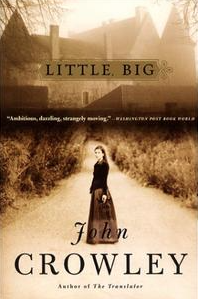
Little, Big

Here’s the blurb of Little, Big:

Edgewood is many houses, all put inside each other, or across each other. It’s filled with and surrounded by mystery and enchantment: the further in you go, the bigger it gets.

Smoky Barnable, who has fallen in love with Daily Alice Drinkwater, comes to Edgewood, her family home, where he finds himself drawn into a world of magical strangeness.

Crowley’s work has a special alchemy – mixing the world we know with an imagined world which seems more true and real. Winner of the WORLD FANTASY AWARD, LITTLE, BIG is eloquent, sensual, funny and unforgettable, a true Fantasy Masterwork.

Winner of the WORLD FANTASY AWARD FOR BEST NOVEL, 1982.

If you’re interested in reading along John Crowley’s Little, Big, you should visit Bellezza’s blog here where you can find the details.

Unfortunately both books, Kushiel’s Dart and Little, Big are hefty tomes, that’s why I don’t think I’ll manage to join both. I’m glad if I succeed in finishing one.

Will you join?

Jacqueline Carey’s mentioned the readalong on her Facebook page!

Literature and War Readalong May 29 2015: Novel Without a Name – Tiêu thuyêt vô dê by Duong Thu Huong

Novel Without A Name

Two years ago we read Bao Ninh’s moving novel on the war in Vietnam The Sorrow of War. Quite a few of those who participated and others who read our posts stated that they would be interested in reading novels by Vietnamese authors. That’s why I chose to include Novel Without a Name – Tiêu thuyêt vô dê, another famous novel on the war in Vietnam. It was written by one of Vietnam’s most prominent authors: Duong Thu Huong. She is well-respected outside of her native country. If you read French you’ll find translations of many of her books. Duong Thu Huong is not only a great writer but a courageous one. Many of her novels have been forbidden in Vietnam and she was imprisoned for her political views.

Duong Thu Huong

This link will lead you to the website of Swiss publisher Unionsverlag. Unionsverlag is a pioner when it comes to world literature. On their website you’ll find newspaper articles and interviews on and with Duong Thu Houng – in English.

Here are the first sentences (which I had to translated from my German copy)

I heard the wind howl all through the night, out there, over the ravine of the lost souls.

It sounded like a constant moan, like sobbing, then again like cheeky whistling, like the neighing of a mare during copulation. The roof of the pile dwelling trembled, the bamboo poles burst and whistled every time like reed pipes. They played the mournful melody of a country burial. Our nightlight flickered as if it was going to die down. I stretched my neck from under the quilt, blew out the light, and hoped that the shadow of the night would cover up all the senses . . .

And some details and the blurb for those who want to join

Novel Without a Name – Tiêu thuyêt vô dê by Duong Thu Huong (Vietnam 1995), War in Vietnam, Novel, 304 pages.

Vietnamese novelist Huong, who has been imprisoned for her political beliefs, presents the story of a disillusioned soldier in a book that was banned in her native country.

A piercing, unforgettable tale of the horror and spiritual weariness of war, Novel Without a Name will shatter every preconception Americans have about what happened in the jungles of Vietnam. With Duong Thu Huong, whose Paradise of the Blind was published to high critical acclaim in 1993, Vietnam has found a voice both lyrical and stark, powerful enough to capture the conflict that left millions dead and spiritually destroyed her generation. Banned in the author’s native country for its scathing dissection of the day-to-day realities of life for the Vietnamese during the final years of the “Vietnam War, ” Novel Without a Name invites comparison with All Quiet on the Western Front and other classic works of war fiction. The war is seen through the eyes of Quan, a North Vietnamese bo doi (soldier of the people) who joined the army at eighteen, full of idealism and love for the Communist party and its cause of national liberation. But ten years later, after leading his platoon through almost a decade of unimaginable horror and deprivation, Quan is disillusioned by his odyssey of loss and struggle. Furloughed back to his village in search of a fellow soldier, Quan undertakes a harrowing, solitary journey through the tortuous jungles of central Vietnam and his own unspeakable memories.

*******

The discussion starts on Friday, 29 May 2015.

Further information on the Literature and War Readalong 2015, including all the book blurbs, can be found here.

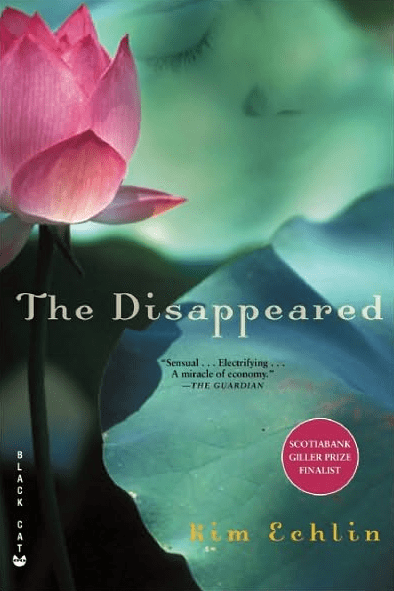
Kim Echlin: The Disappeared (2009) Literature and War Readalong March 2015

The Disappeared

Friends of mine visited Cambodia. They loved the country for its beauty, but they told me that it wasn’t an easy country for travelling as you’re not allowed to move as freely as you’d like because of the danger of the land-mines. A friend of mine is half-Cambodian. He was born in Europe, after the war, but spent a couple of months in Cambodia where he joined a bomb disposal unit. He came back changed and traumatized.  He wouldn’t speak for months. Thirty years of war ravaged the country and left the deadly long-lasting legacy of millions of land-mines. Cambodia is among the ten countries with the most landmines. Currently there are still 8 – 10 million. Cambodia has one of the highest rates of disability. Since 1979 there are some 40 amputations per week. To clear Cambodia of its land mines could take up to 100 years.

The war as such isn’t easy to understand. First there were the Khmer Rouge and Pol Pot, later the Vietnamese invasion. Mostly these wars were genocides. Depending on which side was in  power it would try to wipe out the other side using torture, rape, mutilation and shootings.

I usually don’t start a book review with so much back information but I felt it was needed in this case, although it’s still not nearly enough.

Kim Echlin’s novel The Disappeared begins right after the Khmer Rouge have fled the country. Anne Greves is in Phnom Pen looking for her lover Serey. She met him in Montreal ten years ago when she was only sixteen. Serey, a student and musician, fled Cambodia during the rise of the Khmer Rouge. He has no news of his family. The two young people begin a passionate love affair until Serey returns to Cambodia. Anne hopes he will keep in touch but he doesn’t. She waits and waits and the years go by. She has other lovers but she can’t forget Serey. Meanwhile she has learned the Khmer language and decides to travel to Cambodia and search for Serey in all the clubs of Phnom Pen.

When she finds him she discovers he too couldn’t forget her and they become lovers again until the day Serey disappears once more.

The Disappeared is a stunning novel. Beautiful and harrowing. Through the eyes of Anne we discover the beauty, tragedy, and horror of Cambodia. Thanks to her lover, and because she speaks the language, she is able to immerse herself fully. While the Pol Pot regime is over, Cambodia is still in a state of war, people are still hunted, tortured an executed.

The book is written like a lament. Often Anne addresses her lover.

I see your long silence as I see war, an urge to conquer. You used silence to guard your territory and told yourself you were protecting me. I was outside the wall, an intoxicating foreign land to occupy. I wondered what other secrets you guarded. Our disappeared were everywhere, irresistible, in waking, in sleeping, a reason for violence, a reason for forgiveness, destroying the peace we tried to possess, creeping between us as we dreamed, leaving us haunted by the knowledge that history is not redeemed by either peace or war but only fingered to shreds and left to our children. But I could not leave you, and I could not forget, and I did not know what to do, and always loved you beyond love.

Serey stands for millions of disappeared people. Most relatives never find out what happened to their loved ones, but Anne, fuelled by her passion and because she’s a foreigner who cannot fully comprehend the risk she’s taking, doesn’t let go until she’s found out what happened to the man she loves.

Many of the chapters are like short vignettes. Some contain not much more than lists of atrocities. War is awful but genocide is even much more horrible. To read about what is done to women and children, even babies, is hard to stomach.

Nonetheless it’s a beautiful, captivating book. Anne is passionate about her man and his country, discovering everything, breathlessly. This gives the reader the feel of being on a trip through a foreign country, led by a highly knowledgable guide. It is foreign but you feel like you’re quickly becoming a part of it.

The language is the language of a poet although Kim Echlin doesn’t write poetry. It’s lyrical and full of powerful images.

Kim Echlin managed something admirable. She captured the universality of grief, loss, and war, but at the same time she brought to life a country’s story that we’re either not familiar with or not interested in. In this, the novel is a call for compassion.

Why do some people live a comfortable life and others live one that is horror-filled? What part of ourselves do we shave off so we can keep on eating while others starve? If women, children, and old people were being murdered a hundred miles from here, would we not run to help? Why do we stop this decision of the heart when the distance is three thousand miles instead of a hundred?

The book explores the question of how much we can really understand of a foreign country. I liked that Anne never accepted to stay an outsider. She wanted to be part even if that meant that she put herself in danger.

The Disappeared isn’t easy to read but I loved this haunting book. It’s an amazing achievement, an intense, lucid, lyrical, and compassionate novel about a devastating conflict and a love that surpasses everything.

I’m going to end this post with one of my favorite scenes from the book. It takes place in Montreal. I think it shows what a wonderfully expressive writer Kim Echlin is and illustrates her style, how she renders dialogue.

We rode your bike to the great river. Stars and water and night. Down the riverbank, wrapped in darkness. You led me along a dock where boats were moored in narrow slips and we jumped onto the deck of a sloop called Rosalind. You took a small key from your jeans pocket and unlocked the cabin door. I followed you down the three steep steps into a tiny galley and you opened a cupboard door and took out a box of floating candles. You said, At home it is Sampeas Preah Khe, the night we pray to the moon. My grandmother always lit a hundred candles and sent them out on the black river.

Why?

To honor the river and the Buddha.

You handed me a book of matches and I lit them with you, one by one. We sent out the ninety-ninth and hundredth out together and wathched the trail of small flames drifting away. You said, My grandmother told me in the old days young people did this and prayed for love.

Other reviews

 My Book Strings

Vishy (Vishy’s Blog)


*******

The Disappeared is the first book in the Literature and War Readalong 2015. The next book is the Vietnamese novel Novel Without a Name – Tiêu thuyêt vô dê by Huon Thu huong. Discussion starts on Friday 29 May, 2015. Further information on the Literature and War Readalong 2015, including the book blurbs can be found here.

Literature and War Readalong March 31 2015: The Disappeared by Kim Echlin

The Disappeared

Kim Echlin’s novel on the war in Cambodia is the first title of this year’s Literature and War Readalong.

I chose The Disappeared for various reasons the most obvious being that we haven’t read anything on the war in Cambodia so far. The fact that it was nominated for many awards and has been translated into 19 languages made it a worthy choice as well. Another reason was that it came highly recommended by one of my favourite bloggers (Gavin from Page247) who sadly has stopped blogging in 2013.

Kim Echlin is a Canadian author, journalist, and educator. She has published a couple of other novels before The Disappeared and a new novel is due this year.

Here are the first sentences

Mau was a small man with a scar across his left cheek. I chose him at the Russian market from a crowd of drivers with soliciting eyes. They drove bicycles and tuk tuks, rickshaws and motos. A few had cars. They pushed in against me, trying to gain my eye, to separate me from the crowd.

The light in Mau’s eyes was a pinprick through black paper. He assessed and calculated. I chose him because when he stepped forward, the others fell back. I told him it might take many nights. I told him I needed to go to all the nightclubs of Phnom Penh. The light of his eyes twisted into mine. When I told him what I was doing, the pinprick opened and closed over a fleeting compassion. Then he named his price, which was high, and said, I can help you, borng srei.

And some details and the blurb for those who want to join

The Disappeared by Kim Echlin (Canada 2009), War in Cambodia, Novel, 336 pages.

After more than 30 years Anne Greves feels compelled to break her silence about her first lover, and a treacherous pursuit across Cambodia’s killing fields. Once she was a motherless girl from taciturn immigrant stock. Defying fierce opposition, she falls in love with Serey, a gentle rebel and exiled musician. She’s still only 16 when he leaves her in their Montreal flat to return to Cambodia. And, after a decade without word, she abandons everything to search for him in the bars of Phnom Penh, a city traumatized by the Khmer Rouge slaughter. Against all odds the lovers are reunited, and in a political country where tranquil rice paddies harbour the bones of the massacred, Anne pieces together a new life with Serey. But there are wounds that love cannot heal, and some mysteries too dangerous to know. And when Serey disappears again, Anne discovers a story she cannot bear.

Haunting, vivid, elegiac, The Disappeared is a tour de force; at once a battle cry and a piercing lamentation, for truth, for love.

Literary fiction of the highest order, this is an unforgettable novel set against the backdrop of Cambodia’s savage killing fields.

*******

The discussion starts on Tuesday, 31 March 2015.

Further information on the Literature and War Readalong 2015, including all the book blurbs, can be found here.

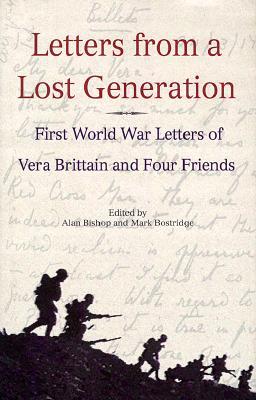
Letters From a Lost Generation – Literature and War Readalong December 2014

Letters From a Lost Generation

Vera to Edith Brittain

Malta, 15 December 1916

I do wonder if I shall ever see Edward again; it is very hard that we should be the generation to suffer the War, though I suppose it is very splendid to, & is making us better & wiser & deeper men & women (at any rate some of us . . .) than our ancestors ever were or our descendants ever will be. It seems to me that the War will make a big division of ‘before’ and ‘after’ in the history of the World, almost if not quite as big as the ‘B.C.’ and ‘A.D.’ division made by the birth of Christ  . . . ( . . . )

I finished reading Letters from a Lost Generation on December 22nd. Only when I put it aside and picked up Testament of Youth did I realize that Vera Brittain’s fiancé Roland Leighton was shot exactly 99 years ago and died on December 23rd 1915. When I chose the book I didn’t know about this; reading it exactly during that time made it even more moving.

The first half of the book contains mostly the letters between Vera Brittain and Roland Leighton. There are a couple of letters between her and her brother Edward and between her and their best friends Victor Richardson and Geoffrey Thurlow, but the major part is the correspondence between Vera and Roland.

Reading these letters was very difficult. They are not graphic or gruesome at all – at times I wondered whether the four men really served in the trenches – but they are so unbearably tragic and sad. These five people were such close friends, that each time one of them dies, they all suffer terribly. Since Roland is the first to go and seems the one everyone liked the most, his death overshadows all the later letters. He’s mentioned constantly, quoted, remembered, and after a while I started to feel the loss almost as badly. No wonder people still visit his grave in France.

After Roland is killed Vera dedicates herself with even more verve to nursing. She first stays in England but then moves to Malta and later to France.

What spoke to me is the way they deal with grief. It shows how very important it is when you lose someone you love to know exactly what happened. In each case, and also in the case of friends who are not as close, they try, like detectives, to find out what happened. It’s particularly painful for Vera to know that Roland was wounded on the 22nd and only died one day later, after having been conscious the whole time, but didn’t write her a goodbye note. They find out later that he took an unforseen turn to the worse and might not have known he was going to die. Other aspects of his death become painful only later. Some of the friends are wounded and killed during battles, not so Roland. His death is rather an accident and Vera sometimes wishes that he’d died in one of the big battles so that his death would forever be linked to that name.

What I found extremely shocking is that Roland’s clothes – the stinking, muddy, bloody uniform and shoes – were sent to his family. I’d never heard of anything like this before. Vera describes the particular stench and the horror of the sight in great detail and I felt so sorry for them. How cruel and thoughtless. In Pat Barker’s Toby’s Room is a scene in which the sister takes out Toby’s clothes and speaks of the stench of the trenches. I’m pretty sure Pat Barker was inspired by the description of Roland Leighton’s clothes.

Letters from a Lost Generation is an important document on how the perception of the war changed. The four men signed up enthusiastically, spoke about honour and glory. Even war is glorified. The longer the war takes, the higher the losses, and the more futile it all seems, the more that perception changes.

Reading about the work of a nurse was especially interesting and showed to some extent why it was possible for so many people in England to ignore the mutilations. By the time the wounded men arrived, they had already been patched up as good as possible.

Another aspect that struck me is how humble the five friends were. None of them complained much or made a big fuss. Not about the cold, the mud, and the rain, nor about the battles and the fear of death. Not even when they are wounded.

I still wonder how Vera Brittain managed to survive the death of the four people who were closest to her. After the war she met the writer Winifred Holtby who became her best friend and helped her to overcome her grief. Sadly Holtby too died an early death in 1935. Another great loss for Vera.

I don’t think I’ve ever read a collection of letters this quickly and as soon as I finished the book I started Vera Brittain’s memoir Testament of Youth. I want to know more about her, about them. Letters from a Lost Generation is as important as it is beautiful and moving. It’s a document of deep and heartfelt friendship, a testimony of grief, loss and sorrow, and a valuable contribution to understand a generation and its motives.

Other reviews


*******

Letters from a Lost Generation was the last book in the Literature and War Readalong 2014. The next book is The Disappeared by Kim Echlin. Discussion starts on Tuesday 31 March, 2015. Further information on the Literature and War Readalong 2015, including the book blurbs can be found here.