There is More to Véronique Olmi Than “Beside the Sea” or Un si bel avenir (Such a beautiful future)

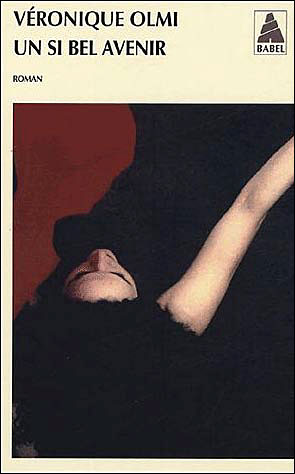
Un si bel avenir

Lucky Pereine Press decided to publish Véronique Olmi’s prize-winning novel Bord the Mer – Beside the Sea or she may still be waiting for an English translation. I’ve read the book when it came out in France in 2001. It’s an excellent but bleak account of a highly depressed mother.

Olmi has written several novels and theater plays. The one that interested me the most was Un si bel avenir which you could translate by Such a beautiful future. Set in the theater world, it tells the story of two women who meet at a time when their lives start to unravel. Elizabeth is an actress, married with two little girls. Her husband is a failed stage director. Clara is a radio journalist who is in a relationship with Boris, an actor as well. The women first meet at the premiere of one of Pascal’s plays which is a total failure. They meet again by coincidence, just after having found out that their marriages and relationships are about to end.

The friendship she describes is very rare in it’s intensity and loyalty. Two people meet when they need someone the most and open up in a way unknown to both of them. Family secrets, disappointments, dreams and fears are shared with great trust and openness.

Some of the scenes in this novel are incredibly  beautiful, some even in their absurdity like when Elizabeth and Pascal are stuck at midnight on the péripherique or when Elizabeth sits up in the middle of the night, the family is sleeping and she enjoys the peacefulness and security it means. Little does she know this is one of the last moments like this.  Another scene in which she starts to see her husband for what he really is, a failed aging guy, with a sagging ass and a secret mistress, is tragic and hilarious. She swears like a sailor using the most expressive language.

The book is an exploration of what it means to be a woman, a mother, a wife, of the different possibilities, the choices, the difficulties and pitfalls modern life has in stall.

The poignancy and immediacy with which this is written, the dialogue and interior monologue, so close to everyday language, bears the sign of a novelist who is also a successful playwright.  This dialogue and interior monologue is so authentic. At the same time there is an airiness in this writing that can describe the dark night of the soul and still let a light shine in. What I missed most in Bord de mer, the chance for transformation and hope, is present here.

I always felt that French women writers have a capacity to touch on every single detail of everyday life, from the most mundane to the most sublime and render it in a meaningful way, show us how we live now with a all the complexity there is.

As I wrote before, Un si bel avenir is about all the facets of the life of a woman, as a daughter, a wife, a lover, a mother and a friend. It is this last part that is the most accentuated. The book’s characters’ hope lies in the friendship with another woman. Romantic relationships are scrutinized, taken apart and discarded together with family ties.

I do not have such a pessimistic view of the couple, not at all. I think a lot of what is called love has not much to do with real love and that is the core problem. It seems, as if these two women show that it can be easier to live this type of love with another woman or the children, in relationships that are free of physical attraction.

I hope this books will be translated too. It isn’t flawless, there are a few breaks in the narrative towards the end which are abrupt but it has a lot of qualities, a lot to offer.

There is much more to Véronique Olmi than Beside the Sea. Although better constructed, Beside the Sea is awfully bleak. If you ever read anything else you will notice how nunaced her writing really is.

Un si bel avenir has been translated into German Eine so schöne Zukunft.

Coincidentally Emma has just reviewed Bord de merBeside the Sea. You can find her review here.

Mary Lawson: The Other Side of the Bridge (2006)

At the end of my introductory post to the Canadian Book Challenge I asked for recommendations and pburt mentioned how much she liked Mary Lawson’s books. That’s how I decided to read The Other Side of the Bridge.

We cannot experience everything in our life. Especially not the past, nor a way of life which is very different from our own. Luckily one of the many functions of literature is to help us experience other times and places. Reading this novel makes it possible to travel back in time, to a place and a way of life long gone; rural Ontario between 1930 to 196o, a harsh inhospitable place which drives strangers and young people away.

The novel tells two parallel but linked stories and moves back and forth in time. It starts in the 30s with the story of the brothers Arthur and Jake. Arthur is the reliable one. Stocky and solid. He wants to become a farmer just like his father. Jake who is much younger, is the good-looking one, the favourite of his mother. But Jake is also inherently mean. A manipulative bully with a sadistic streak which he manages to hide behind his good looks and alleged charm. Only Arthur seems to know about his brothers true nature. One day, on a bridge, fate strikes and sets in motion a tragedy which cannot be stopped anymore.

The second story line starts in the 50s and is told from the point of view of young Ian, the son of the local doctor. Because he is secretly in love with Laura, Arthur’s beautiful wife, he offers to help Arthur every Sunday on the farm.

The blurb states that the novel bears a resemblance to 19th century novels of provincial life. That’s not a bad comparison. But more than that it also reminded me of Greek myths in which you can see the doomed heroes move towards their destruction. The worst thing in the myth of Oedipus for example isn’t so much that he sleeps with his mother and kills his father – although that is certainly very bad – but that his father thought he could prevent this tragedy which had been predicted and through this very attempt at preventing it, he finally provokes it. While The Other Side of the Bride is no story of incest, it has a similar dynamic as Oedipus’ story. There will be a tragedy. We know it.  And no matter how much the people try to prevent it, it will happen anyway. But other than in greek myths, and that’s where Mary Lawson meets Ian McEwan, there is atonement too.

Everything that I said so far has more to do with the plot. The story tells a tragedy and how it happens but that is just one layer of the book and not even the one I liked best as I found it a bit too predictable. What I really liked about this book is the writing which is amazingly beautiful and contains many passages like this one:

It was September, the worst time of the year as far as Arthur was concerned – endless months of school ahead, cooped up in one stuffy schoolroom at a too-small desk, while outside the maple flamed red and gold and the air was clear and pure as spring water. Inside was the leaden boredom, outside was the sharp tang of wood smoke and the urgency of shortening days. You could smell the winter coming. You could see it in the transparency of the light and hear it in the harsh warning cries of the geese as they passed overhead. Most of all you could feel it. During the day the sun was still hot but as soon as it dipped down behind the trees the warmth dropped out of the air like a stone.

Somewhat later in the book there is this passage in which Ian and his friend Peter sit together

They sat on in silence, or almost silence; if you listened closely you could just hear a faint thrumming from thousands of wings. Beyond the dragonflies the sun was sinking slowly, casting its rays across the lake, and on the other side, everything, as far as the eye could see, was slowly dissolving into the haze.

Ian thought, If I love to be a hundred years old, I always remember this.

Apart from the central story of a tragedy, The Other Side of the Bridge is an excellent depiction of the Canadian home front during WWII. It shows the way Canada was affected by huge losses, how most of the young men didn’t return and many of those who did were maimed for life. The book would have been a worthy candidate for my readalong.

Through Ian’s story it is also a coming-of age tale and a look at the life of a country doctor in an isolated place like rural Ontario where the winters are so incredibly harsh that most foreigners and many natives flee the place.

I must admit I didn’t connect with the characters and their stories, I didn’t feel I could identify with any of them, but I’m glad I discovered Mary Lawson. Her writing is beautiful and the way the people and the place come to life is astonishing. They emerge from the pages and seem to be walking around before your very eyes. The way she writes about Canada is very nostalgic and at times I was wondering if the writing wasn’t to a large extent fuelled by homesickness as she seems to be living in England by now. I any case I want to read her first novel Crow Lake soon.

This review is my first contribution to the Canadian Book Challenge 6

Antonio Tabucchi Week 17 – 23 September 2012 – The Giveaway Winner

Random org has decided who has won

Pereira Maintains

In the sweltering summer of 1938 in Portugal, a country under the fascist shadow of Spain, a mysterious young man arrives at the doorstep of Dr Pereira. So begins an unlikely alliance that will result in a devastating act of rebellion. This is Pereira’s testimony.

The book goes to Bettina (Liburuak).

I hope you will like it.

Please send me your address via beautyisasleepingcat at gmail dot com.

For those who want to know more about Tabucchi Week and want to join, here are the details.

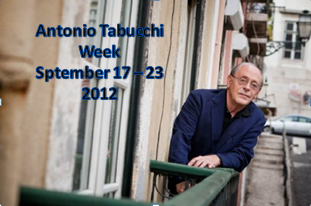
Antonio Tabucchi Week September 17 – 23 2012 and Giveaway

Ever since Stu’s Henry Green Week I wanted to host something similar for an Italian author and my first choice was always Antonio Tabucchi. He is one of the finest Italian writers and one I admire a lot.

Sadly what should have been a tribute to a living author has now turned into a commemoration as Tabucchi died earlier this year.

Tabucchi was a novelist, short story writer and academic. One striking feature was his love for Portugal, the Portuguese language and Fernando Pessoa. He didn’t only teach Portuguese literature at the university but he lived in Portugal (as a reaction among other things to Italian politics), wrote a novel in Portuguese and translated Pessoa.

He is one of the rare authors not writing in English who has been extensively translated. While I will read him in Italian, all those who would like to join can choose from a variety of other languages. He is available in English, French and German and most probably also in Spanish and Portuguese.

Tabucchi’s Indian Nocturne is one of my all-time favourite books. It has been made into a movie. I just read and reviewed Sogni di Sogni – Dreams of Dreams – a collection of imagined dreams attributed to famous writers, musicians and artists. But there are others that I want to re-read or discover for the first time like Tristano muore. Una vita.

If you have never read anything by this author I would suggest you start with one of his more famous novels like Pereira Maintains (Sostiene Pereira) or Indian Nocturne (Notturno Indiano). If you like short stories you may enjoy the beautiful collection of fictitious letters It’s Getting Later All the Time. If you go for quirky and inspiring, Dreams of Dreams may be the thing. But there are more.

Requiem: A Hallucination

Little Misunderstandings of No Importance

The Missing Head of Damasceno Monteiro

And in Italian (and other translations) only

Tristano muore. Una vita

Il tempo invecchia infretta

Il filo dell’orizzonte

In order to motivate you to join I’m giving away one copy of one of his most famous novels which has also been made into a movie with Marcello Mastroianni.

Pereira Maintains

In the sweltering summer of 1938 in Portugal, a country under the fascist shadow of Spain, a mysterious young man arrives at the doorstep of Dr Pereira. So begins an unlikely alliance that will result in a devastating act of rebellion. This is Pereira’s testimony.

The giveaway is open internationally. If you would like to win this book, just leave a comment. The only condition is that you take part in Tabucchi Week. What you will read is up to you, it doesn’t have to be the book you won.

The winner will be announced on Friday August 17 2012.

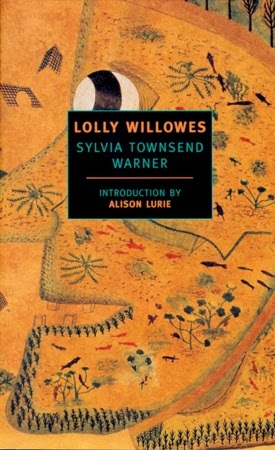
Sylvia Townsend Warner: Lolly Willowes (1926)

Lolly Willowes is a twenty-eight-year-old spinster when her adored father dies, leaving her dependent upon her brothers and their wives. After twenty years of self-effacement as a maiden aunt, she decides to break free and moves to a small Bedfordshire village. Here, happy and unfettered, she enjoys her new existence nagged only by the sense of a secret she has yet to discover. Finally that secret will set Lolly Willowes free.

Danielle (A Work in Progress) has an interesting series called Lost in the Stacks in which she introduces us to authors who have been forgotten or are not read much anymore. One of these authors was Sylvia Townsend Warner as you can read here: Lost in the Stacks – Sylvia Townsend Warner. Danielle mentioned that some of her novels are re-issued by NYRB or Virago and one of the titles Lolly Willowes looked especially interesting. And what a find it was. Not only does the novel tell the story of a unique and independent character but it is a lovely and very feminist book.

Until not too long ago the spinster was a character which could frequently be found in novels. I’ve read more than one novel containing either a spinster or which was about a spinster. They were mostly tragic and often infuriating. The way society treated these unmarried women who were clearly seen as a failure was not only condescending but very often exploitive. As Sarah Waters says in her excellent introduction to the Virago edition of Lolly Willowes, we can see the book to some extent as a re-write of older “spinster novels” like W.B. Maxwell’s The Spinster of this Parish (1922) and F.M. Mayor’s The Rector’s Daughter (1924). As the title of Townsend Warner’s book indicates, the topic has undergone a great change in her novel. The spinster has a name, she is no longer a helpless, independent appendage. Apart from being one woman’s story, the book contains also a subtle reflection on the times, just before and after WWI. The role of the spinster changed considerably after WWI. With so many young men gone, these unmarried elderly women were now seen even more as a useless burden.

Laura, called Lolly, Willowes lives with her father until the age of 28. When he dies her family assumes she will be better off living with her married brother and his family in London instead of staying in the country on her own. The loss of her father is a great tragedy for Lolly. She who lost her mother at an early age, loved living with her father and being relatively independent. She  was never interested in men or getting married. A quiet, introspective life, dedicated to her hobbies, botany and brewery, was all she ever wished for.

She disliked going out, she seldom attended any but those formal parties at which the attendance of Miss Willowes of Lady Place was an obligatory civility; and she found there little reason for animation. Being without coquetry she did not feel herself bound to feign a degree of entertainment which she had not experienced, and the same deficiency made her insensible to the duty of every marriageable young woman to be charming, whether her charm be directed towards one special object or, in default of that, universally distributed through a disinterested love of humanity.

Still she doesn’t make a fuss and follows her brother and his wife and stays with them for several decades. She doesn’t like it there, her sister-in-law is too well-organized, too strict, in other words too boring. She relies completely on her husband, never contradicts him and never seems to spend time on her own. In these surroundings Lolly undergoes a transformation which starts to alarm her more and more over the years.

Or rather, she had become two persons, each different. One was Aunt Lolly, a middle-aging lady, light-footed upon stairs, and indispensable for christmas Eve and birthday preparations. The other was Miss Willowes , ‘my sister-in-law Miss Willowes’, whom Caroline would introduce, and abandon to a feeling of being neither light-footed nor indispensable.

Before WWI breaks out, the Willowes spend all their summer months in the country. Lolly loves these stays and the memory of the beauty of the country side and her reception for everything related to the senses – scents, colors, aromas – open a door in her soul and offer an escape route. She often sits in front of the fire in London and dreams of being in the country on her own. This character trait gives the author the opportunity to include beautiful and evocative descriptions like this one.

At certain seasons a fresh resinous smell would haunt the house like some rustic spirit. It was Mrs Bonnet making the traditional beeswax polish that alone could be trusted to give the proper lustre to the elegantly bulging fronts of tallboys and cabinets. The grey days of early February were tinged with tropical odours by great-great aunt Salome’s recipe for marmalade; and on the afternoon of Good Friday, if it were fine, the stuffed foxes and otters were taken out of their cases, brushed and set to sweeten on the lawn.

After WWI, the society has undergone serious changes. Lolly feels restless. The children of her brother do not really need her anymore and she wants to leave. Finally she wants what her heart has been desiring since years; live in the country on her own. Her relatives are shocked. Her brother has to confess that he has lost a lot of her money due to reckless investments and she cannot afford the house she wanted. Nevertheless, nothing can hold Lolly back, she leaves anyway.

The second half of the novel is dedicated to Lolly’s life in the country. The village she has picked is very mysterious and slowly Lolly undergoes a transformation and becomes a witch. It may sound as if we were entering the realm of the fantastic here and to some extent we do, but the Satan we meet in this book, has more in common with Bulgakov’s Satan than with some fantasy figure.

I’m glad I discovered this wonderful novel. It has freshness and vivacity, is clever and witty and the descriptions are detailed and atmospheric, the portraits of the society and the people are true to life and Lolly is a very endearing character, an illustration of the importance of “a room of one’s own” and the right of women to live an independent life, even outside of society and without a man. It’s certainly one of the rare novels in which a being considered to be a useless burden on society shows that she doesn’t need society in order to live a truly happy and  fulfilled life.

Have you read this or any other of Sylvia Townsend Warner’s novels?

Literature and War Readalong August 31 2012: The Story of a Life – Sippur chajim by Aharon Appelfeld

I haven’t read a lot of literature written by Israeli authors which is one more reason why I was keen on including Aharon Applefeld’s The Story of a Life – Sippur chajim. But that’s not the only reason. The Literature and War Readalong is also an opportunity for me to read some highly acclaimed authors I haven’t read before. The first time I read something about Aharon Applefeld I was surprised to find out that some poeple think he is one of the finest writers alive. An exquisite writer with a sense for language and style.

The Story of a Life is a literary memoir, one of my very favourite genres. At the outbreak of WWII Aharon Appelfeld was living in Romania with his parents, middle-class Jews. His memoir tells about a boy coming-of age during one of the worst periods in history. Applefeld had to endure a lot – the loss of his mother, the ghetto, escape, traversing many countries – until he found a new home in Israel. The book tells this story. If the whole book reads like the quote below I think we are in for a treat.

Here are the first sentences

At what point does my memory begin? It sometimes seems to me as if it only began at four, when we set off for the first time, Mother, Father and I, for a vacation into the heart of the shadowy, moist forests of the Carpathians. But I sometimes think that memory began to bud from within me before that, in my room, next to the double-glazed window that was decorated with paper flowers. Snow is falling and fleecy soft flakes are coming down from the sky with a sound so faint you cannot hear it. For hours I sit and gaze in wonder, until I merge with the white flow and drift to sleep.

*******

The discussion starts on Friay, 31 August 2012.

Further information on the Literature and War Readalong 2012, including all the book blurbs, can be found here.

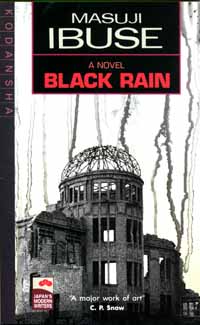
Masuji Ibuse: Black Rain – Kuroi Ame (1969) Literature and War Readalong July 2012

Reading Masuji Ibuse’s Black Rain was an intense experience. Beautiful and horrifying. In all honesty though I have to say the horror prevailed and I have to contradict those who say it’s not depressing. For sure, Ibuse isn’t a manipulative writer, he doesn’t strive for emotional reactions in his readers, but still, I couldn’t help being affected by what I read as no amount of toning down – something Ibuse has been accused of – can minimize the atrocity of what people had to endure on August 6 1945, in Hiroshima and the days and months that followed the bombing.

I think one hast to call Black Rain a documentary style novel. In order to write the book Ibuse has used real diaries and notes of victims and incorporated them in his book. Additionally the descriptions are so detailed and often matter-of-fact that the book reads in parts like a non-fiction account.

The main story is the story of Shigematsu Shizuma’s niece Yasuko. She would like to get married but a marriage is endangered as there are rumours that she got in the Black Rain after the bombing of Hiroshima and suffers of radiation sickness. Shigematsu himself is afflicted by a mild form of radiation sickness which he tries to fight by eating as healthily as possible and with mild exercise and a lot of rest. At the beginning of the novel which starts a few months after the bombing, Yasuko shows no signs of sickness at all. In order to help his niece and to prove that she didn’t get in the Black Rain and is not ill, Shigematsu starts transcribing his niece’s and his own diary covering the days before and after the bombing. The diaries are meticulous and incredibly detailed accounts of those days. The novel moves back and forth between the diary entries of August 5 – 15 and the present in which the entries are copied.

I have seen pictures of Hiroshima and read a few things but never anything like this book which was absolutely overwhelming in its details and the way it captured human suffering. The descriptions always move back and forth between individual and collective experiences. There were descriptions of people who had only mild burns and some whose whole body was an open wound. Some died in agony, some in grotesque positions. There were descriptions which showed how some people afflicted by radiation sickness a few days or weeks later died suddenly while others agonized for months. Towards the end there is a real account of a doctor who served in the infantry and was almost directly under the bomb when it exploded. It was unbearable to read about the suffering he went through.

I was surprised to see what an important element food is in the book. We read detailed accounts of what food was available during the war, how it was prepared and how they had to substitute a lot. Food is also one of the major elements in a successful treatment of radiation sickness. It was fascinating and sad to read.

What shocked me more than anything else, more than the descriptions of the wounded humans and animals and the ensuing total chaos, was the utter helplessness which was expressed in the way how they spoke about the bomb. They had no clue what had happened. They knew it was something unheard of,  never used before, but they didn’t know anything specific. What were the effects? Were burns the only thing or would there be more to come later? How did you treat radiation sickness? Days later they find out what had hit them.

“The name of the bomb had already undergone a number of changes, from the initial “new weapon” through “new-type bomb” to “special high-capacity bomb.” That day I learned for he first time to call it an “atomic bomb”.

The confusion and helplessness of the people is terribly sad. Even more when you read how they started to realize that even people who were not in Hiroshima on August 6, but part of rescue teams who came later, all died. This meant that each and every person who had been in Hiroshima on the 6th or came later would have to wait, sometimes for months, to be sure they were not affected by radiation.

After having read all this you will probably wonder why I called this book “beautiful”. I thought it was beautiful because the way Ibuse describes the Japanese culture, Japanese sensibilities, the descriptions of the food, the habits, some customs and many details of things we are not familiar with is full of beautiful moments like this description of Shigematsu’s childhood.

As a boy, Shigematsu had seldom come to the flat rock to play, but he had often been to play under the ginkgo tree at Kotaro’s place. When the frosts came and the ginkgo tree began to shed its leaves, the roof of Kotaro’s house would be transformed into a yellow roof, smothered with dead leaves. Whenever a breeze sprang up, they would pour down from the eaves in a yellow waterfall, and when it eddied they would swirl up into the air – up and up to twice, three times the height of the roof – then descend in yellow whirlpools onto the road up the slope and onto the oak grove.

Of course the same culture which had such a lot of beauty was also trapped in a destructive system of total obedience which is mentioned more than once in the novel. It takes a masterful writer to be able to convey so much insight into a culture and render a tragedy the way he did it. While Black Rain was not an easy book to read and has to be absorbed in small doses, I think it’s an outstanding book.  Without ever accusing anything or anyone Ibuse shows drastically that in the case of Hiroshima the end didn’t justify the means.

Other reviews

Danielle (A Work in Progress)

Judith (Reader in the Wilderness)

Rise (in lieu of a field guide)

Older reviews

Mel U (The Reading Life)

Gary (The Parrish Lantern)

The review is my first contribution to Bellezza’s Japanese Literature Challenge 6.

*******

Black Rain was the seventh book in the Literature and War Readalong 2012. The next one will be Aaron Applefeld: The Story of a Life – Sippur chajim. Discussion starts on Friday August 31, 2012.