Charles Dickens: Great Expectations (1861)

In Great Expectations the orphan Pip tells the story of his life. He tells us how, after having lost his parents as a small child, he was brought up “by hand” by his mean and quarrelsome sister who hit him and her husband. How his sister’s husband Joe and Biddy the teacher were the only kind people in his life. How he met a convict and helped him. How he was invited to the excentric and melancholy Miss Havisham to play at her house. How he saw the wonderous house for the first time and met the beautiful Estella who would be the love of his life. How being introduced to Miss Havisham and Estella made him long for another life and feel ashamed of his own. How finally he was made rich and hoping for great expectations from an unknown benefactor. And how in the end things turned out in a very different way.

Great Expectations offered everything I expected from Dickens and so much more. The only thing I could criticize is that it was predictable and that there were a lot of coincidences which didn’t seem all that realistic but who cares. There is so much in this novel to like that I can easily forget its flaws. The characters were, as was to be expected, quirky and over-the top, much more caricatures than portraits, but drawn which such a wonderful imagination that I loved each one of them.

I also liked the atmosphere, how with a few words, a few sentences he captures a mood, a season, the weather, a location, a house, a street. All his descriptions are highly evocative and one sees every little detail.

There were many uncanny, witty and captivating scenes and I would have a hard time picking favorites. I liked all the chapters at Miss Havisham’s house. The sorrow and grief which had made the time stand still in that place and entrapped its owner for eternity, gave the book a very gothic feel.

But I also loved all the scenes including Mr Jagger’s clerk Wemmick and his father. They made me chuckle very often. They are such an endearing couple.

To do this book justice and write properly about it, I would need more time which I don’t have. Maybe I will return to it next year and write something a bit more detailed.

For now I would just like to say, I loved it for many reasons but what stood out the most is that Dickens comes across as a writer with a huge heart who can even  make many of his villains endearing.
Dickens button 01 resized

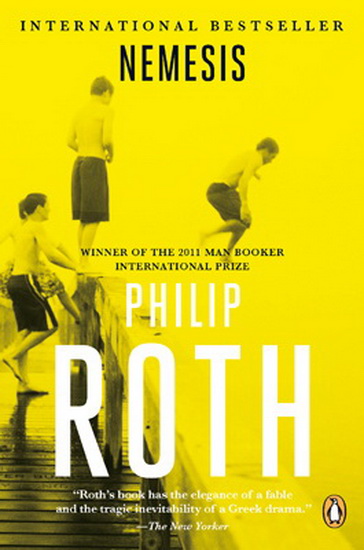
Philip Roth: Nemesis (2010)

Nemesis

There have been a few reviews of Philip Roth books recently (on Babbling Books here and here and on Book Around the Corner here) and because I commented on the one or the other posts saying that I didn’t like him, Leroy suggested I read Nemesis. The premise of the book sounded very interesting and so I finally read it. While I cannot say I’m a convert, I can still say that this is a very fine book and one that’s topical, well written and thought-provoking too.

The first thing I noticed, was that you can feel that this is an assured writer. You can feel it for many reasons. The most important one was that the writing seemed so effortless. It’s free of artificiality, flows nicely, contains many well captured scenes and the way it is told is quite wonderful. The book is told by a first person narrator, who appears only very briefly and then disappears and blends into the background of the story he tells. It isn’t his story and we will have to wait almost until the end of the book to find out who tells it and why. This is artful, and that’s why Nemesis is a great example that it’s worth to finish books because some really need all the pages to become a whole and to fully reveal their meaning.

It’s the summer of 1944. A scorching summer in Newark, New Jersey. Bucky Cantor is a young man, a physical education teacher who just graduated and starts his first job as a playground supervisor in the Jewish neighbourhood of Newark. It’s a summer job to which he has been looking forward to and which he executes with a lot of energy, enthusiasm and passion. Bucky is a small but strong and muscular man and if he wasn’t so terribly short-sighted he would be off fighting against the Germans like his best buddies Jake and Dave.

Bucky lives with his grandmother. His mother died in childbirth, his father, a thief, disappeared and the beloved grandfather has just passed away. But Bucky is by no means lonely as he has a fiancé, Marcia,  who comes from a rich Jewish family who accepts him and loves him just as much as Marcia herself does. Things look promising for Bucky if it wasn’t for a nasty, evil God, as Bucky sees it,  who decides to send the plague, in form of a polio epidemic, on Newark and the Jewish neighbourhood in which Bucky lives and works.This is 11 years before the vaccine is invented and Polio is a devastating disease. It’s not entirely clear how you contract it and while some forms are mild, most are not only crippling but can lead to death.

Roth does a great job at describing the panic, sadness, shock and horror that follow the outbreak of this epidemic. It has an absolutely devastating effect on the community of Newark and underlying racial and social tensions break out with a horrifying force.

While Nemesis tells the story of a disaster which strikes a whole community it also tells one man’s story and how he copes with disaster.

What I found amazing is the way Roth showed that in the end it’s far less important what befalls us but what really counts is how we deal with it. I can’t reveal too much or the book would be spoilt, let’s just say, that when guilt and blame come into the equation a bad situation can turn into a nightmare.

Disaster and how we cope with it isn’t the only theme in the novel. There are others like loss, regret and guilt which are all equally well illustrated.

Nemesis is a book which takes a while to develop its full aroma. I could imagine that the one or the other reader would find it a bit slow at first but it’s worth reading until  the end. While I’m still no Philip Roth enthusiast, I really liked this book and think I might pick up another of his novels some day.

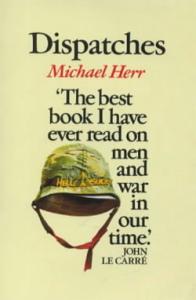
Literature and War Readalong December 28 2012: Dispatches by Michael Herr

https://beautyisasleepingcat.com/wp-content/uploads/2011/11/dispatches.jpg

Dispatches is a book I wanted to read  ever since it has been mentioned in the comments of other posts and after having read Tim O’Brien’s astonishing The Things They Carried. It’s the only book on the Vietnam war we are reading this year and I’m very keen on finding out how it will compare to O’Brien’s masterpiece.

Herr was a front-line reporter in the Vietnam war and has participated in the writing of movie scripts like Apocalypse Now and Platoon.

Here are the first sentences

There was a map of Vietnam on the wall of my apartment in Saigon and some nights, coming back late to the city, I’d lie out on my bed and look at it, too tired to do anything more than just get my boots off. That map was a marvel, especially now, that it wasn’t real anymore. For one thing it was very old. It had been left there years before by another tenant, probably a Fenchman, since the map had been made in Paris.

*******

The discussion starts on Friday, 28 December 2012.

Further information on the Literature and War Readalong 2012, including all the book blurbs, can be found here.

Bernhard Schlink: The Weekend – Das Wochenende (2008)

Old friends and lovers reunite for a weekend in a secluded country home after spending decades apart. They plumb their memories of each other and pass quiet judgements on the life decisions each has made since their youth. This isn’t, however, just any old reunion, and their conversations of the old days aren’t typical reminiscences. After 24 years, Joerg – a convicted murderer and terrorist, is released from prison on a pardon. 

Bernhard Schlink Week, hosted by Judith (Reader in the Wilderness), is part of German Literature Month. We had the option to choose either a literary  or one of the crime novels. I opted for the first. I have read The Reader a few years ago and liked it. It’s well-written, carefully constructed, thought-provoking and suspenseful. No wonder it was a bestseller. It took me a while to decide which of his novels I should read. Since I’m interested in the history of the RAF (Red Army Fraction), I felt like reading The Weekend – Das Wochenende which tells the story of Jörg, former terrorist, who is amnestied by the president, after 20 years in prison. To ease him into this transition his sister Christiane, invited the old friends to her house in the country, to spend a weekend together.

Family weekends or holidays are tropes I love because they often manage to look under the surface; taken out of their daily lives and put together, people clash and reveal their carefully hidden and often ugly feelings. To choose this setting for the homecoming of his protagonist wasn’t a bad choice but the way it was written was awfully bad. While there were a few scenes I liked and although it was a quick read, the melodramatic tone, the trite symbolism – the book starts on Friday and ends on Sunday with a “redemptive” scene in which everyone helps to carry buckets of water which flooded the cellar after a torrential rain (hello, heavy-handed allusion) – just didn’t do it for me. Add cancer, a budding love story between two elderly people who don’t need to fall in love as they are mature and therefore can skip the intro – read – jump into bed without the nervous fussing  – …

What’s really bad is that this is a book about terrorism. A terrorism which was a reaction to Germany’s post-war attempts at forgetting the past and leaving the old Nazis in prominent places. A terrorism which protested against imperialism, bigotry and hypocrisy. While initially in her first wave the RAF didn’t want to harm or kill people, the second wave became much more aggressive and violent and didn’t shy away from murder. Jörg is exemplary of this second wave. But nothing is shown, or discussed. There are just people with opinions, sitting together, eating and discussing. Each character serves as a vehicle expressing the one or the other opinion on terrorism.

The German newspaper critics hated this book. The readers on amazon like it. I don’t always agree with critics but in this case I have to. This is a book written like a corny genre novel and the only thing interesting about it is the topic but it’s not treated well. I don’t know any more than before reading it. Jörg says that there was a war on and that it was normal that people got killed in a war. On the other hand he is crying over getting old and being ill…. A sentimental man who pretends he doesn’t care that he killed people? That doesn’t work for me.

The book was published in 2008, just half a year after Brigitte Mohnhaupt was amnestied, while Christain Klar was not. It’s ok to be topical in novels but this book makes me think Schlink wanted to exploit something.

At the end of the year we write our Best of lists. I always add one or two worst of books, books that I found so bad that in some cases they infuriated me. The Weekend will be on the list. It’s insufferably botched.

Literature and War Readalong November 30 2012 Meets German Literature Month: The Stalin Front – Die Stalinorgel by Gert Ledig

It is thanks to last’s year’s German Literature Month during which I read Sebald’s On the Natural History of Destruction that I discovered Gert Ledig’s The Stalin Front  –  Die Stalinorgel (1955).

In this novel Ledig depicts the atrocities of the Eastern Front. The fact that he is so explicit about the horrors and destruction is, according to Sebald, the reason why Ledig was forgotten and only rediscovered thanks to Sebald’s lectures and later book.

Here’s what is written about the book on the nyrb site

Gert Ledig (1921–1999) was born in Leipzig and grew up in Vienna. At the age of eighteen he volunteered for the army and was wounded at the battle of Leningrad in 1942. He reworked his experiences during the war in this novel Die Stalinorgel (1955). Sent back home, he trained as a naval engineer and was caught in several air raids. The experience never left him and led to the writing of Vergeltung (Payback) (1956). The novel’s reissue in Germany in 1999 heralded a much publicized rediscovery of the author’s work there.

Here are the first sentences

Prologue

The Lance-Coropral couldn’t turn in his grave because he didn’t have one. Some three versts from Podrova, forty versts south of Leningrad, he had been caught in a salvo of rockets, been thrown up in the air and with severed hands and head dangling, been impaled on the skeletal branches of what once had been a tree.

I hope that some of the participants of this year’s German Literature Month will join us. As you can deduce from the first lines –  this is a very graphic novel.

*******

The discussion starts on Friday, 30 November 2012.

Further information on the Literature and War Readalong 2012, including all the book blurbs, can be found here.

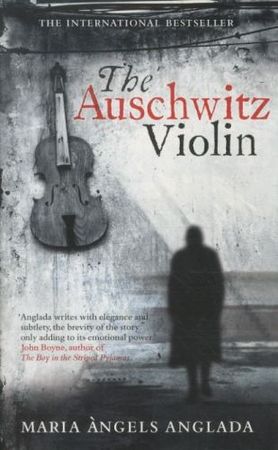
Maria Àngels Anglada: The Auschwitz Violin – El violi’ d’Auschwitz (1994) Literature and War Readalong October 2012

Is there anything that would make life in a concentration camp bearable? Anything that could make it worth living? Is it justified that talent will help you survive? And if you do, how can you go on living? Maria Àngels Anglada’s short and powerful novel The Auschwitz Violin – El violí d’Auschwitz asks precisely these questions.

When Climent, a famous violinist, is invited to Krakow in 1991 for a concert, he meets the elderly Polish violinist Regina who plays on an exquisite violin. He is intrigued, he thinks he should know the luthier but, as he is told, he doesn’t. He is curious and she is keen to share the story of the beautiful instrument. The violin has been made by Daniel, Regina’s uncle, a luthier who was sent to Auschwitz. Regina was only a small girl then. She had lost her parents in the ghetto but was saved and spent the war with a non-Jewish family who let her pass as their daughter.

Daniel who is still a young man, is only saved and not exterminated right away with many others because he pretends to be a carpenter. He helps to build a greenhouse for the sadistic and despotic camp Commander and later, when the commander finds out that he is a luthier, he is ordered to build a violin for him. Another captive, Bronislaw, will have to play on it during one of the dinners the Commander gives for other Nazis. Both their lives depend on Daniel’s success. If he wasn’t such a talented and passionate luthier, he wouldn’t stand a chance to make such a delicate instrument, with hands that are rough and split from the cold and material that is far from perfect.

Working on the violin changes everything for Daniel. It isn’t only a means to survive, like helping with the greenhouse was, but it gives sense to his days, makes a human being out of him again.

The way his workshop in Poland  is described and how he makes the new violin, with so much care and love, infuses this book with beauty, despite the horrors which are evoked as well.

Every chapter begins with a quote from a historical official document in which life in the camp is rendered in a statistical and factual manner. There are reports about shootings, about medical experiments and other atrocities. This adds another layer to the book, echoes the horrors Daniel has to endure and stands in stark contrast to the beauty he experiences while remembering his old life and crafting the violin.

When the instrument is finished, Bronislaw, the violinist, plays Corelli’s Sonata “La Folia” on it. Schindler, a passing figure in the novel, tells someone about Bronislaw and he is freed and brought to Sweden.

It’s a beautifully written book but a bit light at times. I don’t know if working on an instrument would really have transformed the days at the camp like this.

The idea that two people can better their lives, maybe even save it, because of their talents struck me as cruel but realistic. It’s certainly true that those with special talents had a higher chance to live longer or even survive. What does that say about us humans.? Do we always need a reason to help? Talent, looks, frailty, illness, as long as there is something different and special. The thought made me shudder because it’s at the core of so much injustice in this world, not only in the concentration camps.

Since Corelli’s Sonata “La Folia” is so important in the book, I attached a recording. It’s a very haunting piece.

The Auschwitz Violin manages to capture the horror’s of the concentration camps without being horrifying. I think Anglada wanted to tell us that there can be beauty in the most horrible places. I hope that’s true.

Other reviews

Anna (Diary of an Eccentric)

Danielle (A Work in Progress)


*******

The Auschwitz Violin was the tenth book in the Literature and War Readalong 2012. The next one will be Gert Ledig’s The Stalin FrontDie Stalinorgel. Discussion starts on Friday  30 November, 2012.

Literature and War Readalong October 2012: The Auschwitz Violin – El Violi` d`Auschwitz by Maria Àngels Anglada

Maria Àngels Anglada who died in 1999 was considered to be one of the most important Catalan writers of the 20th Century. She won many prizes and was widely read. The Auschwitz Violin – El Violi`d`Auschwitz was translated a year ago and when I saw it in a book shop I thought it’s a perfect choice. It’s slim, seems well written and tells the story of a musician and his struggle to stay human during his imprisonment in Auschwitz.

Here are the first sentences

December 1991

I always have trouble falling asleep after I perform at a concert. It keeps playing in my mind, like a tape going round and round. I was more keyed up than usual because this concert had been special: it marked the two hundredth anniversary of Mozart’s death. The recital was held in Krakow, a city of wonderful musicians, in a makeshift auditorium in the bellissima Casa Veneciana.

*******

The discussion starts on Monday, 29 October 2012.

Further information on the Literature and War Readalong 2012, including all the book blurbs, can be found here.