Louisa Young: My Dear, I Wanted to Tell You (2011) Literature and War Readalong September 2014

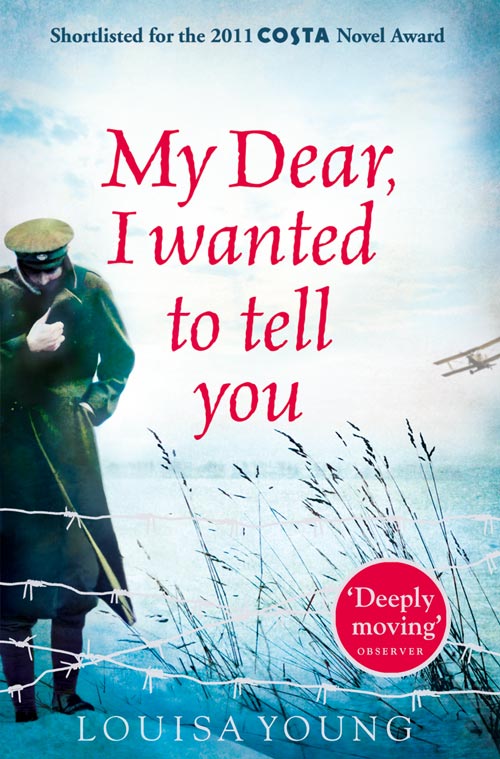
My Dear I Wanted To Tell You

Louisa Young’s novel My Dear, I Wanted to Tell You is one of the most surprising reads for me this year. After having been disappointed in Pat Barker’s Toby’s Room and Helen Dunmore’s The Lie, I was a little worried this would be the third in a series of underwhelming contemporary WWI novels. Well, it wasn’t. I loved this book and could hardly put it down. Not only because the story was so engaging and the characters so likable but because Louisa Young is a skillful storyteller with a very unique style. It’s not easy to tell a WWI story, including all the common themes, and manage to do that in a fresh and original way, but that’s just what Louisa Young did.

Riley Purefoy and Nadine Waveney meet when they are still small children. Although from very different backgrounds – he’s a poor working-class boy, she’s from a rich upper-class family – they become friends and their friendship turns into love eventually. They both share a passion for art and both want to become artists. Just before the war breaks out, Riley works as an assistant to an artist. He sees Nadine regularly and they know they are in love. However, when her parents find out, they are not thrilled and make Riley understand that he isn’t welcome in the Waveney’s home anymore. Feeling hurt and insulted, Riley impulsively joins the army and within a few weeks is sent to the trenches. Nadine on her side, becomes a nurse. They keep in contact and write to each other regularly, even meet during one of Riley’s leaves.

Thanks to influential people at home and thanks to Peter Locke, Riley’s commanding officer, who understands that Riley is very cultured and intelligent, Riley becomes an officer in spite of his background.

Peter Locke and his wife, Julia, are the second important couple in this novel. The book moves back and forth between these four characters.

The first half of the book is intense and beautiful and drew me in so much that when tragedy strikes it made me gasp. What followed wasn’t an easy read. It was tragic but so well done. There are numerous ways to write about facial mutilation and the way Louisa Young did it was outstanding. She combines the themes of body image, art, and beauty, and weaves them together in way that I found extremely thought-provoking. Peter’s wife, Julia, is obsessed with her beauty. She thinks she has nothing else to offer and, although not yet 30, already wants to undergo plastic surgery. Her thoughts and her anguish mirror the thoughts and the anguish of the mutilated men. I also liked that Louisa Young set the book in an artists’ milieu at the beginning because it underlines that we humans are extremely visual beings and while we might not all feel the same about beauty, we all feel the same about looks and mutilation. Making beauty, even more than mutilation, a main theme was a unique choice and even daring. Daring, because Louisa Young doesn’t spare us. She shows us what those mutilations looked like, what they did to a soldier. And how the society reacted. Even mothers screamed and fled at the sight of their disfigured sons.

The second part of the novel focusses almost entirely on the surgeries and the despair of the mutilated men and on the toll the war takes on the minds of those who survive intact.

One of the strengths of the book is its accuracy, another one is that Louisa Young makes us care about her characters. Not only about the main characters but about the minor characters as well. She captures a society and an event, and thus achieves what the best historical fiction should achieve— make us we feel we’ve been there too.

Although My Dear I Wanted to Tell You tells a horrific story, it’s an amazingly beautiful book, full of sentiment and rich descriptions. Louisa Young has already published the sequel (The Heroe’s Welcome) and more books centering on the same characters are still to come. As she said in an interview: “I think I may be writing the twentieth century, through these characters.” I’m eager to read more of her novels.

Other reviews

 Anna (Diary of an Eccentric)

Danielle (A Work in Progress)

My Book Strings

*******

My Dear, I Wanted to Tell You is the ninth book in the Literature and War Readalong 2014. The next book is the Fantasy novel Phoenix and Ashes by Mercedes Lackey. Discussion starts on Friday 31 October, 2014. Further information on the Literature and War Readalong 2014, including the book blurbs can be found here.

Megan Abbott: The End of Everything (2011)

Megan Abbott

To set the mood, let me start this post with a quote from the early pages of Megan Abbott’s unusual crime novel The End of Everything:

These are all the good things, and there were such good things. But then there were the other things, and they seemed to come later, but what if they didn’t? What if everything was there all along, creeping soundlessly from corner to corner, shuddering fast from Evie’s nighttime whispers, from the dark hollows of that sunny-shingled house, and I didn’t hear it? Didn’t see it?

This is a book full of nighttime encounters, people whispering in the dark, sitting on porches, in front of houses or lounging in basements. It’s a hot summer and Lizzie, the narrator is a 13-year-old girl, discovering attraction, sexual feelings and unsettling uncertainty for the first time. Lizzie and Evie are best friends, they are like one body, as Lizzie tells us. They share everything, or so Lizzie believes, until the day Evie disappears. The police and her parents give up quickly. They think that Evie must be dead and buried somewhere, abducted by a pervert, abused and killed. Only Lizzie is sure that Evie is still alive. She saw Mr Shaw drive by in a car twice, just before Evie went missing and points the police in his direction.

The police seem to turn in circles. Mr Shaw has disappeared as well but that might just be a coincidence. Finally Lizzie takes matters into her own hands and starts to investigate. Telling you more would spoil the book.

Megan Abboott writes incredibly well. This is a novel rich in mood and atmosphere but it’s also a deeply disturbing novel. Everyone in this book is sneaking and creeping around. Although there’s a child abduction and possible abuse, the creepiest character for me was Mr Verver, Evie’s father. Lizzie has a major crush on him and so does Dusty, the older of the two Verver girls. That in itself is disturbing but what is far more disturbing is how Mr Verver encourages the girls, especially his own daughter. He never really does anything inappropriate but he balances dangerously close to the abyss. At first I thought he sounded like a wonderful father because he spends so much time with his daughters but the more I read about him, the creepier he sounded. And that’s just one layer of this darkly rich novel, which brilliantly depicts the dark side of suburbia.

What was certainly interesting was how Megan Abbott combined a crime and a coming of age novel. The book reminded me of the movie the Virgin Suicides  (I’ve still not read the book but I’m pretty sure there are similarities). I never felt The End of Everything was an entirely realistic depiction of teenage girls, I found it rather surreal. I’m not even sure when this is set. At times it felt like the 80s, at times even like early 60s.

If you like your crime unusual and are fond of coming of age stories, dreamlike atmosphere and lovely writing, you shouldn’t miss this.

After I bought this novel, I discovered that Max reviewed it not too long ago. As usual, his review is well-worth reading.

Anna Gavalda: L’échappée belle – Breaking Away/French Leave (2009)

Breaking Away

When you look for something light but still profound, Anna Gavalda is an ideal choice. Her writing is airy but not fluffy. Her characters struggle but they make it eventually. Her slim novel, L’échappée belle, which has been published under two different names in English— Breaking Away and French Leave— was just like that. Entertaining, yet thoughtful. Amusing but a bit sad as well. The only problem I had was the structure. Breaking Away is divided in two parts. In both parts the book is told from Garance’s point of view but in the first part she’s the first person narrator, while the story is told in the third person in the later chapters. I wasn’t entirely sure why Anna Gavalda chose this approach. It gave the book a disjointed feel.

Garance, her older sister, Lola, her older brother, Simon, and her sister-in-law, Carine are on the way to a marriage. The scenes in the car are priceless. Carine is quite stuck up and the two sisters tease her mercilessly. They make her feel excluded, shock her, and push all of her buttons. Especially Garance, whose life style is wild and disorganized, antagonizes her constantly.

When they arrive at their destination the three siblings realize they are not in the mood for marriage malarkey, for family and hypocrisy. They would rather spend a day on their own and decide to pay a visit to their younger brother, Vincent, who is working as a guide at a Château.

Once there, they spend a wonderful time together. The siblings are very close and you get the feeling that whoever joins them, will always stay outside. This cannot be easy for a spouse or a girlfriend/boyfriend.

The siblings all seem at a turning point— newly divorced, just starting or ending a relationship. Garance is the one who will undergo the biggest change adn she has a new friend: a dog she adopted on the road trip. While the first part is like a road movie, the second shows us Garance on her own, in Paris.

Although the book is flawed and I didn’t understand the author’s choice to change from 1st to 3rd person, I did enjoy this. I have no siblings, so I always idealize the relationships between brothers and sister, even though most siblings I’ve met in real life never had such an intense, harmonious relationship.

A lot of Breaking Away is written in spoken language, using different types of accents and vernacular. I wonder how the translator handled this. It can’t  have been easy. In my opinion this gives the book added meaning, more depth. There’s a North African shop owner, for example, who speaks with a very strong accent. Reading it, I could hear it and was at first a bit shocked because it seemed racist but then we find out that Rachid speaks a perfect, accent free French, and only uses this accent to make fun of people who expect every North African to talk like this.

I’m glad that I still own another book by Anna Gavalda which I haven’t read yet – Hunting and Gathering – Ensemble c’est tout. It has been made into a movie and so has Someone I Loved. Her books make excellent choices for movies as her writing is heavy on dialogue.

For another take on the book, here’s Guy’s (His Futile Preoccupations) review.

Echappee belle

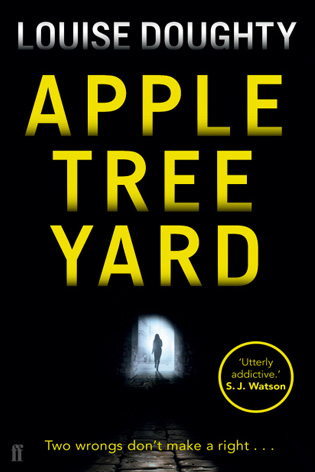
Louise Doughty: Apple Tree Yard (2013)

Apple Tree Yard

I wanted to read Apple Tree Yard as soon as it was out last year because I’d enjoyed Louise Doughty’s earlier novel Whatever You Love so much. I didn’t really know what to expect, didn’t read any reviews, and so I was glad to find out that not only is the book very different from her earlier novel, but just as good, maybe even better.

Apple Tree Yard tells the story of an affair that goes terribly wrong. Yvonne Carmichael is in her fifties, married with two grown-up kids. She’s a scientist and very successful in her work. Her marriage could be better but yshe and her husband do get along fine. What it is that makes her follow a man and start an affair with him? Boredom? Love—or rather lust— at first sight? Maybe a bit of both.

The book opens with a prologue that gives away a lot. We know Yvonne Carmichael and her lover have been arrested and are being tried and we also know that the prosecution has found out something that could be fatal for Yvonne. I think it’s quite impressive that Louise Doughty managed to give away this much in the prologue and still was able to write a page-turner that held my interest until the last page.

What worked particularly well for me was that large parts of the story were written as if Yvonne was talking to her lover, which was intimate and eerie at the same time.

Apple Tree Yard is the third crime novel with a London setting that I’ve read this year and, once again, the setting is almost a character.

The book is a crime novel but it explores a lot of themes in a very arresting way. Unfortunately mentioning some of them would really spoil the book. One theme I can mention, which is important, is the exploration of a marriage. Yvonne and her husband still share a lot but they are clearly not in love.

Apple Tree Yard is part thriller, part court-room drama, nicely paced, intricately plotted and infused with a bitter-sweet, melancholy mood that is quite rare in crime novels. A very gripping and intense novel.


Literature and War Readalong September 29 2014: My Dear, I Wanted to Tell You by Louisa Young

My Dear I Wanted To Tell You

If I hadn’t read a lot of favourable reviews of Louisa Young’s novel My Dear, I Wanted to Tell You, I would never have picked it up. I know you shouldn’t judge a book by its cover but I’m allergic to men in greatcoat’s on WWI novels. On the other hand it’s better than a man in a greatcoat kissing a woman. But, as fluffy as it looks, the reviews made it sound poignant.

Louisa Young is a versatile author. Not only has she written three previous novels and a biography but, as Zizou Corder, she also writes a successful YA adult series together with her daughter.

Here are the first sentences

France, 7 June, 3.10 a.m.

It had been a warm night. Summery. Quiet, as such nights go.

The shattering roar of the explosion was so very sudden, cracking through the physicality of air and earth, that every battered skull, and every baffled brain within those skulls, was shaken by it, and every surviving thought was shaken out. It shuddered eardrums and set livers quivering; it ran under skin, set up counter-waves of blood veins and arteries, pierced rocking into the tiny canals of the sponge of the bone marrow. It clenched hearts, broke teeth, and reverberated in synapses and the spaces between cells. The men became a part of the noise, drowned in it, dismembered by it saturated. They were of it. It was of them.

They were all used to that.

And some details and the blurb for those who want to join

My Dear, I Wanted to Tell You by Louisa Young (UK 2011) WWI, Historical Fiction, 336 pages

A letter, two lovers, a terrible lie. In war, truth is only the first casualty. ‘Inspires the kind of devotion among its readers not seen since David Nicholls’ One Day’ The Times

While Riley Purefoy and Peter Locke fight for their country, their survival and their sanity in the trenches of Flanders, Nadine Waveney, Julia Locke and Rose Locke do what they can at home. Beautiful, obsessive Julia and gentle, eccentric Peter are married: each day Julia goes through rituals to prepare for her beloved husband’s return. Nadine and Riley, only eighteen when the war starts, and with problems of their own already, want above all to make promises – but how can they when the future is not in their hands? And Rose? Well, what did happen to the traditionally brought-up women who lost all hope of marriage, because all the young men were dead?

Moving between Ypres, London and Paris, My Dear I Wanted to Tell You is a deeply affecting, moving and brilliant novel of love and war, and how they affect those left behind as well as those who fight.


*******

The discussion starts on Friday, 29 September 2014.

Further information on the Literature and War Readalong 2014, including all the book blurbs, can be found here.

Across the Universe (2011) A Sci-Fi Thriller

Across the Universe is the first Sci-Fi thriller I’ve ever read. It’s also a YA novel and the first in a trilogy. Luckily it’s not the type of series beginning without a proper ending. There are open questions but the mystery is resolved, the perpetrator is caught.

Amy follows her parents on a mission to a planet that is three hundred years away from Earth. Her parents are part of a project crew needed to terraform Centauri-Earth. They have agreed to board the spaceship Godspeed and to be cyrogenically frozen. Three hundred years in the future they will be unfrozen. Amy didn’t have to follow her parents. They gave her a choice: she could stay with her grandparents and her boyfriend or travel to a new planet with her parents. Her love for her parents is stronger than anything else and she accepts to be frozen. The description of this is actually extremely well done. I could almost feel the ice in my veins.

Fifty years before they should land, someone brutally unplugs Amy. Luckily Elder, the future leader of Godspeed, Eldest’s heir, finds her in time. He’s fascinated by Amy, who is a redhead with translucent white skin and green eyes. Nobody looks like Amy on Godspeed. Everyone looks exactly the same: olive skin, dark eyes, brown hair, tall and strong. Eldest, the current leader, is far less thrilled. He’d like to open a hatch and throw Amy into space. He thinks that having someone on board who looks so different, who knows what it was like on earth, poses a huge threat to peace and stability on Godspeed.

Amy and Elder find out that Amy’s attempted murder probably was a mistake. Someone is targeting the crew of the project, which means Amy’s parents are in danger.

The plot is gripping enough but that wasn’t what I liked about this book. What I liked was the world Beth Revis created. The spaceship Godspeed is like a snow globe. I happen to love snow globes, those mini-worlds inside of glass bubbles filled with water. So naturally, I loved the setting. Godspeed has many layers and is like a replica of the earth. While there are no seasons, there’s still weather; they have rain and wind and they grow plants and have cattle.

For those who were born aboard Godspeed their environment poses no problem, but for Amy the ship is claustrophobic. She knows that the stars on the ship’s ceiling are fake. When they discover that there is a hidden window which allows to look out into space, things become dramatic. People are only docile and agreeing to work like slaves because they know nothing else. But once they would realize how vast the world is outside of the ship, things could change. We soon understand that Godspeed is not so much peaceful but totalitarian.

Amy and Elder try to find out who wants to kill the frozen crew members and they try to make sense of many inconsistencies. Someone, for example, has changed the books on Earth’s history. Facts are distorted and used to manipulate people.

I enjoyed this novel. I loved the setting, I thought the book had many thought-provoking elements, the plot was suspenseful, and Beth Revis has a knack for descriptions. There’s a love story but it’s not too romantic. The character’s are a bit flat and Amy thinks a few silly things, but I didn’t mind. I read this as highly entertaining guilty pleasure. Plus it’s an interesting genre mix that works really well. A bit like a locked room mystery set in space.

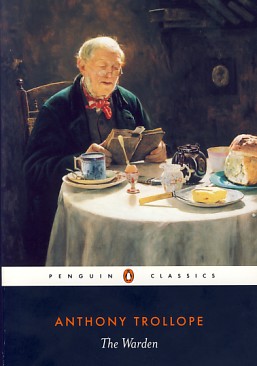
Anthony Trollope: The Warden (1855)

The Warden

Memory is a funny thing. For years I have been haunted by a sensual impression of a place. I remember being in England and walking along a row of houses. It’s a very peaceful, mild, warm autumn afternoon. The houses are part of a larger compound, overshadowed by a huge cathedral. I remember walking away from the cathedral close and coming to a small river that was flowing through the grassy meadow, on the same level as the soil. There were weeping willows and sheep. Walking around that place was like visiting a time long gone. These haunting images returned periodically. The light outside of my windows sometimes triggered the memory. It was always nice to go back in my mind, the only trouble was – I couldn’t remember where this had been. I’ve been in England many times, stayed there for a couple of months or weeks. I’ve visited many places and many cathedrals, but as much as I thought about it – I had no clue where I’d been on that warm autumn afternoon. Not until reading The Warden. The moment I opened the book and read the description of Barchester I knew – this is where I had been. But how could that be? Barchester doesn’t exist. Although I like to keep the introduction of a book until I’ve finished it, I had to read it to find out more. In the introduction I learned that Trollope based Barchester on Salisbury and Winchester. I immediately went online and looked up photos of Salisbury cathedral, the cathedral close and the meadows around and, yes, indeed, that’s where I’ve been some years ago. I found it pretty uncanny that Trollope was so capable at describing a place. I still don’t know why I forgot that the images were images of Salisbury. I’ve never forgotten a place like that. Maybe because it was so dreamlike?

I’ve meant to read Trollope for a while. Actually ever since I’ve read Guy’s (His Futile Preoccupations) and Brian’s (Babbling Books) reviews of his novels. Most of Trollope’s books are chunky but The Warden, the first in the Chronicles of Barsetshire, is a mere 180 pages.

According to the introduction, Henry James called The Warden “the history of an old man’s conscience”. That’s true, however, it’s only one of at least three major themes Trollope exlpores and which all contribute to make The Warden a highly worthwhile and interesting book and one of those you’d love to discuss with other people.

Septimus Harding is precentor and warden of an almshouse. With these positions come 800£ per year. In order to obtain this money Mr Harding doesn’t have to work a lot. As a precentor he’s in charge of the choir in the cathedral and as warden he’s the moral support of the twelve destitute men who are allowed to spend their last years in the almshouse. Since the almshouse was founded in the 15th century, the warden has received  more money every year because of the revenue of the land. The twelve men’s allowance however would have been still the same as in the 15th Century if Mr Harding hadn’t given them some of his own money.

At the time when this story takes place, numerous reformers are hunting down greedy clergymen, showing how they abuse of their power and enrich themselves at the expense of others. Dr Bold is just such a reformer. When he meets the warden and his daughter, with whom he falls in love, he learns about the founder’s will and instigates an investigation which leads him to the conclusion that Mr Harding receives money that is due to the almsmen. His inquiry quickly gets out of hand when the biggest newspaper publicly accuses the warden of greed and malpractice.

Mr Harding is an excessively private man. He’s weak but kind and good-hearted. Being dragged into the spotlight like this, accused and shamed, is more than he can bear. He never thought that he might be doing something wrong but once he starts to think about it, he’s not so sure that he wasn’t enriching himself at the expense of the twelve poor men. While he doesn’t want to fight the accusation, his son-in-law, archdeacon Dr Grantly and the bishop of Barchester, fight for him and soon both parties involve lawyers. The warden has another strong supporter in his daughter who begs Dr Bold to abandon the cause.

The three themes which are explored each center on another figure. Mr Harding has to examine his conscience. Will he stay warden if it has been proven that he’s legally entitled to his money or will his own conscience tell him to let go?

Mr Bold shows how good intentions at the wrong moment and without thinking about consequences can be fatal. Maybe Mr Harding gets too much money, but why make this a matter of public interest and involve the newspaper? Why does he disregard the peace and quiet that reigns at the almshouse? Neither Mr Harding nor the twelve men are wanting anything. They live together amicably but once Dr Bold tells the twelve men that they should get more money, peace is lost forever.

For contemporary readers it might be interesting to read about the role of the press and the journalist Tom Towers. Trollope was inspired by true stories and what he lets us experience is the beginning of the value of public opinion and the power of the press.

Trollope chose to show us the end of an era. The tone of the book is elegiac throughout. In the introduction Robin Gilmour makes an interesting point. The warden’s garden is a strong symbol of this dying of an era. At the beginning of the novel it’s lush, green and lovely. At the end:

The warden’s garden is a wretched wilderness, the drive and paths are covered with weeds, the flowerbeds are bare, and the unshorn lawn is now a mass of long damp grass and unwholesome moss.

I had a very strong reaction when I read how content Mr Harding was in the beginning and how quickly a lifetime of ease was destroyed. At the same time I had to agree with Bold. Not in this matter, but in general. Why would a clergyman be given so many riches, a huge house with gardens, and a large income without doing any work? Still, I was sad for Mr Harding who was threatened to lose everything he held dear, even though he might not have been entitled to have it.

What annoyed me about Mr Bold’s doing was that the man he attacked was a kind and generous man and – compared to other clergymen – a tiny fish.

Before ending this rather lengthy review, I’d like to say a few things about Trollope’s writing. I enjoyed the descriptions and I had to laugh out loud a few times when he characterized people, notably the archdeacon, using caricature and satire. I found many of his authorial intrusions interesting but there were too many for my taste. I had problems with the parodies of Carlyle and Dickens because they felt glued on and were not a part of the story. I didn’t mind that Trollope spoke to the reader directly but some of the more hidden intrusions were annoying.

I’m glad I read The Warden. It made me remember my stay at Salisbury and I loved the descriptions. I liked his choice of themes and think they are just as important today as they were then. I also think he’s a wonderful satirist. Will I read the next in the series? In all honesty – I’m not so sure. I can’t pretend I fully warmed to Trollope and although I’ve started a small Victorian literature reading project, I think I’ll move on to Elizabeth Gaskell and the Brontës.

If you’d like to read more reviews on Trollope visit Guy’s  (His Futile Preoccupations), Brian’s (Babbling Books) and Tony’s (Tony’s Reading List) blogs. Brian’s reading and reviewing The Barsetshire Chronicles (here’s his review of The Warden). Tony has reviewed both the Barchester and the Palliser novels – and some more and  Guy has written about many of the other novels.