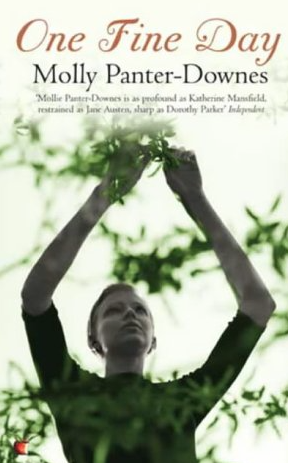
Mollie Panter-Downes: One Fine Day (1947)

One Fine Day

Mollie Panter-Downes was a British novelist and columnist. She’s well-known for her novel One Fine Day and her wartime short story collection Good Evening, Mrs. Craven.

One Fine Day is set on a summer’s day in 1946. It follows one day in the lives of Laura and Stephen Marshall and their young daughter, Victoria. During the war, Stephen was away like most men, while Laura and Victoria, together with other women and their children lived at their big house in the village of Wealding. While the Marshalls haven’t lost anyone during the war, they are still reeling. Their marriage suffers from the strain that comes with the changes in their way of life. Belonging to the upper-class, they were used to have servants: cooks, maids, gardeners. During the war, a lot of the servants left, died or moved on and only a very few were willing to return. Taking care of a big house and garden is clearly not what Laura was meant for. She makes a poor job of it and the house and people inhabiting it grow shabbier every day. While Stephen was gone, nobody minded the chaos, but now that he’s back, Laura feels she has to make an effort and mourns her loss of freedom.

Stephen hopes that things might get back to normal soon and before he leaves the house that morning, he begs Laura to go and look for a new gardener.

The book changes the point of view a few times, but mostly we follow Laura’s outer and inner life. She goes to the small village to buy food – no small feat as there’s still rationing and there’s hardly any choice. Then she prepares dinner, which takes her ages. Every household chore takes ages and is never done to satisfaction. The war and the house have taken their toll. She’s constantly tired. She’s thirty-eight but feels and looks much older.

A large part of the day is dedicated to hunting Stuffy, the Marshalls’ small dog, who has run away. When she goes to find her, she takes this opportunity and makes an excursion up a hill from which she can see the beautiful English landscape and savour an intense moment of solitude.

One Fine Day reminded me a lot of Carr’s A Month in the Country, only the time is even more condensed. The richness doesn’t lie in the plot but in the inner lives of the people and the lyrical descriptions of a beautiful, hot English summer day.

What a morning! Later it would be very hot, but now the dew frosted the grey spikes of the pinks, the double syringa hung like a delicious white cloud in the pure air. The cat sat with her feet close together on the unmown grass, and suddenly, sticking out a stiff back leg, ran her mouth up and down as though playing a passage on the flute. Summer at last, thought Stephen, and about time too. London wold be an oven.

The beauty and warmth of the day affect all the characters. It makes them live intensely and hold still for a few moments. There’s a lot wrong with the life they are living. They are not equipped for it and the spouses have grown apart. But this beautiful day revives them, makes them appreciate what they have, makes them wish to get closer again. The end is uncertain, because in uncertain times, hopes and wishes are easily squashed. While we are not sure they will be able to make it – as people, as a couple – there’s hope.

The novel is gentle but outspoken. The characters hope and dream but they are realistic. They see things the way they are, notice the marks the war has left. Laura who knows she’s lost her looks, tries to strive for charm instead. Or here – an early description of Wealding that used to be

 ( . . . ) the perfect village in aspic, at the sight of which motorists applied their brakes, artists happily set up easels ( . . . )

Those days are gone and now Wealding is

It’s perfect peace was, after all, a sham. Coils of barbed wire still rusting among the sorrel were a reminder. Sandbags pouring out sodden guts from the old strong-point of the bracken, the frizzy lily spikes pushing up in the deserted garden of the bombed cottage, ( . . .)

One Fine Day is intense and lyrical, a novel for those who like introspective books and don’t need a lot of action. But it’s also masterful because of the delicate way Mollie Panter-Downes uses motifs and other recurring elements that reinforce the themes of loss, change and – more positively – transformation. And how she juxtaposes the lives of her two main characters, who undergo, in one single day, a whole transformation, believing at first that they each want what the other has – an independent life, leisure to savour what a day brings -and then discover – it’s already there – they just have to grab it.

I first came across this novel on Danielle’s blog here.

Just an aside – I’m not sure why it says Molly on this book cover, as she’s clearly called Mollie and my edition – same picture – says Mollie.
Duong Thu Huong: Novel Without a Name – Tiêu thuyêt vô dê (1995) Literature and War Readalong May 2015

Novel Without A Name

Duong Thu Huong is one of Vietnam’s most important writers. Since I haven’t read a lot of Vietnamese novels I was looking forward to reading her most famous book Novel Without a Name – Tiêu thuyêt vô dê. I wasn’t disappointed. It’s beautiful and harrowing.

At the beginning, Quan, the narrator, is sent on a mission to find his friend Bien. Quan, his commanding officer, Luong, and Bien have grown up together. When Luong hears that Bien has gone mad, he sends Quan to go and find out if it’s true.

What follows is the account of a dangerous mission on which Quan meets many people, dead and alive, sees atrocities, remembers his childhood, falls dangerously ill, dreams about his love, and finally finds his old friend.

Bien stands for many other “crazy” men we meet in this novel. Some really go mad because of the horrors they have experienced, others just withdraw into themselves, trying to escape the war.

Quan and his younger brother, who has been killed, have signed up right at the beginning of the war, ten years ago. Their father was one of those who supported a 100% mobilization, accepting that he might lose both of his sons. Almost all of Quan’s comrades are dead. The main story follows Quan on his mission, but overall the book is more like a series of vignettes. In parts it reminded me of Tim O’Brien’s The Things They Carried. Without the metafictional elements. Duong Thu Huong uses a mix of very short and long chapters. Some are dedicated to what’s happening to Quan on his trip, some are childhood memories or stories from the war, otheres are just short, intense snapshots.

What I liked best is how descriptive this book is. It speaks to the senses like not many others. It felt at times like watching a documentary on Vietnam. We read about the food, the flora, the fauna, the beliefs, the scents, the way people love, sleep, cook. Several chapters describe the landscape and make you want to visit this country that has sun sets the color of chrysanthemum flowers.

Duong Thu Huong served in the North Vietnamese army and so it’s not surprising the descriptions of combat, dead soldiers, the horror of war are drawn in a shockingly realistic way. She also manages to capture how tired and disillusioned most soldiers have become. The political slogans that fired them up and made them sign up have become mere empty words. Bodies pile up, their country is destroyed – for what? An ideal that isn’t even humane?

On his quest, Quan meets many people. Simple farmers, single mothers, small girls, old men. They are drawn with a lot of detail and warmth. We suffer for these kind, gentle people who had to endure the worst for such a long time.

It’s admirable that the author doesn’t blame the US. She finds a lot of fault with party politics and the false promises of the government. There is no evil enemy. Nor is there an army of faceless Vietnamese soldiers. Every soldier she describes becomes a human being with a history, feelings, wishes and hopes.

Novel Without a Name is a visceral account that doesn’t leave out any aspect of this war. It’s an insider’s perspective, a soldier’s account. The novel unrolls like a huge canvas, a painting of an abundant jungle, where humans butcher each other amidst the most beautiful scenery.

I read the German translation of this novel that’s why I can’t share any quotes. It’s too bad because many of the descriptions are so amazing that I read them more than once.

Other reviews

 TJ (My Book Strings)

Bonespark 


*******

Novel Without a Name is the second book in the Literature and War Readalong 2015. The next book is the Hungarian Holocaust novel Fateless – Sorstalanság by Imre Kertész. Discussion starts on Wednesday 30 September, 2015. Further information on the Literature and War Readalong 2015, including the book blurbs can be found here.

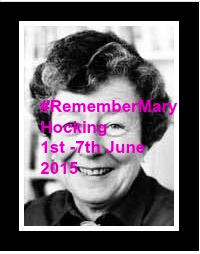
Are You Ready for Mary Hocking Week?

#Remember Mary Hocking

I discovered Mary Hocking last year, thanks to Heavenali‘s Mary Hocking Week. So, of course, I was keen on joining when I saw she was going to do another week this year.

Last year I read the wonderful The Very Dead of Winter. This year I will read Letters From Constance, which I first discovered a while back on Danielle’s blog here.

Letters From Constance

Here’s the synopsis should anyone be interested in reading along:

In 1939, as they leave school, Constance and Sheila vow to keep in touch. Posted to Ireland in the WRNS, Constance marries Fergus, a gregarious Irishman. Before long, stifled by domesticity and motherhood, she envies Sheila, writing poetry and married to the fiercely creative Miles. Gradually, however, a different reality emerges, for Constance has unacknowledged talents of her own, while Sheila’s public success is bought at great personal cost. From the war to the 1980s, Constance writes to Sheila of her everyday hopes and sorrows, and through her we learn much of Sheila’s gallantry and courage. We learn, too, of the social and political developments that challenge and shape her values, until finally outside events come too close and the fragile balance of Constance’s own world is threatened.

There are many Mary Hocking novels that sound amazing but they are not easy to get. Many are out of print. I managed to get a used copy of Letters From Constance.

Mary Hocking Week starts next Monday, so if you want to join, you have to hurry up a bit. Here are the details.

Will you join as well? What are you going to read?

Christine Dwyer Hickey: The Lives of Women (2015)

The Lives of Women

Christine Dwyer Hickey is an Irish novelist and short story writer, who has been awarded many prizes for her work. Her bestselling novel Tatty was chosen as one of the 50 Irish Books of the Decade, long listed for the Orange Prize and shortlisted for the Hughes & Hughes Irish Novel of the Year Award. Last Train from Liguria, was nominated for the Prix L’Européen de Littérature. Her novel The Cold Eye of Heaven won Irish Novel of the Year 2012 and was nominated for the IMPAC 2013 award.

The Lives of Women, her latest novel, is set in an Irish suburb. There are two timelines, one set in the 70s, the other thirty years later, in contemporary Ireland. The chapters set in the present are written in first person. The chapters set in the 70s, in the third. Since both strands are told by Elaine, it felt a bit weird at first, but after a few chapters it made perfect sense. It’s like the person she was in the past was someone else entirely.

I found it interesting that from the first pages on, I felt that Christine Dwyer Hickey was also a short story writer. The prose is so lean, every bit of fluff has been cut. Almost minimalist. I liked that very much and feel like picking up another of her novels. Unfortunately though, this book didn’t quite work for me because she uses a device we know from genre novels – withholding information – and in this case it felt gimmicky.

Elaine returns to Ireland from New York after a thirty year absence. Her mother has died and her father’s caretaker is absent, so she feels, she should come and help him. Early in the novel we’re told that she left Ireland at the age of 16 because of some traumatic event. We’re not told what it was until the final pages. While this technique made the novel suspenseful, I thought it diminished its power.

Apart from this clumsy structure the book has many strengths. Dwyer Hickey captures the claustrophobic feeling of an Irish suburb in the 70s. The women are at home, bored to death, the men just distant shadows. many of the women drink or pop pills. Elaine’s relationship with her mother is very unhealthy. They sleep in the same bed until Elaine is nine and only because a school friend tells other kids about it, does that change. Later, Elaine contracts a near fatal illness, which gives her mother the excuse to smother her. She may not be as extreme but she reminded me quite often of Jeanette Winterson’s mother.

When an American divorcee, Serena, and her daughter, Patty, move into the neighbourhood, tensions rise. We know from the beginning that this divorcee takes Elaine with her when she returns to New York after the tragedy has happened. The way Dwyer Hickey describes the culture clash is so well done. And when reading it and comparing the kind, free-spirited Serena with the frustrated, crazy housewives around her, we start to understand that Elaine might not only be traumatized by what happened but by her upbringing, the stifling atmosphere, the double standards and highly dysfunctional relationships, in which sex is everywhere but too tabu to be spoken about.

Unfortunately this withholding of information, the slow build-up to the final incident, made that incident much less tragic than it really was. And it also overshadowed one of the underlying themes, which I found extremely interesting and well-done. Elaine reinvents herself more than once in this book. She sheds identities like clothes. I liked the idea of a person being able to become someone else, to draw on hidden selves and bring them to light.

This isn’t the glowing review I would have liked to write, but that doesn’t mean I wasn’t glad I read it. If only because it introduced me to an author whose style really appealed to me.

Here’s a small sample of her writing, from the beginning of the novel:

I come down here to try to cure or maybe kill something, in a hair of the dog sort of way, but all I ever do is remember. Days of brooding then follow. Brooding on the past, on the horror of being young: on all the stupidity and ignorance and misplaced loyalty that goes with the territory. Then I start with the thinking. I think about what it was like to be living here at the time. I think about Karl and Paul, about Patty and Serena. About Jonathan. I think about all the others. About my mother and the other mothers. About my father and the other fathers and non-fathers alike. About the unimportance of children and the importance of men. I think about the lives of women.

I want to pick up Tatty next. Has anyone read Christine Dwyer Hickey’s books?


Eva Rice: The Lost Art of Keeping Secrets (2005)

Lost Art of Keeping Secrets

When seeing The Lost Art of Keeping Secrets referred to as pastiche, I was wondering when historical fiction actually crosses the line. Was it because Eva Rice did not only write a novel set in the 50s but a novel that sounded very much like some of the books written in the 40s and 50s? I suppose so. I haven’t read Dodie Smith’s I Capture the Castle, but it seems obvious that there are similarities. Be it as it may, Eva Rice has written a truly charming book.

The story starts in medias res with our narrator, Penelope, an eighteen year-old girl and aspiring writer, being whisked off in a taxi by Charlotte. Charlotte is Penelope’s age, but more self-assured, more stylish, outspoken, and exuberant. Before this day the two girls have never met, but, as the novel will slowly unfold, there are more connections than they see at first.

Charlotte begs Penelope to come with her to tea at Aunt Clare’s and meet Harry, her cousin. A little later they are sitting in Aunt Clare’s messy sitting room, eating scones, drinking tea and Penelope falls under the charm of these three people. They are all eccentric, speak their mind and either say hilarious or almost outrageous things. While Penelope is rather shy, she starts to swim like a fish in water in this stimulating company. Their first afternoon together marks the beginning of a great story and a wonderful friendship.

While the early chapters introduce us to Charlotte’s world, the following will take us to Penelope’s home and introduce us to her mother and her younger brother and the house they live in – Milton Magna Hall, called Magna by its inhabitants. Penelope and her family live in this huge, medieval house in genteel poverty. Her father died in WWII. Her mother, a stunning beauty, who’s only 35 years old, is prone to sudden crying fits and utterly sensitive to everything. Her brother, Inigo, doesn’t care about anything else but pop music. Like Charlotte and Penelope he loves Johnnie Ray, but as soon as his uncle from America introduces him to a new singer, Elvis Presley, who is still unknown in the UK, he only cares for Elvis. Their house, Magna, is as much a character as the people. I love stories that center on big old houses. Magna is such a house but it never sounded beautiful.It sounded rather dreadful, a monstrosity really, and a trap for those living inside. It certainly was one big, money-sucking machine. Sure, it was grand, with its huge galleries and halls, but since they had no money, it was cold, draughty and damp. The furniture had seen better days. Visitors were impressed, but, as Charlotte remarked, they didn’t have to live there.

The Lost Art of Keeping Secrets is a s much a book about the beginning of pop music, youth culture, the young Brits’ infatuation with everything American, as it is about coming of age, the definite end of an era, and new times. It’s a love story and a story of new beginnings but, more than anything, it’s a story of friendship.

The novel moves between a few distinct places,—Aunt Clare’s sitting room, the huge mansion Magna, and public places like The Ritz, where they party and listen to their favourite music.

Some of the most wonderful episodes show the four young people together, drinking champagne and enjoying each others company. My favourite scene is almost surrealist. It features Penelope and Harry together in the huge large gallery at Magna, lying on their backs, drinking, talking, and watching Harry’s doves – he’s a magician – fly around the room.

Books like these are often bitter-sweet, but this one is more sweet than bitter— in spite of some tragedy towards the end—because there are so many opportunities and hope waiting for the characters.

The Lost Art of Keeping Secrets is a smart, charming, exuberant book, filled with witty, endearing and eccentric characters, whose sharp insights, clever repartee, and uncrushable optimism are a delight to follow. If you need some intelligent cheering up—this is the book for you.


J. L. Carr: A Month in the Country (1980)

A Month in the Country

It’s not easy to write about A Month in the Country, but it’s easy to a summarize it. It’s 1920 and Tom Birkin, a man in his late twenties, has come to Oxgodby where he’s hired to spend the summer uncovering a medieval mural in the church. Birkin is a man who feels unmoored. He has a facial twitch, a legacy from his time in the trenches, no money, and his wife ran off with another man. Coming from London to the north of England, he feels like he’s in enemy territory at first, but the stationmaster’s warm welcome and the offer of friendship from the archeologist Moon, a veteran like Birkin, make him soon feel at home. His keen sense of detail and his fondness of things, people, flora and fauna, soon help him to recover. Birkin enjoys these blissful, enchanted moments in the country and even falls in love. As the days go by, he becomes more and more part of the village life, uncovers the stunning wall-painting, and makes friends. The book ends with the first days of autumn and a dramatic, tragic twist, which illustrates that even really awful things we experience are often not as fatal as our own hesitations.

That rose  . . . Sara van Fleet . . . I still have it. Pressed in a book. My Bannister-Fletcher, as a matter of fact. Someday, after a sale, a stranger will find it there and wonder why.

In a review, I read that this was an account of happiness, which puzzled me. Yes, we are told that Birkin was happy, but we never feel it. Or rather, I never felt it, because the narrator of this story isn’t the young Birkin, but the old Birkin looking back. And we also know, early on, that his life didn’t turn out happy and that he mourns not only this summer but a whole way of life that’s long gone in 1978.

She lived at a farmhouse gable end to the road – not a big place. Deep red hollyhocks pressed against limestone wall and velvet butterflies flopped lazily from flower to flower. It was Tennyson weather, drowsy, warm, unnaturally still. Her father and mother made me very welcome, both declaring they’d never met a Londoner before.

A Month in the Country is a stunning book. Not so much for the story but for the fine observations and subtle descriptions. And most of all for the structure and use of time. There’s very little backstory clogging up the story; only a few sentences, inserted here and there, paint a full picture of what happend before. What’s masterful as well is that not only does the narrator look back but he writes about himself in 1920 and how he did then look back at his time in the trenches. This really gives away the main theme of the novel – the passing of time and the fleetingness of life.

Ah, those days . . . for many years afterwards their happiness haunted me. Sometimes, listening to music, I drift back and nothing has changed. The long end of summer. Day after day of warm weather, voices calling as night came on and lighted windows pricked the darkness and, at day-break, the murmur of corn and the warm smell of fields ripe for harvest. And being young.

If I’d stayed there, would I always have been happy? No, I suppose not. People move away, grow older, die, and the bright belief that there will be another marvellous thing around each corner fades. It is now or never; we must snatch at happiness as it flies.

The painting Birkin uncovers illustrates this perfectly. It is more than just a story element, it’s a symbol. It’s magnificent but has been covered up. Nobody knows why. It’s a painting of a man at the height of his art but it’s not finished, Yet, you can see that he wasn’t an old man. The brushstrokes are too vigorous. So why did he stop? Birkin uncovers it all in the end

Death and the passing of time are ever present in the book and all the joy that Birkin experiences—the Sunady meals with the stationmaster, the strong tea in a tea room, his early morning talks with Moon, the funny outings with the villagers, talking to the woman he’s in love with— it all speaks of bliss but it is tainted with sorrow. Carr achieves this through authorial intrusions, which never allow that we stay in the moment, but always remind us that the moment is long gone and the man telling us about it is looking at things past.

I liked him from that first encounter: he was his own man. And he liked me (which always helps). God, when I think back all those years! And it’s gone. It’s gone. All the excitement and pride of that first job, Oxgodby, Kathy Ellerbeck, Alice Keach, Moon, that season of calm weather—gone as though they’d never been.

I can’t praise this novel enough and would really like to urge everyone to read it. It’s not only a joy to read but illustrates what great writing can do. It will be on my “best of list” at the end of the year and I might even add it to my all-time favourites.

I’ll end with one of my favourite quotes

It would be like someone coming to Malvern, bland Malvern, who is halted by the thought that Edward Elgar walked this road on his way to give music lessons or, looking over to the Clee Hills, reflects that Housman had stood in place, regretting his land of lost content. And, at such a time, for a few of us there will always be a tugging at the heart— knowing a precious moment gone and we not there.

I first read about A Month in the Country on Max’s blog here and knew right away it would be a book for me.

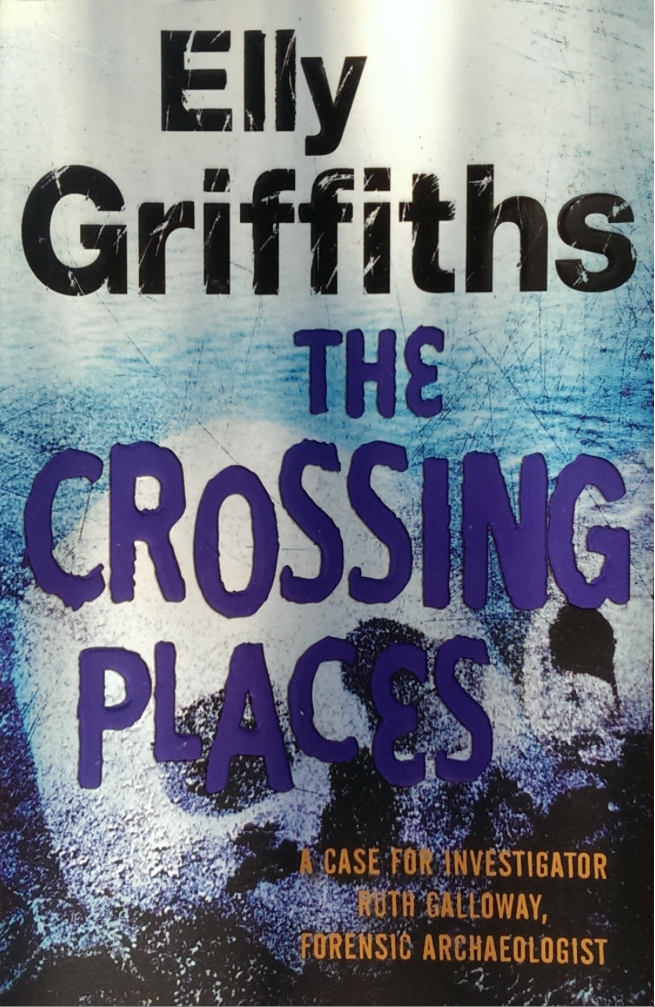
Elly Griffiths: The Crossing Places (2009) Ruth Galloway 1

The Crossing Places

Elly Griffiths’ The Crossing Places is the first novel in her Ruth Galloway series. Ruth Galloway is a forensic archaeologist, who lives and works in Norfolk. Ever since she participated in a dig ten years ago, she’s loved the marshes and is, since then, renting a cottage that overlooks an empty, wild landscape, and the North Sea.

This is a novel with a leisurely pace and Elly Griffiths takes a lot of time to introduce Ruth Galloway. I liked her right away. She’s a single woman, a bit on the clumsy side, and not exactly slim or very attractive. But that doesn’t make her a beggar when it comes to men. She doesn’t need anyone to feel whole and rather lives alone than in the wrong company. This was one of many character traits that made me like her instantly. And of course she’s an expert in her field.

The second main character in the series, DCI Harry Nelson, is likable in a gruff kind of way. The two complement each other rather nicely.

They first meet when human bones are discovered on the marshes and Nelson asks Ruth to identify them. Ten years ago, a little girl went missing. She was never found, but Nelson never gave up hope that they still might find her one day. Naturally, he assumes that these are her bones, but Ruth tells him they are over two thousand years old.

Shortly after this another small girl goes missing and Ruth is threatened. It looks as if she’s somehow roused the murderer and got in his way.

If, like me, you love your crime novels with a strong sense of place, then Elly Griffiths’ Ruth Galloway series is for you. It’s one of those, in which the setting is a character in its own right. The saltmarshes, the weather, the loneliness of the place, and the fauna, are all intricate parts of this book. But that’s not all this atmospheric book has to offer. Ruth is a great character and I’m curious to see how she will develop. Since she’s a forensic archaeologist, we learn a few things about archaeology, which I found interesting, although the way we learn about it, is a tad clumsy at times. But that’s really my only reservation.

I thoroughly enjoyed this book. It’s not edge-of-your-seat gripping and, in spite of the many suspects, I thought it was pretty clear who was the bad guy, but that didn’t diminish the story one bit.

I have to admit that I’m partial to Elly Griffith’s choice of setting. I’ve been in Norfolk and loved it and the way she captures it is great.

I discovered the novel thanks to a review on Crimeworm. If you love crime and mystery it’s worth checking out her blog. You’ll discover some great books.