Dickens in December – Wrap up

Dickens button 01 resized

It’s a sure sign that the year is ending when we publish more wrap up posts than original posts. The end of 2012 also marks the end of Dickens’s bicentenary and of Delia and my Dickens in December event. It’s time to thank all of those who have participated and have joined in the readalong or reviewed books and movies. The links below show that the event was quite a success. I enjoyed it a lot and am glad that I have finally read one of Dickens novels. It will not be my last. A special thank you to my co-host Delia.

Thank you once more and I hope you enjoyed  it as well.

Intro Delia

Intro Caroline

Intro Post (Resistance is Futile)

Intro Post (Leeswamme’s Blog)

Intro Post (50 Year Project)

Intro Post (Rikki’s Teleidoscope)

Intro Post (Page 247)

Intro (Books Speak Volumes)

Dickens in December Begins Today (Beauyt is A Sleeping Cat)

Intro (Too Fond)

Dickens in December Start (Postcards for Asia)

Some Dickens for December (Kaggy’s Bookish Ramblings)

Giveaways Delia – Caroline

Classics Club December Meme – A Christmas Carol (Too Fond)

Great Expectations (Fanda Classiclit)

Bleak House (The Argumentative Old Git)

My Favorite Dickens Quote (On the Homefront)

Great Expectations (My Reading Journal)

A Tale of Two Cities (Babbling Books)

Dickens in December – A mixed bag (Lizzy’s Literary Life)

The Muppet Christmas Carol (Rikki’s Teleidoscope)

Dickens Project (Reader Woman)

A Christmas Carol – Jim Carrey Version (Beauty is a Sleeping Cat)

Great Expectations mini series (Fanda Classiclit)

The Life and Adventures of Nicholas Nickelby (2001) — (Postcards from Asia)

Oliver Twist- The Movie (Leeswamme’s Blog)

The Chimes (The Argumentative Old Git)

Dickens on Screen: David Copperfield, The old Curiosity Shop, Great Expectations (Postcards from Asia)

The Old Curiosity Shop (Tabula Rasa)

Great Expectations (Beauty is a Sleeping Cat)

A Tale of Two Cities (50 Year Project)

Three Detective Anecdotes (Cceativeshadows)

Havisham and Bleak Expectations (Lizzy’s Literary Life)

Blackadder’s A Christmas Carol (Rikki’s Teleidoscope)

Great Expectations (Lynn’s Book Blog)

A Christmas Carol BBC Version (Rikkis’ Teleidoscope)

The Pickwick Papers (Tony’s Reading List)

A Christmas Carol (Surgabukuku)

Great Expectations (50 Year Project)

A very short review A Tale of Two Cities (Leeswamme’s Blog)

Three Short Stories (Postcards from Asia)

A Tale of Two Cities (Tabula Rasa)

Dodger by Terry Pratchett and Dickens by Peter Ackroyd (Tabula Rasa)

Hard Times (Vishy’s Blog)

The Old Curiosity Shop (Kiss a Cloud)

Readalong participants

50 Year Project (TBM)

Dolce Bellezza (Bellezza)

Kaggsy’s Bookish Ramblings

Polychrome Interest (Novia)

Postcards from Asia (Delia)

The Argumentative Old Git (Himadri)

The Things You Can Read  (Cynthia)Questions and Answers

The Things You Can Read Student Comments

The View From the Palace (Shimona)

Lost in the Covers (Elisa)

Leeswamme’s Blog (Judith)

Lynn’s Book Blog

Love. Laughter and a Touch of Insanity (Trish)

A Work in Progress (Danielle)

Sandra – please see comments section

Tabula Rasa (Pryia)

Slightly Cultural, Most Thoughtful and Inevitably Irrelevant (Arenel)

My Reading Journal (Ann)

Vishy’s Blog (Vishy)

Resistance is Futile (Rachel)

Too Fond

Beauty is a Sleeping Cat (Caroline)

Best Books 2012

Last year I had a hard time to narrow down the choices and ended up with a very long list. This year it was far easier. All in all it wasn’t such a great reading year. Still, there were 13 novels and 2 non-fiction books I found outstanding.

I added the links to my posts and a quote from my reviews.

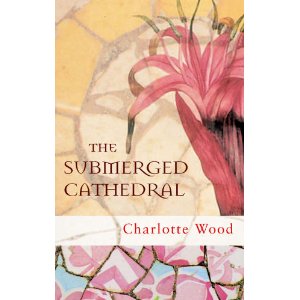
Charlotte Wood – The Submerged Cathedral

Australian author Charlotte Wood’s lyrical novel The Submerged Cathedral caught me unawares. Reading it felt at times like daydreaming. It has a hypnotic and very gentle quality that isn’t easy to put into words. It is highly symbolical and complex but still down to earth. The voice and choice of themes are so unusual, I’m really glad I discovered it on Kim’s blog last year (here).
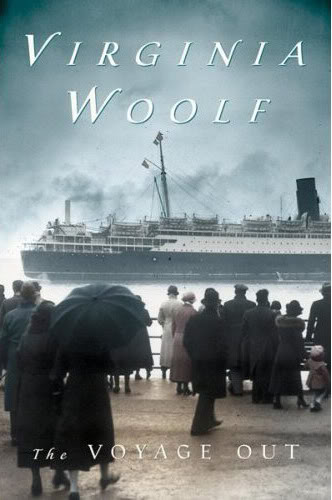
Virginia Woolf – The Voyage Out

Reading The Voyage Out makes me realize once more what I like the most about her writing. Yes, the style, especially in the later novels, is fantastic, with its flow of interior monologue, the way she uses time and how she describes the passing of time. But there is something else that stayed with me forever since the day I have read Mrs Dalloway. Her writing has an exhilarating quality, an effervescent intensity of feeling that made me think of a German expression which I adore: “Champagner Wetter” or “Champagne weather”. Champagne weather is used to describe a very fresh but sunny spring morning on which the air is still cool, nature has returned to life, the first tentative, tiny leaves appear, the first blossoms can be seen. It’s already a bit warm in the sun but still chilly in the shade. It’s like drinking the first glass out of a freshly opened, nicely cooled Champagne bottle. It bubbles and goes to your head. Virginia Woolf’s novels are full of scenes conveying the mood of champagne weather.

Robin McKinley – Chalice

What I loved so much about this book is the atmosphere. Sweet and floating, like the scent of beeswax candles. The descriptions are beautiful and following Marisol’s journey has something enchanting and almost hypnotic. The world building is exquisite. I was there in Willowsland the whole time. And Marisol is such a great character, so real. She is very insecure and has to find her way in a hostile environment but her strength and her love for her home guide her. I liked how she lived, on her own, outside of the Great House or the village, only with her bees whom she treats like pets.

Antonio Tabucchi – The Edge of the Horizon

I liked it because it’s a very melancholic story and the descriptions are wonderful. Instead of taking a trip to Lisbon it was like taking a trip to one of those typical old Italian towns with the narrow and steep alleys. The book has many descriptions of quiet moments like this one towards the end:

“When the night began to fall, he turned on the radio without turning on the light. He was smoking in the dark while looking out of the window and observing the lights in the harbor. He let time slip away. He enjoyed listening to the radio in the dark, it gave him a feeling of distance.”

Helen Dunmore – Zennor in Darkness

Dunmore conveys the soft light of the Cornish coast, the beauty of the lovely landscape, the slow pace of life. This softness is mirrored in the way she changes the point of views, blurring the edges, softening the transitions, so that it feels as if one person’s consciousness and interior monologue, was flowing gently into that of another character. Reading it made me dreamy and I felt as if I was watching a water-color come to life. I read this book very slowly. I could have finished it in a few evenings but I put it aside frequently to make it last.

Amor Towles – The Rules of Civility

This is the reason why I always look forward to new releases because ever so often you discover a new book and simply enjoy it to the extent of wanting to start all over again after finishing it. This doesn’t always have to be a book that will enter the literary canon, it can just be a novel that makes you spend a few extremely entertaining hours. Like a well-made movie.

Charles Dickens – Great Expectations

Great Expectations offered everything I expected from Dickens and so much more. The only thing I could criticize is that it was predictable and that there were a lot of coincidences which didn’t seem all that realistic but who cares. There is so much in this novel to like that I can easily forget its flaws. The characters were, as was to be expected, quirky and over-the top, much more caricatures than portraits, but drawn which such a wonderful imagination that I loved each one of them.

Sylvia Toswnsend Warner – Lolly Willowes

I’m glad I discovered this wonderful novel. It has freshness and vivacity, is clever and witty and the descriptions are detailed and atmospheric, the portraits of the society and the people are true to life and Lolly is a very endearing character, an illustration of the importance of “a room of one’s own” and the right of women to live an independent life, even outside of society and without a man. It’s certainly one of the rare novels in which a being considered to be a useless burden on society shows that she doesn’t need society in order to live a truly happy and  fulfilled life.

Guy de Maupassant – Bel Ami

After having read Bel-Ami, I think that he might very well be one of the best writers in any genre. It’s one of the most perfect books I’ve ever read. I couldn’t name one single flaw. As much as I like Balzac there is always this and that, minor things, sure, but still, some imperfections. Not with Maupassant. What also surprised me is that this book could have been written nowadays. The society has changed, the world has changed but the way he writes about love, sex, power, money, careers… It’s outspoken and modern.

Louise Penny – Still Life

If I could I would move to Three Pines, the small fictional village, located a few hours from Montreal, in rural Québec. It’s a small village that sounds as if it was a place where time stands still and reminded me a lot of Elizabeth Gaskell’s Cranford. Old cottages face a small village center and are surrounded by old trees and lush gardens. The place is very green and picturesque, the descriptions of it atmospheric and full of tiny details of the season. It’s the end of autumn, dead leaves are falling, it rains and the temperature is slowly dropping. A storm will come and soon it will be winter. Before the crime is solved, snow will begin to fall and a lot of the investigation will have taken place in front of a cozy fire.
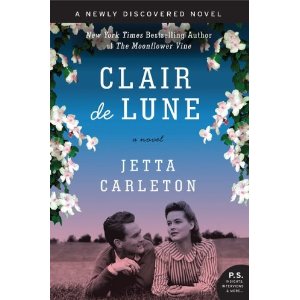
Jetta Carleton – Clair de Lune

I absolutely loved this book. I tried to slow down while reading but it was pointless, I just rushed through the pages and when I turned the last one I was quite sad. It contains such a lot of intense scenes and the most uplifting ending since I’ve read Nada last year. Since the largest part of the book is set in spring, there are a lot of wonderful outdoor scenes in which the three friends walk in the streets, stand in the rain or just stroll through the fog. There is a breathlessness and joy of life in these pages that is exhilarating. It renders the enthusiasm of young people for whom everything is a discovery, be it literature, art, music, love or friendship. At the same time there is the anxiety about war and the knowledge that the freedom and carefreeness they experience is going to end.
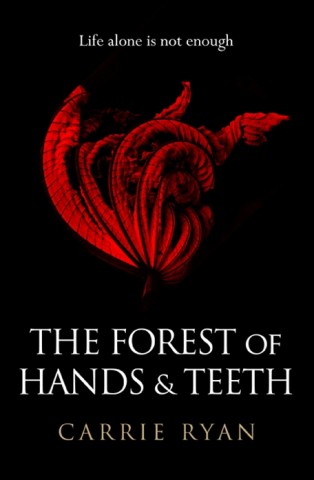
Carrie Ryan – The Forest of Hands and Teeth

I never felt like reading a zombie novel before and if it hadn’t been for Sarah’s intriguing review I wouldn’t have tried this book but I’m glad I did. It has a very special and haunting atmosphere, very captivating and oddly enthralling. The word zombies, is never used, by the way, but it’s clear from the descriptions. The Forest of Hands and Teeth is part I of a trilogy. I won’t rush to read part II and III right now but I feel like reading them some day.

Edda Ziegler – Forbidden – Ostracized – Banned

Edda Ziegler’s fantastic book on German women writers under National Socialism Verboten – Verfemt – Vertrieben (Forbidden – Ostracized – Banned) was easily my favourite read this year. I hope that some English language editor will buy the rights to this book and have it translated. It’s an introduction to the most prominent German women writers under National Socialism, a detailed historical account of the times and an analysis of publishing history.
Barbara DeMarco-Barrett

I didn” get a chance to review this yet but if you are looking for a truly original genre blend – memoir + book on writing, this may be the book for you. Or if you are one of those who keep on saying “I would write if I only had the time” – this may be for you as well. An inspiring, motivating and really lovely book on writing and the life of a writer.

Charles Dickens: Great Expectations (1861)

In Great Expectations the orphan Pip tells the story of his life. He tells us how, after having lost his parents as a small child, he was brought up “by hand” by his mean and quarrelsome sister who hit him and her husband. How his sister’s husband Joe and Biddy the teacher were the only kind people in his life. How he met a convict and helped him. How he was invited to the excentric and melancholy Miss Havisham to play at her house. How he saw the wonderous house for the first time and met the beautiful Estella who would be the love of his life. How being introduced to Miss Havisham and Estella made him long for another life and feel ashamed of his own. How finally he was made rich and hoping for great expectations from an unknown benefactor. And how in the end things turned out in a very different way.

Great Expectations offered everything I expected from Dickens and so much more. The only thing I could criticize is that it was predictable and that there were a lot of coincidences which didn’t seem all that realistic but who cares. There is so much in this novel to like that I can easily forget its flaws. The characters were, as was to be expected, quirky and over-the top, much more caricatures than portraits, but drawn which such a wonderful imagination that I loved each one of them.

I also liked the atmosphere, how with a few words, a few sentences he captures a mood, a season, the weather, a location, a house, a street. All his descriptions are highly evocative and one sees every little detail.

There were many uncanny, witty and captivating scenes and I would have a hard time picking favorites. I liked all the chapters at Miss Havisham’s house. The sorrow and grief which had made the time stand still in that place and entrapped its owner for eternity, gave the book a very gothic feel.

But I also loved all the scenes including Mr Jagger’s clerk Wemmick and his father. They made me chuckle very often. They are such an endearing couple.

To do this book justice and write properly about it, I would need more time which I don’t have. Maybe I will return to it next year and write something a bit more detailed.

For now I would just like to say, I loved it for many reasons but what stood out the most is that Dickens comes across as a writer with a huge heart who can even  make many of his villains endearing.

Dickens button 01 resized

Announcing German Literature Month II – November 2012

I’m so pleased that I can finally announce that German Literature Month is returning. Mark November in your calendar and join Lizzy and me for the occasion.

While we focused on countries last year, this year we are structuring the month around genres and literary formats.

Week 1 (November 1-7) Novellas, plays and poems
Week 2 (November 8-14) Literary Novels
Week 3 (November 15-21) Genre Fiction – Crime, Fantasy, Horror, Romance
Week 4 (November 22-30) Read as you please

We chose that sequence so that Judith’s previously announced Bernhard Schlink Week (November 11-17) would span both literary novels and genre week. So if you read something by Schlink this month, you can partake in two blogging events for the price of one. Cunning, don’t you think?

2012 is also the bi-centennial of the birth of the Brothers Grimm. We can’t let it pass without a Brothers Grimm Readathon. So we’ve put that in the calendar from 22-26 November.

My Literature and War Readalong of Gert Ledig’s The Stalin Front will bring the month to a close on the 30th.

I’m looking forward to another wonderful month with lots to read, discuss and discover. Please join us.

Looking for inspiration? Why don’t you browse through last year’s discussion or the German Literature Month 2011 page. You never know what you’ll be inspired to pick up.

Like last year there will be giveaways. Additionally I’m planning on doing a series of introductory posts during October.

How Gruesome Does A Realisic Account Have To Be? – On Jeanette Winterson’s The Daylight Gate (2012)

A visit to a book shop on Friday evening led me to Jeannette Winterson’s latest book The Daylight Gate. It was in the fantasy section and from the description I gathered it was a book on the trial of the Lancashire Witches in 1612, the most famous of the English witch trials. Why this book was in the fantasy section wasn’t entirely clear to me as witch trials are a historical fact and hardly fantastic. Maybe it was because of the way it was written?

I’ve always been interested in the topic of the trials of witches. Interested and horrified. And I often pick up novels on the subject. In the past I’ve read Eveline Hasler’s amazing but untranslated Anna Göldin. Letzte Hexe (Anna Göldin. Last Witch) on the last witch trial in Switzerland, in 1782. The way the book was told is amazing because it reads like an old trial report. It’s sober and very impersonal which created an eerie feeling of realism. Maryse Condé chose an entirely different approach for her I, Tituba, Black Witch of Salem – Moi Tituba, sorcière noire de Salem. That’s a novel I didn’t only find fascinating but really loved. It’s tragic but beautiful as well. A third novel which many people like but I found dry and unappealing was Erika Mailman’s The Witch’s Trinity.

I was keen to find out how Jeanette Winterson would treat this subject. It seems that content-wise The Daylight Gate is very close to Robert Neill’s Mist Over Pendle. Pendle Hill in Lancashire was said to be the home of witches. While there may be a similarity content-wise, there certainly is none in the execution.

Maybe the fact that it was in the fantasy section misled me. While I didn’t expect a fantasy novel as such, I most certainly wasn’t prepared for something this gruesome. This was by far the most gruesome book I’ve ever read. It’s really not for the faint of heart and it literally made me sick. For someone who is used to read accounts on war this is an intense reaction and it really made me wonder if the book had to be this gruesome to be realistic? Witches are frequent figures in fantasy novels and fairy tales. They can be black or white but some romantic ideas may often be tied to them. Maybe Jeanette Winterson wanted to prevent any idealization or romantic notions. While there are a few instances of magic in the novel – mostly linked to the figures of John Dee and Edward Kelley – the focus is on fanaticism. There is nothing romantic in women and men being persecuted by zealots. Women and Catholics alike were hunted by King James’ henchmen. King James, a fervent  and fanatic protestant, who believed he was attacked by witches, hunted and executed numerous men and women. And had them tortured. And this is the gruesome part, as the torture scenes are described in great detail.

Not only are we served detailed descriptions of torture but of incest and rape as well. Children are sold to their own father. Many a poor woman’s only chance at survival is to sell her body. Often they received not only food but many negative things in exchange. They got pregnant or contracted a disease. The scenes in the dungeons are hard to take as well. The dirt, the festering and oozing wounds, the stink…

To call the world of The Daylight Gate bleak would be an understatement. This is a dark, very dark and disturbing book. Finishing it felt like coming up for air after having been under water and deprived of oxygen.

Was there anything to like in this book?  Yes, I liked the story of Alice Nutter, a rich woman who acquired her fortune through the invention of a magenta dye. An independent and strong woman. Beautiful and free. She was convicted together with 12 other women and men. She seems to serve as proof that it wasn’t about witchcraft but that at the core of those trials was hatred. Hatred against poor people and women.

While I see why Jeannette Winterson chose this approach, I’m not sure it had to be this gruesome. A little less show but tell would have been my preference here. If we had read “He was emasculated” would we not have gotten the picture? Did we need to read how it was done in a page long, detailed description? We get a full blow. No room for romantic notions here, fanaticism and ugliness are laid bare.

To be honest, I could have done without reading this. As well written as it was, as much as I was fascinated by the story of Alice Nutter, I cannot understand how a writer can let loose such utter ugliness. If you know and like Jeanette Winterson, just bear in mind, this might be her most disturbing work.

What do you think? How gruesome should a realistic account of torture and pain be?

Mary Lawson: The Other Side of the Bridge (2006)

At the end of my introductory post to the Canadian Book Challenge I asked for recommendations and pburt mentioned how much she liked Mary Lawson’s books. That’s how I decided to read The Other Side of the Bridge.

We cannot experience everything in our life. Especially not the past, nor a way of life which is very different from our own. Luckily one of the many functions of literature is to help us experience other times and places. Reading this novel makes it possible to travel back in time, to a place and a way of life long gone; rural Ontario between 1930 to 196o, a harsh inhospitable place which drives strangers and young people away.

The novel tells two parallel but linked stories and moves back and forth in time. It starts in the 30s with the story of the brothers Arthur and Jake. Arthur is the reliable one. Stocky and solid. He wants to become a farmer just like his father. Jake who is much younger, is the good-looking one, the favourite of his mother. But Jake is also inherently mean. A manipulative bully with a sadistic streak which he manages to hide behind his good looks and alleged charm. Only Arthur seems to know about his brothers true nature. One day, on a bridge, fate strikes and sets in motion a tragedy which cannot be stopped anymore.

The second story line starts in the 50s and is told from the point of view of young Ian, the son of the local doctor. Because he is secretly in love with Laura, Arthur’s beautiful wife, he offers to help Arthur every Sunday on the farm.

The blurb states that the novel bears a resemblance to 19th century novels of provincial life. That’s not a bad comparison. But more than that it also reminded me of Greek myths in which you can see the doomed heroes move towards their destruction. The worst thing in the myth of Oedipus for example isn’t so much that he sleeps with his mother and kills his father – although that is certainly very bad – but that his father thought he could prevent this tragedy which had been predicted and through this very attempt at preventing it, he finally provokes it. While The Other Side of the Bride is no story of incest, it has a similar dynamic as Oedipus’ story. There will be a tragedy. We know it.  And no matter how much the people try to prevent it, it will happen anyway. But other than in greek myths, and that’s where Mary Lawson meets Ian McEwan, there is atonement too.

Everything that I said so far has more to do with the plot. The story tells a tragedy and how it happens but that is just one layer of the book and not even the one I liked best as I found it a bit too predictable. What I really liked about this book is the writing which is amazingly beautiful and contains many passages like this one:

It was September, the worst time of the year as far as Arthur was concerned – endless months of school ahead, cooped up in one stuffy schoolroom at a too-small desk, while outside the maple flamed red and gold and the air was clear and pure as spring water. Inside was the leaden boredom, outside was the sharp tang of wood smoke and the urgency of shortening days. You could smell the winter coming. You could see it in the transparency of the light and hear it in the harsh warning cries of the geese as they passed overhead. Most of all you could feel it. During the day the sun was still hot but as soon as it dipped down behind the trees the warmth dropped out of the air like a stone.

Somewhat later in the book there is this passage in which Ian and his friend Peter sit together

They sat on in silence, or almost silence; if you listened closely you could just hear a faint thrumming from thousands of wings. Beyond the dragonflies the sun was sinking slowly, casting its rays across the lake, and on the other side, everything, as far as the eye could see, was slowly dissolving into the haze.

Ian thought, If I love to be a hundred years old, I always remember this.

Apart from the central story of a tragedy, The Other Side of the Bridge is an excellent depiction of the Canadian home front during WWII. It shows the way Canada was affected by huge losses, how most of the young men didn’t return and many of those who did were maimed for life. The book would have been a worthy candidate for my readalong.

Through Ian’s story it is also a coming-of age tale and a look at the life of a country doctor in an isolated place like rural Ontario where the winters are so incredibly harsh that most foreigners and many natives flee the place.

I must admit I didn’t connect with the characters and their stories, I didn’t feel I could identify with any of them, but I’m glad I discovered Mary Lawson. Her writing is beautiful and the way the people and the place come to life is astonishing. They emerge from the pages and seem to be walking around before your very eyes. The way she writes about Canada is very nostalgic and at times I was wondering if the writing wasn’t to a large extent fuelled by homesickness as she seems to be living in England by now. I any case I want to read her first novel Crow Lake soon.

This review is my first contribution to the Canadian Book Challenge 6

The Canadian Book Challenge 6

I was hoping to find a Canadian Literature Challenge. These days I’m very interested in literature written in English outside of the UK and the US. The Canadian Book Challenge seemed just the thing I was looking for. I came across the challenge on Gavin’s blog Page 247.

The host is John Mutford from The Book Mine Set. His blog is dedicated to Canadian literature. If you are interested here’s the sign up post with all the details you need to know. In theory the idea is to read 13 books. It sounds like a lot but interpreting what John writes I would say it doesn’t seem as if you must reach that number. Aim for it, if you read less, it’s not the end of the world, if you read more, all the better.

I have a lot of Canadian literature on my book piles and have read quite a few authors in the past. Authors writing in English and in French. I asked and if you’d like to join, you can choose books written in English or French as long as the author or the topic is Canadian.

I know that I usually do not stick to my book lists but I still keep on making them. Possible choices for this challenge are

A Map of Glass by Jane Urquhart. Urquhart isn’t an easy writer but she is a fascinating one who writes beautifully.

Margaret Atwood’s Lady Oracle. Atwood is another immensely fascinating author I have meant to return to. I loved Cat’s Eye and Surfacing and some of her short stories.

The Birth House by Amy McKay. I haven’t read this author yet but everyone who read this novel was impressed.

The Stone Angel by Margaret Laurence is a book I discovered not too long ago on Danielle’s blog (A Work in Progress). It sounded like another Canadian must-read.

I would like to read the one or the other novel by Nancy Huston and some other Canadian authors writing in French.  Since I recently discovered Louise Penny’s Canadian crime series, I’ll certainly read one of those as well.

Are you joining? Do you have any Canadian literature suggestions?