The Canadian Book Challenge 6

I was hoping to find a Canadian Literature Challenge. These days I’m very interested in literature written in English outside of the UK and the US. The Canadian Book Challenge seemed just the thing I was looking for. I came across the challenge on Gavin’s blog Page 247.

The host is John Mutford from The Book Mine Set. His blog is dedicated to Canadian literature. If you are interested here’s the sign up post with all the details you need to know. In theory the idea is to read 13 books. It sounds like a lot but interpreting what John writes I would say it doesn’t seem as if you must reach that number. Aim for it, if you read less, it’s not the end of the world, if you read more, all the better.

I have a lot of Canadian literature on my book piles and have read quite a few authors in the past. Authors writing in English and in French. I asked and if you’d like to join, you can choose books written in English or French as long as the author or the topic is Canadian.

I know that I usually do not stick to my book lists but I still keep on making them. Possible choices for this challenge are

A Map of Glass by Jane Urquhart. Urquhart isn’t an easy writer but she is a fascinating one who writes beautifully.

Margaret Atwood’s Lady Oracle. Atwood is another immensely fascinating author I have meant to return to. I loved Cat’s Eye and Surfacing and some of her short stories.

The Birth House by Amy McKay. I haven’t read this author yet but everyone who read this novel was impressed.

The Stone Angel by Margaret Laurence is a book I discovered not too long ago on Danielle’s blog (A Work in Progress). It sounded like another Canadian must-read.

I would like to read the one or the other novel by Nancy Huston and some other Canadian authors writing in French.  Since I recently discovered Louise Penny’s Canadian crime series, I’ll certainly read one of those as well.

Are you joining? Do you have any Canadian literature suggestions?

Spanish Literature Month – July 2012

There have been requests last year and then a rumour started to spread and now it’s official: July is Spanish Literature Month. Stu (Winstonsdad’s Blog) and Richard (Caravana de recuerdos) who co-host this event have organized a watchalong (Carlos Saura) and two readalongs (Juan Carlos Onetti A Brief Life and Enrique Vila-Matas Bartleby and Co.) but if you cannot make them you are free to choose whatever you like. If you want to join, just leave a comment at one of the two blogs. Here’s Stu’s intro post and here the one by Richard.

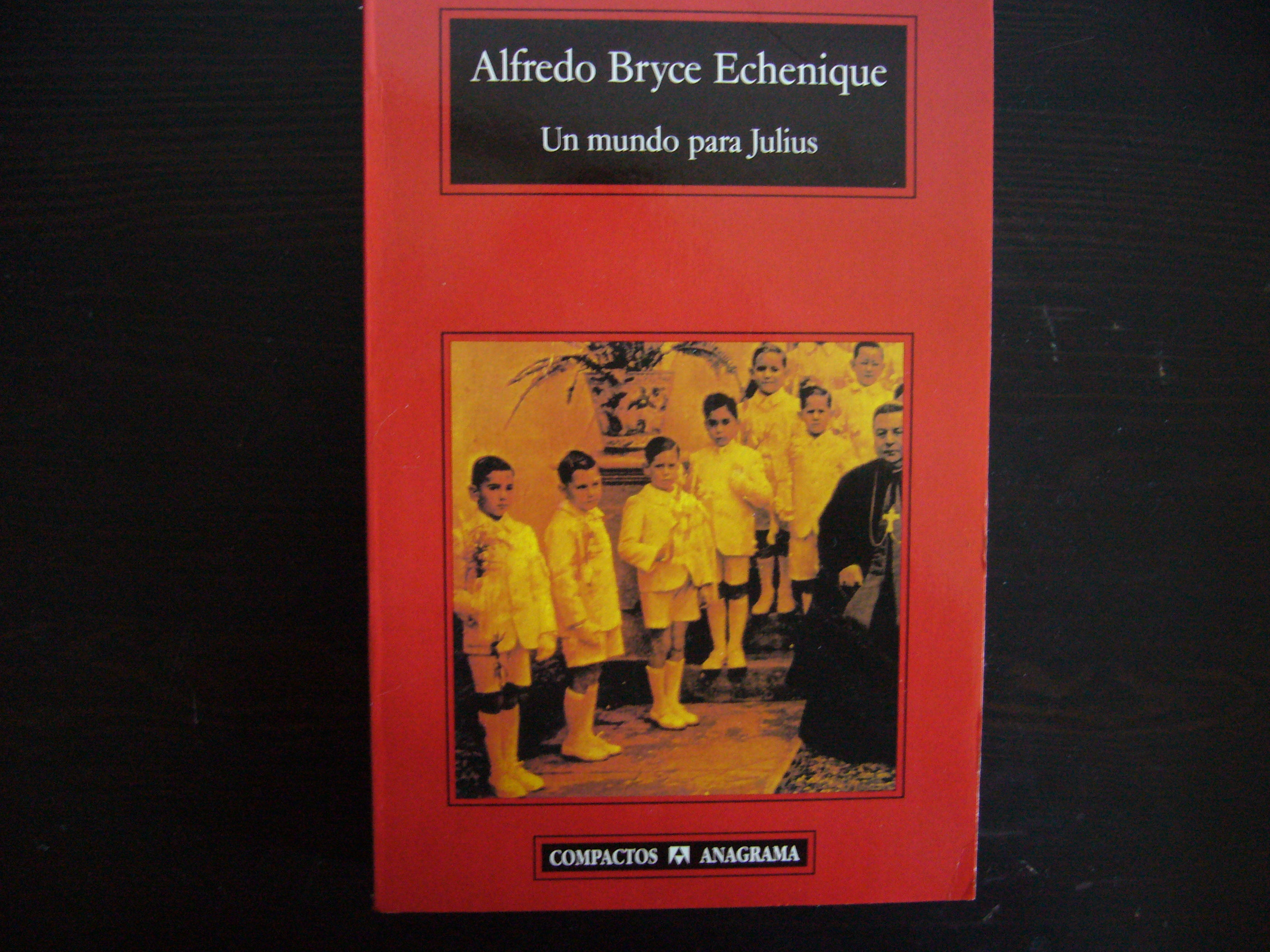
As you can see I have an idea what I would like to read. Since I may not be able to read a lot, I want at least to read one of the books I have in Spanish. A few years back I bought Un mundo para Julius by Peruvian writer Alfredo Bryce Echenique. I like books about the end of an era. They are usually lyrical, nostalgic and melancholic. This seems to be no exception.

It has been translated into English as A World for Julius.

Julius was born in a mansion on Salaverry Avenue, directly across from the old San Felipe Hippodrome.” Life-size Disney characters and cowboy movie heroes romp across the walls of his nursery. Out in the carriage house, his great-grandfather’s ornate, moldering carriage takes him on imaginary adventures. But Julius’s father is dead, and his beautiful young mother passes through her children’s lives like an ephemeral shooting star. Despite the soft shelter of family and money, hard realities overshadow Julius’s expanding world, just as the rugged Andes loom over his home in Lima. This lyrical, richly textured novel, first published in 1970 as Un mundo para Julius, opens new territory in Latin American literature with its focus on the social elite of Peru. A member of that elite, Bryce Echenique incisively charts the decline of an influential, centuries-old aristocratic family who becomes nouveaux riches with the invasion of foreign capital in the 1950s. A World for Julius, his first novel, marks the first appearance in English of this important Peruvian writer, whose Latin American postmodern fiction has won critical acclaim throughout the Spanish-speaking world.

I may end up reading something less challenging in terms of pages. Two authors I like a lot are Almudena Grandes from Spain and Maria Luisa Bombal from Chile. I still have some of their books I have not read.

Product Details

The crime novels by Teresa Solana A Not So Perfect Crime and A Shortcut to Paradise are possible choices as well.

Or another Peruvian author. I just recently got Vargas Llosa’s Death in the Andes – Lituma en los Andes.

Set in an isolated, run down community in the Peruvian Andes, Vargas Llosa’s riveting novel tells the story of a series of mysterious disappearances involving the Shining Path guerrillas and a local couple performing cannibalistic sacrifices with strange similarities to the Dionysian rituals of ancient Greece. Part-detective novel and part-political allegory, it offers a panoramic view of Peruvian society; not only of the current political violence and social upheaval, but also of the country’s past, and its connection to Indian culture and to pre-Hispanic mysticism.

I have read Juan Carlos Onetti before and liked him very much. To make sure that I really read at least something, I will join the readalong of A Brief Life. The details can be found on Richard’s and Stu’s blog.

I could suggest some other books but I think Stu and Richard are doing a great job at pointing out books you should discover.

Are you joining as well? What are you going to read? Do you have favourites of Latin American and Spanish literature?

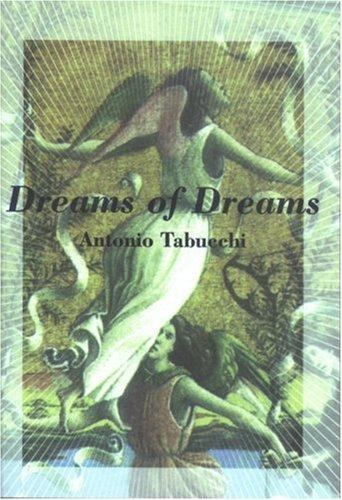
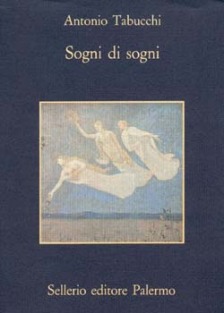
Antonio Tabucchi: Sogni di sogni – Dreams of Dreams (1992)

Elaborately imagined…mini-catalog of great artists’ dreams and the author’s interpretation of the last three days in the life of Portuguese poet Fernando Pessoa. Tabucchi’s rich language and his magical-realist charm tinge the volume with a visionary glow.

Antonio Tabucchi’s Sogni di sogni or Dreams of Dreams is a collection of sketches or short pieces, circling around the life and work of different authors, painters, musicians and other famous people. Arranged in chronological order they all tell of an imaginary dream of the person to whom the story is dedicated. At the end of the book, a short biography of each of the men gives some of the most important details about their life.

While this may not be an ideal starting point for someone who isn’t familiar with Tabucchi, it’s an amazing introduction into the Western European cultural heritage. It’s an amazing little book. To be able to write something that is equally enchanting, inspiring and instructive, is admirable. On the other hand it shows what a wonderful writer Tabucchi was. The short sketches are written in a beautiful and highly evocative prose that reminded me of the intensity of elaborate and sumptuous Persian miniatures.

If you are familiar with the men included in the book, it will enhance the experience but it’s not necessary.

To give you an idea of what Tabucchi does in this book, I’ll pick the example of Ovid. In his dream, Ovid sees himself not only loved by his emperor but transformed into a giant butterfly. Only when he stands in front of the emperor and should perform one of his poems, all that comes from his mouth is a high-pitched whistling sound. He tries to move his wings instead and perform his poem like a pantomime but this infuriates the emperor. Angered he has Ovid’s wings cut off. When they fall to the ground, Ovid knows he will die.

Hidden behind this sketch is an allusion to Ovid’s most famous work, the Metamorphoses and the whole tragic life story of one of the greatest poets of all times, who spent his last years disgraced and banned from Rome, in Tomis, on the Black Sea.

Here is the list of all of the people included in the book:

Daedalus
Ovid
Lucius Apuleius
Cecco Angiolieri
François Villon
François Rabelais
Caravaggio
Francisco Goya
Samuel T. Coleridge
Giacomo Leopardi
Carlo Collodi
R. L. Stevenson
Arthur Rimbaud
Anton Chekhov
Claude Debussy
Henri de Toulouse-Lautrec
Fernando Pessoa
Vladimir Mayakovsky
Frederico Garcia Lorca
Sigmund Freud

Sogni di sogni is highly imaginative and one of those books that opens doors. It will make you want to explore the people and works behind each chapter. It certainly made me want to read more of Tabucchi, one of the most amazing and creative Italian writers who sadly died earlier this year.

It’s often difficult to find Italian books in translation but Tabucchi is one of the rare authors who has been extensively translated. Some of the newest books are not out in English yet but most of his earlier ones are.

Have you read Tabucchi? Would you be interested in a Tabucchi week?

Irish Short Stories by James Stephen, Éilís Ní Dhuibhne and Orflaith Foyle

As you may know, Irish Short Story Week has been extended until the end of the month and maybe beyond. The week 23 – 29 has two parallel themes, Fairy Tales and Emerging Women Writers. I chose to read three stories for this week. A fairy tale, The Enchanted Cave of Cesh Corran by James Stephens which can be found in his book Irish Fairy Tales. Then, after Mel suggested it, I read  Éilís Ní Dhuibhne’s Midwife to the Faeries which I found in The Granta Book of the Irish Short Story (2011), edited by Anne Enright. The last story I read has been reviewed by Mel as well and there is a guest post of the author on his blog today. The story is Somewhere in Minnesota by Orflaith Foyle, found in the New Irish Short Stories (2001), compiled by Joseph O’Connor.

While the three stories I have read this week are quite different in tone and content, they all had something in common. They were highly disturbing. Maybe not so much the fairy tale by James Stephens, although it was certainly unusual as far as fairy tales go.

Stephen’s tale The Enchanted Cave of Cesh Corran contains a few elements typical for Irish fairy tales. There is some sort of other world and fairies but both have nothing in common with what we know from fantasy stories that claim to be influence by Irish folklore. The world in this tale is rather coarse and crude. The army chief Fionn and his men, among them Goll who hates him but serves him nonetheless, are resting near the cave of Conaran, King of the fairies. Conaran hates Fionn more than anything else and has waited for an occasion like this. He lures the men into the cave, casts a spell and calls his extremely ugly daughters to finish them off. His daughters are fairies but with whiskers. They are as fierce as they are cruel, no fair maidens at all. I won’t tell you how the story ends but there is fighting involved. It’s nothing like any other fairy tale I’ve read before, it felt very archaic but was humorous as well. It depicted a world in which hatred and friendship go hand in hand and can change at any moment. It depicts an insecure world in which life isn’t worth much.

This last element was equally present in Éilís Ní Dhuibhne’s excellent story Midwife to the Fairies. This is a haunting and mysterious story, a story which reads as if someone had mixed Shirley Valentine with a tale of some archaic, fierce fairies. The story begins as an interior monologue. A woman, a midwife, sits in front of the TV with her husband on a Saturday night. The voice sounds uneducated, working class but very intimate as well. Late at night someone knocks on the door. It’s an emergency and they need a midwife at once. It does seem unusual that these people wouldn’t go to a hospital but the man is forceful and she follows him into the night. What awaits her is a depressing scene. A young woman, a girl really, is about to give birth. There is a crowd in the house but nobody cares about what is going on. The midwife helps her and delivers the tiny, premature baby. What follows is sad and shocking and involves a crime. What was interesting was that the story was broken up. On every page there were bits of a fairy tale in italics. One can read only those parts and the parts together form a whole tale which mirrors the one we read. Unwanted pregnancies are a frequent theme in Irish stories. I’m not even sure, if abortion is not still forbidden in Ireland or most certainly has been much longer than in most other countries. Unwanted pregnancies is the core theme of this disturbing story. What was really disturbing was the way the people handled this. The midwife, the man, the woman giving birth and her relatives, they all pretended it didn’t happen. The fairy tale that was told in parallel had the same theme. It’s not a pretty fairy tale at all. On the contrary it contains a very shocking element as well. Fairy tales like dreams are a to a certain extent a means to express the hidden, the suppressed. Pairing these two tales made this a powerful and uncanny short story.

The third story I read, Orflaith Foyle’s Somewhere in Minnesota, wasn’t less disturbing. A young woman, an artist, sits in a diner, somewhere in Minnesota. She has run off. The woman behind the bar and a man are drawn to her. They say she triggers an urge to protect her. The young woman’s face looks bloody and destroyed, someone must have beaten her up. They assume a man has done this to her and so do we for a while. We find out that the truth is very different. There are allusions to a troubled childhood, abuse, brutality. This in itself has the power to disturb but what is far more disturbing is that the two people who pretend they want to help her, appear to be turned on by the fact that she may have been beaten by a man.

With these three tales I have moved far away from the beauty of the three other stories I have read but that doesn’t mean I didn’t like them. All of the stories I have read were very well written and powerful.

I read the three stories as a contribution to Irish Short Story Week hosted by Mel u from The Reading Life.

Reviews and further suggestions can be found here.

If you are interested, you can still participate in Irish Short Story Week which has been extended.

Mel and I are planning on reading Frank Delaney’s Ireland together and post on it either during week 2 or 3 in April. Is anyone interested in joining us? Let us know and we can plan which date would work best for all of us.

IRELAND travels through the centuries by way of story after story, from the savage grip of the Ice Age to the green and troubled land of tourist brochures and news headlines. Along the way, we meet foolish kings and innocent monks, god-heroes and great works of art, shrewd Norman raiders and envoys from Rome, leaders, poets and lovers. Each illuminates the magic of Ireland, the power of England and the eternal connection to the land.

Returning to Virginia Woolf

Maybe it’s because I’m reading Alexandra Johnson’s books and Virginia Woolf is an author who is central in them or perhaps it is because of Sigrun’s (sub rosa) Virginia Woolf project which I like to follow, whatever it is, Virginia Woolf was often on my mind lately.

I have this odd habit that when I like an author a lot I try to keep at least one of his or her books for later. There are a few authors whose complete works I have read but, due to my reluctance to run out of books to look forward to, they aren’t numerous.

Virginia Woolf is one of those authors where the thought I may finally have read all she has ever written fills me with a certain apprehension. While I’m still keeping Moments of Being for later, I have finally started The Voyage Out, the only novel I hadn’t read yet.

It’s funny to return to her and finalize the reading of her novels with the first book she wrote. It feels as if I had completed a circle. I started reading Virginia Woolf with Mrs Dalloway. I didn’t know that Mrs Dalloway was a returning character. I didn’t even know that Virginia Woolf had any returning characters. But here she is, in The Voyage Out, Mrs Dalloway, in all of her “glory”. Was she always this obnoxious? Frankly, I don’t remember. What I remember of my first Virginia Woolf novel was how much I liked the style.

The Voyage Out is very different from later books but at the same time it contains so many aspects typical for Virginia Woolf”s writing. I know many people read the body of work of an author they cherish chronologically but in her case, reading backwards wasn’t a bad choice. One could too easily overread important aspects of this early novel or, as was done when it was published, dismiss it as being nothing special.

Reading The Voyage Out makes me realize once more what I like the most about her writing. Yes, the style, especially in the later novels, is fantastic, with its flow of interior monologue, the way she uses time and how she describes the passing of time. But there is something else that stayed with me forever since the day I have read Mrs Dalloway. Her writing has an exhilarating quality, an effervescent intensity of feeling that made me think of a German expression which I adore: “Champagner Wetter” or “Champagne weather”. Champagne weather is used to describe a very fresh but sunny spring morning on which the air is still cool, nature has returned to life, the first tentative, tiny leaves appear, the first blossoms can be seen. It’s already a bit warm in the sun but still chilly in the shade. It’s like drinking the first glass out of a freshly opened, nicely cooled Champagne bottle. It bubbles and goes to your head. Virginia Woolf’s novels are full of scenes conveying the mood of champagne weather.  

I will write a “proper” review once I have finished the book but I’m enjoying it too much to wait until then. So far I can see that the story is told chronologically and sequentially, nothing daring really. But there is already a very striking way of writing about people’s interior lives. One of the main themes is the role of women and the way they are treated or rather mistreated by society. Parts of the novel reminded me of E.M. Forster, others of Henry James’ Portrait of a Lady. Rachel, one of the main characters, has a lot in common with Isabel Archer. Still there are scenes which are already typically Woolf. She had a very particular way of showing the passing of time or how the interior worlds of people coexist. There is a wonderful scene towards the middle of the novel in which we see a hotel at night.  First we see it from the outside, all its windows are illuminated, the people are getting ready to go to bed. Later we approach and enter the building, brief glimpses into the various rooms draw pictures of the inhabitants. At the end of the scene, they are lying in their beds, separated only by thin walls, dreaming or just sleeping, drifting off into unknown territory, as if on a big ocean liner. It is a recurring scene really, as the book starts with the voyage on a ship.

It is possible that I will start rereading her books in chronological order when I have finished The Voyage Out and Moments of Being. My favourite of her books are Mrs. Dalloway, To the Lighthouse and Flush. I didn’t like The Years or The Waves much and can never even keep them apart. I also didn’t care for Orlando at all. Not sure why, it’s generally a favourite of many people but I remember I found reading it was painfully boring. Jacob’s Room and Between the Acts were two I liked but the memory of them is barely more than a vague impression.

I often hear people say, they are intimidated by Virginia Woolf, just like many are intimidated by Proust or James Joyce. For those who didn’t dare reading her so far, The Voyage Out and Flush are excellent starting points.

Have you read The Voyage Out or any other of Virginia Woolf’s novels? Which is your favourite?

Irish Short Stories by Kevin Barry, Elizabeth Bowen and James Joyce

I had some plans for Irish Short Story Week but as usual I ended up reading mostly something else. I discovered two new short story collections which contain a wide range of stories. One is The Granta Book of the Irish Short Story(2011), edited by Anne Enright, the other one, New Irish Short Stories (2001), was compiled by Joseph O’Connor.

Anne Enright’s introduction to The Granta Book of the Irish Short Story was particularly interesting as she writes about short stories in general and underlines that the Irish have a very distinct short story tradition. Here is my favourite quote from her introduction:

I am not sure whether the novel is written for our convenience, but it is probably written for our satisfaction. That is what readers complain about with short stories, that they are not “satisfying”. They are the cats of literary form; beautiful but a little too self-contained for some readers’ tastes.

Kevin Barry is a writer I wasn’t familiar with. He is one of a very few who has a story in both collections. I read one from New Irish Short Stories called Beer Trip to Llandudno. What a hilarious story. It tells about a trip of a group of fortysomething men who regularly take trips to towns and cities just to sample the local beer. They move from one bar to the next and from pub to pub. Drinking beer is more than a hobby, it’s a religion. They take it extremely seriously and discuss the taste and flavour in minute detail. At the end, they rate the beer according to a complicated system. Of course, the more beers they have sampled, the more they are drunk and the trip gets farcical. If the story had ended there it would have been amusing but Barry goes much farther than that. He manages to convey a whole life in a few random sentences, in one or two allusions to side stories, he shows us more than a few guys on a beer trip but a group of human beings who have suffered, hoped, lost their dreams and  adjusted to life in various ways. Still, despite a lot of heartache and disappointment, they have kept their joy of life, their humour and their enthusiasm. Barry has only written one novel so far, City of Bohane which came out last year. Needless to say that I ordered it. This is a writer with a rare gift and I would love to read his novel.

Here’s the mini-blurb

This is the cool, comic, violent and lyrical debut novel from one of Ireland’s most talented new writers.

Elizabeth Bowen’s Summer Night is one of her most famous short stories. I found it in Anne Enright’s collection. It’s a beautiful, evocative story that takes place on a summer night in the Irish countryside. At the beginning a woman speedily drives a car through the landscape, seeing the sun go down and how everything is transformed by the softness of the light. Only the houses on a hill in the distance are still bathing in the sunlight. That’s where she is going but we do not know it yet. The point of view changes after a few pages. We do now see a scene in a large country house. A phone is ringing. The point of view changes again and another phone rings. We meet the people in those other houses, we know that they are linked to the woman in the car who is the one ringing but we don’t know what is going on. It will take the whole 30 pages of the story for us to find out the secret at the heart of the story. The character descriptions are masterful and the dynamics between the people very complex and subtle but what I liked most about the story was the description how the summer night transforms the surroundings, how the changing of the light seems to cast a spell over the landscape.

James Joyce’s Araby was the third short story I read. It was actually a re-read. I wasn’t aware when I wrote my introduction that Araby was the short story which was the reason why Dubliners is one of my all-time favourite books. I don’t want to write too much about it, I’m afraid my words would dispel its magic. It’s an enchanting, lyrical story that has a lot in common with Elizabeth Bowen’s Summer Night. I would call both stories, twilight stories. Twilight because at one point they describe the light at sun set but also because everything is half-hidden, half revealed. The feelings are hinted at, nothing is in the open. While Bowen’s story is a summer story, Araby is set in winter. What is interesting is to imagine the two stories like paintings. One is a softly colored summer painting, the other captures the darker colors of winter.

If you like, you can read Araby here.

I read the three stories as a contribution to Irish Short Story Week hosted by Mel u from The Reading Life.

Reviews and further suggestions can be found here.

How is your Irish Short Story Week going? Have you found anything interesting?

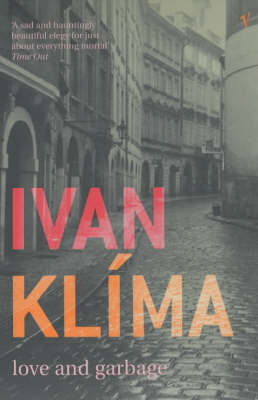
Ivan Klíma: Love and Garbage – Láska a smetí (1988)

Donning an orange vest, the narrator–a banned Czech writer–sweeps the Prague streets with a group of the society’s other outcasts–an old sailor given to drink, a sickly teenager, a foul-mouthed former beauty, a failed inventor, and an ex-pilot. As they go about their mindless job, the narrator learns of the dreams and sorrows of his coworkers and meditates on the life and work of Franz Kafka, the power of literature, and his relationship with his dying father. 

Love and Garbage is my first book by Czech writer Ivan Klíma. It’s said to be one of his best. Klíma had a difficult life. Born in Prague in 1931, he spent some years of his childhood in the concentration camp Theresienstadt.  Later he was an editor in his home town. He spent 1969/70 in the US where he taught Czech literature at a university but when he returned to Prague in 1970 he was forbidden to publish until 1989. Love and Garbage contains a lot of Klíma’s own story but it isn’t, as he says, autobiographical.

The narrator, a writer who isn’t allowed to publish, starts working as a street sweeper. The slow and contemplative work allows him to explore his city, to think about his life and an essay on Kafka he is writing and helps him forget his lover. Because he chose to work as a street sweeper and it isn’t necessity who forces him to do this job, he likes it. He likes his colleagues, most of them are outcasts too. The work he is doing doesn’t only allow him to think about his life but it turns into a philosophical meditation on what the society deems worthless. Garbage and human beings alike. As a child the writer who is Jewish lived in Theresienstadt and most of his relatives were killed. The Jews, he muses, were like garbage for the Germans, worthless and had to be discarded and burned. The novel is full of linked symbols and elements, of scenes that are mirrored and repeated.

After he was forbidden to publish, he was desperate, caught in a marriage that didn’t mean much anymore, to a wife who had started a new life. She was studying psychology and trying to help others while he spent his days locked inside, chasing thoughts, trying to write. During this time he meets the sculptor Daría and falls passionately in love with her. When the affair ends, he decides to sweep the streets. This is symbolical as well, he starts to clean the city around him, to make room inside for another, clean start.

The writer is working on an essay about Kafka and often returns to him. He is reminded of Kafka constantly. For him, Kafka was the purest possible writer, an outcast like himself, not really understood and unhappy in love.

When the novel begins, the narrator is heartbroken but that doesn’t explain the sadness in the book. The sadness comes from looking back, thinking about his childhood in the concentration camp and all the people he lost. The only person still alive from that period is his father but he is very old and ill. The saddest thing is that despite everything that happened in the past and that his country had to endure, instead of having a better life now, they live under a communist regime. The constant threats and lack of freedom make life unbearable. His affair with Daría is an attempt at finding happiness but it turns bitter eventually and when he tells his wife about it, it seems at first that he will end up losing both women.

Love and Garbage is a challenging read. It demands concentration as the story moves back and forth in time, breaking up the chronology, sometimes up to three times per page. It took a bit of getting used to but once I had read a few pages I liked it. This type of writing doesn’t allow you to fall into some sort of reader’s trance but wakes you up constantly. This may sound like a gimmick but that’s not what it is at all. It’s a cunning way to mirror the narrator’s interior life.  It’s not so much an interior monologue as a way to render how freely thoughts move, unlike the person who thinks them. We easily move back and forth in our minds, a childhood memory can be followed by some thoughts about the past day. In our minds we can go wherever we want, at any time we choose.

I have read a lot of Czech writers who wrote in German but only a very few who write in Czech. As I have found out, Love and Garbage was meant as an answer to Kundera’s Unbearable Lightness of Being which Klíma considered to be chauvinistic.

I liked Klíma’s writing. It’s unusual, complex, poetic and highly descriptive. There is hardly an aspect of human life that isn’t touched and that’s why the book is like a delicately woven tapestry. One pattern evokes another one, one angle mirrors the next, all is linked and intertwined. Poetical passages follow psychological insights, philosophical thoughts come after realistic descriptions. The book is sad but the way the writer fights for the tiniest bit of happiness and the richness of his interior life are so beautiful, they illuminate the book from within.

Have you read Klíma or other Czech writers?