Deirdre Madden: Molly Fox’s Birthday (2008)

Molly Fox's Birthday

It’s been a while since I’ve read a book by a new-to-me author and felt like reading everything she’s ever written. I have Guy to thank for the discovery of Irish writer Deirdre Madden. When he reviewed her novel Time Present and Time Past (here’s the link) I knew right away this would be a book I’d love to read. When I looked at her other novels Molly Fox’s Birthday tempted me even more.

Molly Fox’s Birthday is set in Dublin and tells about one day in the life of the narrator, a playwright and best friend of Molly Fox. Molly is a much-admired, famous theatre actress. She’s spending some time away from Ireland and she and her friend swap apartments. While the narrator stays in Dublin, Molly will be staying at her apartment in London.

The narrator has just started a new play and tries to overcome a severe case of writers’ block. Instead of writing, she spends the day thinking back on her life and her friendship with Molly and their mutual best friend Andrew. One little thing leads to another, one thought leads to the next. While not a lot happens during that day – the narrator goes shopping, Andrew drops in, a stranger rings the doorbell – we see the richness of a complex life unfold. A life that is as much rooted in Irish history as in the love for theater and acting. The different elements all lead to an in-depth exploration of many other themes: religion, friendship, family, acting, reality, dreams, authenticity.

I liked how she shows the world of the theater from different sides. The side of the playwright, the side of the actor, the view from a fan, and how she draws parallels. Her own brother is a priest and a lot of what he’s doing, when preaching, is acting as well. One strand of thoughts circles around how much any person acts and how much someone can ever know an actor. Until the end of the book, Molly stays an enigma. Just like she hates celebrating her birthday, she hates talking about her feelings and withdraws into her acting if someone comes too close. This doesn’t mean Molly doesn’t reveal herself. Her apartment which is carefully decorated allows a glimpse into her soul.

While the narrator thinks about this, we realize that one of the reasons why Molly, Andrew and the narrator are such close friends, is that they share this reservation. As rich and detailed as their inner lives are, they are not very explicit people and are interested in what is left unsaid, maybe more than in what is said. In the end, when someone like Molly decides to talk – it can always be to reveal something or to hide even more. She may always play a role. But that’s true of many people, only actors are much better at selling the idea of themselves they want others to buy.

It’s hard to do a book like this justice because it’s so complex and multi-layered. And because I loved it so much.

A few quotes may help to give you a better impression.

There are forms of communication that drive people apart, that do nothing other than confirm distance. But there are also instances when no connection seems to be made and yet something profound takes place, and this was just such a moment.

My hunger for the stage at that time was intense in a way I now find somewhat alarming. I watched plays with the kind of voracity with which small children read books; with the same visceral passion, the same complete trust in the imagination which is so difficult to sustain throughout the course of one’s whole life.

Here is one of Molly’s fans telling the narrator why the theater and someone like Molly who brings so much authenticity to the stage is important in her life.

You’re locked into this iron routine, cooking and shopping and cleaning, saying things to people and them saying things back to you, and none of it meaning anything, all of it pointless. Maybe it has to do with getting older, I don’t know, I feel like I’m sleepwalking through the years, but I want to wake up. Reality, you know? Why is it so hard to find? And why do so many people not seem to notice this? Why don’t hey care? Yes, I did go to see The Duchess, and all of this was very much on my mind that particular evening. I was worn down with it all, I felt stultified. And then the play – well, Molly Fox in particular, she was electrifying. All that dullness, that unreality I’m talking about, she blew a whole through it with language, with that voice of hers; i wa like an explosion going of in your soul.

Of course, since this book is the story of one day, set in Dublin, and one of the main protagonists is called Molly, we are reminded of Ulysses. I didn’t try to dig deeper, but the connection seems pretty obvious.

Molly Fox’s Birthday is a wonderful celebration of the interior life, art, theatre, friendship and it’s an exploration of how daily life, despite the struggles, doesn’t have to turn into something dull and devoid of authenticity. There’s always meaning, you just have to look for it.
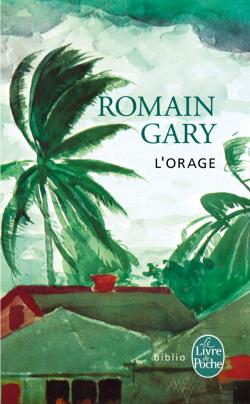
On Some Short Stories by Romain Gary

L'Orage

Romain Gary was a Jewish-French novelist, film director, World War II aviator and diplomat. He also wrote under the pen name Émile Ajar. He’s the only author who won the Prix Goncourt twice. Once as Romain Gary for The Roots of Heaven (Les racines du ciel) and the second time as Emile Ajar for Life Before Us aka Madame Rosa (La Vie Devant Soi). 

Romain Gary would have been 100 years old on May 8. That’s why Emma has organized a Romain Gary Month on her blog Book Around the Corner. She’d announced it a while back and I knew I wanted to participate, only I wasn’t sure whether I would have enough time. The books that really interested me were a bit too long. So I did something you should not do when it comes to reading – I settled for a compromise. In this case it meant reading a collection of short stories, knowing well that they would never equal his novels.

It was still an interesting experience as the stories and fragments have been written between 1935 and 1970. Mostly they were written in French but two longer pieces were originally written in English. Gary wrote in both languages and also translated his own work. Or, as Emma wrote in one of her posts, he rewrote them in the other language. The collection shows not only the development of an author but also his wide range. Unfortunately most of the stories and fragments collected here are less than stellar. Notably the two early stories, written at the age of 20, whiff of epigonism.  Both L’Orage (1935) and Une petite femme ( 935) are set in the tropics and I found them to be examples of exoticism. I don’t think that Gary had been in any of the places described at that time. It seems both stories are influenced by Malraux. I was also reminded of Conrad. While I found that exoticism dubious, I liked the way they were told. At this early age, Gary was already well aware how to tell a story. And while both endings are predictable, there’s still very good pacing and build-up.

The other stories written in French are far more original and poignant. Two of them are quite chilling. Géographie humaine (1943) and Sergent Gnama (1946) are inspired by Gary’s own experience as a pilot during WWII and his experience of colonial France. The first – Human Geography – tells the story of a few men reminiscing. Each place they mention equals someone being shot down, wounded or killed. Sergeant Gnama tells the story of an African boy who sings a French song although he can’t speak French. It’s seems he’s learned it from a man called Sergeant Gnama – a ghost in other words.

The Jaded (1970) and The Greek (1970) were the two pieces originally written in English. While The Greek is a fragment and a bit hard to get into, The Jaded is a great, pessimistic and sarcastic story. A man spends his final hours in a place eating burgers. Later he will be shot. He knows this because he’s ordered his own assassination. He thinks he has lost his interest in life but during these hours it seems to be reawakened. If you want to know whether or not he’ll die in the end, you’ll have to read the story.

While this collection wasn’t all that great, I’d like to recommend Gary because he’s a great novelist and for those who love biography, it’s worth reading about this chameleon of a man. David Bellos has written a Gary biography  Gary: A Tall Man that looks interesting. Here’s the blurb

Airman, war hero, immigrant, law student, diplomat, novelist and celebrity spouse, Romain Gary had several lives thrust upon him by the history of the twentieth century, but he also aspired to lead many more. He wrote more than two dozen books and a score of short stories under several different names in two languages, English and French, neither of which was his mother tongue. Gary had a gift for narrative that endeared him to ordinary readers, but won him little respect among critics far more intellectual than he could ever be. His varied and entertaining writing career tells a different story about the making of modern literary culture from the one we are accustomed to hearing. Born Roman Kacew in Vilna (now Lithuania) in 1914 and raised by only his mother after his father left them, Gary rose to become French Consul General in Los Angeles and the only man ever to win the Goncourt Prize twice.

 This biography follows the many threads that lead from Gary’s wartime adventures and early literary career to his years in Hollywood and his marriage to the actress Jean Seberg. It illuminates his works in all their incarnations, and culminates in the tale of his most brilliant deception: the fabrication of a complex identity for his most successful nom de plume, Émile Ajar.

In his new portrait of Gary, David Bellos brings biographical research together with literary and cultural analysis to make sense of the many lives of Romain Gary – a hero fit for our times, as well as his own.

I know that quite a few readers of this blog love memoir as much as I do. Gary’s memoir Promise at DawnLa promesse de l’aube is highly acclaimed. Vishy just reviewed it here.

If you’d like some more recommendations – Emma has posted many suggestions on her blog.

Edith Wharton: The House of Mirth (1905)

The House of Mirth

It took me far over two months to decide whether I wanted to review The House of Mirth or not. For some reasons, I found this book profoundly disturbing.

While reading  The House of Mirth I felt like I was watching a fly getting trapped in a spider’s web. At first, when they notice that they are trapped, they wiggle frantically, hoping to be able to free themselves but, in doing so, entangle themselves even more. Comparing the stunningly beautiful Lily Bart to a fly isn’t doing her any justice, but the way she’s trapped by the society she lives in, and the way in which she tries to free herself, is not much different from the poor fly. I’m still a bit shocked. I knew nothing about The House of Mirth and to find that Lili Bart is just as tragic – maybe even more so – as Effi Briest or Mme Bovary (only without the adultery), came as a huge surprise.

Lily Bart comes from a formerly rich family who has lost everything, Her parents are dead and Lily depends on a rich aunt and her friends. She spends a lot of time at her aunt’s New York home or at the country houses of her friends, on the Hudson. Lily is lucky; she’s stunningly beautiful and people like to adorn their parties and evenings with her. She is also a great conversationalist. Everyone is sure she is going to marry rich but the years go by, Lily is already 29, and she still hasn’t settled.

At the beginning of the novel, she meets the lawyer Lawrence Selden. Lily clearly fancies him but since he’s not rich, she doesn’t think of getting married to him. Accidentally meeting at the train station is surprising for both of them and it triggers something reckless in Lily. She spontaneously decides to follow him home for a cup of tea. Something that would be of no consequences nowadays sets in motion Lily’s downfall and shows how much it costs her at all times to play by the rules. The visit is harmless enough. Lily and Selden chat and speak about mutual acquaintances. The tragedy is set in motion because Lily bumps into someone on her way out and abashedly lies about where she’s been. What follows is a series of bad decisions (on Lily’s side) and shameless exploitation, petty jealousy and revenge (on the society’s side). The story has a lot in common with a Greek tragedy in which the heroes fail inevitably.

As much as some elements of the plot shocked me, I loved this book. The prose is luminous, the descriptions are masterful. I went over many passages repeatedly, before moving forward. The book is written from different points of view, each adding another element, another voice. Selden’s passages are analytical, while Lily’s are far more descriptive and atmospheric.

I found Lily Bart one of the most interesting fictional characters because she’s such a bundle of contradictions and – in many ways – her own worst enemy. At least in the beginning. From a 21st Century perspective one is tempted to condemn her at first. But her upbringing really didn’t equip her for an independent life. She has examples of people around her who are independent, but they are outside of the society whose member Lily wishes to stay. Still, they could inspire her and they do eventually, only by then it’s too late then. What makes Lily endearing, is the way she self-sabotages herself constantly, because these acts of sabotage show that she’s not that corrupted, that she actually despises the society she lives in.

The biggest shock is to see how especially women contribute to Lily’s undoing and how much they relish watching her going down. The House of Mirth is an illustration that – I hate to say this – as long as women actively contribute to undermine, discredit and harm other women – out of jealousy or envy – there will never be true gender equality.

I’ve read The Age of Innocence, Ethan Frome and Mme de Treymes, three very different books, which are all great, but none of them quite equals The House of Mirth. I’m pretty sure, I will re-read it. Now that I know the story, I’ll be enjoying the writing even more.

Sarah Moss: Bodies of Light (2014)

Bodies of Light

In January I read Sarah Moss’ first novel Cold Earth (here is the review). I liked it but had some minor reservations. I wasn’t sure how good a writer she really was. After having read her latest book, Bodies of Light, I think it’s safe to say that she’s evolved from a promising writer to an accomplished one.

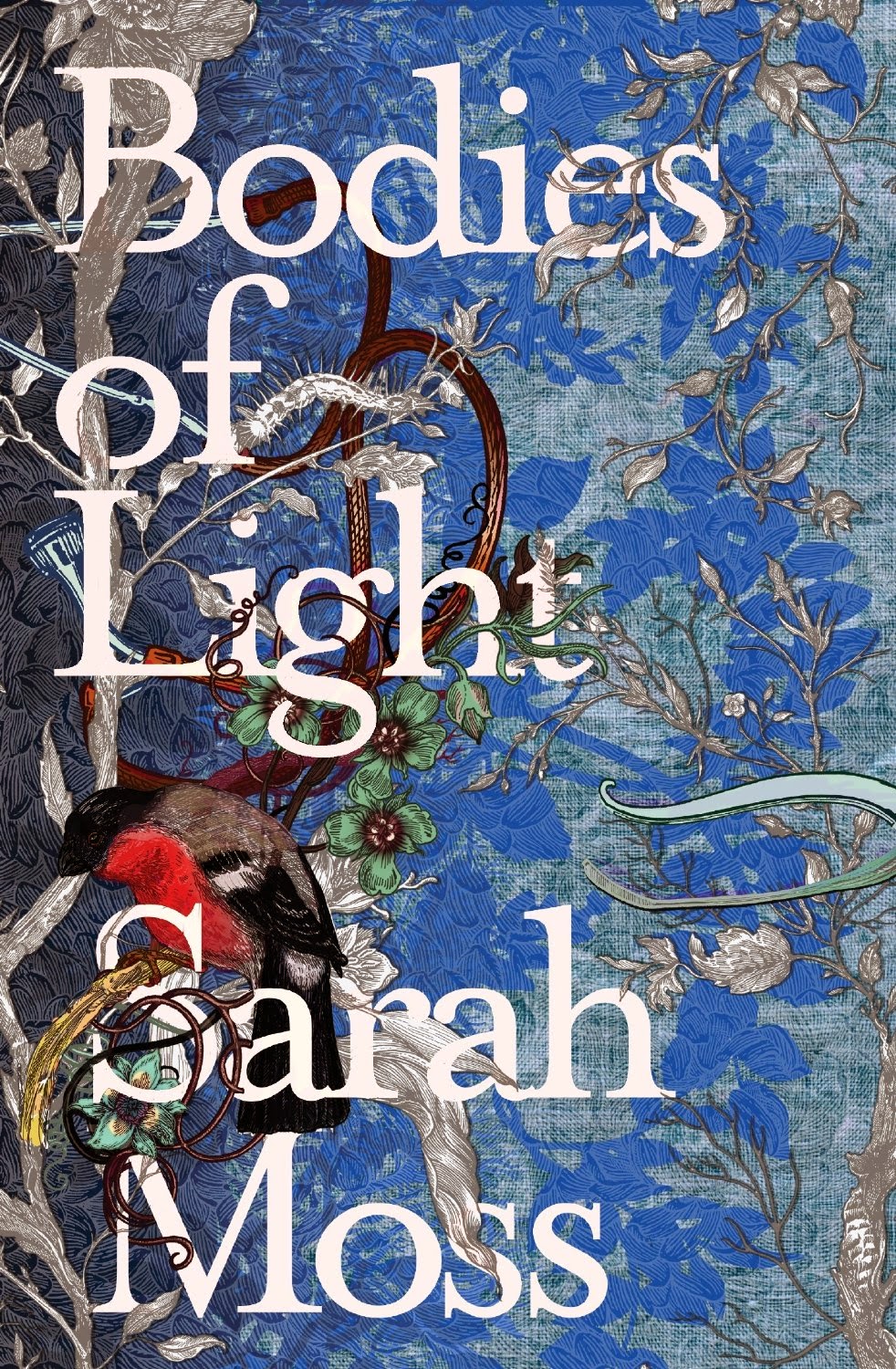
I didn’t look at the author’s name when I saw the book at the book shop the other day. What caught my attention was the beautiful cover that reminded me of a Victorian wallpaper. As soon as I opened it, I discovered that they had used the same endpaper inside. When I read the blurb, I saw how fitting this was, as Sarah Moss has set her third novel in Victorian Manchester and London. This might not have been enough for me to buy the book, but I started browsing and what struck me was how often colors and light were mentioned. I did something I don’t do that often; I bought the book and started reading it right away.

The novel did keep its promise; it has a lot of a William Morris wallpaper. The descriptions and the writing are gorgeous. But what is really arresting is the combination and range of topics.

Bodies of Light tells the story of two generations of women. Elizabeth is married to the designer and painter Alfred Moberley. Beauty is most important to him. He pays attention to color and light, to fabrics and interior decoration, to every single detail in a furniture, wallpaper or painting. Elizabeth is quite different. She likes it sober. She doesn’t want to wear expensive, colorful clothes. Her mother taught her that she has to be modest at all times because there are so many poor women who have nothing. This strict, severe upbringing, in which every single minute is dedicated to helping the poor, has turned Elizabeth into a joyless creature. And she’s ill-equipped for motherhood. She hates being pregnant and once the girl is born she hates her and can hardly be forced to take care of her. On the other hand, her mother taught her to despise the ways of the rich. A nanny is out of the question. Whenever her husband, who is a kind man, wants to take care of Ally and pampers the child, Elizabeth tells him off. It’s easy to understand why this marriage isn’t a happy one.

May is born after Ally. While she will be treated in very strict ways as well, she will not be abused. Abuse is the ugly secret in the Moberly household. Ally is her mother’s mirror and instrument. Her mother mishandles and punishes her and forces her to become successful. What she calls strict is nothing bud thinly veiled sadism.

In spite of this – or because of this – Ally will become one of the first women doctors. When it’s time for her to study, she will leave Manchester and go to live in London. She’s learned from an early age that others have less, that women are mistreated and it seems natural for her to dedicate her life to the cause of women. But her family, especially her mother, looms like a dark shadow over her head. The question is – will she be able to free herself and find happiness?

The summary may seem gloomy and the parts dedicated to Ally’s upbringing, the many cruelties she had to endure on a daily basis, made me choke, but the book contains so much beauty. I liked how complex all the characters are. Even Ally’s mother, Elizabeth. She’s doing a lot of good, helping the poor selflessly, at the same time, she unleashes her sadistic impulses on her daughter. It’s something that we hear occasionally. A person famous for his/her altruism, is a tyrant, bully or even a sadist at home.

A major topic is women’s fight for the right to higher education, their fight to become doctors. The scenes at the hospital are quite drastic. Ally specializes in gynaecology at first but then discovers her interest in psychiatry.

At times it was shocking to see that, while we’ve come a long way, women still fight for many of the things they fought for in the 19th Century. Conflicting emotions about motherhood, for example, are still more or less taboo.

Bodies of Light is a remarkable book. The writing is taut and stylish and full of luminous descriptions. The topics range from art to motherhood, from medicine to women’s history, from psychiatry to abuse and, finally, to healing. The greatest accomplishment however, is that the opposing themes and characters of the novel are mirrored in the writing. The writing is at times pithy, at times lavish. It’s a fascinating, thought-provoking book from a very assured writer. We can look forward to her next books.

Literature and War Readalong May 30 2014: Private Peaceful by Michael Morpurgo

Private Peaceful

Michael Morpurgo is a famous British Children’s author. Some of you may know him from the Spielberg movie War Horse, which was based on one of his novels. I’ve had Private Peaceful on my piles for a while and I’m really keen on reading it finally. I’ve always wondered how you write about war for children. Especially from the point of view of a soldier. We’ve read the Dutch novel Winter in Wartime last year, but that was set among civilians. So I’m curious to find out how explicit the book will be and where Morpurgo draws the line.

I’m glad that CarolineD made me aware that Private Peaceful and My Dear I Wanted to Tell You (our choice for September) have been chosen by CityRead London 2014. CItyRead London is a project to promote reading across the UK capital.

Here are the first sentences

They’ve gone now, and I’m alone at last. I have the whole night ahead of me, and I won’t waste a single moment of it. I shan’t sleep it away. I won’t dream it away either. I mustn’t, because every moment of it will be far too precious.

And some details and the blurb for those who want to join

Private Peaceful by Michael Morpurgo (UK 2003)  WWI, Children’s Book, 192 pages

Heroism or cowardice? A stunning story of the First World War from a master storyteller.

Told in the voice of a young soldier, the story follows 24 hours in his life at the front during WW1, and captures his memories as he looks back over his life. Full of stunningly researched detail and engrossing atmosphere, the book leads to a dramatic and moving conclusion.

Both a love story and a deeply moving account of the horrors of the First World War, this book will reach everyone from 9 to 90.


*******

The discussion starts on Friday, 30 May 2014.

Further information on the Literature and War Readalong 2014, including all the book blurbs, can be found here.

On Valentina d’Urbano’s Il Rumore Dei Tuoi Passi – The Sound of Your Footsteps (2012)

RumoreTuoiPassi.indd

Valentina D’Urbano is a young Italian novelist. Il Rumore dei tui passi (The Sound of  Your Footsteps) is her first novel. She won a publishing contract with Longanesi thanks to a competition. The novel has been translated into French under the title Le bruit de tes pas and into German Mit zwanzig hat man kein Kleid für eine Beerdigung. Hopefully an English translation will be next.

This novel is like a kick in the gut. It describes a world we dont know anything about, but it’s a world that the young writer knows all too well, as she grew up under similar circumstances.

The book is set in Rome, in La Fortezza – The Fortress -, in the late 70s and 80s. It starts with a funeral and a laconic voice telling us that her “twin” has died. Bea and Alfredo are called the twins because they are inseparable, not because they are siblings. They met because their families both live in La Fortezza – this is also a nickname. La Fortezza is some sort of abandoned housing project where the poorest of the poor land. Most of the families are squatters and their miserable, small apartments can be snatched from them at all times. “Never leave your apartment unattended” is one of the earliest lessons Bea, her brother Francesco, Alfredo and Arianna, her best friend, learn at an early age. If you leave the apartment, it’s possible that when you come back, you’ll find that all your belongings have been thrown from a window and another family claims the place.

La Fortezza is a place without hope. Most people have no job and will never have one; they drink or take drugs; they hit their children and their wives. They have no chance of ever getting out because when they apply for a job somewhere and have to say they come from la Fortezza, it’s over. People from La Fortezza are not hired. They are said to be criminals and drug addicts.

One way of dealing with a bleak situationlike this is domestic violence and addiction, another is to look the other way. Nothing is named in La Fortezza. People and things have nicknames. Bad situations are ignored. Arianna can get pregnant at 15 and abort and nobody will ever speak about it.

Bea’s mother got pregnant with Bea when she was only 15. She and Bea’s father were lucky to be able to live in La Fortezza. It’s one step from being homeless. They rarely have jobs, but at least they are kind and caring. The familial environment is rough; there’s a lot of swearing, the kids are slapped, but in spite of that Bea and Franceso know their parents love them and do everything for them. They even accept Alfredo in their home. Alfredo lives above and his father is anything but kind and caring. He’s a single parent, unemployed, alcoholic and beats up his three sons regularly. More than once, someone has to interfere and make sure he doesn’t kill them.

Bea’s and Alfredo’s feelings for each other are deep. But it’s a love-hate relationship, one that strengthens them as much as it weakens them.

From the beginning we know things go wrong, or Alfredo wouldn’t be dead and Bea wouldn’t attend his funeral.

Valetina d’Urbano’s book is written in an amazing, sparse style, told in a painfully laconic voice which isn’t devoid of tenderness. This is not the Rome tourists see. This world is far from anything most Europeans know. This is poverty at its ugliest. All they have is dreams. Some have the power to make them come true. Most don’t.

Interestingly it’s a book that contains a lot of beautiful passages and it certainly makes us think. People in this novel sit on the balcony in summer, making plans for holidays at the sea that they will never take. They are overwhelmed with joy when they own more than one sweater. Reading a book like this certainly shows us that we’re not as grateful as we could be. And it illustrates that this type of poverty is as bad as a congenital disease. Escaping it is almost impossible.

D’Urbano is particularly good at descriptions. We feel the suffocating heat in summer, the cold in winter, we experience the frustration and boredom they have to endure.

I admire that she was able to escape this world and that she didn’t turn this book into a pity-party. It’s a powerful account of a hidden world, a story I’m not likely to forget.


Pat Barker: Toby’s Room (2012) Literature and War Readalong April 2014

Toby's Room

I’ve been procrastinating all morning. Every time I sat down to write this review I had something very urgent to do. Read the afterword of Fire and Hemlock, read the news on the Ukraine, get a cup of tea, look for cat number 2, read more news on the Ukraine, read the guardian review of Toby’s Room, urgently hunt for a book voucher, read the NY Times review of Toby’s Room, call my best friend in Odessa. I think you get the drift. Anything but writing the review.

Why?  Because I’m far from happy about this book and because I’m going to say what the critics didn’t say: it’s a mixed bag and despite a lot of good elements – mainly the choice of topic – it’s pretty much a failure or – even worse – a dishonest attempt. Still, it would be a great book club pick, as its strengths are topics and characters. That’s why I think it was a good choice for our readalong and if a few people read it, the discussion should be interesting.

So what’s Toby’s Room about? Thanks to the Guardian review, I was made aware that the title is an allusion to Virginia Woolf’s Jacob’s Room, the novel which she wrote after her brother Thoby died in WWI. It’s not surprising then that Virginia Woolf has a cameo appearance in Toby’s Room. I’ve read Jacob’s Room too long ago to make the connection, but I’m tempted to revisit it.

Elinor and her brother Toby are close, too close, one could say. One afternoon, in 1914 they spend a night together. This is deeply traumatizing for Elinor, although she’s not a victim in the whole encounter. Later when they are both in London, Elinor studying to become a painter, Toby to become a doctor, their relationship is strained.

In 1917 Toby’s reported “Missing, believed Killed”, which affects Elinor deeply. Until that day she tried to avoid thinking of the war but the death of her brother and the uncertainty of the circumstances, propel her right into it.

When Elinor finds a letter her brother wrote shortly before his death, mentioning Kit Neville, a famous painter, knows what happened to him, she barges in on Neville who’s at a hospital for soldiers with facial wounds. She disregards his state and unease and tries to force him to confess what happened. To no avail.

The second part of the novel sees Elinor join Tonks, her former teacher. Tonks is a painter and surgeon who helped a great deal in giving back some sort of face to those who had been severely disfigured. Part of his and Elinor’s work consists in drawing the wounded men before, during and after surgery. The gallery of this drawings can be visited online here (I managed to look at two).

Neville doesn’t confess to Elinor, he will confess to the far more sympathetic Paul, Elinor’s lover, whose story is told in Barker’s Life Class.

Pat Barker is famous for blending fact and fiction, for introducing us to important topics – I shy away from calling facial reconstruction “fascinating” as she herself does in her afterword – and for addressing the complexity of WWI. And she’s a very good plotter. The book reads like crime fiction. From the very beginning we are drawn along, running like donkeys after a carrot, to find out “Whatever happened to Toby?” I’m grateful for Pat Barker’s plotting skills, it made for quick reading, but when the juicy carrot I’d been hoping for proved to be a shriveled scrap, I felt let down. I didn’t buy the end. It wasn’t believable for me, but very much in line with the sensationalist beginning.

My biggest problem however was that she felt she had to start with an incest. Why was that necessary? I can relate to someone’s attachment to their brother, I didn’t need an incest to understand that they were very close and that their relationship was far from uncomplicated. This leads me to another problem I had with the book – heavy-handed foreshadowing.

Before I move on to the good parts, let me just say that I found Elinor a off-putting character. Not only did I despise her for blocking out the war, but for being so insensitive. In a way, the novel wants to tell us, it’s that character trait that made her useful. If she’d been more emotional, more sensitive, she wouldn’t have been able to draw the atrocities she saw. I don’t think that is true. I think there are people capable of deep empathy who can still do work like that.

What I liked about this novel, besides its suspenseful readability, was the choice of topics. I’d never heard of Tonks before and I found it interesting how the novel showed that the painters had to document everything in great detail but that they knew it would never be shown publicly. Some of the other painters mentioned painting landscapes as a metaphor. The war can be shown metaphorically but not realistically.

Neville isn’t a sympathetic character either but he’s a great character nonetheless. His story illustrates how hard it was for people to handle seeing facial mutilations. It was so hard that they often ceased to think about the person who was “behind” the disfigurement. They seemed to have lost their humanity with their faces and thus the repulsive reactions of the people were only occasionally questioned.

The more I read, the more I was wondering whether the fact that these injured men were sent to hospitals outside of cities was not so much for their own good as for the good of the population. These parts were done admirably well in the novel and the juxtaposition with scenes in which Elinor learns how to become a better painter through anatomy lessons and dissecting a corpse is great as well.

As a whole however I would say that this novel with its shifting POVs and sensationalist beginning and ending, is a failure. But a very thought-provoking failure.

I’m curious to hear the thoughts of others. Did you think the incest was a good choice? And what about the many different POVs and Elinor’s diary?

Other reviews

CarolineD

Danielle (A Work in Progress)

Maryom (Our Book Reviews)

The Mole

*******

Toby’s Room is the fourth book in the Literature and War Readalong 2014. The next book is the WWI novel  Private Peaceful by Michael Morpurgo. Discussion starts on Friday 30 May, 2014. Further information on the Literature and War Readalong 2014, including the book blurbs can be found here.