Looking Back on German Literature Month IV 2014

Screen Shot 2014-09-24 at 07.23.25

Every year Lizzy and I think that German Literature Month can’t get any better and every year we are wrong. It keeps on getting better and better. More people take part – 43 this year – more blog post are being written – 174 (!) -, and the quality of the posts is surprising too. I’m so pleased and want to thank you all for participating and showing so much enthusiasm.

I tried to read all the posts, but I still have some catching up to do before next Sunday. Next Sunday Lizzy and I are giving away two books. One for the winner of the “pick and mix”- category and one for our “favourite post”. It’s not easy because there have been so many great posts.

I’m sorry if I haven’t been able to comment on some blogs, but unfortunately there are always a few with a commenting system I can’t use.

My personal month went great as well. I’ve read some outstanding books, discovered a new favourite crime writer, and managed to read most of the books on my list.

Thanks once more to everyone. And a very special thank you to my wonderful co-host Lizzy.

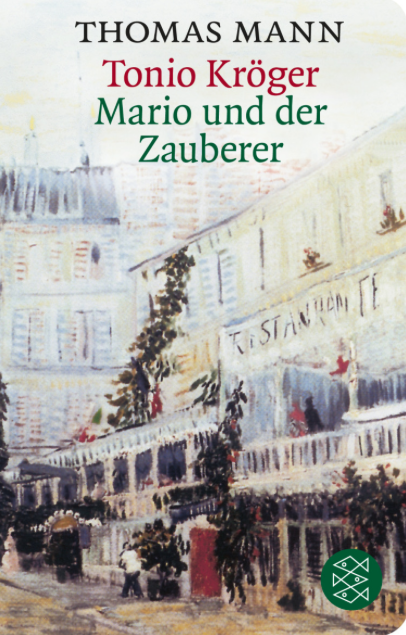
Thomas Mann: Tonio Kröger (1903)

Tonio Kröger

Tonio Kröger is considered one of Thomas Mann’s masterpieces, but only a few elements spoke to me, most of it infuriated me.  The writing is stellar, as usual, and the way he described Lübeck – the narrow alleys and gabled roofs – made me want to travel there, but the idea of the artist as tortured soul and ultimately superior was hard to stomach.

Tonio Kröger is the son of a German Consul and a Southern woman. He’s got his looks, – dark eyes and dark hair – and the name from her. From an early age on, Tonio feels he’s different, an outsider. Not only because his mother’s from the South, but because he loves books and art and feels like an artist. He first feels an intense love for blond and blue-eyed Hans and later for the blond, blue-eyed Inge. They seem to live in another sphere, a happier one, more immersed in life and what society expects from them.

Tonio wants to become a writer and finally, in his twenties, leaves Lübeck for Munich where he lives a life of debauchery, which disgusts him eventually. A long central chapter shows us Tonio discussing his views of art and life with the painter Lisaweta Iwanowna. Tonio is in his thirties now. Prematurely aged and sobered. Shortly afterwards, he departs for his hometown Lübeck. He visits his family home, which has been sold after the death of his father. One part of the stately home houses a public library. Tonio walks through the once familiar rooms. There’s nothing here for him anymore. He leaves for Denmark. At the hotel in Denmark he meets Hans and Inge again. They are married. He watches them without making himself seen. He’s less an outsider now than a spectator, still, he feels keenly that he’s different and decides to return home which isn’t Lübeck anymore.

A last letter to Lisaweta tells us he’s made peace with himself and will return to Munich for good.

The descriptions and the structure of the novella are wonderful. The way Mann captures the feeling of being an outsider is something one can easily relate to. But I didn’t like the ideas contained in the book. Tonio suffers a lot and he would like to be an ordinary person, like Hans and Inge. He would like to be blond and blue-eyed because those people have an easier, happier life. He’s tortured because he’s no conformist, but an artist. This is so dated and clichéd, it’s painful. Plus the association of blue eyes, blond hair with health and strength made me shudder. There’s also a lot of arrogance in this depiction of an artist. Yes, Tonio does suffer – or says so – , but he very obviously feels superior too.

I don’t think you have to be a tortured soul to be a great artists. Feeling like an outsider and being a non-conformist, most probably comes with it, but it doesn’t mean you have to suffer. And it most certainly doesn’t mean you are superior. I can’t accept the idea of an artist (or anyone else) as a superior person  or as “chosen”. That’s pure hubris. Tonio Kröger is filled to the brim with hubris. The suffering Tonio professes felt more like a pose than real pain.

Has anyone read Tonio Kröger? How do you feel about it?

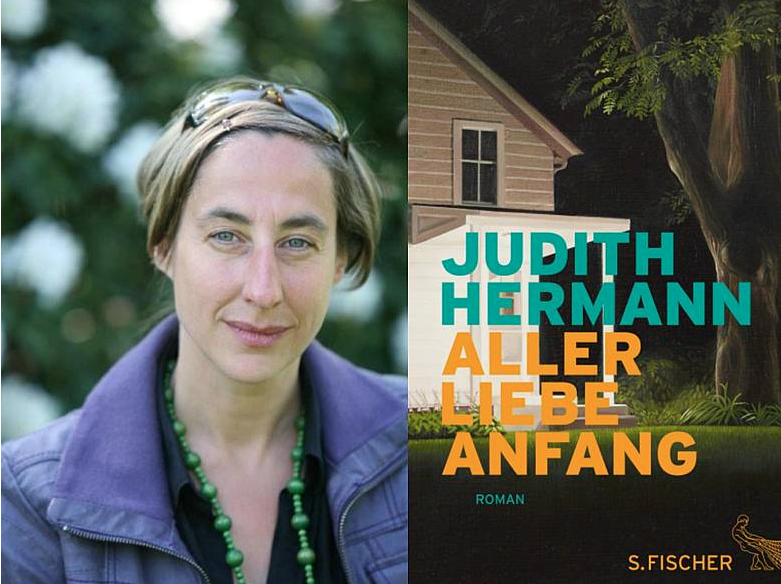
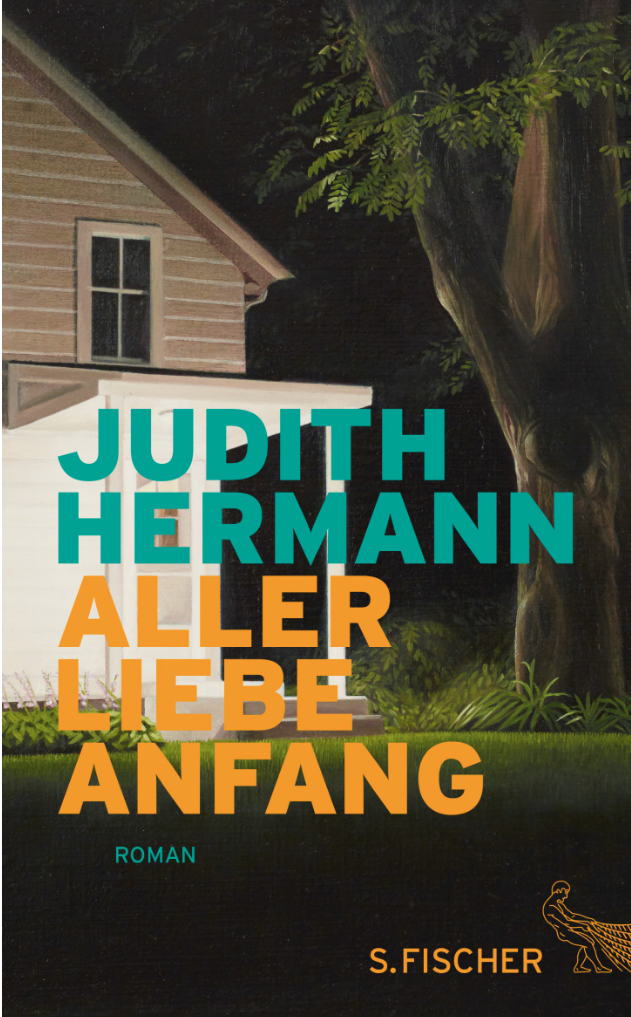
Bad Literature Doesn’t Equal Genre – On Judith Hermann’s Aller Liebe Anfang (2014)

Aller Liebe Anfang

Edo Reents, the critic of the FAZ – Frankfurter Allgemeine Zeitung – wrote about Judith Hermann’s long-awaited first novel:  “Judith Hermann has two problems. She cannot write and she has nothing to say.” – “Judith Hermann hat zwei Probleme: Sie kann nicht schreiben, und sie hat nichts zu sagen”. I wouldn’t go as far as that, but I too felt that the muses were absent while she wrote this. It’s particularly disappointing because she took a long time to write this novel. Her last book came out in 2009. You’d expect a masterpiece after five years of silence.

Edo Reents’ review wasn’t the only one I read and most critics share his opinion; they just don’t word it as a personal attack. I’m not keen on this type of exposure of an author, but there were other elements – in the reviews and the book – that were incredibly annoying.

Aller Liebe Anfang is a stalker novel. Yes, another one. It’s the choice of theme that led the critics to the most stupid analysis I’ve read in a long time. Because this is a topic often used in genre literature and because the book isn’t great, they deduce that it must be genre. Some critics even mentioned Stephen King. Now, you may like Stephen King or not, but the guy knows how to write great genre and, funny enough, if you read Aller Liebe Anfang as genre – it’s even worse. Clearly those critics just know about Stephen King, they haven’t read him or any other genre writer or they would know that plausibility and logic are key in most crime novels. Unfortunately you don’t find a lot of that in Hermann’s book. Nor do you find compelling and precise descriptions, but blurred settings and faulty imagery. The characters too are blurred and their occupations seem vague. I’ve never heard of a nurse doing people’s shopping or of a carpenter designing houses.

What’s the novel about? Stella and Jason have been married for five years. They live with their small daughter in the suburbs. Where? We don’t know. That’s another annoying trait of this book: Everything is vague. Jason is mostly gone for weeks and Stella is alone. She loves to sit in the living room, in front of a huge window, reading. She doesn’t realize that she’s probably watched all the time until one day a guy rings the door bell demanding to talk to her. She refuses and, Mister Pfister (yes, that’s his name, not Herr Pfister), insists. He returns daily, leaves messages, photos, small things in her letter box. Stella is passive at first and when she finally reacts it’s too late. Things go very wrong.

Why does she not react? Because she’s unsettled by Mister Pfister and starts to look at her own life from outside. Is this really the life she wanted? Has she ever decided what kind of life she wants or has she just been drifting?

The reflections circling around Stella’s life were well done. I also liked her prose in these sections because some of the descriptions stood out like scarecrows on an empty field. She does more telling than showing but it’s often interesting telling. She takes risks.

In spite of some good elements, this isn’t a book I would recommend. I seriously wonder what went wrong here. I have a suspicion. Judith Herman is one of a few German authors who has been highly praised and translated into English – and many other languages. This book feels as if it had been written with an international market in mind. Knowing that the US and UK market is much more interested in plot, she added a stalker element to an otherwise quiet and introspective novel. The names she chose are very telling too. Stella, Jason, Ava, Mister Pfister  – really? I haven’t come across these names in Germany very often. And then there’s the  setting. It’s deliberately vague – with a bit of imagination it could be set anywhere in the world.

I once thought that Judith Hermann was one of the most important younger writers. I still think her shot story collections are wonderful. But she isn’t a novelist and she shouldn’t add a dodgy plot to her story just because she has an international market in mind. Considering how very few German books are translated into English, I would wish, this one wouldn’t make it and leave room for something that’s really good. Sadly, without the stalker element – and maybe 100 pages shorter – this could have been another of her memorable short stories.


Michael Kumpfmüller: Die Herrlichkeit des Lebens (2011) – The Glory of Life (2014)

Die Herrlichkeit des LebensThe Glory of Life

There are two types of historical novels: those which are pure fiction and those in which real people are brought to life. I’m fond of the latter, so I was interested in Michael Kumpfmüller’s Kafka novel  Die Herrlichkeit des Lebens – The Glory of Life.

What a sad and moving book this is. The last Kafka book I’ve read was Brief and den Vater – Letter to My Father, and with that in mind, Kumpfmüller’s novel was even more moving. There’s this future giant at of German literature, who, at forty, is still afraid to face his father, to make decisions for himself, and to allow himself to live a happy, fulfilled life. And then, on a holiday with his sister, he meets Dora Diamant, a young Eastern Jewish woman who works as a cook in a holiday home for Jewish children. It’s the year 1923, Kafka has been ill for many years by then and is retired. A year later, in 1924, he will be dead.

Dora Diamant falls in love with him instantly. She loves this sensitive, delicate man. He too, falls in love. She’s good for him and for the first time in his life he makes plans for the future. They want to live together in Berlin. He will not return to his family home in Prague. It takes a lot of courage for him to oppose his parents, but they finally give in. Of course, they don’t know that he will live with Dora.

The months in Berlin are some of the happiest in Kafrka’s life, but they are difficult too. Kafka and Dora are not married and landlords aren’t keen on having them in their house. And there’s the hyperinflation. Money’s devalued constantly. Life in Berlin is incredibly expensive. The winter is harsh and the apartments are cold. It doesn’t take a lot for a frail man like Kafka to fall ill again. This time it will be fatal.

The book tells us how he has to return to Prague, from there to a sanatorium in Austria, and to another one, near Vienna. Dora follows him eventually. Kafka’s parents have accepted her. Possibly they sense it’s the end anyway.

It’s incredibly sad to read how Kafka suffered. How painful it was to write his final short stories, but it’s also interesting to read about some of those stories and what they meant. In his last year, for the first time, he stood up against his father; for the first time he’s almost free. Too late though. He dies in June 1924, after long and intense suffering.

Kumpfmüller alternates between Dora’s and Kafka’s point of view which enlarges the book. The dialogue is rendered in indirect speech which is the only way this could have been done. Anything else would have been tacky. Besides, he had to invent most. The notebooks and letters of Kafka’s last years are lost. Dora took them and in 1933 they were confiscated by the Nazis.

I never pictured Kafka to be a ladies’ man nor that there was a true joy of life hidden in him. It’s horrible to see to what extent his father crushed him.

Anyone interested in Kafka should read this. Preferably, in parallel with some of his short stories and The Letter to My Father.

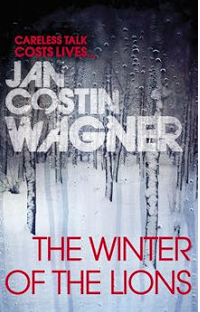
Jan Costin Wagner: Im Winter der Löwen (2008) – The Winter of the Lions (2011) – Kimmo Joentaa Series 3

The Winter of the Lions

Jan Costin Wagner may very well be THE discovery of this year’s German Literature Month for me. I started The Winter of the Lions, book three in the series, in October and since then I’ve already read Silence, book two, have started book one, Ice Moon, and ordered the remaining two novels. Book five just came out in German. Now you certainly wonder why I’ve started the series backwards. There’s a reason, although, now that I’m reading book one I know, I shouldn’t have worried. I knew that Detective Kimmo Joentaa loses his wife in book one. I thought that a large part of the book would focus on her illness, but she dies in the first two pages and the book is about grief and loss, not about illness. The death of Joentaa’s wife, which is a recurring theme in every book, underlines that each novel is, at its core, a meditation on death.

It’s interesting that reading the series backwards makes me much more aware of how much Joentaa is changing. And it’s precisely this change which makes the series such a great read. Joentaa is not only likable but complex and sensitive, a truly appealing character. I’m also pleasantly surprised about how different each book is, although there are many similarities. In the first, Ice Moon, most chapters are written from Joentaa’s point of view, a few from the murderer’s perspective. In book two, Silence, we have a whole chorus of voices. Joentaa’s is only one of many. In The Winter of the Lions, Wagner uses a similar approach as in Ice Moon. Most chapters are written from Joentaa’s point of view, only a few from the point of view of the murderer.

What makes this series so outstanding is the choice of themes. While the detective has to find the murderer the books are much more an exploration of the reasons why someone was killed than simple “whodunits”. Only in finding the reason for a murder, does Joentaa find the killer.

The careful uncovering of the reason behind a series of murders is even more important in The Winter of the Lions than in the first two books. While book one focuses on the meaning of death, book two is a study of guilt, and book three looks into the way we treat other people’s tragedies.

The Winter of the Lion starts on Christmas Eve. Joentaa has been a widower for two years and has come to terms with his loneliness. He even looks forward to spend Christmas on his own. While he’s still at the police station, a young woman wants to report a rape. She’s a prostitute and pretends one of her customer’s has raped her. When Joentaa begins to ask questions, she withdraws. She doesn’t want to go into details.

Surprisingly, the same woman rings Joentaa’s door bell a little while later, when he’s back home. She spends the night with him and they begin a very unusual relationship.

The strange woman isn’t the only one to disturb Joentaa’s quiet Christmas. One of his colleague’s, the police pathologist, is found stabbed in a snowy wood. A little while later a puppeteer is killed and a famous talk show host is attacked.

All of the victims of the perpetrator in The Winter of the Lions took part in a talk show, in which victims of accidents, fires, and murder were the topic of the discussion.

One of the many questions the book asks is: When does one person’s tragedy become another person’s entertainment? I would love to write in more details about the topics in the book but I would spoil it.

What made me love Wagner’s books even more was his writing style. This is crime at the literary end of the spectrum. The sentences are short, spare, and very precise.

As if all of this wasn’t enough there’s a haunting atmosphere in every book and the Finnish setting is another bonus, especially since each book takes place during another season. I loved to read about the long nights in winter and the endless days in summer.

Should you wonder why a German author chose to set his books in Finland —Wagner is married to a Finnish woman and spends half of the year in Finland.

This is one of the best crime series I know. Haunting, atmospherical, with philosophical depth and impeccable writing.

Here is Guy’s excellent review of book two – Silence.

Welcome to German Literature Month

Screen Shot 2014-09-24 at 07.23.25

Welcome everyone to German Literature Month 2014.

If we can go by the many intro posts that I’ve seen, it should be a fantastic month.

I have already started and read three books which I hope to review shortly.

I’m not as disciplined as Lizzy whose plans you can see on her blog, I will read as I please the whole month, focussing mostly on newer publications.

Unfortunately I will not be able to visit and publish a lot during the first ten days, but as soon as things have quieted down on my side, I’ll make the rounds.

———-

A tiny piece of hostess admin before the fun begins in earnest.  The German Literature Month blog is once more up and running and all participants with blogs  (30+ – how terrific is that!) have been added to the blogroll.  If you’re joining in, and don’t see your name up in lights, so to speak, please leave a comment below and you will be added.

There are also prizes to be won by participating.  Whoever tallies the most pick and mix points will win a copy of both Berlin Tales and Vienna Tales, kindly donated by Oxford University Press.  Lizzy and I will choose our favourite post and the writer will win 2 titles by Alina Bronsky, The Hottest Dishes of The Tartar Cuisine and Call Me Superhero, kindly donated by Europa Editions.  For your reviews to be in the running for these prizes, please link them into the Mr Linky on the German Literature Month blog.

All that remains is for Lizzy and I to wish you a very enjoyable November.  🙂


German Literature Month – Some Plans and Suggestions

Screen Shot 2014-09-24 at 07.23.25

Although I don’t really stick to my plans these days, I was still tempted to make a list of possible choices for German Literature Month because in the past years my lists helped others find books. I’ll attempt to read a mix of translated and not yet translated books but all by authors known in the English-speaking world.
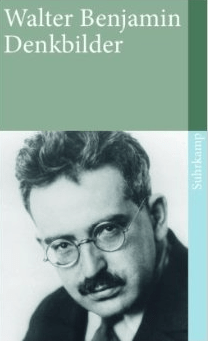
Walter Benjamin

I started to read Walter Benjamin’s essay collection Denkbilder. Many of the essays can be found in the collection Reflections. Benjamin was a philosopher, essayist, memoirist and modernist writer, who tragically took his own life in 1940, in France, when he knew he wouldn’t be able to escape the Nazis. He has written a lot of influential books like The Work of Art in the Age of Mechanical Reproduction
Tonio Kröger

Another classic, Thomas Mann’s novella of a young artist, Tonio Kröger.
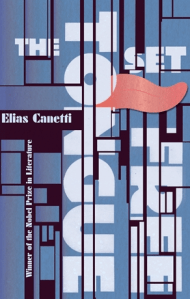
The Tongue Set Free

Another modernist writer and memoirist, just like Walter Benjamin. Elias Canetti’s The Tongue Set Free is a childhood memoir, written in a dense poetic prose.
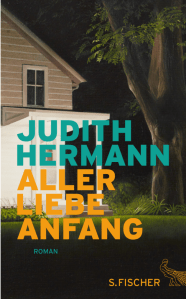
Aller Liebe Anfang

Judith Hermann has just published her fourth book. I loved her two short story collections and appreciated Alice and now I’m curious to find out how much I’ll like her novel which just came out in Germany.
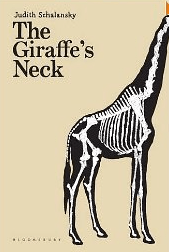
The Giraffe's Neck

I bought Judith Schalansky’s The Giraffe’s Neck when it was published in Germany, two years ago. Now it has finally been  translated.

Here’s the blurb

Adaptation is everything, something Frau Lomark is well aware of as the biology teacher at the Charles Darwin High School in a country backwater of the former East Germany. It is the beginning of the new school year, but, as people look west in search of work and opportunities, its future begins to be in doubt.

Frau Lohmark has no sympathy for her pupils and scorns indulgent younger teachers who talk to their students as peers, play games with them, or (worse) even go so far as to have ‘favourites’. A strict devotee of the Darwinian principle of evolution, Frau Lohmark believes that only the best specimens of a species are fit to succeed. But now everything and everyone resists the old way of things and Inge Lohmark is forced to confront her most fundamental lesson: she must adapt or she cannot survive.

Written with cool elegance and humane irony, The Giraffe’s Neck is an exquisite revelation of a novel, and what the novel can do, that will resonate in the reader’s mind long after the last page has been turned.
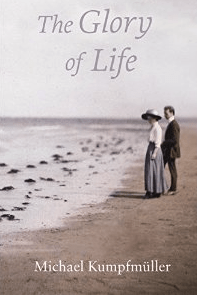
The Glory of Life

Michael Kumpfmüller has already published a few novels to high acclaim. Some have been translated. The Glory of Life is his latest book and tells the story of Kafka’s last year, during which he fell in love with Dora Diamant. I started reading it and the writing is luminous and lyrical.
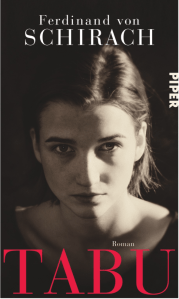
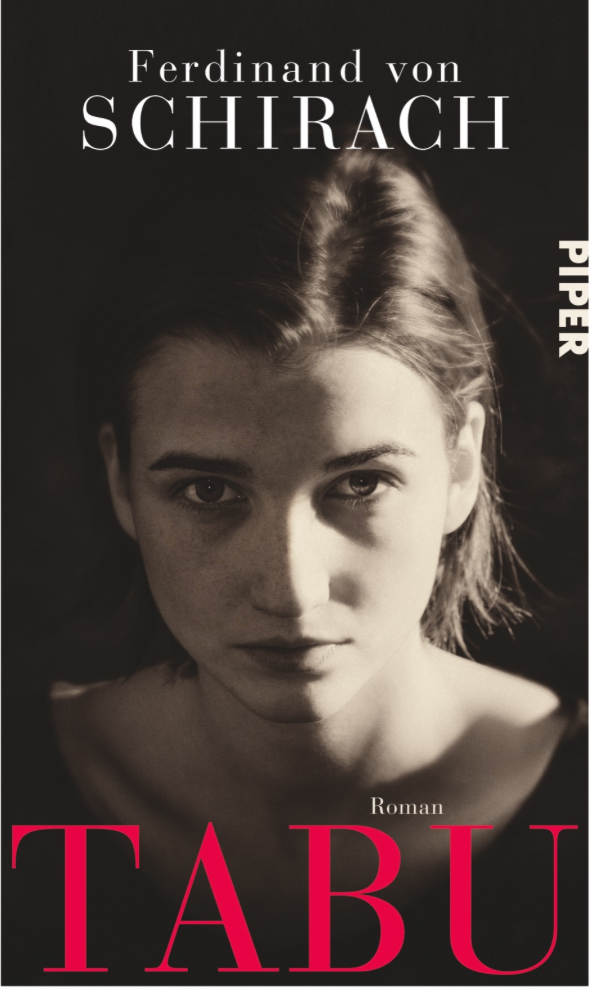
Tabu

The translation of Ferdinand von Schirach’s latest novel Tabu – The Girl Who Wasn’t There will be published in January. He’s another author whose every book I tend to read.

Sebastian von Eschburg, scion of a wealthy, self-destructive family, survived his disastrous childhood to become a celebrated if controversial artist. He casts a provocative shadow over the Berlin scene; his disturbing photographs and installations show that truth and reality are two distinct things.

When Sebastian is accused of murdering a young woman and the police investigation takes a sinister turn, seasoned lawyer Konrad Biegler agrees to represent him – and hopes to help himself in the process. But Biegler soon learns that nothing about the case, or the suspect, is what it appears. The new thriller from the acclaimed author of The Collini CaseThe Girl Who Wasn’t There is dark, ingenious and irresistibly gripping.
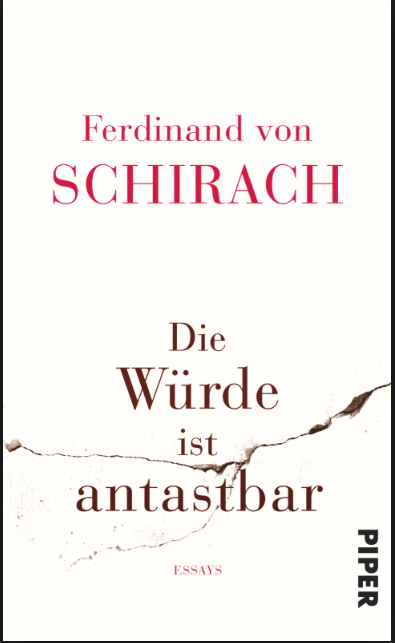
Essays

I’ve almost finished this collection of Ferdinand von Schirach’s essays. Some are interesting, some, like the one of smoking, annoyed me quite a bit, but overall they are worth reading.
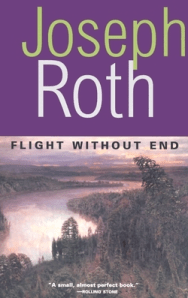
Screen Shot 2014-10-19 at 10.18.51

Since I’m hosting a Joseph Roth Week I’ll be reading at least two of his novels. One of them is our readalong title Flight Without End.

Flight Without End, written in Paris, in 1927, is perhaps the most personal of Joseph Roth’s novels. Introduced by the author as the true account of his friend Franz Tunda it tells the story of a young ex-office of the Austro-Hungarian Army in the 1914- 1918 war, who makes his way back from captivity in Siberia and service with the Bolshevik army, only to find out that the old order, which has shaped him has crumbled and that there is no place for him in the new “European” culture that has taken its place. Everywhere – in his dealings with society, family, women – he finds himself an outsider, both attracted and repelled by the values of the old world, yet unable to accept the new ideologies.
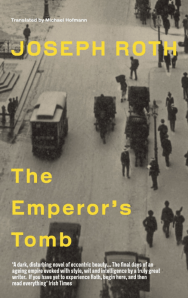
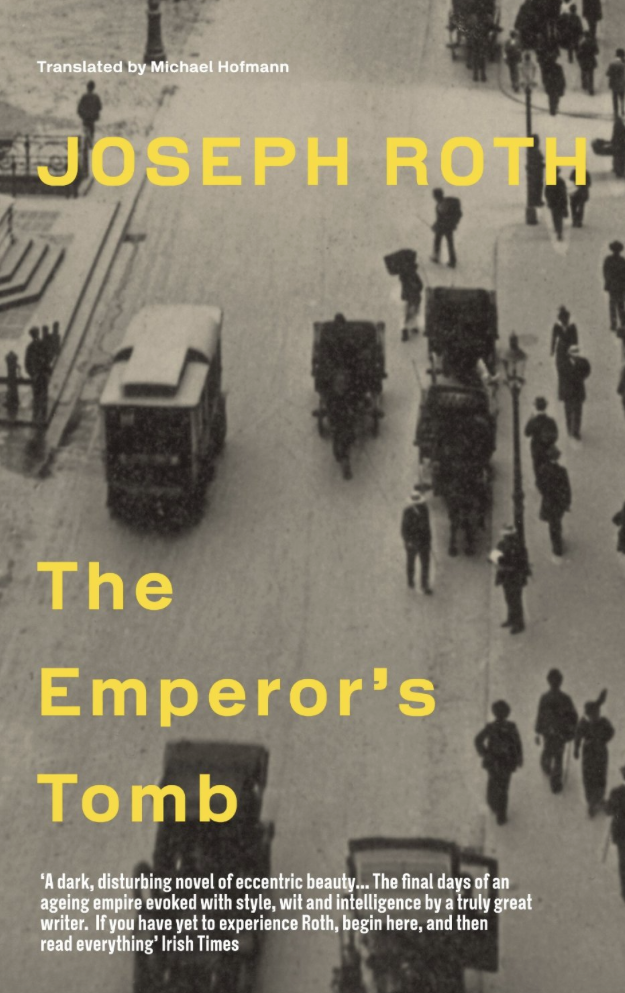
The Emperor's Tomb

The Emperor’s Tomb might be the second choice.

The Emperor’s Tomb is a magically evocative, haunting elegy to the vanished world of the Austro-Hungarian Empire, and to the passing of time and the loss of youth and friends. Prophetic and regretful, intuitive and exact, Roth’s acclaimed novel is the tale of one man’s struggle to come to terms with the uncongenial society of post-First World War Vienna and the first intimations of Nazi barbarities.
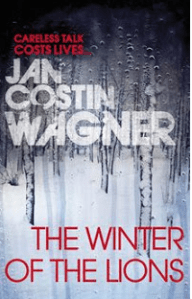
The Winter of the Lions

Jan Costin Wagner is a German crime author whose books are set in Finland. A very unique mix. I’m reading the third in his Kimmo Joentaa series The Winter of the Lions and like it so much, I already got another one. I’m particularly fond of the writing. It’s so sparse and dry. Decidedly more literary than mainstream.

Every year since the tragic death of his wife, Detective Kimmo Joentaa has prepared for the isolation of Christmas with a glass of milk and a bottle of vodka to arm himself against the harsh Finnish winter. However, this year events take an unexpected turn when a young woman turns up on his doorstep.

Not long afterwards two men are found murdered, one of whom is Joentaa’s colleague, a forensic pathologist. When it becomes clear that both victims had recently been guests on Finland’s most famous talk show, Kimmo is called upon to use all his powers of intuition and instinct to solve the case. Meanwhile the killer is lying in wait, ready to strike again…

In Kimmo Joentaa, prizewinning author Jan Costin Wagner has created a lonely hero in the Philip Marlowe mould, who uses his unusual gifts for psychological insight to delve deep inside the minds of the criminals he pursues.
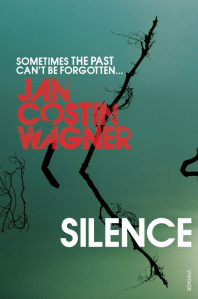
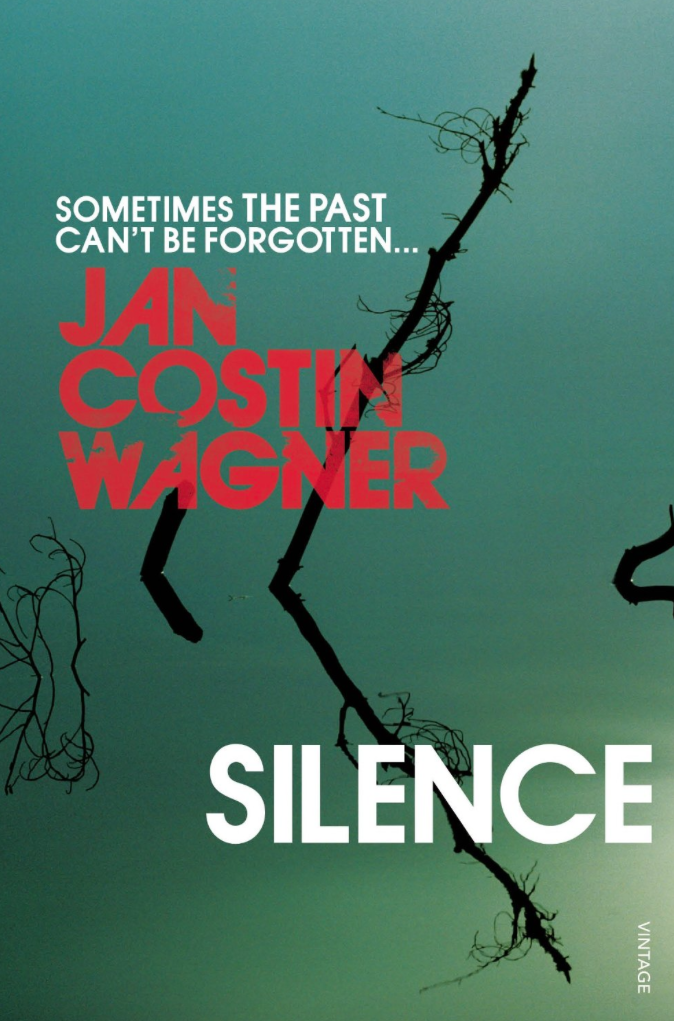
Silence

Silence is Wagner’s second Kimmo Joentaa novel.

A young girl disappears while cycling to volleyball practice. Her bike is found in exactly the same place that another girl was murdered, thirty-three years before. The original perpetrator was never brought to justice – could they have struck again? The eeriness of the crime unsettles not only the police and public, but also someone who has been carrying a burden of guilt for many years…

Detective Kimmo Joentaa calls upon the help of his older colleague Jetola, who worked on the original murder, in the hope that they can solve both cases. But as their investigation begins, Kimmo discovers that the truth is not always what you expect.
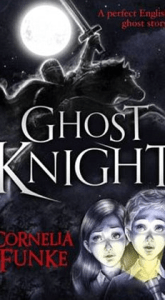
Ghost Knight

I’m also tempted by Cornelia Funke’s ghost story Ghost Knight, set in and around Salisbury Cathedral.

Eleven-year-old Jon Whitcroft never expected to enjoy boarding school. He never expected to be confronted by a pack of vengeful ghosts either. And then he meets Ella, a quirky new friend with a taste for adventure…

Together, Jon and Ella must work to uncover the secrets of a centuries-old murder, while being haunted by ghosts intent on revenge. So when Jon summons the ghost of the late knight Longspee for his protection, there’s just one question – can Longspee really be trusted? A thrilling tale of bravery, friendship – and ghosts!
Screen Shot 2014-10-19 at 09.59.49

These are the plans for the translated authors/books, but I might also read some of those that haven’t been translated yet, like Keto von Waberer.

Have you read any of these books? What are you’re plans?