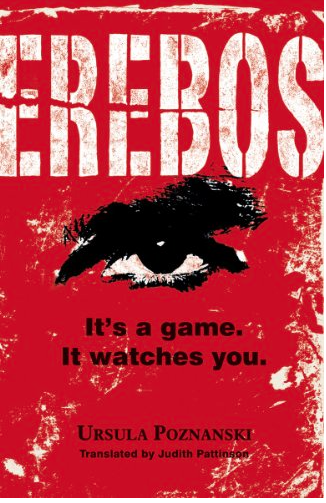
Ursula Poznanski: Erebos (2011)

Erebos Poznanski

Are you playing the game – or is the game playing you? A highly addictive thriller about power, manipulation and revenge.

‘Enter. Or turn back. This is Erebos.’

Nick is given a sinister but brilliant computer game called Erebos. The game is highly addictive but asks its players to carry out actions in the real world in order to keep playing online, actions which become more and more terrifyingly manipulative. As Nick loses friends and all sense of right and wrong in the real world, he gains power and advances further towards his online goal – to become one of the Inner Circle of Erebos. But what is virtual and what is reality? How far will Nick go to achieve his goal? And what does Erebos really want?

Enter Erebos at your own risk. Exciting, suspenseful and totally unputdownable.

I must honestly say, when Lizzy suggested Erebos as her readalong title, I wasn’t thrilled. I couldn’t tell you why. Certainly not because it’s a YA novel. Maybe because I wasn’t sure whether it was some sort of fantasy or a realistic thriller? And because I was worried about the writing. Some recent German thrillers that have made it into translation were anything but well written. Imagine my surprise when I detected that Erebos wasn’t only well-written but so gripping and believable, I couldn’t put it down. It might be the thriller of the year for me. Unfortunately for this review, part of the appeal is that we don’t really know what’s going on. Is it realistic? Is it fantasy? Science-fiction? I don’t want to say too much. Only that I think it would appeal to anyone, whether you like more fantastic stories, or only read realistic novels.

So what’s it about? At a school in London, students exchange a computer game. Those who play it are not allowed to talk about it. Those who don’t, either want to be part of what feels almost like a secret society, or they openly hate the game.

Nick is at first one of those who don’t play the game. He watches his friends and is worried. What happens to them? Why are they sucked into this game like this? Finally someone passes the game on to him and he tries it out. Initially, he’s skeptical but that passes quickly and he, like all the others, is sucked into the world of Erebos.

Being addicted to a game might be bad enough, but this one seems to have an agenda of its own. It seems to know the players and their secrets and uses this against them. Part of the game are assignments in real life, and soon the virtual danger become very real.

I deliberately kept this summary very short because, as I wrote earlier, part of the appeal is discovering what’s going on.

Nick is a great protagonist and we root for him. He’s likable but flawed and undergoes important changes.

I really loved how Ursula Poznanski described the world of the game and the addictive part was shown in a very believable way. Once the assignments in the real word start, an entertaining read turns into an eerie thriller. I couldn’t stop reading, wanted to find out what was behind it all. So often thrillers have disappointing endings. Here again, Erebos is an exception. It’s pitch perfect from beginning to end. A must read for those who love YA novels and for fans of original, futuristic thrillers. I’m not surprised that Erebos has won the Deutscher Jugendbuchpreis, the German prize for Children’s Literature. It’s captivating and topical.

I finished this book before the attacks in Paris but meanwhile, I’ve heard that the terrorists also communicate via computer online games. A communication that’s particularly hard to decipher. All of a sudden, Erebos his even more topical. It certainly has a lot to say about addiction, manipulation, and retribution. Don’t miss it.
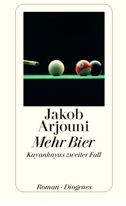
Jakob Arjouni: More Beer – Mehr Bier (1987) Kayankaya 2

More Beer

More BeerMehr Bier is the second novel in Jakob Arjouni’s Kayankaya series. It’s set in Frankfurt, Germany. PI Kayankaya is of Turkish origin. While Arjouni was still alive, he was called Germany’s answer to Raymond Chandler. I always found this comparison problematic. Arjouni writes extremely well. I’d say he’s definitely at the literary end of the crime spectrum. His books are hardboiled noir. Kayankaya is a cynical loner who gets beaten up more than once, still, I don’t think he has a lot in common with Marlowe. The differences are quite subtle but they are important. I remeber hating how Kayankaya killed a fly in the first novel. In this one, he beats a rat. Marlowe would never do something like that. I remember noticing after I’ve read three or four books by Chandler that Marlowe has a great fondness for animals. Kayankaya is much more jaded.

More Beer sees Kayankaya investigate the murder of a chemical plant owner. Four eco-terrorists have been charged with the murder, but it seems highly unlikely that they did go that far. Unfortunately,they don’t want to talk. Early on, it becomes obvious that there was a fifth man involved. But who and where is he? The defendants’ lawyer hires Kayankaya to find him. He investigates with his usual stubbornness, even pursuing after he gets beaten up a couple of times.

Kayankaya is a loner, a heavy drinker, a disillusioned man with an acerbic wit. And constantly mistreated because of his origins. I forgot how old these books are. This one was written in the 80s and to read about the way Kayankaya is treated was quite shocking. I think the status of people of Turkish origin has changed meanwhile. At least I hope so. Creating a character like this in the 80s must have been pretty provocative.

I’m not too sure what to think about this book. I found the first in the series, Happy Birthday, TürkeHappy Birthday, Turk, so much better. But while I didn’t care for the story of More Beer, I loved the writing. I’d forgotten just how well Arjouni writes. The novel is full of memorable metaphors like when the narrator compares rain drops on a windshield to a herd of animals running.  For that alone, I might reread it and will certainly not wait another ten years before I read the third one.

Arjouni, Jakob
Most of Arjouni’s novels have been translated and published by Melvillehouse.
Sadly the author died of pancreatic cancer in 2013. He was 48 years old.

Mehr Bier

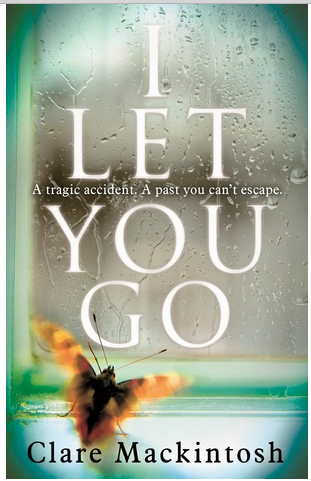
Clare Mackintosh: I Let You Go (2014)

I Let You Go

I came across Clare Mackintosh’s novel I Let You Go on Twitter. It’s another one of those psychological thrillers with a split narrative and a huge, stunning twist. But, for once, I really loved the twist and the split narrative actually added not only other POVs but another genre altogether. Unfortunately I can’t say much about the twist, only that I found it great but if I told you why, it would be utterly spoilt. But I can talk about the split narrative.

The prologue describes a horrible accident. A small child runs from his mother and is killed in a hit and run. The novel is told from several POVs – the two most important ones being Clare’s and the police’s. Adding the POV of the police was quite unusual and made this book a combination of psychological thriller and police procedural, which worked well.

Clare runs from Bristol after the accident and hides in Wales. She’s an artist but her hand has been so severely wounded that she cannot work as a potter anymore. She starts to take photographs of the beaches, where she lives. It’s out of season when she arrives and the cottage she rents is far away from any other houses. The only people she sees are the owner of a caravan park and the local vet who helps her when she finds an abandoned puppy. While Clare, who is haunted by memories of the accident and other traumatic events,  tries to heal and find new meaning in life, the police frantically look for the person who killed the little boy.

The book has a leisurely pace until the twist in the middle, but from then on it gets very fast paced and suspenseful. We find out that the accident isn’t the only horrible thing in Clare’s past and that the past she hopes she’s left behind, is catching up with her. I can’t say more.

This is a suspenseful, well-plotted, fast-paced psychological thriller with a major twist. The characters are well-drawn, the setting is atmospheric and the end doesn’t disappoint. Maybe the police parts are a tad too long, unless this is meant to be a first in a series. If it’s a standalone, then those parts could have done with some cutting because we don’t need to know that much about the private lives of the detectives. Possibly, though, it was Clare Mackintosh’s homage to her twelve years in the police force. All in all, a minor thing that doesn’t change that I enjoyed this book a lot.


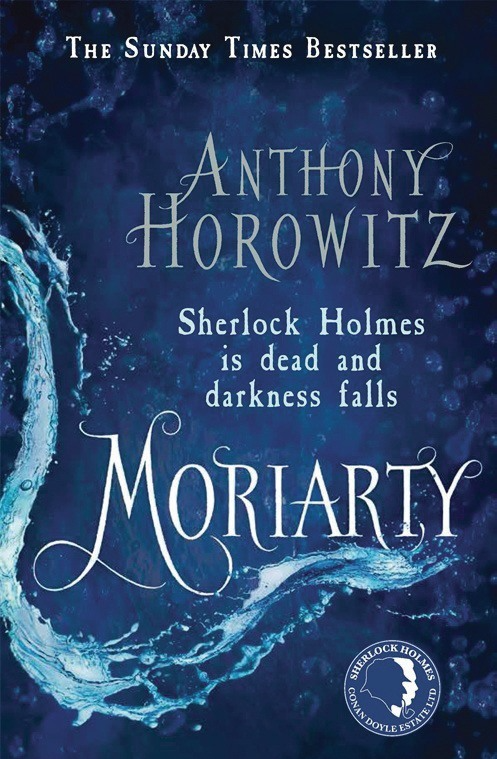
Anthony Horowitz: Moriarty (2014)

Moriarty

I didn’t expect that I would enjoy Moriarty so much but I did. This is especially surprising because, initially, I had no intention of reading it. I don’t usually pick up Sherlock Homes sequels, but since I’m planning on visiting the Swiss Sherlock Homes Museum and the Reichenbach Falls soon, I was suddenly tempted. I don’t regret it. Of course, the weather played a role as well. After weeks of temperatures over 100°/39°, we suddenly had cool and rainy autumnal weather.

The book starts at the Reichenbach Falls, in Switzerland. Those who are familiar with the Sherlock Holmes stories, know that’s where Holmes and his adversary Moriarty meet and fall to their deaths. Or, to be more precise, we are led to believe they fell to their deaths. It’s here, at the Reichenbach Falls, where Inspector Athelney Jones from Scotland Yard and Pinkerton agent Frederick Chase meet. The two men hit it off instantly and decide to join forces and hunt for a criminal, who is even more evil than Moriarty—Clarence Devereux, a ruthless American criminal who’s been followed by his violent entourage. A coded message in the pockets of the dead man they believe to be Moriarty, tells the two men where to go next. It looks as if Devereux and Moriarty were meant to meet in London.

Jones and Chase leave Switzerland and travel back to London where they embark on a hunt for the elusive criminal and follow his trail of violence and murder.

This is a very tightly plotted, dramatic and atmospheric story that manages to capture the Victorian London we know so well from the Sherlock Holmes story. I was afraid at first, that the book might be a bit artificial but while it shares elements with the Sherlock Holmes stories, it felt original. It also felt much more modern. I can’t think of any Sherlock Homes story in which the crimes depicted were as gruesome as in this novel. It’s an entertaining, enjoyable page-turner that will appeal to more than just Sherlock Holmes fans. My only reservation – admittedly it’s not a small one – the twist towards the end. If you’ve read it, you know what I’m talking about, if not—be prepared. You might be disappointed. I was annoyed at first, but a few days after having finished the book, the memory of the great atmosphere and the tight plot remains, while the twist is just a faint aftertaste. In a way, looking back, it even makes sense. Nonetheless, I felt I needed to warn people. There were reviewers on amazon who were so annoyed by the twist that it made them hate the book.

At the end of the book, as a freebie, so to speak, there’s one of Horowitz’ Sherlock Holmes stories “The Three Monarchs”, which I found quite enjoyable too.

In spite of the twist – I can really recommend this crime novel. It’s been written in the spirit of the Sherlock Holmes stories but adapted to our more modern tastes. An ideal book for a rainy afternoon.

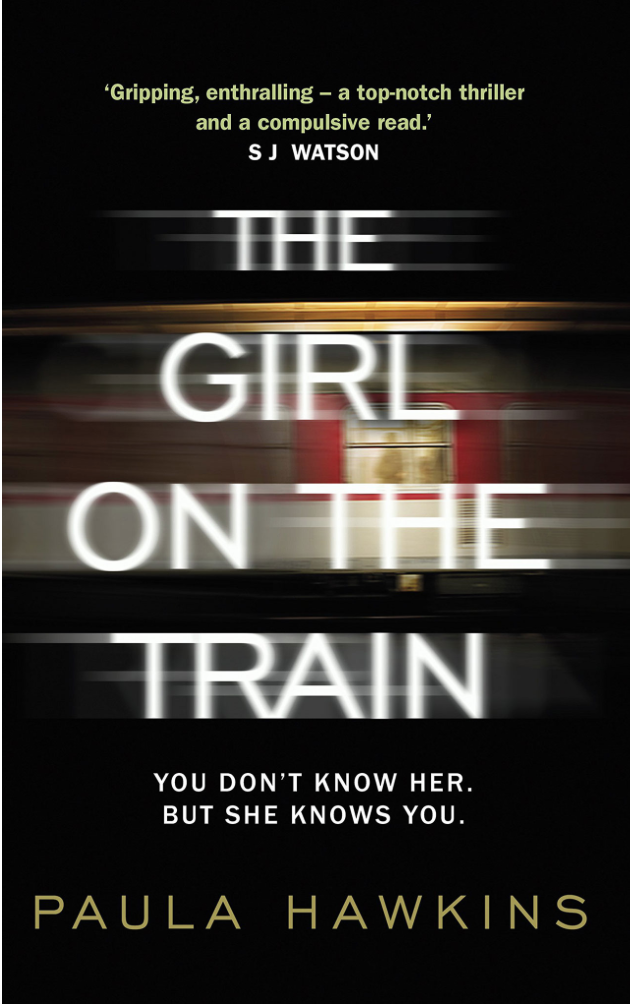
Paula Hawkins: The Girl on the Train (2015)

The Girl on the Train

Sometimes a negative review entices me to read a book. To be fair though, in the case of Paula Hawkins’ The Girl on the Train, there were also a fair amount of positive reviews that made me want to read it. What I didn’t expect was that I would like it so much. I basically gobbled it down in a couple of sittings. For sure, the writing is very simple—present tense + short sentences + split narrative, short chapters, three narrators. Not exactly sophisticated writing. And, yes, the three women who tell this story have only one voice. Without chapter headings indicating when it’s Rachel’s, Megan’s or Anne’s turn to tell the story, we would hardly be able to guess. Their lives are different, some of their dysfunctions are different, but the tone and vocabulary is pretty much the same. And all three of them are not exactly role models.

There’s Rachel, the girl on the train. Every day she commutes to London, guzzling cans of pre-mixed gin and tonic, although she’s been unemployed for some time. The train always stops at the same place and she gets a good view of one of the houses. The young good-looking couple living there fascinates her. They remind her of herself and her ex-husband Tom with whom she used to live only a few houses farther down. While her obsessive interest in the couple is strange, it is far stranger that she’s willing to enter her fantasy world when she thinks she sees something shocking. I’m not going to write more as it’s a book that’s easily spoilt.

Why did I love it, you wonder? There are books that do nothing more than exploit an idea or an image. In this case: looking at people from a train and imagining their lives. I liked this idea a great deal. I would never spy on people with binoculars – a habit I find positively disgusting-, but I’m fascinated by the tiny glimpses of other people’s lives we can catch when we are on a train. I often wonder what kind of life they have, those people, frozen in a single moment of their lives, while I rush by. I could relate to Rachel’s fascination and understood how someone as dysfunctional and lonely would get caught up in her fantasies.

I also loved the novel because I found it very gripping. And very realistic. I’ve had the misfortune of meeting a Megan and an Anna. Also women like Rachel, only without her alcohol problems. One of the characters in particular reminded me of a girl I used to work with for a while. The moment a guy showed interest in someone else, had a girl friend or a wife, she had to fling herself at him.

The Girl on the Train is a page-turner that depicts certain aspects of our society like isolation, commuting, envy, and narcissism in a realistic way. It’s a bit like Gone Girl’s little sister, although the writing isn’t nearly as good. Still,  if you’re in the mood to gobble down a book and share my fascination with the small glimpses of other people’s lives you can catch while rushing by on a train – get it. It’s flawed but entertaining. Just one word of warning – the end is a bit disappointing.

After finishing it I picked up Renée Knights Disclaimer and was amused to see that the sticker on the book doesn’t say “The new Gone Girl” but “If You Liked The Girl on the Train“. I suspect in a few months it will say “The new Disclaimer“. I’m eager to find out which I will like better.

Nicci French: Thursday’s Child (2014)

Thursday's Children

I’ve been waiting to read Thursday’s Child, the fourth in the Frieda Klein series, until it came out in paperback. That happened just a few months before the fifth Friday on my Mind was published. It’s one of the rare series I’ve followed since the beginning. Here are the first three reviews Blue Monday – Tuesday’s Gone – Waiting for Wednesday

I think what surprised me the most, is that this book was so much better than the last and that it felt very fresh, and added a lot on Frieda’s private life and backstory.

Due to the nature of the crime she investigates, we learn a lot about Frieda’s past. Since Frieda is a psychotherapist, an old school friend contacts her because her daughter shows signs of distress. At first, Frieda is not willing to see the girl. For one, she wasn’t all that keen on her mother all those years ago and she’s not sure how she can help. In the end she accepts to see the girl anyway and what she hears is extremely shocking. Not only because something awful happened to the girl, but because what happened sounds exactly like something that happened to Frieda when she was the girls’ age.

Although Frieda’s left her hometown twenty years ago, hasn’t stayed in contact with any of her friends, and never spoke to her mother again, she decides to leave London and investigate what has happened to the girl – and maybe to herself. I’m one of those people who would never go to a school reunion and reading how Frieda went back and had to face her past, was an intense read. I also had a very complex relationship with my mother, and so, reading about her reunion with her mother was intense as well.

Unlike in most other Frieda Klein novels, London isn’t as important in this book as in the others, but it still plays a role. Frieda’s love life takes a surprising turn and I’m not sure how I feel about it. I wonder if it was necessary to handle it that way and I’m very curious to see where she goes from here.

While the crime element is solid and gripping, it’s not the only interesting narrative strand. Following Frieda as she faces her troubled past was well worth reading. That one of the perpetrators of the first books is still following Frieda, added another, creepy layer.

Something I don’t like in crime novels is when there’s a final showdown. It’s a typical element in most psychological thrillers and Nicci French has used it before. Not in this one. That’s why it felt fresher. Frieda also didn’t put herself as much in harm’s way as she did in other books. That was always an element that annoyed me because I felt it had less to do with Frieda than with creating suspense.

If you like the series, you shouldn’t miss this. It’s the second best so far. However, I wouldn’t recommend to start with this one. You would maybe still enjoy the crime story but the part about Frieda’s life would not be as interesting.

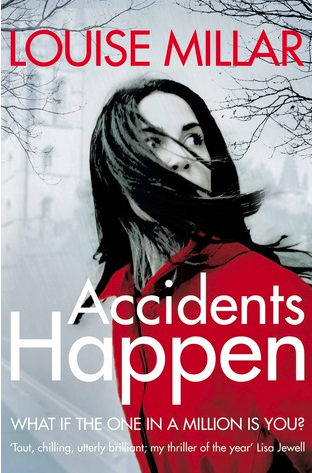
Louise Millar: Accidents Happen (2013)

Accidents Happen

I’m not sure where I’ve first heard of Louise Millar, but the review I read was very positive, so when I saw Accidents Happen at the local book shop, I picked it up.

It’s a book that’s easily spoilt. For once, the blurb doesn’t give away anything. All it says is that Kate had some serious bad luck in her life, which has made her obsessive and paranoid. We learn early that her parents have died tragically and later her husband too. It takes a while until we know how they died, and since I enjoyed discovering it for myself, I’m not going to reveal anything more.

When the book opens, Kate and her young son, Jack, live in Oxford. They have moved from London and live in a shabby neighbourhood, although Kate is very rich. Her parents-in-law aren’t happy about this choice. But they are equally unhappy about Kate’s behaviour which is extreme. She’s obsessed with statistics and hopes that if she controls her son’s and her every move, she’ll be able to avert more bad luck. The relationship with her in-laws and her sister-in-law is more than a little strained. On top of that there were break-ins in the house, Jack pretends he hears noises in the cupboard, and Kate can’t shake off the impression that someone enters while they are out. Unfortunately the in-laws think Kate’s making it all up and that she’s a bad influence on her child. They are planning on taking Jack away and so she’s forced into action. Either she sees a therapist or she changes radically. That’s when she meets visiting Oxford professor Jago, a statistician who proposes a very unorthodox way to cure Kate. I can’t say more.

This is one of those novels that might lose readers halfway in because a lot of what happens during this so-called therapy is more than a little bewildering. I’m not sure why I kept on reading anyway, but I’m glad I did because at the end – everything makes perfect sense. I think I don’t spoil too much when I say it has a major twist but a twist that works because Kate doesn’t know what’s going on either. You have to trust the author in this case, and just wait and see.

Apart from this bewildering element, the book has a lot to offer. I liked that it’s set in Oxford and the way she described the city was really appealing. The topic of statistics and the theme of whether someone is cursed or whether you can prevent accidents, was unusual. The pacing is great. It’s suspenseful but never too fast-paced. Most of the characters are extremely unlikable. Luckily Kate isn’t and we care for her.

I’d love to say more about the transformation she undergoes but – again – it would spoil the book.

While this isn’t one of my all-time favourite crime novels, I liked it a lot. It’s solid and highly entertaining, with some really nasty, even creepy characters. I’ll certainly pick up another of her novels. I was also glad that I couldn’t come up with a comparison. It didn’t feel like I’ve read  a book like this or similar authors before.