Lucie Whitehouse: Keep You Close (2016)

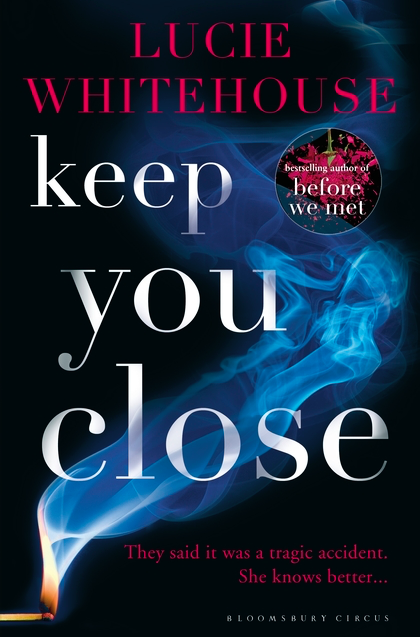
Keep You Close

This is just a quick review of Lucie Whitehouse’s latest novel Keep You Close. It’s short because it’s more easily spoilt than other crime novels. It has a couple of really surprising twists and it would be sad to give them away.

The famous, rich young painter Marianne Glass is found dead in her garden. The police say that it was an accident. Her former best friend Rowan Winter doesn’t believe this. Marianne suffered from crippling vertigo and would never have gone this close to edge of the roof.

When Rowan hears of her former best friend’s death, she travels to Oxford and the home of the Glass family. Marianne’s house is a place where she once used to be a constant visitor. Rowan, who lost her mother as a young girl and whose father never had time for her, found a second family in her friend’s family. Coming back after all these years is intense, to say the least. Although the circumstances are dire, the Glass family, or what is left of them, are happy to see Rowan again and even ask her to house-sit for them. Rowan however has a hidden agenda. She’s the only one who cannot belive that Marianne’s death was an accident. Could it have been a suicide? She doesn’t think so, she thinks that something far more sinister has happened and wants to investigate Marianne’s death.

Early on we find out that Rowan and Marianne hadn’t been in contact for ten years because of something that happened back then. This was right about the same time Marianne’s father died in a car crash. The official version was that they had a falling out because Rowan intruded too much and didn’t let Marianne grieve. But the reader questions soon whether Rowan isn’t hiding something.

A lot of things are mysterious. Someone seems to watch the house at night. Someone else or maybe the same person tries to break in. A lot of people seem to gain, one way or the other, through Marianne’s death. Some even attack Rowan, saying that she’s profiting as well, since she was able to renew her friendship with the Glass’s and begins a relationship with Marianne’s brother.

Keep You Close is an entertaining book but not entirely convincing. I didn’t mind the slow pace as much as the implausibility of some of the twists. One was really surprising and well done, the others were over the top. All in all, it’s not a bad book, but not as good as some of her older novels. This is her fourth and I’ve read three of them so far. I liked both The House at Midnight and Before We Met better than this. If you’ve never read anything by Lucie Whitehouse, I’d suggest to start with one of her earlier novels. I read The House at Midnight before blogging, so you won’t find a review, but here’s my review of Before We Met.


Dorothy B. Hughes: In a Lonely Place (1947)

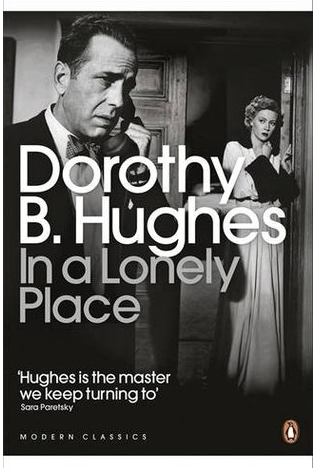
In a Lonely Place

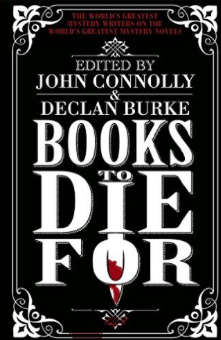
I came across Dorothy B. Hughes excellent noir novel In a Lonely Place in Books to Die For, a book of essays on important crime novels. Each of the articles was written by a famous crime writer. The book has been edited by John Connolly and Declan Burke. The article on In a Lonely Place was written by Megan Abbott. I’m sure I would have liked In A Lonely Place without reading Abbott’s essay but I might have missed a few things.

Books to Die For

Hughes novel is one of the first serial killer novels and inspired later works like Jim Thompson’s The Killer Inside Me. I know that many readers of this blog are averse to serial killer novels and I understand why. But this one is a very different book. There are three types of serial killer novels—those from the point of view of the victim, those from the point of view of the detectives and those from the killer’s point of view. The mainstream/bestselling novels usually fall into category one or two, while this one falls into the third category. Unfortunately, the blurb gives a very wrong impression and the reader thinks (s)he is reading a thriller-type story. That was never Hughes intention. Without the blurb it’s clear from the beginning that we’re in the head of the killer, Dix Steele. Dix is a WWII veteran who has just moved to L.A. and, on the spur of a moment, contacts Brub Nicolai, a former army buddy, who served with him in the UK, not knowing that he is a detective. An other perpetrator would have stayed away or fled, not so Dix Steele. He loves the idea of being able to follow the investigation very closely.

Here’s an early quote which doesn’t only give an idea of Dorothy B. Hughes’ writing but also of how eerie this scenario is. Brub is obviously talking to Dix.

Brub started, “Wha-” He realized Dix’s question. ” I guess it’s pretty much my fault. Ever since the thing started, I’ve been afraid for her. She’s lived in  the canyon all her life. She never had any fear, wandered all over it, any time of the day. But the canyon at night, the way the fogs come in— it’s a place for him.” His face was again angry, helplessly angry. “I’ve scared her. She’s alone so much. I never know what hours I have to keep. We have good neighbours, a couple of our best friends are right across the road. But you know our street. It’s dark and lonely and the way our house is set up there—” He broke off. “I’m the one who’s scared; I’ve infected her. And I can’t help it. I can’t pretend until we caught him.”

Megan Abbott emphasized in her essay that this is far more than a serial killer novel or an ordinary noir. The author went further than others in showing how difficult it was for veterans to return. How in many cases, they felt like their masculinity was in danger. The book is as much about gender as it is about crime. Men like Dix Steele had to reinvent themselves after the war. With the end of the war, they lost their identity.

What made me love this book is that we actually pity Dix Steele. He’s more than a little troubled and his suffering is genuine. Here’s a quote to illustrate this:

A man couldn’t live alone; he needed friends. He needed a woman, a real woman. Like Brub and Sylvia. Like that stupid Cary had that stupid Maude. Better than being alone.

It wasn’t often it hit him hard. It was the balmy night and the early dusk and the look of the lamps through opened windows and the sound of music from radios in the lighted rooms. he’d eschewed human relationship for something stronger, something a hell of a lot better.

What makes Dix Steele so tragic is that he is not only greedy and full of longing— for women he can’t have, for status, money, relationships, the “good life”— but also oddly hopeful. He believes that with the right woman everything might be different. When he sees Laurel Grey for the first time, a young  actress who is just as greedy for the good life, as he is, he genuinely believes, she might be his saviour.

I love nothing as much as atmospherical crime novels and this one might be one of the greatest in this regard. Set in L.A., it really brings the city to life and makes great use of the landscape and weather conditions. I thought that fog and mist were particular to San Francisco but reading this, I have to assume that the L.A. area (at the time?) was constantly foggy. Reading how this lonely, deranged and driven killer hunts for his prey in the fog made for great reading.

In a Lonely Place has been made into a movie starring Humphrey Bogart and Gloria Grahame. I haven’t seen it but I get the impression, the ending is very different.

Dorothy B. Hughes had an unusual writing career. She published twelve novels, three of which were made into movies, before she stopped writing in 1950. Allegedly, because she took care of her mother and her grandchildren. She died in 1993. It’s a bit sad to think that this great writer spent the last forty years of her life not writing.

Nicci French: Friday On My Mind (2015) Frieda Klein 5

Friday On My Mind

I just finished the fifth novel in Nicci French’s Frieda Klein series, Friday On My Mind. I really like this series although not all the books are equally good. Part of the appeal is that they are set in London, so, understandably I wasn’t too keen on book four, in which Frieda is returning to her childhood home and which therefore takes place mostly outside of London.

In this novel, we are back in London. It’s quite different from the other books, but I’m happy to say it’s one of the best of the series. Frieda isn’t only  looking for a perpetrator, no, she’s on the run and desperately trying to clear her name. A body has been found in the Thames. The dead man has a hospital tag with Frieda’s name around his wrist. His throat has been cut, so he’s clearly a murder victim. For various reasons, the police suspect Frieda.

Hiding in London proves to be very difficult. And dangerous. The police are hunting her and with CCTV everywhere, she might be discovered all too soon. But the danger doesn’t come from the police, it comes from the murderer who chases her as well.

As usual, Frieda does a lot of foolish things and puts herself and her friends in danger.

I really enjoyed this fifth installment. I liked the story and I like Frieda and her circle of friends who play an important role in this book.

Another aspect I enjoyed was that because Frieda was on the run, she came into contact with people who live on the margins of society and under precarious circumstances. This gave the book depth. On a side note—This is  the second UK novel I’ve read recently, in which the killing and/or abuse of homeless people plays a role. I felt tempted to google this and was shocked to find out how often this really happens. It’s appalling.

The sixth book is due in June (Saturday Requiem) but I will probably wait until it’s available in paperback.

Here are the links to the reviews of the other books in the series:

Blue Monday

Tuesday’s Gone

Waiting for Wednesday

Thursday’s Child

Matthew Frank: If I Should Die (2014)

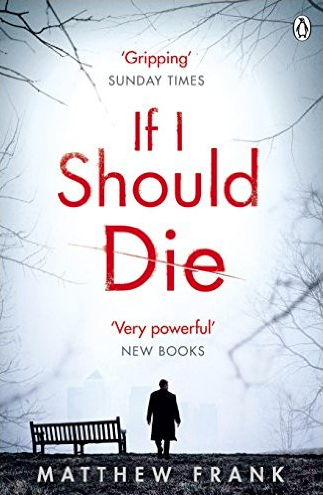
If I Should Die

I’ve seen so many rave reviews of this crime novel, that I had to pick it up. It’s a police procedural, set in London. I’m not sure whether this is a first in a series but it’s possible. The main character is trainee detective, Joseph Stark, a twenty-five-year-old Irak and Afghan veteran, dealing with heavy PTSD. He’s still recovering from an ambush that cost the lives of his comrades and has left him scarred and wounded.

When Stark begins his work at the precinct, repeated attacks on homeless people are worrying the police. When one of the victims dies, the investigation intensifies. Things get chaotic when a homeless man confesses that he’s murdered someone. How are these attacks linked and who are the perpetrators? Only when the police find out that the homeless man is a veteran (Falkland), do they make progress, as Stark is able to communicate with him.

The book offers some interesting insight into what happened and what happens to veterans in Britain. It also explores youth gangs and homelessness. The characters are realistic and likeable. The writing’s tight, the social commentary pertinent. But – I was the wrong reader for this. The book is more than just a crime novel, it’s a character study of a young veteran with PTSD. All the reviews I read, praised that aspect, called it new and gripping. Unfortunately I couldn’t even tell you how many times I’ve come across the same character in books, movies, and TV series. Admittedly, more movies than books but nonetheless, the PTSD Afghan or Irak veteran has almost become a cliché. This novel adds nothing new. The worst parts for me were those dealing with the ambush in Afghanistan. I’ve seen too many movies dealing with this to find it of any interest. Maybe it’s unfair, but I felt I had to say this because I’m sure, there are others with my interests who might not find this part of the novel original.

So, if you’ve never watched a film about recent wars – this novel could be for you. It doesn’t only show what PTSD means, but it makes it very clear that even decorated veterans may very well end up homeless because nobody cares what happens to them once they have done their duty. I still enjoyed parts of this book because the writing is assured, the investigation and the social commentary are interesting and the characters are appealing. However, I found it was too long (460 pages). Did I find it gripping? No, but sometimes, interesting is enough.

Dashiell Hammett: The Thin Man (1934)

The Thin Man

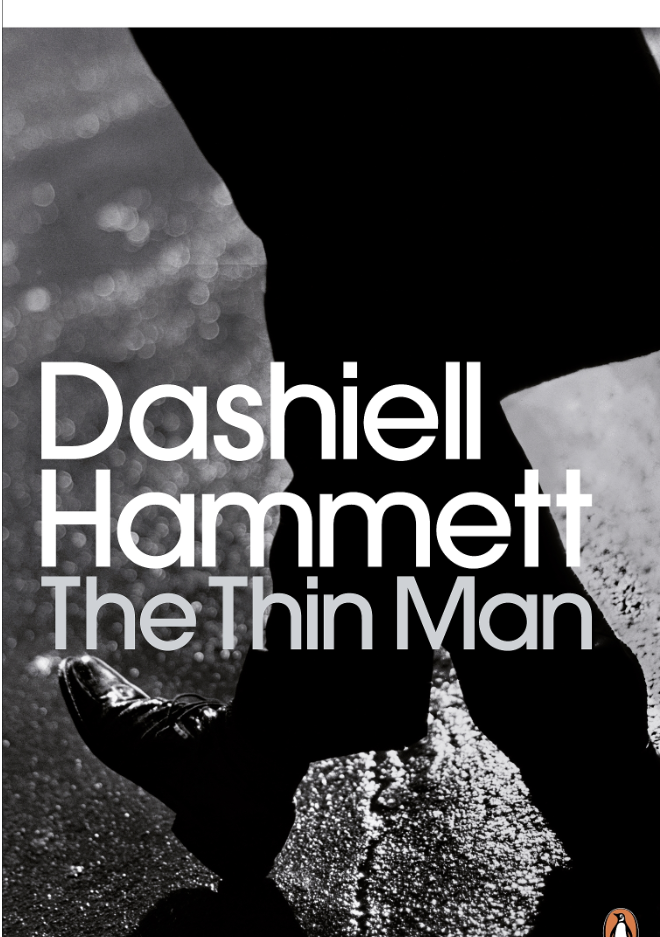
While I’ve devoured all of Chandler’s books, I’ve hardly read any Hammett. Way back when I started this blog, I read and reviewed The Glass Key – book and movie – and while I liked it, I never returned to him until now. Although I had both The Maltese Falcon and The Thin Man on my piles, I picked the latter. I’m pretty sure they are not in the same league and it wasn’t s as hard-boiled or noir as I expected. On the contrary. It has even some elements of a screwball comedy.

It’s the Christmas season and our hero, Nick Charles, is back in New York with his young wife Nora and their schnauzer Asta. Nick used to be a PI in New York before he met Nora and followed her to San Francisco where they share a business.

While waiting in a speakeasy for his wife who is Christmas shopping, a young woman walks up to him and introduces herself as Dorothy Wynant. Nick used to know her father and her when she was a kid. Dorothy hopes he’s got her’ father’s address but he hasn’t. He hasn’t heard from Wynant in years. Shortly after this encounter, Nick hears that Wynant’s secretary and former lover Julia Wolf has been found dead, shot four times, and that Wynant is missing. Interestingly, the dying Julia has been found by Wynant’s ex-wife, the manipulative, bitchy Mimi. Everyone, including the police, is convinced that Wynant shot Julia, only Nick doubts this.

While the readers are kept guessing who shot Julia, I can’t say that the crime-solving is the most interesting element in this story. What I enjoyed the most is the description of the couple Nick and Nora and the way they spend their days and nights. Most of the story takes place in their hotel room and a huge number of people drifts in and out. Friends, acquaintances, police men, criminals. Every one is constantly downing a drink. The last thing Nick does before he goes to bed – drink, the first thing he does when he gets up – he pours himself another drink. Nora and the others aren’t much better.

Nora might not be the best developed character but she’s fun. She’s the opposite of a nagging housewife. No matter what Nick does or what happens to him, she never gives him a hard time, never freaks out. She’s almost twenty years younger than her husband and very fascinated by his old life. When he’s dragged into the investigation of Julia’s murder, she joins him eagerly and tries to help him find out who killed her.

The tone and humour throughout the book, especially in the dialogue is very dry. Not as dark as in other novels of the era but refreshingly brittle.

I only found out after finishing this novel that Hammett wrote it for the women’s magazine Redbook where it was serialised in 1934. That may explain why it’s not as dark and why there are so many female main characters. There’s Nora, Nick’s wife, the hysterical Dorothy, Mimi, her bitchy mother and Dorothy’s aunt. The male characters are rather pale in comparison.

The THin Man is certainly not Hammett’s best but it’s fun.

Has anyone seen the movie?

Today I’m Over at Shotgun Honey

Shotgun Honey

Today, I was going to write a review on Dashiell Hammett’s The Thin Man but I came down with the flu. Just as well because I have some news to share.

I’m really thrilled to let you know that one of my short crime pieces You Got It All Wrong has been published by Shotgun Honey. I’ve been a fan of the magazine for a while and so I’m really happy about this.

If you’d like to read it – here’s the link.


A Bunch of Mini Crime and Thriller Reviews

The Ice TwinsCop TownChemistry of DeathUntil It's OverDisclaimerMurder on the Orient EXpress

I went over my stacks of read books during German Literature Month and was startled when I noticed how many books, especially thriller and crime novels, I had read but not reviewed. I could probably write longer posts but decided to write a few very short reviews instead. That way, you might still hear about a book worth reading or one you should avoid and I don’t have to post every single day until the end of the year.

Disclaimer

Renée Knight’s Disclaimer is possibly the thriller disappointment of the year. The premise was interesting – a woman receives a novel in which the authors describe something that happened a long time ago and that she never told anyone. I think the book has two major flaws. One is that it’s not believable. I hate it when plot relies on one character suspecting another without questioning things. That alone would have annoyed me but I also thought the story was highly unbelievable. Sometimes a book can be salvaged through great atmosphere and description. Not so this novel. In my opinion that’s the second flaw of Disclaimer. While it’s said to be set in London, it might as well have been set on the moon. Not once did I see the city. Unbelievable story, wonky psychology, and zero atmosphere.

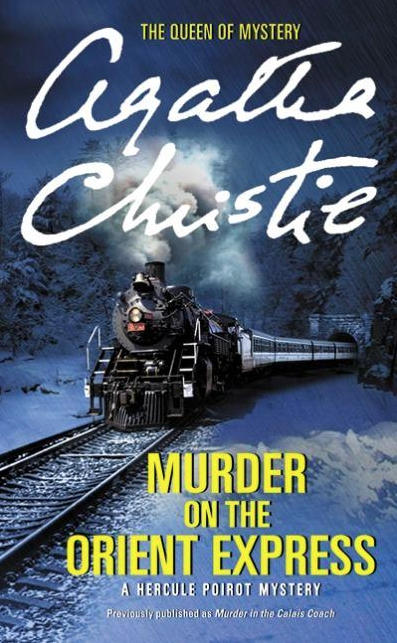
Murder on the Orient EXpress

Murder on the Orient Express was another disappointment. I picked it because I was in the mood to read a locked-room mystery and because I haven’t read any Agatha Christie in a long time. So far I’ve only ever read her standalone novels and one or two Miss Marple novels. While they might be formulaic, I still really enjoyed them. This was my first Hercule Poirot. I never picked them up because for me, as a native French speaker, the name is so silly. It sounds like poireau – leek – or poivrot – drunkard – . Plus Hercule? Really? I expected him to be on the boring side and that’s what he is. I wasn’t fascinated by his deductive skills. Still, it was a quick read and I loved the setting. I only found the murder and the way it was solved a bit lame. Still, if you like a great setting – a train in winter – and are in favour of cozy crime and whodunnits – especially locked-room mysteries – this might be for you.

The Ice Twins

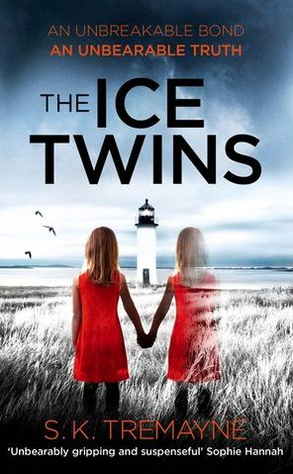
The Ice Twins had a lot to offer. Stunning descriptions and atmosphere. After the death of one of their twin daughters, Angus and Sara Moorcroft move to a remote Scottish island. Such eerie, creepy descriptions and certainly not a place I would have chosen to live in, after the awful loss of a child. It gets creepier when the surviving twin begins to claim that she’s the other one. The part that affected me the most and which is the creepiest is the favouritism. While the father openly preferred one kid, the mother preferred the other. What does it mean, when you suddenly think that it’s not your favourite who has survived?  The Ice Twins was psychologically compelling. The descriptions are great. Unfortunately the end was a bit of a disaster. Not only was it disappointing and far-fetched, I also found it misogynistic. When I bought the book, I thought S.K.Tremayne was a woman but after finishing, I started to doubt that. And indeed, S.K. Tremayne is a man. I’m not surprised. The ending leaves no doubt.

Cop Town

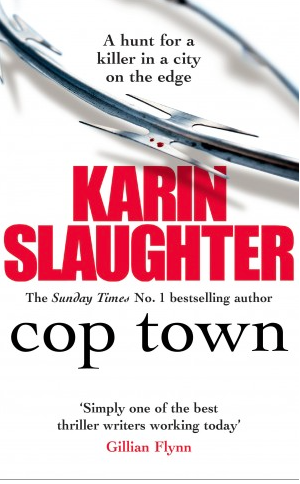
With Karin Slaughter’s standalone novel Cop Town I finally enter the territory of the books I loved without reservations. Like Nicci French or Sarah Bolton, she is one of my favourite mainstream crime writers.  I’ve been reading her series for years, but when I heard she’d written a standalone novel, set in the 70s in Atlanta, I was interested immediately. What sounded particularly great was the research she’d done for this book. The period details are amazing. Her choices of two female protagonists make this a very feminist novel, as it’s in part a murder mystery – there’s a shooter killing cops – and a book about women on the police force, a workplace that’s dominated by white males who are sexist, racists, anti-Semites, homophobic . . . you name it. Into this explosive environment comes Kate, a rookie cop. She’s recently widowed, her husband died in Vietnam. Kate comes from an upper-class, Jewish family. The Vietnam angle, is another well-done angle.  Her first day is a shocker, but to the surprise of everyone, even her partner Maggie, she doesn’t give up. Maggie comes from a cop family. Her uncle and her brother have joined the force. They both didn’t want her to follow them in their footsteps and the aggression and violence she has to endure, are appalling. Notably her uncle Terry is the prototypical male white homophobic sexist racist. The shooter’s been active for a while, which infuriates the cops and even leads them to plant false evidence.  Maggie and Kate decide to take matters into their own hands. A dangerous idea. Slaughter’s writing is tight, as usual, the period details so well captured, the story is gripping. A remarkable achievement. It works as a crime novel and as a novel on the 70s, Atlanta, gender issues . . .  It’s shocking to think what women had to put up with to fulfill the dream of working in a male dominated  job. A word of warning—I’m not the most squeamish but there’s some violence in this book that was very hard to read and get out of my mind again.

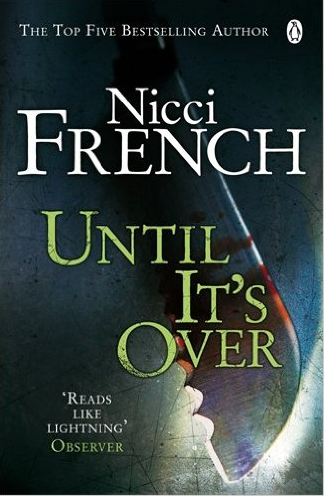
Until It's Over

Everyone reading this blog knows how much I love the author duo Nicci French. I’m slowly reading my way through their novels. Surprisingly I wouldn’t have heard of Until It’s Over, if it hadn’t been mentioned by one of my readers a year ago (I’m really sorry I can’t remember who it was). I got it back then and kept it for later. A while ago, I read a review of it and that’s how I remembered I had it on my piles. I’m glad I read that review before reading the book because, with the wrong expectation, I might have been disappointed. They did something very unusual here. They wrote two distinct parts. Part one is told from the point of view of London Cycling Courier Astrid, part two from the point of view of the perpetrator. It wasn’t easy to adapt to part two because I loved part one so much. Astrid lives together with a group of friends in an old house, in an area of London that hasn’t bee gentrified yet. Suddenly people around her are murdered. What has it got to do with her? While the story is suspenseful, it’s not what I liked best. I liked to read about this group of friends who share a house. Loved the setting, which Nicci French captures so well- the bars, the parks, the houses. London is as much a character as the people. Part two is very good too, but I would have loved to go on reading from Astrid’s point of view. Once I had gotten used to the new narrator, I liked part two almost as much. I’ve read a lot of Nicci French’s novels. Some I loved, some I found OK; this was one of the best.

Chemistry of Death

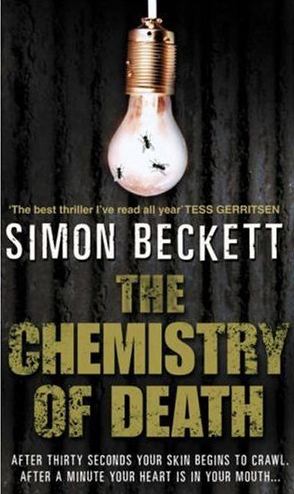
The Chemistry of Death is another book that has been lying on my piles almost since it came out. For some reasons, I didn’t think I would like it because I got a bit tired of serial killer novels. In theory I would like them, because, for me, a great serial killer novel is like a realistic ghost or horror story. That’s why setting, atmosphere and mood are so important in this subgenre. Sadly, many authors just use the trope to avoid to have to dig for good reasons for murder and many of those “products” are as far from psychologically compelling as can be. However, there’s one thing I don’t like even in the best serial killer books —the showdown ending. All these books get frantic towards the end and there are recurring elements that are frankly annoying – e.g. hero/heroine tries to avoid killer and runs right into his arms. While The Chemistry of Death does have a formulaic ending, the rest of the book is so astonishingly well done, that it hasn’t only become one of the favourites of this year but I think it’s possibly one of the best crime novels I’ve ever read. I loved the mourning, depressed narrator, loved, the almost gothic descriptions of murder scenes and locations. The atmosphere is brooding, haunting. Don’t be put of by the serial killer thing— this is so well written and atmospheric, it would be sad to miss it.

Have you read any of these? Does anyone know a good locked-room mystery?