Louise Welsh: Naming the Bones (2010)

Knee-deep in the mud of an ancient burial ground, a winter storm raging around him, and at least one person intent on his death: how did Murray Watson end up here? His quiet life in university libraries researching the lives of writers seems a world away, and yet it is because of the mysterious writer, Archie Lunan, dead for thirty years, that Murray now finds himself scrabbling in the dirt on the remote island of Lismore. Loaded with Welsh’s trademark wit, insight and gothic charisma, this adventure novel weaves the lives of Murray and Archie together in a tale of literature, obsession and dark magic.

I read a few intriguing reviews of Louise Welsh’s books and Naming the Bones was the one that tempted me the most. Set in Glasgow, Edinburgh and on the Island of Lismore, off the West Coast of Scotland, this is a very atmospherical read. The first 150 pages or so, it did remind me a lot of Kate Atkinson but farther into the novel, this changed considerably. And that is a bit sad. The novel had the potential to be great but the denouement wasn’t to my liking and so I would say, yes, it is a very good novel but not a great one.

Murray Watson, a professor of English literature at the University of Glasgow has a passion that makes him ask for a sabbatical. Since he was a very young guy, he loved the poems of Archie Lunan. Lunan has only had one slim collection published before he died an untimely and mysterious death. Living on the Island of Lismore for a certain time, together with Christie, his girl friend, he took a boat in stormy weather and never returned.

Murray wants to write his biography, do extensive research on the poet, interview people who knew him and secretly wishes to find a few undiscovered poems. Fergus Baine, the head of the department and husband of Murray’s lover Rachel, disadvises this approach. He tells him to concentrate on the poems, not the man.

It is obvious that Naming the Bones is exploring these two approaches to literature; the biographical one and the one leaving out everything related to the life of the author.

Murray is an interesting character. We meet him at a junction in his life. He has just been dumped by Rachel and realizes that Fergus may have known all along that he had an affair with her and that he may not have been the only one whith whom she had affairs. Fergus and Rachel seem to have a very unhealthy relationship.

Murray’s father died of Alzheimer’s and Jack, his brother, who is an artist, made an installation, showing their demented father on film which infuriates Murray.

Murray is a good looking, very attractive man and his charms are the reason why all through the novel women feel attracted to him.

What reads for the first 100 and so pages like a character study and an adventure story circling around the core theme of researching a deceased poet, starts to get dismal once it seems obvious that some of the people in Murray’s life knew Archie and that there may be secrets tied to Archie’s death that are far more disturbing than the possibility that Archie committed suicide.

When the reasearch in Edinburgh and Glasgow is finished, Murray leaves for the Island of Lismore where Christie lives. She doesn’t want to give him an interview or any other information, still Murray wants to see the place where Archie lived and died.

As beautiful as the island may be, it is a lonely and desolate place. Murray’s mood seems to get darker and darker, along with the developments in the novel. It also seems as if other people looking into Archie’s life had met with an untimely death and the further we read into the novel the more uncanny it gets.

I saw the term “gothic” mentioned a few times along with this book and couldn’t understand the use at first. I love gothic books but I do not like the blend of gothic and crime/thriller because that invariably means that  a “satanistic cult” or some such thing serves as part of the background. It’s not as bad as that here but the elements are present. Lucky the outcome isn’t tied to anything supernatural or occult. What we find out at the end just shows some young people’s depravity.

As said in the beginning, this is a very atmospherical novel. I have been to Scotland and know Glasgow and Edinburgh as well as some of the islands off the West Coast and I must say they are very well rendered. It is also an extremely well written novel, the numerous main and secondary characters are without any exception interesting and complex. There is more than one theme explored in this book which gives it additional depth. Welsh tackles topics like old age, research, poetry, alternative life styles, modern relationships, death and suicide with intelligence and a great deal of insight.

All this together makes Naming the Bones a very entertaining read on an autumn or winter afternoon when the world outside is as rainy, stormy and dark as the world in the novel. If you like a gothic atmosphere, you will enjoy this a great deal.

Here’s the island’s website should you plan a trip to Scotland: Island of Lismore.

Dutch Literature Recommendations

Lost Paradise

A post on Guy’s blog His Futile Preoccupations, followed by a discussion and comments on Dutch literature inspired me to write a post on maybe not sufficiently known Dutch literature. There is maybe also an upcoming European book tour on Bookaroundthecorner’s Blog.

I did learn Dutch because I wanted to read Dutch books in the original language. It’s a funny language and very close to the Swiss German dialects therefore I can’t say it was difficult to learn for me. The structure of the sentences is very English, the words have either German or English origin. However I read most of the books in the German translation which was mostly OK. Despite having read a fair amount of books I still have a big TBR pile of Dutch books.

I tried to find as many English translations as possible but depending on the author the result is somewhat meager.

The list below consists of literary fiction and a few crime writers. The authors that deserve particular attention are Grünberg, Mulisch, de Winter, Palmen, Hermans and Nooteboom.  I have also read the crime writers. Janwillem van de Wetering’s series is very different, very enjoyable. Saskia Noort seemed rather a bit in the vein of Mary Higgins Clark. Maarten t’Hart writes crime and memoirs and is good at both. Mulisch, Nooteboom and van de Wetering should be easy to find. Many of their books have been translated.

Arnon Grünberg: Phantom Pain

Arnon Grunberg’s masterful first novel is a rare feat: a work that manages to be shocking yet not sensationalist, hip but not trendy, ironic but not cynical. Most of all it is highly affecting. Highly recommended.

Leon de Winter: Hoffman’s Hunger

Felix Hoffman’s hunger is both physical and emotional. A Dutch diplomat with a chequered career behind him, he is now Ambassador in Prague in the late 1980s; his final posting. In Kafka’s haunted city, Hoffman desperately feeds his bulimia and spends his insomniac nights studying Spinoza and revisiting the traumas of his past. A child survivor of the Holocaust, Hoffman married and had beloved twin daughters, but a double tragedy has befallen his family; one daughter died as a young girl of leukaemia, the other, who became a heroin addict, has committed suicide.This has wrecked Hoffman’s marriage and his life; he has not had one decent night’s sleep since the death of his daughter over twenty years ago, and his constant physical hunger reflects his emotional hunger for truth and understanding. When Carla, a Czech double agent, gets into Hoffman’s bed, political and emotional mayhem ensues. Hoffman’s past and his present predicament are inextricably bound up with the tormented history of Europe over the fifty years since the Second World War. Like Europe, he is at a crossroads, and the signs point to an uncertain future.

Willem Frederik Hermans: Beyond Sleep

A gripping tale of a man approaching breaking point set beyond the end of the civilised world: a modern classic of European literature.

Margriet de Moor: The Virtuoso

A novel set in 18th-century Naples. For one entire season, Carlotta sits in her candle-lit box, held in the spell of a world in which knowledge, beauty and love collide: music. She has fallen in love with the male soprano, Gasparo.

Cees Nooteboom: Lost Paradise

Nooteboom brings a subtle, playful brilliance to this exceptional story of escape, loss and identity.

Harry Mulisch: The Discovery of Heaven

On a cold night in Holland, Max Delius – a hedonistic, yet brilliant astronomer who loves fast cars, nice clothes and women – picks up Onno Quist, a cerebral chaotic philologist who cannot bear the banalities of everyday life. They are like fire and water. But when they learn they were conceived on the same day, it is clear that something extraordinary is about to happen. Their worlds become inextricably intertwined, as they embark on a life’s journey destined to change the course of human history. A magnum opus that is also a masterful thriller.

Connie Palmen: The Laws

A debut novel which won the European Novel of the Year Award about unconventional love spanning seven years. A young philosophy student Marie Deniet encounters several men: an astrologer, an epileptic, a philosopher, a priest, a physicist, an artist and a psychiatrist, and attempts to comprehend the laws these loves live by.

and The Friendship

Ara and Kit, two girls in the village school, seem to have nothing in common. Ara, the elder, is large, earthy and illiterate; Kit is lean, brainy and interested in abstractions like philosophy. After they leave school Ara cannot let Kit alone – she is drawn to her as a moth to a candle flame.

Jessica Durlacher. I couldn’t find any of her books in English but she is famous as she writes on the Holocaust and is mentioned in this book: The Holocaust Novel

Dutch crime

Janwillem van de Wetering: Outsider in Amsterdam

Piet Verboom is found dangling from a beam in the Hindist Society he ran as a restaurant-commune in a quiet Amsterdam street. Detective-Adjutant Gripstra and Sergeant de Gier of the Amsterdam police force are sent to investigate what looks like a simple suicide.
Outsider in Amsterdam is the first in the Amsterdam Cops series of internationally renowned mysteries.

Saskia Noort: The Dinner Club

On a cold winter’s night, an elegant villa goes up in flames. Evert Struyck, happily married, father of two and successful business man, dies in the fire. His wife, Babette and the children manage to escape. Babette is part of a group of five women, known as “the dinner club”, who meet regularly and whose husbands do business together. Karen, a dinner club member, takes Babette into her house after the fire, but soon discovers that the friendships in the dinner club are not as unconditional as they seem. It becomes clear that some people have benefited from Evert’s death. Within weeks another member of the club falls from the balcony of a hotel and dies. Karen starts to put the pieces together. White-collar crime, fraud and adultery are the putrefying glue that has kept the dinner club together. Not for much longer. Set in a world of affluent suburbs, flashy 4×4’s and country clubs, familiar to readers in the UK and the US, “The Dinner Club” is a psychological thriller about a group of people desperately hanging on to the outer varnish of their lives. Some of them will defend their material success at any price. Imagine “Desperate Housewives” scripted by Patricia Highsmith. That’s “The Dinner Club”

Maarten t’Hart: The Sundial

The Sundial opens with Leonie Kuyper attending the funeral of her best friend Roos Berczy. She has always felt a little overshadowed by her friend’s glamorous looks and successful career so when she discovers she is the sole heir to Roos’s estate Leonie, an impoverished translator, cannot refuse. Leonie gradually begins to assume Roos’s identity, and as questions arise about her friend’s past, her curiosity becomes piqued. Leonie’s investigations soon unearth certain suspicious circumstances surrounding Roos’s death and the culprit, alarmed by this, springs into action.

I’m planning on reading either Hoffman’s Hunger or Phantom Pain soon.

If you think of reading books in Dutch, it might also be worth trying the literature of Suriname. I have one or two books but they have not been translated.

Does anyone have other suggestions and/or know the books?

If you are interested in a Dutch read along taking place in June, please visit Iris on Books

Phantom Pain

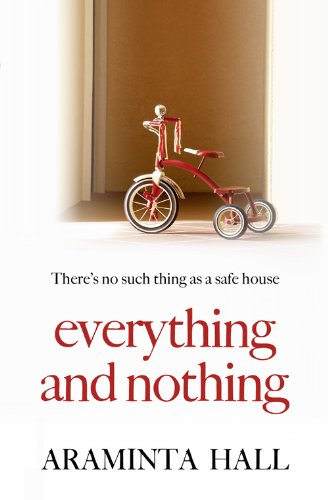
Araminta Hall: everything and nothing (2011) Social Realism and Psychological Suspense

Ruth and Christian are – just – holding their marriage together, after Christian’s disastrous affair a year ago. But chaos beckons, and when the family are suddenly left without any childcare, Agatha comes into their lives to solve all their problems. But Agatha is not as perfect as she seems and her love for the children masks a deeper secret.

I read a review of this book on Lizzy’s Literary Life and something told me I might like it. And I did. It was one of those super fast reads, a book that I could hardly put down. Really riveting. The only complaint I have is that this is labelled as a psychological thriller. Although there is a part of it reminiscent of Ruth Rendell, it is like a background story and not really very gripping. At least not for me. Still I consider this to be a real page-turner for the simple reason that it captures chaotic family life in so much detail and explores some of the questions and problems parents who work full-time would face. I often enjoy descriptions of domestic life although I don’t live anything that is even remotely comparable.

Ruth and Christian both not only work full-time but overtime many days of the week. They both have careers that seem to absorb all of their energy and when they come home in the evening they face total chaos. The place is dirty, sticky and disorderly, the little girl is screaming constantly and throws one temper tantrum after the other. The little boy, at three, still doesn’t eat properly and drinks from a bottle. The nights are nightmares too. Ruth and Christian fight and when they finally go to bed, the girl starts to scream again. She always wakes at midnight and never goes back to sleep.

At the beginning of the novel Ruth knows she isn’t capable of going on like this. She needs a new nanny. And in comes Agatha. We know from the start that something is wrong with her. She lives in daydreams and lies to her employers and to herself constantly. Something bad has happened in her past, a trauma that she cannot overcome and tries to repress with her imagination.

Family life improves considerably after she has started working for Ruth and Christian. She is super organized and makes Ruth feel deficient. To make things worse, Christian accidentally meets the woman he has had an affair with and starts seeing her for drinks.

Something bad, coming from Agatha, is lurking in the background and we know things will go very awry. But as said, this is completely toned down. I was fascinated by Ruth. Christian was not particularly interesting. Just one of those guys who thinks he has the right to have an affair when his wife is pregnant for the second time and is not that much into him during that time.  Ruth shows every sign of a severe depression and what I found interesting is the fact that this did not start right after she had the first baby but several months later. As if the bubble of enchantment that the little baby brought burst suddenly. From that moment on she struggles. I could feel the exhaustion of that woman and I know that this is very realistic. Women around me have mentioned it. If you are unlucky and have a baby that doesn’t sleep well and you need to go to work every morning… Ruth is a journalist and her work is very demanding. There is always someone waiting to jump into her position should she show signs of weakness.

I also hear the type of questioning very often that Ruth utters. Is it OK to work full-time and have children? Is it OK to have someone else looking after them? I think in the book the problem isn’t only that Ruth works full-time but that both work overtime and that she tries for too long to cope with everything else as well. She is afraid that having a nanny means defeat. And she thinks that women like Nigella Lawson are an example for the fact that it is possible to have and do it all yourself.

There is a strange fascination in seeing people at their most vulnerable, when their masks are down. That’s what made this book so riveting for me. And I think the questions it asks are very important.

I would be curious to hear from anyone who has read it.

This was Araminta Hall’s first novel. I really wouldn’t mind reading the next one too.

Ruth Rendell: The Tree of Hands (1984)

Once, when Benet was about fourteen, she and her mother had been alone in a train carriage and Mopsa had tried to stab her with a carving knife. It was some time since Benet had seen her mad mother. So when Mopsa arrived at the airport, looking drab and colourless in a dowdy grey suit, Benet tried not to hate her. But the tragic death of a child begins a chain of deception, kidnap and murder. Domestic dramas exploding into deaths and murders …threads are drawn tightly together in a lethal last pattern.

I read and reviewed A Judgment in Stone last year and have mentioned how much I liked it. It was one of my favourite reads of 2010. On one of the comment thread’s Guy Savage suggested another book by Ruth Rendell, The Tree of Hands, and that is how I discovered this novel.

I have to emphasize once more what a great writer Ruth Rendell is. This book is different from A Judgment in Stone but also very engrossing. After having read The Tree of Hands I can also see why A Kind of Intimacy was compared to Rendell’s books. The description of the streets and their inhabitants shows a lot of parallels plus the people are equally deranged.

In the Tree of Hands the stories of at least 6 people are interwoven but it is skillfully done and they are all linked together in a logical way. The novel works like those rows of domino stones that have been set up in order to see them fall one by one. The falling down of the first stone makes the others follow. One action in the novel triggers another action and they are all equally fatal and catastrophic.

I was a bit wary at the beginning as Mopsa, Benet’s mother, is said to have a mental illness. Using mental illness as an explanation for a crime is often insufferable to me. But fortunately Mopsa is just the first domino stone. Being totally irresponsible she steals a child without ever thinking of the consequences but then she leaves and lets all the other people deal with the aftermath of his kidnapping.

The book really has a chain reaction at its core and one bad decision leads to another. And it also describes quite a lot of negative, selfish and frankly bad people. What struck me, even though Mopsa is mentally ill and on top of that clearly not a good person, she is by far less deranged than some of the other nasty characters in this book.

One of the main stories is the story of Benet, a young mother and extremely successful writer who lives in a beautiful house in Hampstead. At the beginning of the book her mentally ill and very unstable mother, Mopsa, comes to visit her and her little boy, James. Benet is a very loving mother and James is the most important person in her live.

The second main story revolves around another young mother, Carol, her son Jason and her young boyfriend Barry. Carol is a superficial and unrestrained woman with a flaming temper. At the age of 28 she is already a widow and has three children from different men. Two have been taken away, only the smallest, Jason, is living with her and Barry.

At first the two strands of the story run in parallel until a tragedy happens and Mopsa steals Jason.

I am tempted to write a lot more as there are a few aspects that I find interesting but unfortunately it isn’t possible, it would spoil too much. I can however say that the novel also explores the concept of parenthood and if someone who loves a child dearly might not be a better parent than a biological parent.

Something that struck me in this book is the overuse of the sedative Valium. This dates the book. Surely nowadays people in novels don’t pop pills like sweets and they might not use benzodiazepines as often anymore. This constant use of downers and alcohol is of course symbolical and just underlines that the people in the novel do not want to face any problems or consequences of their actions.

Ruth Rendell’s writing is suspenseful, her characterizations are psychologically plausible and the descriptions of different social milieus spot-on. Do I have to mention that I will certainly read another Ruth Rendell or Barbara Vine very soon?

Dashiell Hammett: The Glass Key (1931) and Heisler’s The Glass Key (1942)

Ned Beaumont is a tall, thin, moustache-wearing, TB-ridden, drinking, gambling, hanger-on to the political boss of a corrupt Eastern city. Nevertheless, like every Hammett hero (and like Hammett himself), he has an unbreakable, if idiosyncratic moral code. Ned’s boss wants to better himself with a thoroughbred senator’s daughter; but does he want it badly enough to commit murder? If he’s innocent, who wants him in the frame? Beaumont must find out.

I have read everything Raymond Chandler has written. He used to be one my favourite authors. This might be the reason why I neglected Hammett for so long. Maybe I thought he would be too similar and that this would influence my reading.

The Glass Key was my introduction to Dashiell Hammett and although it did remind me a bit of Chandler, they are still quite different. Hammett is at the same time sparser and coarser.

At the heart of The Glass Key lies the question “Who has killed Taylor Henry?”. Taylor Henry is the son of the influential politician Ralph Henry. In an attempt to appear cleaner than he is, the corrupt politician Paul Madvig tries to associate himself with Henry. And he is in love with Henry’s daughter Janet. When Taylor is found dead, rumors start to circulate that he might have been killed by Paul. None of these people are really main characters, the central figure and exemplary tough-guy, is Ned Beaumont. He is a sort of assistant to Paul Madvig and tries, like a PI, to investigate the murder. He visits bars and clubs and people. Gets beaten up and is held captive. Women literally throw themselves at him. This all leaves him quite unfazed. No matter how much you beat that guy up, how often you threaten him, how many times you flatter him or try to seduce him, you will not get much of a reaction but a very short reply. This is as tough as tough-guys go.

The interest, at least for me, did not lie in the solving of the murder. I couldn’t care less. The appeal of this book, is the character of Ned Beaumont, this monosyllabic guy who doesn’t even flinch when he is beaten to a pulp. The other appeal is the world and the atmosphere this novel depicts.

The world of The Glass Key is a world of corruption, prohibition, easy women, hard men, bars and secret joints, bribery and violence.

And of course one has to mention the dialogue. You couldn’t find any more sparse and caustic dialogue in any novel.

Ned Beaumont advanced into the room where Lee and the Kid were.

The Kid asked: “How’s the belly?”

Ned Beaumont did not say anything.

Bernie Despain exclaimed: “Jesus! For a guy that says he came up here to talk you’ve done less of it than anybody I’ve ever heard of.”

“I want to talk to you,” Ned Beaumont said. “Do we have to have all these people around?”

“I do,” Despain replied. “You don’t. You can get away from them just by walking out and going about your own business.”

“I’ve got business here. “

After having finished the book I realized that I had the movie. It is part of a collection of Film noir movies that I had ordered before Christmas. I immediately watched it and liked it a lot.

The story is told differently. More chronological and Janet Henry’s (Veronica Lake) role is much more important. A few names have been changed. There is a club owner who is Irish in the book. He is Italian in the movie which was probably more in line with the depiction of wise guys as they populated the film noir. What I truly liked about the movie is Veronica Lake. Since I have seen L.A. Confidential (one of my favourite movies) in which Kim Basinger is compared to Veronica Lake I always wanted to see the real one. I think she is really special.

Don’t ask me whether I prefer the novel or the movie. I enjoyed reading and watching at the almost same time. It was as if the characters had stepped out of the pages at the end of the book and come alive.

I am really pleased I found the trailer which is not usual for every old movie.

Crimeculture – Books, Movies and More

victorian


I found this great site Crimeculture today and wanted to share it with you as I know that many of you also love crime, thriller, detective and suspense novels and movies. It contains a lot of information, essays, articles, lists on books and films. You will find the books and movies organized by subgenres like Victorian Detective Fiction, Classic Detective Novels, Early Hard-Boiled… Film Noir, Neo Noir, Asian Detectives. I hope you will enjoy it as much as I do. It’s a great resource.

Niccolò Ammaniti: I am not scared (2004) aka Io non ho paura (2001) An Italian Novel of Crime, Adventure and Coming of Age

One relentlessly hot summer, six children explore the scorched wheat-fields that enclose their tiny Italian village. When the gang find a dilapidated farmhouse, nine-year-old Michele Amitrano makes a discovery so momentous he dare not tell a soul. It is a secret that will force Michele to question everything and everyone around him.

Someone has offered me a gift and this person is called Niccolò Ammaniti. The gift consists of a trip to the distant land of childhood memories, of hot summers long gone. No words will be able to convey how much I liked this novel, however I am conscious that it is also a very personal experience. It has a lot to do with my cultural background (my mother was Italian) and similar childhood experiences (apart from the crime element). This novel is pure magic. A magic that I have only encountered in Italian novels so far. It’s a magic that comes from the almost cinematographic power of descriptions. This is a novel I didn’t read, I saw and experienced it. It is sensuous and descriptive like not many. And gripping. Imagine what a combination. And touching as well. (I really have to hold myself back or I will get this year’s prize for cheesiest book review.) And did I mention melancholic? Italian novels tend to be very melancholic, with bitter-sweet undertones, there is always a mix of tears and laughter. I laughed quite a few times when reading Io non ho paura.

I am not scared evokes a scorching hot summer, in the little Italian village of Aqua Traverse. The heat is suffocating, the air has acquired a density that feels like cotton, the heat feels dangerous and relentless. All around the village oceans of yellow wheat extend and in the far distance are rolling hills and little mountains. Michele, his little sister and their friends play outside all day long, they venture into places that are yet unknown, populated by ghosts and ogres, witches and demons, all fruit of their imagination. Childhood politics, with their petty punishment and ostracizing of the weakest are rendered masterly. One day the children explore an abandoned ruinous house and Michele discovers a little boy in a dug out. He won’t tell anyone what he has found, keeps it to himself. Michele learns later that the child is held hostage until his mother will comply and pay a huge ransom. Things are not exactly what they seem in peaceful Aqua Traverse and more than one illusion will be lost at the end of this summer.

Michele, the narrator, is a boy of 9, or rather, the grown up Michele, looking back on his childhood self, is the narrator. This is one of the most beautiful narrative voices I have come upon in a long time. Naïve, perceptive, and precocious at the same time.

The descriptions of an typical Italian village, Italian family life in the 70ies is spot on.

Some of the most wonderful passages are descriptions of moments Michele spends in utter solitude. At night he cannot sleep, the heat is too intense, he stands at the open window, looks out into the full moon night. Everybody is asleep, he seems to be the only one on earth, he hears the sound of little owls and crickets in the windless night…

There is another wonderful instance in which he imagines himself dead and how he would enjoy to attend his own funeral. I always used to think such thoughts as a child and these solitary moments are also very familiar. Enchanting moments of blissful loneliness.

Michele is a highly imaginative child, everything around him is full of mysteries but there are also discoveries that are sobering like when they climb a mountain that they had suspected to be full of magic and it is quite ordinary close-by.

Ammaniti, an author of the so-called letteratura pulp movement, influenced by Tarantion’s Pulp Fiction, is an astonishingly original writer. He mixes genres like the adventure and horror story with crime and elements of the coming of age story. He combines all sorts of elements from popular and sophisticated culture alike. He mentions an Italian pop song like Parole at the same time as La Traviata.

What I liked best are the masterful descriptions of the landscape and the weather.

I haven’t read anything in Italian lately, another reason why  this was a particular pleasure for me. I think it is one of the most melodious languages and being my mother’s native language it brings back childhood memories…

Other Italian authors I love are Bassani, Tabucchi and Pavese. Which are the ones you would recommend?

Io Non Ho Paura (Stile Libero)