Ferdinand von Schirach: Crime – Verbrechen (2009)

Are they true? Are they not? The discussion of Ferdinand von Schirach ‘s stories circled to a large extent around these questions  in Germany  and what the respective answers might mean. For the book. For life. And human nature in general. In English speaking countries there is no emphasis on whether they are based on true cases or not. People admire the crisp, precise, unadorned prose, the philosophical background, the look into human depravity, into guilt, gruesome crime and its possible punishment. They are seen as literature and not as true crime accounts. I find this interesting. In this faz interview von Schirach says that all the cases happened and are true. A lot has been changed to guarantee anonymity of the people involved but other than that, this is what happened. Does it matter? Maybe not.

Von Schirach is a famous German defence lawyer. His grandfather Baldur von Schirach was even more famous. He was one of the Nazi criminals convicted in Nuremberg.

The stories in Crime – Verbrechen are astonishing. Some are shocking, some made me laugh, some are puzzling, others thought-provoking, even very touching at times. Often the person who sets out to commit a crime isn’t the person the lawyer in the story will have to defend. Somewhere along the line, the roles are reversed. The initial victim can become the perpetrator. This happens especially in those cases in which silly small-time-crooks inadvertently attack a “big fish”. Some of those stories are hilarious.

But there are stories in which a lot of pain and cruelty pushes a person over the edge. As von Schirach writes in the introduction, this is what the stories are about; the tipping point. We are all, as he says, walking on thin ice, but not all of us make it to the other side. The moment when the ice crashes, is the moment he is interested in.

Punishment is one of the key themes of all of those stories and surprisingly, for various reasons, not many of the delinquents get sentenced. The book, being written by a defence lawyer, gives a lot of insight into the German criminal system, comparing it to other systems, showing how it has changed over time, how it has become more just but much more complicated as well.

I cannot write all that much about the individual stories as that would spoil the fun of discovering what happened. I’m glad I discovered the review of the book on Lizzy’s blog last year.

Some of the stories are gruesome but the majority is just absolutely fascinating and thought-provoking. Many give insight into the German society, it’s problems and challenges; many illustrate that some people are just born unlucky.

Crime was von Schirach’s first book. It was an immense success in Germany and translated into 30 languages. One of the stories of the collection have been made into a movie Glück – Bliss by none other than Dorries Dörrie. It’s in the cinemas in Germany right now.

Another short story collection Guilt – Schuld and a novel Der Fall Collini have followed. Guilt just came out in English.

Der Fall Collini which Die Welt calls a”cristal clear story of disconcerting amorality” will certainly be translated very soon. I want to read both, Schuld and Der Fall Collini. And watch the movie.

Have you read von Schirach or heard about him?
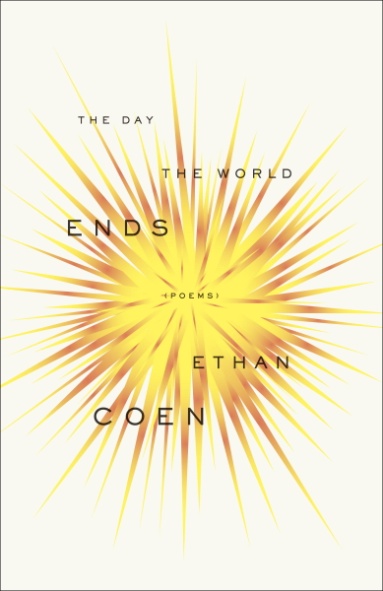
Giveaway Winner – The Day the World Ends – A Collection of Poems by Ethan Coen

As promised, I’ve drawn the winner of the poetry collection The Day the World Ends courtesy of Crown Publishing.

random org. list generator has decided. The winner is

Guy Savage (His Futile Preoccupations)

Congratulations, Guy.

Pease send me your address via beautyisasleepingcat@gmail.com

William Trevor: My House in Umbria (1991) Novella and Movie

My House in Umbria is one of two longer novellas contained in the book Two Lives. The other one is called Reading Turgenev. I’ve had the book for a while and since Mel u’s Irish Short Story Week has been prolonged, I decided to read it now. William Trevor is one of those authors I always wanted to read more of.

My House in Umbria is a surprisingly somber and complex novella. As lovely as the setting is, a villa located near Siena, there are some dark undercurrents, nasty secrets and a back story unlike any other to discover.

The story is told in the very unique voice of Mrs. Emily Delahunty. Delahunty is one of a few names she has chosen for herself. She is a romance novelist with a more than troubled past. Sold by her parents as a child, abused by her step-father and later abandoned by a lover and stranded in a hotel in Africa where she meets Quinty. Quinty isn’t any less mysterious or adventurous than Emily and this strange couple forms an interesting alliance. At the beginning of the story they live in the afore-mentioned villa in Umbria. Surprisingly Emily’s novels have brought money and fame and she lives a comfortable life. She is haunted by the past but her incredible imagination helps her to flee to nicer places whenever the clouds get to dark. And there is always alcohol as well, to help circumnavigate the roughest cliffs.

At the beginning of the story she boards a train to Milano. The wagon she is sitting in is blown up and most of the passengers die. Only Emily, a young German man who loses his girlfriend, an old general who loses his daughter and Aimée a little American  girl whose whole family dies, survive.

After a stay at a hospital, Emily invites the three people to stay with her in her house in Umbria. The calm and peacefulness of the country-side, the beauty of the house, will help them recover, she hopes.

These four highly traumatized and maimed people share some moments of great intimacy, – reminiscent of the group in Enchanted April – until the day Aimee’s uncle announces that he will come and fetch the girl.

What follows is equally sad and dramatic and what little peace these wounded  people  have acquired is shattered for good. The idea that a man she has never seen before and who seems distant and unlikable, comes to get the girl who still suffers from amnesia is particularly painful for the three other victims.

Mrs Delahunty sounds like an unreliable narrator for most of the book but she isn’t. Some of the things she tells sound unbelievable but they turn out to be true, only, she mixes things she imagines with things that happened. She has a a habit of inventing back stories for each and every person she meets. It’s not surprising she has become a novelist. Hearing her we think she would have had what it takes to write great literature, yet she chose to write romances as a means to escape the memory of her past. Not only was she abused but it seems that before discovering that she is a writer, she was an escort girl in Africa.

It’s not often that I watch a movie based on a book right after having finished the book but I watched My House in Umbria the day after finishing Trevor’s novella.

I really enjoyed how the movie brings to life the great character of Mrs Delahunty. Maggie Smith is amazing in this role. They way she plays this very kind, vulnerable and sad woman is touching and funny at the same time. The movie changed the ending completely but stayed true to the rest of the story. It underlines and enhances the characters and episodes in the novella and I would say I liked it even better. Others may prefer the darker novella; I liked the way the movie interpreted some facts and changed a few others. In any case they work extremely well together. What the movie offers, apart from great acting, is enchanting pictures of a beautiful landscape and some truly comical moments when the worlds of Mrs Delahunty and Aimée’s uncle clash. It’s one of my favourite movies so far this year. But don’t get me wrong, the book is excellent as well.

It’s rare that a main character in a book is so memorable but I’m beginning to think that creating great characters is one of William Trevor’s strengths.


Nina Sankovitch: Tolstoy and the Purple Chair (2011) A Memoir

Tolstoy and the Purple Chair is a memoir I’ve been eying for a while until I finally bought it. The subtitle – My Year Of Magical Reading – obviously an allusion to Joan Didion’s memoir – annoyed me a bit but I liked the idea behind the book.

After the early death of her beloved sister, Nina tries for several years to overcome her grief and feelings of guilt when she finally comes up with a cunning idea. Reading has always been important for her and her family. Reading instructs and entertains but it can console and give hope as well. That’s how she decided that she would read one novel per day for a whole year and write about it on her blog Read All Day.

Tolstoy and the Purple Chair tells the story of that year, interweaving it with memories and stories of her family and herself. Not all the 365 books she has read in one year are described or mentioned but she writes in detail about a few which were especially meaningful. She summarizes them briefly and writes why they were important, what memories they triggered, how they helped her heal.

The list of all the 365 books can be found at the end of Tolstoy and the Purple Chair and on her blog. They don’t follow any specific order. One book led to the next and many were recommendations from family and friends and later from readers of the blog.

While I expected slightly more, I still liked reading the book. I liked her infectious enthusiasm. Each book is a world to discover and she tackles the ambitious goal with a lot of energy and passion.

Some of the books are so important because they help her explore her story or the story of her family. Harry Mulisch’s The Assault is one of them and so is Schlink’s Self’s Deception. But there are many more.

Crime novels are among her and her family’s favourite books, each member loves another writer. Nina thinks that what she loves best about them is the fact that they re-establish order. Things make sense in crime novels.

The parts in the book I enjoyed the most weren’t only those about books but those in which she describes the many little joys life has to offer. A meal with friends, a sunset, a newly planted tree, a lilac bush and the many cherished memories of her sister that make it easier to let go of her grief.

As was to be expected with a book like this I ended up with a list of books I’d like to read now.

Muriel Barbery’s The Elegance of the Hedgehog – L’élégance du hérisson

Nadine Gordimer’s Burger’s Daughter

Harry Mulisch’s The Assault

Adam Phillips and Barbara Taylor’s On Kindness

Kevin Canty Where the Money Goes

Chris Cleave Little Bee

Chimamanda Ngozi Adichie The Thing Around Your Neck

While I wouldn’t say it’s an absolute must-read, it’s a nice way to spend a few hours. I liked her voice and her stories. Just be prepared, if you don’t have as much time at hand, you might end up being a bit envious.

I have a fondness for this type of project. It doesn’t even have to be reading a book per day. There are some other 365 and similar projects like that I enjoyed reading about. Many are based on blogs or turn into blogs like the famous Julie and Julia.

Have you read about any interesting projects or self-experiments like this? And what about the books on my list, have you read any of them?

The Winner of the Muriel Spark E-Book Giveaway – The Hothouse by the East River

One week has passed and it’s time to announce the winner of the Muriel Spark e-book giveaway The Hothouse by the East River courtesy of Open Road Media.

I drew the winner via random.org list generator.

The lucky winner is Nadine (Carpediemblogger)

Enjoy!

This e-book is one of eight of Muriel Spark’s novels that have just been released.

There is still enough time to read something for Simon’s (Stuck in A Book) and Harriet’s (Harriet Devine’s Blog) Muriel Spark Week from April 23 – 29.

Poetry Month Book Giveaway – The Day the World Ends – A Collection of Poems by Ethan Coen

April is poetry month and that seems to be an excellent reason to give away a book of poetry. I wasn’t even aware of the fact that the younger of the two Coen brothers wrote poems before Crown Publishing offered me the opportunity to give away his newly released book The Day the World Ends.

Here is what the blurb says

Coen’s eccentric genius is revealed again in THE DAY THE WORLD ENDS (Broadway Paperbacks Original, on sale April 3, 2012), a collection of poems that offers humor and provides insight into an artist who has always pushed the boundaries of his craft. THE DAY THE WORLD ENDS  is a remarkable range of poems that are as funny, ribald, provocative, raw, and often touching as the brilliant films that have made the Coen brothers cult legends.

I haven’t read any of his poems but I like the movies of the Coen brothers a lot. The Big Lebowski is one of my favourite comedies. It seems that some of the poems in his older collection were quite controversial.

*******

If you would you like to win the book, please leave a comment. The giveaway is open internationally. The winner will be announced on Sunday 15 April 2012. 

7 X 7 Link Award

I’ve been tagged by the lovely Novia from Polychrome Interest and received the 7×7 link award. This is a fun award and more than anything I hope that the people I’m going to tag will participate as well as we will get to read and re-read a few really great posts.

What is it all about?

1: Tell everyone something about yourself that nobody else knows.

2: Link to a post you think fits the following categories: The Most Beautiful Piece, Most Helpful Piece, Most Popular Piece, Most Controversial Piece, Most Surprisingly Successful Piece, Most Underrated Piece, Most Pride-worthy Piece.

3: Pass this on to 7 fellow bloggers.

While everyone seems to skip question 1,  almost everybody enjoys answering question 2. Admittedly not an easy question and I’m cheating. I have included posts from my movie blog.

The Most Beautiful Piece

I think my post on Niccolò Ammanitis’ novel I’m not scared was my most beautiful post. The book made me travel back to my own childhood and long-lost summers.

Most Helpful Piece

People were glad to read something about Indirect Translations and L2 Translations.

Most Popular Piece

10 German war movies. It had 30’000 views so far. It’s quite surprising.

Most Controversial Piece

I don’t think any post on this blog was very controversial with the exception of on Negative “Reviews” but that was a mild controversy. However there was a very controversial one on my movie blog on Movies on the Crusades. I was even tempted to close the comments section.

Most Surprisingly Successful Piece

I wrote a post on my German blog called Menschen, die zu viel reden – People who talk too much. It is surprisingly successful and viewed more often than the whole blog.

Most Underrated Piece

One of my earliest posts which I personally like got no comments and hardly any views. It was a post on Nora Murphy’s memoir Knitting the Threads of Time.

Most Pride-worthy Piece

A post on the movie Napola got me a quote on a DVD cover.

*****

Now it’s my turn to tag 7 people. I decided to include only book blogs.

Danielle from A Work in Progress. Danielle’s posts are very varied. Some are informative, some are entertaining, others lovely and many are full of book discoveries.

Guy from His Futile Preoccupations. Guy is by far the person who makes me buy the most books (followed closely by Danielle). Not only do I like his taste in books but I also enjoy that he writes so very well about them.

Emma from Book Around the Corner. Emma’s posts are very diverse, some are long and elaborate, others short and to the point but they are always full of interesting and nuanced insights into the books she has read.

Litlove from Tales from the Reading Room. Litlove writes on many different topics, mostly book related but also essays on interesting people and personal essays. All of her posts are well written and thought-provoking.

Richard from Caravana de Recuerdos. Just to put his name on the list made me grin. I have a feeling I know which could be the “most controverisal post” in his case. Richard has an interesting choice of lengths for his post. From three sentence pieces containing a deadly blow to longer and very soulful posts, you will find everything.

Stu from Winston’s Dads Blog. Stu is dedicated, passionate and never ceases to surprise me with his book choices and the enthusiastic posts he writes about them. How many great posts on books in translations have  I missed? Many I’m afraid.

Vishy from Vishy’s Blog. Another blog I have only discovered recently. Vishy has a very special way of combining personal anecdotes and book reviews. I’d love to read and discover some older posts that I may have missed.

Violet Still Life With Books. Don’t we all have a blog we secretly admire? Someone who writes like we would want to write? In my case it’s Violet. Since I’ve first visited her blog I loved the way she writes and her book choices. I’d love to discover her older posts.

I’d love to see all of your choices but don’t feel forced to particpiate.