James Lincoln Collier & Christopher Collier: My Brother Sam Is Dead (1974)

My Brother Sam is Dead is a historical children’s book set during the American Revolutionary War. I didn’t really want to read a children’s book but it seems there are a great deal of novels for children and young adults on this period and hardly any literary fiction at all (Please, correct me if I’m wrong). I thought I had found a few literary novels but every time I looked at a book more closely it turned out to be a novel on the Civil War.

The Colliers are brothers and have written quite a lot of books for children together. While Christopher does the research and writes down the structure of the books, James writes the novels.

It’s a well written book but very clearly for children and meant to teach history. It’s quite educational and very anti-war, something which, oddly enough, has been criticized. American patriots, to this day, seem to think that it’s ok to go to war as long as the goal is freedom. Freedom is certainly worth fighting for but, as the Colliers exemplify, it will always be better to see if there are no other options.

In order to show the different positions, they created a conflict inside of one family. The Meekers own a tavern in Redding, a Tory town. The older son, Sam, is about 16 and in college, the younger, Tim, is only 10 at the beginning of the novel. When the novel opens, Sam and his father get into a fight because Sam joins the Patriot troops and wants to fight the “lobsterbacks” – the English. Sam’s father is against this. He doesn’t see why they should fight the King and his troops. Young Timmy is somewhere in-between. He admires his brother but he also loves his father and respects his opinion.

The main reason for the outbreak of the war, as presented in the novel, is that the colonials feel it is unjust that they have to pay such high taxes to England. They want this to stop and become free.

After his dispute with his father, Sam runs away and joins the troops. The novel then focusses on the remaining Meekers and shows how difficult it was for families to survive and to stay out of the conflict. The war soon invades everything. They were attacked by Patriots, British troops got all their food. Staying neutral was suspicious.

I don’t want to tell too much of the story as it’s a short book and there are a few tragic events which shouldn’t be revealed here. Obviously the title contains a spoiler but it will still be surprising to find out how Sam died.

I liked reading this, it’s quite atmospherical and think captures well what it must have been like for families to live during that time. The Collier’s position, which becomes clear when you read the book and which is shown in some quite ironic moments, is that they are not sure whether the war was really needed. They seem to think that there might have been other solutions for the colony to become independent.

The book contains background information on the story and the characters, some events and people were real, some were not. It also contains an interview with one of the brothers. All this together makes this an interesting book, not a literary gem but nicely executed and informative. In some ways you could even call it a cautionary tale.

I’d like to end the review with a  quote taken from the interview with Charles Collier.

I want a reader to understand the complicatedness of the Revolutionary War. Maybe there was as much bad as good that came of it, especially if one considers the Meekers. I think any book that deals honestly with war will be antiwar, because any book that glorifies war isn’t telling the truth.

The review is a contribution to Anna’s and Serena’s American Revolution Reading Challenge. Please visit their site for other reviews or if you’d like to join  as well.
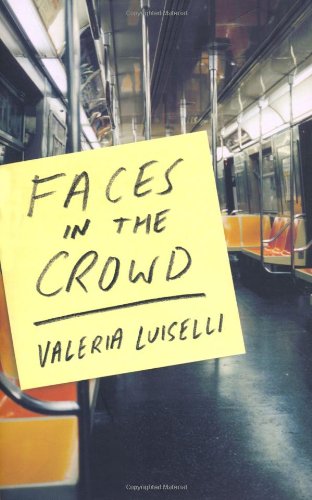
Valeria Luiselli: Faces in the Crowd – Los ingrávidos (2011)

Faces in the Crowd

I discovered Valeria Luiselli’s Faces in the Crowd – Los ingrávidos on Stu’s best of list last year. Somehow I had missed his review (here). The book sounded really interesting and since I was in the mood for some unconventional writing, this was just the book to match the mood. Valeria Luiselli is a Mexican writer and has published essays and short pieces. Faces in the Crowd is her first novel.

The narrator of  Faces in the Crowd is a young married woman.  She lives with her husband and two kids in Mexico City and leads a life which is far from fulfilling. She decides to write a novel about her time in New York where she worked for an editor and met a lot of colorful people. Writing the novel isn’t easy. Her life isn’t her life, her children claim a large part. Her writing isn’t her writing, as her husband reads it and gets jealous.

The book has an interesting structure. It consist of small and very small paragraphs and episodes, some are up to two pages long, many not much longer than a sentence or two. In the beginning the narrative jumps from the present to the past but in the middle of the novel the narrative voices start to multiply.

Leave a life. Blow everything up. No, not everything: blow up the square meter you occupy among people. Or better still: leave empty chairs at the table you once shared with your friends, not metaphorically, but really, leave a chair, become a gap for your friends, allow the circle of silence around you to swell and fill with speculation. What few people understand is that you leave one life to start another.

The narrator is very interested in the poems of Gilberto Owen, an Mexican poet who lived in New York. His voice will be one of the most important ones towards the end of the book and we are led to believe that it’s not the young woman anymore who writes about a writer but the writer who writes about the young woman.

This may sound quite confusing but it’s not, it is always clear whether we are in New York or Mexico City and who is telling the story. It’s a unusual book and I was reminded of Bolaño’s The Savage Detectives more than once. Faces in the Crowd may very well be a novel but it has a lot of non-fiction elements. Many poets and writers like Ezra Pound, Gilberto Owen, Federico García Lorca, Nella Larsen are present. Many of the sequences circle around topics like reality and imagination, the boundaries between the two, illusions and inventions. Many symbols and stories echo and multiply throughout the novel. Early on there is the story of Ezra Pound who believes he has seen the face of  a dead friend who had been killed in the trenches on the subway. This is a recurring element. The young woman believes she has seen Gilberto Owen’s face on the subway, although he is long-dead and later, when he tells the story, he believes to see hers. The book is populated by real and imaginary people and their ghosts.

I’m glad I’ve read Faces in the Crowd, it’s very different. It’s a book to read again, slowly. Some of the paragraphs and sequences even work on their own and they are all very different in tone and style.  Some contain small stories, some are thoughts, philosophical reflections, meditations, some are like small poems. There is a reason for this structure as the narrator tells us in the beginning:

Novels need a sustained breath. That’s what novelists want. No one knows exactly what it means but they all say: a sustained breath. I have a baby and a boy. They don’t let me breathe. Everything i write is – has to be – in short bursts. I’m short of breath.

The only reservation I had,  was the woman’s voice and the lack of atmosphere. I thought she was a very cold and distant character and not likable at all, especially in the parts set in the present. It’s as if she is dead inside. A ghost. Which she probably is.

The narrator of the novel should be like an Emily Dickinson. A woman who remains eternally locked up in her house, or in a subway carriage, it makes no difference which, talking with her ghosts and trying to piece together a series of broken thoughts.

If you like unusual books or are a fan of Bolaño’s writing, you should give it a try. It’s rare that I pick up a book after having finished it and re-read passages, and find they have even more meaning read out of context.

Chris Pavone: The Expats (2012)

I saw Chris Pavone’s The Expats at the local book shop and the blurb sounded interesting. It said the novel was about a young married American woman, Kate, mother of two, who followed her husband to Luxembourg and reinvented her life as an expat mom. They meet another expat couple, become friends and some weeks into the friendship Kate starts to doubt that Julia and Bill are really who they say they are. As a matter of fact none of the people in this novel are who they say they are.

I’m not a fan of spy novels and if I had realized that’s what this was supposed to be, I wouldn’t have bought it but the blurb was misleading. It sounded much more like the story of a woman who reinvents herself, gives her life new meaning, which is a topic I love. Despite the fact that it’s a genre I’m not fond of and a very long novel, I was still willing to give it a try and finished it rather quickly. Unfortunately this doesn’t mean I liked it.

I wrote above that this was supposed to be a spy novel but I’m not sure it really is. It’s the story of a woman who had a secret she didn’t even tell her husband and that secret was, that she used to work for the CIA. Later, when she finds out that all the people around her have secrets, she tries to uncover them but that’s not really spying, is it? It’s rather a crime novel without murder, a thriller without danger. Still it’s quite suspenseful as there are many twists and turns or rather manipulative cutting and withholding of information. If you don’t mind that, you will find it gripping. Unfortunately I hate it when the twists and turns in a novel are not achieved in a natural way but simply through the cutting up of the story. Every time some question arose, some mystery was hinted at and about to be resolved, the author jumped back or forth in time. Annoying.

Another thing that I found hard to take is that Kate’s husband is called Dexter. How can you write a genre novel and call your main protagonist Dexter? Maybe Dexter isn’t as iconic as Ripley but he is not far from it.

Some other thing that bugged me – big time – were the cobblestones. Pavone spent some time as an expat in Luxembourg and clearly he wanted to share his insider information of Europe. Or rather what an American expat would call his insider information. I suppose one of the things that must have really made an impression on Pavone were the cobblestones. Sure, there are cobblestone roads in European cities but not everywhere. And why all his protagonists had to stand, walk, drive on cobblestones and not on roads, streets, alleys… I have no clue. I live in a very old European city, one with a big medieval old-town center and I can guarantee you, there aren’t all that many cobblestone roads and certainly not in the newer parts of the town or the roads on which cars drive.

I also really didn’t care for the country clichés. So Switzerland is just a rich ski resort? Everybody eats ham sandwiches in Luxembourg all the time? Paris… yeah well, Paris has sordid clubs and food, food, food. Amsterdam has prostitutes in windows (who knew?).

Still, as I said, I finished this quickly, as the first secret which concerns the identity of Julia and Bill is interesting. After that the novel was quite predictable. Maybe a forgiving reader might like it but I thought the construction was annoying and the whole novel was full of trite clichés and one-dimensional characters. Last but not least who wants to read a book in which people with an annual salary of 300.000$ have a hard time to make ends meet?

From Australia to Russia via the US – A Few Challenges/Events in 2013

Aussie-Author-Challenge-2013

I have decided to be less active this year when it comes to challenges, readalongs and other events but there are still a few things I want to do or rather challenges I’d like to sign up for again.

All the Australian books I read last year were wonderful books and I want to explore more Australian literature. That’s why I singed up again for The Aussie Author Challenge at Booklover Book Reviews.

These are the possible choices

Secret River

Kate Grenville’s The Secret River

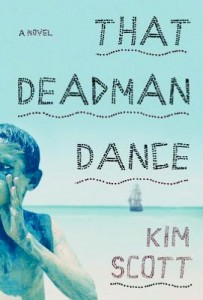
That Deadman Dance

Kim Scott’s That Deadman Dance

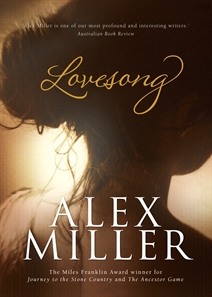
lovesong

Alex Miller’s Lovesong

American Revolution Reading Challenge 2013

I will also participate again in Anna’s and Serena’s War Through the Generations Challenge. The topic this year is the American Revolution. I haven’t read anything about this period yet and don’t know any books at all. Suggestions are very welcome.

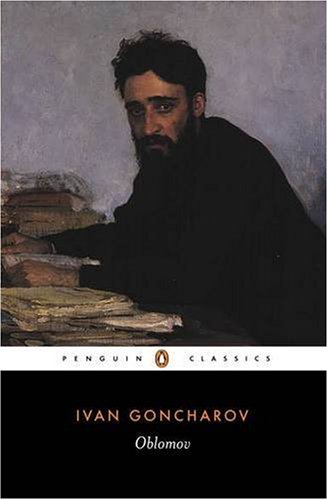
oblomov

Last but not least I’m planning on joining Richard (Caravana de recuerdos) for one or two of his 2013 Russian Reading readalong titles.

Here is the list.

Vasily Grossman’s Life and Fate (c. 1960)
 
Nikolai Gogol’s Dead Souls (1842)
 
Ivan Goncharov’s Oblomov (1859)
 
Leo Tolstoy’s Anna Karenina (1877)
 
Mikhail Bulgakov’s The Master and Margarita (c. 1940)
 
Vladimir Nabokov’s Lolita (1955)
 

Please visit Richard’s site for the details.

Hiromi Kawakami: The Briefcase – Sensei no kaban (2004)

Hiromi Kawakami is one of my favourite writers. Three of her books have been translated into German two of which are available in English as well. I loved both books I’ve read so far (Manazuru and Mr Nakano and the Women) and was looking forward to this third one which has been published last year in English.

I often hear people say they don’t know any Japanese literature or don’t know where to begin. I usually recommend Banana Yoshimoto as a first author but now I think Kawakami’s The Briefcase may be even a better starting point.

The Briefcase is a love story between a retired college professor and his former student Tsukiko. When you read “love story”, you may have some expectations but you will have to throw them overboard as nothing will quite match this story which is as far from a Western love story or romance as can be.

The professor or sensei and his former student  meet accidentally one evening in a bar. Tsukiko is 38 years old, a loner who doesn’t believe she will ever find true love. She isn’t too sad about this though, she is unconventional and likes to live on her own.

The professor is somewhat startled to meet a woman in such a bar and drinking a lot of sake at that but soon they are both delighted to find out that they like the same food and drinks and that they enjoy hanging out together. The relationship is very formal at first, nothing hints at a possible love story at all. Tsukiko is quite quirky and in the beginning the professor tells her constantly that she isn’t acting very ladylike, only she couldn’t care less. It becomes soon obvious that he isn’t less quirky. They never  make appointments, they just meet at the same bars week after week until one day pick when they a fight over something really silly. It’s only when they do not see each other any more for a long time that Tsukiko realizes she has fallen in love.

The way they slowly and carefully approach each other, and get to know each other is so lovely. They really take their time and only decide to be real lovers when they have spent a long time together and have seen each other at their worst. But they are also both very shy and not very experienced and have been on their own for a long time. Why the professor has been alone will only be revealed in the end.

The way this relationship is described is very Japanese. It’s filled with respect and an almost ritualized slow approach of another human being. None of them would ask the other any direct questions, the way they get to know each other is far more subtle. Through shared moments and mutual attention and observation.

There are many wonderful and typically Japanese elements which could have turned the book into a cliché if a lesser writer had attempted to write about them. Food is extremely important and we read about an incredible amount of different meals. Vegetables, mushrooms, fish we’ve never heard of are mentioned.

Japanese poetry, Haikus, the cherry blossom festival, calligraphy and many other things are very important as well and reading the book is a bit like a trip to Japan. Or at least like I would imagine it.

What I liked is how the book reads as if it had been painted with one of those very precise and fine calligraphy brushes. Kawakami can evoke an atmosphere and emotions in a few lines, and artfully captures how they are changing constantly. The story takes up almost a year and the change of seasons is captured as well as the change of emotions.

The end was a real killer, beautiful but quite sad. I highly recommend this wonderful and lovely book. It is a great introduction to Japanese literature, its sensibilities and esthetics.

I’ve read the book as a contribution to Tony’s January in Japan and Bellezza’s Japanese Reading Challenge.

January_in_Japan

Japanese Literature Challenge

Literature and War Readalong January 28 2013: The Yellow Birds by Kevin Powers

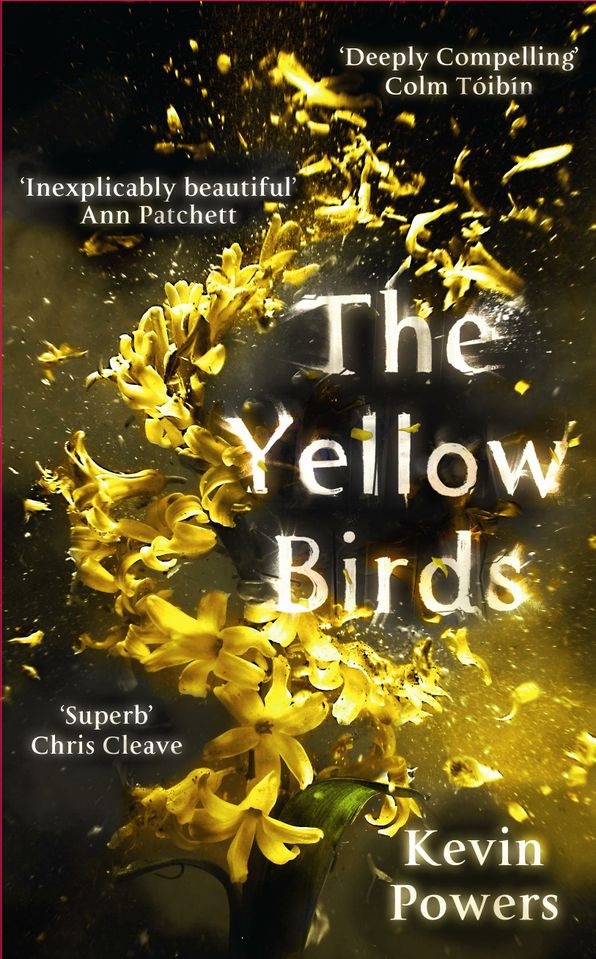
The Yellow Birds


I decided to include The Yellow Birds after having seen a few reviews which made it sound interesting. I wanted to branch out and include literature on other wars than just WWI, WWII and Vietnam. Iraq seemed an excellent choice and I’m very curious to see what we will think of this novel.

Kevin Powers is a veteran of the Iraq war. The Yellow Birds is his first novel.

Here are the first sentences

The war tried to kill us in the spring. As grass greened the plains of Niniveh and the weather warmed, we patrolled the low-slung hills beyond the cities and towns. We moved over them and through the tall grass on faith, kneading paths into the windswept growth like pioneers.

*******

The discussion starts on Monday, 28 January 2013.

Further information on the Literature and War Readalong 2013, including all the book blurbs, can be found here.

Dickens in December – Wrap up

Dickens button 01 resized

It’s a sure sign that the year is ending when we publish more wrap up posts than original posts. The end of 2012 also marks the end of Dickens’s bicentenary and of Delia and my Dickens in December event. It’s time to thank all of those who have participated and have joined in the readalong or reviewed books and movies. The links below show that the event was quite a success. I enjoyed it a lot and am glad that I have finally read one of Dickens novels. It will not be my last. A special thank you to my co-host Delia.

Thank you once more and I hope you enjoyed  it as well.

Intro Delia

Intro Caroline

Intro Post (Resistance is Futile)

Intro Post (Leeswamme’s Blog)

Intro Post (50 Year Project)

Intro Post (Rikki’s Teleidoscope)

Intro Post (Page 247)

Intro (Books Speak Volumes)

Dickens in December Begins Today (Beauyt is A Sleeping Cat)

Intro (Too Fond)

Dickens in December Start (Postcards for Asia)

Some Dickens for December (Kaggy’s Bookish Ramblings)

Giveaways Delia – Caroline

Classics Club December Meme – A Christmas Carol (Too Fond)

Great Expectations (Fanda Classiclit)

Bleak House (The Argumentative Old Git)

My Favorite Dickens Quote (On the Homefront)

Great Expectations (My Reading Journal)

A Tale of Two Cities (Babbling Books)

Dickens in December – A mixed bag (Lizzy’s Literary Life)

The Muppet Christmas Carol (Rikki’s Teleidoscope)

Dickens Project (Reader Woman)

A Christmas Carol – Jim Carrey Version (Beauty is a Sleeping Cat)

Great Expectations mini series (Fanda Classiclit)

The Life and Adventures of Nicholas Nickelby (2001) — (Postcards from Asia)

Oliver Twist- The Movie (Leeswamme’s Blog)

The Chimes (The Argumentative Old Git)

Dickens on Screen: David Copperfield, The old Curiosity Shop, Great Expectations (Postcards from Asia)

The Old Curiosity Shop (Tabula Rasa)

Great Expectations (Beauty is a Sleeping Cat)

A Tale of Two Cities (50 Year Project)

Three Detective Anecdotes (Cceativeshadows)

Havisham and Bleak Expectations (Lizzy’s Literary Life)

Blackadder’s A Christmas Carol (Rikki’s Teleidoscope)

Great Expectations (Lynn’s Book Blog)

A Christmas Carol BBC Version (Rikkis’ Teleidoscope)

The Pickwick Papers (Tony’s Reading List)

A Christmas Carol (Surgabukuku)

Great Expectations (50 Year Project)

A very short review A Tale of Two Cities (Leeswamme’s Blog)

Three Short Stories (Postcards from Asia)

A Tale of Two Cities (Tabula Rasa)

Dodger by Terry Pratchett and Dickens by Peter Ackroyd (Tabula Rasa)

Hard Times (Vishy’s Blog)

The Old Curiosity Shop (Kiss a Cloud)

Readalong participants

50 Year Project (TBM)

Dolce Bellezza (Bellezza)

Kaggsy’s Bookish Ramblings

Polychrome Interest (Novia)

Postcards from Asia (Delia)

The Argumentative Old Git (Himadri)

The Things You Can Read  (Cynthia)Questions and Answers

The Things You Can Read Student Comments

The View From the Palace (Shimona)

Lost in the Covers (Elisa)

Leeswamme’s Blog (Judith)

Lynn’s Book Blog

Love. Laughter and a Touch of Insanity (Trish)

A Work in Progress (Danielle)

Sandra – please see comments section

Tabula Rasa (Pryia)

Slightly Cultural, Most Thoughtful and Inevitably Irrelevant (Arenel)

My Reading Journal (Ann)

Vishy’s Blog (Vishy)

Resistance is Futile (Rachel)

Too Fond

Beauty is a Sleeping Cat (Caroline)