Elizabeth Taylor: A Game of Hide and Seek (1951)

Screen Shot 2014-11-26 at 09.14.09

I often read the best books of the year in December. Sometimes they don’t make it on the Top 10 list because I read them so late in the year. Luckily I’ve read Elizabeth Taylor’s fifth novel  A Game of Hide and Seek  just in time. This is my third Elizabeth Taylor novel and every time I read her I’m amazed to find out again how good she is. As much as I liked Blaming and Mrs Palfrey at the Claremont, A Game of Hide and Seek is even better. It’s larger in scope, richer in themes, with many more protagonists, and stretches over decades. The mood and atmosphere reminded me a lot of Rosamond Lehmann’s Dusty Answer and David Lean’s movie Brief Encounter, both of which are favourites of mine.

The main story of A Game of Hide and Seek is the love story between Harriet and Vesey, an unfulfilled love story that lasts a life time. They meet as children when Vesey spends his summer vacations at his aunt Caroline’s house. Caroline is the best friend of Harriet’s mother Lilian. Caroline and Lilian are very modern, emancipated women, former suffragettes and, when younger, spent some time in prison together. Lilian is surprised to see that, in spite of their battles, the younger generation goes back to old ways.

“It took us years to get rid of those cumbersome skirts and now you go all meekly back in them like a herd of sheep. And all this make-up. You look like a woman of uneasy virtue,” Lilian had said with vague distress.

Harriet is very different from her mother. She has no ambition and fails in school. When the book starts, she’s about eighteen and helps Caroline with her paper work. In the evenings she often plays hide and seek with Vesey and his small cousins. When they are in each other’s presence, they are both awkward, muted by their feelings, exhilarated and fearful at the same time.

Harriet is mortified by her feelings because Vesey is such an imperfect person. He likes to provoke, is careless and selfish. He even manages to upset Caroline and her husband although they are the most tolerant people one could imagine. One of Caroline’s mottos is “houses are for people” – not the other way around- , which means, she doesn’t care whether its appearance is neglected. It doesn’t have to be clean, it has to be welcoming. The children and dogs are allowed to do everything they want. Nobody has to follow strict rules. The only thing she’s insisting on is vegetarianism. When Vesey and Harriet take out the children, Vesey reveals his recalcitrant character once again and orders steak for them. It’s the final transgression and he’s sent back home immediately. Harriet will never recover from this loss. She will never find anyone she’ll love as much.

A few years later Harriet works a sales girl. She’s part of a tight-knit group of women; some have boyfriends or fiancés, others have lovers. They tease Harriet until she meets Charles who’s much older and quite rich. Harriet likes him and finally marries him. They live in a big house and have one daughter, Betsy. Life is quiet. But then Vesey reappears. He’s become an unsuccesful actor, living under precarious conditions as his family doesn’t support him. All the feelings Harriet had been able to contain, break free.

The love story between Harriet and Vesey is one of the most intense and mysterious I’ve come across in literature. With only a few words, Elizabeth Taylor manages to convey the intensity of their feelings, the turmoil, the confusion that keeps them apart at first and then draws them to each other almost violently.

“His climate!” Harriet thought, staring down at the fire until her eyes smarted. The word expressed something of her feelings at being with him: how she had loved, when she was young, merely to stand close to him. When he had drawn away, he took something miraculous from her.

It is amazing how multi-layered the characters are although there are so many. Everyone is wonderfully well rendered. The main and the minor characters alike. Interestingly they are all flawed but even the most mundane person is fascinating because we see their strengths and their shortcomings, their hopes and lost dreams. Thanks to the number, there are many different themes and moods. Scenes in which Betsy, Harriet’s daughter occupies centre-stage, are light and playful. Harriet’s and Vesey’s scenes are often melancholic and nostalgic. I couldn’t think of any other novel in which even the minor characters come alive like this and whole lives are rendered in a few sentences. Lilian and Caroline’s friendship for example, their struggle for women’s rights, the way they live their lives – it only takes up a dozen pages but we feel we know them.

A part I enjoyed a lot was the part in which we see Harriet as a sales girl. It’s interesting to read about the work conditions of these early professional women. The camaraderie between the women is touching; their little ruses funny.

Their hours were long; they went up to the elevenses at ten, were often missing while they cut out from paper patterns, set their hair, washed their stockings, drank tea. Nothing was done in their own time that could be done in the firm’s. They were underpaid so they took what they could; not money in actual coins, but telephone-calls, stamps, boxes of matches, soaps; later when these were marked down as soiled, they bought them at the staff-price, a penny in the shilling discount.

The end of the novel is as mysterious as the love story between Harriet and Vesey.

What contributes to the scope of the novel is that we first see Harriet as a young woman and then as a middle-aged wife and mother, looking back, reminiscing, comparing how she thought of middle age and how she lives it now that she is in her forties.

I’m aware I wasn’t able to capture this book because it contains so many themes (childhood, first love, passion, married life, women’s rights, work, education, memory, growing older . . .) and is so rich— there’s a wonderful, bitter-sweet love story, accurate descriptions of a period, lifelike, flawed characters, and humourous observations. It’s one of the best books I’ve read this year. I even added it to my list of all-time favourite books.

Have you read Elizabeth Taylor? Do you have a favourite Elizabeth Taylor novel?
Literature and War Readalong 2015 – Mini Edition

Literature and War Readalong 2015

For some of you it may come as a surprise that next year’s Literature and War Readalong contains only four titles, but I felt we needed a change. That’s why I chose only four books, from four different countries, focussing on three different wars. The list should appeal to those interested in international literature, books by prize winners, novels on international conflict, modern classics, books that have been made into movies and a lot more.

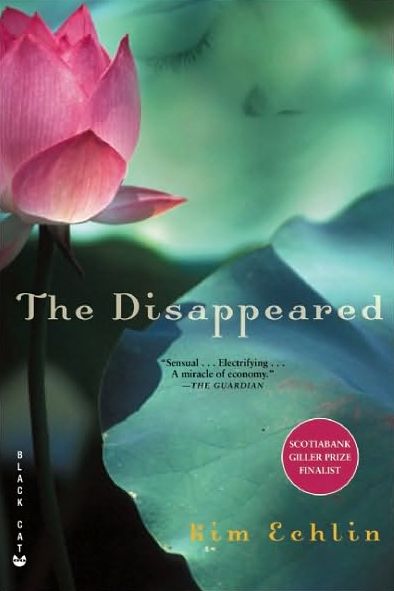
The Disappeared

March, Tuesday 31 2015

The Disappeared by Kim Echlin (Canada 2009), War in Cambodia, Novel, 336 pages.

Here’s the blurb:

After more than 30 years Anne Greves feels compelled to break her silence about her first lover, and a treacherous pursuit across Cambodia’s killing fields. Once she was a motherless girl from taciturn immigrant stock. Defying fierce opposition, she falls in love with Serey, a gentle rebel and exiled musician. She’s still only 16 when he leaves her in their Montreal flat to return to Cambodia. And, after a decade without word, she abandons everything to search for him in the bars of Phnom Penh, a city traumatized by the Khmer Rouge slaughter. Against all odds the lovers are reunited, and in a political country where tranquil rice paddies harbour the bones of the massacred, Anne pieces together a new life with Serey. But there are wounds that love cannot heal, and some mysteries too dangerous to know. And when Serey disappears again, Anne discovers a story she cannot bear.

Haunting, vivid, elegiac, The Disappeared is a tour de force; at once a battle cry and a piercing lamentation, for truth, for love.

Literary fiction of the highest order, this is an unforgettable novel set against the backdrop of Cambodia’s savage killing fields.
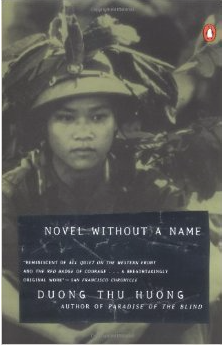
Novel Without A Name.
May, Friday 29 2015

Novel Without a Name – Tiêu thuyêt vô dê by Huon Thu huong (Vietnam 1995), War in Vietnam, Novel, 304 pages.

Here is the blurb:

Vietnamese novelist Huong, who has been imprisoned for her political beliefs, presents the story of a disillusioned soldier in a book that was banned in her native country.

A piercing, unforgettable tale of the horror and spiritual weariness of war, Novel Without a Name will shatter every preconception Americans have about what happened in the jungles of Vietnam. With Duong Thu Huong, whose Paradise of the Blind was published to high critical acclaim in 1993, Vietnam has found a voice both lyrical and stark, powerful enough to capture the conflict that left millions dead and spiritually destroyed her generation. Banned in the author’s native country for its scathing dissection of the day-to-day realities of life for the Vietnamese during the final years of the “Vietnam War, ” Novel Without a Name invites comparison with All Quiet on the Western Front and other classic works of war fiction. The war is seen through the eyes of Quan, a North Vietnamese bo doi (soldier of the people) who joined the army at eighteen, full of idealism and love for the Communist party and its cause of national liberation. But ten years later, after leading his platoon through almost a decade of unimaginable horror and deprivation, Quan is disillusioned by his odyssey of loss and struggle. Furloughed back to his village in search of a fellow soldier, Quan undertakes a harrowing, solitary journey through the tortuous jungles of central Vietnam and his own unspeakable memories.

Fateless

September, Wednesday 30 2015

Fateless – Sorstalanság by Imre Kertész (Hungary 1975), Holocaust,  Novel, 272 pages.

Here is the blurb:

The powerful story of an adolescent’s experience of Auschwitz by Holocaust survivor and Nobel Prize winner, Imre Kertész.

Gyuri, a fourteen-year-old Hungarian Jew, gets the day off school to witness his father signing over the family timber business to the firm’s bookkeeper – his final business transaction before being sent to a labour camp. Two months after saying goodbye to his father, Gyuri finds himself assigned to a ‘permanent workplace’, but within a fortnight he is unexpectedly pulled off a bus and detained without explanation. This is the start of his journey to Auschwitz.

On his arrival Gyuri finds that he is unable to identify with other Jews, and in turn is rejected by them. An outsider among his own people, his estrangement makes him a preternaturally acute observer, dogmatically insisting on making sense of everything he witnesses.

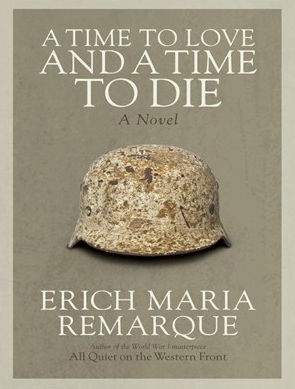
A Time To Love and a Time to Die

November, Friday 27

A Time to Love and a Time to DieZeit zu leben und Zeit zu sterben by Erich Maria Remarque (Germany, WWII, Novel, 384 pages.

It’s interesting to note that the German title isn’t as corny as the English one. It means “A Time to Live and a Time to Die” not Love and Die.

Here is the blurb:

From the quintessential author of wartime Germany, A Time to Love and a Time to Die echoes the harrowing insights of his masterpiece All Quiet on the Western Front.

After two years at the Russian front, Ernst Graeber finally receives three weeks’ leave. But since leaves have been canceled before, he decides not to write his parents, fearing he would just raise their hopes.

Then, when Graeber arrives home, he finds his house bombed to ruin and his parents nowhere in sight. Nobody knows if they are dead or alive. As his leave draws to a close, Graeber reaches out to Elisabeth, a childhood friend. Like him, she is imprisoned in a world she did not create. But in a time of war, love seems a world away. And sometimes, temporary comfort can lead to something unexpected and redeeming.

“The world has a great writer in Erich Maria Remarque. He is a craftsman of unquestionably first rank, a man who can bend language to his will. Whether he writes of men or of inanimate nature, his touch is sensitive, firm, and sure.”—The New York Times Book Review


I will anounce each title with some additional information about six weeks before the discussion date. I hope you like the choices and will join me whenever you can.

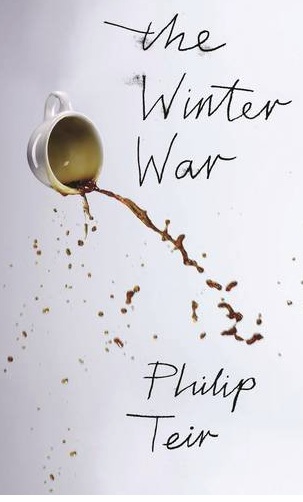
Philip Teir: The Winter War (2015) – Vinterkriget (2013)

Philip Teir

On the surface, the Paul family are living the liberal, middle-class Scandinavian dream. Max Paul is a renowned sociologist and his wife Katriina has a well-paid job in the public sector. They live in an airy apartment in the centre of Helsinki. But look closer and the cracks start to show.

As he approaches his sixtieth birthday, the certainties of Max’s life begin to dissolve. He hasn’t produced any work of note for decades. His wife no longer loves him. His grown-up daughters – one in London, one in Helsinki – have problems of their own. So when a former student turned journalist shows up and offers him a seductive lifeline, Max starts down a dangerous path from which he may never find a way back.

The Winter War is Philip Teir’s first novel but already he’s been hailed as one of the most important young Finnish writers. In a press release, which announced the translation of his book into English, I saw him mentioned as a Swedish author. That’s a bit embarrassing. Philip Teir is part of the Finland Swedish minority in Finland. He writes in Fenno Swedish and his book has been published by a Swedish publisher, nonetheless he was born and lives in Finland.

The title of the book is symbolic and alludes to the Winter War (Talvisota in Finnish – Vinterkriget in Swedish), in which Finland fought against Russia, after having been invaded by Russian forces in 1939. In the book however, the war is mentioned but it isn’t a topic. The major topic is the end of a marriage, embedded in a family story.

I wasn’t so keen on the book at first, because I wasn’t keen on the first narrator, Max, but the book alternates between four narrators: Max, his wife Katriina, and the daughters Helen and Eva. As soon as the book started switching to other narrators, I found it very captivating and was even a little sad when I finished it.

Max is a sociologist and when the book starts he struggles to write a book on Edvard Westermarck. He’s just turning 60 and about to start an affair with a much younger woman. Katriina is on her way to the Philippines to recruit nurses. When she finds out about the affair, he reaction is not exactly as Max imagined it would be. Helen is working as a teacher and has assigned her class to read a novel on the Winter War. When their grandmother has a stroke, it hits her the hardest. The youngest daughter, Eva, lives in London. She studies at an art school and meets people who have joined the Occupy movement.

Teir is a journalist and at times you can feel that. He even indicates his sources at the end of the book, names the authors and ideas which have influenced him. The result is a book that feels uncannily life-like and contains a lot of interesting ideas. I didn’t know Edvard Westermarck but he sounds like a real pioneer and fascinating person. I also enjoyed learning more about the Occupy movement. The thoughts on contemporary art were just as captivating.

The Winter War tells the story of a family in crisis. Each member is unsettled by something and has to make decisions. Not only about marriage and divorce but about choices of profession, ideologies and ways of life.

I was wondering how typical this family was. They live together and come together for important things like birthdays, the illness of the grandmother, the marriage of one daughter, but they each seem to live a completely independent life and have the most profound experiences on their own.

What I liked is that the person who seems the most fragile and directionless is ultimately the strongest and sanest. Maybe Teir wanted to say that those who think they have to make decisions that last a life time are the least suited for our society and only those who embrace flexibility and change are capable of navigating contemporary life and its difficult choices.

Teir has been compared to Jonathan Franzen and I can see why. There are similarities. I enjoyed reading this novel and if you like Franzen, you should pick it up. The Winter War is a highly entertaining, charcater-driven novel of ideas; just don’t expect stylish writing, elaborate descriptions or strong atmosphere.

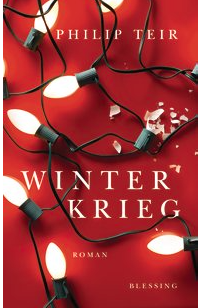
Winterkrieg

I’ve read the German edition of this book. Finland was the guest of honour at the Frankfort book fair 2014 and Teir’s was one of 120 new translations. I bought a few more and hope to review them soon. Sadly most haven’t been translated so far. I like the German cover and the paper they used for this edition is simply gorgeous and lovely to the touch (Munken Premium).

German Literature Month – Winner Announcement

Screen Shot 2014-09-24 at 07.23.25

Some of you will remember that we announced two special giveaways at the beginning of German Literature Month.

Two people will win two sets of books. One will be the winner of the “Pick and Mix Category” and the other will be the winner of “Best Post”.

While I will let Lizzy announce the winner of the “Pick and Mix Category”, I’m announcing the winner of the “Best Post”.

It wasn’t easy to find a winner because there were so many outstanding posts, but we both named the same without much thinking.

And here goes:

Winner of the category “Best Post” is Thomas (Mytwostotinki) for his post on Ostende. 1936, Summer of Friendship.

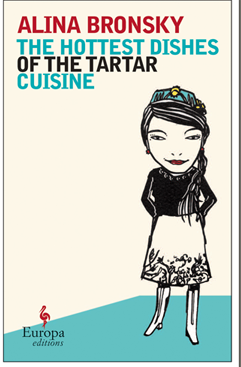
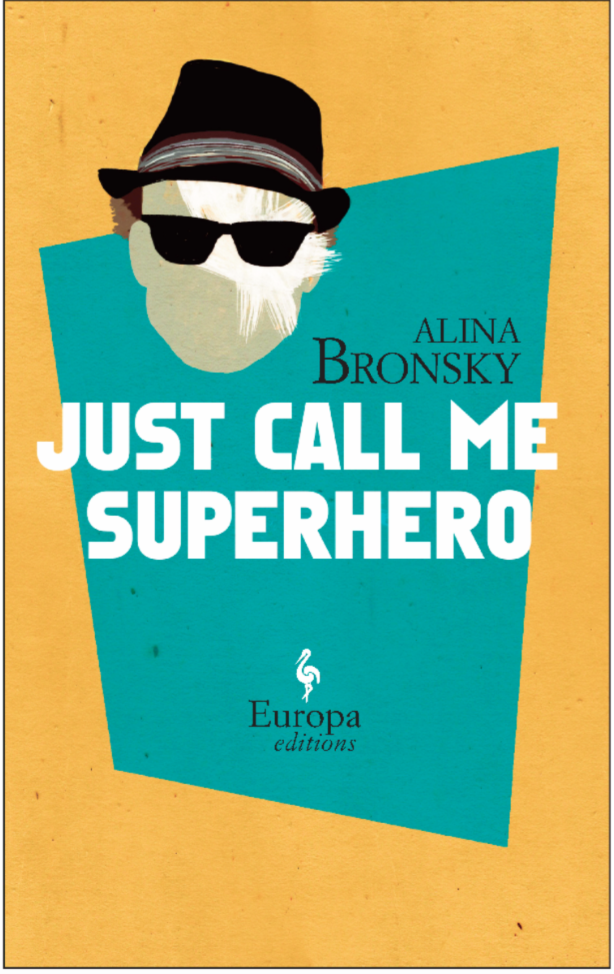
The Hottest DishesJust Call Me Superhero

Congratulations, Thomas, you have won two books by Alina Bronsky, The Hottest Dishes of the Tartar Cuisine and Just Call Me Superhero. Thanks to Europa Editions for their generosity.

Literature and War Readalong December 29 2014: Letters From a Lost Generation by Vera Brittain and Four Friends

Letters From a Lost Generation

Letters from a Lost Generation is the book I’ve been looking forward to all year. I love reading letters and this collection has been on my radar for a long time. Vera Brittain was a nurse during WWI.

The letters have been written between her, her fiancé, her younger brother, and two of their best friends. All four men died in the war. I don’t know how she survived such loss. Vera Brittain later wrote her memoirs Testament of Youth, based on her wartime experience.

And some details and the blurb for those who want to join

Letters from a Lost Generation by Vera Brittain and Four Friends (UK) WWI, Letters, 448 pages

Nothing in the papers, not the most vivid and heart-rending descriptions, have made me realise war like your letters’ Vera Brittain to Roland Leighton, 17 April 1915.

This selection of letters, written between 1913 & 1918, between Vera Brittain and four young men – her fiance Roland Leighton, her brother Edward and their close friends Victor Richardson & Geoffrey Thurlow present a remarkable and profoundly moving portrait of five young people caught up in the cataclysm of total war.

Roland, ‘Monseigneur’, is the ‘leader’ & his letters most clearly trace the path leading from idealism to disillusionment. Edward, ‘ Immaculate of the Trenches’, was orderly & controlled, down even to his attire. Geoffrey, the ‘non-militarist at heart’ had not rushed to enlist but put aside his objections to the war for patriotism’s sake. Victor on the other hand, possessed a very sweet character and was known as ‘Father Confessor’. An important historical testimony telling a powerful story of idealism, disillusionment and personal tragedy.


*******

The discussion starts on Monday, 29 December 2014.

Further information on the Literature and War Readalong 2014, including all the book blurbs, can be found here.

Looking Back on German Literature Month IV 2014

Screen Shot 2014-09-24 at 07.23.25

Every year Lizzy and I think that German Literature Month can’t get any better and every year we are wrong. It keeps on getting better and better. More people take part – 43 this year – more blog post are being written – 174 (!) -, and the quality of the posts is surprising too. I’m so pleased and want to thank you all for participating and showing so much enthusiasm.

I tried to read all the posts, but I still have some catching up to do before next Sunday. Next Sunday Lizzy and I are giving away two books. One for the winner of the “pick and mix”- category and one for our “favourite post”. It’s not easy because there have been so many great posts.

I’m sorry if I haven’t been able to comment on some blogs, but unfortunately there are always a few with a commenting system I can’t use.

My personal month went great as well. I’ve read some outstanding books, discovered a new favourite crime writer, and managed to read most of the books on my list.

Thanks once more to everyone. And a very special thank you to my wonderful co-host Lizzy.

Joseph Roth: Flight Without End – Die Flucht ohne Ende (1927) Literature and War Readalong November 2014

Screen Shot 2014-10-19 at 10.18.51

I’ve read a few novels by Joseph Roth now and every time I’m surprised how different they are. Die Flucht ohne EndeFlight Without End is no exception. This is a Roth I’ve not encountered so far, or only in snippets. Flight Without End clearly shows the mark of the journalist, but it’s also the book of someone who cannot take the society he lives in seriously. Rarely have I seen him this sarcastic, mocking individuals and groups of people. And rarely have I come across a Roth that was this funny. I had to laugh out loud more than once and truly wish the translator was able to capture this. Roth’s wit and humour is very subtle and although a translation could be literal, the humour might get lost in translation as it’s often tied to one word that changes the meaning. Mostly he uses it when describing someone. Here’s just a short example.

Eine junge Schauspielerin, die zwar mit dem dicken Zweiten Bürgermeister geschlafen hatte, aber unbeschädigt aus seiner Umarmung wieder herausgekommen war und teilweise sogar erfrischt.

A young actress, who indeed slept with the fat second mayor but came out of this embrace undamaged, partially even refreshed.

I take just one element of the sentence to explain what I mean. It’s entirely possible to choose the word unharmed instead of undamaged but it would remove a lot of the fun. “Unbeschädigt” means both unharmed or undamaged, but normally you’d use it for an object, while unharmed would rather mean a person. Roth chose undamaged very consciously.

What struck me too in this book was how cosmopolitan Roth was. The book starts in the Russian steppe, moves to Baku, from there to Vienna, then to a unamed city on the Rhine, and ends in Paris. Each place is described masterfully, its essence captured, its character laid bare.

The story is a bit more problematic. I’ve seen this book mentioned as one of Roth’s weakest works, which would have needed some editing. I agree to some extent. I didn’t mind the lack of plot. What we find here is basically the story of a quest. Franz Tunda, former officer, then captive of the Russian army, escapee, revolutionary, drifter and private tutor, lacks one thing – a home. What is home for a man like Tunda? If he can be of some use, he’s adopted everywhere, but never really welcome. He stays an outsider and this makes him a keen observer. He sees behind everyone’s masks, doesn’t buy any of the big theories on progress and wealth. He’s as wary of the communists as he is of the socialist’s and the bourgeoisie. They all have a hidden agenda. That’s why his flight is without end because, as vast as the world may be, society ultimately makes it very small and there’s no home for those who don’t play along. When I get so much insight and analysis of people and countries I don’t mind a lack of plot. My reservation has something to do with the structure of the book. It’s presented as if we were reading an account of someone who is Tunda’s friend. At the same time there are accounts that are directly made by Tunda and it switches occasionally from third to first person. I think this would have needed editing but it’s a minor flaw.

One of the most poignant scenes is when Tunda visits the grave of the unknown soldier, under the Arc de Triomphe, in Paris.

The blue flame burned not to honor the dead soldiers, but to reassure the survivors. Nothing was more cruel than the blissfully ignorant devotion of a surviving father at the grave of his son, whom he had sacrificed without knowing it. Tunda sometimes felt as if he himself lay there in the ground, as if we all lay there, all those of use who set out from home and were killed and buried, or who came back but never came home. For it doesn’t really matter whether we’re buried or alive and well. We’re strangers in this world, we come from the realm of shadows.

Flight Without End doesn’t show us a poetic or lyrical Roth. It’s not elegiac or nostalgic. It’s sarcastic and ironic. It’s the work of someone who saw the downside of globalisation long before anyone else and who was no fool when it came to human beings. There are a few good ones out there but they hardly ever occupy the big stages; they might be hidden somewhere in the Taiga, doing their thing quietly and unseen.

I thoroughly enjoyed this book. It’s witty, irreverent, unflinching and astute. It may not be the best book for someone who hasn’t read Roth yet, but it’s a must-read for those who already like him.


Other reviews

Vishy (Vishy’s Blog) 


*******

Flight Without End is the eleventh book in the Literature and War Readalong 2014. The next book is Letters from a Lost Generation by Vera Brittain and four of her friends. Discussion starts on Monday 29 December, 2014. Further information on the Literature and War Readalong 2014, including the book blurbs can be found here.