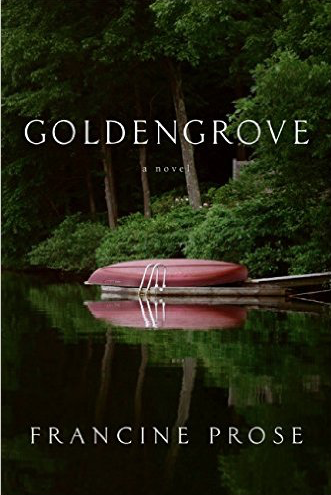
Francine Prose: Goldengrove (2008)

goldengrove
Goldengrove

One sultry summer’s day, teenage Nico and her vivacious older sister Margaret take a boat out on the lake by their family home. But when Margaret dives in, and doesn’t resurface, Nico realizes with horror that her sister is lost to the watery depths for ever. While her parents drift toward their own risky consolations, Nico searches for solace and security in books, art, and – recklessly – in a fledgling relationship with Margaret’s boyfriend. Heartrending and intense, Goldengrove follows a girl on the cusp of adulthood during a summer when a death changes her life for ever.

Reading Francine Prose’s novel Goldengrove felt at times like holding the clothes and belongings of a dead person in my hands. While I read it, and for a long while after I finished it, I felt as if I was grieving. It’s a really sad novel but at the same time it’s a very beautiful novel. It also reminded me of the series Six Feet Under. There is something very similar in the mood and the characters. Although I absolutely loved this novel I could imagine it isn’t for everybody.

There is an epitaph at the beginning of the novel, a poem by Gerard Manley Hopkins.

To a young child

Margaret, are you grieving
Over Goldengrove unleaving?
Leaves, like the things of man, you
With your fresh thoughts care for, can you?
Ah! as the heart grows older
It will come to such sights colder
By and by, nor spare a sigh
Though worlds of wanwood leafmeal lie;
And yet you will weep know why.
Now no matter, child, the name:
Sorrow’s springs are the same.
Nor mouth had, no nor mind, expressed
What heart heard of, ghost guessed:
It is the blight man was born for,
It is Margaret you mourn for.

I didn’t know this poem before but now it haunts me.  It actually woke me in the middle of the nigh; it had burned itself into my memory. I felt as if I was wrapped in the poem and the book and as if I had just lost someone too. The poem is important in many ways. Margaret and Nico’s parents are creative people. Her mother is a musician, her father owns a bookshop that he has called Goldengrove and he is a writer as well. They chose to name their first child Margaret and it seems so fitting as Margaret is the creative one, the singer, while little Nico is the scientist of the family.

The first few sentences of the novel are as haunting as the poem and pull you right into the story:

We lived on the shore of mirror lake, and for many years our lives were as calm and transparent as its waters. Our old house followed the curve of the bank, in segments, like a train, each room and screened porch added on, one by one, decade by decade.

When I think of that time, I picture the four of us wading in the shallows, admiring our reflections in the glassy, motionless lake. Then something — a pebble, a raindrop — breaks the surface and shatters the mirror. A ripple reaches the distant bank. Our years of bad luck begin.

One afternoon in summer, Margaret, Nico’s older sister, drowns in the lake. The two girls spent the afternoon in a boat and Margaret swims back while Nico brings the boat in. Margaret never returns. Losing someone is painful but losing someone like Margaret is incredibly tragic. This was such a fascinating young woman. The lives of those around her literally stop after her death. She was charismatic, authentic, original and highly creative, an accomplished singer who could move people to tears. After her death there is nothing that doesn’t remind little Nico, her parents, or Aaron, Margaret’s boyfriend, of her.

Each of the four people Margaret leaves behind, mourns in another way. Nico dreams of her sister at night and believes her ghost tries to contact her. Attracted by the fascinating but somewhat loony Aaron, she spends long afternoons with him not realizing that they have formed an unhealthy relationship. Aaron cannot get over Margaret’s death and driven by an urge to get her back, he attempts to transform the young Nico into her older sister. Both parents have a hard time to cope as well, each seeking another form of consolation.

The four of them stumble through this summer, mourning and trying to make sense of something that makes no sense.

The end of the novel is very interesting and ambiguous.

I have read Francine Prose’s Reading Like a Writer and her novella Guided Tours of Hell. They both impressed me, still I didn’t expect such a beautifully morbid book. Since I was so impressed by what she wrote about style in her nonfiction book, I did pay special attention to her writing and although I was really immersed in this novel I had to admit it is far from flawless. There were even two or three cringe-inducing passages.

Despite its flaws, Goldengrove is an emotionally intense and haunting novel. Should it manage to touch you it will linger for a long time after you finished it.

William Maxwell: So Long, See You Tomorrow (1980)

The story of a murder is framed by the story of a brief friendship between two young boys. One, the narrator, is coping with the recent death of his mother; the other, a farm boy, witnesses his parents and a friend in scenes he neither understands nor wishes to. The narrative goes into his past and explores the events that destroyed the lives of his parents.

William Maxwell seems to be what I call a “writer’s writer”, meaning someone whose reputation is highest among writers. Fellow writers admire him, look up to him, try to imitate him. Yet it seems as if he had done a lot for fellow writers too. John Updike, John Cheever, John O’Hara and Eudora Welty are among them. He is truly a discovery for me, someone who writes books one can enjoy reading and admire the craft at the same time. His prose is accomplished, he writes with beautiful fluidity.

So Long, See You Tomorrow is set in rural Illinois during the early years of the last century. The narrator, an old man by now, was a boy of 10 when his mother died during the influenza epidemic in 1918. He looks back to this point in time in which his life was shattered. It seems he never got over his mother’s early death, nor over all the things that happened afterwards. There is something he regrets, something he wants to atone for and that is tied to another story, the story of a murder. Now an old man, he tries to understand what happened. Why this murder was committed, how it affected the lives involved and led to the worst thing he did in his life, or rather something he didn’t do, a fatal omission.

Trying to look back and reconstruct what has happened also leads to the exploration of memory.

What we, or at any rate what I refer to confidently as memory – meaning a moment, a scene, a fact that has been subjected to a fixative and thereby rescued from oblivion – is really a form of storytelling that goes on continually in the mind and often changes with the telling. Too many conflicting emotional interests are involved for life ever to be wholly acceptable, and possibly it is the work of the storyteller to rearrange things so that they conform to this end. In any case, in talking about the past we lie with every breath we draw.

The book starts with the murder of a farmer on a lonely farm in rural Illinois. He is shot by his best friend who commits suicide after having killed him. From that starting point the book moves to the death of the narrator’s mother and then to his friendship with Cletus Smith, the son of the murderer. The narrator tries to reconstruct what happened. Some things he remembers but knows they are distorted information as their source is gossip. He tries to find newspaper articles of the time, talk to people and where he really cannot find anything, he imagines how things could have been.

The narrator is a very lonely boy when he meets Cletus and the murder becomes part of his life. He has no friends and all the other boys pick on him, as he likes reading and isn’t the sporting kind. He and Cletus, who live in Lincoln by now, meet by chance and form an intense friendship until the murder happens.

A few years later – the narrator’s family has moved to Chicago where he fits in much better – he meets Cletus again. They meet only one single time and that’s when the thing he can never forget, happens.

So Long, See You Tomorrow is a beautiful and melancholic short novel that explores a wide range of themes like memory, the past, isolation, loneliness, friendship, jealousy and violence. The central theme is that of the omission and the following regret. There are so many things left unsaid, things not done or too late in a life, that this core theme will speak to almost all of us. It’s often little things but they resonate for a long time in our lives and we might wish to turn back time and undo what has happened.

Has anyone read William Maxwell? Which one should I read next?

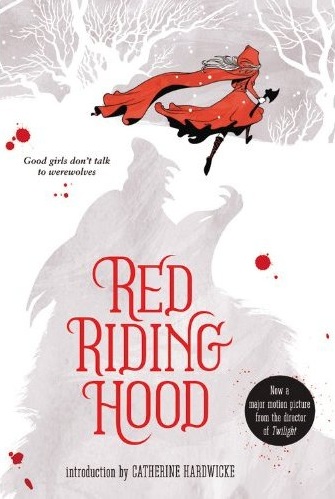
Sarah Blakley-Cartwright: Red Riding Hood (2011) The Book Based on the Movie

Valerie’s sister was beautiful, kind, and sweet. Now she is dead. Henri, the handsome son of the blacksmith, tries to console Valerie, but her wild heart beats fast for another: the outcast woodcutter, Peter, who offers Valerie another life far from home.
After her sister’s violent death, Valerie’s world begins to spiral out of control. For generations, the werewolf has been kept at bay with a monthly sacrifice. But no one is safe. When an expert wolf hunter arrives, the villagers learn that the creature lives among them – it could be anyone in town.
It soon becomes clear that Valerie is the only one who can hear the voice of creature. The Wolf says she must surrender herself before the Blood Moon wanes . . . or everyone she loves will die..

A few months ago I was browsing the Internet looking for the website of Fever Ray and that’s how I found the trailer of the movie Red Riding Hood for which Fever Ray has done the soundtrack.

There are hundreds of fairytale retellings out there. The range is incredible. From literary fiction to pulpy trash you find everything.

Ever since I have read Angela Carter’s Fairytale retellings and watched the movie The Company of Wolves I had a particular liking for the Little Red Riding Hood retellings. It has a few powerful elements that not all other fairy tales have, first of all the wolf and the red cloak. When it comes to the original fairytale it is far from being one of my favourites but what it inspires newer authors to do is often interesting.

For these reasons there was no way around the book Red Riding Hood as soon as I discovered it. The book is actually based on the movie, which makes the marketing strategy clear. This is even enhanced once you realize that what you hold in your hand isn’t the complete book. The last chapter is missing and can only be read online. This isn’t such a problem by now, as the movie has been released, but when I started reading, the chapter wasn’t accessible yet because the movie wasn’t playing.

The wolf in this version, like in some of the other retellings, is a werewolf. During the Blood Moon he lurks in the darkness and comes out of his hiding to kill the people of Daggorhorn. He hasn’t done so for a long time because he normally gets an offering but different circumstances lead to the killing of Valerie’s sister and from there to the death of other villagers. There is no stopping the wolf anymore.

The book works pretty much like a paranormal thriller. It is suspected that the werewolf must be from the village. Someone among the people they all know is transforming himself during the Blood Moon. Like in a proper thriller, there are many suspects. Red herrings abound and you really have to read until the final (online) chapter to find out who is the killer. Insofar it is quite gripping. I think it is possible to find out who it is but it is still entertaining.

What did not work for me are the characters. With the exception of the grandmother they are quite flat and interchangeable. The grandmother however is interesting, a witch-like, potion-cooking old woman who lives outside of society.

Another thing I didn’t like are the inconsistencies in the story. I had a feeling it was written very fast and there were really tacky moments too.

This probably sounds as if I had regretted to read this book but this is absolutely not the case. The descriptions are what I really liked. The little village, lost in the forest, the narrow medieval streets, the picturesque settings and most of all the house of the grandmother. The description of that house made the whole reading worthwhile. The grandmother lives in a tree house, outside of the fear-ridden village, high above everyone else. The interior of that house, the security it provides, is described very appealingly. I’m not going into details, those who want to read the novel should discover this for themselves.

All in all it was a fast read, a bit boring at times but still enjoyable and worthwhile thanks to the descriptions and settings. I shouldn’t forget to mention that there is also a romance part in the novel that did not work so well, or rather, the conflict keeping the lovers apart didn’t work.

I think you gathered that it is nowhere near as good as other retellings of the fairytale that’s why I decided to dedicate another post to a few of the really stunning examples.

Here is the Book’s Homepage with the final chapter.

I haven’t seen the movie yet but I might watch it since I like Fever Ray and Gary Oldman.

Red Riding Hood is my first contribution to the Once Upon a Time Challenge.

Sarah Blake: The Postmistress (2010)

The wireless crackles with news of blitzed-out London and of the war that courses through Europe, leaving destruction in its wake. Listening intently on the other side of the Atlantic, newly-wed Emma considers the fragility of her peaceful married life as America edges closer to the brink of war. As the reporter’s distant voice fills the room, she sits convincing herself that the sleepy town of Franklin must be far beyond the war’s reach. But the life of American journalist Frankie, whose voice seems so remote, will soon be deeply entangled with her own. With the delivery of a letter into the hands of postmistress Iris, the fates of these three women become irrevocably linked. But while it remains unopened, can Iris keep its truth at bay?

I wanted to like The Postmistress and for 200 pages I really did. It has a cinematic quality to it, the descriptions are so perfect, you think you are watching a movie. A movie like Pearl Harbor, not The Draughtsman’s Contract, that’s for sure, but still, it’s an achievement. Also the story is really interesting for far more than two thirds of the book and then it sadly collapses. What starts out as an entertaining and very well-researched read becomes slightly insipid.

The Postmistress interweaves the lives of three very different American women. Frankie Bard, a war reporter, Emma Fitch, the young wife of a doctor and Iris James, the postmaster (she insists on calling herself “postmaster” and I never really got the title).

The story that is told in the book takes place in 1941. During the first two thirds of the book, Frankie is in war-torn Europe, reporting live on the radio, during the Blitz and later from different cities in France. Emma and Iris live both, in the fictional small town Franklin in Massachusetts and hear Frankie’s broadcasts that brings the war into their living rooms. They feel Frankie’s engagement, they live the tragedy with her. They are so far away if it wasn’t for Frankie the war would seem almost unreal.  Apart from Harry Vale, Iris’ fiancé, no one in Franklin, Massachusetts thinks that America will ever go to war, even though the draft has started.

The plot starts to get silly when Emma’s husband decides to go and help in London. He seeks atonement for a “medical accident” for which he feels responsible.

The second third of the book shows Frankie travelling with various trains from Germany to Portugal to interview refugees on the trains. She collects the stories on disks and those voices will later be listened to – thanks to a huge story-twist – in Franklin.

The central story is the one part of the book that I didn’t like and this is unlucky because it ties the three parts together. The idea was to tell the story of a letter that is not delivered because the postmistress decides to hold it back.

Something else that didn’t quite work for me is due to the handling of the characters. Although all three women get their equal share at the beginning, it becomes ultimately Frankie’s story. The other two seem to be mere vehicles to make the plot work.

Sarah Blake writes in her after-word that Frankie couldn’t have had access to a portable disk recorder at that time. What she uses came into usage in 1944 and enabled live-recording from the battlefields.

I took liberty with the date because World War II was the first war that was brought into people’s living rooms by radio, and I wanted to highlight the power of the voice to convey the untellable, the refugees speaking into an air into which they will vanish.

Sarah Blake studied a lot of books on female war reporters, Martha Gellhorn and many other books on WWII. The themes are decidedly interesting and it is no wonder the book has A Reader’s Guide and Discussion Questions. An ideal choice for a book club I presume. Occasionally I wonder if these Reader Guides are not meant to justify the book and ultimately to sell it. It strikes me that I see this more in more in books, even in so-called American literary fiction.

The history of female war reporters and the evolution of reporting is interesting. I think the book also captures very well how far away the war seemed to the Americans. It looks at the way people go on about their lives while in another part of the world people go through terrible things. This seemed very timely and I was reminded of the situation in Japan. We are here and safe while people in another country fight for their survival. How do we go on living as if nothing was happening?

If you are still curious, here is The book’s homepage where you can read the first chapter.

Hop a long, Git a long, Read a long Western Reading Challenge

Have you ever read a Western? Well, I haven’t. It is just not a genre I ever really felt tempted to explore but one evening, watching TCM, a couple of years ago, I saw a made for TV movie  that really stunned me, namely Riders of the Purple Sage. It was a melancholic tale of a gunslinger looking for the guy who drove his sister to commit suicide. It showed Ed Harris, in what I would say, one of his best roles. It was such a moody and atmospheric movie. I found out later that it was based on a novel by Zane Grey, Riders of the Purple Sage. I bought it, wanted to read it and forgot all about it. When I stumbled upon this Western challenge/readalong in which you can participate reading only one book, I thought, now is the time .

My thanks go to Gavin from Page247 who presented this effortless challenge on her blog a while ago. The challenge itself is hosted by Ready When You Are, C.B.. Here is the link to the challenge that takes place in May.

It’s worth having a look at the definition of Westerns on C.B. James’s page and also at the list of possible books. People who love Willa Cather could read along as well as those who always wanted to read Jim Harrison.

For me this is a good opportunity to broaden my horizon. I wouldn’t call it get out of my comfort zone as that is a concept I don’t have. I can’t think of any genre or type of book I don’t feel comfortable with (but maybe I get the idea of comfort zone in this context wrong?).

Erica Bauermeister: The School of Essential Ingredients (2009) Dreams, Friendship and Slow Food

In this remarkable debut, Bauermeister creates a captivating world where the pleasures and particulars of sophisticated food come to mean much more than simple epicurean indulgence. Respected chef and restaurateur Lillian has spent much of her 30-something years in the kitchen, looking for meaning and satisfaction in evocative, delicious combinations of ingredients. Endeavoring to instill that love and know-how in others, Lillian holds a season of Monday evening cooking classes in her restaurant. The novel takes up the story of each of her students, navigating readers through the personal dramas, memories and musings stirred up as the characters handle, slice, chop, blend, smell and taste. Each student’s affecting story—painful transitions, difficult choices—is rendered in vivid prose and woven together with confidence.

I like books about book groups, writing classes, language lessons or knitting clubs as they are essentially books about friendships focusing additionally on a certain topic. They resemble cozy mysteries in which an amateur sleuth, besides solving a crime, introduces us to his craft, hobby or profession. Most of the books of this book club/lesson/school subgroup are not up to my expectations and still, whenever I see one, I have to read it sooner or later. When I read about The School Of Essential Ingredients I was curious and thought it might be uplifting to read a novel that takes you into the realm of food, cooking, spices and aromas during the bleak month of February. And for a change I was not disappointed. It is entertaining, charming and provides intelligent reflections on food and food preparation.

From the reviews I read, I know that some people had a problem with the form of this novel as each chapter is dedicated to another character. We only catch glimpses of their lives. Unlike in The Fiction Class that I enjoyed so much last year, there is no main character in this novel.

Lillian is a chef and owns an expensive and very exclusive restaurant. She organizes monthly cooking classes in which she teaches a very special form of cooking that is meant to inspire and transform. The beginning of every new class is exciting as people come for so many various reasons. Of course they want to learn to cook but they also want to make friends. Some only come because they were offered a voucher. Each person has their own dreams and sorrows that they carry with them.

Lillian is far more than just a simple cook. Already as a child she has learned that you can affect people if you serve them the right food. She did this when she managed to guide her own mother back into life. After having been left by Lillian’s father, her mother shied away from the world and withdrew into books. By cooking the right meal, choosing the right ingredients, Lillian achieved to pull her back into life, to make her notice the world around her and to participate again.

This is what she also does in her cooking classes. She has a good eye for people and studies her pupils closely. Through choosing the right menu, she manages to trigger something in them.

Each month is dedicated to another meal and another person. While they cook and discover new tastes and new aromas, the students are touched in a profound way, remember something of their past or discover new joys in the present.

There is Claire a young mother who rediscovers herself outside of her role as mother and wife and finds back to a more authentic, less limited perception of herself. Her dish is a meal of crabs and preparing it reveals to her an inner strenghth she didn’t know she had (It was a bit hard to read this chapter as the process of killing the crabs is described. Admittedly in a thoughtful and thought-provoking way.).

There is Helen, an elderly woman fighting the early signs of dementia or Alzheimer’s. During “her” evening they cook fondue. There are many others. Tom, a young man who is mourning his wife who was a chef herself, Antonia, an Italian interior designer and the elderly couple Helen and Carl.

At the end of the novel, the little group has become a group of friends who will probably go on seeing each other. Only Lillian hasn’t become a part of it a fact which fills her with an unfullfilled longing.

Susan Breen’s The Fiction Class, that I mentioned before, was completely focusing on the teacher. She was the central character who tied the stories together. This isn’t the case here. Although Lillian is a force, she stays in the background. She is like one of those ingredients in a dish that you only notice when they are absent. Maybe like salt.

I know that this approach didn’t work for every reader but I liked the stories and the descriptions of the aromas, ingredients and the setting and found the book to be positively enchanting. You can feel Erica Bauermeister’s inspiring love of food and especially Slow Food that she discovered during her stay in Italy.

Erica Bauermeister is the editor of 500 Great Books by Women and Let’s hear it for the Girls.  The School Of Essential ingredients is her first novel.

She has her own website on which you can find recipes and guest posts she has written for other bloggers.

Dashiell Hammett: The Glass Key (1931) and Heisler’s The Glass Key (1942)

Ned Beaumont is a tall, thin, moustache-wearing, TB-ridden, drinking, gambling, hanger-on to the political boss of a corrupt Eastern city. Nevertheless, like every Hammett hero (and like Hammett himself), he has an unbreakable, if idiosyncratic moral code. Ned’s boss wants to better himself with a thoroughbred senator’s daughter; but does he want it badly enough to commit murder? If he’s innocent, who wants him in the frame? Beaumont must find out.

I have read everything Raymond Chandler has written. He used to be one my favourite authors. This might be the reason why I neglected Hammett for so long. Maybe I thought he would be too similar and that this would influence my reading.

The Glass Key was my introduction to Dashiell Hammett and although it did remind me a bit of Chandler, they are still quite different. Hammett is at the same time sparser and coarser.

At the heart of The Glass Key lies the question “Who has killed Taylor Henry?”. Taylor Henry is the son of the influential politician Ralph Henry. In an attempt to appear cleaner than he is, the corrupt politician Paul Madvig tries to associate himself with Henry. And he is in love with Henry’s daughter Janet. When Taylor is found dead, rumors start to circulate that he might have been killed by Paul. None of these people are really main characters, the central figure and exemplary tough-guy, is Ned Beaumont. He is a sort of assistant to Paul Madvig and tries, like a PI, to investigate the murder. He visits bars and clubs and people. Gets beaten up and is held captive. Women literally throw themselves at him. This all leaves him quite unfazed. No matter how much you beat that guy up, how often you threaten him, how many times you flatter him or try to seduce him, you will not get much of a reaction but a very short reply. This is as tough as tough-guys go.

The interest, at least for me, did not lie in the solving of the murder. I couldn’t care less. The appeal of this book, is the character of Ned Beaumont, this monosyllabic guy who doesn’t even flinch when he is beaten to a pulp. The other appeal is the world and the atmosphere this novel depicts.

The world of The Glass Key is a world of corruption, prohibition, easy women, hard men, bars and secret joints, bribery and violence.

And of course one has to mention the dialogue. You couldn’t find any more sparse and caustic dialogue in any novel.

Ned Beaumont advanced into the room where Lee and the Kid were.

The Kid asked: “How’s the belly?”

Ned Beaumont did not say anything.

Bernie Despain exclaimed: “Jesus! For a guy that says he came up here to talk you’ve done less of it than anybody I’ve ever heard of.”

“I want to talk to you,” Ned Beaumont said. “Do we have to have all these people around?”

“I do,” Despain replied. “You don’t. You can get away from them just by walking out and going about your own business.”

“I’ve got business here. “

After having finished the book I realized that I had the movie. It is part of a collection of Film noir movies that I had ordered before Christmas. I immediately watched it and liked it a lot.

The story is told differently. More chronological and Janet Henry’s (Veronica Lake) role is much more important. A few names have been changed. There is a club owner who is Irish in the book. He is Italian in the movie which was probably more in line with the depiction of wise guys as they populated the film noir. What I truly liked about the movie is Veronica Lake. Since I have seen L.A. Confidential (one of my favourite movies) in which Kim Basinger is compared to Veronica Lake I always wanted to see the real one. I think she is really special.

Don’t ask me whether I prefer the novel or the movie. I enjoyed reading and watching at the almost same time. It was as if the characters had stepped out of the pages at the end of the book and come alive.

I am really pleased I found the trailer which is not usual for every old movie.