Elizabeth Bowen and Irish Short Story Week

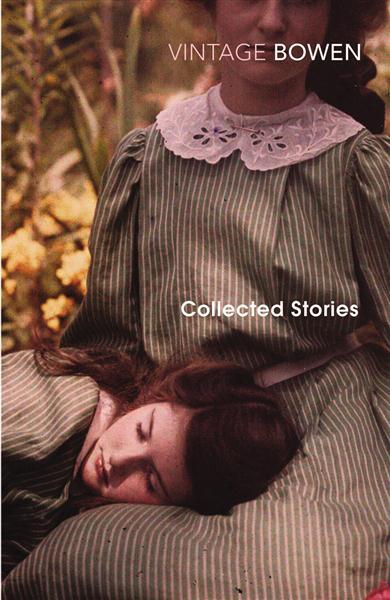
Elizabeth Bowen Collected Stories

I just wanted to let you know that Mel’s Irish Short Story Week is upcoming in March. Because it was such a success in the last couple of years the week has been extended to a whole month and therefore runs from March 1 until March 31 2013.

I discovered some great new writers like Órfhlaith Foyle and Kevin Barry last year, but I also rediscovered old favourites like Elizabeth Bowen. I read a few of her short stories and had sworn I would read more. This year I’m planning on reading several of her stories contained in the Collected Stories which seems to be a great collection.

To stay in line with this month’s theme my Literature and War Readalong, which takes place at the end of the month, also features a book by Elizabeth Bowen – The Heat of the Day.

Because I loved the stories I read last year so much I also got her book Love’s Civil War which contains letters and diary entries and Victoria Glendinning’s biography which was recommended by Mel u. I might start the one or the other or even both.

For more details and Irish reading suggestions please visit Mel u at The Reading Life.

Orfhlaith Foyle

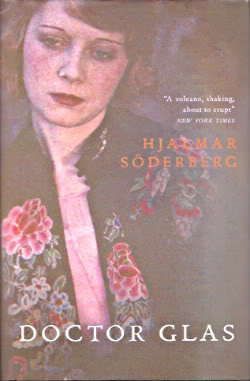
Hjalmar Söderberg: Doctor Glas – Doktor Glas (1905) A Swedish Classic

doctorglas

The haunting tale of Doctor Glas takes place in Stockholm during the closing years of the 1800s. The doctor, a troubled and compassionate man, relates the strange story of the Reverend Gregorius and his pretty wife. Gregorius, an elderly and offensive pastor, has endangered her physical and mental health. She consults Doctor Glas, who for the first time violates the ethics of his profession and uses a highly unorthodox method of helping her. But when the wife takes a lover, and Doctor Glas becomes emotionally attached to her, an intolerable situation develops. The uxorious pastor dies, poisoned. The aftermath of his death and the doctor’s unforeseen reactions to it bring the story to a chilling, horrifying close. Originally published in 1905, Doctor Glas is a novel of extraordinary immediacy and frankness. Its concerns – sexual incompatibility, abortion, euthanasia – together with its psychological insights, make it a remarkably modern work.

I’m so glad I’ve discovered this book on Danielle’s blog (here) not too long ago. I haven’t read a lot of Swedish literature. I’m familiar with some names, like Strindberg, Lindgren, Lagerlöf, and Lars Gustafsson but I hadn’t heard of Söderberg. I tend to read books from Scandinavia in German and Söderberg’s novel Doctor Glas wasn’t available in Germany anymore. It has just been republished for the first time last year following the success of another Swedish writer, Kerstin Ekman, who wrote a book called Tagebuch eines Mörders (Diary of a murderer) in which she tells the fictitious story of how Doctor Glas told Söderberg about the planned murder. Her novel led to the rediscovery of Söderberg’s controversial book. It was considered to be very scandalous when it came out. That’s not surprising as some of the topics (abortion, euthanasia) still lead to heated discussions.

Doctor Glas has been compared to Zola’s Thérèse Raquin and Dostoevsky’s Crime and Punishment. I would add Schnitzler to these two as there is clearly another dimension to this story which seems influenced by depth psychology.

Doctor Glas is written in form of a fictitious diary. The diary is kept by the doctor himself. The book is set during one hot summer, in Stockholm towards the end of the 19th Century, and tells the story of a murder.

Doctor Glas is a loner and a very sensitive man who is filled with disgust by anything all too human. He’s in his thirties and has never had a relationship or any physical contact with a woman. It’s not that he never felt attracted but he thinks too much about it and it starts to look absurd and revolting to him. The summer during which the story begins, is hot and sweltering. Couples meet in the dark in the cemetery below his window. He can hear and sense them, and after a while he cannot shut himself off anymore.

The elderly Pastor Gregorious is a man who more than any other fills Glas with disgust. He looks revolting and has an obnoxious character. Imagining him with his young and beautiful wife is awful for Glas, all the more so as he is secretly in love with her. One day she comes to see Glas and asks him for help. She wants him to tell her husband that he cannot have sex with her as she suffers from an illness. She then tells Glas that he forces her and even rapes her when she is not willing. This shocks Glas so much that even though he knows she loves someone else, he decides to free her one way or the other.

The story line circling around the planned murder reminded me a lot of the above mentioned books by Zola and Dostoevsky but the way the inner life of Glas is rendered, the descriptions of the weather and the nature, his thoughts, emotions and dreams seem influenced by depth psychology and reminded me of Schnitzler. It’s this aspect that made me love the novel. But there is another dimension. The book covers a lot of themes. Adultery, abortion, free love, marriage, euthanasia, murder, guilt. It’s almost endless and highly fascinating. What I found the most interesting are the thoughts on love, marriage and sexuality which made this a very modern novel. This reminded me of another Swedish author, Carl Jonas Love Almqvist whose much earlier novel Sara Videbeck and the Chapel (1839) is equally ahead of its time. It’s the story of a young woman who doesn’t believe in marriage and thinks that a relationship suffers if people are too close and live together. The very same spirit can be found in Doctor Glas only the story is bleak, as Doctor Glas, unlike Sara, is a very troubled mind.

I wrote in the beginning that the novel is set in Stockholm. Stockholm is much more than just a setting, it’s one of the topics of the book. Glas hates the country and loves the city and many of his entries describe the beauty of Stockholm. The initial descriptions of his diary entries always capture a special sight, the blue moon over the cemetery, a walk through the city, a famous building.

Doctor Glas is a rich, multi-layered book which has not only put me in the mood to read more Swedish authors but to finally visit Stockholm. If you like books which take a look into the darkest corners of troubled minds, this is for you. I loved it.

Carol Ann Duffy: Rapture (2005) Poems

Rapture

Carol Ann Duffy’s seventh collection is a book-length love poem, and a moving act of personal testimony; but what sets these poems apart is Duffy’s refusal to simplify the contradictions and transformations of love – infatuation, longing, passion, commitment, rancour, separation and grief. Instead, Rapture is a map of real love, in all its churning complexity, showing us that a song can be made of even the most painful episodes in our lives. These are poems that will find deep rhymes in the experience of most readers and will, ultimately, prove that poetry can and should speak for us all.

I like poetry and try to read a poem here and there as often as possible but it’s relatively rare that I read a whole collection in one go.  British poet Carol Ann Duffy’s collection Rapture was an exception that’s why I decided to write about it.

I often hear people say they would love to read poetry but feel they need special guidance, an instruction, an interpretation to be able to make the most of a poem. While I certainly like some of the poets which are not so accessible, I thought it was a pleasure to find someone like Carol Ann Duffy who is so readable and whose poems almost read like short stories. Reading her would be a perfect starting point for someone less familiar with reading poetry.

Rapture is meant to be read from beginning to end as it does, to some extent, tell a love story, beginning with the early enchanted moments of falling in love and ending with the break-up and loss of the loved person.

What appealed to me in Duffy’s poems is the combination of strong imagery and ideas. The words she chooses create pictures in the mind, are very sensual but at the same time they lead to intellectual discoveries. Another element which seems typical for her and makes her so accessible, is the combination of the mundane with lyrical descriptions of nature. Love in these poems is rooted in daily life but also experienced as pure beauty and enchantment. Duffy writes a lot of almost magical poems describing exalted states but she doesn’t shy away from writing about the sudden importance of text messages.

I haven’t read any others of her collections so far but it seems every book has a theme which runs through it. The themes are different from one book to the next, but images return and weave a world of their own.

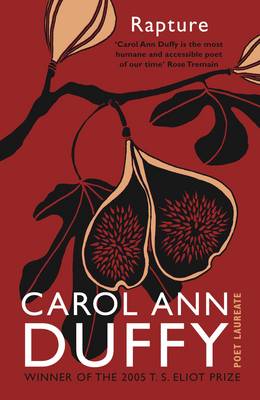
The collection I bought, is the Picador collection which you can see above. The cover is very pretty, it’s not as red as on the photo. The picture of the branch of a fig tree, with leaves and fruits, is embossed on it.

I find it very hard to review a poetry collection and think it might be better to let the poems speak for themselves. Here are three of my favourite poems of this collection:

Name

When did your name
change from a proper noun
to a charm?

Its three vowels
like jewels
on the thread of my breath.

Its consonants
brushing my mouth
like a kiss.

I love your name.
I say it again and again
in this summer rain.

I see it,
discreet in the alphabet,
like a wish.

I pray it
into the night
till its letters are light.

I hear your name
rhyming, rhyming,
rhyming with everything.

River

Down by the river, under the trees, love waits for me
to walk from the journeying years of my time and arrive.
I part the leaves and they toss me a blessing of rain.

The river stirs and turns consoling and fondling itself
with watery hands, its clear limbs parting and closing.
Grey as a secret, the heron bows its head on the bank.

I drop my past on the grass and open my arms, which ache
as though they held up this heavy sky, or had pressed
against window glass all night as my eyes sieved the stars;

open my mouth, wordless at last meeting love at last, dry
from travelling so long, shy of a prayer. You step from the shade,
and I feel love come to my arms and cover my mouth, feel

my soul swoop and ease itself into my skin, like a bird
threading a river. Then I can look love full in the face, see
who you are I have come this far to find, the love of my life.

Tea

I like pouring your tea, lifting
the heavy pot, and tipping it up,
so the fragrant liquid streams in your china cup.

Or when you’re away, or at work,
I like to think of your cupped hands as you sip,
as you sip, of the faint half-smile of your lips.

I like the questions – sugar? – milk? –
and the answers I don’t know by heart, yet,
for I see your soul in your eyes, and I forget.

Jasmine, Gunpowder, Assam, Earl Grey, Ceylon,
I love tea’s names. Which tea would you like? I say
but it’s any tea for you, please, any time of day,

as the women harvest the slopes
for the sweetest leaves, on Mount Wu-Yi,
and I am your lover, smitten, straining your tea.

While browsing the internet to do a bit of research on this collection I found an interesting article by Jeanette Winterson from 2005 in which she deplores that Carol Ann Duffy is not poet laureate. I’m sure Jeanette Winterson is pleased that this has changed. Carol Ann Duffy holds the title since 2009.

Do you have a favourite poem or poet?

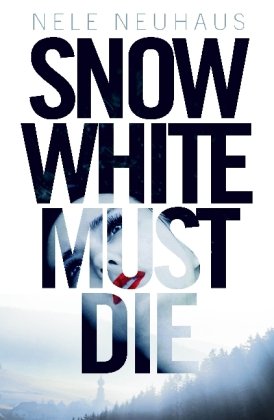
Introducing Nele Neuhaus – German Crime

snow-white-must-die

Nele Neuhaus has just been published for the first time in English (Snow White Must Die) and I thought that was a good opportunity to see for myself what this highly acclaimed German crime writer has to offer. Neuhaus entered the German crime scene with her self-published  novels. They were so successful that a big German editor bought them and re-edited and re-published the first ones and now her later novels too. Her very first book was a standalone called Unter Haien (Among Sharks), the second was the first in a series. What has currently been published in English is the fourth volume in the series with Chief Inspector Oliver Bodenstein and his colleague Inspector Pia Kirchhoff.

I like to start series with the first book and since I read German, I bought it to find out what the fuss was about. There is a new crime writing star every few years in Germany, some like Charlotte Link have been popular for years, others, like Neuhaus are new. At the moment, whenever Neuhaus publishes a book, it will be a huge success with hundreds and hundreds of amazon reviews.

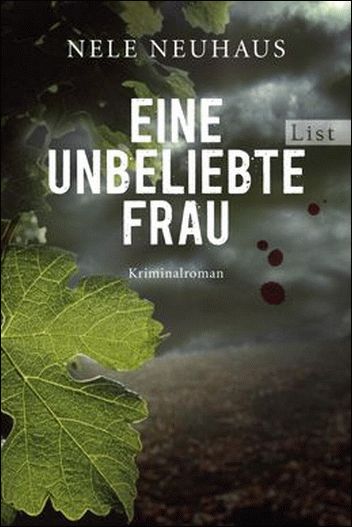
Now on to the book. In German it’s called Eine unbeliebte Frau – An unlikable woman. A young extremely beautiful woman is murdered and the inspectors soon find out that she had a lot of enemies. It’s a classic whodunnit. As I said, I read the first in the series and it became quickly obvious why the English editor went for no. 4. I enjoyed it, I thought it was very gripping but not in a manipulative, cliffhanger-at-the-end-of-every-chapter kind of way. Rather in a laid back way. I liked that. What didn’t work so well was the way the two inspectors were introduced. It seems this gets better from book to book. They are a bit pale in this one. Bodenstein less than Kirchhoff but still, they don’t feel like characters in a series yet but rather like inspectors in a standalone police procedural.

The story as such is gripping. There are at least 6 or 7 suspects and it takes almost the whole book to make clear what happened. I liked that.  I also liked what little we get to know about Kirchoff and Bodenstein, despite the fact that they are a bit pale, not very charismatic.

The setting of the books is the Taunus region, near Frankfurt. Frankfurt is one of the biggest German cities and also one with a high crime rate. There are quite a few crime series and novels set in this town, the best known are certainly the Kayankaya novels by Jakob Arjouni who just died a few weeks ago. Choosing the Taunus region, and not the big city was a deliberate choice. It allows much slower stories and to integrate one of the core themes of the series, the wish of the two main characters to start a new life which should be less stressful and closer to nature.

While this may not have been the most exciting crime novel I’ve ever read, nor is it literary – the writing gets the job done, it’s not refined -, it’s still a solid police procedural. It is well constructed and with a nice pace. I thought it was a promising start to the series which introduces good-natured characters, and I know I’ll read another one sooner or later. For English readers the good news is that it seems you can start with no. 4 and you will not miss out too much. No. 6 in the series has just been published in Germany. If you like your crime gripping but not too fast-paced, this is a good choice.

XXX_Neuhaus_unbeliebteFrau_BS_fin.indd

I’m Lost in the Stacks

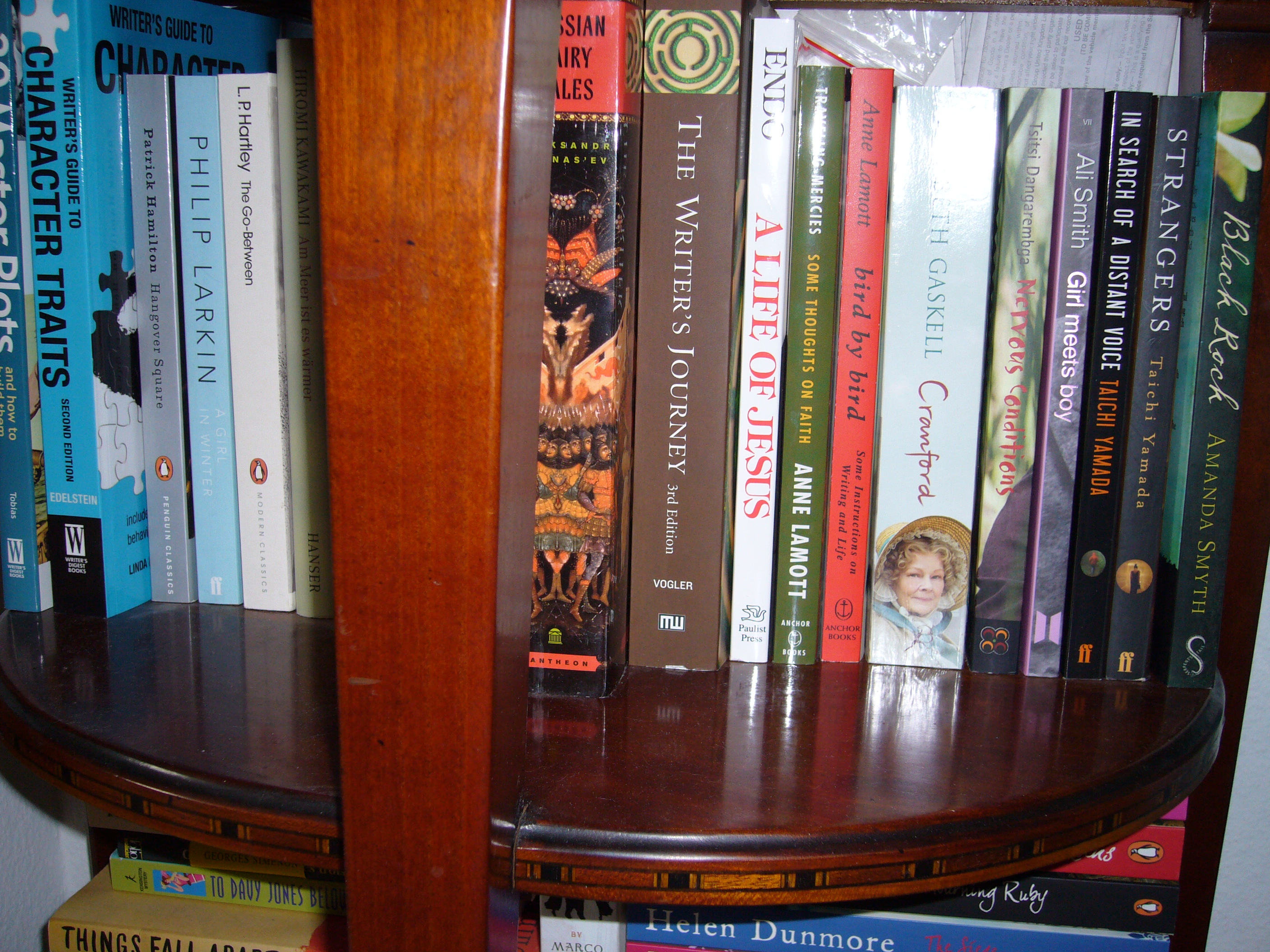
P1030807

Danielle (A Work in Progress) runs a Friday series called Lost in the Stacks: Home Edition in which we are allowed to have a look at people’s bookshelves and libraries and read about some of their habits like organizing and weeding books.

When Danielle asked whether I would like to participate and share some photos I gladly accepted and so, today, I’m over there showing some of my crammed and messy shelves.

Come and have a look, if you like. Here’s the link.

On Iris Hanika’s Tanzen auf Beton (Dancing on Concrete) (2013)

Tanzen auf Beton

I avoid reviewing books which haven’t been translated and this led to the somewhat more problematic development of my not reading them anymore. Since some of you have commented that you’d be interested anyway I will  post a bit more frequently on not (yet) translated books in the future.

Iris Hanika is a German writer who has received several important prizes for her books. So far none has been translated. I bought one of her novels a while ago but when a friend told me about  Tanzen auf Beton (Dancing on Concrete), which has just been published in Germany, I thought, I’d like to read it. As much as I like British and American novels, occasionally I want something more edgy, less polished, raw even. Hanika’s fragmented “novel” was exactly that: raw and edgy.

It already starts with the subtitle which calls this book “Another report from the endless analysis”. Still, the book is called “novel”. After having finished it, I’m not sure why. Easier to sell?

What is edgy and raw in the book is not only the writing and the fact that it is fragmented but that Hanika presents herself naked, with all her vulnerabilities. She analyses the total failure of an affair which lasted years, decades even. Despite the fact that being with this man turned her into a moron (as she thinks) who wasn’t able to talk, made her dependent and begging for sex which wasn’t even good or satisfying, she couldn’t stop seeing him.

This whole misery is almost spat out at first, not like a confession, more like an attempt at putting into words what happened and in doing so making sense. It’s an attempt that took a long time and would never have been achieved without the help of psychoanalysis. As Hanika admits freely in interviews, she’d like to help people see that psychoanalysis can help, it can help uncover hidden truths and move towards a being less neurotic, healthier. She has even written an introduction to psychoanalysis together with her analyst.

I personally don’t believe psychoanalysis is that useful, (psychotherapy certainly is but there are many approaches). A so-called talking cure, is not for everyone. Hanika tries to show that for her this was a good approach. (Seeing the outcome, I’m not entirely convinced this is true).

What was interesting was that she did not only find meaning and a new way to live through psychoanalysis but also through writing, travelling, Russian literature and heavy metal. A peculiar mix but when she writes about these things, how much joy for example a trip through Russia brings, how much she loves to read the Russian authors, the joy is infectious. It makes you want to grab all of your Russian novels and book a trip to St Petersburg. (Her praise of Ministry and other metal bands was somewhat less infectious).

What was it that turned Hanika into a woman who needs a man, feels incomplete without one but is at the same time not capable of having a real relationship and always ends up in degrading affairs with married men? Yes, a lack of self-esteem, but that does come from somewhere. Since it’s not that likely this book will be translated I can allow myself to write spoilers and will tell you what was uncovered. First she came from a family in which women were not valued and then, at the age of 13, she had the traumatizing experience of being almost raped. It’s interesting that her therapist isn’t accepting this as sole reason but digs deeper and what is truly shocking is that nobody spoke with the young Iris about what happened to her. Nobody tried to find out whether the man was caught. It was a topic that was never mentioned. As if what had happened to her had not been important as she was not important. As she correctly writes – the shame is for the victims. Not only is this hurtful but it made her feel utterly alone.

All this is told in fragments; bits of storytelling follow small essays, short observations follow longer reflections.

Happiness, love, sex, getting older, music, psychoanalysis, Russia, violence against women…. The topics are endless, the way she writes is fresh and new, the tone is sometimes humorous, sometimes sad, often laconic and surprising. Quite refreshing to be honest but I can’t say I really liked it. I felt pity for her, for the way she over-analyzes everything but then again, I liked the way she could be so enthusiastic. I certainly wish her well and think it was a courageous book to write. The only thing I found a bit astonishing was that she never thought of the guy’s wife. (I am tempted to be sarcastic here – psychoanalysis, in this case, seems to have turned someone into a person who feels better but not necessarily a better person.)

There are a lot of reviews from critics available already, and they are all raving. I’m going to read her novel Treffen sich zwei (When Two Meet) soon. I’d like to see how she writes when she writes a “real” novel. Treffen sich zwei has been translated into French (Une fois deux) and Spanish (Un encuentro de dos), her prize-winning novel Das Eigentliche was translated into Italian (L’essenziale) and has a good chance of being translated into English as well as it received a prestigious prize.

Literature and War Readalong Februay 28 2013: The Flowers of War – Jingling Shisan Chai by Geling Yan

The Flowers of War

It has been a while since I’ve last read a Chinese novel. Over the years it has become a literature I have learned to appreciate a lot and it was about time to return to it. Geling Yan is a well-known novelist in China. She has written short stories, scripts, essays and novels. Many of her books have been made into movies. The Flowers of War – Jingling Shisan Chai is no exception. The Flowers of War is based on one of the most horrible events which have taken place during war-time – the notorious Nanking/Nanjing Massacre in which Japanese troops slaughtered Chinese civilians. It has been estimated that 250.000 to 300.000 people have been killed. It is sometimes also called The Rape of Nanking. The story of this book is narrated from the point of view of Shujuan a 13 year-old schoolgirl. Together with a group of other girls she hides in the compound of an American church.

Here are the first sentences

Shujuan woke with a start. The next thing she knew, she was standing beside her bed. At first she thought it was the absence of gunfire that had woken her. The artillery that had been thundering for days had suddenly fallen silent.

For those who can’t get the book or do prefer to watch the movie, feel free to review the film starring Christian Bale.

*******

The discussion starts on Thursday, 28 February 2013.

Further information on the Literature and War Readalong 2013, including all the book blurbs, can be found here.