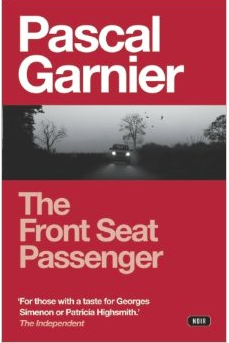
Pascal Garnier: La place du mort (1997) – The Front Seat Passenger (2014)

The Front Seat Passenger

I’ve seen French crime writer Pascal Garnier mentioned on so many blogs that I could no longer resist and had to read him. La place du mortThe Front Seat Passenger seemed like a good choice as it’s short and the story sounded intriguing.

Fabien loses his wife in a car accident. Until that day he thought they were fairly happy. At least as happy as you can be when you’ve been married for a long time and have taken the other one for granted. Still, finding out she wasn’t alone in that car but with her married lover comes as a bit of a shock. While he may not be mourning her, he’s outraged and comes to the conclusion: If that guy took my wife – I’m going to take his widow. And he starts to pursue the other man’s wife, follows her, observes her, enters her apartment.

After his wife’s death he moves in with his divorced friend Gilles. Both men are unemployed and spend their days playing with Gilles’ small son, looking out of the window, smoking pot. Their playful cohabitation is often interrupted by Fanchon, Gilles’ ex-wife, who doesn’t think it’s funny that the two men behave as if the weren’t any older than her small kid. It’s a hilarious set up.

Fabien is anything but likable. He’s sarcastic, frustrated, acerbic. His comments and observations are a lot of fun. Not everything is amusing though. He may be astute when it comes to others, but he doesn’t seem to have a good feeling for himself and so, after a while, the reader feels uneasy.

The writing is surprisingly good, placing this crime novel firmly among the more literary of its kind. I really liked how he included small details – like the movements of pigeons on a windowsill, for example.

The first hundred pages of this book were really excellent but unfortunately from then on it went downhill. What started as a great contemporary French crime novel turned into a Hollywood plot. Think “Misery” with a twist. I have no idea why Garnier chose to flush his original story down the toilet. I can’t imagine he couldn’t come up with another idea for an ending, so it must have been a deliberate choice. I’m just not sure why.

Not one of the other reviews I read had a problem with the end. I have to admit, the writing is so good, that I, too, was tempted to forgive the end but I failed.

Because the first hundred pages were outstanding,  I’ll be reading more of him. I just hope the next book will not be such a mixed bag.

Here are two more favourable reviews by Guy here and Emma here.
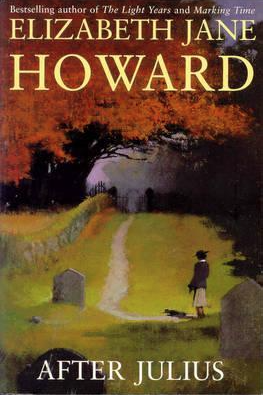
Elizabeth Jane Howard: After Julius (1965)

After Julius

It is twenty years since Julius died, but his last heroic action still affects the lives of the people he left behind. Emma, his youngest daughter, twenty-seven years old afraid of men. Cressida, her sister, a war widow, blindly searching for love in her affairs with married men. Esme, Julius’s widow, still attractive at fifty-eight, but aimlessly lost in the routine of her perfect home. Felix, Esme’s old lover, who left her when Julius died and who is still plagued by guilt for his action. And Dan, an outsider. Throughout a disastrous – and revelatory – weekend in Sussex, the influence of the dead Julius slowly emerges.

Elizabeth Jane Howard is best known for her Cazalet Chronicles, which I haven’t read yet. I don’t know where I came across After Julius, I only know I liked the premise. I’m drawn to stories that deal with the aftermath of an action. While After Julius is more complex than that, all the characters are affected by Julius’ last heroic action, which took place during WWII, twenty years before this story begins.

After Julius is divided into three parts; each part is subdivided into several chapters, each of which is told by another narrator. In lesser hands this might have turned into a fractured story, but Elizabeth Jane Howard is a very skilful writer and, while each chapter is told in a distinct voice, the whole feels seamless.

The narrators are Esme, Julius’ fifty-eight-year-old widow, Cressy, her older daughter, Emma, her younger daughter, Dan, Emma’s friend and Felix, Esme’s former lover. These five people, plus a married couple and an old Major meet for a dinner at Esme’s house in the country.

In the first part we see them all get ready for the weekend. Cressy and Emma live together in a dingy flat in London. Emma works in her late father’s publishing house, while Cressy struggles as a pianist. Like her mother, Cressy’s been a widow since the last war. She’s a great beauty, one of those that make whole rooms go quiet when she enters. A bit like Lily Bart. And, like Lily Bart, her beauty isn’t doing her any good. She attracts many, mostly married men, and all of her affairs end in drama and tears. When we meet her first she’s crying and thinking of ending it with her current lover Dick. Esme lives luxuriously in a big house in the country. Her only occupations are her garden, answering letters, planning meals and instructing the housekeeper. Dan’s a struggling poet and Felix is a doctor, who has spent most of his life abroad.

The dinner turns into a disaster for many reasons. Felix, who is Cressy’s age, was once her mother’s lover. He left her when Julius died and they haven’t seen each other in twenty years. Cressy’s lover is the husband of the woman, Esme invited for the dinner. The friend Emma brings along is an eccentric poet that she’s met only a few hours ago and invited spontaneously.

The last part of the novel shows each character after the disastrous meal.

The plot isn’t the most important thing in this book. What is amazing is how true to life these characters are. How we get to see their vulnerabilities, their disappointments, their hidden motivations. It’s a very outspoken book. Whether it lays bare the hopes of the protagonists, their sexual desires, or their life choices, it’s so honest, it’s occasionally painful to read. We forget that these are characters on paper and think we’re actually looking into someone’s soul.

It’s a beautiful book and a tragic one. We can’t help but wonder—when did things start to go wrong? While Julius’ death sets things in motion, it’s not the real beginning of the drama.

Esme is by far the most tragic character. She’s looking forward to seeing Felix again. Although he’s fourteen years younger, she hopes that there could finally be a future for them. She never assumes that he may have come for other reasons.

I found it hard to believe at times that this book was written in 1965. The open discussion of abortion and sexuality seemed far more modern. It made me wonder if we’re not living in more prudish times now.

Before ending this post I have to mention Elizabeth Jane Howard’s descriptions. They are stunning. When she describes a room, a scene, clothes, anything, she makes full use of these descriptions. It’s never just a random description but it always contributes to the understanding of a character, enhances the mood, sets the tone.

It’s still early but I wouldn’t be surprised if this book would be among my best of this year. Since she reminded me of many writers I absolutely love —Elizabeth Taylor, Rosamond Lehmann, Jean Rhys, Elizabeth Bowen — I know I’ll be reading more of her.

Do you have a favourite Elizabeth Jane Howard novel?


Laura Kasischke: Mind of Winter (2014)

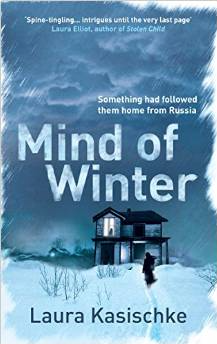
Mind Of Winter

I wonder sometimes whether authors prefer we read their books very slowly, savouring every word or whether they take it as a compliment if we devour a novel in one sitting. I don’t think Laura Kasischke’s going to pop in and let me know how she feels about the way I read her latest novel Mind of Winter. I bought it, started reading on the tram, kept on reading at home – resenting even the shortest interruptions – and finished it a couple of hours later. I don’t do that very often and if I do, it means that I found a book highly enthralling and couldn’t wait to find out what’s going on. Not a bad thing for a psychological thriller, right?

Mind of Winter (which I discovered on Tony’s Book World here) takes place on December 25, during one snowy day. Holly Judges, a poet, who has been suffering from writer’s block for decades, wakes late on Christmas morning. Her husband dashes out the door to get his parents at the airport, their daughter Tatty – Tatiana – is still sleeping. Holly, who woke from a nightmare, tries to make sense of a sentence that haunted her when she woke up “Something had followed them from Russia.”

Moving back and forth in time we hear about the adoption of Holly’s daughter, thirteen years ago, from a Russian orphanage and we witness how this Christmas day develops. It’s snowing constantly and after a few hours it’s obvious that neither friends nor family will make it and join Holly and Tatty for their traditional Christmas meal.

Inside of the house tensions rise. Tatiana not only displays the moodiness of a teenager but behaves more and more erratic.

There are many dark elements of the past mentioned – dead animals, neighbours who don’t speak to Holly anymore, a family history of hereditary cancer and much more. In the beginning there are just a couple of words that hint at something sinister but then, more information is added on every page, a fuller picture emerges and the reader is wondering constantly what really happened in the past and what is going on in the present.

Saying more would spoil this utterly compelling novel. There’s just one tiny thing that I feel I have to reveal—while the atmosphere is dark and brooding, and the book is more than a little creepy at times, there’s no supernatural explanation. As much as I love ghost stories, I really hate it when a psychological thriller takes the easy way out and uses some lame paranormal explanation for the things that go on.

This is a tightly woven novel, a real page-turner, but still a book that explores a huge amount of interesting themes like hereditary disease, writer’s block, poetry, motherhood, family  . . .  I know I’ll be returning to this author soon.

Laura Kasischke isn’t only a novelist, she’s also a poet. It’s not surprising that poetry is important in this book. I’m grateful that she introduce me to a whole bunch of poets I didn’t know and to the poem referred to in the title,  Wallace Stevens’  The Snow Man.

The Snow Man

One must have a mind of winter
To regard the frost and the boughs
Of the pine-trees crusted with snow;


And have been cold a long time
To behold the junipers shagged with ice,
The spruces rough in the distant glitter


Of the January sun; and not to think
Of any misery in the sound of the wind,
In the sound of a few leaves,


Which is the sound of the land
Full of the same wind
That is blowing in the same bare place


For the listener, who listens in the snow,
And, nothing himself, beholds
Nothing that is not there and the nothing that is.

Yasushi Inoue – Three Short Stories

Yasushi Inoue

A review of a collection of Yasushi Inoue’s short stories on the blog 1streading inspired me to look for a book by this author. Luckily I found one just in time, before the end of Tony’s January in Japan. They had a large number of novellas, novels, and short story collections at the book shop. Clearly there’s more available in German than in English. Since I wanted to find out whether he’s an author I want to read more of, I got a collection with short stories first. The book is called Liebe (Love) in German and contains three stories. Translated these would be the titles : Death, Love and Waves – The Stone Garden – The Honeymoon. I’m annoyed that they didn’t bother including the Japanese titles even though I don’t speak or read it. Because of this omission I’m not sure whether you can find translations of these or not.

The first story tells the story of a man who has come to a hotel because he wants to kill himself. It took him some time to find the ideal spot. He wanted a place that was visually appealing and practical; one that would allow him to jump off a cliff and be dead right away. We don’t know why he wants to die at first, we only know that things don’t go according to plan because a young woman arrives with the same idea in mind. I was really wondering whether they would both jump, or if only one of them would do it or whether they would even decide to stay alive. This is such a typically Japanese story. I don’t think that Westerners write like this about suicide. What strikes a Western reader even more than the choice of topic is the reasoning behind the choice. In Western literature people who commit sucide are in great distress, but these two, sound very sober. It’s a question of honor and the logical thing to do. Our narrator looks at his own death from a great distance.

The second story was the one I liked best. A newly married man visits a stone garden with his young bride. The description of the nature and the garden is exquisite. The stone garden is a zen garden that proves to have a stunning effect. Every time the man visits the garden, his life changes completely. This time is no exception.

The last story was the saddest because it captured two absolutely unfulfilled lives. The only thing this married couple had in common was that they both avoided joy and were extremely avaricious. The only sign of their love for each other is that they agree so much in their avarice and that the man follows his wife’s example even after her death.

Yasushi Inoue, it seems, isn’t as widely read outside of Japan although he’s one of the greatest Japanese writers. I wonder why. Maybe the stories are too quietly odd? I thought these stories were a great introduction to Inoue’s work and I know I’ll read more of him. The mix between delicate descriptions of nature and character analysis that seems to have been executed with a scalpel is fascinating. I also loved that it felt strange and familiar at the same time.

If you have read Inoue I’d love to hear which books you’d recommend.

Emily St. John Mandel: Station Eleven (2014)

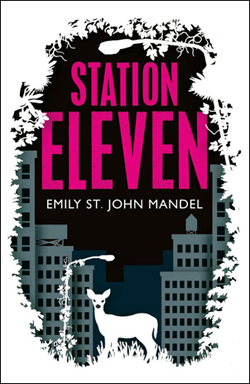
Station Eleven

Another post-apocalyptic novel and one that so  many have reviewed already. Still, I have to write about Station Eleven because it’s such an impressive book and even though there are so many dystopian and post-apocalyptic books published every year, this one stands out. To a large extent because it’s one of a few – maybe even the only one – that doesn’t make you feel as if someone just bashed you over the head. It has so many moments of glorious beauty that you’ll finish it without feeling a major depression coming on.

The book opens with a theater play. It’s Arthur Leander’s last performance of King Lear. Although he dies during the play he has a pivotal role in the book. The night of the play, a winter night in Toronto, isn’t only Arthur’s last night, it marks the end of most of humanity. In a few days a pandemic will have wiped out 99% of the world’s population.

From that night the novel flash forwards to the future, fifteen years later. Kirsten is part of the Travelling Symphony, an orchestra and theater group who performs Shakespeare plays while travelling from one place to the next. The world has changed a great deal. Everywhere lie the remnants of the old world, in which there still was electricity, air planes, iPhones etc.

I mentioned that Arthur Leander has a pivotal role and that’s because Emily St. John Mandel decided to tell the story of all those who were close to him and present when he died, including the story of some other people linked to him. Kirsten, for example, played a child Cordelia in this modern interpretation of Shakespeare’s play.

Some of the people who were close to Arthur will make it, some won’t. There are some heartbreaking scenes when we read how some of them struggle in vain and die during the pandemic.

What makes the book stand out, apart from the ingenious structure, was how people looked back on what they lost. It makes you grateful for everything we have but at the same time, the book shows that there will always be great things. Because the society we live in now has so much to offer, so  much beauty – art, theater, even technology – that, although 99% of its population are wiped out, many live in a lawless state, and other’s form fanatic cults, there’s still enough that has survived and will go on making our world a special place.

I wonder if this book made it into other people’s dreams as well. While I was reading it, I dreamt every night of the landscapes in the book. That’s why I called it impressive. It’s not overburdened with descriptions but what little she uses is very powerful. If you wonder why it’s called Station Eleven – the title refers to a comic book one of the characters has been drawing almost all of her life.

I liked that the book made me look at what I have and wonder what I would like to keep. Even when it comes to objects. Only things that are useful or even things that are just beautiful?

I could say a lot more about this book but I feel it’s OK to only write a short review because there are so many around at the moment. The important thing is – pick it up. It’s really worth it. If you love post-apocalyptic stories, you’ll read it anyway. If you don’t, maybe it will show you that not every book about the end must be traumatic. Certainly not one that makes you grateful for everything we have and, ultimately, shows that it’s possible to find beauty, no matter what will happen to our world. Nothing illustrates the message of the book better than the reversal of Sartre’s famous quote L’enfer c’est les autres – Hell is other people. In the novel Kirsten thinks that he’s wrong. She has come to the conclusion that hell is the absence of people you feel close to.

I haven’t read The Road yet but I could imagine the two complement each other; one being very gloomy, the other one very luminous.

Phil Rickman: The Smile of a Ghost (2005) Merrily Watkins Series

Smile of a Ghost

In the affluent, historic town of Ludlow, a teenage boy dies in a fall from the castle ruins. Accident or suicide? No great mystery, so why does the boy’s uncle, newly-retired detective sergeant Andy Mumford take his personal fears to diocesan exorcist Merrily Watkins? More people will die before Merrily, her own future uncertain, uncovers in those shadowed, medieval streets, a dangerous obsession with suicide, the nature of death and the afterlife.

I bought The Smile of a Ghost by accident, thinking it was the first in the Merrily Watkins series, but it’s already book seven. I think it says a lot about a series though if new readers do not feel left out and don’t get the impression that there’s a huge amount of backstory that would be annoying for those already familiar with the books.

When you read about some of the elements of the novels, notably that they are set in small English towns and that the main protagonist/investigator is a vicar, you might be led to thinking this is cozy crime. You’d be very wrong. The series is far edgier than you’d expect. And in some ways quite eccentric. Think Trollope meets the Gilmore Girls and you have a pretty good idea of the flavour of the series.

The main investigator is thirty-six-year-old Merrily Watkins, vicar of Ledwardine, in Herefordshire, near the Welsh border. Merrily isn’t only a vicar she’s also a deliverance minister – in other words an exorcist. And she’s the single mom of a teenage daughter and dates a rock musician. With these ingredients it’s not surprising that the books offer a mix of solid mystery, with a gothic flair and a very realistic look at life in contemporary Britain.

In this seventh book of the series Merrily has a lot of trouble with the church. Exorcist is a role that many among the clergy want gone. It whiffs too much of medieval superstitions. But Merrily persists. She’s not entirely sure herself whether she believes in ghosts, all she knows is that there are phenomena nobody can explain and if people feel the need of a priest to help them, why should the church refuse this. It’s decided that she can go on doing what she does but only after consulting with a whole group of people first, one of which a retired, pompous psychiatrist.

Merrily is a very independent person. She hates these new rules. But she’s got more troubles of her own . Her boyfriend, rock musician Lol, has moved to Ledwardine and they try to keep it a secret for the time being. Someone knows though or they wouldn’t receive hate mail. Jane, Merrily’s feisty daughter, starts to investigate, only to find a few other worrying things.

When a young boy, Robbie Walsh, falls from Ludlow castle, it looks like an accident at first. His uncle, newly-retired police investigator Mumford doubts it was an accident. As usual the boy stayed with his grandparents for the holidays. He loves staying at Ludlow. His own home is anything but peaceful. His mother is a druggie and pregnant with a much younger guy’s kid. Robbie’s a history buff and knows everything about Ludlow, including its ghost stories. Shortly before he dies he’s seen with Belladonna, an eccentric goth musician who has bought a house in Ludlow. She’s often seen at night in a dark cape, possibly naked underneath, holding a flickering candle. Does she have something to do with Robbie’s death? Was it a suicide?

If Mumford’s mother wouldn’t pretend she’s still seeing Robbie and he’s talking to her, Merrily might not have been drawn into this, but since there’s the possibility of a haunting, Mumford asks her for help.

Shortly afterwards Mumford’s mother is found dead in the river and a girl jumps from the castle. There’s clearly something very sinister at work here. A suicide cult led by Belladonna? Drug-dealing youth who force others to throw themselves from the ruin? Murder?

I loved this book and will return to this series again. It has such an arresting mix of elements: a suspenseful mystery, elements of ghost stories, a strong sense of place and setting, social commentary and a lot more. The characters are wonderfully well drawn. Merrily and her daughter Jane are a great team. They made me think of the Gilmore Girls more than once. The only reservation I have is the length of the books. None is shorter than 500 pages, many are over 600 and a lot of these pages are filled with church politics. It didn’t bother me too much because everything else was so different and fresh. And I had a tiny problem with the occasional use of vernacular though. It’s just something I don’t like.

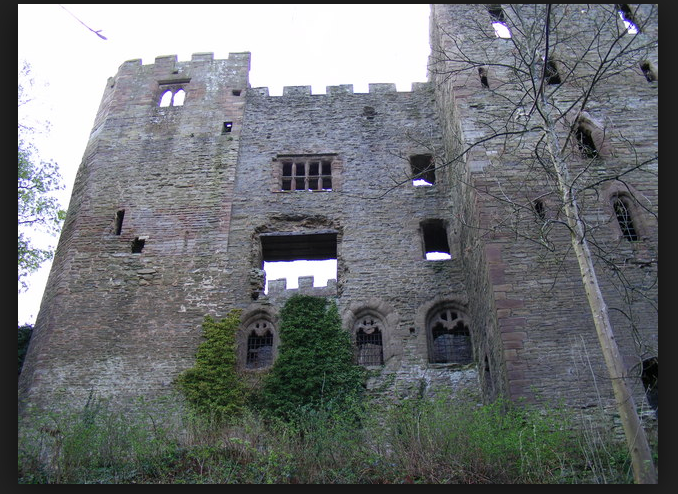
I highly recommend this series. It offers a terrific mix of elements, wonderfully likable characters, and great setting and atmosphere. I was almost sad when I came to the end of the novel and didn’t have another one at hand. And I would love to visit Ludlow Castle.

Ludlow Castle

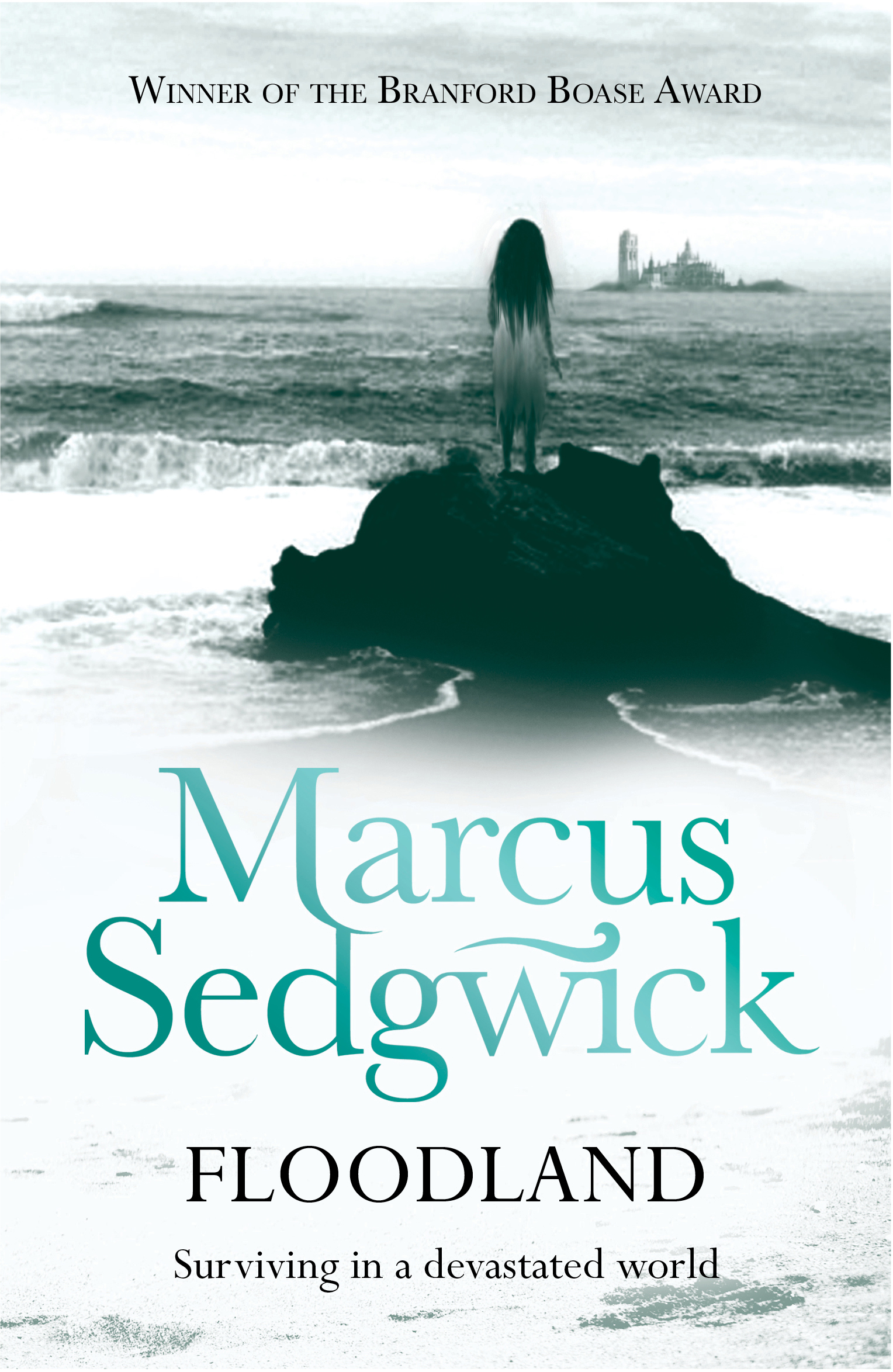
Marcus Sedgwick: Floodland (2000)

Floodland

Marcus Sedgwick has been on my radar for a while. I’ve seen more than one enthusiastic review of his books. He’s regularly nominated for awards and has won a few, notably the Branford Boase Award for first children’s book for Floodland. When you come to a writer who is as prolific as Marcus Sedgwick it’s hard to know where to start. Last year he even published a book for adults A Love Like Blood, that’s high on my TBR piles. I first wanted to read Midwinterblood but then decided to start with his first novel Floodland.

Floodland is set in the UK in the future. Most of the country is flooded, some of the higher regions building small islands. Food is scarce and people try to flee from the smaller islands to a larger part of the mainland. Zoe is left behind on the island of Norwich when her parents leave. During a moment of total chaos they boarded without making sure that she was really following them. Zoe’s been fighting for herself ever since. She’s a loner and most people leave her alone that’s why, when she discovers a boat, she’s able to hide it, and make it seaworthy again. One day she leaves the island, looking for the mainland. Instead of finding the mainland she’s stranded on an even smaller island than Norwich. Dooby, who is only a few years older than Zoe, is the leader of the people on that island. Food is even scarcer and so is shelter. Most people live in an old cathedral. Dooby confiscates her boat and Zoe’s forced to stay on this island on which people have turned into barbaric mobs, periodically overrun by other mobs who they torture and kill, if given a chance. Her only aim is to find her boat, flee and find the mainland and her parents.

I thought that the idea of Norwich being an island was pretty uncanny. I liked how this book was structured and divided into three parts “before”, “then” and “after”. Each part is subdivided into short chapters. At the beginning of every part and every chapter we find haunting wood carvings by Marcus Sedgwick.

Floodland is a short novel and so it may not be surprising that the writing is taut. There’s no superfluous word here. It all moves along at a steady pace and is very suspenseful.The middle part, which is the longest, was reminiscent of Lord of the Flies. It was also the part which carried the strongest message. There’s only one elderly person on that island and he makes Zoe understand how important it is to tell stories if humans want to keep their humanity.

The end felt a bit rushed but I still thought it was well done. Overall I enjoyed this adventurous story a great deal. Zoe’s a wonderful heroine and the world Marcus Sedgwick created felt realistic. There’s not too much backstory but we still understand it’s all a result of global warming. For children this may be a very emotional book because Zoe wonders until the end why her parents didn’t come back to find her. There’s one thing I didn’t like and that’s the idea that people turn into animals when they lose their humanity. I’m not keen on the dichotomy animal/human. The people in this book lose their compassion and their altruism because they are in a very precarious situation. They are cruel and depraved. That doesn’t make them animals. Animals don’t know cruelty.

If you’d like to find out more about Marcus Sedgwick here’s his website Marcus Sedgwick. It’s one of the most appealing writer’s websites I’ve come across. He also writes a blog where I found this quote that sums up his writing

I’m not a writer who tells you something five times. I usually say it just once, and if I say it any more in a first draft, my editor makes me take it out in a rewrite anyway. That’s one of the reasons that my books are sometimes shorter than other people’s. And that’s one of the reasons why I wish some people would read more slowly. Books are patient; you can afford to take your time when you’re reading for pleasure.